2020 Subaru Legacy vs 2021 Toyota Camry

Overview | |
MSRP$22,745 | MSRP$25,045 |
Listings203 | Listings1104 |
Ratings & Reviews | |
User Reviews | User Reviews |
Expert reviews7.8 out of 10 | Expert reviews7.8 out of 10 |
Pros
Cons
| Pros
Cons
|
2020 Subaru Legacy Reviews SummaryIt’s something we’ve said almost exhaustively on this site: Crossovers are king, and the age of sedans owning the road has waned. But you can’t fault us for reporting what’s happening out there, and if you bought your first car more than a decade ago, this may still be news to you. Their combination of cargo space, passenger space, and added ride height—with a seemingly minimal penalty when it comes to fuel economy—contributed largely to the proliferation of SUVs over the past 10 years. But what of the humble sedan? And what is an automaker to do when one of its best-selling segments becomes passé? If that automaker is Subaru, the play is to lean into the niche. For the 4-door, 5-passenger Legacy, that means a focus on practicality, efficiency, and safety. The Legacy has long been a pragmatic choice thanks to its standard all-wheel-drive (AWD), fuel-efficient engines, and easy-to-use interiors. The 2020 Legacy can still boast AWD and strong mileage, but Subaru has made some major changes inside its midsize sedan in an attempt to go more mainstream and grab a larger slice of the shriveling sedan market. Some of the technology Subaru added has been great, but one major change to the dash of the new Legacy makes us ask what Subaru is thinking. | |
2021 Toyota Camry Reviews SummaryThe Toyota Camry has long been many new-car buyers’ default choice—but not because it’s interesting. Reliability and practicality have traditionally been the Camry’s strengths, not sportiness or style. Toyota tried to change that for the 2018 model year, when the Camry was last redesigned. The current-generation Camry adopted more extroverted styling, and engineers tried to make the driving experience more exciting, too. While Toyota’s approach has changed, the Camry still competes against the same array of midsize sedans, including the Honda Accord, Hyundai Sonata, Mazda 6, Nissan Altima, Subaru Legacy, and Volkswagen Passat. Changes for the 2021 model year include subtle styling tweaks, new infotainment displays, an upgrade to the Toyota Safety Sense 2.5+ (TSS 2.5+) package of driver aids, some changes to the dashboard trim, and the discontinuation of the Camry L trim level. That leaves the Camry LE as the new base trim level. The Camry offers buyers more choices than many rivals, encompassing three powertrains (inline-four, V6, and hybrid), six trim levels (LE, XLE, SE, SE Nightshade Edition, XSE, and TRD), and the choice of front-wheel drive (FWD) or all-wheel drive (AWD). Our test car was an AWD SE Nightshade Edition, positioned close to the middle of the lineup. | |
No video found | |
Popular Features & Specs | |
Engine2.5L 182 hp H4 | Engine2.5L 203 hp I4 |
DrivetrainAWD | DrivetrainFWD |
Seating Capacity5 | Seating Capacity5 |
Horsepower182 hp @ 5800 rpm | Horsepower |
MPG City27 | MPG City28 |
MPG Highway35 | MPG Highway39 |
Engine | |
Engine Name2.5L 182 hp H4 | Engine Name2.5L 203 hp I4 |
Torque178 lb-ft @ 4400 rpm | Torque |
Horsepower182 hp @ 5800 rpm | Horsepower |
DrivetrainAWD | DrivetrainFWD |
Fuel Economy | |
MPG City27 | MPG City28 |
MPG Highway35 | MPG Highway39 |
Interior | |
Seating Capacity5 | Seating Capacity5 |
Safety | |
Front Crash Overall5 | Front Crash Overall5 |
Side Crash Overall5 | Side Crash Overall5 |
Dimensions & Capacity | |
Cargo Space15.1 cu ft | Cargo Space15.1 cu ft |
Curb Weight3499 lbs | Curb Weight3310 lbs |
Height59.1 in | Height56.9 in |
Length190.6 in | Length192.1 in |
Width82.0 in | Width72.4 in |
Wheelbase108.3 in | Wheelbase111.2 in |
Maximum Payload | Maximum Payload925 lbs |
Number of doors4 | Number of doors4 |
Overview | ||
MSRP | $22,745 | $25,045 |
Listings | ||
Ratings & Reviews | ||
User reviews | ||
Expert reviews | 7.8 out of 10Read full review | 7.8 out of 10Read full review |
Pros & cons | Pros
Cons
| Pros
Cons
|
Summary | It’s something we’ve said almost exhaustively on this site: Crossovers are king, and the age of sedans owning the road has waned. But you can’t fault us for reporting what’s happening out there, and if you bought your first car more than a decade ago, this may still be news to you. Their combination of cargo space, passenger space, and added ride height—with a seemingly minimal penalty when it comes to fuel economy—contributed largely to the proliferation of SUVs over the past 10 years. But what of the humble sedan? And what is an automaker to do when one of its best-selling segments becomes passé? If that automaker is Subaru, the play is to lean into the niche. For the 4-door, 5-passenger Legacy, that means a focus on practicality, efficiency, and safety. The Legacy has long been a pragmatic choice thanks to its standard all-wheel-drive (AWD), fuel-efficient engines, and easy-to-use interiors. The 2020 Legacy can still boast AWD and strong mileage, but Subaru has made some major changes inside its midsize sedan in an attempt to go more mainstream and grab a larger slice of the shriveling sedan market. Some of the technology Subaru added has been great, but one major change to the dash of the new Legacy makes us ask what Subaru is thinking. | The Toyota Camry has long been many new-car buyers’ default choice—but not because it’s interesting. Reliability and practicality have traditionally been the Camry’s strengths, not sportiness or style. Toyota tried to change that for the 2018 model year, when the Camry was last redesigned. The current-generation Camry adopted more extroverted styling, and engineers tried to make the driving experience more exciting, too. While Toyota’s approach has changed, the Camry still competes against the same array of midsize sedans, including the Honda Accord, Hyundai Sonata, Mazda 6, Nissan Altima, Subaru Legacy, and Volkswagen Passat. Changes for the 2021 model year include subtle styling tweaks, new infotainment displays, an upgrade to the Toyota Safety Sense 2.5+ (TSS 2.5+) package of driver aids, some changes to the dashboard trim, and the discontinuation of the Camry L trim level. That leaves the Camry LE as the new base trim level. The Camry offers buyers more choices than many rivals, encompassing three powertrains (inline-four, V6, and hybrid), six trim levels (LE, XLE, SE, SE Nightshade Edition, XSE, and TRD), and the choice of front-wheel drive (FWD) or all-wheel drive (AWD). Our test car was an AWD SE Nightshade Edition, positioned close to the middle of the lineup. |
Video | No video found | |
Popular Features & Specs | ||
Engine | 2.5L 182 hp H4 | 2.5L 203 hp I4 |
Drivetrain | AWD | FWD |
Seating Capacity | 5 | 5 |
Horsepower | 182 hp @ 5800 rpm | |
MPG City | 27 | 28 |
MPG Highway | 35 | 39 |
Engine | ||
Engine Name | 2.5L 182 hp H4 | 2.5L 203 hp I4 |
Torque | 178 lb-ft @ 4400 rpm | |
Horsepower | 182 hp @ 5800 rpm | |
Drivetrain | AWD | FWD |
Fuel Economy | ||
MPG City | 27 | 28 |
MPG Highway | 35 | 39 |
Interior | ||
Seating Capacity | 5 | 5 |
Safety | ||
Front Crash Overall | 5 | 5 |
Side Crash Overall | 5 | 5 |
Dimensions & Capacity | ||
Cargo Space | 15.1 cu ft | 15.1 cu ft |
Curb Weight | 3499 lbs | 3310 lbs |
Height | 59.1 in | 56.9 in |
Length | 190.6 in | 192.1 in |
Width | 82.0 in | 72.4 in |
Wheelbase | 108.3 in | 111.2 in |
Maximum Payload | 925 lbs | |
Number of doors | 4 | 4 |
The 2020 Subaru Legacy was a car that prioritized pragmatic sensibility over flashy design. While it was a handsome vehicle, it often struggled to stand out among its competitors. The Legacy featured sharp angles and details, but these elements made it feel smaller compared to the larger and bolder designs of the Honda Accord and Toyota Camry. The front end of the Legacy was particularly unassuming, to the point where it could be mistaken for a compact Subaru Impreza. Despite Subaru's attempt to go mainstream with the Legacy, the design felt more like a sedan version of the Outback.
Inside, the Legacy featured a massive 11.6-inch touchscreen, but many features were buried deep within the digital interface, complicating simple tasks like adjusting the climate controls or radio. The base trim came well-equipped with features like remote keyless entry, Bluetooth connectivity, and dual 7-inch touchscreens with Apple CarPlay and Android Auto. Higher trims added more luxurious features, such as leather-wrapped steering wheels, dual-zone automatic climate control, and heated seats. The range-topping Touring XT trim included power-folding exterior mirrors, full Nappa leather upholstery, and heated and ventilated front seats.
The 2021 Toyota Camry aimed to distance itself from its more generic predecessors by incorporating more exciting styling details. The flared wheel arches and thin headlights and taillights visually widened the car, but some trims like the SE, XSE, and TRD were cluttered with fake vents. The LE and XLE trims had a cleaner, though still massive, grille. The Camry's interior mirrored its exterior's chaotic styling, with a mix of trim elements that lacked a cohesive design theme. Materials felt low-rent, but the seats were comfortable and supportive, and outward visibility was excellent.
The Camry's cargo space was average for a midsize sedan at 15.1 cubic feet, but it lagged behind competitors like the Honda Accord. In-cabin storage was limited, with small cupholders and door bottle holders. However, Toyota included analog controls for important functions, making it easier to use than some competitors' touchscreen-heavy systems. The dual-zone automatic climate control available on higher trims added to the car's convenience.


The 2020 Subaru Legacy offered a 2.5-liter boxer 4-cylinder engine in its base, Premium, Sport, and Limited trims, producing 182 horsepower and 176 pound-feet of torque. This engine was paired with a continuously variable transmission (CVT) and standard all-wheel drive (AWD). The Legacy's powertrain was responsive, making it suitable for city driving, but it struggled to reach highway speeds without significant noise. For those needing more power, the Limited XT and Touring XT trims featured a 2.4-liter turbocharged boxer 4-cylinder engine, delivering 260 horsepower and 270 pound-feet of torque. The Legacy's chassis provided precise cornering and refined ride quality, making it a pleasure to drive.
The Legacy's auto stop-start system aimed to conserve fuel, contributing to an impressive fuel economy of 27 mpg city, 35 highway, and 30 combined with the base engine. The turbocharged engine's fuel economy dropped to 24 city, 32 highway, and 27 combined. Despite the system's fuel-saving benefits, it was jarring and required multiple steps to disable through the infotainment system.
The 2021 Toyota Camry's base powertrain was a 2.5-liter four-cylinder engine, producing 203 horsepower and 184 pound-feet of torque with front-wheel drive (FWD), and slightly less with all-wheel drive (AWD). The XSE trim's dual-exhaust system increased output to 206 horsepower and 186 pound-feet of torque with FWD. The Camry also offered a 3.5-liter V6 engine with 301 horsepower and 267 pound-feet of torque, as well as a hybrid powertrain with a total system output of 208 horsepower. All engines were paired with an eight-speed automatic transmission.
The Camry's Dynamic Force engine provided a lively driving experience, with a balance between handling and ride quality. The steering was responsive and precise, making it enjoyable to drive. The TRD model, introduced in 2020, added performance upgrades like a lowered suspension, stiffer coil springs, and bigger brakes, enhancing the driving experience further. The AWD system, derived from the RAV4, could send up to 50% of torque to the rear wheels when needed, without impacting passenger or cargo space.
The 2020 Subaru Legacy offered solid trunk space for its class at 15.1 cubic feet, though it couldn't compete with crossovers or hatchbacks. The backseat provided impressive head- and legroom, accommodating taller passengers comfortably. The front seats were supportive, with deep door pockets for storage. However, the center stack's small tray made plugging in USB cables a bit challenging.
The 2021 Toyota Camry also had 15.1 cubic feet of cargo space, which was average for a midsize sedan but less than the Honda Accord's 16.7 cubic feet. The Camry's rear headroom and legroom were generous, but front headroom and legroom were below average. The front seats were adjustable and comfortable, with excellent outward visibility. In-cabin storage was limited, with small cupholders and door bottle holders. Toyota included analog controls for important functions, making the car easier to use than some competitors' touchscreen-heavy systems.
The 2020 Subaru Legacy featured a massive 11.6-inch touchscreen with the Starlink infotainment system. While the icons were large and easy to read, the system required multiple steps to perform simple tasks like adjusting the climate controls or heated seats. The portrait orientation of the screen also scrunched Apple CarPlay into a third of the display. The base trim had a dual-screen setup with similar issues, making it difficult to avoid the Legacy's poor infotainment system.
The 2021 Toyota Camry's standard infotainment system included a 7-inch touchscreen, Apple CarPlay and Android Auto connectivity, Amazon Alexa compatibility, Bluetooth, Siri Eyes Free voice control, and SiriusXM satellite radio. Higher trims featured a 9-inch touchscreen, WiFi, navigation, and a nine-speaker JBL audio system. A 10-inch head-up display was available on the XSE and XLE trims. The touchscreen menus were easy to navigate, but the graphics were plain. The system was functional but not a standout feature.
The 2020 Subaru Legacy came standard with Subaru's EyeSight suite of driver-assistance features, including forward-collision warning, lane-departure warning, and adaptive cruise control. The system used a head-up light system to signal alerts, which was intuitive. EyeSight also included an alert for when the car in front started moving, helping to avoid causing a backup. Other standard safety features included front- and side-impact airbags, traction control, a reversing camera, and a tire pressure monitoring system.
The 2021 Toyota Camry earned a "Top Safety Pick+" rating from the IIHS and a five-star overall rating from the NHTSA. The Camry's standard TSS 2.5+ package included adaptive cruise control, automatic emergency braking, forward-collision warning with pedestrian detection, lane-departure warning, automatic high beams, and traffic-sign recognition. The adaptive cruise control provided a burst of acceleration during lane changes, and forward-collision warning could detect cyclists and oncoming vehicles or pedestrians during left turns. The Camry also featured a Rear Seat Reminder to prevent children or pets from being left unattended. Blind-spot monitoring and rear cross-traffic alert were available as standalone options.
CarGurus highlights
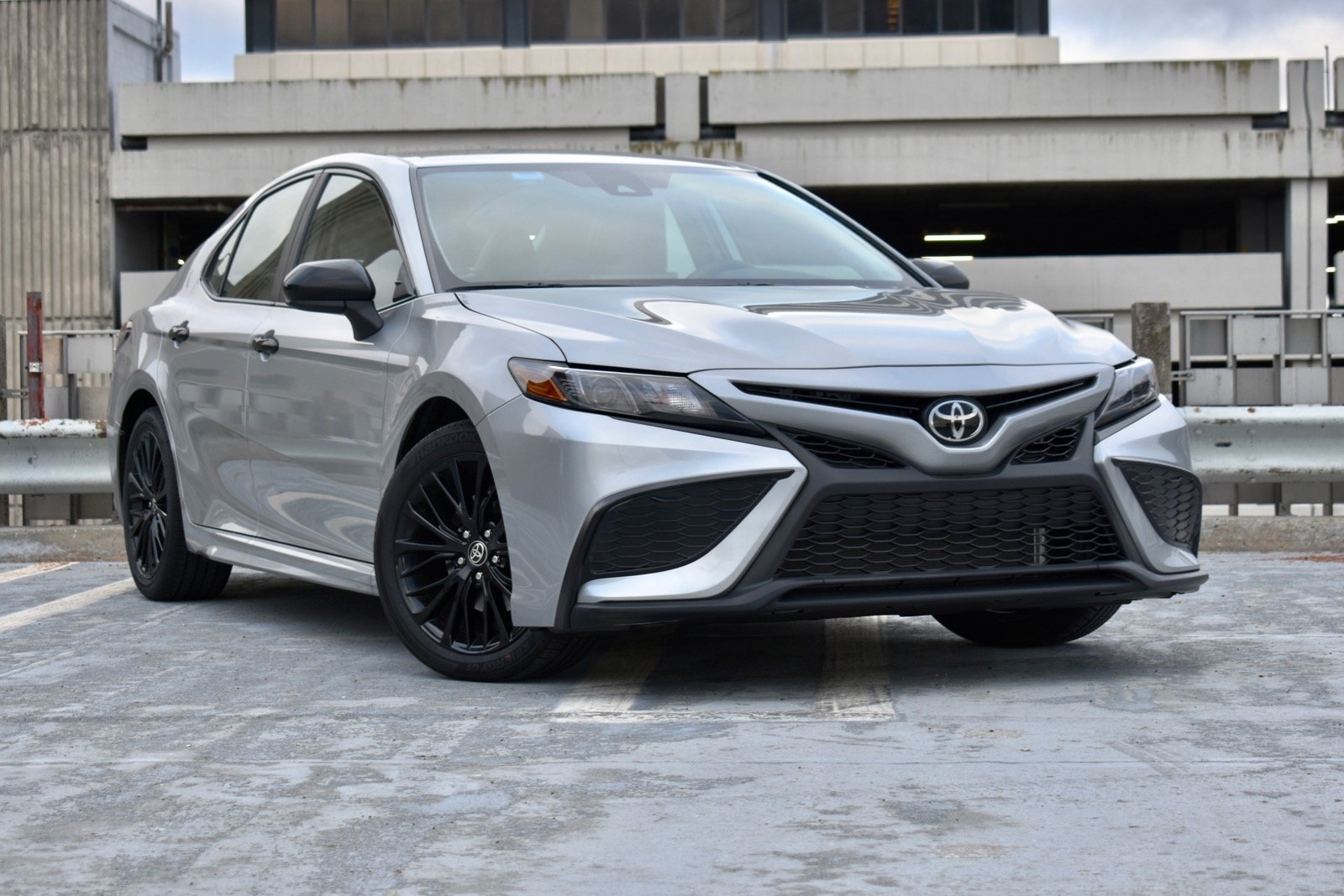
According to CarGurus experts, the overall rating for the 2020 Subaru Legacy is 7.8 out of 10, while the 2021 Toyota Camry scores 7.8 out of 10. Both cars offer unique strengths, but the Toyota Camry's lively driving experience, high safety ratings, and functional infotainment system make it the better choice for most consumers.
Choose the 2020 Subaru Legacy if:
- You prioritize all-wheel drive for better traction in various weather conditions.
- You value a spacious backseat with ample head
- and legroom for taller passengers.
- You appreciate a refined ride quality and precise cornering.


Choose the 2021 Toyota Camry if:
- You want a car with a lively driving experience and a balance between handling and ride quality.
- You prefer a vehicle with a high safety rating and advanced driver-assistance features.
- You need a functional infotainment system with easy-to-navigate menus and analog controls for important functions.


CarGurus highlights
According to CarGurus experts, the overall rating for the 2020 Subaru Legacy is 7.8 out of 10, while the 2021 Toyota Camry scores 7.8 out of 10. Both cars offer unique strengths, but the Toyota Camry's lively driving experience, high safety ratings, and functional infotainment system make it the better choice for most consumers.
Choose the 2020 Subaru Legacy if:
Shop Now- You prioritize all-wheel drive for better traction in various weather conditions.
- You value a spacious backseat with ample head
- and legroom for taller passengers.
- You appreciate a refined ride quality and precise cornering.
Choose the 2021 Toyota Camry if:
Shop Now- You want a car with a lively driving experience and a balance between handling and ride quality.
- You prefer a vehicle with a high safety rating and advanced driver-assistance features.
- You need a functional infotainment system with easy-to-navigate menus and analog controls for important functions.

By: CarGurus + AI
At CarGurus, our team of experienced automotive writers remain at the heart of our content operation, conducting hands-on car tests and writing insightful guides that are backed by years of industry experience. To complement this, we are harnessing AI to make our content offering more diverse and more helpful to shoppers than ever. To achieve this, our AI systems are based exclusively on CarGurus content, ratings and data, so that what we produce is both unique to CarGurus, and uniquely helpful to car shoppers.

