2020 Subaru Ascent vs 2020 Toyota 4Runner

Overview | |
MSRP$31,995 | MSRP$36,120 |
Listings477 | Listings790 |
Ratings & Reviews | |
User Reviews | User Reviews |
Expert reviews7.5 out of 10 | Expert reviews6.8 out of 10 |
Pros
Cons
| Pros
Cons
|
2020 Subaru Ascent Reviews SummaryLove might be what makes a Subaru a Subaru, as the automaker’s advertising has long claimed, but it's also what has traditionally made people outgrow Subarus. Subaru tried building a 3-row, 7-passenger SUV once before, but quirky design and a strange name flattened the B9 Tribeca’s tires before they got a decent chance to roll down the road. With the 2020 Ascent, however, Subaru has a family-size SUV for existing and would-be customers who need extra space for people, pets, and cargo. And while the Ascent is loaded with compelling details and thoughtful features, flaws might limit its appeal strictly to the Subaru faithful. | |
2020 Toyota 4Runner Reviews SummaryEven in its expensive Limited trim, the Toyota 4Runner remains clearly purpose-built for tackling terrain. Whether on a dusty cow path or snowy mountain road, the 4Runner looks most in its element when its outside the typical car’s comfort zone. For 2020, Toyota keeps enough chrome and leather available to market the 4Runner as a rough-and-tumble luxury alternative, but shoppers considering one had better have a real need for 4-wheel drive. | |
No video found | |
Popular Features & Specs | |
Engine2.4L 260 hp H4 | Engine4.0L 270 hp V6 |
Drive TrainAWD | Drive Train4X2 |
Seating Capacity8 | Seating Capacity7 |
Horsepower260 hp @ 5600 rpm | Horsepower270 hp @ 5600 rpm |
MPG City21 | MPG City16 |
MPG Highway27 | MPG Highway19 |
Engine | |
Engine Name2.4L 260 hp H4 | Engine Name4.0L 270 hp V6 |
Torque277 lb-ft @ 2000 rpm | Torque278 lb-ft @ 4400 rpm |
Horsepower260 hp @ 5600 rpm | Horsepower270 hp @ 5600 rpm |
DrivetrainAWD | Drivetrain4X2 |
Fuel Economy | |
MPG City21 | MPG City16 |
MPG Highway27 | MPG Highway19 |
Interior | |
Seating Capacity8 | Seating Capacity7 |
Safety | |
Front Crash Overall5 | Front Crash Overall4 |
Side Crash Overall5 | Side Crash Overall5 |
Dimensions & Capacity | |
Cargo Space17.8 cu ft | Cargo Space47.2 cu ft |
Curb Weight4430 lbs | Curb Weight4400 lbs |
Height71.6 in | Height71.5 in |
Length196.8 in | Length190.2 in |
Width85.7 in | Width75.8 in |
Wheelbase113.8 in | Wheelbase109.8 in |
Maximum Payload1570 lbs | Maximum Payload1700 lbs |
Number of doors4 | Number of doors4 |
Maximum Towing Capacity2000 lbs | Maximum Towing Capacity5000 lbs |
Standard Towing Capacity | Standard Towing Capacity5000 lbs |
Overview | ||
MSRP | $31,995 | $36,120 |
Listings | ||
Ratings & Reviews | ||
User reviews | ||
Expert reviews | 7.5 out of 10Read full review | 6.8 out of 10Read full review |
Pros & cons | Pros
Cons
| Pros
Cons
|
Summary | Love might be what makes a Subaru a Subaru, as the automaker’s advertising has long claimed, but it's also what has traditionally made people outgrow Subarus. Subaru tried building a 3-row, 7-passenger SUV once before, but quirky design and a strange name flattened the B9 Tribeca’s tires before they got a decent chance to roll down the road. With the 2020 Ascent, however, Subaru has a family-size SUV for existing and would-be customers who need extra space for people, pets, and cargo. And while the Ascent is loaded with compelling details and thoughtful features, flaws might limit its appeal strictly to the Subaru faithful. | Even in its expensive Limited trim, the Toyota 4Runner remains clearly purpose-built for tackling terrain. Whether on a dusty cow path or snowy mountain road, the 4Runner looks most in its element when its outside the typical car’s comfort zone. For 2020, Toyota keeps enough chrome and leather available to market the 4Runner as a rough-and-tumble luxury alternative, but shoppers considering one had better have a real need for 4-wheel drive. |
Video | No video found | |
Popular Features & Specs | ||
Engine | 2.4L 260 hp H4 | 4.0L 270 hp V6 |
Drive Train | AWD | 4X2 |
Seating Capacity | 8 | 7 |
Horsepower | 260 hp @ 5600 rpm | 270 hp @ 5600 rpm |
MPG City | 21 | 16 |
MPG Highway | 27 | 19 |
Engine | ||
Engine Name | 2.4L 260 hp H4 | 4.0L 270 hp V6 |
Torque | 277 lb-ft @ 2000 rpm | 278 lb-ft @ 4400 rpm |
Horsepower | 260 hp @ 5600 rpm | 270 hp @ 5600 rpm |
Drivetrain | AWD | 4X2 |
Fuel Economy | ||
MPG City | 21 | 16 |
MPG Highway | 27 | 19 |
Interior | ||
Seating Capacity | 8 | 7 |
Safety | ||
Front Crash Overall | 5 | 4 |
Side Crash Overall | 5 | 5 |
Dimensions & Capacity | ||
Cargo Space | 17.8 cu ft | 47.2 cu ft |
Curb Weight | 4430 lbs | 4400 lbs |
Height | 71.6 in | 71.5 in |
Length | 196.8 in | 190.2 in |
Width | 85.7 in | 75.8 in |
Wheelbase | 113.8 in | 109.8 in |
Maximum Payload | 1570 lbs | 1700 lbs |
Number of doors | 4 | 4 |
Maximum Towing Capacity | 2000 lbs | 5000 lbs |
Standard Towing Capacity | 5000 lbs | |
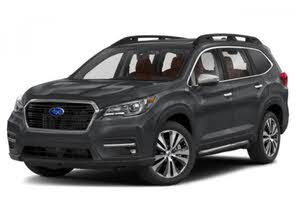
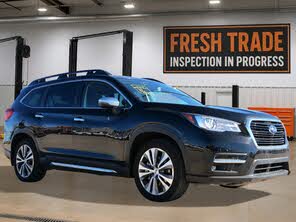
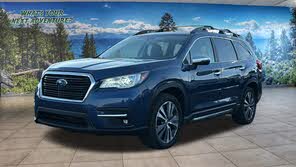
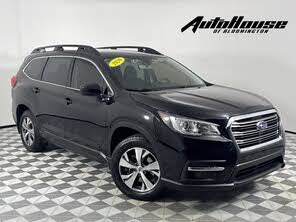
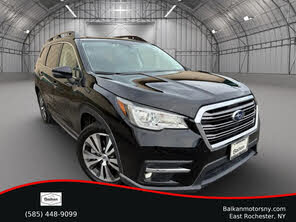
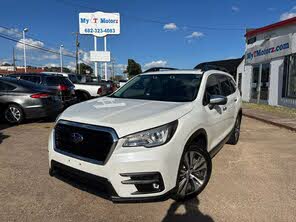
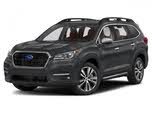
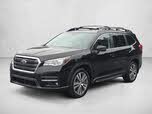
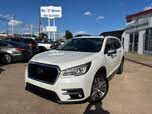
The 2020 Subaru Ascent exuded the practical and utilitarian appeal people had come to expect from Subaru's lineup of SUVs. Reminiscent of an enlarged Subaru Forester, the Ascent featured gray plastic cladding that wrapped around the lower edges, providing 360-degree protection against potential road hazards. Visual strength was further emphasized through an oversized grille and pronounced fender flares. The robust roof rails highlighted the Ascent’s readiness for adventure and practicality.
Depending on the trim level, the Ascent's appearance ranged from functional to upscale. The base model, priced at $31,995, came with 18-inch wheels and lacked privacy glass. For $34,395, the Premium trim brought refined details, a superior infotainment system, and larger wheels. The Limited trim, at $39,345, added leather seats and more luxurious touches. At the top of the range, the Touring trim cost $45,045 and featured premium leather in an exclusive color, a panoramic sunroof, and special wood trim.
The test vehicle, a Touring trim painted Abyss Blue Pearl with Java Brown leather seats and third-row quick-charge USB ports, cost $46,285. The interior featured high-quality materials, appealing design, and thoughtful details that made it feel worth the investment. Despite the stylish Touring trim, CarGurus recommended the Ascent Premium trim combined with the Convenience and Sport option packages for a similar look and additional comfort for under $40,000.
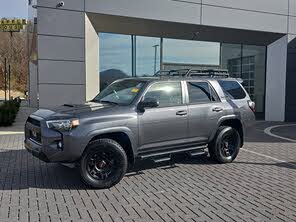
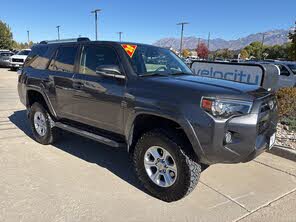
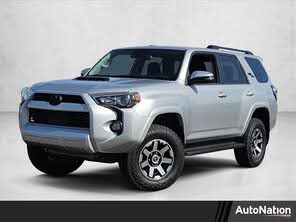
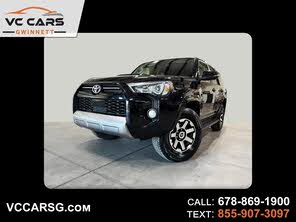
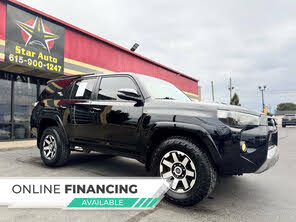
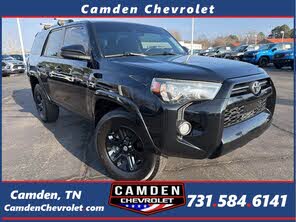
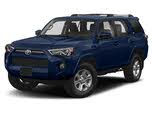
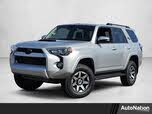
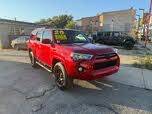
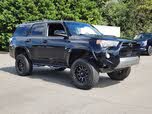
In contrast, the 2020 Toyota 4Runner embraced a timeless design characterized by tall slab sides, a high beltline, short overhangs, and a near-vertical front fascia, giving it a strong, utilitarian presence. Its flared wheel wells accommodated large off-road tires, and short overhangs enabled the 4Runner to handle steep pitches and declines effortlessly. The hood scoop on the TRD trim, though non-functional, was one of the few decorative elements.
Depending on the trim, the 4Runner’s grille varied from body-color accents in the SR5, twin black bars in the TRD Pro, to gleaming chrome in the Limited. While the Nightshade Special Edition offered a stealthy aesthetic, the Venture Special Edition featured off-road-ready elements like 17-inch TRD wheels and a Yakima Megawarrior roof rack.
The test vehicle in Limited trim focused more on comfort than off-road capability, showcasing leather upholstery across all seats, an 8-inch touchscreen, and an array of buttons on the steering wheel. Despite these additions, the 4Runner retained a utilitarian feel with lots of plastic and a seating position suited for trails rather than highways.


The 2020 Subaru Ascent came with a turbocharged 2.4-liter 4-cylinder engine, producing 260 horsepower and 277 pound-feet of torque. Paired with a continuously variable automatic transmission (CVT) and standard all-wheel drive (AWD), the Ascent boasted decent acceleration and remained strong even at higher elevations, thanks to its turbocharging.
However, the ascent was considerably thirsty, averaging just 18.9 mpg during testing, well below the EPA's combined estimate of 22 mpg. This resulted in a limited driving range of fewer than 365 miles per tank. The turbocharged engine's real-world fuel economy often fell short of its EPA ratings, exacerbated by a relatively low center of gravity and brake-based Active Torque Vectoring system.
Although the Ascent excelled in off-road conditions thanks to its Active Torque Split AWD system, Subaru's X-Mode off-road traction system, Hill Descent Control, and 8.7 inches of ground clearance, it struggled on uneven pavement. The CVT often produced uneven power delivery, and the shifter felt cheap and awkwardly noisy, especially when parked on a hill.
On the other hand, the 2020 Toyota 4Runner featured a 4-liter V6 engine with 270 horsepower and 278 pound-feet of torque, mated to a 5-speed automatic transmission. This powertrain focused on durability and off-road capability rather than smoothness and efficiency. We noted a towing capacity of 5,000 pounds, though its fuel economy was mediocre, averaging just 17.7 mpg over 400 miles, close to the EPA estimates.
The 4Runner's body-on-frame construction provided a robust foundation for off-road adventures. Despite significant body roll in corners and heavy, imprecise steering, the SUV excelled in rough terrains. TRD models included advanced traction systems like CRAWL control and Multi-Terrain Select, making it easier to navigate challenging landscapes.
Inside the 2020 Subaru Ascent, comfort was paramount, especially in the Touring trim with its soft leather, heated and ventilated front seats, and a heated steering wheel. A 10-way power-adjustable driver’s seat with manual thigh support extension catered to tall drivers, and the armrests were densely padded for added comfort.
The dashboard's layout was practical, featuring a useful shelf, upscale ambient lighting, and logically arranged controls, though the overall appearance seemed dated. Storage options included a decent-sized center bin, door panel bins, and an underfloor storage compartment in the cargo area, offering 17.8 cubic feet of space behind the third row, expanding to 47 cubic feet with the seats folded, and a maximum of 86 cubic feet.
The Ascent offered seating configurations with either a second-row bench seat or individual captain’s chairs. The Touring trim tested had captain’s chairs, providing ample comfort and adjustability. Although the third row was tighter, it was still suitable for short trips and offered good visibility thanks to large side windows and a panoramic glass roof.
The 2020 Toyota 4Runner's interior design favored practicality, with large knobs for HVAC and stereo controls, and physical buttons for the 8-inch touchscreen system, making it easy to operate, even in rough conditions. However, some controls on the steering wheel lacked illumination, making them difficult to use at night.
With its tall seating position and body-on-frame construction, the 4Runner's ingress and egress could be challenging without the power-retractable running boards available on the Limited trim. Unlike the Ascent’s comfortable second and third rows, the 4Runner's optional third row featured narrow and thin jump seats, best used for short trips, lacking the spaciousness and comfort of Subaru’s offering.
In terms of cargo space, the 4Runner offered less overall usability compared to the Ascent. The Toyota’s design sacrifices rear cargo area volume for off-road prowess, whereas the Subaru strikes a better balance with its upright liftgate and 86 cubic feet of maximum cargo capacity.
The 2020 Subaru Ascent came equipped with the Starlink infotainment system, including Bluetooth connectivity, Apple CarPlay, Android Auto, satellite and HD Radio, integrated apps, and a CD player. The Premium trim added a larger 8-inch touchscreen, a 4G LTE WiFi hotspot, and Starlink Safety and Security services. The Touring trim improved image resolution and added navigation.
Despite its relatively small screen size, the Touring’s system was user-friendly, featuring stereo knobs and separated climate controls. However, its voice-control system lagged behind competitors, struggling with natural language commands and accurate navigation placement.
Meanwhile, the 2020 Toyota 4Runner finally modernized its infotainment with an 8-inch touchscreen compatible with Apple CarPlay and Android Auto. The test model’s onboard navigation system was challenging to set, but Google Maps via Android Auto offered more accurate route estimates.
The 4Runner also supported Amazon Alexa, Bluetooth connectivity, Sirius XM Radio, Safety Connect, and WiFi Connect. Higher trims featured additional options like a JBL stereo and integrated navigation, but overall, its tech features felt outdated against market leaders.
The Subaru Ascent’s active lifestyle hacks, like the PIN Code Vehicle Access system, stood out as a clever feature missing from the 4Runner.
The 2020 Subaru Ascent boasted a Top Safety Pick+ rating from the IIHS, thanks to its robust global platform. Subaru's EyeSight suite included adaptive cruise control, forward-collision warning, automatic emergency braking, lane-departure warning, and lane-keeping assist. The Premium trim added blind-spot monitoring and rear cross-traffic alert, while the Limited included LED steering-responsive headlights with auto high beams and reverse automatic braking. Starlink Safety Plus and Security Plus connected services offered additional safety and convenience features.
In comparison, the 2020 Toyota 4Runner included the TSS-P system, featuring adaptive cruise control, lane-departure alert, a pre-collision system with pedestrian detection, and automatic high beams. It also came with eight standard airbags. The NHTSA granted it an overall safety rating of four out of five stars but noted a three-star rating in the rollover test. The IIHS rated it Good in most tests but gave it a Marginal rating in the small overlap front: driver-side test.
CarGurus highlights

According to CarGurus experts, the overall rating for the 2020 Subaru Ascent is 7.5 out of 10, while the 2020 Toyota 4Runner scores 6.8 out of 10. For families and daily commuters seeking a well-rounded SUV with high safety ratings, advanced ADAS, and more cargo space, the Subaru Ascent is the better choice. Its superior comfort, practical features, and standout safety make it the clear winner in this comparison. However, if your priority is a tough, off-road-focused SUV with a high seating position and excellent off-road capabilities, the Toyota 4Runner remains a strong contender, despite its dated interior and lower technology and safety scores.
Choose the 2020 Subaru Ascent if:
- You need a family-friendly vehicle with high safety ratings and advanced ADAS.
- You prefer a comfortable and well-appointed interior for long drives.
- You value higher cargo capacity and practical storage solutions.




Choose the 2020 Toyota 4Runner if:
- You require a rugged SUV with superior off-road capabilities.
- You appreciate a high seating position and robust construction for heavy-duty use.
- You want a blend of classic design with modern technological updates for outdoor adventures.



CarGurus highlights
According to CarGurus experts, the overall rating for the 2020 Subaru Ascent is 7.5 out of 10, while the 2020 Toyota 4Runner scores 6.8 out of 10. For families and daily commuters seeking a well-rounded SUV with high safety ratings, advanced ADAS, and more cargo space, the Subaru Ascent is the better choice. Its superior comfort, practical features, and standout safety make it the clear winner in this comparison. However, if your priority is a tough, off-road-focused SUV with a high seating position and excellent off-road capabilities, the Toyota 4Runner remains a strong contender, despite its dated interior and lower technology and safety scores.
Choose the 2020 Subaru Ascent if:
Shop Now- You need a family-friendly vehicle with high safety ratings and advanced ADAS.
- You prefer a comfortable and well-appointed interior for long drives.
- You value higher cargo capacity and practical storage solutions.







Choose the 2020 Toyota 4Runner if:
Shop Now- You require a rugged SUV with superior off-road capabilities.
- You appreciate a high seating position and robust construction for heavy-duty use.
- You want a blend of classic design with modern technological updates for outdoor adventures.






By: CarGurus + AI
At CarGurus, our team of experienced automotive writers remain at the heart of our content operation, conducting hands-on car tests and writing insightful guides that are backed by years of industry experience. To complement this, we are harnessing AI to make our content offering more diverse and more helpful to shoppers than ever. To achieve this, our AI systems are based exclusively on CarGurus content, ratings and data, so that what we produce is both unique to CarGurus, and uniquely helpful to car shoppers.