2020 Nissan Rogue vs 2019 Toyota 4Runner
Overview | |
MSRP$35,310 | MSRP$25,490 |
Listings945 | Listings1129 |
Ratings & Reviews | |
User Reviews | User Reviews |
Expert reviews7.2 out of 10 | Expert reviews6.0 out of 10 |
Pros
Cons
| Pros
Cons
|
2019 Toyota 4Runner Reviews SummaryIf you’re in the market for a modern SUV capable of getting off the beaten path, you have only a handful of options. These include the 2- and 4-door Jeep Wranglers, the Jeep Cherokee Trailhawk, the Jeep Grand Cherokee Trailhawk, the Land Rover Range Rover, and the Toyota 4Runner. Of those, only the Jeep Wrangler Unlimited and the 4Runner are 4-door SUVs that put off-road grit above all else. While the Jeep Wrangler is only one year removed from a complete redesign that brought in many new technologies, the 2019 Toyota 4Runner is based on a design first introduced in 2009. For those keeping score at home, that means the DNA underpinning the 4Runner is a decade old. Yet picking which vehicle I’d choose as a daily drivable, off-road-capable SUV is a surprisingly difficult decision. So where does an old goat like the 2019 Toyota 4Runner fit in the modern SUV market? Interestingly, the 4Runner's advanced age actually helps it in some respects. | |
2020 Nissan Rogue Reviews SummaryNissan hasn’t redesigned the Rogue since 2014, but an all-new version of this SUV is coming for the 2021 model year. In the meantime, dealers will be eager to sell remaining stocks of the outgoing 2020 Nissan Rogue, and the deals on these new cars ought to be mighty juicy. Should you bite? Should you wait? Or should you shop for something else? The answers to these questions depend on who you are and what you value in a compact crossover SUV. | |
No video found | |
Popular Features & Specs | |
Engine4.0L 270 hp V6 | Engine2.5L 170 hp I4 |
Drive Train4X2 | Drive TrainFWD |
Seating Capacity7 | Seating Capacity5 |
Horsepower270 hp @ 5600 rpm | Horsepower170 hp @ 6000 rpm |
MPG City17 | MPG City26 |
MPG Highway21 | MPG Highway33 |
Engine | |
Engine Name4.0L 270 hp V6 | Engine Name2.5L 170 hp I4 |
Torque278 lb-ft @ 4400 rpm | Torque175 lb-ft @ 4400 rpm |
Horsepower270 hp @ 5600 rpm | Horsepower170 hp @ 6000 rpm |
Drivetrain4X2 | DrivetrainFWD |
Fuel Economy | |
MPG City17 | MPG City26 |
MPG Highway21 | MPG Highway33 |
Interior | |
Seating Capacity7 | Seating Capacity5 |
Safety | |
Front Crash Overall4 | Front Crash Overall4 |
Side Crash Overall5 | Side Crash Overall5 |
Dimensions & Capacity | |
Cargo Space47.2 cu ft | Cargo Space39.3 cu ft |
Curb Weight4400 lbs | Curb Weight3463 lbs |
Height71.5 in | Height66.3 in |
Length190.2 in | Length184.5 in |
Width75.8 in | Width72.4 in |
Wheelbase109.8 in | Wheelbase106.5 in |
Maximum Payload1700 lbs | Maximum Payload1127 lbs |
Number of doors4 | Number of doors4 |
Maximum Towing Capacity5000 lbs | Maximum Towing Capacity |
Standard Towing Capacity5000 lbs | Standard Towing Capacity |
Overview | ||
MSRP | $35,310 | $25,490 |
Listings | ||
Ratings & Reviews | ||
User reviews | ||
Expert reviews | 7.2 out of 10Read full review | 6.0 out of 10Read full review |
Pros & cons | Pros
Cons
| Pros
Cons
|
Summary | If you’re in the market for a modern SUV capable of getting off the beaten path, you have only a handful of options. These include the 2- and 4-door Jeep Wranglers, the Jeep Cherokee Trailhawk, the Jeep Grand Cherokee Trailhawk, the Land Rover Range Rover, and the Toyota 4Runner. Of those, only the Jeep Wrangler Unlimited and the 4Runner are 4-door SUVs that put off-road grit above all else. While the Jeep Wrangler is only one year removed from a complete redesign that brought in many new technologies, the 2019 Toyota 4Runner is based on a design first introduced in 2009. For those keeping score at home, that means the DNA underpinning the 4Runner is a decade old. Yet picking which vehicle I’d choose as a daily drivable, off-road-capable SUV is a surprisingly difficult decision. So where does an old goat like the 2019 Toyota 4Runner fit in the modern SUV market? Interestingly, the 4Runner's advanced age actually helps it in some respects. | Nissan hasn’t redesigned the Rogue since 2014, but an all-new version of this SUV is coming for the 2021 model year. In the meantime, dealers will be eager to sell remaining stocks of the outgoing 2020 Nissan Rogue, and the deals on these new cars ought to be mighty juicy. Should you bite? Should you wait? Or should you shop for something else? The answers to these questions depend on who you are and what you value in a compact crossover SUV. |
Video | No video found | |
Popular Features & Specs | ||
Engine | 4.0L 270 hp V6 | 2.5L 170 hp I4 |
Drive Train | 4X2 | FWD |
Seating Capacity | 7 | 5 |
Horsepower | 270 hp @ 5600 rpm | 170 hp @ 6000 rpm |
MPG City | 17 | 26 |
MPG Highway | 21 | 33 |
Engine | ||
Engine Name | 4.0L 270 hp V6 | 2.5L 170 hp I4 |
Torque | 278 lb-ft @ 4400 rpm | 175 lb-ft @ 4400 rpm |
Horsepower | 270 hp @ 5600 rpm | 170 hp @ 6000 rpm |
Drivetrain | 4X2 | FWD |
Fuel Economy | ||
MPG City | 17 | 26 |
MPG Highway | 21 | 33 |
Interior | ||
Seating Capacity | 7 | 5 |
Safety | ||
Front Crash Overall | 4 | 4 |
Side Crash Overall | 5 | 5 |
Dimensions & Capacity | ||
Cargo Space | 47.2 cu ft | 39.3 cu ft |
Curb Weight | 4400 lbs | 3463 lbs |
Height | 71.5 in | 66.3 in |
Length | 190.2 in | 184.5 in |
Width | 75.8 in | 72.4 in |
Wheelbase | 109.8 in | 106.5 in |
Maximum Payload | 1700 lbs | 1127 lbs |
Number of doors | 4 | 4 |
Maximum Towing Capacity | 5000 lbs | |
Standard Towing Capacity | 5000 lbs | |
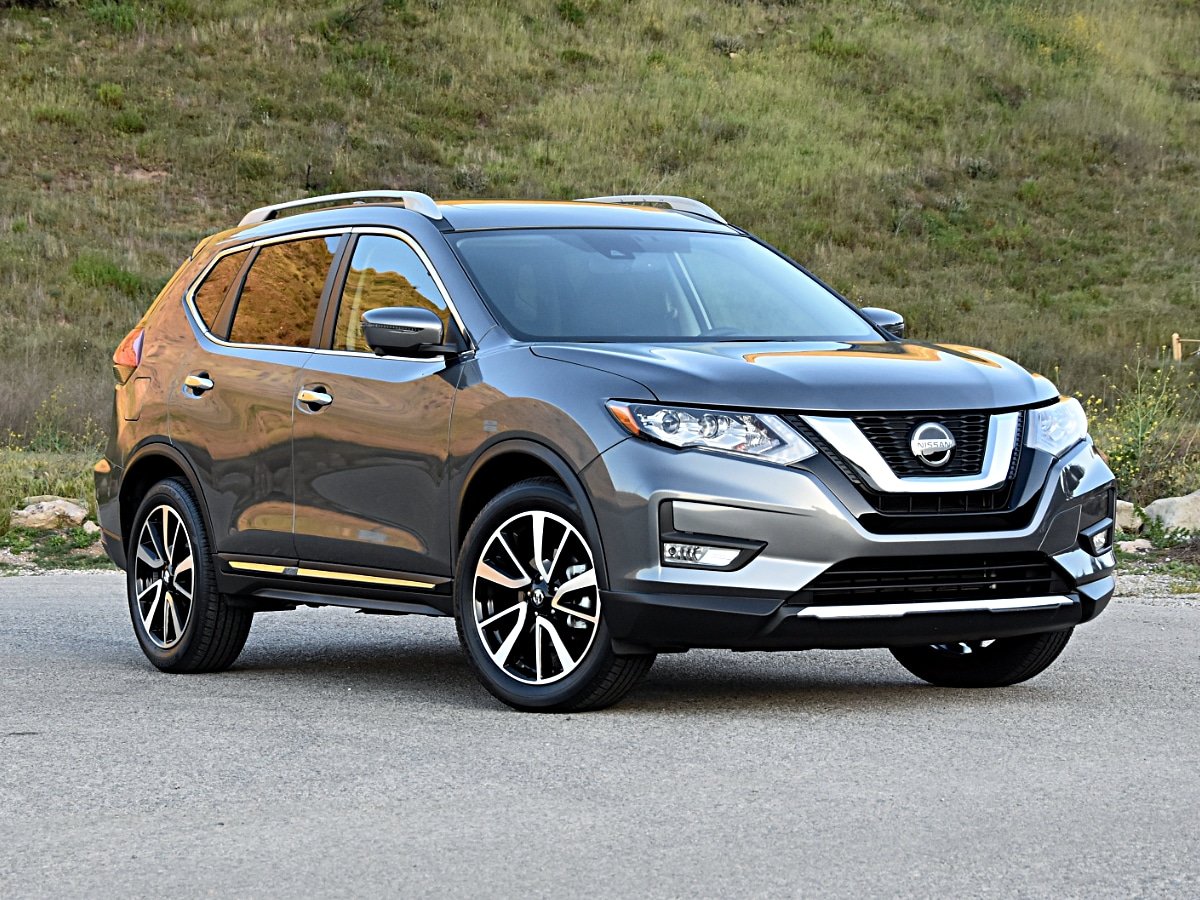
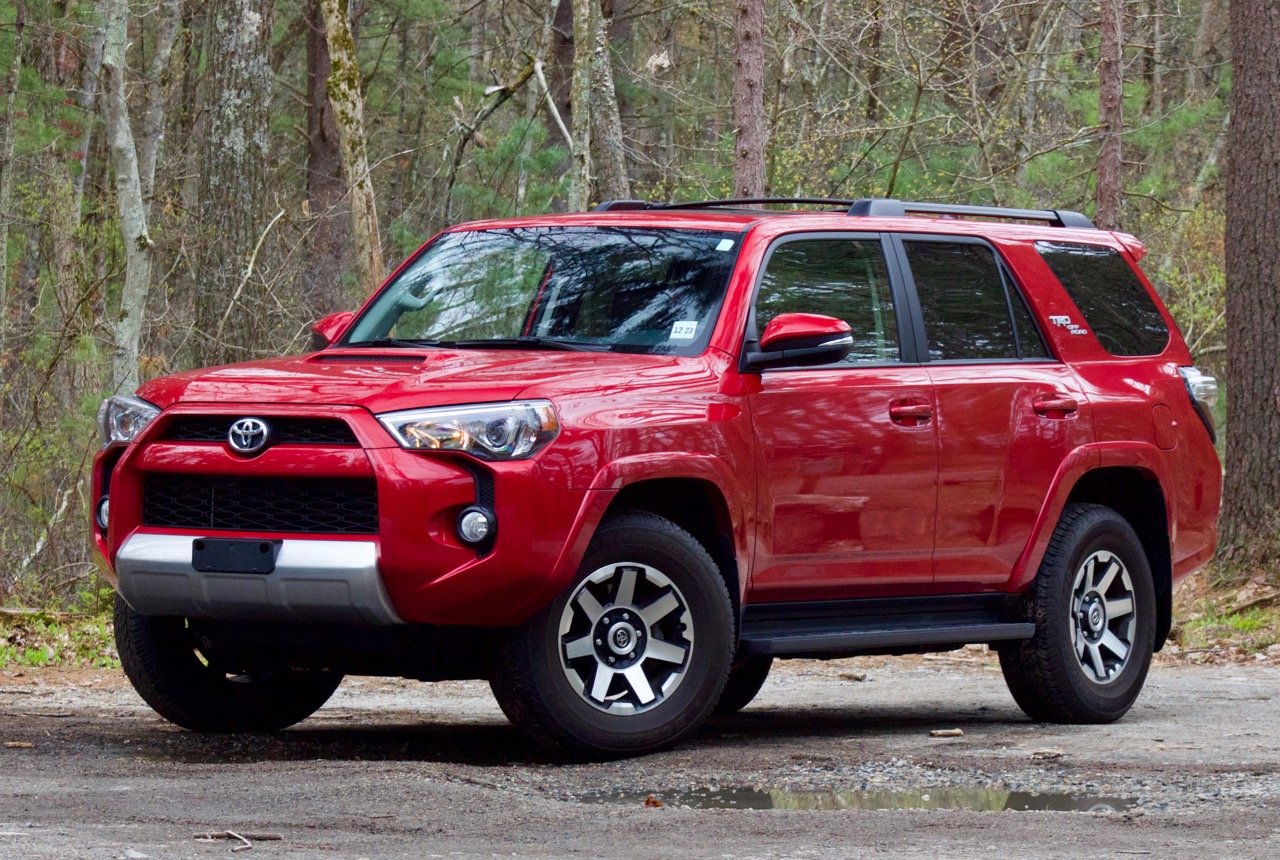
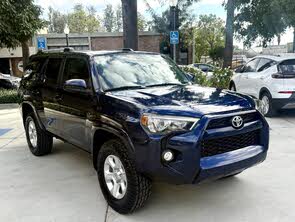
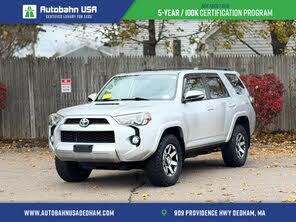
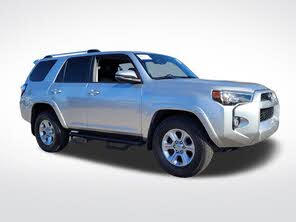
The 2019 Toyota 4Runner had a rugged and aggressive design, a product of its off-road capabilities. Its stubby front and rear ends, large tires, and flared fenders were not just for show but essential for steep approach and departure angles on trails. The 4Runner's trim levels ranged from the base SR5 to the top-tier TRD Pro, each offering a mix of off-road readiness and varying degrees of comfort and luxury. Inside, the 4Runner's interior was dated, with a simple 6.1-inch touchscreen and basic features, but it was functional and ready for outdoor adventures.
In contrast, the 2020 Nissan Rogue maintained an attractive appearance despite its age, with a bold V-Motion grille and exaggerated fender swells. The SL trim, especially with its 19-inch aluminum wheels, added to its appeal. However, the interior showed its age with older styling themes and unimpressive plastic surfaces. The Rogue's center console sides were padded for driver comfort, but overall, the interior design lagged behind more modern competitors.


The 2019 Toyota 4Runner was powered by a 4.0-liter V6 engine producing 270 horsepower and 278 pound-feet of torque, paired with a 5-speed automatic transmission. This powertrain, dating back to 2002, was robust and reliable, allowing the 4Runner to tow up to 5,000 pounds. The 4Runner's off-road capabilities were enhanced by features like a locking rear differential, Multi-Terrain Select system, and crawl control, making it a formidable off-road vehicle. However, its fuel efficiency was poor, with 4WD models returning just 17 mpg city, 20 highway, and 18 combined.
The 2020 Nissan Rogue, on the other hand, was equipped with a 170-horsepower 2.5-liter four-cylinder engine paired with a continuously variable automatic transmission (CVT). While the CVT made the most of the available power, the Rogue struggled with acceleration, especially when merging onto highways or climbing grades. The EPA estimated fuel economy for FWD models at 29 mpg combined, but real-world testing showed a disappointing 24.9 mpg. The Rogue's ride and handling were improved by Intelligent Trace Control and Active Ride Control, but it lacked the fun-to-drive factor.
The 2019 Toyota 4Runner offered a spacious and practical interior, with ample head- and legroom for front and rear passengers. Its fully enclosed cabin provided significant advantages over competitors like the Jeep Wrangler, including nearly 90 cubic feet of cargo space with the rear seats folded. The 4Runner's interior was simple and functional, with large knobs and a small 6.1-inch touchscreen, making it ready for outdoor activities.
In comparison, the 2020 Nissan Rogue's interior was less accommodating for taller drivers, with limited seat height adjustment and legroom. However, rear passengers enjoyed a high seat cushion, excellent thigh support, and a panoramic glass sunroof. The Rogue offered 39 cubic feet of cargo space behind the back seat, along with underfloor storage compartments and a Divide-n-Hide cargo management system, making it practical for everyday use.
The 2019 Toyota 4Runner lagged in technology, lacking Apple CarPlay and Android Auto. Its basic infotainment system was straightforward but outdated, with small fonts and a 6.1-inch touchscreen. The SR5 Premium trim added navigation and Siri Eyes Free, but overall, the 4Runner's tech offerings were minimal.
The 2020 Nissan Rogue, on the other hand, boasted a comprehensive list of infotainment features, including Bluetooth, Apple CarPlay, Android Auto, and a hands-free text messaging assistant. Higher trims offered upgrades like SiriusXM satellite radio, navigation, a Bose premium sound system, and NissanConnect Services. However, the Rogue's 7-inch touchscreen was slow to respond, and the voice-recognition technology was subpar, detracting from its overall tech experience.
The 2019 Toyota 4Runner came with basic safety features, including a full array of airbags, traction control, and a reversing camera. However, it lacked modern driver-assistance features, making it less family-friendly. The 4Runner received a 4-star overall rating from NHTSA but only 3 stars in the rollover test.
The 2020 Nissan Rogue offered a more comprehensive suite of safety features, including the standard Safety Shield 360 collection with forward-collision warning, automatic emergency braking, blind-spot monitoring, and more. Additional options included a surround-view camera and ProPilot Assist adaptive cruise control. Despite these features, the Rogue's crash-test ratings were less impressive, with a 4-star overall rating from NHTSA and some dings from IIHS.
CarGurus highlights
According to CarGurus experts, the overall rating for the 2019 Toyota 4Runner is 7.2 out of 10, while the 2020 Nissan Rogue scores 6.0 out of 10. Based on these ratings, the 2019 Toyota 4Runner is the better choice, offering superior off-road capabilities, more interior space, and a higher overall rating.
Choose the 2020 Nissan Rogue if:
- You want a comprehensive suite of standard and optional safety features.
- You need a practical and comfortable rear seat for passengers.
- You value modern infotainment features like Apple CarPlay and Android Auto.





Choose the 2019 Toyota 4Runner if:
- You need a vehicle with proven off-road capabilities and rugged design.
- You prioritize interior space and cargo capacity for outdoor activities.
- You prefer a simple, functional interior over modern tech features.



CarGurus highlights
According to CarGurus experts, the overall rating for the 2019 Toyota 4Runner is 7.2 out of 10, while the 2020 Nissan Rogue scores 6.0 out of 10. Based on these ratings, the 2019 Toyota 4Runner is the better choice, offering superior off-road capabilities, more interior space, and a higher overall rating.
Choose the 2020 Nissan Rogue if:
Shop Now- You want a comprehensive suite of standard and optional safety features.
- You need a practical and comfortable rear seat for passengers.
- You value modern infotainment features like Apple CarPlay and Android Auto.

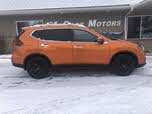





Choose the 2019 Toyota 4Runner if:
Shop Now- You need a vehicle with proven off-road capabilities and rugged design.
- You prioritize interior space and cargo capacity for outdoor activities.
- You prefer a simple, functional interior over modern tech features.

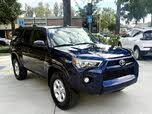





By: CarGurus + AI
At CarGurus, our team of experienced automotive writers remain at the heart of our content operation, conducting hands-on car tests and writing insightful guides that are backed by years of industry experience. To complement this, we are harnessing AI to make our content offering more diverse and more helpful to shoppers than ever. To achieve this, our AI systems are based exclusively on CarGurus content, ratings and data, so that what we produce is both unique to CarGurus, and uniquely helpful to car shoppers.