2020 Mazda CX-5 vs 2021 Honda CR-V
Overview | |
MSRP$25,190 | MSRP$25,350 |
Listings735 | Listings1266 |
Ratings & Reviews | |
User Reviews | User Reviews |
Expert reviews7.7 out of 10 | Expert reviews7.8 out of 10 |
Pros
Cons
| Pros
Cons
|
2020 Mazda CX-5 Reviews SummaryAccording to a Harvard Business Review marketing study, there is such a thing as too much choice. And when the marketplace presents consumers with too much choice, there is a chance they won’t buy anything at all. For the 2020 model year, there are more than 40 small or compact SUVs available, half of them sold by luxury brands. Small and scrappy Mazda offers three of them: the CX-3, the CX-30, and the CX-5. However, in a marketplace awash in Chevys, Fords, Hondas, and Toyotas, Mazda has trouble standing apart from the established crowd. What’s the solution? Move upscale into “premium” territory. Premium is where Buick, Fiat, GMC, Jeep, Mini, and Volkswagen play to varying levels of success. Combining the value inherent in a mainstream brand with the design, materials, and technology common to luxury brands, these premium vehicles attempt to provide more than mainstream for less than luxury. At the same time, less is more. Because the 2020 Mazda CX-5 has but four similarly sized competitors in the premium class, that makes it easier for a consumer to choose, and more likely that a consumer will buy. The trick is convincing people that Mazda is a premium brand, and the automaker is taking a pragmatic approach to this emotionally-charged solution. | |
2021 Honda CR-V Reviews SummaryEven in a grim year, Honda is selling a staggering number of CR-Vs. The CR-V is the best-selling Honda by far. It’s also the second best-selling compact SUV, just behind the Toyota RAV4. And it's the fifth best-selling vehicle in the U.S., and if you take out all the commercial sales of full-size pickups it’s one of the two best-selling vehicles year in and year out. So it’s hard to argue against the CR-V formula. Honda’s been at this almost as long as crossovers have been a thing, launching the CR-V in 1997—a year after the RAV4 debuted. The funny thing is, aside from sales volume, there’s only one thing the CR-V particularly excels at. Aesthetics are subjective, but it would be hard to argue the CR-V is the best looking vehicle in its class. It’s not the cheapest. It’s not the best equipped, especially at the middle to lower trim levels. It’s not the fastest, nor is it the quietest, or the most fuel efficient. It’s not even the most reliable, showing up nowhere in J.D. Power's Most Reliable list. So what makes it so appealing to American consumers? Let’s see if we can figure that out. | |
No video found | No video found |
Popular Features & Specs | |
Engine2.5L 187 hp I4 | Engine1.5L 190 hp I4 |
Drive TrainFWD | Drive TrainFWD |
Seating Capacity5 | Seating Capacity5 |
Horsepower187 hp @ 6000 rpm | Horsepower190 hp @ 5600 rpm |
MPG City25 | MPG City28 |
MPG Highway31 | MPG Highway34 |
Engine | |
Engine Name2.5L 187 hp I4 | Engine Name1.5L 190 hp I4 |
Torque186 lb-ft @ 4000 rpm | Torque179 lb-ft @ 2000 rpm |
Horsepower187 hp @ 6000 rpm | Horsepower190 hp @ 5600 rpm |
DrivetrainFWD | DrivetrainFWD |
Fuel Economy | |
MPG City25 | MPG City28 |
MPG Highway31 | MPG Highway34 |
Interior | |
Seating Capacity5 | Seating Capacity5 |
Safety | |
Front Crash Overall5 | Front Crash Overall5 |
Side Crash Overall5 | Side Crash Overall5 |
Dimensions & Capacity | |
Cargo Space30.9 cu ft | Cargo Space39.2 cu ft |
Curb Weight3541 lbs | Curb Weight3337 lbs |
Height66.2 in | Height66.1 in |
Length179.1 in | Length182.1 in |
Width83.3 in | Width73.0 in |
Wheelbase106.2 in | Wheelbase104.8 in |
Maximum Payload1034 lbs | Maximum Payload1358 lbs |
Number of doors4 | Number of doors4 |
Maximum Towing Capacity2000 lbs | Maximum Towing Capacity1500 lbs |
Overview | ||
MSRP | $25,190 | $25,350 |
Listings | ||
Ratings & Reviews | ||
User reviews | ||
Expert reviews | 7.7 out of 10Read full review | 7.8 out of 10Read full review |
Pros & cons | Pros
Cons
| Pros
Cons
|
Summary | According to a Harvard Business Review marketing study, there is such a thing as too much choice. And when the marketplace presents consumers with too much choice, there is a chance they won’t buy anything at all. For the 2020 model year, there are more than 40 small or compact SUVs available, half of them sold by luxury brands. Small and scrappy Mazda offers three of them: the CX-3, the CX-30, and the CX-5. However, in a marketplace awash in Chevys, Fords, Hondas, and Toyotas, Mazda has trouble standing apart from the established crowd. What’s the solution? Move upscale into “premium” territory. Premium is where Buick, Fiat, GMC, Jeep, Mini, and Volkswagen play to varying levels of success. Combining the value inherent in a mainstream brand with the design, materials, and technology common to luxury brands, these premium vehicles attempt to provide more than mainstream for less than luxury. At the same time, less is more. Because the 2020 Mazda CX-5 has but four similarly sized competitors in the premium class, that makes it easier for a consumer to choose, and more likely that a consumer will buy. The trick is convincing people that Mazda is a premium brand, and the automaker is taking a pragmatic approach to this emotionally-charged solution. | Even in a grim year, Honda is selling a staggering number of CR-Vs. The CR-V is the best-selling Honda by far. It’s also the second best-selling compact SUV, just behind the Toyota RAV4. And it's the fifth best-selling vehicle in the U.S., and if you take out all the commercial sales of full-size pickups it’s one of the two best-selling vehicles year in and year out. So it’s hard to argue against the CR-V formula. Honda’s been at this almost as long as crossovers have been a thing, launching the CR-V in 1997—a year after the RAV4 debuted. The funny thing is, aside from sales volume, there’s only one thing the CR-V particularly excels at. Aesthetics are subjective, but it would be hard to argue the CR-V is the best looking vehicle in its class. It’s not the cheapest. It’s not the best equipped, especially at the middle to lower trim levels. It’s not the fastest, nor is it the quietest, or the most fuel efficient. It’s not even the most reliable, showing up nowhere in J.D. Power's Most Reliable list. So what makes it so appealing to American consumers? Let’s see if we can figure that out. |
Video | No video found | No video found |
Popular Features & Specs | ||
Engine | 2.5L 187 hp I4 | 1.5L 190 hp I4 |
Drive Train | FWD | FWD |
Seating Capacity | 5 | 5 |
Horsepower | 187 hp @ 6000 rpm | 190 hp @ 5600 rpm |
MPG City | 25 | 28 |
MPG Highway | 31 | 34 |
Engine | ||
Engine Name | 2.5L 187 hp I4 | 1.5L 190 hp I4 |
Torque | 186 lb-ft @ 4000 rpm | 179 lb-ft @ 2000 rpm |
Horsepower | 187 hp @ 6000 rpm | 190 hp @ 5600 rpm |
Drivetrain | FWD | FWD |
Fuel Economy | ||
MPG City | 25 | 28 |
MPG Highway | 31 | 34 |
Interior | ||
Seating Capacity | 5 | 5 |
Safety | ||
Front Crash Overall | 5 | 5 |
Side Crash Overall | 5 | 5 |
Dimensions & Capacity | ||
Cargo Space | 30.9 cu ft | 39.2 cu ft |
Curb Weight | 3541 lbs | 3337 lbs |
Height | 66.2 in | 66.1 in |
Length | 179.1 in | 182.1 in |
Width | 83.3 in | 73.0 in |
Wheelbase | 106.2 in | 104.8 in |
Maximum Payload | 1034 lbs | 1358 lbs |
Number of doors | 4 | 4 |
Maximum Towing Capacity | 2000 lbs | 1500 lbs |
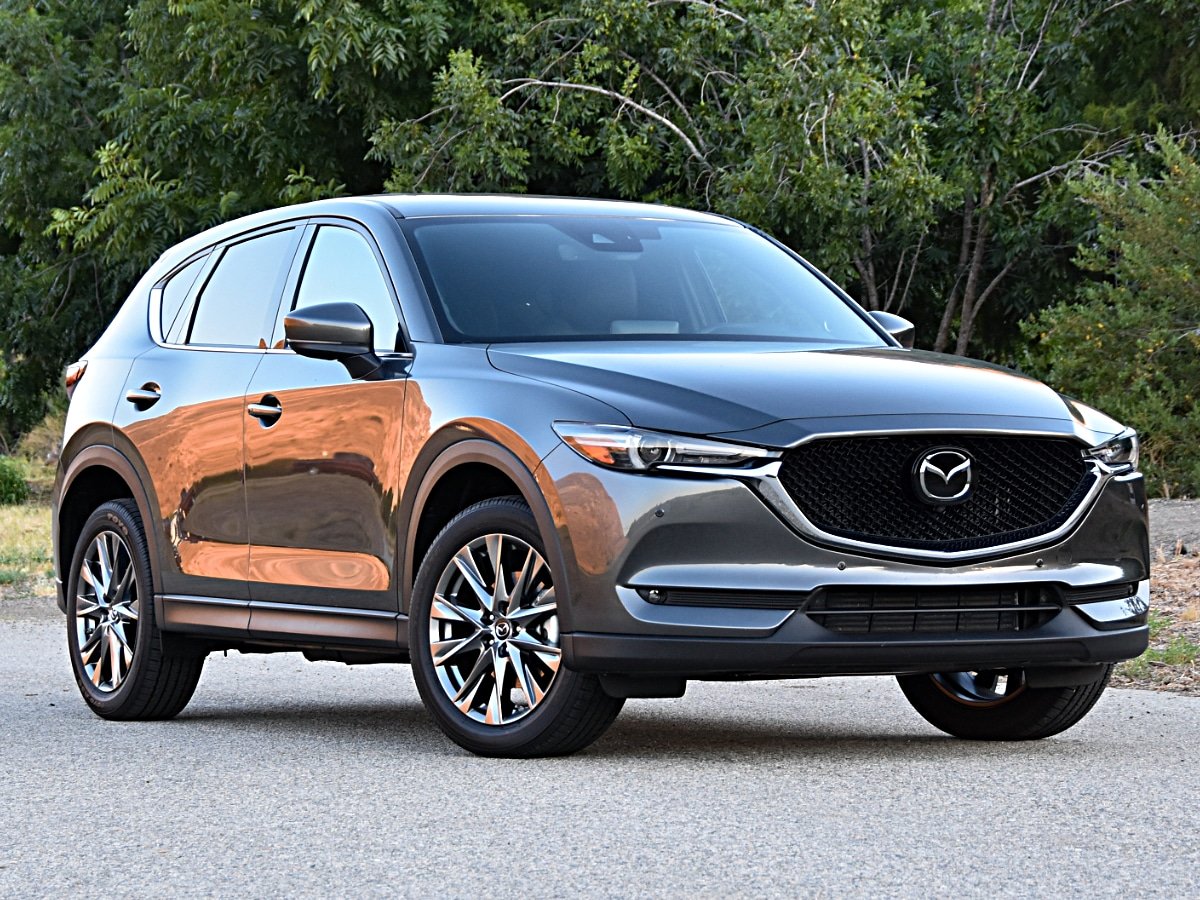
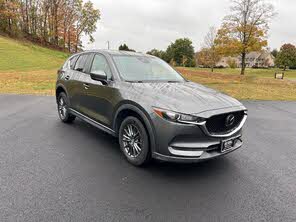
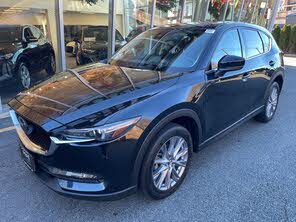
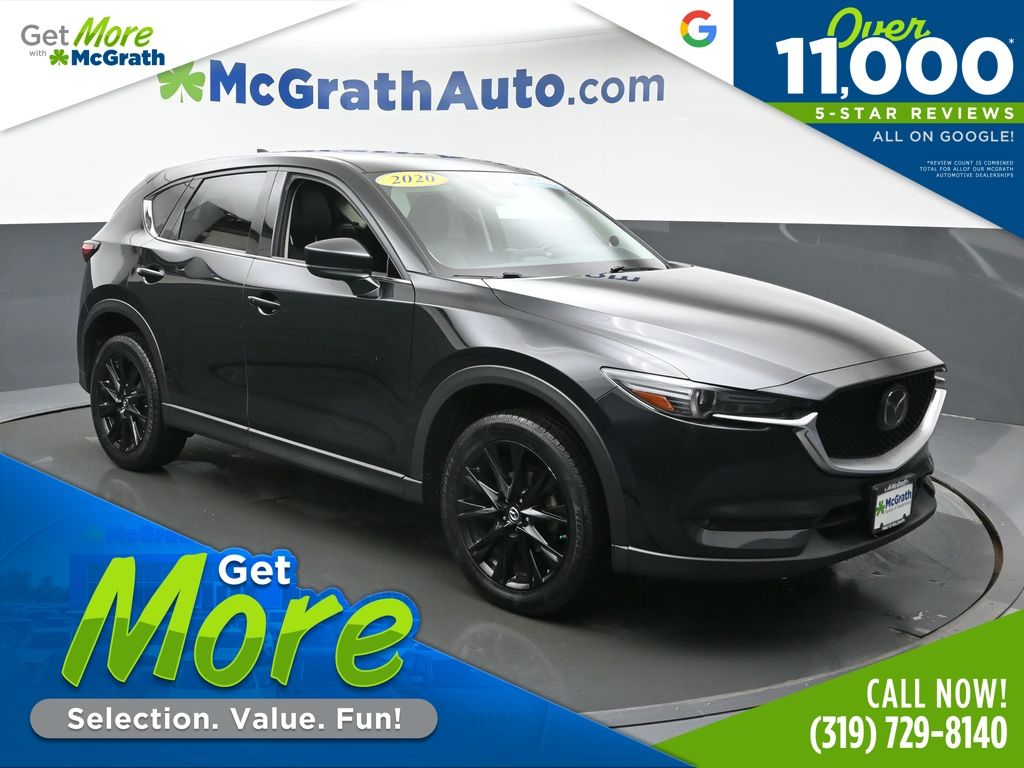
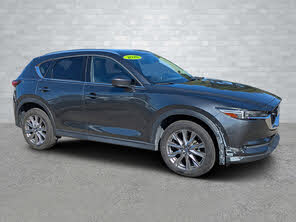
Mazda executed the concept of premium better than its competitors with the 2020 CX-5. This model year saw more standard equipment, revised instrumentation, and control markings to enhance the cabin's appearance, along with modifications to reduce noise, vibration, and harshness. The turbocharged engine received an increase in torque output, and AWD versions gained a new off-road traction assistance feature. Prices ranged from $25,190 to $37,155, with the test vehicle in Signature trim costing $38,680, including destination charges. The CX-5's "Kodo" styling themes made it look appealing, distinctive, and upscale, a feat many automakers struggled to achieve.
Inside, the CX-5, especially in Signature trim, featured premium Nappa leather upholstery, real wood, and a black headliner, giving it a luxurious feel. However, the Caturra Brown leather was almost indistinguishable from the black cabin, reducing the contrast that often makes a vehicle seem premium. Despite this, the interior reflected style and good taste, with elegant metallic accents and clear gauges.
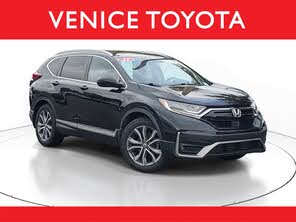
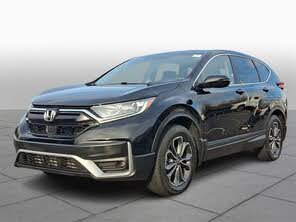
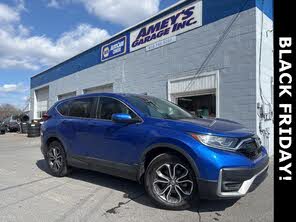
The 2021 Honda CR-V, while not a standout in styling, offered a few details that set it apart, like the grille opening and some chromed plastic features. It came in eight colors, though many were shades of gray, black, or white, with more vibrant colors limited to higher trims. The interior offered black, gray, and ivory cloth or leather, with higher trims featuring wood panels and more chrome for an upscale appearance. The front and rear seats had a modern look with sharp details, but vehicles like the Kia Sportage and Hyundai Tucson had an advantage in mid-tier trims.
The CR-V's form was dictated by its function, aiming to fit five people comfortably and carry their gear. It boasted 102.9 cubic feet of passenger volume and 75.8 cubic feet of total cargo volume with the rear seats folded. Depending on the trim, the tailgate could be manual, power-operated, or hands-free. Roof rails were standard only on the top Touring trim.


The 2020 Mazda CX-5 came standard with a 2.5-liter four-cylinder engine producing 187 horsepower and 186 pound-feet of torque, paired with a six-speed automatic transmission with a Sport mode. FWD was standard, with AWD optional. The Grand Touring Reserve and Signature trims featured a turbocharged version of the engine, generating 250 hp and 320 lb-ft of torque on premium fuel, or 227 hp and 310 lb-ft on regular fuel. The turbocharged engine, paired with AWD, provided a healthy amount of power for a compact crossover SUV, though it was less efficient, rated at 24 mpg combined. The naturally-aspirated engine with AWD was rated at 26 mpg combined, and 28 mpg with FWD.
The CX-5 Signature was engaging to drive, thanks to its G-Vectoring Control Plus (GVC Plus) technology, which stabilized the SUV when cornering. However, the SUV's excessive body motions when hustling down a back road detracted from the driving experience. Despite this, the steering and brakes were up to the task, making the CX-5 a delight in typical driving situations.
The 2021 Honda CR-V featured a 190-horsepower turbocharged four-cylinder engine across all nine trims, with a 0-60 mph time of about 7.8 seconds. It came with a continuously variable transmission (CVT) that held engine revs constant as the vehicle gained speed. The CR-V's drivetrain was less engaging compared to competitors like the Kia Sportage and Hyundai Tucson, which offered conventional eight-speed automatic transmissions with sport modes. FWD was standard, with AWD as an extra-cost option.
The CR-V had a unitized body structure with a MacPherson strut setup in the front and a multi-link suspension at the rear, similar to other vehicles in its class. Handling and ride quality were decent, with no real surprises.
The 2020 Mazda CX-5's interior was more cramped compared to sales leaders like the Honda CR-V and Toyota RAV4. However, it featured a stylish and upscale cabin with dual-zone automatic climate control, heated front seats, and rear air conditioning vents in Touring trim. Grand Touring trim added a power height-adjustable front passenger seat, while Grand Touring Reserve included ventilated front seats, heated rear seats, and a heated steering wheel. The Signature trim added Nappa leather, genuine wood trim, and more. Cargo space behind the rear seat measured 30.9 cubic feet, expanding to 59.6 cubic feet with the rear seat folded.
The 2021 Honda CR-V aimed to fit five people comfortably and carry their gear, with 102.9 cubic feet of passenger volume and 75.8 cubic feet of total cargo volume with the rear seats folded. The tailgate could be manual, power-operated, or hands-free, depending on the trim. Roof rails were standard only on the top Touring trim.
The 2020 Mazda CX-5 featured a Mazda Connect infotainment system with a 7-inch touchscreen in Sport trim, which responded to touch only when the vehicle wasn't moving. Bluetooth, HD Radio, text messaging support, integrated internet radio apps, and E911 emergency notification were standard. Touring trim added Apple CarPlay and Android Auto. Grand Touring trim included an 8-inch touchscreen, satellite radio, and a 10-speaker Bose premium sound system. Signature trim added a navigation system, a surround-view camera system, and a SiriusXM data subscription. The system could be frustrating to use, with awkwardly placed controls and unreliable voice-recognition technology.
The 2021 Honda CR-V's base LX trim had a 5-inch color screen with Bluetooth connectivity. Other trims featured a 7-inch high-definition touchscreen with Apple CarPlay, Android Auto, and SMS text messaging functions. The Special Edition and EX trims had a 180-watt audio system with six speakers, while the EX-L had eight speakers. The Touring trim had a 300-watt system with a subwoofer and a satellite navigation system with voice recognition. Charging ports were plentiful, with USB ports in the front and second rows, and a wireless phone charger in the Touring trim.
The 2020 Mazda CX-5 featured a comprehensive suite of advanced driving assistance systems (ADAS) under the i-Activsense banner, including adaptive cruise control, forward collision warning, automatic emergency braking, blind-spot monitoring, rear cross-traffic alert, lane departure warning, and lane-keep assist. Standard LED headlights and rain-sensing wipers were included, with adaptive headlights available in Grand Touring trim. The CX-5 earned a Top Safety Pick+ rating from the IIHS and a five-star overall rating from the NHTSA.
The 2021 Honda CR-V excelled in safety, earning a five-star NHTSA overall crash test rating and an IIHS Top Safety Pick award. However, it didn't receive the highest Top Safety Pick+ rating due to lower scores in the headlight evaluation and updated side crash test. The CR-V's LATCH child safety seat anchoring system received an "Acceptable" rating. Honda's Sensing system, standard across all trims, included a multi-angle rearview camera, forward collision warning, lane departure warning, automatic emergency braking, road departure mitigation, lane keeping assist, adaptive cruise control, and auto high-beam headlamps. Blind spot monitoring with rear cross-traffic alert was standard from the EX trim upwards.
CarGurus highlights

According to CarGurus experts, the overall rating for the 2020 Mazda CX-5 is 7.7 out of 10, while the 2021 Honda CR-V scores 7.8 out of 10. Based on these ratings, the 2021 Honda CR-V is the better choice, offering more passenger and cargo space, a user-friendly infotainment system, and comprehensive safety features standard across all trims.
Choose the 2020 Mazda CX-5 if:
- You prioritize a stylish and upscale interior with premium materials.
- You enjoy a more engaging driving experience with responsive handling.
- You value advanced safety features and top safety ratings.



Choose the 2021 Honda CR-V if:
- You need more passenger and cargo space for family and gear.
- You prefer a straightforward and user-friendly infotainment system.
- You want comprehensive safety features standard across all trims.







CarGurus highlights
According to CarGurus experts, the overall rating for the 2020 Mazda CX-5 is 7.7 out of 10, while the 2021 Honda CR-V scores 7.8 out of 10. Based on these ratings, the 2021 Honda CR-V is the better choice, offering more passenger and cargo space, a user-friendly infotainment system, and comprehensive safety features standard across all trims.
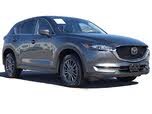
Choose the 2020 Mazda CX-5 if:
Shop Now- You prioritize a stylish and upscale interior with premium materials.
- You enjoy a more engaging driving experience with responsive handling.
- You value advanced safety features and top safety ratings.







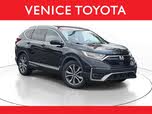
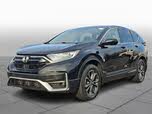
Choose the 2021 Honda CR-V if:
Shop Now- You need more passenger and cargo space for family and gear.
- You prefer a straightforward and user-friendly infotainment system.
- You want comprehensive safety features standard across all trims.









By: CarGurus + AI
At CarGurus, our team of experienced automotive writers remain at the heart of our content operation, conducting hands-on car tests and writing insightful guides that are backed by years of industry experience. To complement this, we are harnessing AI to make our content offering more diverse and more helpful to shoppers than ever. To achieve this, our AI systems are based exclusively on CarGurus content, ratings and data, so that what we produce is both unique to CarGurus, and uniquely helpful to car shoppers.