2020 Lincoln Navigator vs 2020 Hyundai Santa Fe
Overview | |
MSRP$26,275 | MSRP$76,185 |
Listings1154 | Listings303 |
Ratings & Reviews | |
User Reviews | User Reviews |
Expert reviews8.8 out of 10 | Expert reviews8.2 out of 10 |
Pros
Cons
| Pros
Cons
|
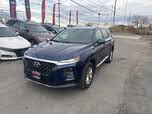
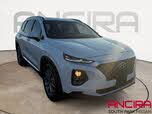
2020 Hyundai Santa Fe Reviews SummaryLast year, Hyundai changed its approach to the Santa Fe. The smaller five-passenger Santa Fe Sport got drop-kicked from the automaker’s lineup, replaced by this completely redesigned version of the SUV. The larger seven-passenger Santa Fe got a new name for one year (Santa Fe XL), and then the all-new 2020 Hyundai Palisade replaced that vehicle. With the Palisade’s arrival, there is just one Santa Fe for 2020, a five-passenger crossover that resides in a sweet spot between traditional compact and midsize models. It gets several updates, too, including a standard rear-seat reminder system, an available camera-based Blind-Spot View Monitor system, and new design accents to better distinguish the top trim level. | |
2020 Lincoln Navigator Reviews SummaryFrom an impressive customer care program to a lineup of luxury vehicles focused on catering to and coddling its clients, Lincoln is carving a niche for itself in a space the automaker has referred to as “quiet luxury.” With the discontinuation of both the Continental and MKZ sedans after the 2020 model year, Lincoln will now rely on a lineup of four SUVs to continue its quest for success. Of those SUVs, the 2020 Lincoln Navigator is the flagship setting the course for the future. | |
No video found | |
Popular Features & Specs | |
Engine2.4L 185 hp I4 | Engine3.5L 450 hp V6 |
Drive TrainFWD | Drive Train4X2 |
Seating Capacity5 | Seating Capacity8 |
Horsepower185 hp @ 6000 rpm | Horsepower450 hp @ 5500 rpm |
MPG City22 | MPG City16 |
MPG Highway29 | MPG Highway22 |
Engine | |
Engine Name2.4L 185 hp I4 | Engine Name3.5L 450 hp V6 |
Torque178 lb-ft @ 4000 rpm | Torque510 lb-ft @ 3000 rpm |
Horsepower185 hp @ 6000 rpm | Horsepower450 hp @ 5500 rpm |
DrivetrainFWD | Drivetrain4X2 |
Fuel Economy | |
MPG City22 | MPG City16 |
MPG Highway29 | MPG Highway22 |
Interior | |
Leather Seats | Leather SeatsStandard |
Seating Capacity5 | Seating Capacity8 |
Key Features | |
Navigation System | Navigation SystemStandard |
Safety | |
Front Crash Overall4 | Front Crash Overall5 |
Side Crash Overall5 | Side Crash Overall5 |
Dimensions & Capacity | |
Cargo Space35.9 cu ft | Cargo Space20.9 cu ft |
Curb Weight3591 lbs | Curb Weight5673 lbs |
Height66.1 in | Height76.4 in |
Length187.8 in | Length210.0 in |
Width74.4 in | Width93.8 in |
Wheelbase108.9 in | Wheelbase122.5 in |
Maximum Payload1138 lbs | Maximum Payload1620 lbs |
Number of doors4 | Number of doors4 |
Maximum Towing Capacity2000 lbs | Maximum Towing Capacity8600 lbs |
Standard Towing Capacity | Standard Towing Capacity6200 lbs |
Overview | ||
MSRP | $26,275 | $76,185 |
Listings | ||
Ratings & Reviews | ||
User reviews | ||
Expert reviews | 8.8 out of 10Read full review | 8.2 out of 10Read full review |
Pros & cons | Pros
Cons
| Pros
Cons
|
Summary | Last year, Hyundai changed its approach to the Santa Fe. The smaller five-passenger Santa Fe Sport got drop-kicked from the automaker’s lineup, replaced by this completely redesigned version of the SUV. The larger seven-passenger Santa Fe got a new name for one year (Santa Fe XL), and then the all-new 2020 Hyundai Palisade replaced that vehicle. With the Palisade’s arrival, there is just one Santa Fe for 2020, a five-passenger crossover that resides in a sweet spot between traditional compact and midsize models. It gets several updates, too, including a standard rear-seat reminder system, an available camera-based Blind-Spot View Monitor system, and new design accents to better distinguish the top trim level. | From an impressive customer care program to a lineup of luxury vehicles focused on catering to and coddling its clients, Lincoln is carving a niche for itself in a space the automaker has referred to as “quiet luxury.” With the discontinuation of both the Continental and MKZ sedans after the 2020 model year, Lincoln will now rely on a lineup of four SUVs to continue its quest for success. Of those SUVs, the 2020 Lincoln Navigator is the flagship setting the course for the future. |
Video | No video found | |
Popular Features & Specs | ||
Engine | 2.4L 185 hp I4 | 3.5L 450 hp V6 |
Drive Train | FWD | 4X2 |
Seating Capacity | 5 | 8 |
Horsepower | 185 hp @ 6000 rpm | 450 hp @ 5500 rpm |
MPG City | 22 | 16 |
MPG Highway | 29 | 22 |
Engine | ||
Engine Name | 2.4L 185 hp I4 | 3.5L 450 hp V6 |
Torque | 178 lb-ft @ 4000 rpm | 510 lb-ft @ 3000 rpm |
Horsepower | 185 hp @ 6000 rpm | 450 hp @ 5500 rpm |
Drivetrain | FWD | 4X2 |
Fuel Economy | ||
MPG City | 22 | 16 |
MPG Highway | 29 | 22 |
Interior | ||
Leather Seats | Standard | |
Seating Capacity | 5 | 8 |
Key Features | ||
Navigation System | Standard | |
Safety | ||
Front Crash Overall | 4 | 5 |
Side Crash Overall | 5 | 5 |
Dimensions & Capacity | ||
Cargo Space | 35.9 cu ft | 20.9 cu ft |
Curb Weight | 3591 lbs | 5673 lbs |
Height | 66.1 in | 76.4 in |
Length | 187.8 in | 210.0 in |
Width | 74.4 in | 93.8 in |
Wheelbase | 108.9 in | 122.5 in |
Maximum Payload | 1138 lbs | 1620 lbs |
Number of doors | 4 | 4 |
Maximum Towing Capacity | 2000 lbs | 8600 lbs |
Standard Towing Capacity | 6200 lbs | |
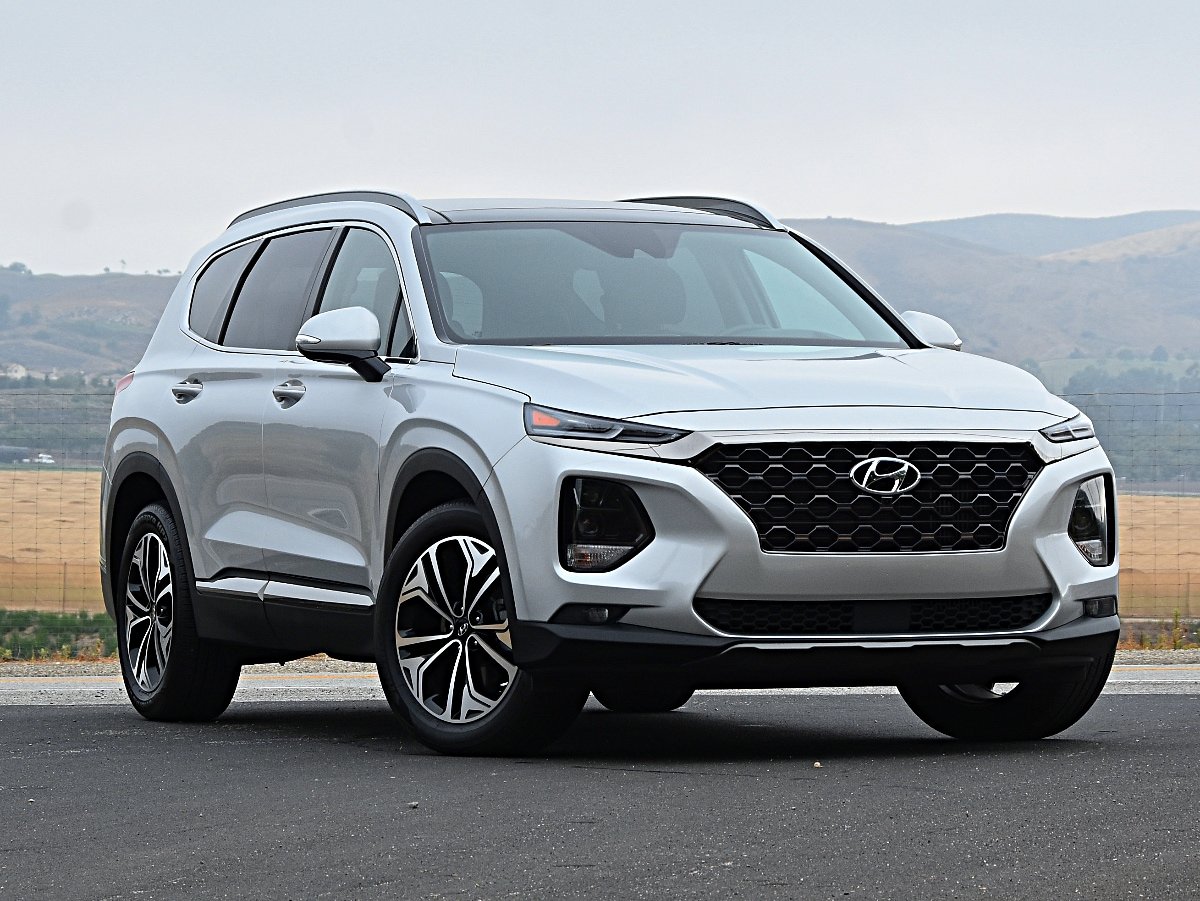
When shopping for a new 2020 Hyundai Santa Fe, buyers chose between SE, SEL, and Limited trim levels. Versions with a “2.0T” in the trim name received a power and performance upgrade courtesy of a turbocharged engine. All-wheel drive (AWD) was an option, allowing the automatic transmission to transfer power from the front wheels to the rear wheels when necessary. Aside from deciding about AWD, a turbocharged engine, and—if you were getting the SEL—an optional Convenience Package, buyers picked a paint color, interior color, and upgrades from a shortlist of dealer-installed accessories. The test vehicle had Limited 2.0T trim and a set of dealer-installed floor mats, bringing the price to $39,170.
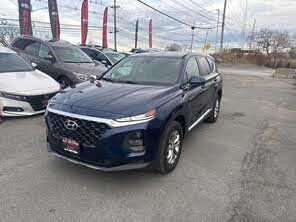
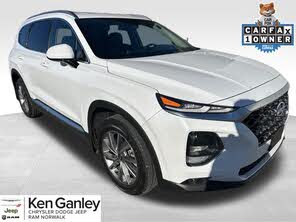
The Santa Fe's design was bold and experimental, which might not have appealed to everyone. Controversial design elements included the grille shape, stacked front lighting elements, asymmetrical fender stampings, wheel well shapes, and the oversized rear “skid plate” trim. Inside, the dual-cowl dashboard design swept into door panels containing diamond-textured speaker grilles. Versions with gray or beige interior colors presented a high-contrast visual feast. However, materials quality couldn't quite match Hyundai’s high-style design, with glossy plastic covering the lower half of the interior and fairly stiff leather seat upholstery. Build quality was exceptionally good, and the controls operated with refinement.
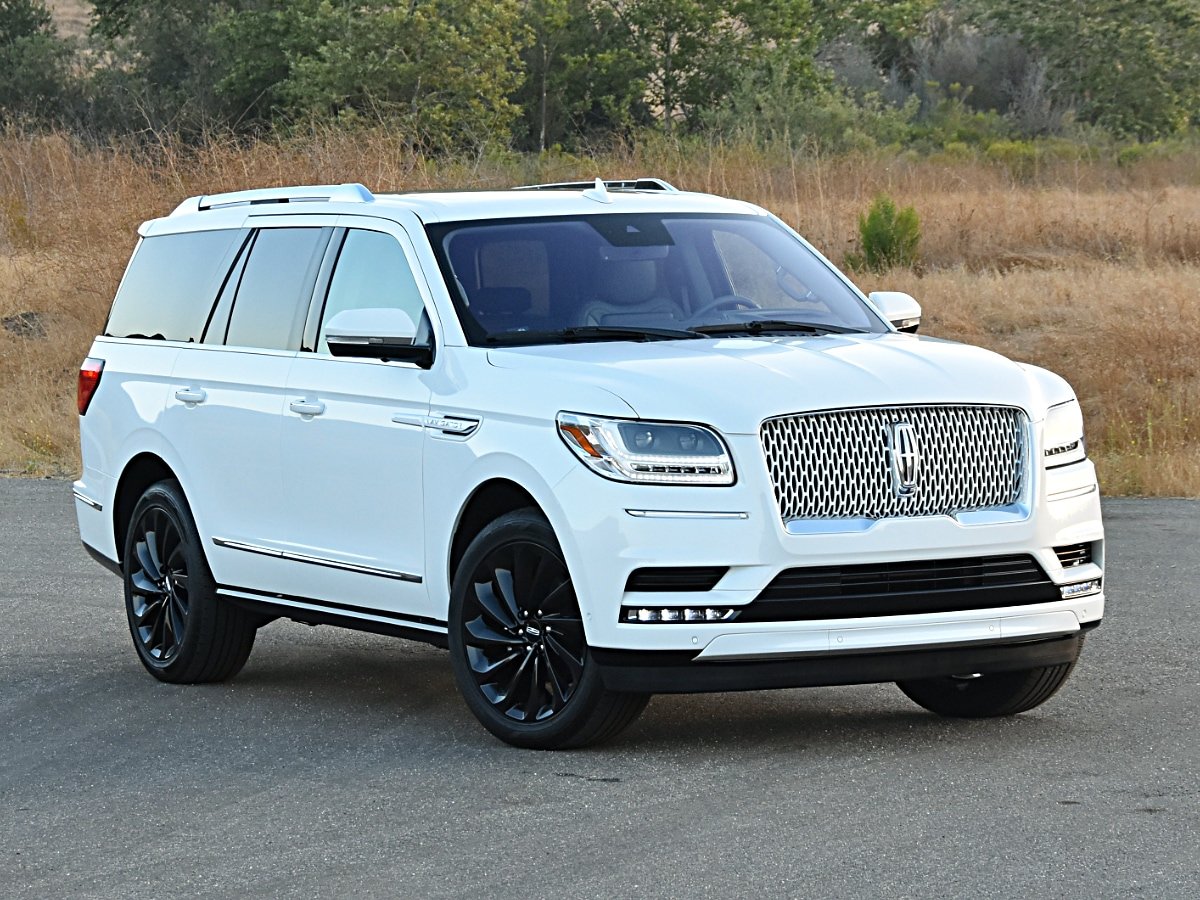
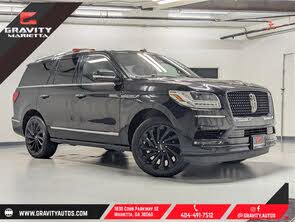
Traditionally, chrome and other brightwork set big luxury SUVs apart from more common mainstream models, and that was true of the 2020 Lincoln Navigator, which shared a basic platform with the Ford Expedition. Designers went the extra mile to differentiate the Navigator with completely different front and rear styling elements, plus the Lincoln Embrace, an exterior lighting system that sequentially illuminated the SUV to welcome its owner. Further detailing included a lattice-type grille insert mimicking the shape of the Lincoln star logo and an illuminated star in the center of it. Fender vents with simulated exposed front door hinges and full-width taillights were also Lincoln-specific design hallmarks, and black roof pillars gave the Navigator’s glass a full wraparound appearance.
For 2020, a new Reserve Monochromatic Package debuted, adding to the Navigator’s custom look. Offered with White, Ceramic Pearl, and Infinite Black paint colors, it included body-color grille and side mirror enhancements combined with 22-inch black-painted wheels. The test vehicle was a standard-length Navigator Reserve with 4WD, extra-cost paint, and both the Luxury and Reserve Monochromatic option packages, bringing the price to $92,385. The Dark Slate leather interior included Lincoln’s 30-way Perfect Position front seats with heating, ventilation, and massaging functions. Digital instrumentation, a 10-inch infotainment touchscreen, and piano-key transmission controls on the dashboard clearly separated the Navigator from the Ford Expedition. A panoramic glass roof bathed the interior in natural light, and Lincoln used high-quality materials in all the places that mattered most.


With a minimum curb weight of 3,591 pounds (and a maximum of 3,946), the Santa Fe’s standard 185-horsepower 2.4-liter four-cylinder engine was not the preferred choice. Instead, the turbocharged 2.0-liter four-cylinder engine, making 235 hp and 260 lb-ft of torque between 1,450 rpm and 3,500 rpm, was the better option. These figures represented increases of 50 hp and 82 lb-ft over the standard power plant, and the torque was available much faster after stepping on the gas pedal. An eight-speed automatic transmission funneled the power to the front wheels unless the optional AWD system was chosen. The test vehicle had FWD and suffered from torque steer under hard acceleration, an issue that disappeared with AWD. Properly equipped, the Hyundai Santa Fe had a towing capacity of 3,500 pounds.
The EPA estimated a Santa Fe 2.0T front-driver should get 23 mpg in combined driving, and the test model returned 22.1 mpg. The Santa Fe offered a smooth ride, decent handling, light-effort steering, and brakes that withstood some abuse while also allowing the driver to bring the SUV to a clean stop. Limited trim had laminated windshield and front window glass, making the highway ride nice and quiet. The Santa Fe handled moderate off-roading with unexpected ease but lacked driver engagement, making it more of a tool than a toy.
Lincoln offered a single engine choice for the Navigator, a twin-turbocharged 3.5-liter V6 engine generating 450 horsepower and 510 lb-ft of torque. A 10-speed automatic transmission transferred the power to the rear wheels unless upgraded with four-wheel drive. Multiple Lincoln Drive Modes tailored the powertrain to specific driving situations, including Conserve, Normal, Excite, Slippery, Deep Conditions, and Slow Climb with the optional towing package. Maximum towing capacity was 8,700 pounds with rear-wheel drive and 8,300 pounds with four-wheel drive. Pro Trailer Backup Assist made it easier to tow a trailer by allowing the driver to point the trailer in the desired direction using a dashboard knob.
Acceleration from the twin-turbo V6 was strong, and the engine note was subtle with a tinge of aggression. The Navigator averaged 16.4 mpg on the testing loop, with the EPA estimating 18 mpg in combined driving. With 22-inch wheels and 285/45 tires, impact harshness over imperfect stretches of pavement was a problem despite the standard adaptive damping suspension. The Navigator’s body motion control was excellent, lending the SUV a hint of athleticism. Around town, the Navigator felt huge, but a tight turning radius, a parking assist system, and numerous camera views helped make it more maneuverable in tight parking situations.
Thoughtful attention to detail permeated the two-row Hyundai Santa Fe. The test vehicle had eight-way power-adjustable, heated, and ventilated front seats, with the driver’s seat including four-way power-adjustable lumbar support and an extending thigh support. The test model also included a heated steering wheel. The Santa Fe’s dual-zone automatic climate control system included a Clean Air ionizer, and the air conditioning was effective even with the massive panoramic glass sunroof. Adults found the back seat comfortable, with air conditioning vents, rear side-window sunshades, and heated bottom cushions in the Limited trim level. Legroom and thigh support made the back seat a good place to spend time, and the rear seats reclined for added comfort.
The Santa Fe’s cargo space was 35.9 cubic feet behind the rear seat and a maximum of 71.3 cubic feet, which was big compared to most compact SUVs but fell short for a midsize SUV. Large storage compartments under the cargo floor were handy, and the hands-free “smart” liftgate was intelligent, sensing the key fob in proximity to the rear of the vehicle and rising automatically.
To enter a Navigator, one had to climb up and into the SUV, almost like ascending a short flight of stairs, though available power running boards helped somewhat. The test vehicle’s 30-way Perfect Position front seats were exceptionally comfortable, though it took some time to find the right combination of settings. The second row of seats could be configured with a three-person bench or two captain’s chairs, with the latter option including a large center console with audio system controls. Triple-zone climate control ensured optimum comfort across all three rows, and the test vehicle had heated rear seat cushions.
The Navigator’s third-row seat provided ample legroom and thigh support, making it comfortable for most passengers. Cargo volumes were class-leading, with the standard-length model offering 19.3 cubic feet behind the third-row seat, 57.5 cubic feet behind the second-row seat, and a maximum of 103.3 cubic feet. The longer Navigator L increased these measurements to 34.3, 73.3, and 120.2 cubic feet, respectively.
The Santa Fe’s touchscreen infotainment system was a shining example of this technology done right. It had stereo control knobs, main menu shortcut buttons, a programmable button, Bluetooth connectivity, and Apple CarPlay and Android Auto smartphone integration. SEL trim added SiriusXM satellite radio with a free three-month subscription and Blue Link connected services with three free years of service, including remote engine starting, automatic emergency assistance, and more. Limited trim added a larger 8-inch display, a navigation system, a surround-view camera, wireless smartphone charging, and a 12-speaker Infinity surround sound system. A head-up display provided a wealth of data on the windshield within the driver’s line of sight.
The Sync 3 infotainment system in the 2020 Lincoln Navigator took quite some time to load content, which could be frustrating. However, it provided Apple CarPlay, Android Auto, Lincoln Connect services with a 4G LTE WiFi hotspot and 911 Assist, a Lincoln Way smartphone and smartwatch app, and wireless device charging. "Phone As A Key" technology transformed the smartphone into the vehicle key. Sync 3’s voice recognition system worked reasonably well but was not as sophisticated as some other luxury vehicles. The Reserve’s Luxury Package included a 20-speaker Revel Ultima audio system with three listening profiles. Additional technologies included a surround-view camera system and a head-up display, though the test vehicle did not have the optional Lincoln Play rear-seat entertainment system.
The 2020 Hyundai Santa Fe earned a five-star overall crash-test rating from the National Highway Traffic Safety Administration (NHTSA) and a Top Safety Pick rating from the Insurance Institute for Highway Safety (IIHS). Every Santa Fe was equipped with adaptive cruise control, forward collision warning, automatic emergency braking, lane-departure warning, lane-keeping assistance, a driver monitoring system, and a rear-seat reminder system. SEL trim added blind-spot warning, rear cross-traffic warning, and a safe exit assist system. The SEL Convenience Package included an ultrasonic occupant alert system tied to the owner’s Blue Link smartphone app. Limited trim included a Blind-Spot View Monitor, showing a live video feed of the blind spots.
The Lincoln Navigator came with the standard Lincoln Co-Pilot360 collection of advanced driving assistance systems (ADAS), including forward-collision warning with pedestrian detection, automatic emergency braking, lane-departure warning with lane-keeping assistance, a blind-spot warning system with trailer coverage, a rear cross-traffic warning system, and automatic high-beam headlights. Reserve trim added adaptive cruise control with stop-and-go capability. The Navigator’s adaptive cruise control operated with refinement, and the lane-keeping assistance system was subtle yet effective. The Navigator earned a five-star overall safety rating from the NHTSA, though the rollover resistance rating for RWD was just three stars. The IIHS had not tested the 2020 model.
CarGurus highlights
According to CarGurus experts, the overall rating for the 2020 Hyundai Santa Fe is 8.8 out of 10, while the 2020 Lincoln Navigator scores 8.2 out of 10. Based on these ratings, the Hyundai Santa Fe is the recommended choice, offering a better balance of affordability, design, and family-friendly features.
Choose the 2020 Lincoln Navigator if:
- You require a powerful engine with high towing capacity and multiple driving modes.
- You desire a luxurious interior with ample space and high-quality materials.
- You want advanced technology features, including "Phone As A Key" and a 20-speaker Revel Ultima audio system.




Choose the 2020 Hyundai Santa Fe if:
- You want a more affordable SUV with a starting price significantly lower than the Navigator.
- You prefer a vehicle with a bold, experimental design and excellent build quality.
- You need a family-friendly SUV with thoughtful interior features and good safety ratings.






CarGurus highlights
According to CarGurus experts, the overall rating for the 2020 Hyundai Santa Fe is 8.8 out of 10, while the 2020 Lincoln Navigator scores 8.2 out of 10. Based on these ratings, the Hyundai Santa Fe is the recommended choice, offering a better balance of affordability, design, and family-friendly features.
Choose the 2020 Lincoln Navigator if:
Shop Now- You require a powerful engine with high towing capacity and multiple driving modes.
- You desire a luxurious interior with ample space and high-quality materials.
- You want advanced technology features, including "Phone As A Key" and a 20-speaker Revel Ultima audio system.







Choose the 2020 Hyundai Santa Fe if:
Shop Now- You want a more affordable SUV with a starting price significantly lower than the Navigator.
- You prefer a vehicle with a bold, experimental design and excellent build quality.
- You need a family-friendly SUV with thoughtful interior features and good safety ratings.






By: CarGurus + AI
At CarGurus, our team of experienced automotive writers remain at the heart of our content operation, conducting hands-on car tests and writing insightful guides that are backed by years of industry experience. To complement this, we are harnessing AI to make our content offering more diverse and more helpful to shoppers than ever. To achieve this, our AI systems are based exclusively on CarGurus content, ratings and data, so that what we produce is both unique to CarGurus, and uniquely helpful to car shoppers.