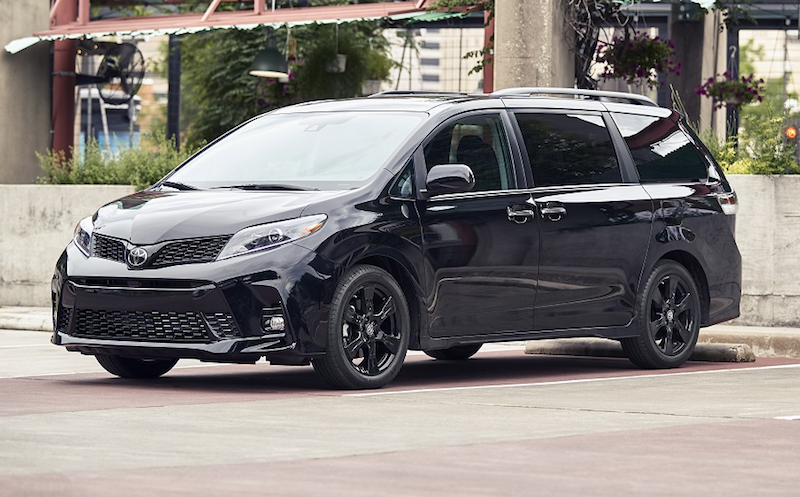
2021 Hyundai Santa Fe vs 2020 Toyota Sienna
Overview | |
MSRP$29,715 | MSRP$27,000 |
Listings411 | Listings506 |
Ratings & Reviews | |
User Reviews | User Reviews |
Expert reviews7.8 out of 10 | Expert reviews8.7 out of 10 |
Pros
Cons
| Pros
Cons
|
2020 Toyota Sienna Reviews SummarySince the second half of the 20th century, each decade has had a hot-topic family car, and, as we’ve noted in a number of reviews this year, the crossover is our current darling vehicle. Before the crossover, there were big, truck-based SUVs. Before that, there were station wagons. And for the past 35 years, there's always been the minivan. The Dodge Caravan has been widely considered the Patient Zero of the minivan segment. From there, seemingly everyone joined the party, including Toyota, Nissan, Ford, Chevy, GMC, Volkswagen, Oldsmobile, Ford, and more. Heck, even Mercury had a “Nautica Edition” version of the Villager. The minivan was king once, the crossover is king now, and some other type of vehicle will likely dominate in the near future. But in all this, the 7- and 8-passenger minivans will always represent the ultimate in versatility. The crossover is an image-forward fad with a dash of usability, but the minivan continues to prove itself as the pinnacle of practicality. The 2020 Toyota Sienna is neither the newest nor flashiest minivan out there, but when you absolutely need space for people and gear, there’s nothing better. Additionally, the Sienna is the only minivan to offer all-wheel drive (AWD), which is something specifically desired by many car buyers. | |
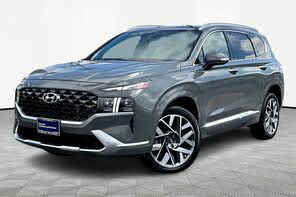
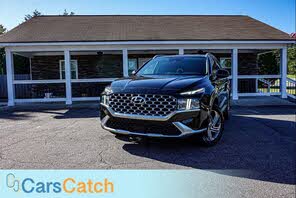
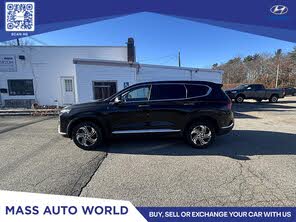
2021 Hyundai Santa Fe Reviews SummaryJust two years after a complete redesign, the 2021 Hyundai Santa Fe gets a substantial update with new styling, controls, displays, engines, technology, and safety systems. Plus, it gets a thorough structural upgrade and a new Calligraphy luxury-themed trim level. However, despite the long list of changes and improvements, the 2021 Santa Fe remains the tremendous bargain it’s always been. | |
No video found | |
Popular Features & Specs | |
Engine3.5L 296 hp V6 | Engine2.5L 191 hp I4 |
Drive TrainFWD | Drive TrainFWD |
Seating Capacity2 | Seating Capacity5 |
Horsepower296 hp @ 6200 rpm | Horsepower191 hp @ 6100 rpm |
MPG City19 | MPG City25 |
MPG Highway26 | MPG Highway28 |
Engine | |
Engine Name3.5L 296 hp V6 | Engine Name2.5L 191 hp I4 |
Torque263 lb-ft @ 4700 rpm | Torque181 lb-ft @ 4000 rpm |
Horsepower296 hp @ 6200 rpm | Horsepower191 hp @ 6100 rpm |
DrivetrainFWD | DrivetrainFWD |
Fuel Economy | |
MPG City19 | MPG City25 |
MPG Highway26 | MPG Highway28 |
Interior | |
Seating Capacity2 | Seating Capacity5 |
Safety | |
Front Crash Overall4 | Front Crash Overall5 |
Side Crash Overall5 | Side Crash Overall5 |
Dimensions & Capacity | |
Cargo Space | Cargo Space36.4 cu ft |
Curb Weight4375 lbs | Curb Weight3649 lbs |
Height68.9 in | Height66.3 in |
Length200.2 in | Length188.4 in |
Width78.1 in | Width74.8 in |
Wheelbase119.3 in | Wheelbase108.9 in |
Maximum Payload | Maximum Payload1488 lbs |
Number of doors4 | Number of doors4 |
Maximum Towing Capacity | Maximum Towing Capacity2000 lbs |
Overview | ||
MSRP | $29,715 | $27,000 |
Listings | ||
Ratings & Reviews | ||
User reviews | ||
Expert reviews | 7.8 out of 10Read full review | 8.7 out of 10Read full review |
Pros & cons | Pros
Cons
| Pros
Cons
|
Summary | Since the second half of the 20th century, each decade has had a hot-topic family car, and, as we’ve noted in a number of reviews this year, the crossover is our current darling vehicle. Before the crossover, there were big, truck-based SUVs. Before that, there were station wagons. And for the past 35 years, there's always been the minivan. The Dodge Caravan has been widely considered the Patient Zero of the minivan segment. From there, seemingly everyone joined the party, including Toyota, Nissan, Ford, Chevy, GMC, Volkswagen, Oldsmobile, Ford, and more. Heck, even Mercury had a “Nautica Edition” version of the Villager. The minivan was king once, the crossover is king now, and some other type of vehicle will likely dominate in the near future. But in all this, the 7- and 8-passenger minivans will always represent the ultimate in versatility. The crossover is an image-forward fad with a dash of usability, but the minivan continues to prove itself as the pinnacle of practicality. The 2020 Toyota Sienna is neither the newest nor flashiest minivan out there, but when you absolutely need space for people and gear, there’s nothing better. Additionally, the Sienna is the only minivan to offer all-wheel drive (AWD), which is something specifically desired by many car buyers. | Just two years after a complete redesign, the 2021 Hyundai Santa Fe gets a substantial update with new styling, controls, displays, engines, technology, and safety systems. Plus, it gets a thorough structural upgrade and a new Calligraphy luxury-themed trim level. However, despite the long list of changes and improvements, the 2021 Santa Fe remains the tremendous bargain it’s always been. |
Video | No video found | |
Popular Features & Specs | ||
Engine | 3.5L 296 hp V6 | 2.5L 191 hp I4 |
Drive Train | FWD | FWD |
Seating Capacity | 2 | 5 |
Horsepower | 296 hp @ 6200 rpm | 191 hp @ 6100 rpm |
MPG City | 19 | 25 |
MPG Highway | 26 | 28 |
Engine | ||
Engine Name | 3.5L 296 hp V6 | 2.5L 191 hp I4 |
Torque | 263 lb-ft @ 4700 rpm | 181 lb-ft @ 4000 rpm |
Horsepower | 296 hp @ 6200 rpm | 191 hp @ 6100 rpm |
Drivetrain | FWD | FWD |
Fuel Economy | ||
MPG City | 19 | 25 |
MPG Highway | 26 | 28 |
Interior | ||
Seating Capacity | 2 | 5 |
Safety | ||
Front Crash Overall | 4 | 5 |
Side Crash Overall | 5 | 5 |
Dimensions & Capacity | ||
Cargo Space | 36.4 cu ft | |
Curb Weight | 4375 lbs | 3649 lbs |
Height | 68.9 in | 66.3 in |
Length | 200.2 in | 188.4 in |
Width | 78.1 in | 74.8 in |
Wheelbase | 119.3 in | 108.9 in |
Maximum Payload | 1488 lbs | |
Number of doors | 4 | 4 |
Maximum Towing Capacity | 2000 lbs | |
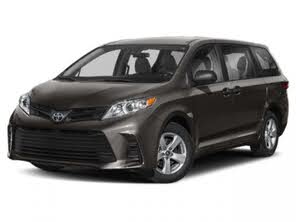
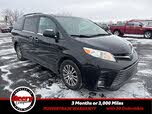
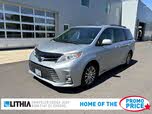
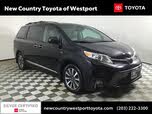
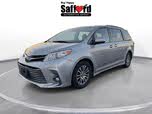
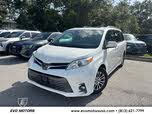
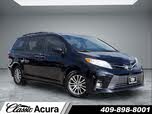
The 2020 Toyota Sienna, a third-generation model, had been around since 2011 and received updates in 2018. Despite these updates, the 2020 version still felt somewhat dated. The vehicle occasionally offered an upscale feel, but the hollow "thud" of the front doors and the outdated instrument panel, reminiscent of Toyota's 2010 parts bin, detracted from its modernity. However, the simplicity of the controls made them easy to use. The Sienna was available in various trims, from the base L to the Limited Premium, each offering a range of features. The base L trim was well-equipped with 17-inch alloy wheels, remote keyless entry, and a 7-inch touchscreen with Apple CarPlay. The SE trim, recommended by CarGurus, included a power rear liftgate, 19-inch alloy wheels, and leather upholstery, making it a practical choice for families.
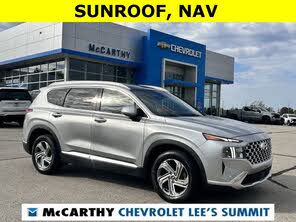
In contrast, the 2021 Hyundai Santa Fe presented a more modern and upscale appearance. The Santa Fe's exterior featured a redesigned front end with new running lights, grille, and bumper, giving each trim a unique character. Inside, the Santa Fe boasted new colors, patterns, and textures, elevating its interior to a more luxurious level. The Calligraphy trim, in particular, exuded quality with its premium leather and panoramic glass sunroof. The Santa Fe's interior was well-appointed, with a bridge-style center console and a 12.3-inch digital instrumentation panel, adding a high-tech touch. The exterior design, while fitting in with Hyundai's lineup, had some asymmetrical elements that might not appeal to everyone.


The 2020 Toyota Sienna was powered by a 3.5-liter V6 engine, producing 296 horsepower and 263 pound-feet of torque, paired with an 8-speed automatic transmission. The Sienna offered stout acceleration in normal Drive mode, with a Sport mode available for more spirited driving. It also had a manual mode, which was rarely used but could be helpful for towing up to 3,500 pounds. The Sienna's power was routed to the front wheels, with an optional all-wheel-drive (AWD) system available for all trims except the base L. The AWD versions were limited to a 7-passenger configuration, sacrificing the 8-passenger option. The Sienna's fuel economy was best with front-wheel drive, achieving 19 mpg city, 26 highway, and 21 combined, while AWD versions returned slightly lower figures. The Sienna handled surprisingly well for a minivan, with a low center of gravity and broad base, but its twitchy steering required constant attention at higher speeds.
The 2021 Hyundai Santa Fe offered three new powertrains. The SE and SEL trims came with a 191-horsepower 2.5-liter four-cylinder engine and an eight-speed automatic transmission. The Santa Fe Hybrids featured a turbocharged 1.6-liter four-cylinder engine, a starter/generator, an electric drive motor, and a six-speed automatic transmission, delivering a total system output of 226 hp. The higher-level Limited and Calligraphy trims were equipped with a turbocharged 2.5-liter four-cylinder engine, producing 281 hp and 311 lb-ft of torque, paired with an eight-speed wet-plate dual-clutch transmission. The Santa Fe offered Normal, Sport, and Smart driving modes, with the latter focusing on fuel efficiency. The turbocharged engine provided impressive performance, with a fuel economy rating of 24 mpg in combined driving for both powertrains. The Santa Fe exhibited improved driving dynamics, with added structural rigidity, better braking, and refined handling.
The 2020 Toyota Sienna excelled in cargo space, offering 150 cubic feet, surpassing competitors like the Chrysler Pacifica and Honda Odyssey. However, accessing this space required removing the second-row seats, which could be cumbersome with the bench seat configuration. The third row folded seamlessly into the floor, but getting into the backseat was challenging due to the awkward folding of the second-row seat cushion. Toyota also offered mobility access features, such as the Auto Access Seat, making it easier for those with mobility needs.
The 2021 Hyundai Santa Fe, while lacking a third-row seat, provided ample passenger room and comfort. All trims included dual-zone automatic climate control, with stain-resistant fabric for cloth seats and leather available for higher trims. The Calligraphy trim elevated the interior with premium Nappa leather and a suede-like headliner. The Santa Fe offered comfortable seating, with power-adjustable seats and heated and ventilated options. The rear seat was spacious, with air-conditioning vents, USB ports, and sunshades. The Santa Fe's cargo space measured 36.4 cubic feet, expanding to 72.1 cubic feet with the rear seat folded, providing ample room for a family of four.
The 2020 Toyota Sienna featured a 7-inch touchscreen infotainment system with Amazon Alexa and Apple CarPlay, a long-awaited addition. Standard tech included Bluetooth connectivity, five USB ports, and a WiFi hotspot with a 6-month trial. The Limited trim added navigation and a JBL premium audio system. The Driver Easy Speak system allowed the driver to communicate with rear passengers through the speakers, a helpful feature for parents.
The 2021 Hyundai Santa Fe Calligraphy was packed with technology, including a 12.3-inch digital instrument cluster, a surround-view camera system, and an 8.5-inch color head-up display. The basic 8-inch touchscreen offered wireless Apple CarPlay and Android Auto, while the 10.25-inch screen provided upgraded voice recognition and Blue Link connected services. The Harman Kardon surround-sound system enhanced the audio experience. Blue Link offered a range of features, including remote engine start and climate control adjustment. The Santa Fe also featured Digital Key and Remote Smart Parking Assist, adding convenience and innovation.
The 2020 Toyota Sienna came standard with the Toyota Safety Sense (TSS-P) suite, including lane-departure warning, lane-keep assist, forward-collision warning, and dynamic cruise control. Blind-spot monitoring was optional on lower trims and standard on XLE and Limited trims. The Sienna earned five stars from the NHTSA and a top rating of Superior from the IIHS for its driver-assistance features.
The 2021 Hyundai Santa Fe offered an impressive array of safety features, including forward-collision warning with pedestrian, cyclist, and junction turning assistance. Safe Exit Assist and rear-occupant alert systems added extra layers of protection. The Blind-Spot View Monitor and Highway Driving Assist enhanced safety and convenience. The Santa Fe earned a "Top Safety Pick" rating from the IIHS with LED projector headlights.
CarGurus highlights

According to CarGurus experts, the overall rating for the 2020 Toyota Sienna is 7.8 out of 10, while the 2021 Hyundai Santa Fe scores 8.7 out of 10. Based on these ratings, the Hyundai Santa Fe is the recommended choice, offering a more modern design, advanced technology, and superior safety features.
Choose the 2021 Hyundai Santa Fe if:
- You want a midsize SUV with modern design and luxurious interior options.
- You appreciate advanced technology and innovative safety features.
- You seek a vehicle with strong performance and fuel efficiency.






Choose the 2020 Toyota Sienna if:
- You need a minivan with class-leading cargo space and mobility access features.
- You prefer a vehicle with a proven track record and a range of trim options.
- You value standard safety features and high crash-test ratings.




CarGurus highlights
According to CarGurus experts, the overall rating for the 2020 Toyota Sienna is 7.8 out of 10, while the 2021 Hyundai Santa Fe scores 8.7 out of 10. Based on these ratings, the Hyundai Santa Fe is the recommended choice, offering a more modern design, advanced technology, and superior safety features.
Choose the 2021 Hyundai Santa Fe if:
Shop Now- You want a midsize SUV with modern design and luxurious interior options.
- You appreciate advanced technology and innovative safety features.
- You seek a vehicle with strong performance and fuel efficiency.





Choose the 2020 Toyota Sienna if:
Shop Now- You need a minivan with class-leading cargo space and mobility access features.
- You prefer a vehicle with a proven track record and a range of trim options.
- You value standard safety features and high crash-test ratings.





By: CarGurus + AI
At CarGurus, our team of experienced automotive writers remain at the heart of our content operation, conducting hands-on car tests and writing insightful guides that are backed by years of industry experience. To complement this, we are harnessing AI to make our content offering more diverse and more helpful to shoppers than ever. To achieve this, our AI systems are based exclusively on CarGurus content, ratings and data, so that what we produce is both unique to CarGurus, and uniquely helpful to car shoppers.