2021 Honda CR-V vs 2020 Hyundai Palisade

Overview | |
MSRP$31,975 | MSRP$25,350 |
Listings1161 | Listings1279 |
Ratings & Reviews | |
User Reviews | User Reviews |
Expert reviews8.2 out of 10 | Expert reviews7.8 out of 10 |
Pros
Cons
| Pros
Cons
|
2020 Hyundai Palisade Reviews SummaryWhen your job is to test drive cars, you start to see trends happening before your eyes. You mention something once, then again, and before you know it, it's unavoidable. The downside is I end up sounding like a broken record to a lot of shoppers. Car reviewers started seeing huge improvements from Kia and its parent company, Hyundai, years ago. Now, these Korean automakers are so good, they're genuine contenders in nearly every segment. We saw this earlier this year with the 2020 Kia Telluride, which Cliff Atiyeh reviewed. Now we’re seeing it again with the all-new 2020 Hyundai Palisade. This is a spacious, comfortable, and versatile 3-row SUV, and one you should seriously consider against cornerstones of the family SUV market, like the Toyota Highlander and Honda Pilot. The Palisade has been a long time coming for Hyundai, which has been without a true contender in the segment. From 2008 to 2012, Hyundai offered the 3-row Veracruz, but that was more of a glorified 2-row SUV that had extra-small seats in the back for kids. More recently, Hyundai has offered the Santa Fe XL with three rows, but that was a stopgap car. This is a similar situation to Subaru, which offered the Tribeca for a number of years but didn't become a serious contender in the space until it debuted the Ascent. There are no half-measures in the family-hauler market. This little history lesson serves to indicate the lengths to which automakers will go to stand out in the 3-row family SUV segment. The Palisade is already making headlines, but will it move the needle for Hyundai? Read on to find out, and to learn which trim of the Palisade CarGurus recommends. | |
2021 Honda CR-V Reviews SummaryEven in a grim year, Honda is selling a staggering number of CR-Vs. The CR-V is the best-selling Honda by far. It’s also the second best-selling compact SUV, just behind the Toyota RAV4. And it's the fifth best-selling vehicle in the U.S., and if you take out all the commercial sales of full-size pickups it’s one of the two best-selling vehicles year in and year out. So it’s hard to argue against the CR-V formula. Honda’s been at this almost as long as crossovers have been a thing, launching the CR-V in 1997—a year after the RAV4 debuted. The funny thing is, aside from sales volume, there’s only one thing the CR-V particularly excels at. Aesthetics are subjective, but it would be hard to argue the CR-V is the best looking vehicle in its class. It’s not the cheapest. It’s not the best equipped, especially at the middle to lower trim levels. It’s not the fastest, nor is it the quietest, or the most fuel efficient. It’s not even the most reliable, showing up nowhere in J.D. Power's Most Reliable list. So what makes it so appealing to American consumers? Let’s see if we can figure that out. | |
No video found | |
Popular Features & Specs | |
Engine3.8L 291 hp V6 | Engine1.5L 190 hp I4 |
Drive TrainFWD | Drive TrainFWD |
Seating Capacity8 | Seating Capacity5 |
Horsepower291 hp @ 6000 rpm | Horsepower190 hp @ 5600 rpm |
MPG City19 | MPG City28 |
MPG Highway26 | MPG Highway34 |
Engine | |
Engine Name3.8L 291 hp V6 | Engine Name1.5L 190 hp I4 |
Torque262 lb-ft @ 5000 rpm | Torque179 lb-ft @ 2000 rpm |
Horsepower291 hp @ 6000 rpm | Horsepower190 hp @ 5600 rpm |
DrivetrainFWD | DrivetrainFWD |
Fuel Economy | |
MPG City19 | MPG City28 |
MPG Highway26 | MPG Highway34 |
Interior | |
Seating Capacity8 | Seating Capacity5 |
Safety | |
Front Crash Overall5 | Front Crash Overall5 |
Side Crash Overall5 | Side Crash Overall5 |
Dimensions & Capacity | |
Cargo Space18.0 cu ft | Cargo Space39.2 cu ft |
Curb Weight4127 lbs | Curb Weight3337 lbs |
Height68.9 in | Height66.1 in |
Length196.1 in | Length182.1 in |
Width77.8 in | Width73.0 in |
Wheelbase114.2 in | Wheelbase104.8 in |
Maximum Payload1605 lbs | Maximum Payload1358 lbs |
Number of doors4 | Number of doors4 |
Maximum Towing Capacity5000 lbs | Maximum Towing Capacity1500 lbs |
Overview | ||
MSRP | $31,975 | $25,350 |
Listings | ||
Ratings & Reviews | ||
User reviews | ||
Expert reviews | 8.2 out of 10Read full review | 7.8 out of 10Read full review |
Pros & cons | Pros
Cons
| Pros
Cons
|
Summary | When your job is to test drive cars, you start to see trends happening before your eyes. You mention something once, then again, and before you know it, it's unavoidable. The downside is I end up sounding like a broken record to a lot of shoppers. Car reviewers started seeing huge improvements from Kia and its parent company, Hyundai, years ago. Now, these Korean automakers are so good, they're genuine contenders in nearly every segment. We saw this earlier this year with the 2020 Kia Telluride, which Cliff Atiyeh reviewed. Now we’re seeing it again with the all-new 2020 Hyundai Palisade. This is a spacious, comfortable, and versatile 3-row SUV, and one you should seriously consider against cornerstones of the family SUV market, like the Toyota Highlander and Honda Pilot. The Palisade has been a long time coming for Hyundai, which has been without a true contender in the segment. From 2008 to 2012, Hyundai offered the 3-row Veracruz, but that was more of a glorified 2-row SUV that had extra-small seats in the back for kids. More recently, Hyundai has offered the Santa Fe XL with three rows, but that was a stopgap car. This is a similar situation to Subaru, which offered the Tribeca for a number of years but didn't become a serious contender in the space until it debuted the Ascent. There are no half-measures in the family-hauler market. This little history lesson serves to indicate the lengths to which automakers will go to stand out in the 3-row family SUV segment. The Palisade is already making headlines, but will it move the needle for Hyundai? Read on to find out, and to learn which trim of the Palisade CarGurus recommends. | Even in a grim year, Honda is selling a staggering number of CR-Vs. The CR-V is the best-selling Honda by far. It’s also the second best-selling compact SUV, just behind the Toyota RAV4. And it's the fifth best-selling vehicle in the U.S., and if you take out all the commercial sales of full-size pickups it’s one of the two best-selling vehicles year in and year out. So it’s hard to argue against the CR-V formula. Honda’s been at this almost as long as crossovers have been a thing, launching the CR-V in 1997—a year after the RAV4 debuted. The funny thing is, aside from sales volume, there’s only one thing the CR-V particularly excels at. Aesthetics are subjective, but it would be hard to argue the CR-V is the best looking vehicle in its class. It’s not the cheapest. It’s not the best equipped, especially at the middle to lower trim levels. It’s not the fastest, nor is it the quietest, or the most fuel efficient. It’s not even the most reliable, showing up nowhere in J.D. Power's Most Reliable list. So what makes it so appealing to American consumers? Let’s see if we can figure that out. |
Video | No video found | |
Popular Features & Specs | ||
Engine | 3.8L 291 hp V6 | 1.5L 190 hp I4 |
Drive Train | FWD | FWD |
Seating Capacity | 8 | 5 |
Horsepower | 291 hp @ 6000 rpm | 190 hp @ 5600 rpm |
MPG City | 19 | 28 |
MPG Highway | 26 | 34 |
Engine | ||
Engine Name | 3.8L 291 hp V6 | 1.5L 190 hp I4 |
Torque | 262 lb-ft @ 5000 rpm | 179 lb-ft @ 2000 rpm |
Horsepower | 291 hp @ 6000 rpm | 190 hp @ 5600 rpm |
Drivetrain | FWD | FWD |
Fuel Economy | ||
MPG City | 19 | 28 |
MPG Highway | 26 | 34 |
Interior | ||
Seating Capacity | 8 | 5 |
Safety | ||
Front Crash Overall | 5 | 5 |
Side Crash Overall | 5 | 5 |
Dimensions & Capacity | ||
Cargo Space | 18.0 cu ft | 39.2 cu ft |
Curb Weight | 4127 lbs | 3337 lbs |
Height | 68.9 in | 66.1 in |
Length | 196.1 in | 182.1 in |
Width | 77.8 in | 73.0 in |
Wheelbase | 114.2 in | 104.8 in |
Maximum Payload | 1605 lbs | 1358 lbs |
Number of doors | 4 | 4 |
Maximum Towing Capacity | 5000 lbs | 1500 lbs |
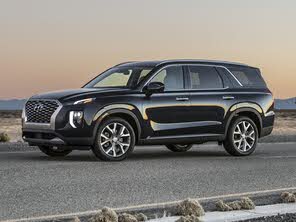
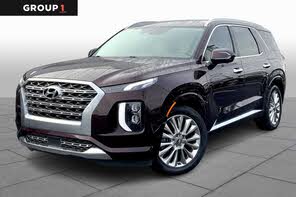
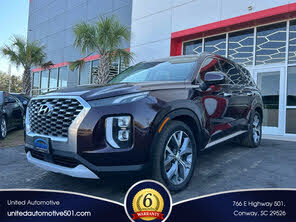
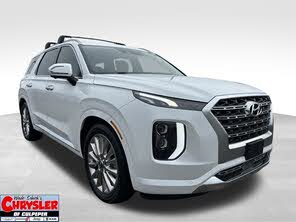
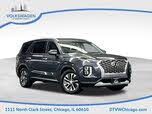
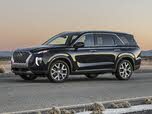
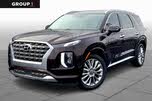
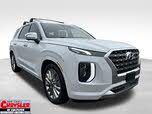
Hyundai absolutely nailed the Palisade's styling. This vehicle could have easily worn a Cadillac logo without raising any eyebrows. The Palisade stood out even more than Cadillac’s new XT6 3-row luxury SUV. Its bold, in-your-face styling was characterized by a massive grille and rakishly thin headlights. Interestingly, the upper headlight assembly was only part of the headlight puzzle, with larger fog lights making up the rest. When illuminated, a character line of LEDs extended from the upper headlights down through the mid-level assembly. Hyundai continued its trend of unique chrome and character line designs with the Palisade, featuring a large chrome strip that ran from the base of the A-pillar over both side door windows, finishing just after the rear door. This visually broke up what might otherwise be a very long design, though it did leave the Palisade looking a bit busy. Despite this, it was a handsome and eye-catching SUV.
The cabin of the Palisade continued that upscale feel with more elegance and simplicity. At first glance, the dash could be mistaken for one from a luxury brand, featuring a fully digital instrument panel, a large touchscreen that flowed seamlessly across the dash, and a center console bristling with controls. The personalized ambient lighting system drew attention, especially in the top-of-the-line Limited trim. The base SE trim came with acoustic-laminated glass, cloth upholstery, a 6-way adjustable driver’s seat, power-folding second-row seats, and a swath of front and rear USB ports. The SEL trim added second-row captain's chairs, satin chrome door handles and grille, integrated roof rails, and a proximity key with push-button start. The range-topping Limited trim featured 20-inch alloys, LED headlights, side puddle lights, LED cabin accent lighting, rain-sensing wipers, a dual sunroof, and a hands-free smart power liftgate. The Limited also impressed with its high-quality leather upholstery, heated and cooled front seats, heated rear seats, driver’s seat memory, and power-folding third-row seats.
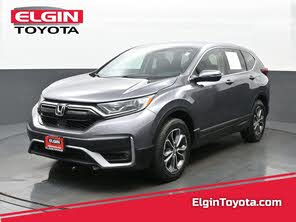
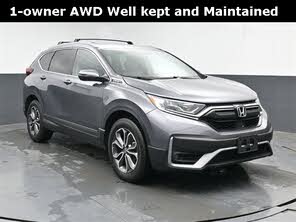
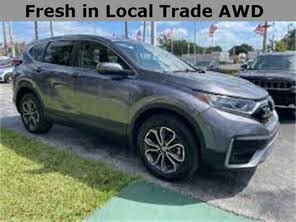
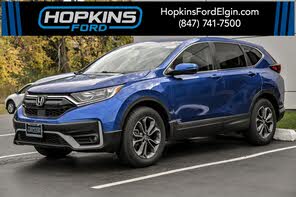
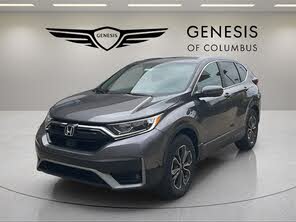
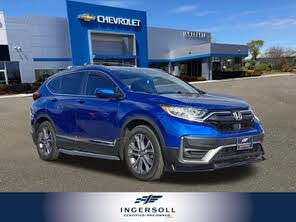
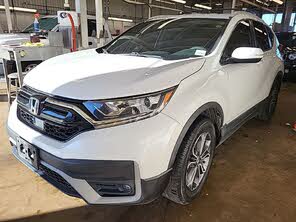
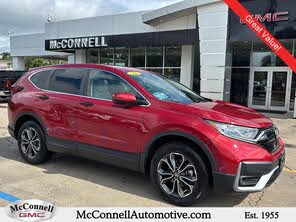
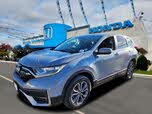
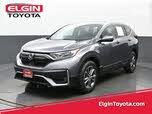
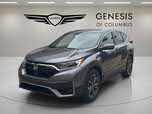
The Honda CR-V, on the other hand, had a more conventional look that blended in with other compact crossovers. The styling of all compact crossovers was nearly identical, with the CR-V featuring a similar side window opening shape to its competitors. There were a few details that separated the CR-V from the herd, like the grille opening and some chromed plastic features, but overall, it wasn’t a vehicle bought for its exterior looks. Honda offered the CR-V in eight colors, though three were shades of gray, one was black, and one was white. The more vibrant colors were limited to higher trims, making it challenging to find a CR-V in a standout color. Inside, the CR-V was offered in black, gray, and ivory cloth or leather, depending on the trim level. Climbing the trim ladder unlocked features like wood panels and more chrome for a more upscale appearance. The front and rear seats had a more modern look with sharp details on the seat edges and headrests. However, vehicles like the Kia Sportage and Hyundai Tucson had an advantage over the CR-V in terms of distinctive styling, especially at the mid-tier trims.


The 2020 Hyundai Palisade came equipped with a 3.8-liter V6 engine, the only engine offered, producing 291 horsepower and 262 pound-feet of torque. Power was sent to the front wheels or available all-wheel drive (AWD) through an 8-speed automatic transmission, operated via a push-button shifter. The automatic transmission managed power well, and the V6 engine provided solid acceleration. The drive mode dial in the center console offered Sport, Comfort, Eco, Snow, and Smart modes. Smart mode toggled between the other modes based on driving habits, engaging Eco mode in traffic and Sport mode for highway speeds. Comfort mode had a half-second delay in acceleration, while Sport mode made the gas pedal more responsive. The Limited trim featured a self-leveling rear suspension, enhancing cornering and handling. Fuel economy for the Palisade FWD was 19 mpg city, 26 highway, 22 combined, and 19/24/21 with AWD. In a week of combined city and highway driving, observed fuel economy was 20.3 miles per gallon.
The 2021 Honda CR-V was not known for neck-snapping acceleration or high Gs on the skidpad. It featured a 190-horsepower turbocharged four-cylinder engine across all nine trims, with a 0-60 mph time of about 7.8 seconds. The CR-V had a continuously variable transmission (CVT) that held engine revs constant as the vehicle accumulated speed. The drivetrain was less engaging compared to competitors like the Kia Sportage and Hyundai Tucson, which offered conventional eight-speed automatic transmissions with sport modes. The CR-V came standard with front-wheel drive (FWD), with AWD as an extra-cost option. The CR-V had a unitized body structure, MacPherson strut front suspension, and multi-link rear suspension, similar to other vehicles in its class. Handling and ride quality were decent, with no real surprises.
The 2020 Hyundai Palisade excelled in versatility and handling family needs. It offered 45.8 cubic feet of cargo space with the third row down and 86.4 cubic feet with all rear seats dropped, more than the Highlander and Pilot. The Limited trim had power-folding third-row seats, though they were slow to rise and drop. The third row was manageable for longer trips, fitting into the category of 3-row SUVs with third rows designed for adults. The second-row captain's chairs were the place to be, with multiple cup holders, seatback pockets, and space between the chairs for bags or gear.
The 2021 Honda CR-V aimed to fit five people comfortably and carry their gear. It had 102.9 cubic feet of passenger volume, four cubic feet more than the Toyota RAV4, and slightly more cargo space behind the second row. With the rear seats folded, the CR-V offered 75.8 cubic feet of total cargo volume. The tailgate could be raised and lowered manually on the LX to EX trims, with the EX-L featuring a power tailgate and the Touring offering a hands-free version. Roof rails were standard only on the top-of-the-line Touring trim.
The 2020 Hyundai Palisade came with an 8-inch touchscreen infotainment system with Apple CarPlay and Android Auto, three front-row USB ports, two second-row USB ports, and Bluetooth connectivity. The SEL trim could be upgraded to a 10.25-inch touchscreen with navigation, satellite radio, and the Driver Talk in-car intercom system. The Limited trim featured a Harman Kardon premium audio system with 12 speakers, Clari-Fi music restoration technology, a surround-view monitor, and a head-up display.
The 2021 Honda CR-V LX had a 5-inch color screen with Bluetooth connectivity. Other trims had a 7-inch high-definition touchscreen infotainment system with Apple CarPlay and Android Auto integration. The Special Edition and EX trims had a 180-watt audio system with six speakers, while the EX-L had eight speakers. The Touring trim had a 300-watt system with a subwoofer and satellite navigation. Charging ports were available throughout the CR-V, with the Touring trim adding a wireless phone charger.
The 2020 Hyundai Palisade was named a Top Safety Pick+ by the Insurance Institute for Highway Safety. It came with a reversing camera, child-seat anchors, front- and side-impact airbags, forward-collision avoidance with pedestrian detection, lane-keeping assist, driver-attention warning, and parking sensors. The digital instrument panel displayed parking sensor warnings and featured a unique blind-spot camera system.
The 2021 Honda CR-V earned a five-star National Highway Traffic Safety Administration (NHTSA) overall crash test rating and an Insurance Institute for Highway Safety (IIHS) Top Safety Pick award. It did not receive the highest Top Safety Pick+ rating due to lower scores in the headlight evaluation and updated side crash test. The CR-V had a multi-angle rearview camera, forward collision warning, lane departure warning, automatic emergency braking, road departure mitigation, lane keeping assist, adaptive cruise control, and auto high-beam headlamps. The blind spot monitoring system with rear cross-traffic alert was standard on the EX trim and above.
CarGurus highlights

According to CarGurus experts, the overall rating for the 2020 Hyundai Palisade is 8.2 out of 10, while the 2021 Honda CR-V scores 7.8 out of 10. Based on these ratings, the 2020 Hyundai Palisade is the recommended choice for its superior styling, luxurious interior, and advanced tech features.
Choose the 2021 Honda CR-V if:
- You prioritize safety features and want them standard across all trims.
- You need a compact crossover with excellent passenger and cargo space.
- You prefer a vehicle with a reliable and efficient turbocharged engine.


Choose the 2020 Hyundai Palisade if:
- You need a spacious 3-row SUV with ample cargo space.
- You prefer a vehicle with upscale styling and a luxurious interior.
- You want advanced tech features like a large touchscreen and premium audio system.





CarGurus highlights
According to CarGurus experts, the overall rating for the 2020 Hyundai Palisade is 8.2 out of 10, while the 2021 Honda CR-V scores 7.8 out of 10. Based on these ratings, the 2020 Hyundai Palisade is the recommended choice for its superior styling, luxurious interior, and advanced tech features.
Choose the 2021 Honda CR-V if:
Shop Now- You prioritize safety features and want them standard across all trims.
- You need a compact crossover with excellent passenger and cargo space.
- You prefer a vehicle with a reliable and efficient turbocharged engine.







Choose the 2020 Hyundai Palisade if:
Shop Now- You need a spacious 3-row SUV with ample cargo space.
- You prefer a vehicle with upscale styling and a luxurious interior.
- You want advanced tech features like a large touchscreen and premium audio system.





By: CarGurus + AI
At CarGurus, our team of experienced automotive writers remain at the heart of our content operation, conducting hands-on car tests and writing insightful guides that are backed by years of industry experience. To complement this, we are harnessing AI to make our content offering more diverse and more helpful to shoppers than ever. To achieve this, our AI systems are based exclusively on CarGurus content, ratings and data, so that what we produce is both unique to CarGurus, and uniquely helpful to car shoppers.