2020 Honda CR-V vs 2020 Honda CR-V Hybrid

Overview | |
MSRP$25,150 | MSRP$27,850 |
Listings1672 | Listings216 |
Ratings & Reviews | |
User Reviews | User Reviews |
Expert reviews7.5 out of 10 | Expert reviews7.3 out of 10 |
Pros
Cons
| Pros
Cons
|
2020 Honda CR-V Reviews SummaryHonda’s compact SUV has been satisfying buyers for more than two decades, with more than five million CR-V’s sold. Such a legacy means the CR-V has long had its wrinkles smoothed out into a comfortable and capable crossover package that’s only downside may be its sheer inoffensiveness. This year’s model gets engine and safety upgrades, which improve fuel economy and help to make Honda’s bestseller an even better value. | |
2020 Honda CR-V Hybrid Reviews SummaryOne of the forerunners to today’s seemingly never-ending onslaught of crossover SUV debuts, the Honda CR-V entered the market when SUV meant body-on-frame truck and CUV meant, well, nothing. The year was 1996 and the only other crossover option in the U.S. was the Toyota RAV4, which went on sale the year prior. Since then, hybrid technology has become commonplace. Yet, Americans have lived without a battery-assisted Honda crossover. That finally changes, with the debut of the 2020 Honda CR-V Hybrid. | |
No video found | No video found |
Popular Features & Specs | |
Engine1.5L 190 hp I4 | Engine2.0L 212 hp I4 Hybrid |
Drive TrainFWD | Drive TrainAWD |
Seating Capacity5 | Seating Capacity5 |
Horsepower190 hp @ 5600 rpm | Horsepower212 hp @ 6200 rpm |
EV Battery Capacity | EV Battery Capacity1.3 kWh |
MPG City28 | MPG City40 |
MPG Highway34 | MPG Highway35 |
Engine | |
Engine Name1.5L 190 hp I4 | Engine Name2.0L 212 hp I4 Hybrid |
Torque179 lb-ft @ 2000 rpm | Torque |
Horsepower190 hp @ 5600 rpm | Horsepower212 hp @ 6200 rpm |
DrivetrainFWD | DrivetrainAWD |
Fuel Economy | |
EV Battery Capacity | EV Battery Capacity1.3 kWh |
MPG City28 | MPG City40 |
MPG Highway34 | MPG Highway35 |
Interior | |
Seating Capacity5 | Seating Capacity5 |
Safety | |
Front Crash Overall5 | Front Crash Overall5 |
Side Crash Overall5 | Side Crash Overall5 |
Dimensions & Capacity | |
Cargo Space39.2 cu ft | Cargo Space33.2 cu ft |
Curb Weight3337 lbs | Curb Weight3649 lbs |
Height66.1 in | Height66.5 in |
Length182.1 in | Length182.1 in |
Width73.0 in | Width73.0 in |
Wheelbase104.8 in | Wheelbase104.7 in |
Maximum Payload1358 lbs | Maximum Payload |
Number of doors4 | Number of doors4 |
Maximum Towing Capacity1500 lbs | Maximum Towing Capacity |
Overview | ||
MSRP | $25,150 | $27,850 |
Listings | ||
Ratings & Reviews | ||
User reviews | ||
Expert reviews | 7.5 out of 10Read full review | 7.3 out of 10Read full review |
Pros & cons | Pros
Cons
| Pros
Cons
|
Summary | Honda’s compact SUV has been satisfying buyers for more than two decades, with more than five million CR-V’s sold. Such a legacy means the CR-V has long had its wrinkles smoothed out into a comfortable and capable crossover package that’s only downside may be its sheer inoffensiveness. This year’s model gets engine and safety upgrades, which improve fuel economy and help to make Honda’s bestseller an even better value. | One of the forerunners to today’s seemingly never-ending onslaught of crossover SUV debuts, the Honda CR-V entered the market when SUV meant body-on-frame truck and CUV meant, well, nothing. The year was 1996 and the only other crossover option in the U.S. was the Toyota RAV4, which went on sale the year prior. Since then, hybrid technology has become commonplace. Yet, Americans have lived without a battery-assisted Honda crossover. That finally changes, with the debut of the 2020 Honda CR-V Hybrid. |
Video | No video found | No video found |
Popular Features & Specs | ||
Engine | 1.5L 190 hp I4 | 2.0L 212 hp I4 Hybrid |
Drive Train | FWD | AWD |
Seating Capacity | 5 | 5 |
Horsepower | 190 hp @ 5600 rpm | 212 hp @ 6200 rpm |
EV Battery Capacity | 1.3 kWh | |
MPG City | 28 | 40 |
MPG Highway | 34 | 35 |
Engine | ||
Engine Name | 1.5L 190 hp I4 | 2.0L 212 hp I4 Hybrid |
Torque | 179 lb-ft @ 2000 rpm | |
Horsepower | 190 hp @ 5600 rpm | 212 hp @ 6200 rpm |
Drivetrain | FWD | AWD |
Fuel Economy | ||
EV Battery Capacity | 1.3 kWh | |
MPG City | 28 | 40 |
MPG Highway | 34 | 35 |
Interior | ||
Seating Capacity | 5 | 5 |
Safety | ||
Front Crash Overall | 5 | 5 |
Side Crash Overall | 5 | 5 |
Dimensions & Capacity | ||
Cargo Space | 39.2 cu ft | 33.2 cu ft |
Curb Weight | 3337 lbs | 3649 lbs |
Height | 66.1 in | 66.5 in |
Length | 182.1 in | 182.1 in |
Width | 73.0 in | 73.0 in |
Wheelbase | 104.8 in | 104.7 in |
Maximum Payload | 1358 lbs | |
Number of doors | 4 | 4 |
Maximum Towing Capacity | 1500 lbs | |
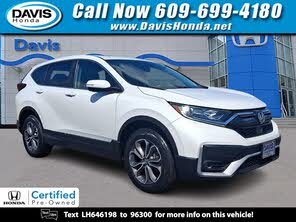
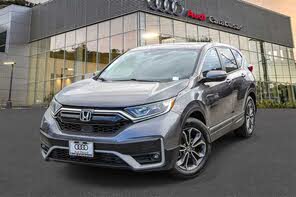
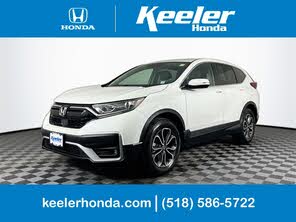
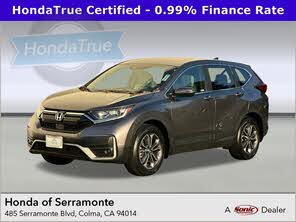
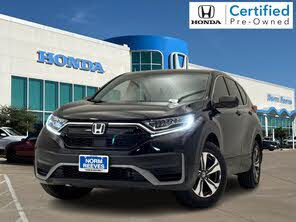
The 2020 Honda CR-V had a well-familiar design since its introduction in the 2017 model year. Characterized by its curvy, car-like exterior, the vehicle boasted a seamless blend of design elements reminiscent of Honda's sedan lineup. Its front and rear fascias and station wagon-leaning overall look made it a paradigm of modern family transportation. While the exterior design was on point, the CR-V's interior was a mix of high and low-quality materials. Leather upholstery and wood-look trim adorned higher trims but clashed with certain low-quality plastics.
The CR-V lineup offered simplicity with four trim levels: LX, EX, EX-L, and Touring. Starting prices ranged from $26,270 for the base LX to $34,770 for the fully-loaded Touring. Each trim offered different aesthetic touches, from standard 17-inch alloy wheels to the 19-inch ones on the Touring. Real leather seats were reserved for the top trims, and a moonroof was included in all but the LX trim. Roof rails were limited to the Touring model.
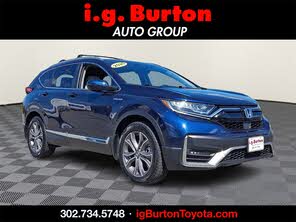
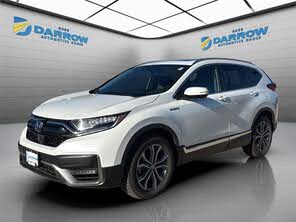
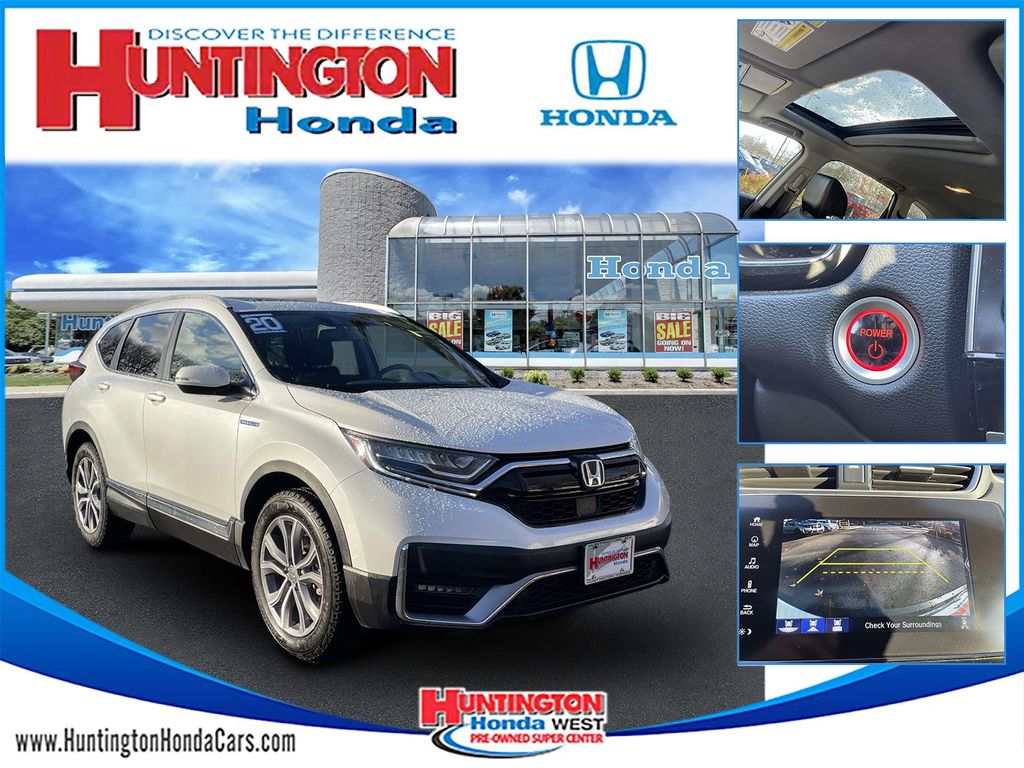
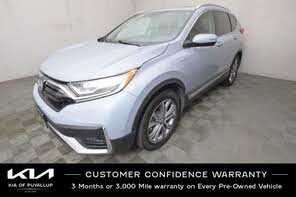
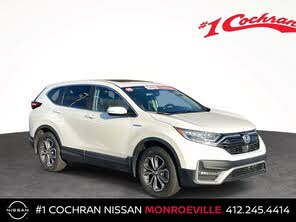
The 2020 Honda CR-V Hybrid featured a mid-cycle refresh with minor but noticeable fraternal differences from its gasoline counterpart. It shared identical dimensions and similar wheel patterns, but the blue-outlined Honda emblems and "Hybrid" badges distinguished it. The rear lower bumper, featuring a hidden exhaust, provided another subtle difference.
Inside, the Hybrid's cabin mirrored that of the gas model with the same dash and multi-function center console. The differences lay in the replacement of the gear shifter with push-button selectors and paddle shifters that adjusted brake regeneration. The instrument panel reflected driving modes, including Normal, EV, Econ, and Sport.


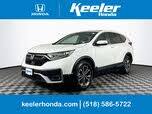
The 2020 Honda CR-V gasoline model had a simplified lineup with a single 1.5-liter turbocharged engine delivering 190 horsepower and 179 pound-feet of torque, paired with a continuously variable automatic transmission (CVT). The turbocharged four-cylinder offered commendable acceleration and fuel efficiency. The FWD model weighed 3,337 pounds, contributing to nimble handling and performance with 30 mpg combined fuel economy, while AWD models achieved 29 mpg.
The 2020 Honda CR-V Hybrid, equipped with standard AWD, featured a two-motor hybrid system combining a 2.0-liter four-cylinder engine with an electric generator and propulsion motor. This combination delivered 212 horsepower and 232 pound-feet of torque. The hybrid system was interfaced through fixed-ratio gear sets and a lock-up clutch for smoother transitions.
Fuel economy was a standout feature for the Hybrid, with an EPA rating of 40 mpg city, 35 highway, and 38 combined. During real-world driving, the Hybrid performed nearly as advertised, achieving around 41 mpg in city conditions. Despite this, it ranked third in fuel efficiency compared to the Toyota RAV4 Hybrid and Ford Escape Hybrid.
The 2020 Honda CR-V provided excellent interior space, nearly matching the class giant Volkswagen Tiguan in volume. The CR-V's strategic seating position and open visibility made for a comfortable cabin, with 75.8 cubic feet of cargo space when the 60-40 split rear seats were folded down. The smartly designed center console and door pockets allowed for flexible storage solutions, accommodating various items without clutter.
Conversely, the 2020 Honda CR-V Hybrid had to compromise some cargo capacity to house its battery pack beneath the cargo floor. It offered 33.2 cubic feet of space behind the rear seats and 68.7 cubic feet with the seats folded flat. While slightly less than the gas model, the Hybrid still surpassed the Ford Escape Hybrid in cargo volume. The Toyota RAV4 Hybrid had a slight edge over the CR-V Hybrid with 37.6 cubic feet of space behind the rear seats and 69.8 cubic feet with them folded.
The CR-V Hybrid also maintained a configurable center console bin and competitive ground clearance. Passenger comfort remained a strong suit for the Hybrid, boasting superior front headroom and rear legroom compared to its direct competitors.
The 2020 Honda CR-V's tech suite showed its age, especially with the 5-inch screen standard on the LX trim, which lacked features apart from Bluetooth and Pandora compatibility. Higher trims received a 7-inch touchscreen, but it still lagged compared to the competition's larger displays. The frustrating user interface required multiple taps to navigate and lacked integration for Apple CarPlay and Android Auto.
Higher trims, like the EX, added better tech, including smartphone integration, but still fell short of competitors like the Volkswagen Tiguan’s Digital Cockpit. However, USB port provision was generous, especially in models equipped with the 7-inch system. The Touring trim also featured wireless charging, completing the tech availability for gadget-loving families.
The 2020 Honda CR-V Hybrid improved upon the base tech offerings. Even the base Hybrid model included keyless entry, push-button start, and automatic headlights, which were limited to higher trims in the gasoline model. The EX trim introduced a 7-inch touchscreen, Honda Link, smartphone integration, SiriusXM, and a more powerful stereo system.
Despite these upgrades, the Hybrid's infotainment system still faced usability issues. The touchscreen lacked haptic feedback, and disabling certain settings required cumbersome navigation through menus. Adjusting driver and vehicle information entailed frequent menu flipping, potentially distracting the driver.
The 2020 Honda CR-V came standard with the Honda Sensing suite, which included forward-collision warning, automatic emergency braking, road-departure mitigation, adaptive cruise control, and lane-keeping assist. Additionally, it featured automatic high beams, and EX trims and above added blind-spot monitoring and cross-traffic alert.
The NHTSA awarded the CR-V a five-star safety rating, with high scores across various crash tests. The IIHS also named it a Top Safety Pick, albeit only for trims with LED headlights, which performed better in nighttime visibility tests than the halogen headlights on lower trims.
Similarly, the 2020 Honda CR-V Hybrid earned top safety ratings from both NHTSA and IIHS. It also came standard with the comprehensive Honda Sensing suite. Blind-spot monitoring and rear cross-traffic alerts were available starting with the EX trim, adding to the Hybrid's robust safety features.
CarGurus highlights
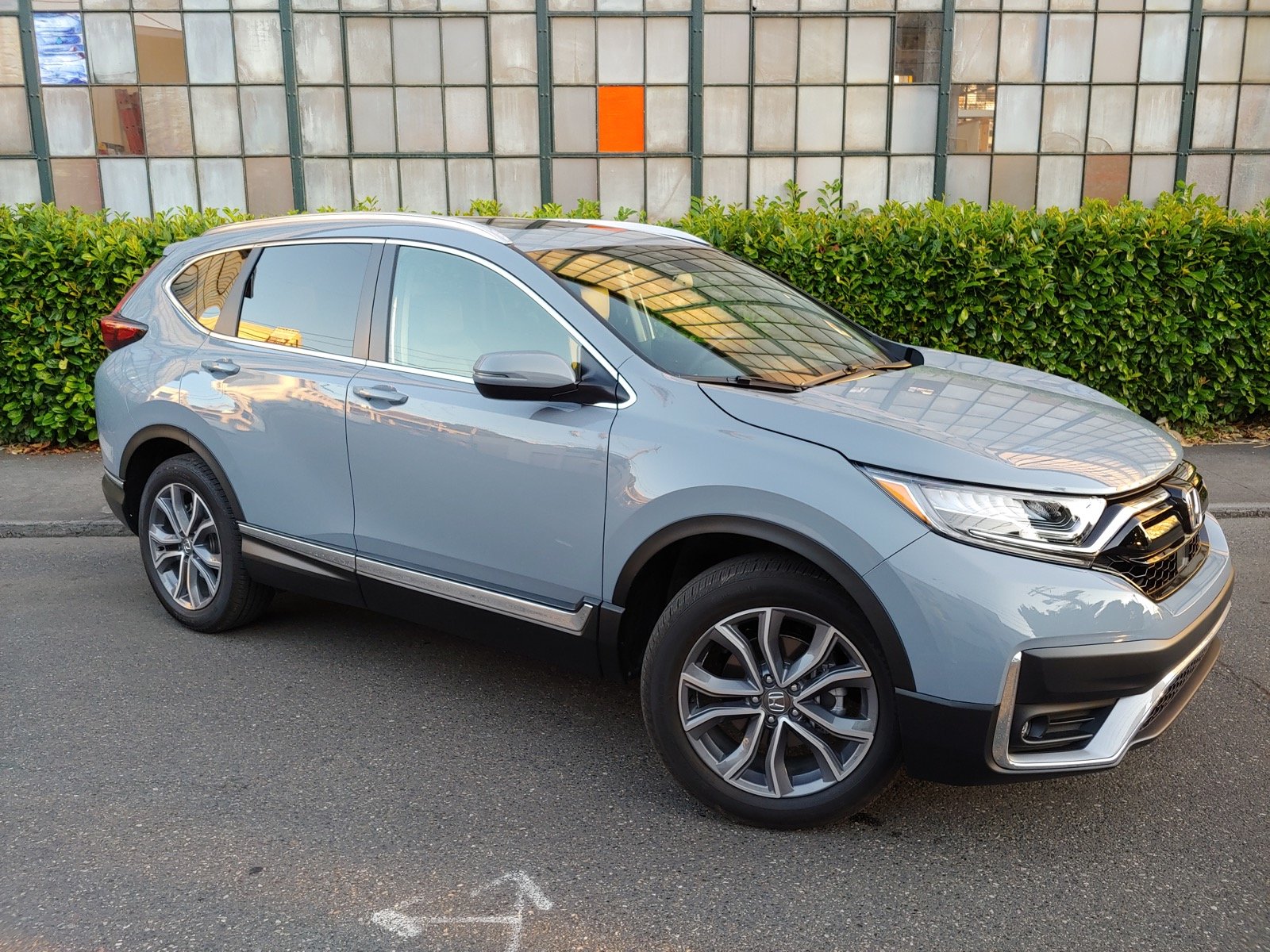
According to CarGurus experts, the overall rating for the 2020 Honda CR-V is 7.5 out of 10, while the 2020 Honda CR-V Hybrid scores 7.3 out of 10. Despite the close competition, the CR-V's higher rating makes it the better choice. The CR-V offers ample cargo space, a more satisfying driving experience, and a simpler tech interface, making it the recommended option for most consumers.
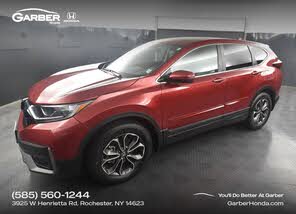
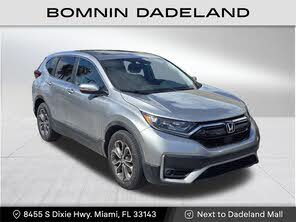
Choose the 2020 Honda CR-V if:
- You prioritize cargo capacity and interior storage solutions.
- You prefer the more traditional driving experience with quick acceleration.
- You want straightforward tech without the need to navigate multiple complex menus.

Choose the 2020 Honda CR-V Hybrid if:
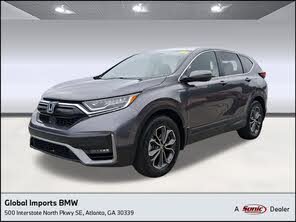
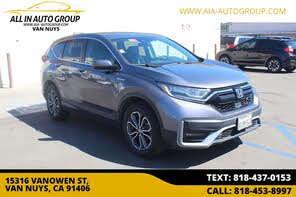
- Fuel efficiency and lower emissions are top priorities for your daily driving.
- You desire the added stability and confidence of standard all-wheel drive.
- You're looking for advanced tech and convenience features even in the lower trims.

CarGurus highlights
According to CarGurus experts, the overall rating for the 2020 Honda CR-V is 7.5 out of 10, while the 2020 Honda CR-V Hybrid scores 7.3 out of 10. Despite the close competition, the CR-V's higher rating makes it the better choice. The CR-V offers ample cargo space, a more satisfying driving experience, and a simpler tech interface, making it the recommended option for most consumers.
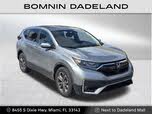
Choose the 2020 Honda CR-V if:
Shop Now- You prioritize cargo capacity and interior storage solutions.
- You prefer the more traditional driving experience with quick acceleration.
- You want straightforward tech without the need to navigate multiple complex menus.








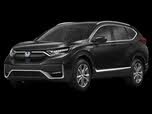
Choose the 2020 Honda CR-V Hybrid if:
Shop Now- Fuel efficiency and lower emissions are top priorities for your daily driving.
- You desire the added stability and confidence of standard all-wheel drive.
- You're looking for advanced tech and convenience features even in the lower trims.








By: CarGurus + AI
At CarGurus, our team of experienced automotive writers remain at the heart of our content operation, conducting hands-on car tests and writing insightful guides that are backed by years of industry experience. To complement this, we are harnessing AI to make our content offering more diverse and more helpful to shoppers than ever. To achieve this, our AI systems are based exclusively on CarGurus content, ratings and data, so that what we produce is both unique to CarGurus, and uniquely helpful to car shoppers.