Toyota Prius vs Nissan Maxima
Overview | |
MSRP$24,525 | MSRP$37,090 |
Listings316 | Listings199 |
Ratings & Reviews | |
User Reviews | User Reviews |
Expert reviews6.2 out of 10 | Expert reviews7.3 out of 10 |
Pros
Cons
| Pros
Cons
|
Reviews SummaryTo many people, cars are appliances made to serve a function. These consumers own a car because they need to get from where they are to where they’re going, and with a minimum of hassle, expense, or discomfort. Reliability, efficiency, safety, and economy are the critical deciding factors, and the 2021 Toyota Prius delivers on all fronts. Confusingly, for 2021, the Prius lineup offered a 2020 Edition. Toyota built just 2,020 examples to commemorate the 20th anniversary of the first Prius sold in the U.S. market. It has blacked-out trim, black 17-inch wheels, a body-color rear spoiler, and comes in Supersonic Red or new Wind Chill paint colors. Additionally, Toyota improved the 2021 Prius’s driving-assistance systems by making Toyota Safety Sense 2.0 standard across the board. Android Auto is also standard (joining Apple CarPlay), except for the unique infotainment system in the Prius Limited. | |
Reviews SummaryThe 2021 Nissan Maxima celebrates 40 years on sale, making it one of the oldest Japanese automotive nameplates in continuous use. While it’s impressive for any model to survive four decades, the Maxima has spent most of its history mired in mediocrity. The Nissan Maxima name first appeared in 1981 as a rebranding of the Datsun 810 sedan. The original Maxima/810 was a true enthusiast’s car, boasting rear-wheel drive (RWD) and a sporty character that led Nissan to declare it a “four-door sports car.” However, that only lasted for a few years. With its first redesign for the 1985 model year, the Maxima switched to front-wheel drive (FWD) and was positioned as Nissan’s flagship sedan. It’s been that way ever since. Nissan has continued to gesture in the direction of that original RWD model, but for most of its 40 years, the Maxima has been a slightly sportier alternative to full-size sedans like the Toyota Avalon, rather than a BMW beater. So it is with the current, eighth-generation, Maxima, which debuted for the 2016 model year. It enters the 2021 model year with few changes, the most significant being a 40th Anniversary Edition option package for the top Platinum trim level, which sits above the base SV and mid-range SR trim levels. That’s what we test drove for this review. | |
No video found | No video found |
Popular Features & Specs | |
Engine1.8L 121 hp I4 Hybrid | Engine3.5L 300 hp V6 |
Drive TrainFWD | Drive TrainFWD |
Seating Capacity5 | Seating Capacity5 |
Horsepower | Horsepower300 hp @ 6400 rpm |
EV Battery Capacity0.7 kWh | EV Battery Capacity |
MPG City58 | MPG City20 |
MPG Highway53 | MPG Highway30 |
Engine | |
Engine Name1.8L 121 hp I4 Hybrid | Engine Name3.5L 300 hp V6 |
Torque | Torque261 lb-ft @ 4400 rpm |
Horsepower | Horsepower300 hp @ 6400 rpm |
DrivetrainFWD | DrivetrainFWD |
Fuel Economy | |
EV Battery Capacity0.7 kWh | EV Battery Capacity |
MPG City58 | MPG City20 |
MPG Highway53 | MPG Highway30 |
Interior | |
Seating Capacity5 | Seating Capacity5 |
Key Features | |
Navigation System | Navigation SystemStandard |
Safety | |
Front Crash Overall4 | Front Crash Overall5 |
Side Crash Overall5 | Side Crash Overall5 |
Dimensions & Capacity | |
Cargo Space27.4 cu ft | Cargo Space14.3 cu ft |
Curb Weight3010 lbs | Curb Weight3612 lbs |
Height57.9 in | Height56.5 in |
Length180.0 in | Length192.8 in |
Width69.3 in | Width73.2 in |
Wheelbase106.3 in | Wheelbase109.3 in |
Maximum Payload825 lbs | Maximum Payload1073 lbs |
Number of doors4 | Number of doors4 |
Overview | ||
MSRP | $24,525 | $37,090 |
Listings | ||
Ratings & Reviews | ||
User reviews | ||
Expert reviews | 6.2 out of 10Read full review | 7.3 out of 10Read full review |
Pros & cons | Pros
Cons
| Pros
Cons
|
Summary | To many people, cars are appliances made to serve a function. These consumers own a car because they need to get from where they are to where they’re going, and with a minimum of hassle, expense, or discomfort. Reliability, efficiency, safety, and economy are the critical deciding factors, and the 2021 Toyota Prius delivers on all fronts. Confusingly, for 2021, the Prius lineup offered a 2020 Edition. Toyota built just 2,020 examples to commemorate the 20th anniversary of the first Prius sold in the U.S. market. It has blacked-out trim, black 17-inch wheels, a body-color rear spoiler, and comes in Supersonic Red or new Wind Chill paint colors. Additionally, Toyota improved the 2021 Prius’s driving-assistance systems by making Toyota Safety Sense 2.0 standard across the board. Android Auto is also standard (joining Apple CarPlay), except for the unique infotainment system in the Prius Limited. | The 2021 Nissan Maxima celebrates 40 years on sale, making it one of the oldest Japanese automotive nameplates in continuous use. While it’s impressive for any model to survive four decades, the Maxima has spent most of its history mired in mediocrity. The Nissan Maxima name first appeared in 1981 as a rebranding of the Datsun 810 sedan. The original Maxima/810 was a true enthusiast’s car, boasting rear-wheel drive (RWD) and a sporty character that led Nissan to declare it a “four-door sports car.” However, that only lasted for a few years. With its first redesign for the 1985 model year, the Maxima switched to front-wheel drive (FWD) and was positioned as Nissan’s flagship sedan. It’s been that way ever since. Nissan has continued to gesture in the direction of that original RWD model, but for most of its 40 years, the Maxima has been a slightly sportier alternative to full-size sedans like the Toyota Avalon, rather than a BMW beater. So it is with the current, eighth-generation, Maxima, which debuted for the 2016 model year. It enters the 2021 model year with few changes, the most significant being a 40th Anniversary Edition option package for the top Platinum trim level, which sits above the base SV and mid-range SR trim levels. That’s what we test drove for this review. |
Video | No video found | No video found |
Popular Features & Specs | ||
Engine | 1.8L 121 hp I4 Hybrid | 3.5L 300 hp V6 |
Drive Train | FWD | FWD |
Seating Capacity | 5 | 5 |
Horsepower | 300 hp @ 6400 rpm | |
EV Battery Capacity | 0.7 kWh | |
MPG City | 58 | 20 |
MPG Highway | 53 | 30 |
Engine | ||
Engine Name | 1.8L 121 hp I4 Hybrid | 3.5L 300 hp V6 |
Torque | 261 lb-ft @ 4400 rpm | |
Horsepower | 300 hp @ 6400 rpm | |
Drivetrain | FWD | FWD |
Fuel Economy | ||
EV Battery Capacity | 0.7 kWh | |
MPG City | 58 | 20 |
MPG Highway | 53 | 30 |
Interior | ||
Seating Capacity | 5 | 5 |
Key Features | ||
Navigation System | Standard | |
Safety | ||
Front Crash Overall | 4 | 5 |
Side Crash Overall | 5 | 5 |
Dimensions & Capacity | ||
Cargo Space | 27.4 cu ft | 14.3 cu ft |
Curb Weight | 3010 lbs | 3612 lbs |
Height | 57.9 in | 56.5 in |
Length | 180.0 in | 192.8 in |
Width | 69.3 in | 73.2 in |
Wheelbase | 106.3 in | 109.3 in |
Maximum Payload | 825 lbs | 1073 lbs |
Number of doors | 4 | 4 |
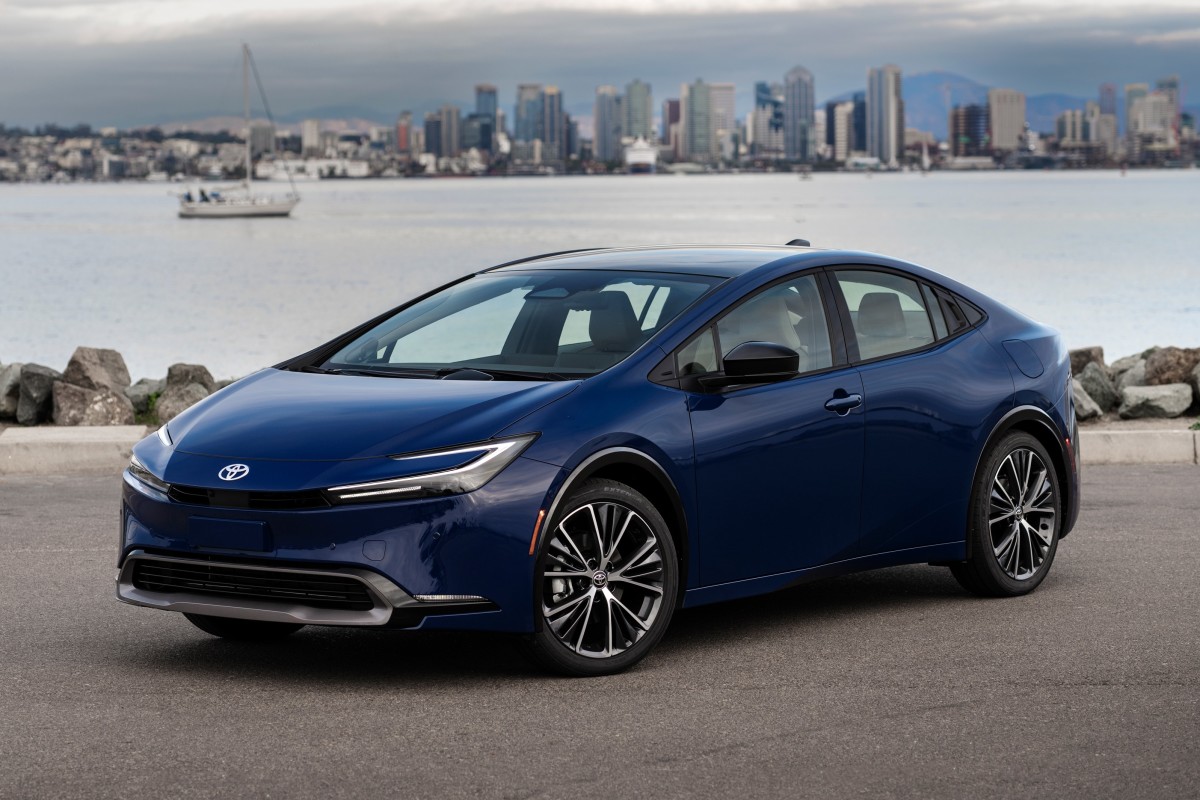
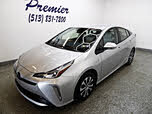
The 2021 Toyota Prius retained its iconic boomerang-shaped hood and roofline, a design choice that had become synonymous with its identity since its second-generation debut in 2004. Despite advancements in aerodynamic vehicle design, the Prius continued to embrace its unique styling, which was not universally praised. The interior of the Prius was equally unconventional, featuring a central strip of displays near the windshield and a dashboard-mounted toggle lever for transmission controls. The dashboard's dramatic wrap into the door panels and the narrow center console added to the car's quirky aesthetic. The Prius was available in several trims, including L Eco, LE, XLE, 2020 Edition, and Limited, with an optional AWD-e system for the LE and XLE trims. Prices ranged from $24,525 to $32,650, excluding destination charges.
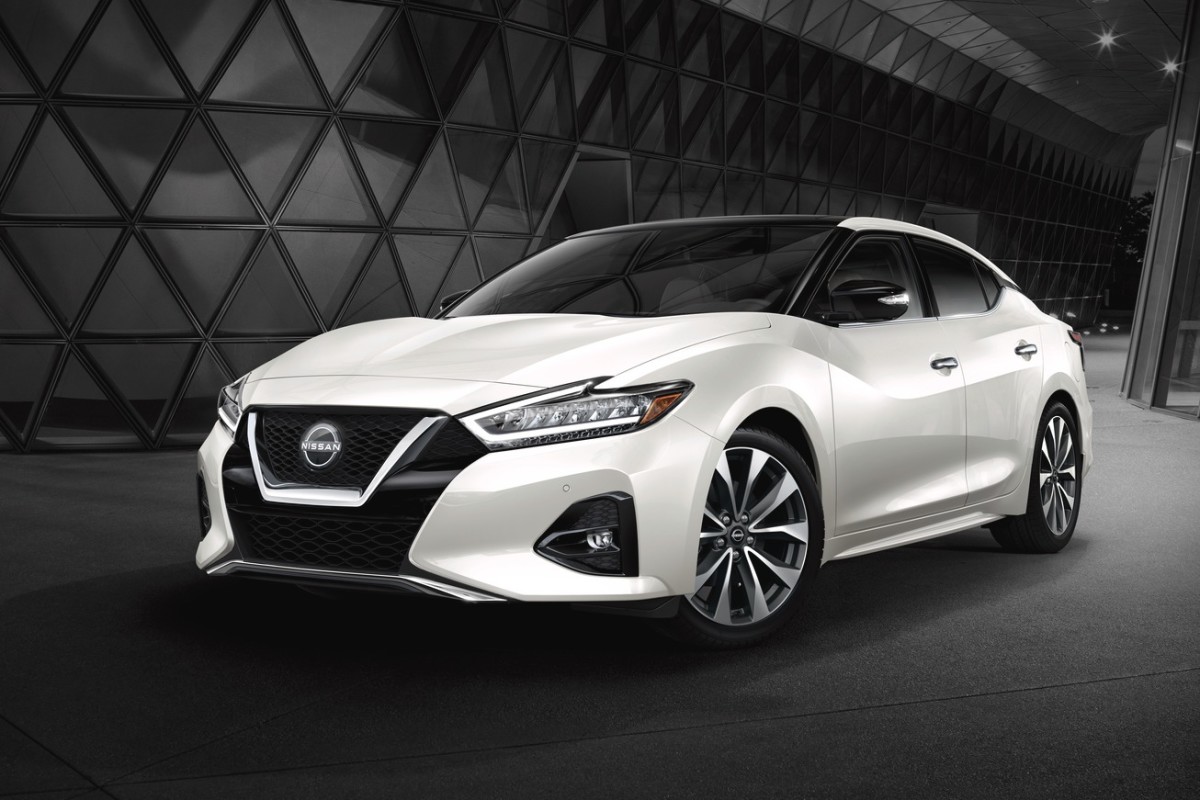
In contrast, the 2021 Nissan Maxima set a bold tone with its styling, featuring a steeply-angled front end and a massive grille reminiscent of an Art Deco locomotive. The Maxima's design elements, such as the "floating" roofline and "V-Motion" grille, influenced other Nissan models. The 40th Anniversary Edition of the Maxima boasted a two-tone exterior, model-specific wheels, and a stylish interior with red leather upholstery and white gauge faces. The Maxima's interior was designed with the driver in mind, offering a comfortable and visually appealing experience. While the Maxima's design was bold, it was toned down in subsequent models, yet it maintained a distinct presence on the road.

The 2021 Toyota Prius was all about fuel efficiency, with the L Eco version achieving an impressive 56 mpg in combined driving, according to the EPA. Other front-wheel-drive models managed 52 mpg, while the AWD-e versions achieved 49 mpg. The Prius 2020 Edition, however, averaged 47.5 mpg during testing. The Prius combined a 1.8-liter four-cylinder engine with a 53-kilowatt electric motor, producing a total of 121 horsepower. While not powerful, the Prius offered a lively feel due to its electric motor's torque. The car featured Eco, Normal, and Power driving modes, with regenerative braking to enhance efficiency. The Prius handled well on curvy roads, thanks to its Toyota New Global Architecture platform, but its steering lacked road feel, and acceleration was accompanied by powertrain noise.
The 2021 Nissan Maxima, equipped with a 3.5-liter V6 engine producing 300 horsepower and 261 pound-feet of torque, offered a different driving experience. The Maxima's CVT was responsive, and the V6 engine provided a satisfying sound. While not a "four-door sports car," the Maxima was agile for a large sedan, though its steering lacked precision and feel. The Maxima's front-wheel-drive setup led to some torque steer, but it remained enjoyable to drive. Compared to competitors, the Maxima's sporty design was more coherent, and it excelled in highway cruising with a quiet cabin and comfortable ride, despite its stiff suspension.
The 2021 Toyota Prius offered more interior space than expected, accommodating up to five passengers. The seats were comfortable, though the SofTex synthetic leather could be sticky. The test vehicle featured an eight-way power driver's seat, heated front seats, and a heated steering wheel. Rear-seat passengers had adequate space, but the lack of air-conditioning vents was a drawback. Cargo space varied by trim, with a maximum of 50.7 cubic feet available with the rear seats folded.
The 2021 Nissan Maxima prioritized front-seat comfort, offering generous headroom and legroom for the driver and front passenger. However, rear-seat passengers experienced limited space, with the worst rear legroom among full-size sedans. The Maxima's cabin was designed around the driver, providing excellent visibility and comfort with Nissan's "Zero Gravity" front seats. Cargo space was limited to 14.3 cubic feet, less than competitors like the Kia Stinger and Volkswagen Arteon, which offered hatchback designs for easier loading.
The 2021 Toyota Prius featured a 7-inch touchscreen infotainment system with standard Bluetooth, SiriusXM, Apple CarPlay, Android Auto, and Amazon Alexa compatibility. The Limited trim offered a 10-speaker JBL sound system and an 11.6-inch touchscreen, though it lacked Android Auto. The infotainment system's sound quality was poor, and road noise often overwhelmed it. The digital instrumentation was dated, with unimpressive graphics.
The 2021 Nissan Maxima's technology showed its age, with an 8-inch touchscreen, Bluetooth, and Apple CarPlay/Android Auto compatibility. A WiFi hotspot and USB ports were standard, but the infotainment system was difficult to use due to dated graphics and small icons. The Maxima included analog controls for convenience, but the notification sounds were jarring. An 11-speaker Bose audio system was available, but the overall tech experience was lacking.
The 2021 Toyota Prius came standard with Toyota Safety Sense 2.0, offering adaptive cruise control, forward-collision warning, lane-departure warning, and more. Higher trims included blind-spot monitoring and rear cross-traffic alert. Safety Connect services were standard for three years. The Prius received favorable marks from the IIHS but lacked an NHTSA crashworthiness rating.
The 2021 Nissan Maxima earned an IIHS "Top Safety Pick+" rating and a five-star overall safety rating from the NHTSA. Standard safety features included automatic emergency braking, blind-spot monitoring, and rear cross-traffic alert. Optional features included adaptive cruise control and a 360-degree camera system. The Maxima did not include ProPilot Assist, but its safety features were comprehensive.
CarGurus highlights
According to CarGurus experts, the overall rating for the 2021 Toyota Prius is 6.2 out of 10, while the 2021 Nissan Maxima scores 7.3 out of 10. Based on these ratings, the 2021 Nissan Maxima is the recommended choice, offering a more engaging driving experience, better safety ratings, and a more cohesive design.
Choose the 2021 Nissan Maxima if:
- You desire a powerful V6 engine and a sporty driving experience.
- You value a driver-focused interior with comfortable front seats.
- You want a sedan with a strong safety rating and comprehensive safety features.


Choose the 2021 Toyota Prius if:
- You prioritize fuel efficiency and want a car that excels in city driving.
- You need a vehicle with versatile cargo space and hatchback utility.
- You appreciate a unique design and are willing to overlook unconventional interior features.



CarGurus highlights
According to CarGurus experts, the overall rating for the 2021 Toyota Prius is 6.2 out of 10, while the 2021 Nissan Maxima scores 7.3 out of 10. Based on these ratings, the 2021 Nissan Maxima is the recommended choice, offering a more engaging driving experience, better safety ratings, and a more cohesive design.
Choose the 2021 Nissan Maxima if:
Shop Now- You desire a powerful V6 engine and a sporty driving experience.
- You value a driver-focused interior with comfortable front seats.
- You want a sedan with a strong safety rating and comprehensive safety features.


Choose the 2021 Toyota Prius if:
Shop Now- You prioritize fuel efficiency and want a car that excels in city driving.
- You need a vehicle with versatile cargo space and hatchback utility.
- You appreciate a unique design and are willing to overlook unconventional interior features.



By: CarGurus + AI
At CarGurus, our team of experienced automotive writers remain at the heart of our content operation, conducting hands-on car tests and writing insightful guides that are backed by years of industry experience. To complement this, we are harnessing AI to make our content offering more diverse and more helpful to shoppers than ever. To achieve this, our AI systems are based exclusively on CarGurus content, ratings and data, so that what we produce is both unique to CarGurus, and uniquely helpful to car shoppers.

