Land Rover Range Rover vs Hyundai Ioniq 5
Overview | |
MSRP$107,900 | MSRP$35,000 |
Listings850 | Listings154 |
Ratings & Reviews | |
User Reviews | User Reviews |
Expert reviews7.7 out of 10 | Expert reviews8.0 out of 10 |
Pros
Cons
| Pros
Cons
|
Reviews SummaryFew automotive nameplates carry the star power of the Land Rover Range Rover. Arguably the first luxury SUV, it blazed a trail for high-end utility vehicles like the Lexus LX and Mercedes-Benz G-Wagen, and it now counts more suburb-oriented models like the BMW X7, Cadillac Escalade, Infiniti QX80, Lincoln Navigator, and Mercedes-Benz GLS-Class among its competition. Changes for 2025 are limited to some reshuffling of options. Verdict: The Range Rover excels in refinement, while offering competitive interior space and towing capacity. But its user interface remains a weak point. | |
Reviews SummaryMany automakers have had a tough time launching electric vehicles, as teething problems have resulted in build-quality issues, gremlins, and production delays. Hyundai, however, got it right from the start with the Ioniq 5. Not only did this compact crossover nail the basics, it has also struck a chord for its stylish looks, fast charging capability, good range, and practicality. Verdict: Five years into its run, the Ioniq 5 is still the electric vehicle we would recommend to most EV buyers. A drive around Hyundai’s factory in Savannah, Georgia, only reinforced our position. | |
No video found | No video found |
Popular Features & Specs | |
Engine3.0L 395 hp I6 | Engine168 hp Electric |
DrivetrainAWD | DrivetrainRWD |
Seating Capacity5 | Seating Capacity5 |
Horsepower395 hp @ 5500 rpm | Horsepower |
EV Battery Capacity0.2 kWh | EV Battery Capacity63 kWh |
MPG City19 | MPG City131 |
MPG Highway24 | MPG Highway100 |
Battery Charge Time (120V) | Battery Charge Time (120V)54 hours |
Battery Charge Time (240V) | Battery Charge Time (240V)5.7 hours |
Engine | |
Engine Name3.0L 395 hp I6 | Engine Name168 hp Electric |
Torque406 lb-ft @ 2000 rpm | Torque |
Horsepower395 hp @ 5500 rpm | Horsepower |
Battery Charge Time (120V) | Battery Charge Time (120V)54 hours |
Battery Charge Time (240V) | Battery Charge Time (240V)5.7 hours |
DrivetrainAWD | DrivetrainRWD |
Fuel Economy | |
EV Battery Capacity0.2 kWh | EV Battery Capacity63 kWh |
MPG City19 | MPG City131 |
MPG Highway24 | MPG Highway100 |
Interior | |
Leather SeatsStandard | Leather Seats |
Seating Capacity5 | Seating Capacity5 |
Key Features | |
Navigation SystemStandard | Navigation SystemStandard |
Sunroof/MoonroofStandard | Sunroof/Moonroof |
Safety | |
Front Crash Overall | Front Crash Overall4 |
Side Crash Overall | Side Crash Overall5 |
Dimensions & Capacity | |
Cargo Space40.7 cu ft | Cargo Space26.3 cu ft |
Curb Weight5240 lbs | Curb Weight4145 lbs |
Height73.6 in | Height63.0 in |
Length198.9 in | Length183.3 in |
Width87.0 in | Width74.4 in |
Wheelbase118.0 in | Wheelbase118.1 in |
Maximum Payload2145 lbs | Maximum Payload1080 lbs |
Number of doors4 | Number of doors4 |
Maximum Towing Capacity7715 lbs | Maximum Towing Capacity |
Overview | ||
MSRP | $107,900 | $35,000 |
Listings | ||
Ratings & Reviews | ||
User reviews | ||
Expert reviews | 7.7 out of 10Read full review | 8.0 out of 10Read full review |
Pros & cons | Pros
Cons
| Pros
Cons
|
Summary | Few automotive nameplates carry the star power of the Land Rover Range Rover. Arguably the first luxury SUV, it blazed a trail for high-end utility vehicles like the Lexus LX and Mercedes-Benz G-Wagen, and it now counts more suburb-oriented models like the BMW X7, Cadillac Escalade, Infiniti QX80, Lincoln Navigator, and Mercedes-Benz GLS-Class among its competition. Changes for 2025 are limited to some reshuffling of options. Verdict: The Range Rover excels in refinement, while offering competitive interior space and towing capacity. But its user interface remains a weak point. | Many automakers have had a tough time launching electric vehicles, as teething problems have resulted in build-quality issues, gremlins, and production delays. Hyundai, however, got it right from the start with the Ioniq 5. Not only did this compact crossover nail the basics, it has also struck a chord for its stylish looks, fast charging capability, good range, and practicality. Verdict: Five years into its run, the Ioniq 5 is still the electric vehicle we would recommend to most EV buyers. A drive around Hyundai’s factory in Savannah, Georgia, only reinforced our position. |
Video | No video found | No video found |
Popular Features & Specs | ||
Engine | 3.0L 395 hp I6 | 168 hp Electric |
Drivetrain | AWD | RWD |
Seating Capacity | 5 | 5 |
Horsepower | 395 hp @ 5500 rpm | |
EV Battery Capacity | 0.2 kWh | 63 kWh |
MPG City | 19 | 131 |
MPG Highway | 24 | 100 |
Battery Charge Time (120V) | 54 hours | |
Battery Charge Time (240V) | 5.7 hours | |
Engine | ||
Engine Name | 3.0L 395 hp I6 | 168 hp Electric |
Torque | 406 lb-ft @ 2000 rpm | |
Horsepower | 395 hp @ 5500 rpm | |
Battery Charge Time (120V) | 54 hours | |
Battery Charge Time (240V) | 5.7 hours | |
Drivetrain | AWD | RWD |
Fuel Economy | ||
EV Battery Capacity | 0.2 kWh | 63 kWh |
MPG City | 19 | 131 |
MPG Highway | 24 | 100 |
Interior | ||
Leather Seats | Standard | |
Seating Capacity | 5 | 5 |
Key Features | ||
Navigation System | Standard | Standard |
Sunroof/Moonroof | Standard | |
Safety | ||
Front Crash Overall | 4 | |
Side Crash Overall | 5 | |
Dimensions & Capacity | ||
Cargo Space | 40.7 cu ft | 26.3 cu ft |
Curb Weight | 5240 lbs | 4145 lbs |
Height | 73.6 in | 63.0 in |
Length | 198.9 in | 183.3 in |
Width | 87.0 in | 74.4 in |
Wheelbase | 118.0 in | 118.1 in |
Maximum Payload | 2145 lbs | 1080 lbs |
Number of doors | 4 | 4 |
Maximum Towing Capacity | 7715 lbs | |
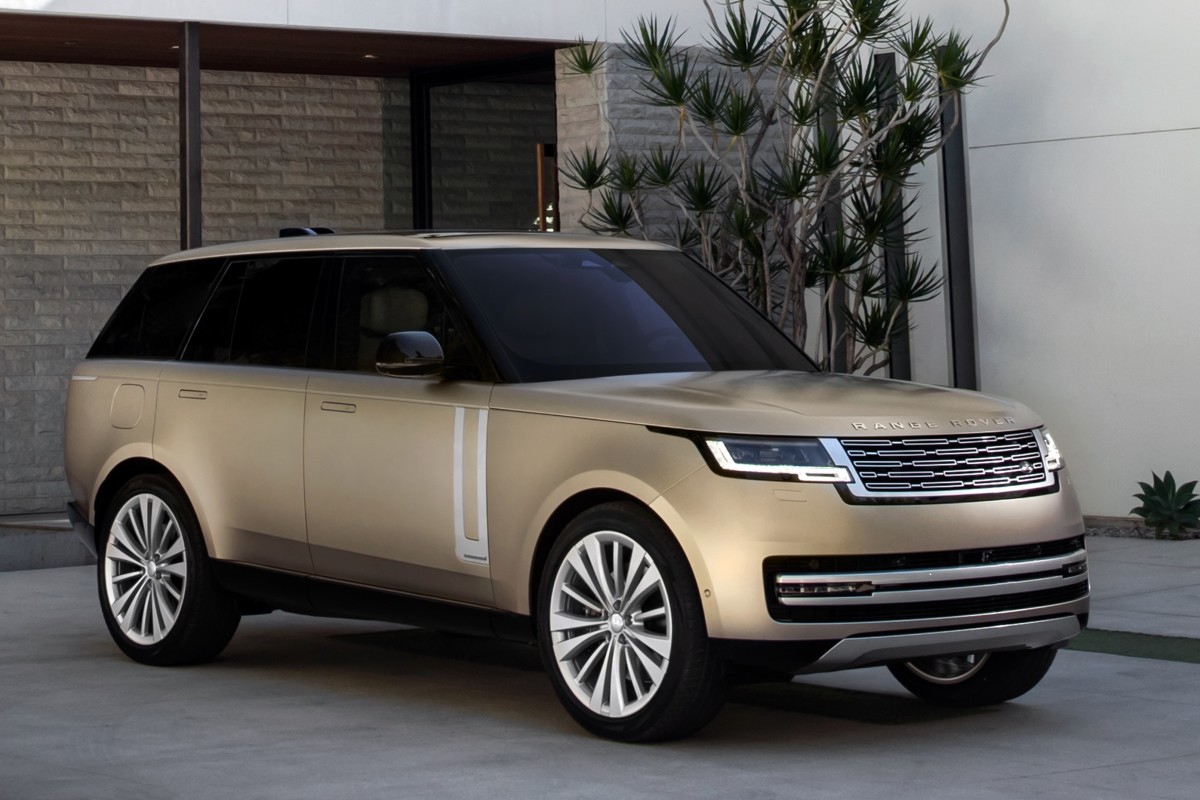
The 2025 Land Rover Range Rover was a testament to understated luxury, maintaining its classic design lineage while offering multiple configurations. Buyers could choose between standard-wheelbase and long-wheelbase versions, with the latter available with a third row of seats. The trim levels included SE, Autobiography, and SV, though not all were available with every body style. The exterior design, with its minimal detailing and recognizable features like the vertical trim piece and angled rear roof pillar, conveyed a subtle high-end status. Inside, the Range Rover emphasized simplicity with a minimalist dashboard, featuring a touchscreen, engine start button, and shifter. While the materials were generally high-quality, the long-wheelbase SE model had a bit too much plastic for its price point.
The 2026 Hyundai Ioniq 5 combined a retro 1980s hatchback vibe with modern crossover SUV elements, resulting in a unique and attractive design. Its profile was defined by angular lines and a triangular shape, enhanced by dark cladding around the wheels and lower body. The front featured a visor slit with rectangular headlights, while the rear had an integrated spoiler and darkened panels. The XRT model stood out with its unique 18-inch alloys, pixel-patterned cladding, and a more purposeful rally car-like appearance. Inside, the Ioniq 5 was utilitarian yet tech-savvy, with standard cloth upholstery and synthetic leather in higher trims. The interior had a cold theme with black and gray upholstery, but the tech features, including dual 12.3-inch screens, added a modern touch.

The 2025 Land Rover Range Rover offered a range of powertrain options, all paired with an eight-speed automatic transmission and four-wheel drive. The entry-level engine was a turbocharged 3.0-liter inline-six with a mild hybrid system, producing 395 horsepower and 405 pound-feet of torque. A plug-in hybrid version of this engine delivered 543 hp and 406 lb-ft. The V8 option, sourced from BMW, was a twin-turbocharged 4.4-liter engine making 523 hp and 553 lb-ft in SE and Autobiography models, and 606 hp and 553 lb-ft in the SV model. The SV could accelerate from 0 to 60 mph in 4.3 seconds, with a top speed of 162 mph. Despite its size, the Range Rover offered excellent ride quality and body control, with features like a two-speed transfer case, Terrain Response drive modes, and height-adjustable air suspension ensuring off-road capability.
The 2026 Hyundai Ioniq 5 provided a choice between a single-motor, rear-wheel-drive powertrain with 168 hp and 258 lb-ft of torque in the base trim, or 220 hp in other trims, and a dual-motor, all-wheel-drive setup with 320 hp and 446 lb-ft. The Ioniq 5 N performance model boasted 641 hp and 568 lb-ft. The dual-motor powertrain delivered quiet, robust power, with a 0-60 mph time of 5.3 seconds. Drivers could select from five regenerative braking settings, including a one-pedal driving mode. The Ioniq 5 rode smoothly, though its steering was somewhat numb. The XRT model, with its higher ground clearance and all-terrain tires, excelled on off-road trails, offering terrain modes for different conditions. However, it lacked underbody skid plates and high-performance shocks for more extreme off-road adventures.
The 2025 Land Rover Range Rover offered a spacious interior, with three-row models seating seven and two-row models seating five. The long-wheelbase version provided unmatched second-row legroom of 48 inches, even without the third row. The third-row legroom was comparable to competitors like the Cadillac Escalade and Mercedes-Benz GLS-Class. Cargo space was limited to 11 cubic feet with the third row in place, expanding to 40.7 cubic feet with the third row folded and 83.5 cubic feet with both rows down. The split tailgate and air suspension facilitated loading and unloading. The Range Rover could tow up to 8,200 pounds, matching other luxury SUVs in its class.
The 2026 Hyundai Ioniq 5 featured spacious front seats with standard eight-way power adjustments for the driver and heated front seats across all trims. The Limited trim added ventilated front seats and a "Relaxation" seat for the driver. The rear seat offered 39.4 inches of legroom, accommodating two adults comfortably. Cargo space was 26.3 cubic feet with the rear seats up, expanding to 58.5 cubic feet with them folded. The Ioniq 5's cargo capacity was slightly less than gas-powered compact crossovers but comparable to the Mustang Mach-E. The steep rear hatch angle affected cargo usability.
The 2025 Land Rover Range Rover came with a 13.7-inch digital instrument cluster and a 13.1-inch touchscreen, featuring wireless Apple CarPlay and Android Auto. A 35-speaker Meridian audio system was available on higher trims. The Pivi Pro infotainment system had improved functionality, but the lack of physical controls made it less user-friendly. The natural-language voice recognition system helped mitigate this issue, allowing for easy control of various functions.
The 2026 Hyundai Ioniq 5 boasted a 12.3-inch digital instrument cluster and a 12.3-inch infotainment touchscreen, both under a single piece of glass. Standard features included wireless Apple CarPlay and Android Auto, built-in navigation, and a Wi-Fi hotspot. The Limited trim added a head-up display and a Bose eight-speaker audio system. The MyHyundai app allowed for remote control of various functions, and the XRT and Limited trims offered a digital key. The infotainment system was user-friendly, with voice commands and separate climate controls.
The 2025 Land Rover Range Rover included standard driver-assistance features like automatic emergency braking, forward collision warning, adaptive cruise control, and a 360-degree camera system. However, it lacked advanced systems like Super Cruise or BlueCruise. The surround-view camera system was helpful, though it required manual activation at times. Crash-test ratings were unavailable at the time of publication.
The 2026 Hyundai Ioniq 5 offered a comprehensive suite of standard safety features, including blind-spot monitors, forward-collision warning, and adaptive cruise control. Optional features included a surround-view camera system and Highway Driving Assist 2 with automatic lane changes. The Ioniq 5 earned a Top Safety Pick+ from the IIHS, though NHTSA ratings were not available. The lane-keep assist and blind-spot camera system were particularly effective.
CarGurus highlights

According to CarGurus experts, the overall rating for 2025 Land Rover Range Rover is 7.7 out of 10, while the 2026 Hyundai Ioniq 5 scores 8.0 out of 10. Based on these ratings, the Hyundai Ioniq 5 is the recommended choice, offering a blend of modern technology, safety features, and unique design that edges out the Range Rover in this comparison.
Choose the 2025 Land Rover Range Rover if:
- You prioritize off-road capability with luxury features.
- You need a spacious interior with ample legroom for passengers.
- You require a high towing capacity for heavy loads.


Choose the 2026 Hyundai Ioniq 5 if:
- You want a modern EV with advanced technology and user-friendly features.
- You seek a vehicle with excellent safety ratings and comprehensive driver-assistance systems.
- You prefer a unique design that combines retro and modern elements.


CarGurus highlights
According to CarGurus experts, the overall rating for 2025 Land Rover Range Rover is 7.7 out of 10, while the 2026 Hyundai Ioniq 5 scores 8.0 out of 10. Based on these ratings, the Hyundai Ioniq 5 is the recommended choice, offering a blend of modern technology, safety features, and unique design that edges out the Range Rover in this comparison.
Choose the 2025 Land Rover Range Rover if:
Shop Now- You prioritize off-road capability with luxury features.
- You need a spacious interior with ample legroom for passengers.
- You require a high towing capacity for heavy loads.
Choose the 2026 Hyundai Ioniq 5 if:
Shop Now- You want a modern EV with advanced technology and user-friendly features.
- You seek a vehicle with excellent safety ratings and comprehensive driver-assistance systems.
- You prefer a unique design that combines retro and modern elements.

By: CarGurus + AI
At CarGurus, our team of experienced automotive writers remain at the heart of our content operation, conducting hands-on car tests and writing insightful guides that are backed by years of industry experience. To complement this, we are harnessing AI to make our content offering more diverse and more helpful to shoppers than ever. To achieve this, our AI systems are based exclusively on CarGurus content, ratings and data, so that what we produce is both unique to CarGurus, and uniquely helpful to car shoppers.

