Mercedes-Benz GLC vs Hyundai IONIQ 5

Overview | |
MSRP$52,400 | MSRP$35,000 |
Listings10068 | Listings7178 |
Ratings & Reviews | |
User Reviews | User Reviews |
Expert reviews7.8 out of 10 | Expert reviews8.0 out of 10 |
Pros
Cons
| Pros
Cons
|
Reviews SummaryThe GLC 53 replaces the previous pair of four-cylinder-powered AMG models. Its sweet twin-turbo inline-six engine and a menu of chassis enhancements add up to a zesty and surprisingly engaging driving experience. It also enhances the GLC’s already good looks and boasts the same high-quality cabin that strikes a balance between new-school tech and old-world luxury. Verdict: The GLC is more expensive than rivals and certainly isn’t the most practical choice, but the value of its most appealing attributes—its interior, the way its technology works, and the way it drives—is hard to quantify on a spreadsheet. | |
Reviews SummaryMany automakers have had a tough time launching electric vehicles, as teething problems have resulted in build-quality issues, gremlins, and production delays. Hyundai, however, got it right from the start with the Ioniq 5. Not only did this compact crossover nail the basics, it has also struck a chord for its stylish looks, fast charging capability, good range, and practicality. Verdict: Five years into its run, the Ioniq 5 is still the electric vehicle we would recommend to most EV buyers. A drive around Hyundai’s factory in Savannah, Georgia, only reinforced our position. | |
No video found | No video found |
Popular Features & Specs | |
Engine | Engine168 hp Electric |
Drivetrain | DrivetrainRWD |
Seating Capacity5 | Seating Capacity5 |
EV Battery Capacity | EV Battery Capacity63 kWh |
Fuel Economy (City) | Fuel Economy (City)131 MPG/MPGe |
Fuel Economy (Highway) | Fuel Economy (Highway)100 MPG/MPGe |
Battery Charge Time (120V) | Battery Charge Time (120V)54 hours |
Battery Charge Time (240V) | Battery Charge Time (240V)5.7 hours |
Engine | |
Engine Name2.0L 255 hp I4 | Engine Name168 hp Electric |
Torque295 lb-ft @ 1800 rpm | Torque |
Horsepower255 hp @ 5800 rpm | Horsepower |
Battery Charge Time (120V) | Battery Charge Time (120V)54 hours |
Battery Charge Time (240V) | Battery Charge Time (240V)5.7 hours |
DrivetrainRWD | DrivetrainRWD |
Fuel Economy | |
EV Battery Capacity | EV Battery Capacity63 kWh |
Fuel Economy (City) | Fuel Economy (City)131 MPG/MPGe |
Fuel Economy (Highway) | Fuel Economy (Highway)100 MPG/MPGe |
Interior | |
Seating Capacity5 | Seating Capacity5 |
Key Features | |
Navigation System | Navigation SystemStandard |
Safety | |
Front Crash Overall | Front Crash Overall4 |
Side Crash Overall | Side Crash Overall5 |
Dimensions & Capacity | |
Cargo Space21.9 cu ft | Cargo Space26.3 cu ft |
Curb Weight4167 lbs | Curb Weight4145 lbs |
Height64.6 in | Height63.0 in |
Length185.7 in | Length183.3 in |
Width81.7 in | Width74.4 in |
Wheelbase113.7 in | Wheelbase118.1 in |
Maximum Payload1256 lbs | Maximum Payload1080 lbs |
Number of doors4 | Number of doors4 |
Maximum Towing Capacity3500 lbs | Maximum Towing Capacity |
Overview | ||
MSRP | $52,400 | $35,000 |
Listings | 10068 Shop all listings | |
Ratings & Reviews | ||
User reviews | ||
Expert reviews | 7.8 out of 10Read full review | 8.0 out of 10Read full review |
Pros & cons | Pros
Cons
| Pros
Cons
|
Summary | The GLC 53 replaces the previous pair of four-cylinder-powered AMG models. Its sweet twin-turbo inline-six engine and a menu of chassis enhancements add up to a zesty and surprisingly engaging driving experience. It also enhances the GLC’s already good looks and boasts the same high-quality cabin that strikes a balance between new-school tech and old-world luxury. Verdict: The GLC is more expensive than rivals and certainly isn’t the most practical choice, but the value of its most appealing attributes—its interior, the way its technology works, and the way it drives—is hard to quantify on a spreadsheet. | Many automakers have had a tough time launching electric vehicles, as teething problems have resulted in build-quality issues, gremlins, and production delays. Hyundai, however, got it right from the start with the Ioniq 5. Not only did this compact crossover nail the basics, it has also struck a chord for its stylish looks, fast charging capability, good range, and practicality. Verdict: Five years into its run, the Ioniq 5 is still the electric vehicle we would recommend to most EV buyers. A drive around Hyundai’s factory in Savannah, Georgia, only reinforced our position. |
Video | No video found | No video found |
Popular Features & Specs | ||
Engine | 168 hp Electric | |
Drivetrain | RWD | |
Seating Capacity | 5 | 5 |
EV Battery Capacity | 63 kWh | |
Fuel Economy (City) | 131 MPG/MPGe | |
Fuel Economy (Highway) | 100 MPG/MPGe | |
Battery Charge Time (120V) | 54 hours | |
Battery Charge Time (240V) | 5.7 hours | |
Engine | ||
Engine Name | 2.0L 255 hp I4 | 168 hp Electric |
Torque | 295 lb-ft @ 1800 rpm | |
Horsepower | 255 hp @ 5800 rpm | |
Battery Charge Time (120V) | 54 hours | |
Battery Charge Time (240V) | 5.7 hours | |
Drivetrain | RWD | RWD |
Fuel Economy | ||
EV Battery Capacity | 63 kWh | |
Fuel Economy (City) | 131 MPG/MPGe | |
Fuel Economy (Highway) | 100 MPG/MPGe | |
Interior | ||
Seating Capacity | 5 | 5 |
Key Features | ||
Navigation System | Standard | |
Safety | ||
Front Crash Overall | 4 | |
Side Crash Overall | 5 | |
Dimensions & Capacity | ||
Cargo Space | 21.9 cu ft | 26.3 cu ft |
Curb Weight | 4167 lbs | 4145 lbs |
Height | 64.6 in | 63.0 in |
Length | 185.7 in | 183.3 in |
Width | 81.7 in | 74.4 in |
Wheelbase | 113.7 in | 118.1 in |
Maximum Payload | 1256 lbs | 1080 lbs |
Number of doors | 4 | 4 |
Maximum Towing Capacity | 3500 lbs | |
The 2026 Hyundai IONIQ 5 combined the retro charm of a 1980s hatchback with the modern flair of a crossover SUV, resulting in a design that was both unique and appealing. Its profile was distinctly hatchback-like, yet larger than traditional models like the Volkswagen GTI or Toyota Corolla. Angular lines and a character line rising from the rear wheels to the front doors created a triangular shape that defined its profile. Dark cladding around the wheels and lower body added a crossover touch. The front featured a visor slit with rectangular headlights and a small grille, while the rear boasted an integrated spoiler and darkened panels. The XRT model stood out with unique 18-inch alloys, pixel-patterned cladding, and a more rugged appearance, reminiscent of a rally car. Inside, the Ioniq 5 leaned towards a utilitarian aesthetic with a focus on technology, featuring dual 12.3-inch screens and touch controls, though it lacked the warmth of genuine leather and offered a rather sterile ambiance.
The 2027 Mercedes-Benz GLC maintained a sleek and curvaceous design, avoiding the brand's more recent styling excesses. The AMG GLC 53 variant exuded a sporty and athletic vibe, with 21-inch AMG forged wheels and distinctive features like chrome-trimmed vertical slats on the grille and a rear diffuser with four round tailpipes. Despite its sporty appearance, it lacked tinted rear windows, giving it a hot hatchback-like look. Inside, the GLC offered a range of leather and MB-Tex simulated leather hues, along with various trim options that catered to both traditional and modern tastes. The cabin featured high-quality materials, including textured plastics and solid switchgear, with rotary air vents adding a touch of luxury. Overall, the GLC's interior was more premium compared to its competitors, offering a blend of old-school luxury and modern technology.


The 2026 Hyundai IONIQ 5 offered a range of powertrain options, starting with a single-motor, rear-wheel-drive setup producing 168 horsepower and 258 pound-feet of torque in the base SE Standard Range trim. Other trims featured a more powerful 220 hp motor with the same torque. For those seeking more power, a dual-motor, all-wheel-drive configuration delivered 320 hp and 446 lb-ft of torque. The Ioniq 5 N performance model took it further with a dual-motor setup generating up to 641 hp and 568 lb-ft of torque. The Ioniq 5 provided a smooth and quiet ride, with the dual-motor powertrain offering robust acceleration, especially in Sport mode. It achieved an estimated 0-60 mph time of 5.3 seconds, making it quicker than most gas-powered crossovers. The vehicle featured five regenerative braking settings, allowing for one-pedal driving in city conditions. The Ioniq 5 XRT variant offered a more rugged experience with increased ground clearance, all-terrain tires, and terrain modes for off-road adventures.
The 2027 Mercedes-Benz GLC lineup included three models, each with distinct powertrains. The GLC 300 featured a 2.0-liter turbocharged inline-four engine producing 255 horsepower and 295 pound-feet of torque, paired with a nine-speed automatic transmission. It offered rear-wheel drive or the 4Matic all-wheel-drive system, achieving an EPA-estimated 27 mpg combined with RWD and 26 mpg with AWD. The GLC 350e plug-in hybrid delivered 313 hp and 406 lb-ft of torque, with an estimated 54 miles of electric-only range. The AMG GLC 53, a new addition for 2027, boasted a 3.0-liter turbocharged inline-six engine with an electric supercharger and mild-hybrid system, producing 443 hp and 443 lb-ft of torque. It accelerated from 0-60 mph in four seconds, offering a thrilling driving experience. The GLC 53 impressed with its fuel efficiency, achieving 22 mpg combined and 29.8 mpg on the highway. Its chassis enhancements, including rear-wheel steering, contributed to its engaging and athletic feel, while maintaining a comfortable ride quality.
The 2026 Hyundai IONIQ 5 provided spacious front seats with an eight-way power-adjustable driver's seat as standard, while the front passenger seat offered six-way manual adjustments in the base trim. Heated front seats were standard across all trims, with the Limited trim adding ventilated front seats, driver’s seat memory, and a "Relaxation" seat for the driver. The rear seat offered ample legroom with 39.4 inches, accommodating two adults comfortably. Cargo space was slightly smaller than average for a compact crossover, with 26.3 cubic feet behind the rear seats and 58.5 cubic feet with the second row folded. The Ioniq 5 also featured a small front trunk, adding to its cargo capacity.
The 2027 Mercedes-Benz GLC offered a comfortable driver's seat with adjustable thigh support and ample reach from the telescoping steering wheel. Even taller drivers found a good seating position. Rear-seat legroom was slightly reduced with a tall driver up front, but still manageable. The rear seatback did not recline, and fitting a rear-facing child seat required adjusting the front passenger seat. The GLC featured air vents in the rear but lacked separate climate controls. Up front, a versatile bin under a sliding lid provided storage options, though accessing the wireless phone charger was challenging. Cargo capacity was average for the segment, with the GLC holding a comparable amount of luggage to its competitors.
The 2026 Hyundai IONIQ 5 featured a 12.3-inch digital instrument cluster and a 12.3-inch infotainment touchscreen under a single piece of glass. It offered wireless Apple CarPlay and Android Auto, built-in navigation, and a Wi-Fi hotspot. The MyHyundai smartphone app allowed owners to monitor the car's status, set charging schedules, and use connected navigation. The XRT and Limited trims included a digital key and a head-up display. The infotainment system was user-friendly, with voice commands and separate climate controls for convenience.
The 2027 Mercedes-Benz GLC had a portrait-oriented touchscreen with customizable home-screen layouts. It offered a shortcut icon for Apple CarPlay or Android Auto, providing ample visual real estate. The GLC 53 test vehicle featured a Burmester 3D Surround Sound System, delivering crisp vocals and clean bass. The Pinnacle trim package included navigation, entertainment apps, a head-up display, noise-insulating glass, and ambient lighting. However, the GLC's touch-sensitive controls were imprecise, and the climate controls were integrated into the touchscreen, which some drivers found less convenient than physical controls.
The 2026 Hyundai Ioniq 5 came equipped with a comprehensive suite of standard safety features, including blind-spot monitors, parking sensors, forward-collision warning, automatic emergency braking, lane-keep assist, and adaptive cruise control. Higher-end models offered additional features like a surround-view camera system and Highway Driving Assist 2. The Ioniq 5 earned a Top Safety Pick+ rating from the IIHS, though NHTSA ratings were unavailable.
The 2027 Mercedes-Benz GLC offered standard safety features such as forward-collision warning, automatic emergency braking, blind-spot monitors, and adaptive cruise control. The Driver Assistance package included lane-centering steering assist and other advanced features. While most systems performed well, the lane-centering assist was inconsistent. The GLC's speed-limit-sign detection system was effective but could be annoying. Safety ratings from the IIHS and NHTSA were not available, but the similar 2026 GLC received a Top Safety Pick rating.
CarGurus highlights
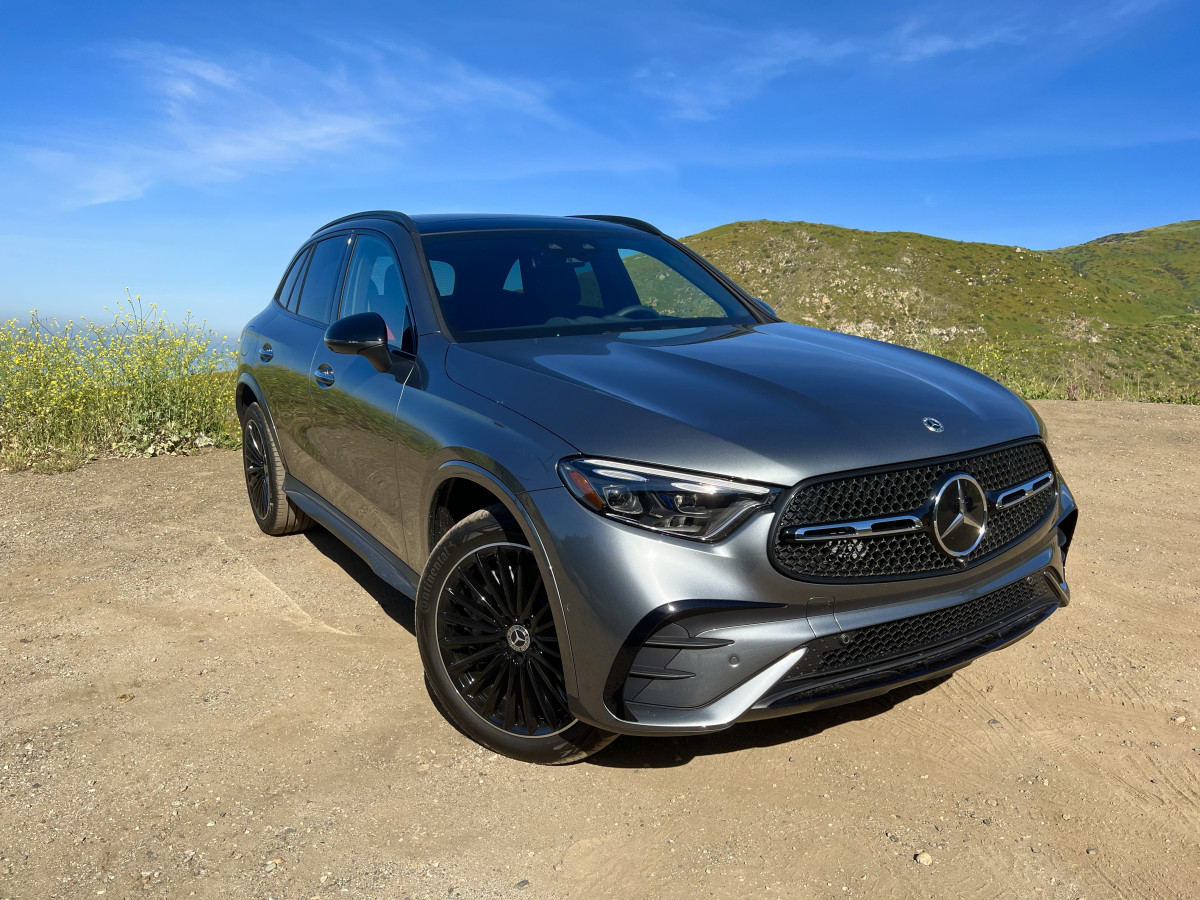
According to CarGurus experts, the overall rating for the 2026 Hyundai IONIQ 5 is 8.0 out of 10, while the 2027 Mercedes-Benz GLC scores 7.8 out of 10. Based on these ratings, the Hyundai IONIQ 5 is the recommended choice, offering a well-rounded package with advanced technology, safety features, and versatility.
Choose the 2027 Mercedes-Benz GLC if:
- You desire a luxurious and sporty driving experience with the AMG GLC 53.
- You appreciate a premium interior with high-quality materials and finishes.
- You want a vehicle with impressive fuel efficiency for its class.


Choose the 2026 Hyundai IONIQ 5 if:
- You prioritize a spacious interior with advanced technology features.
- You seek a versatile vehicle with off-road capabilities in the XRT trim.
- You value a comprehensive suite of standard safety features.


CarGurus highlights
According to CarGurus experts, the overall rating for the 2026 Hyundai IONIQ 5 is 8.0 out of 10, while the 2027 Mercedes-Benz GLC scores 7.8 out of 10. Based on these ratings, the Hyundai IONIQ 5 is the recommended choice, offering a well-rounded package with advanced technology, safety features, and versatility.
Choose the 2027 Mercedes-Benz GLC if:
Shop Now- You desire a luxurious and sporty driving experience with the AMG GLC 53.
- You appreciate a premium interior with high-quality materials and finishes.
- You want a vehicle with impressive fuel efficiency for its class.
Choose the 2026 Hyundai IONIQ 5 if:
Shop Now- You prioritize a spacious interior with advanced technology features.
- You seek a versatile vehicle with off-road capabilities in the XRT trim.
- You value a comprehensive suite of standard safety features.

By: CarGurus + AI
At CarGurus, our team of experienced automotive writers remain at the heart of our content operation, conducting hands-on car tests and writing insightful guides that are backed by years of industry experience. To complement this, we are harnessing AI to make our content offering more diverse and more helpful to shoppers than ever. To achieve this, our AI systems are based exclusively on CarGurus content, ratings and data, so that what we produce is both unique to CarGurus, and uniquely helpful to car shoppers.

