2025 Land Rover Range Rover Reviews, Pricing & Specs

Pros & cons
What we like
Multiple powertrain options
Stylish design
Standard all-wheel drive
What to consider
Unintuitive technology
Poor value for money
The CarGurus verdict
The Range Rover combines regal luxury with go-anywhere capability like no other vehicle.
Few automotive nameplates carry the star power of the Land Rover Range Rover. Arguably the first luxury SUV, it blazed a trail for high-end utility vehicles like the Lexus LX and Mercedes-Benz G-Wagen, and it now counts more suburb-oriented models like the BMW X7, Cadillac Escalade, Infiniti QX80, Lincoln Navigator, and Mercedes-Benz GLS-Class among its competition. Changes for 2025 are limited to some reshuffling of options.
Verdict: The Range Rover excels in refinement, while offering competitive interior space and towing capacity. But its user interface remains a weak point.
out of 10 expert review
Look & feel
Land Rover has grown an entire family tree of Range Rover models—including the Range Rover Sport, Range Rover Evoque, and Range Rover Velar—but this review focuses on the classic version, which itself is sold in multiple configurations. Standard-wheelbase and long-wheelbase versions are available, and the latter can be optioned with a third row of seats.
Buyers can also choose from SE, Autobiography, and SV trim levels, but not with all body styles. The standard-wheelbase Range Rover is available in all three trim levels, but the long-wheelbase three-row model is only available as an SE or Autobiography, while the two-row long-wheelbase Range Rover is only available in Autobiography or SV spec. Base Range Rover SE models come standard with 21-inch wheels, while Autobiography and SV models get standard 22-inch wheels.
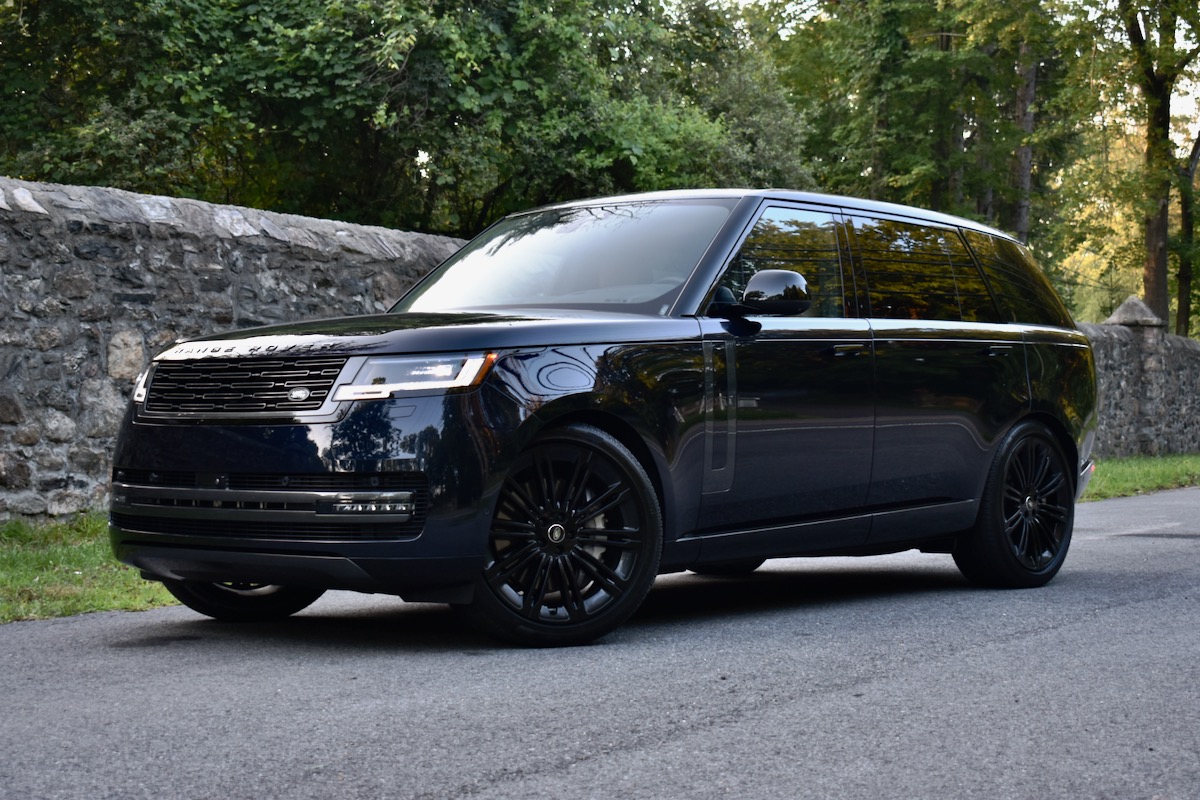
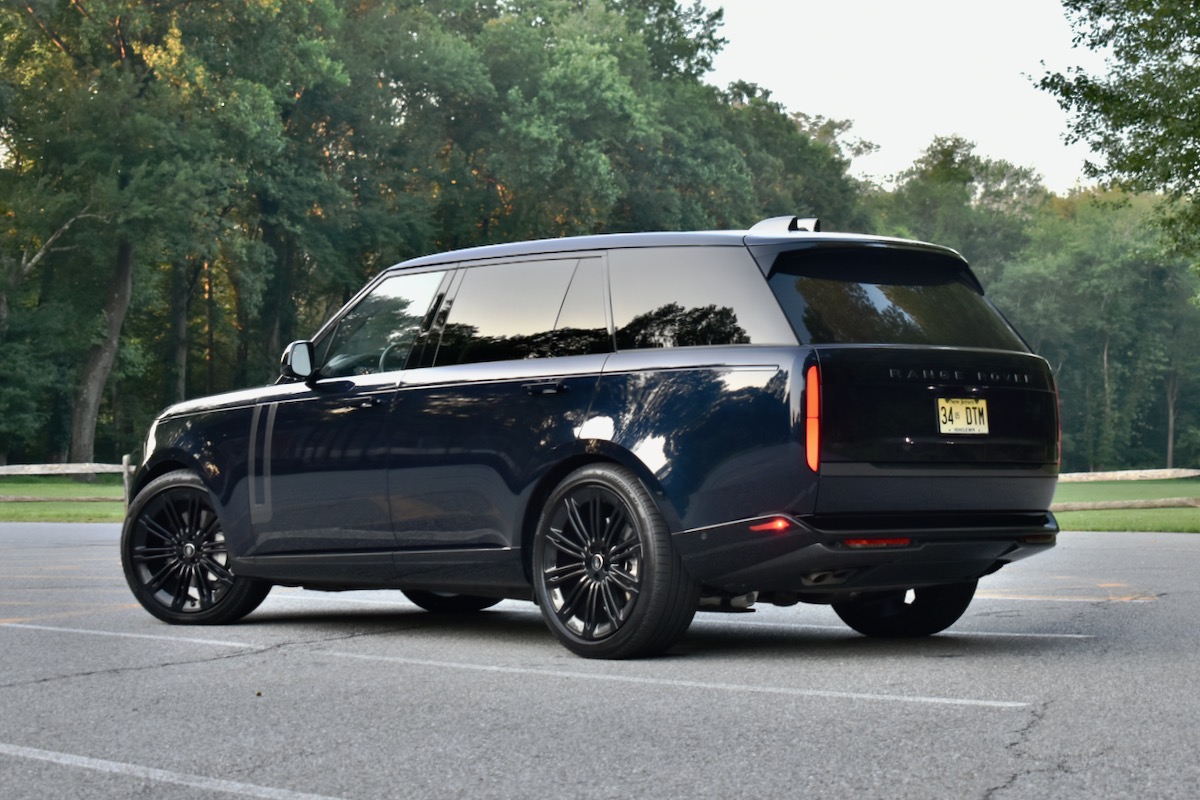
This fifth-generation Range Rover, codenamed L460, was introduced for the 2022 model year. However, it doesn’t look terribly different from the fourth-generation L405 model that preceded it. The main tells are updated headlights and taillights, with the latter integrated with a fuselage-like section of rear bodywork. Still, the design is aging well. Our long-wheelbase test vehicle looked ready to whisk a Bond villain off to their volcanic lair.
With its ample size and minimal exterior detailing, the Range Rover conveys its status in an admirably subtle way. It looks every bit the high-end SUV, but without the nouveaux riche flashiness of a Bentley Bentayga or Rolls-Royce Cullinan, let alone the Escalades and Navigators it’s more likely to share private-school drop-off lines with. Details like the vertical trim piece ahead of the front doors and the angle rear roof pillar also make it instantly recognizable as a Range Rover.
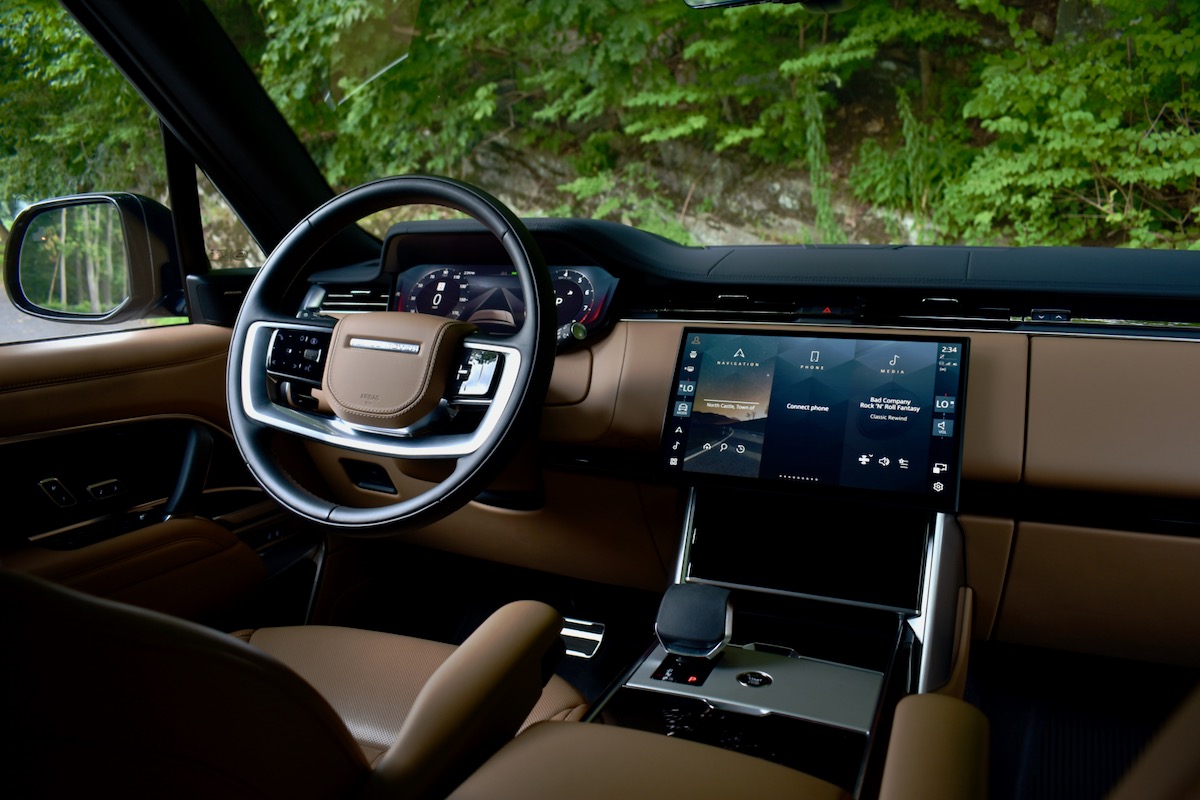
The interior matches the exterior’s emphasis on simplicity. There’s hardly anything on the dashboard except a touchscreen, and awkwardly-placed engine start button, and a nib of a shifter. That makes for a somewhat stark appearance, but the subtle curve of the dash, hidden air vents, and nice integration of the touchscreen show an attention to detail often missing from minimalist interiors like this. Or long-wheelbase SE test car had a bit too much plastic for a six-figure vehicle, but that was the only issue when it came to materials.
Performance
The U.S. doesn’t get the diesel engines available in Europe, but there are still plenty of powertrain options—all with an eight-speed automatic transmission and four-wheel drive (4WD). The entry-level option is a turbocharged 3.0-liter inline-six, with a mild hybrid system, rated at 395 horsepower and 405 pound-feet of torque. This engine can also be had as part of a plug-in hybrid powertrain producing 543 hp and 406 lb-ft of torque.
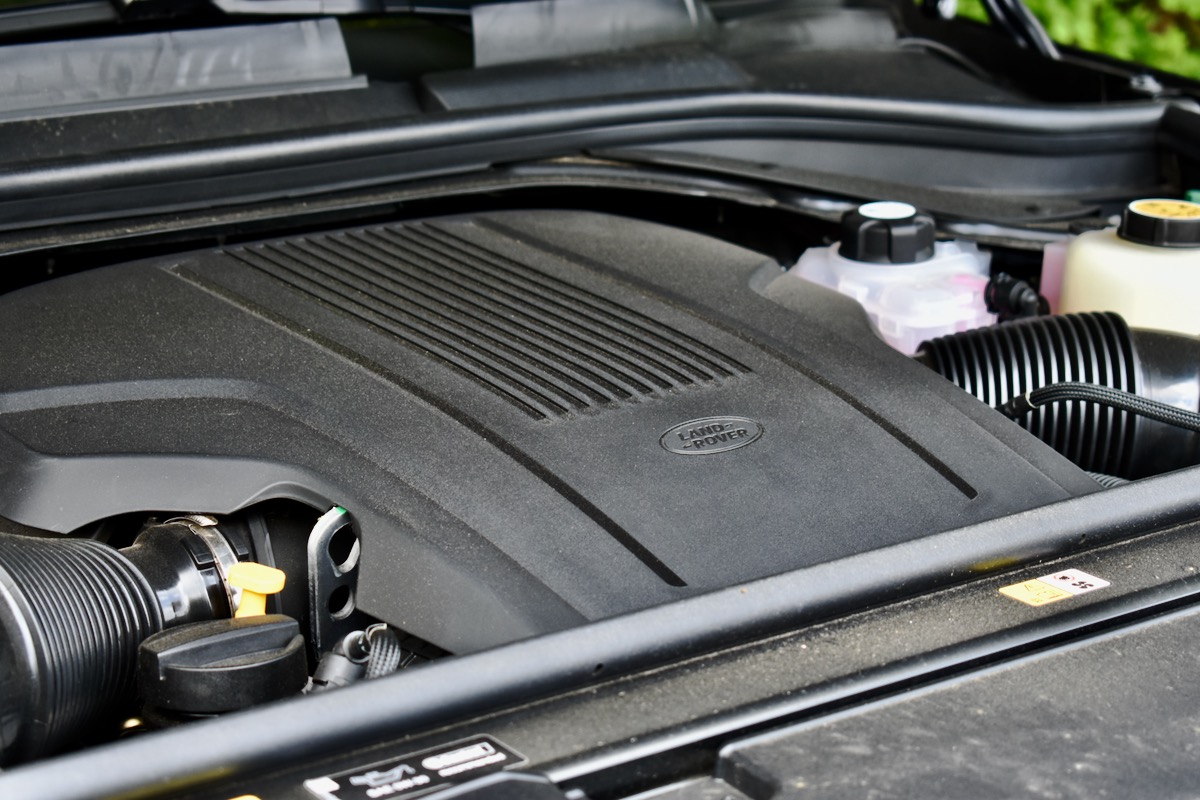
A V8 option remains as well, but it’s no longer Land Rover’s in-house 5.0-liter supercharged engine. Instead, it’s a BMW-sourced twin-turbocharged 4.4-liter V8 making 523 hp and 553 lb-ft in SE and Autobiography models, and 606 hp and 553 lb-ft in the Range Rover SV, getting the latter from zero to 60 mph in 4.3 seconds and on to a top speed of 162 mph in short-wheelbase form, according to Land Rover. The BMW X7 M60 xDrive has the same engine in the 523-hp tune; for more power you need the limited-volume Alpina XB7.
Our three-row test car offered a very different driving experience to the BMW, though. It wasn’t as athletic or agile, but more than made up for that in comfort and refinement. It felt more like traditional luxury cars than anything designed to leave the pavement. Even on optional 23-inch wheels, excellent ride quality minimized road imperfections. Body control was excellent as well, and while it’s not a small vehicle, the Range Rover’s well-tuned suspension and steering meant it was easy to drive delicately. Lots of weigh and comfort-focused suspension are usually a recipe for floppiness and passenger head toss, but not here. Rear-seat passengers kvelled.
Standard features like a two-speed transfer case, brake-based torque vectoring, Terrain Response drive modes, and height-adjustable air suspension ensure the Range Rover remains a capable off-roader. With the suspension set at its off-road height, standard-wheelbase models have 11.6 inches of ground clearance and can wade through up to 35.4 inches of water, according to Land Rover. A 34.7-degree approach angle, 29-degree departure angle, and 25.2-degree breakover angle are impressive as well. A G-Wagen or Lexus LX (basically a fancy Toyota Land Cruiser) might be easier to maneuver on the trail, but the Range Rover holds its own while providing a truly spacious interior.
Form & function
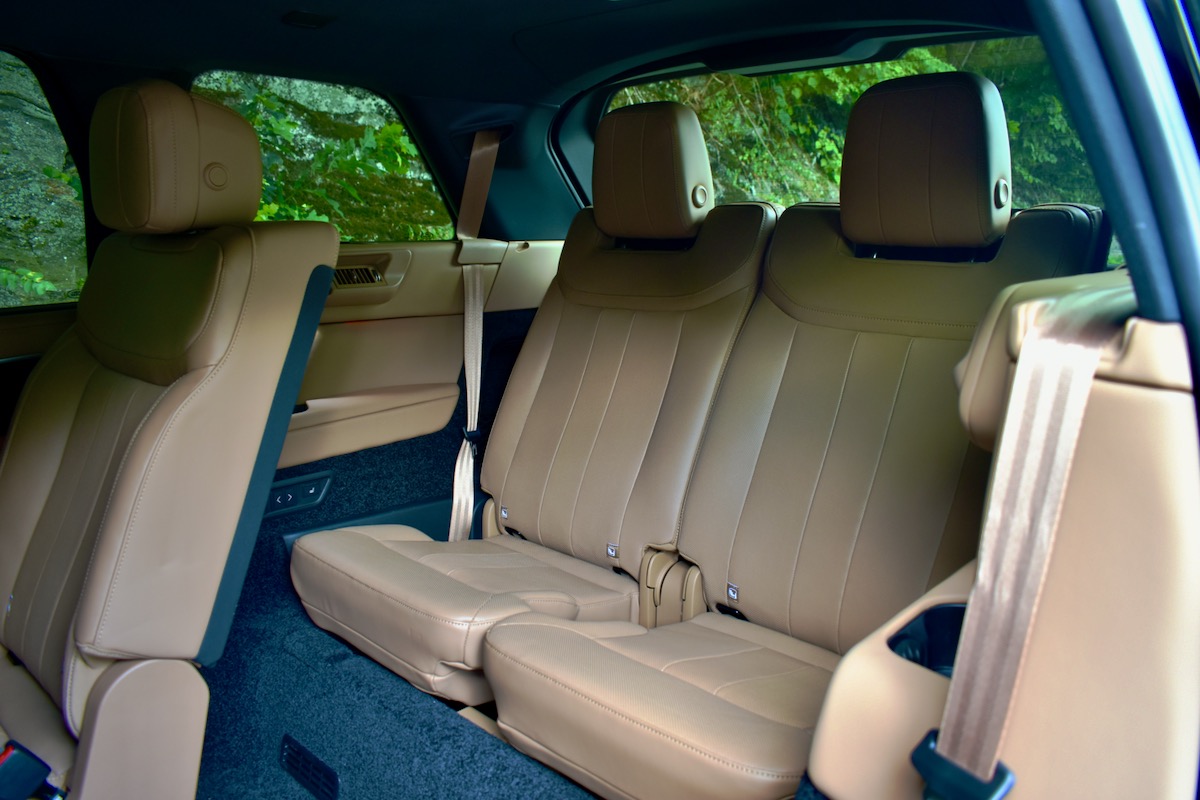
For 2025, three-row Range Rovers are all seven-seaters with second-row captain’s chairs and a third-row bench. Two-row models seat five with a bench in the second row. Headroom across all three rows is ample, and if you opt for the long wheelbase but not the third-row seats, the Range Rover’s 48 inches of second-row legroom are unmatched among big luxury SUVs.
That model’s 125.8-inch wheelbase (8.1 inches longer than the standard-wheelbase model) still leaves competitive second-row legroom with the third row shoehorned in. Third-row legroom, meanwhile, is comparable to that in a standard-wheelbase Cadillac Escalade or Mercedes-Benz GLS-Class; only the Lincoln Navigator offers substantially more legroom in that row. Power-folding seats with buttons conveniently placed near the doors’ strike plates make accessing the third row easy.
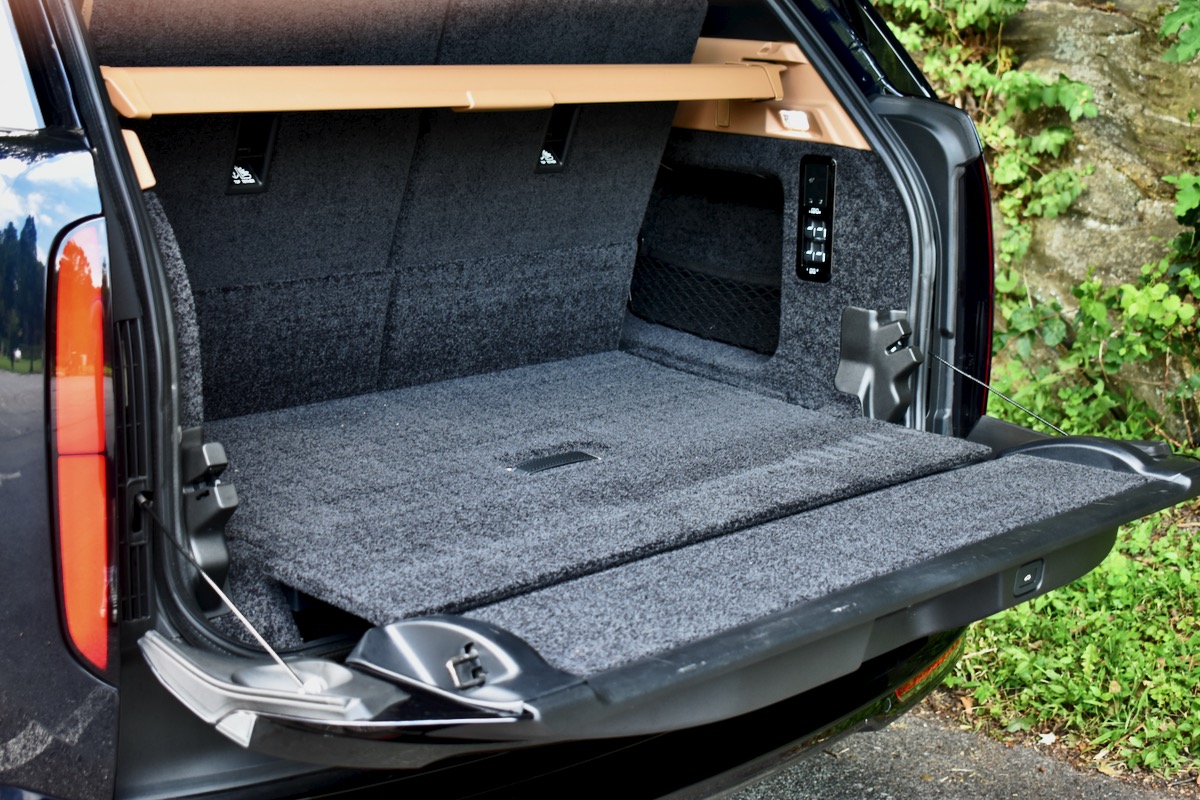
With the third row in place, cargo space is limited to 11 cubic feet—the same as in a Lexus LX, but less than most other three-row full-size SUVs. Cargo space with the third and second rows folded also trails most of the competition, but still measures as respectable 40.7 cubic feet and 83.5 cubic feet, respectively. A split tailgate also makes loading and unloading cargo easier (power operation is standard, with gesture control on Range Rover Autobiography and SV models), as does the air suspension, which allows the Range Rover to kneel like a bus.
Three-zone automatic climate control is standard, while four-zone climate controls, power window shades, and a cabin air purifier are available with the Comfort Pack on SE models, and as standard equipment on higher trim levels.
The Range Rover can tow up to 8,200 pounds, which is right within expectations for this segment. This unibody Land Rover is right up there with the body-on-frame Escalade, Navigator, and Lexus LX, all of which share DNA with pickup trucks.
Technology
All 2025 Range Rover models come standard with a 13.7-inch digital instrument cluster and 13.1-inch touchscreen. Wireless Apple CarPlay and Android Auto are standard as well, while a 35-speaker Meridian audio system with active noise cancellation is available on Autobiography and SV models. Land Rover has discontinued the Activity Key, a bracelet that served as a more rugged key fob, and doesn’t offer phone-as-key connectivity like some other brands.
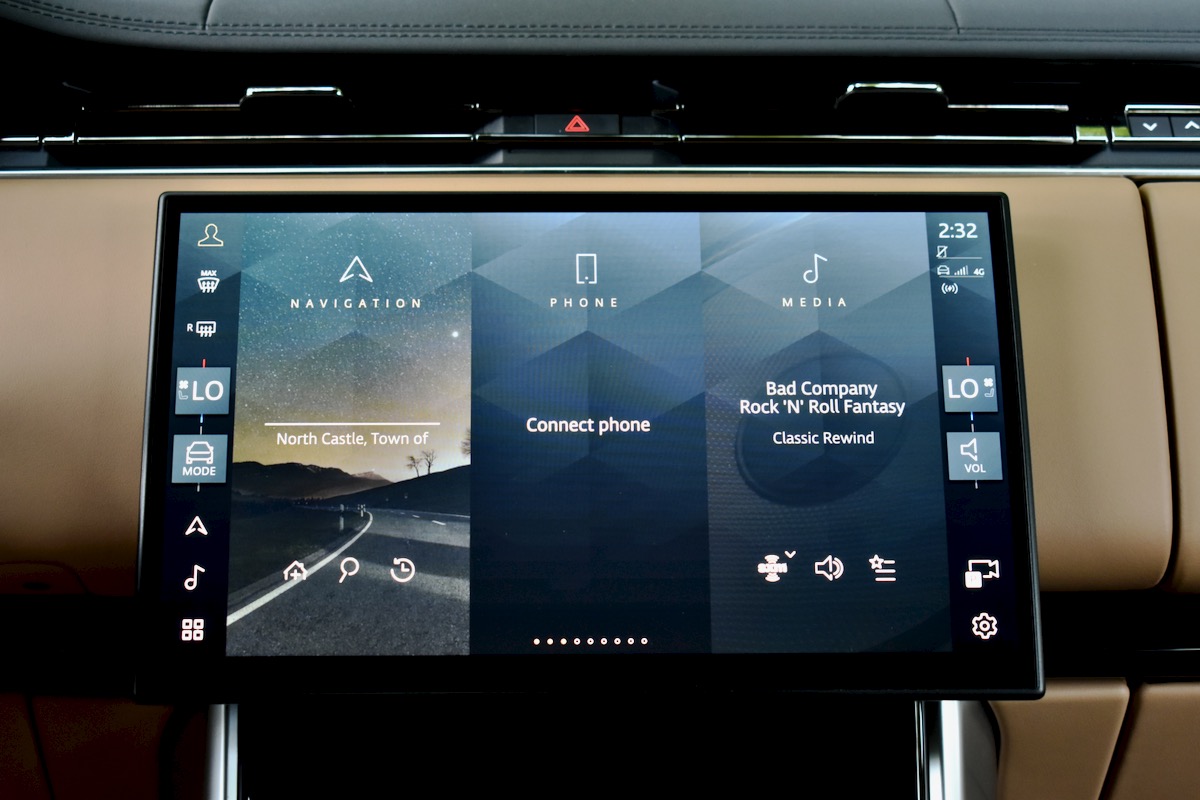
Land Rover’s Pivi Pro infotainment system has gradually improved to achieve reliable functionality, but the physical interface is an unfortunate case of form over function. The touchscreen is nicely integrated with the dashboard, but the lack of buttons and knobs needed to achieve the dashboard’s minimalist aesthetic means it’s overburdened.
Icons for temperature, audio volume, and drive modes are prominently placed, but they’re still more difficult to use than physical controls. There are some controls on the steering wheel, but it was hard to figure out how to reconfigure them for anything other than default settings. Thankfully the gauge-cluster display was crisp and easy to read and featured both a map view and a three-way split of a map, speed readout, and radio station information, but drivers will still find themselves taking turns on the touchscreen with a front-seat passenger quite frequently.
Helping to cut through some of this confusion was Land Rover’s natural-language voice recognition system, which could reliably set different SiriusXM satellite radio stations and change the temperature. Other luxury brands offer similar tech, but it’s especially important for Land Rover because of how few other options exist in the Range Rover cabin.
Safety
Standard driver-assistance features include: automatic emergency braking, forward collision warning, a driver attention monitor, adaptive cruise control with steering assist, front and rear parking sensors, and a 360-degree camera system. Land Rover doesn’t offer anything more sophisticated—nothing like the Super Cruise or BlueCruise systems available on the Cadillac Escalade and Lincoln Navigator, certainly—but at least everything that is on offer is standard.
The driver aids worked as expected, and a standard surround-view camera system is very helpful in a vehicle of this size, whether on-road or off. But the camera view often didn’t appear automatically when needed, necessitating a few pokes at the touchscreen. That, and the Range Rover’s overly sensitive parking aids, made parking a bit more of a process than it needed to be.
Crash-test ratings from the Insurance Institute for Highway Safety (IIHS) and National Highway Traffic Safety Administration (NHTSA) were not available at the time of publication.
Cost-effectiveness
The Range Rover’s base turbo-six powertrain achieves EPA-rated fuel economy of up to 21 mpg combined (19 mpg city, 24 mpg highway), while V8 models are rated at 19 mpg combined (16 mpg city, 23 mpg highway) in standard tune and 18 mpg combined (16 mpg city, 22 mpg highway) in more-powerful SV spec. The Range Rover’s saving grace is the available plug-in hybrid powertrain, which offers an EPA-rated 53 miles of electric range.
Land Rover includes a four-year/50,000-mile new vehicle limited warranty and four-year/50,000-mile roadside assistance coverage. Competitor brands offer similar coverage.
Base prices start at $111,925 for a standard-wheelbase Range Rover SE model (all prices include a $1,825 destination charge) and go up to $240,525 for the long-wheelbase Range Rover SV grade. That’s quite a range (no pun intended), and within it for options. Our seven-seat SE test car had a base price of $119,025 base price, but options like the twin-turbo V8 engine, 23-inch wheels, a head-up display, and Constellation Blue paint brought the as-tested MSRP up to $157,165.
Even among full-size luxury SUVs, the Range Rover is not a value play—and the desirability of the nameplate means it doesn’t have to be. The Range Rover’s combination of off-road capability and on-road poise also justifies its price. It’s much more refined and luxurious then the already-polished BMW X7 and Mercedes-Benz GLS-Class, and makes the truck-like Cadillac Escalade, Lincoln Navigator, Lexus LX, and Infiniti QX80 feel primitive by comparison. Decades after it changed the SUV game, there’s still nothing like a Range Rover.
What owners say
Trims & specs
Base MSRP $114,900 | Seating 7 |
Engine 3.0L 395 hp I6 | Cargo Capacity 8.7 cu ft |
Combined MPG 21 | Drivetrain AWD |
Base MSRP $131,400 | Seating 5 |
Engine 4.4L 523 hp V8 | Cargo Capacity 40.7 cu ft |
Combined MPG 19 | Drivetrain AWD |
Base MSRP $209,000 | Seating 5 |
Engine 4.4L 606 hp V8 | Cargo Capacity 40.7 cu ft |
Combined MPG 19 | Drivetrain AWD |
Base MSRP $234,000 | Seating 5 |
Engine 4.4L 606 hp V8 | Cargo Capacity 40.9 cu ft |
Combined MPG 19 | Drivetrain AWD |
Base MSRP $107,900 | Seating 5 |
Engine 3.0L 395 hp I6 | Cargo Capacity 40.7 cu ft |
Combined MPG 21 | Drivetrain AWD |
Base MSRP $119,900 | Seating 5 |
Engine 3.0L 542 hp I6 Hybrid | Cargo Capacity 40.7 cu ft |
Combined MPG 53 | Drivetrain AWD |
Base MSRP $138,400 | Seating 7 |
Engine 4.4L 523 hp V8 | Cargo Capacity 8.7 cu ft |
Combined MPG 19 | Drivetrain AWD |
Base MSRP $169,400 | Seating 5 |
Engine 4.4L 523 hp V8 | Cargo Capacity 40.9 cu ft |
Combined MPG 19 | Drivetrain AWD |
Base MSRP $151,600 | Seating 5 |
Engine 3.0L 542 hp I6 Hybrid | Cargo Capacity 40.7 cu ft |
Combined MPG 53 | Drivetrain AWD |
Base MSRP $166,400 | Seating 5 |
Engine 4.4L 523 hp V8 | Cargo Capacity 40.7 cu ft |
Combined MPG 19 | Drivetrain AWD |


Pricing trends
MSRP range
$107,900 - $234,000
Current avg. market price
$111,779
Trending down by 1.6% this month
May 2026 - November 2026


