Honda HR-V vs Toyota RAV4 Hybrid
Overview | |
MSRP$23,800 | MSRP$31,225 |
Listings197 | Listings384 |
Ratings & Reviews | |
User Reviews | User Reviews |
Expert reviews8.2 out of 10 | Expert reviews6.3 out of 10 |
Pros
Cons
| Pros
Cons
|
Reviews SummaryHonda’s subcompact SUV gets a makeover inside and out. Previously based on the Fit, the new HR-V shares the global architecture that also underpins the Civic. Honda continues to narrow trim options: There were once as many as five, but the Touring trim level got the axe for the 2022 model year, and the EX has now left the lineup as well. The three remaining trims for 2023 are LX, Sport, and EX-L. We drove the top trim, EX-L, through the mountains of Washington's Columbia River Gorge. New styling plus the newly standard Honda Sensing suite of safety features put this latest HR-V back at the front of the pack it led when it debuted in 2016. | |
Reviews SummaryThe 2023 Toyota RAV4 Hybrid is a solid choice in its rather limited class, with an easily attained 40 mpg, pleasant driving characteristics, and high levels of comfort. A new infotainment system helps its standing, as does a new off-road capable Woodland Edition. | |
Popular Features & Specs | |
Engine2.0L 158 hp I4 | Engine2.5L 219 hp I4 Hybrid |
Drive TrainFWD | Drive TrainAWD |
Seating Capacity5 | Seating Capacity5 |
Horsepower158 hp @ 6500 rpm | Horsepower |
EV Battery Capacity | EV Battery Capacity1.6 kWh |
MPG City26 | MPG City41 |
MPG Highway32 | MPG Highway38 |
Engine | |
Engine Name2.0L 158 hp I4 | Engine Name2.5L 219 hp I4 Hybrid |
Torque138 lb-ft @ 4200 rpm | Torque |
Horsepower158 hp @ 6500 rpm | Horsepower |
DrivetrainFWD | DrivetrainAWD |
Fuel Economy | |
EV Battery Capacity | EV Battery Capacity1.6 kWh |
MPG City26 | MPG City41 |
MPG Highway32 | MPG Highway38 |
Interior | |
Seating Capacity5 | Seating Capacity5 |
Safety | |
Front Crash Overall5 | Front Crash Overall4 |
Side Crash Overall5 | Side Crash Overall5 |
Dimensions & Capacity | |
Cargo Space24.4 cu ft | Cargo Space37.5 cu ft |
Curb Weight3159 lbs | Curb Weight3690 lbs |
Height63.4 in | Height67.0 in |
Length179.8 in | Length180.9 in |
Width72.4 in | Width73.0 in |
Wheelbase104.5 in | Wheelbase105.9 in |
Maximum Payload | Maximum Payload1210 lbs |
Number of doors4 | Number of doors4 |
Maximum Towing Capacity | Maximum Towing Capacity1750 lbs |
Overview | ||
MSRP | $23,800 | $31,225 |
Listings | ||
Ratings & Reviews | ||
User reviews | ||
Expert reviews | 8.2 out of 10Read full review | 6.3 out of 10Read full review |
Pros & cons | Pros
Cons
| Pros
Cons
|
Summary | Honda’s subcompact SUV gets a makeover inside and out. Previously based on the Fit, the new HR-V shares the global architecture that also underpins the Civic. Honda continues to narrow trim options: There were once as many as five, but the Touring trim level got the axe for the 2022 model year, and the EX has now left the lineup as well. The three remaining trims for 2023 are LX, Sport, and EX-L. We drove the top trim, EX-L, through the mountains of Washington's Columbia River Gorge. New styling plus the newly standard Honda Sensing suite of safety features put this latest HR-V back at the front of the pack it led when it debuted in 2016. | The 2023 Toyota RAV4 Hybrid is a solid choice in its rather limited class, with an easily attained 40 mpg, pleasant driving characteristics, and high levels of comfort. A new infotainment system helps its standing, as does a new off-road capable Woodland Edition. |
Video | ||
Popular Features & Specs | ||
Engine | 2.0L 158 hp I4 | 2.5L 219 hp I4 Hybrid |
Drive Train | FWD | AWD |
Seating Capacity | 5 | 5 |
Horsepower | 158 hp @ 6500 rpm | |
EV Battery Capacity | 1.6 kWh | |
MPG City | 26 | 41 |
MPG Highway | 32 | 38 |
Engine | ||
Engine Name | 2.0L 158 hp I4 | 2.5L 219 hp I4 Hybrid |
Torque | 138 lb-ft @ 4200 rpm | |
Horsepower | 158 hp @ 6500 rpm | |
Drivetrain | FWD | AWD |
Fuel Economy | ||
EV Battery Capacity | 1.6 kWh | |
MPG City | 26 | 41 |
MPG Highway | 32 | 38 |
Interior | ||
Seating Capacity | 5 | 5 |
Safety | ||
Front Crash Overall | 5 | 4 |
Side Crash Overall | 5 | 5 |
Dimensions & Capacity | ||
Cargo Space | 24.4 cu ft | 37.5 cu ft |
Curb Weight | 3159 lbs | 3690 lbs |
Height | 63.4 in | 67.0 in |
Length | 179.8 in | 180.9 in |
Width | 72.4 in | 73.0 in |
Wheelbase | 104.5 in | 105.9 in |
Maximum Payload | 1210 lbs | |
Number of doors | 4 | 4 |
Maximum Towing Capacity | 1750 lbs | |
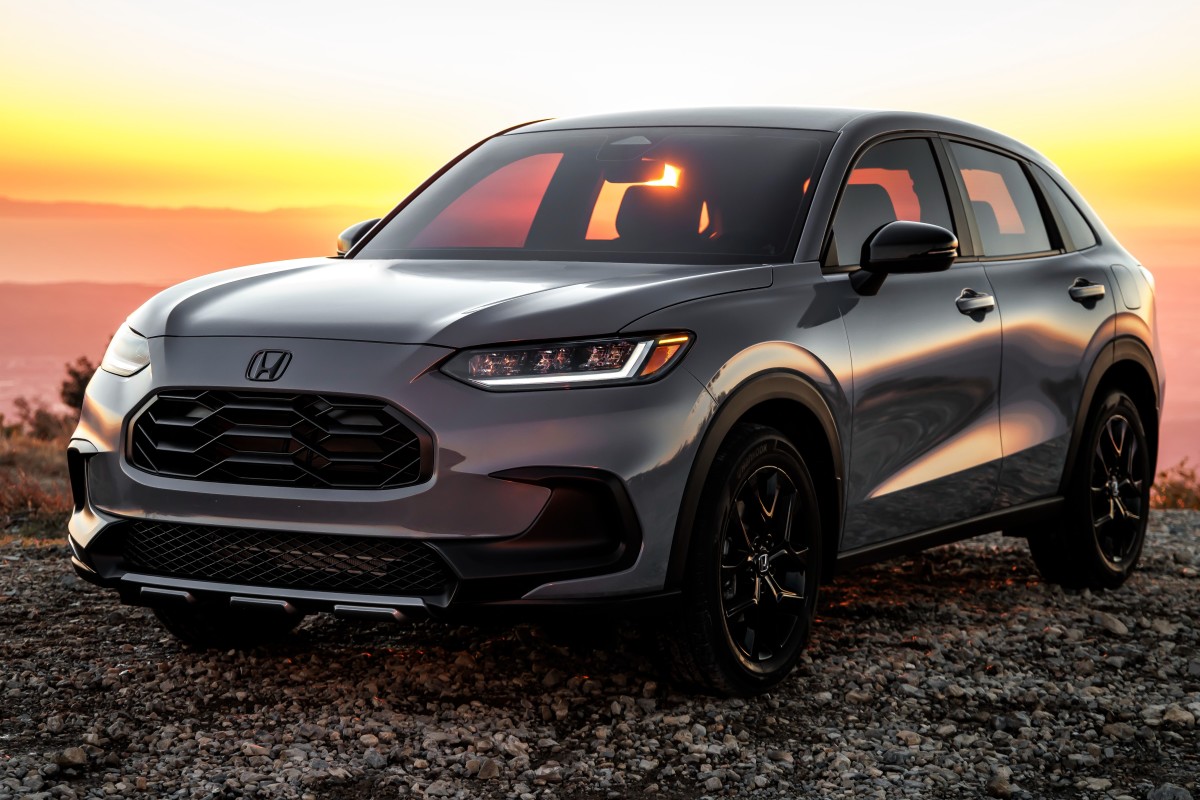
The 2023 Honda HR-V debuted with a notably updated aesthetic, shedding some of the previous model’s quirkiness for a more refined and modern appearance. Gone were the concealed rear door handles and black molding strips on the roof, replaced by cleaner lines and a lower beltline that delivered a sophisticated silhouette. The Nordic Forest Pearl hue, a new addition, enhanced its elegance. The model featured 17-inch silver alloy wheels, with the EX-L variant boasting Shark Gray finished wheels and the HR-V Sport presenting striking 18-inch black alloy wheels and a host of sporty visual tweaks.
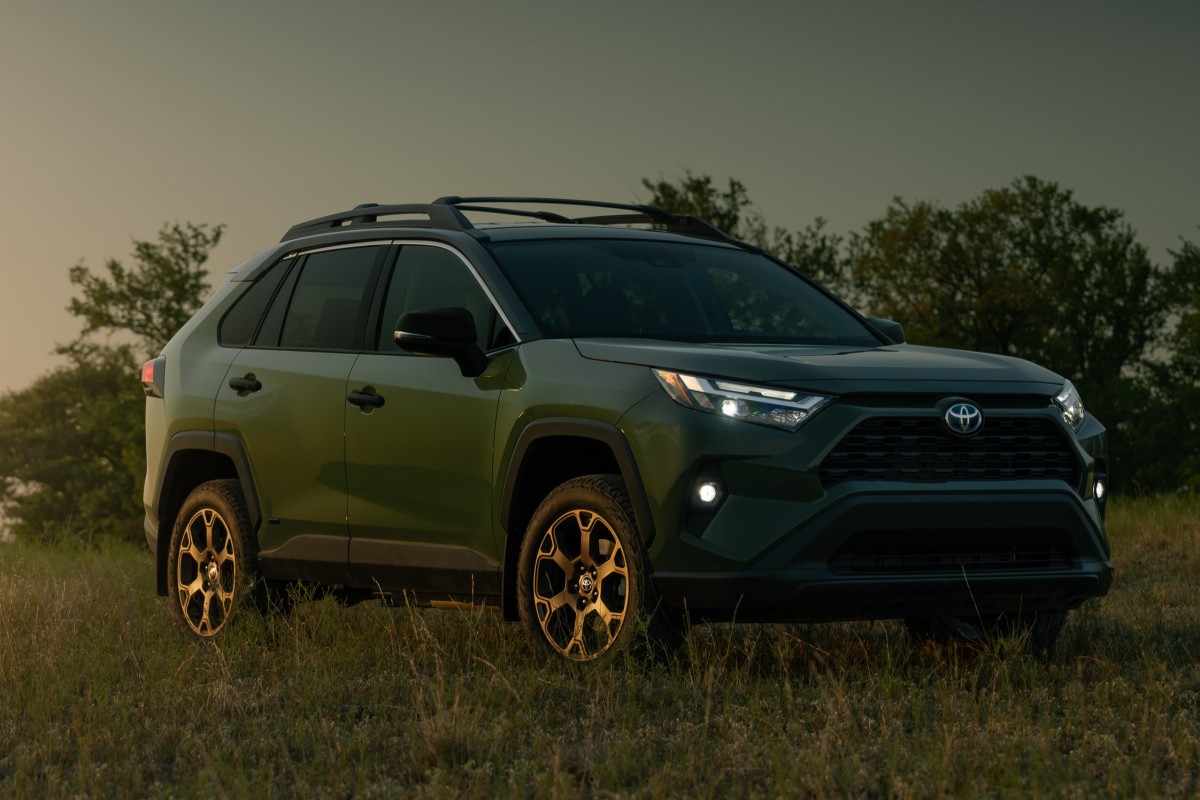
Meanwhile, the 2023 Toyota RAV4 Hybrid, continuing with the design language established in 2019, featured a bold, truck-like grille and angular bodywork that emphasized a rugged stance. Its interior sported a multi-tiered dashboard with beveled cutouts, maintaining a focus on utility over luxury. Material quality was typical for its class, with a mix of hard and padded surfaces and a distinct difference in feel between trim levels – some lacking the more desirable leather-wrapped steering wheel.


Powering the 2023 HR-V was a 2.0-liter inline four-cylinder engine offering 158 horsepower and 138 pound-feet of torque. An updated CVT with a Step-Shift function aimed to mimic a conventional automatic’s gear changes, enhancing the driving experience, particularly in Sport mode, which maximized the engine’s performance curve. Despite updates, the HR-V remained noisier than desired at higher speeds.
The RAV4 Hybrid, on the other hand, combined a 2.5-liter four-cylinder engine with electric motors to deliver a total of 219 horsepower. This setup not only offered a quicker acceleration compared to the standard RAV4 but also remained competitive within its class. The hybrid and standard braking systems worked seamlessly to provide a smooth stopping experience, and the ride quality was commendably managed over various surfaces, though it was not positioned as a sporty option.
In terms of interior space, the HR-V’s design was cleverly maximized within its subcompact dimensions. It offered up to 55.1 cubic feet of cargo space, slightly down from the previous model but still competitive. Rear headroom and legroom were adequate, and the thoughtfully designed 60/40 split rear seats allowed for a nearly flat cargo floor.
The RAV4 Hybrid excelled in providing a practical and comfortable space. It offered up to 37.5 cubic feet of cargo capacity immediately behind the rear seats, which was competitively ample, and the front and rear seating was spacious enough to accommodate adults comfortably. Storage solutions for small items were abundant and thoughtfully integrated throughout the cabin.
Technologically, the HR-V showed notable improvements, particularly in the EX-L trim, which featured a 9-inch touchscreen infotainment system that included Apple CarPlay and Android Auto. The system was intuitive and user-friendly, augmented by additional ports and connectivity options that enhanced digital interaction.
Toyota’s RAV4 Hybrid featured a newly upgraded infotainment system with sharper graphics and more logical menu arrangements. While the base models started with an 8.0-inch display, higher trims offered a larger 10.5-inch touchscreen. System updates and a standard suite of connectivity options ensured that it remained current with technological trends.
Every 2023 HR-V model came standard with the Honda Sensing suite of safety features, making advanced driver assistance systems accessible across all trims. The inclusion of adaptive cruise control, collision mitigation, and lane-keeping assist among others set a high standard of safety.
The RAV4 Hybrid also boasted a robust safety package, with Toyota’s Safety Sense 2.5 delivering comprehensive coverage including pedestrian detection, lane-keep assist, and adaptive cruise control. Additional safety features were available on higher trims, reinforcing Toyota’s commitment to safety across its model range.
CarGurus highlights
According to CarGurus experts, the overall rating for the 2023 Honda HR-V is 8.2 out of 10, while the 2023 Toyota RAV4 Hybrid scores 6.3 out of 10. Based on these evaluations, the Honda HR-V emerges as the preferable choice, particularly for those who prioritize a blend of modern style, safety, and a dynamic driving experience within the subcompact SUV category.
Choose the 2023 Toyota RAV4 Hybrid if:
- Hybrid efficiency with competitive power output is essential.
- You require a robust and practical interior with ample storage solutions.
- Advanced infotainment and connectivity features are a must.


Choose the 2023 Honda HR-V if:
- You value a modern and sophisticated design in a compact SUV.
- Advanced safety features standard across all trims is a priority.
- You prefer a sportier feel with customizable driving modes.







CarGurus highlights
According to CarGurus experts, the overall rating for the 2023 Honda HR-V is 8.2 out of 10, while the 2023 Toyota RAV4 Hybrid scores 6.3 out of 10. Based on these evaluations, the Honda HR-V emerges as the preferable choice, particularly for those who prioritize a blend of modern style, safety, and a dynamic driving experience within the subcompact SUV category.
Choose the 2023 Toyota RAV4 Hybrid if:
Shop Now- Hybrid efficiency with competitive power output is essential.
- You require a robust and practical interior with ample storage solutions.
- Advanced infotainment and connectivity features are a must.
Choose the 2023 Honda HR-V if:
Shop Now- You value a modern and sophisticated design in a compact SUV.
- Advanced safety features standard across all trims is a priority.
- You prefer a sportier feel with customizable driving modes.

By: CarGurus + AI
At CarGurus, our team of experienced automotive writers remain at the heart of our content operation, conducting hands-on car tests and writing insightful guides that are backed by years of industry experience. To complement this, we are harnessing AI to make our content offering more diverse and more helpful to shoppers than ever. To achieve this, our AI systems are based exclusively on CarGurus content, ratings and data, so that what we produce is both unique to CarGurus, and uniquely helpful to car shoppers.

