2024 Genesis GV70 vs 2024 Mazda CX-5
Overview | |
MSRP$45,150 | MSRP$29,300 |
Listings90 | Listings374 |
Ratings & Reviews | |
User Reviews | User Reviews |
Expert reviews8.3 out of 10 | Expert reviews7.7 out of 10 |
Pros
Cons
| Pros
Cons
|
2024 Genesis GV70 Reviews SummaryVerdict: The GV70 offers style, impressive tech, and a well-executed electric variant. Launched as a 2022 model and thus still very fresh, the Genesis GV70 is the Korean luxury brand’s answer to the BMW X3, Mercedes-Benz GLC-Class, Lexus NX, Volvo XC60, and other small luxury crossover SUVs. The GV70 checks most of the boxes needed to compete in this segment while offering something the competition doesn’t: an all-electric powertrain option. | |
2024 Mazda CX-5 Reviews SummaryThough Mazda hasn’t redesigned its popular compact crossover SUV since 2017, a program of continuous refinement makes the 2024 CX-5 better than ever. It might even be too good. It has shared showroom space with the similarly sized Mazda CX-50 model since last year but continues to outsell its newer and slightly more expensive sibling. As it turns out, there are numerous reasons for that. Verdict: Mazda positions the CX-5 as an SUV for active urbanites, and it serves perfectly in its role. Stylish design, taut dimensions, excellent outward visibility, a comfortable cabin, commendable quality, and impressive safety ratings make it a great choice. Plus, the 2024 Mazda CX-5 is genuinely enjoyable to drive. | |
No video found | |
Popular Features & Specs | |
Engine2.5L 300 hp I4 | Engine2.5L 187 hp I4 |
Drive TrainAWD | Drive TrainAWD |
Seating Capacity5 | Seating Capacity5 |
Horsepower | Horsepower187 hp @ 6000 rpm |
MPG City22 | MPG City26 |
MPG Highway28 | MPG Highway31 |
Engine | |
Engine Name2.5L 300 hp I4 | Engine Name2.5L 187 hp I4 |
Torque | Torque185 lb-ft @ 4000 rpm |
Horsepower | Horsepower187 hp @ 6000 rpm |
DrivetrainAWD | DrivetrainAWD |
Fuel Economy | |
MPG City22 | MPG City26 |
MPG Highway28 | MPG Highway31 |
Interior | |
Seating Capacity5 | Seating Capacity5 |
Key Features | |
Navigation SystemStandard | Navigation System |
Safety | |
Front Crash Overall4 | Front Crash Overall5 |
Side Crash Overall5 | Side Crash Overall5 |
Dimensions & Capacity | |
Cargo Space28.9 cu ft | Cargo Space30.8 cu ft |
Curb Weight4167 lbs | Curb Weight3783 lbs |
Height64.2 in | Height66.1 in |
Length185.6 in | Length180.1 in |
Width75.2 in | Width83.3 in |
Wheelbase113.2 in | Wheelbase106.2 in |
Maximum Payload1334 lbs | Maximum Payload941 lbs |
Number of doors4 | Number of doors4 |
Maximum Towing Capacity3500 lbs | Maximum Towing Capacity2000 lbs |
Overview | ||
MSRP | $45,150 | $29,300 |
Listings | ||
Ratings & Reviews | ||
User reviews | ||
Expert reviews | 8.3 out of 10Read full review | 7.7 out of 10Read full review |
Pros & cons | Pros
Cons
| Pros
Cons
|
Summary | Verdict: The GV70 offers style, impressive tech, and a well-executed electric variant. Launched as a 2022 model and thus still very fresh, the Genesis GV70 is the Korean luxury brand’s answer to the BMW X3, Mercedes-Benz GLC-Class, Lexus NX, Volvo XC60, and other small luxury crossover SUVs. The GV70 checks most of the boxes needed to compete in this segment while offering something the competition doesn’t: an all-electric powertrain option. | Though Mazda hasn’t redesigned its popular compact crossover SUV since 2017, a program of continuous refinement makes the 2024 CX-5 better than ever. It might even be too good. It has shared showroom space with the similarly sized Mazda CX-50 model since last year but continues to outsell its newer and slightly more expensive sibling. As it turns out, there are numerous reasons for that. Verdict: Mazda positions the CX-5 as an SUV for active urbanites, and it serves perfectly in its role. Stylish design, taut dimensions, excellent outward visibility, a comfortable cabin, commendable quality, and impressive safety ratings make it a great choice. Plus, the 2024 Mazda CX-5 is genuinely enjoyable to drive. |
Video | No video found | |
Popular Features & Specs | ||
Engine | 2.5L 300 hp I4 | 2.5L 187 hp I4 |
Drive Train | AWD | AWD |
Seating Capacity | 5 | 5 |
Horsepower | 187 hp @ 6000 rpm | |
MPG City | 22 | 26 |
MPG Highway | 28 | 31 |
Engine | ||
Engine Name | 2.5L 300 hp I4 | 2.5L 187 hp I4 |
Torque | 185 lb-ft @ 4000 rpm | |
Horsepower | 187 hp @ 6000 rpm | |
Drivetrain | AWD | AWD |
Fuel Economy | ||
MPG City | 22 | 26 |
MPG Highway | 28 | 31 |
Interior | ||
Seating Capacity | 5 | 5 |
Key Features | ||
Navigation System | Standard | |
Safety | ||
Front Crash Overall | 4 | 5 |
Side Crash Overall | 5 | 5 |
Dimensions & Capacity | ||
Cargo Space | 28.9 cu ft | 30.8 cu ft |
Curb Weight | 4167 lbs | 3783 lbs |
Height | 64.2 in | 66.1 in |
Length | 185.6 in | 180.1 in |
Width | 75.2 in | 83.3 in |
Wheelbase | 113.2 in | 106.2 in |
Maximum Payload | 1334 lbs | 941 lbs |
Number of doors | 4 | 4 |
Maximum Towing Capacity | 3500 lbs | 2000 lbs |
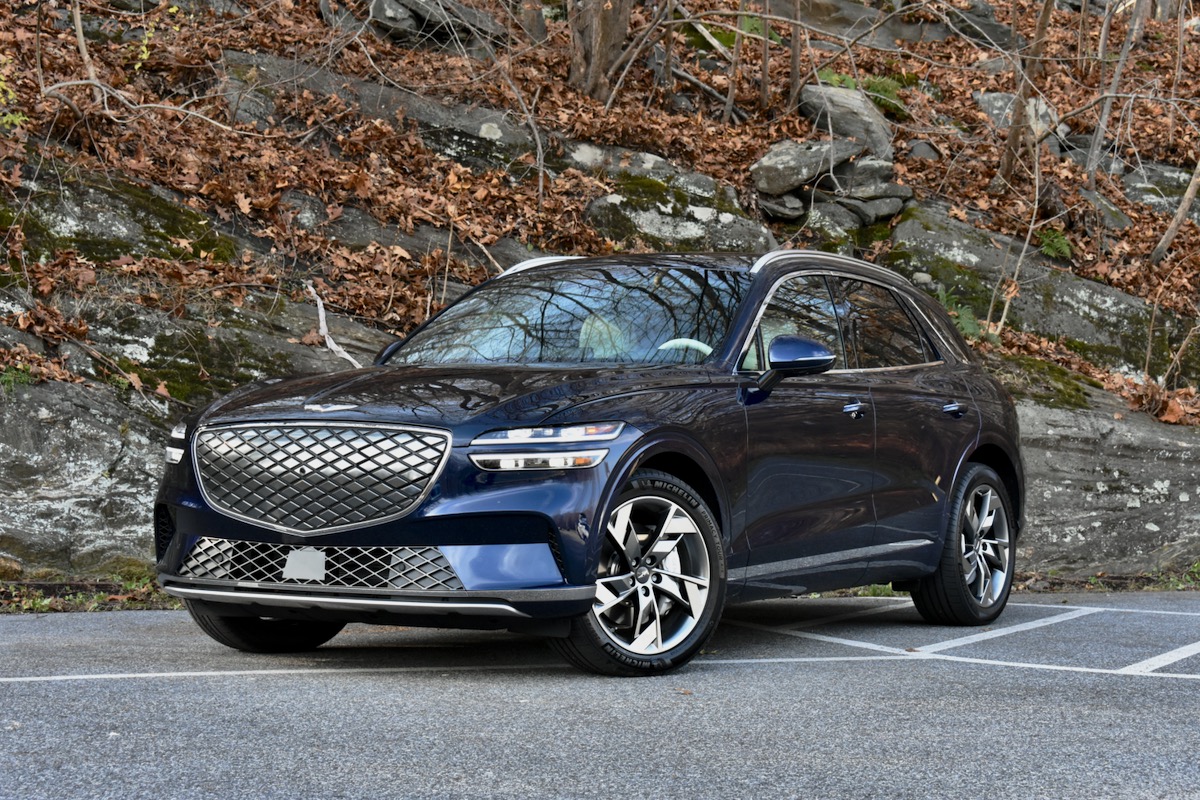
The 2024 Genesis GV70 emanated an air of sophistication and sporty allure, making it a standout both within the Genesis lineup and among its competitors. Genesis emphasized brand recognition with styling cues such as the split headlights and the prominent shield-like grille. However, the GV70 was sleeker than its larger sibling, the GV80, avoiding the quirky design of the smaller GV60. Unique details like the almost hatchback-style rear window profile, large round exhaust outlets on the Sport Prestige trim, and distinctive 21-inch wheels added to its visual appeal.
This SUV struck a perfect balance between the substantial presence of an SUV and the refined style of a luxury vehicle. Compared to rivals like the Audi Q5 and BMW X3, which appeared more robust, the GV70 featured a finesse that was hard to match. While the Porsche Macan stretched car-like design elements onto an SUV framework and the Mercedes-Benz GLC-Class relied on its iconic three-pointed star, the GV70 convincingly blended SUV characteristics with luxury brand aesthetics.
For those considering an electric vehicle, the Electrified GV70 offered a subtle, understated design. While it retained the flashy grille that housed the charge port, the rest of the styling remained consistent with the gasoline-powered models. This thoughtful design meant that charging was straightforward, usually requiring just a simple drive-in much like parking at a traditional spot, avoiding the awkward positioning needed for many other EVs.
The GV70’s interior was a visual and tactile delight, featuring traditional luxuries like quilted Nappa leather and a panoramic sunroof. However, it was the distinctive details that set it apart. The climate controls and buttons were housed in an elliptical pod, while the infotainment system utilized a rotary controller with a design reminiscent of a futuristic gadget. The dashboard’s rounded cross-section added a unique flair akin to an airplane wing, highlighting Genesis' commitment to a bold, distinct design.
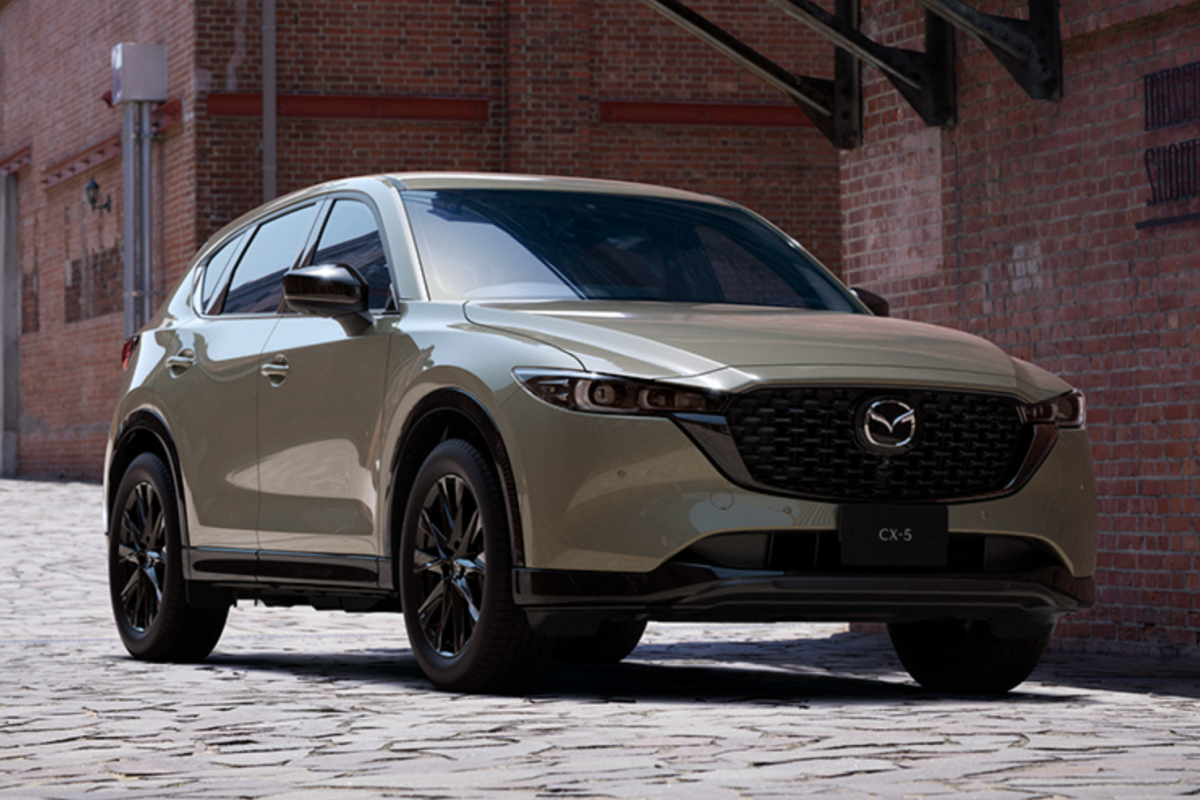
On the opposite spectrum, the 2024 Mazda CX-5 maintained its allure with a design that hadn’t changed much since its 2017 debut. Yet, it still looked modern and attractive. The 2024 model, especially in the new Carbon Turbo trim, featured fresh elements like Zircon Sand paint and exclusive Terracotta leather seats with black suede inserts. The gloss-black exterior detailing further enhanced its appeal, while premium paint options like Rhodium White were also available.
Mazda paid attention to aesthetic and functional updates, including enhanced fuel economy for the base engine models and new tech features like wireless charging and wireless Apple CarPlay and Android Auto. Despite these updates, the CX-5 retained its recognizable shape and proportions, a testament to its timeless design.
Stepping inside, the CX-5 offered a cozy, comfortable environment. While it might have been on the smaller side in its segment, it made efficient use of its space. The rear seats were supportive with a proper sitting position, and passengers appreciated the comfortable and high-quality materials. The Terracotta leather seats and padded console sides added a touch of luxury. Functional aspects like rear air conditioning vents and a center armrest with integrated storage enhanced passenger comfort.
The cabin quality elevated the CX-5 above most mass-market rivals, giving off an almost luxury-brand vibe. However, the smaller interior dimensions compared to larger competitors like the GV70 were noticeable.


The 2024 Genesis GV70 offered unchanged powertrain options from its previous model year, ensuring robust performance across its lineup. The standard gasoline model came equipped with a 2.5-liter turbocharged four-cylinder engine, generating an impressive 300 horsepower and 311 pound-feet of torque when using premium fuel. For those seeking even more power, the 3.5-liter twin-turbo V6 delivered a hefty 375 horsepower and 391 pound-feet of torque. Both engine variants were paired with an eight-speed automatic transmission and featured standard all-wheel drive (AWD).
The Electrified GV70 provided a compelling option for those venturing into the electric vehicle market, with front and rear electric motors combined to produce 429 horsepower and 516 pound-feet of torque, sustained by a 77.4-kilowatt-hour battery pack. A notable "Boost Mode" could temporarily increase output to 483 horsepower for short bursts, offering thrilling acceleration.
Despite the impressive specs on paper, the GV70’s actual driving dynamics slightly lagged behind the sportiest rivals like the Acura RDX, BMW X3, or Porsche Macan. While the Boost Mode on the Electrified GV70 and the Sport+ mode on the twin-turbo V6 offered vigorous straight-line acceleration, the chassis tuning fell short of delivering equally exciting cornering abilities. The GV70 felt heavier and somewhat less agile through corners.
Comfort was reasonably good but the suspension was firm, responding to road imperfections more harshly than desired for a luxury SUV. The Electrified model carried over these traits despite weighing significantly more due to the battery pack.
Tech-savvy drivers would appreciate the Electrified GV70’s regenerative braking system, adjustable via steering-wheel paddles, allowing the driver to modulate braking intensity. However, they would need to manage with its relatively modest EPA-rated 236-mile range.
In contrast, the 2024 Mazda CX-5 Carbon Turbo variant offered a turbocharged 2.5-liter four-cylinder engine which delivered 256 horsepower at 5,000 rpm and 320 pound-feet of torque at 2,500 rpm on premium fuel. Using regular gas, the engine still produced 227 horsepower and 310 pound-feet of torque, with peak torque arriving 500 rpm sooner.
Driving the Turbo CX-5 required a more nuanced touch. It was more rewarding when power was built up gradually rather than expecting an immediate thrust. Once accustomed to this, the turbocharged engine felt well-matched to the vehicle, delivering a satisfying driving experience, albeit with lackluster fuel economy. The EPA-rated combined fuel efficiency was 24 mpg, and real-world tests often showed slightly lower figures, around 22.9 mpg.
The CX-5 provided a commanding driving position, feeling tall and narrow compared to its sibling, the CX-50 which offered a broader stance. It was easy to navigate through traffic, parking lots, and garages thanks to its excellent outward visibility. The CX-5 handled confidently due to Mazda's suspension retuning in recent years, ride comfort ascended, reducing the previously choppy and tippy sensations, while retaining responsive handling characteristics.
On highways, the CX-5 maintained a quiet cabin, and in urban settings, it felt firmly connected with agile handling. The various driving modes, including Off-Road, allowed it to manage well-traveled trails with decent ground clearance of 7.9 inches. The CX-5 also had a maximum towing capacity of 2,000 pounds, adequate for light-duty tasks.
The 2024 Genesis GV70 offered passengers a spacious and comfortable interior, easily competing with its rivals in terms of space. The SUV featured slightly less headroom compared to the Audi Q5, BMW X3, and Mercedes-Benz GLC-Class, but the difference was marginal, especially given the more streamlined roofline that the GV70 sported. Genesis found a balance, providing a smidgen more front-seat legroom than the BMW and Mercedes, although a fraction less than in the Audi. In the second row, the differences were also minimal, with the GV70 offering marginally more legroom than the X3 and slightly less than the Q5 and GLC.
Cargo capacity in the GV70 was practical, offering 28.9 cubic feet with the rear seats up, which surpassed Mercedes’ 21.9 cubic feet, slightly bettered BMW’s 28.7 cubic feet, but fell short of Audi’s 29.5 cubic feet. With the rear seats folded, the GV70 provided 56.9 cubic feet, which was less than any of the three German competitors.
The Electrified GV70 cleverly incorporated its battery pack without drastically reducing interior space. First-row legroom remained unchanged, second-row legroom was reduced by 0.6 inches, and headroom was down by 1 inch and 0.8 inches in the front and second rows, respectively. The reduction in cargo capacity was minimal, with less than a cubic foot difference between the gasoline and electric models.
Designed interior layout like the orb-like infotainment controller, rotary shifter, and curvaceous dashboard added to the unique aesthetic but compromised small-item storage usability. However, Genesis did include a dedicated phone storage nook and climate controls for the rear seats, enhancing functionality.
In comparison, the 2024 Mazda CX-5 proved to be a cozy yet efficient space for passengers. Standard heated front seats, redesigned for comfort and support, significantly enhanced the driving experience. The driver's seat offered six-way power adjustment, while the passenger’s seat allowed manual height adjustment. The padded sides of the center console provided comfort for the driver’s legs.
Leather upholstery was standard for all trims, except for the base model, which came with artificial leather. The top-tier 2.5 Turbo Signature featured exclusive premium Nappa leather. Higher trim levels also included additional comforts like a heated steering wheel, heated rear seats, and ventilated front seats.
Despite its smaller stature in the segment, the CX-5 comfortably accommodated four adults. Rear seats provided good support, a proper sitting position, and appreciated rear air conditioning vents, center armrest with cupholders, and a storage tray. Cabin design and material quality elevated the CX-5’s interior to a near-luxury feel.
In terms of cargo capacity, the CX-5 provided 30 cubic feet with the rear seats in place, which was marginally more than the GV70. With the rear seats down, the maximum cargo space extended to 59.3 cubic feet, surpassing the GV70, making it practical for families or hauling gear over long trips.
The 2024 Genesis GV70 was well-equipped with user-friendly technology and an intuitive infotainment system. Borrowing elements from the Hyundai parts bin, the GV70's system might not have been as advanced as those in the BMW X3 or Mercedes-Benz GLC-Class, but simplicity often proved beneficial. All models came with a sizable 14.5-inch touchscreen offering wired Apple CarPlay and Android Auto connectivity. Lower trims featured an 8-inch digital instrument cluster, while higher trims boasted a 12.3-inch unit with an engaging 3D effect. Additionally, a 12-inch head-up display and a 16-speaker Lexicon audio system were available.
The touchscreen displayed a user-friendly interface with large, easily accessible tiles, positioned so both the driver and passenger could reach it. The rotary controller on the center console provided an alternative for navigating the system, comparing favorably to BMW’s iDrive and Mercedes’ MBUX controllers in terms of quality. Advanced features like a fingerprint scanner for driver profiles and a digital key functionality that allowed smartphone-based access and operation added to the high-tech allure.
For the 2024 Mazda CX-5, the company maintained a traditional approach to infotainment to minimize driver distraction, utilizing physical controls for essential functions like stereo volume, radio tuning, climate settings, and driving modes. Yet, recognizing the prevalence of touchscreens in modern life, Mazda integrated a touch capability for Apple CarPlay and Android Auto, which were also available wirelessly in several trims.
The central 10.25-inch display might not have required constant interaction once set up as per user preferences. The system’s interface could be navigated using a large knob on the center console, surrounded by buttons for quick access to vital functions like Home, Entertainment, and Navigation, along with a programmable Star button for direct access to a specific setting. Though this design echoed early infotainment systems from Audi, BMW, and Mercedes-Benz, these brands had since transitioned to touchscreens and advanced voice controls, areas where Mazda could improve.
Mazda Connected Services offered amenities like remote engine start, a Wi-Fi hotspot, and automatic emergency dialing following a collision, aligning with the connected vehicle trends. Higher trims benefited from a 10-speaker Bose premium sound system, enhancing the audio experience with classy-looking tweeters.
Both the gasoline and electrified versions of the 2024 Genesis GV70 had commendable safety records. The gasoline models earned the highest Top Safety Pick+ award from the Insurance Institute for Highway Safety (IIHS), and the 2023 Electrified GV70 had already earned the same accolade. At the time of writing, the National Highway Traffic Safety Administration (NHTSA) had published partial ratings: four stars for frontal crash and rollover tests for the gasoline GV70, and a five-star overall safety rating for the 2023 model. Ratings for the Electrified GV70 were not yet available.
Standard safety features included lane-keep assist, forward-collision warning, automatic emergency braking, rear cross-traffic alert, a driver-attention monitor, and parking assist sensors. The Highway Driving Assist system incorporated adaptive cruise control with automated lane centering. An advanced version, Highway Driving Assist 2, added automated lane-change capability and blind-spot monitoring.
Additional high-tech safety features like a safe exit assist, which aimed to prevent passengers from opening doors into oncoming traffic, and a radar-based rear occupant alert system were included. These features prioritized safety for all occupants, enhancing the GV70's appeal.
The 2024 Mazda CX-5 also came well-equipped with advanced driving assistance systems (ADAS). Standard features across the board included adaptive cruise control, forward collision warning, automatic emergency braking, blind-spot monitoring, rear cross-traffic alert, lane departure warning, and lane-keep assist. Higher trim levels offered additional safety technologies like adaptive headlights, traffic sign recognition, and Traffic Jam Assist for low-speed adaptive cruise control with lane-centering assist. Premium trims featured a driver monitoring system, surround-view camera, front and rear parking sensors, and automatic reverse braking.
Despite lacking some advanced features in the tested Carbon Turbo model, the standard ADAS suite performed well, with lane departure and lane-keep systems being particularly intuitive and non-intrusive. Adaptive headlights also significantly improved night-time visibility.
Historically, the Mazda CX-5 had earned a Top Safety Pick designation from the IIHS, though not for 2024. However, it held five-star safety ratings from the NHTSA across all categories except for a four-star rating for rollover resistance, maintaining its reputation as a dependable and safe vehicle.
CarGurus highlights
According to CarGurus experts, the overall rating for the 2024 Genesis GV70 is 8.3 out of 10, while the 2024 Mazda CX-5 scores 7.7 out of 10. Based on these ratings, the 2024 Genesis GV70 emerges as the recommended choice, boasting a higher score thanks to its superior blend of luxury, technology, and overall performance. While the Mazda CX-5 offers a commendable package with its design, practicality, and strong safety features, the GV70’s advanced features and refined driving experience give it the edge in this comparison.
Choose the 2024 Genesis GV70 if:
- You desire a sophisticated blend of SUV practicality and luxury car refinement with unique, standout design elements.
- You value a spacious and well-appointed interior with high-tech features like a fingerprint scanner and digital key functionality.
- You want a safe vehicle with top-tier safety ratings and advanced driving assistance systems, including options for automated lane-change capability.


Choose the 2024 Mazda CX-5 if:
- You prefer a more compact and efficiently designed crossover with a timeless and well-executed traditional aesthetic.
- You appreciate the tactile feel of physical controls for essential functions and the convenience of wireless Apple CarPlay and Android Auto.
- You need a cost-effective and well-rounded vehicle with comprehensive standard safety features and an upscale interior feel on a mainstream budget.


CarGurus highlights
According to CarGurus experts, the overall rating for the 2024 Genesis GV70 is 8.3 out of 10, while the 2024 Mazda CX-5 scores 7.7 out of 10. Based on these ratings, the 2024 Genesis GV70 emerges as the recommended choice, boasting a higher score thanks to its superior blend of luxury, technology, and overall performance. While the Mazda CX-5 offers a commendable package with its design, practicality, and strong safety features, the GV70’s advanced features and refined driving experience give it the edge in this comparison.
Choose the 2024 Genesis GV70 if:
Shop Now- You desire a sophisticated blend of SUV practicality and luxury car refinement with unique, standout design elements.
- You value a spacious and well-appointed interior with high-tech features like a fingerprint scanner and digital key functionality.
- You want a safe vehicle with top-tier safety ratings and advanced driving assistance systems, including options for automated lane-change capability.
Choose the 2024 Mazda CX-5 if:
Shop Now- You prefer a more compact and efficiently designed crossover with a timeless and well-executed traditional aesthetic.
- You appreciate the tactile feel of physical controls for essential functions and the convenience of wireless Apple CarPlay and Android Auto.
- You need a cost-effective and well-rounded vehicle with comprehensive standard safety features and an upscale interior feel on a mainstream budget.

By: CarGurus + AI
At CarGurus, our team of experienced automotive writers remain at the heart of our content operation, conducting hands-on car tests and writing insightful guides that are backed by years of industry experience. To complement this, we are harnessing AI to make our content offering more diverse and more helpful to shoppers than ever. To achieve this, our AI systems are based exclusively on CarGurus content, ratings and data, so that what we produce is both unique to CarGurus, and uniquely helpful to car shoppers.

