2023 Volkswagen ID.4 vs 2022 Volvo XC60

Overview | |
MSRP$42,650 | MSRP$38,995 |
Listings539 | Listings617 |
Ratings & Reviews | |
User Reviews | User Reviews |
Expert reviews7.8 out of 10 | Expert reviews7.8 out of 10 |
Pros
Cons
| Pros
Cons
|
2022 Volvo XC60 Reviews SummaryThe 2022 Volvo XC60 brings the Swedish automaker’s signature style and solid engineering to one of the most popular luxury SUV segments. Slotting between the XC40 and XC90 in size, the XC60 competes against crossover SUVs like the Acura RDX, Audi Q5, BMW X3, Infiniti QX50, Lexus NX, and Mercedes-Benz GLC-Class. With so many choices, Volvo needed to keep the XC60 fresh. So, the automaker gave it some notable updates for the 2022 model year. The current version of the XC60, representing the model’s second generation, has been around since the 2018 model year. For 2022, it gets new mild-hybrid powertrains, mildly updated exterior styling, and the Android-based infotainment system previously seen in the electric Volvo XC40 Recharge and Polestar 2. The reshuffled 2022 XC60 lineup includes the B5 mild hybrid with Momentum, R-Design, and Inscription trim levels, the B6 mild hybrid (which skips the base Momentum trim level), and the carryover Volvo XC60 T8 Recharge plug-in hybrid in Inscription, R-Design, and sporty Polestar Engineered guises. We spent a day driving the B6 R-Design model around New York’s Hudson Valley. | |
2023 Volkswagen ID.4 Reviews SummaryThe Volkswagen ID.4 is still relatively new to the marketplace (it debuted for the 2021 model year) but VW is already making some important updates to keep it competitive and fulfill goals set when this compact electric SUV first launched. The 2023 Volkswagen ID.4 adds a new base model and a smaller 62-kilowatt-hour battery pack alongside the carryover 82-kWh to increase affordability. VW will also begin sourcing cars for its United States dealerships from the same Chattanooga, Tennessee, factory that builds the gasoline-powered Atlas and Atlas Cross Sport. The automaker has been discussing this since the ID.4 was unveiled, but at first cars for the U.S. came from Zwickau, Germany. The 2023 ID.4 retains single-motor rear-wheel drive (RWD) and dual-motor all-wheel drive (AWD) powertrain options, but gets revised exterior and interior styling, some software changes, and a few more standard tech features and driver aids. The new-for-2023 base model is dubbed ID.4 Standard, slotting below the ID.4 S, ID.4 Pro, ID.4 Pro S, and ID.4 Pro S Plus trim levels (the Pro S Plus replaces the Gradient appearance package from previous model years). We recently spent a day driving a Pro S AWD model from Nashville to Chattanooga, along with a shorter drive in an ID.4 Standard model. | |
No video found | No video found |
Popular Features & Specs | |
Engine2.0L 247 hp I4 | Engine201 hp Electric |
Drive TrainFWD | Drive TrainRWD |
Seating Capacity5 | Seating Capacity5 |
Horsepower247 hp @ 5500 rpm | Horsepower |
EV Battery Capacity | EV Battery Capacity62 kWh |
MPG City23 | MPG City115 |
MPG Highway30 | MPG Highway99 |
Engine | |
Engine Name2.0L 247 hp I4 | Engine Name201 hp Electric |
Torque258 lb-ft @ 1500 rpm | Torque |
Horsepower247 hp @ 5500 rpm | Horsepower |
DrivetrainFWD | DrivetrainRWD |
Fuel Economy | |
EV Battery Capacity | EV Battery Capacity62 kWh |
MPG City23 | MPG City115 |
MPG Highway30 | MPG Highway99 |
Interior | |
Seating Capacity5 | Seating Capacity5 |
Key Features | |
Navigation System | Navigation SystemStandard |
Sunroof/MoonroofOptional | Sunroof/Moonroof |
Safety | |
Front Crash Overall5 | Front Crash Overall5 |
Side Crash Overall5 | Side Crash Overall5 |
Dimensions & Capacity | |
Cargo Space37.8 cu ft | Cargo Space30.3 cu ft |
Curb Weight4003 lbs | Curb Weight4317 lbs |
Height65.3 in | Height64.5 in |
Length185.4 in | Length180.5 in |
Width83.3 in | Width83.0 in |
Wheelbase112.8 in | Wheelbase108.9 in |
Maximum Payload950 lbs | Maximum Payload959 lbs |
Number of doors4 | Number of doors4 |
Maximum Towing Capacity3500 lbs | Maximum Towing Capacity |
Overview | ||
MSRP | $42,650 | $38,995 |
Listings | ||
Ratings & Reviews | ||
User reviews | ||
Expert reviews | 7.8 out of 10Read full review | 7.8 out of 10Read full review |
Pros & cons | Pros
Cons
| Pros
Cons
|
Summary | The 2022 Volvo XC60 brings the Swedish automaker’s signature style and solid engineering to one of the most popular luxury SUV segments. Slotting between the XC40 and XC90 in size, the XC60 competes against crossover SUVs like the Acura RDX, Audi Q5, BMW X3, Infiniti QX50, Lexus NX, and Mercedes-Benz GLC-Class. With so many choices, Volvo needed to keep the XC60 fresh. So, the automaker gave it some notable updates for the 2022 model year. The current version of the XC60, representing the model’s second generation, has been around since the 2018 model year. For 2022, it gets new mild-hybrid powertrains, mildly updated exterior styling, and the Android-based infotainment system previously seen in the electric Volvo XC40 Recharge and Polestar 2. The reshuffled 2022 XC60 lineup includes the B5 mild hybrid with Momentum, R-Design, and Inscription trim levels, the B6 mild hybrid (which skips the base Momentum trim level), and the carryover Volvo XC60 T8 Recharge plug-in hybrid in Inscription, R-Design, and sporty Polestar Engineered guises. We spent a day driving the B6 R-Design model around New York’s Hudson Valley. | The Volkswagen ID.4 is still relatively new to the marketplace (it debuted for the 2021 model year) but VW is already making some important updates to keep it competitive and fulfill goals set when this compact electric SUV first launched. The 2023 Volkswagen ID.4 adds a new base model and a smaller 62-kilowatt-hour battery pack alongside the carryover 82-kWh to increase affordability. VW will also begin sourcing cars for its United States dealerships from the same Chattanooga, Tennessee, factory that builds the gasoline-powered Atlas and Atlas Cross Sport. The automaker has been discussing this since the ID.4 was unveiled, but at first cars for the U.S. came from Zwickau, Germany. The 2023 ID.4 retains single-motor rear-wheel drive (RWD) and dual-motor all-wheel drive (AWD) powertrain options, but gets revised exterior and interior styling, some software changes, and a few more standard tech features and driver aids. The new-for-2023 base model is dubbed ID.4 Standard, slotting below the ID.4 S, ID.4 Pro, ID.4 Pro S, and ID.4 Pro S Plus trim levels (the Pro S Plus replaces the Gradient appearance package from previous model years). We recently spent a day driving a Pro S AWD model from Nashville to Chattanooga, along with a shorter drive in an ID.4 Standard model. |
Video | No video found | No video found |
Popular Features & Specs | ||
Engine | 2.0L 247 hp I4 | 201 hp Electric |
Drive Train | FWD | RWD |
Seating Capacity | 5 | 5 |
Horsepower | 247 hp @ 5500 rpm | |
EV Battery Capacity | 62 kWh | |
MPG City | 23 | 115 |
MPG Highway | 30 | 99 |
Engine | ||
Engine Name | 2.0L 247 hp I4 | 201 hp Electric |
Torque | 258 lb-ft @ 1500 rpm | |
Horsepower | 247 hp @ 5500 rpm | |
Drivetrain | FWD | RWD |
Fuel Economy | ||
EV Battery Capacity | 62 kWh | |
MPG City | 23 | 115 |
MPG Highway | 30 | 99 |
Interior | ||
Seating Capacity | 5 | 5 |
Key Features | ||
Navigation System | Standard | |
Sunroof/Moonroof | Optional | |
Safety | ||
Front Crash Overall | 5 | 5 |
Side Crash Overall | 5 | 5 |
Dimensions & Capacity | ||
Cargo Space | 37.8 cu ft | 30.3 cu ft |
Curb Weight | 4003 lbs | 4317 lbs |
Height | 65.3 in | 64.5 in |
Length | 185.4 in | 180.5 in |
Width | 83.3 in | 83.0 in |
Wheelbase | 112.8 in | 108.9 in |
Maximum Payload | 950 lbs | 959 lbs |
Number of doors | 4 | 4 |
Maximum Towing Capacity | 3500 lbs | |
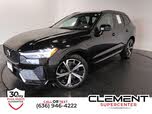
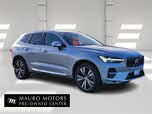
Volvo made some subtle styling changes for the 2022 XC60. The new front fascia featured “air blades,” vertical elements on either side of the grille that gave the XC60 a slightly sportier appearance. A new rear bumper hid the tailpipes, and all models received new wheel designs. The front grille was reworked to move sensors for the driver-assist systems behind the Volvo logo, which was also heated to keep those sensors working in cold weather.
The XC60 was based on the same Scalable Product Architecture (SPA) platform as the XC90, as well as the S90 and S60 sedans and V90 Cross Country and V60 Cross Country wagons.
The interior remained largely unchanged except for a new digital instrument cluster, maintaining the same clean design with a portrait-oriented touchscreen and minimal excess clutter. The B6 R-Design test car’s aluminum mesh speaker grilles and elaborately textured seats added some flair, but overall the interior seemed a bit subdued compared to other Volvo models. The XC60 Inscription trim level did get Nappa leather upholstery and a leather-wrapped steering wheel.
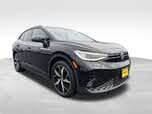
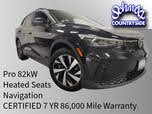
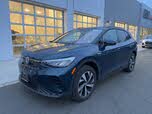
VW made some very subtle styling changes for the 2023 ID.4. The front bumper now had some gloss black trim, while the rear bumper had a more squared-off design that improved aerodynamics, according to VW. All wheel designs and colors were new for 2023, and the rear VW logo now lit up.
While it was easily distinguished as an EV compared to VW’s gasoline models, the VW ID.4 didn’t look particularly SUV-like. It lacked the upright profile and added ground clearance of more traditional SUVs, which might have been a problem for VW, as those styling features were a big part of SUVs’ attractiveness to new car buyers. But the same could be said about many other current electric vehicles. The Chevrolet Bolt EUV, for example, was marketed as an SUV but was very hard to distinguish from its Bolt EV hatchback sibling.
The ID.4 was based on VW’s MEB platform, designed specifically for EVs with built-in modularity to support a wide variety of models. It was essentially the EV equivalent to the MQB platform that currently underpinned everything from the seven-seat Atlas to the VW Jetta compact sedan. The next MEB-based model slated for the U.S. was the Microbus-inspired ID.Buzz electric van, due to arrive in 2024.
The interior carried over the best qualities from recent VW gasoline-car interiors, including a minimalist design and an overall feeling of quality. That trickled down to the base ID.4 Standard model which, aside from a manual driver’s seat, didn’t seem like much of a downgrade from the higher-level ID.4 Pro S. Leatherette upholstery with seat and door-panel inserts made partly from recycled fibers were standard for 2023.


For the 2022 model year, new B5 and B6 mild-hybrid powertrains replaced the previous T5 and T6 powertrains, respectively. Both powertrains combined a 2.0-liter turbocharged four-cylinder engine with a 48-volt electrical system and integrated starter generator, which could add 13 horsepower in short bursts. The B6 powertrain also got an electric supercharger in addition to the turbo.
Volvo quoted total-system outputs of 258 hp and 247 pound-feet of torque for the XC60 B5, and 295 hp and 310 lb-ft of torque for the B6 version. Both powertrains used an eight-speed automatic transmission. The B5 got standard front-wheel drive (FWD) or optional all-wheel drive (AWD), while the B6 was only available with AWD.
Output was down a bit from the 2021 XC60’s gasoline-only powertrains, as were acceleration times. Volvo said the XC60 B5 would do zero to 60 mph in 6.5 seconds (6.6 seconds with FWD), while the XC60 B6 would get there in 5.9 seconds. From behind the wheel, the B6 XC60 R-Design didn’t feel slow, and the smoothness of the mild-hybrid system's power delivery was impressive.
The XC60 encouraged calm, relaxed driving. While it was decently quick and showed impressive body control in corners, the XC60’s standout features were its quiet cabin and comfortable ride, enhanced by the test car’s optional air suspension. Most other luxury automakers felt obligated to mix some sportiness into every vehicle, usually to the detriment of ride quality. Volvo provided a more old-school experience that emphasized true luxury over performance.
Volvo also still offered an XC60 plug-in hybrid alongside the new-for-2022 mild-hybrid powertrains. The XC60 Recharge had a 2.0-liter four-cylinder engine that was both turbocharged and supercharged, an integrated starter generator, and a rear electric motor that enabled AWD without any mechanical connection to the front wheels. This more-aggressively electrified powertrain bumped output to 400 hp and 472 lb-ft of torque, and got the XC60 from zero to 60 mph in 5 seconds, according to Volvo.
Finally, the XC60 Polestar Engineered added a bit more performance to the plug-in hybrid model. Output increased to 415 hp and 494 lb-ft, while the claimed zero to 60 mph time dropped to 4.9 seconds. The Polestar Engineered also got Öhlins adjustable dampers, Akebono brakes, and a front strut bar.
The new-for-2023 62-kWh battery pack was available on the base Standard and S models, and only with RWD. The Pro, Pro S, and Pro S Plus got the carryover 82-kWh pack and were available with RWD or AWD.
Powertrains and most specs carried over. Regardless of battery pack, single-motor RWD models were rated at 201 horsepower and 229 pound-feet of torque. The dual-motor AWD powertrain upped output to 295 hp and 339 lb-ft of torque, allowing for zero to 60 mph in 5.7 seconds, according to VW.
Volkswagen estimated that the smaller battery pack reduced curb weight by 240 pounds, which should have improved acceleration and handling. The 62-kWh ID.4 Standard definitely felt quite spritely during a short drive around downtown Chattanooga, but more seat time was needed for a proper comparison with the larger-battery RWD version. Regardless, it didn’t feel like a downgrade in terms of driving dynamics.
With AWD, the ID.4 had the acceleration to rival hot hatchbacks like VW’s Golf GTI and Golf R, but not the handling. While comfortable and refined, the ID.4 allowed too much body roll to be truly entertaining on twisty roads. It was a great way to rack up roughly 200 miles driving across Tennessee, but the nicest driving roads couldn’t really be taken advantage of.
All EVs used regenerative braking to recover energy while decelerating, but each automaker seemed to have a different philosophy. Some automakers pursued one-pedal driving, allowing drivers to avoid using the brake pedal most of the time. VW didn’t go that far, allowing the ID.4 to coast in its default regen setting, and still stopping short of one-pedal driving in the more aggressive “B” setting. Lack of one-pedal driving might have disappointed some EV fans, but it provided a more familiar experience for EV first-timers.
None of the 2022 model year changes affected interior space, so the XC60 remained competitive within its market segment on passenger space. Front-seat headroom was above average, but the XC60 was tied with the Audi Q5 for worst rear-seat headroom. Legroom in both rows was about average for the segment.
Models with the mild-hybrid powertrains offered 21.6 cubic feet of cargo space with the rear seats in place, and 49.8 cubic feet with the rear seats folded. Plug-in hybrid models lost a bit of cargo capacity, at 21.1 cubic feet with the rear seats up and 49.3 cubic feet with the rear seats down. That meant the XC60 offered less cargo space than most similarly sized luxury crossovers.
The XC60 did at least offer the commanding driving position that was an SUV selling point, with good forward visibility. Despite the somewhat pinched roofline, rear visibility was good as well. Large exterior mirrors also made it easy to drive without being reliant on the XC60’s various driver aids.
The ID.4 lived up to its SUV billing with more interior space than other affordable EVs. It had more front-seat and rear-seat legroom than a Chevrolet Bolt EV or Nissan Leaf, and more headroom than the freshly redesigned 2023 Kia Niro EV.
At 30.3 cubic feet of cargo space with the rear seats up, and 64.2 cubic feet with the rear seats folded, the ID.4 also had substantially more cargo space than most other entry-level EVs. It was worth noting that VW also benchmarked the ID.4 against gasoline crossovers like the Honda CR-V and Toyota RAV4, and it fell short of those vehicles on interior space, but it was definitely the SUV of affordable EVs when it came to practicality.
SUV buyers might also have expected some towing capability, and the ID.4 did deliver on that front. But, again, the figures were only notable when compared to other entry-level EVs. VW’s quoted towing capacity of 2,200 pounds for RWD models and 2,700 pounds for AWD models provided some usable capability, but you wouldn’t be towing a large boat with this car.
VW made some small changes to the interior for 2023 that improved functionality. The center console now had a conventional lid in place of the previous sliding cover, as well as a better spot for a phone, located between the cupholders and storage bin. Three-zone climate control was now available as well, with rear-seat controls and heated outboard rear seats.
The XC60 got a tech overhaul for the 2022 model year. It still had a 9-inch touchscreen, but it now ran the Android Automotive operating system. A 12.3-inch digital instrument cluster was included as well, along with Bluetooth and a built-in WiFi hotspot. A head-up display and upgraded audio systems from Harman Kardon or Bowers & Wilkins were also available.
The new operating system meant Android-specific features were now baked into the infotainment system. Voice control was provided by Google Assistant, while navigation was provided by Google Maps. Android users could also sync their profiles with the car, and the Google Play Store also provided access to third-party apps like Spotify. The new system also enabled over-the-air (OTA) software updates.
You didn’t have to have an Android phone to use this infotainment system; Volvo promised full iPhone compatibility as well. However, you wouldn’t get the added functionality of syncing your Google profile to the car.
The system’s graphics were liked, but since everything defaulted to a Google-based design, Apple users might have had other opinions. The infotainment redesign also brought a new layout, with sideways swiping to access individual menus. That was found to be a sensible way to make the most of the available screen space.
The digital instrument cluster could display a map in between the speedometer and tachometer, but Volvo also included a “Calm” setting that removed the map to minimize distraction.
For 2023, the formerly optional 12.0-inch touchscreen was now standard on all models, replacing the 10.0-inch screen on lower trim levels. The infotainment system itself got some software updates to improve responsiveness, while wireless Apple CarPlay and Android Auto remained standard and the ID.Cockpit digital instrument cluster remained standard.
Despite the software updates, not much had changed about the infotainment system’s user experience. That meant you still got sharp graphics and a choice of smartphone-like icons or a more traditional automotive split-screen view for the touchscreen, as well as natural-language voice recognition that could intuit most simple command phrases.
The downside to the ID.4’s user interface remained the haptic touchpads on the dashboard and steering wheel that replaced conventional buttons. Unlike buttons, they didn’t provide physical feedback, so it was hard to tell if you’d actually pressed one. The setup was worryingly distracting although, in our experience, the above-mentioned voice recognition made it redundant in most situations. It was much easier to ask the car to turn down the audio volume or adjust the temperature than to use the dashboard controls.
Another carryover tech feature was ID.Light, which was part ambient lighting system, part AI assistant. Lights around the perimeter of the dashboard changed color depending on the drive mode (in sync with the touchscreen), but would also flash to indicate which direction you should turn when using the navigation system. It was a clever feature, but one that was easily overlooked in normal driving, blending in with the array of visual and audio warnings and alerts from the various driver aids.
The Insurance Institute for Highway Safety (IIHS) hadn’t released crash-test ratings for the 2022 XC60, but the similar 2021 model received the organization’s highest “Top Safety Pick+” rating. The National Highway Traffic Safety Administration (NHTSA) hadn’t published safety ratings for the 2022 XC60 either, but the 2021 model received a five-star overall rating, with five stars in frontal and side crash tests, and four stars in rollover crash tests.
Standard safety features included forward-collision warning, automatic emergency braking, lane-departure warning, lane-keep assist, automatic post-collision braking, a driver-attention monitor, traffic-sign recognition, blind-spot monitoring, and rear cross traffic alert. New for 2022 were a Ready to Drive Notification (told the driver when vehicles ahead were pulling away from a stop) and Emergency Stop Assist, which was designed to automatically stop the car in its lane if the driver was incapacitated.
Volvo’s Pilot Assist driver-assistance system was also available as part of an option package. This essentially combined adaptive cruise control and automated lane centering into one system that could help the driver maintain position on highways. Volvo was one of the first automakers to offer this tech on a production vehicle, but most competitors now had their own versions. So while Pilot Assist worked fairly well, as far as these systems go, it was no longer a standout feature.
The National Highway Traffic Safety Administration (NHTSA) gave the 2023 ID.4 a five-star overall safety rating, with five stars in frontal and side crash tests, and four stars in rollover crash tests.
Insurance Institute for Highway Safety (IIHS) crash-test ratings for the 2023 ID.4 hadn’t been published, but the similar 2022 model received the IIHS’ highest “Top Safety Pick+” rating. That included top “Good” scores in all crash tests, the top “Superior” rating for vehicle-to-vehicle front crash prevention, and an “Advanced” rating for vehicle-to-pedestrian collision prevention in daylight. The only blemish was an “Average” score for the standard headlights; the headlights on the Pro S model received a “Good” score.
The ID.4 also got a fairly good complement of standard driver-assist features, including forward collision warning, automatic emergency braking with pedestrian and (new for 2023) cyclist detection, blind-spot monitoring, rear park distance control, automatic high beams, traffic-sign recognition, and VW’s Travel Assist 2.0, which included adaptive cruise control and automated lane centering. Also standard was Emergency Assist 3.0, which would automatically pull the vehicle over if the driver was incapacitated.
For 2023, the ID.4 also added standard Park Assist Plus automated parking, an automated lane-change feature for Travel Assist, and a 360-degree camera system.
CarGurus highlights
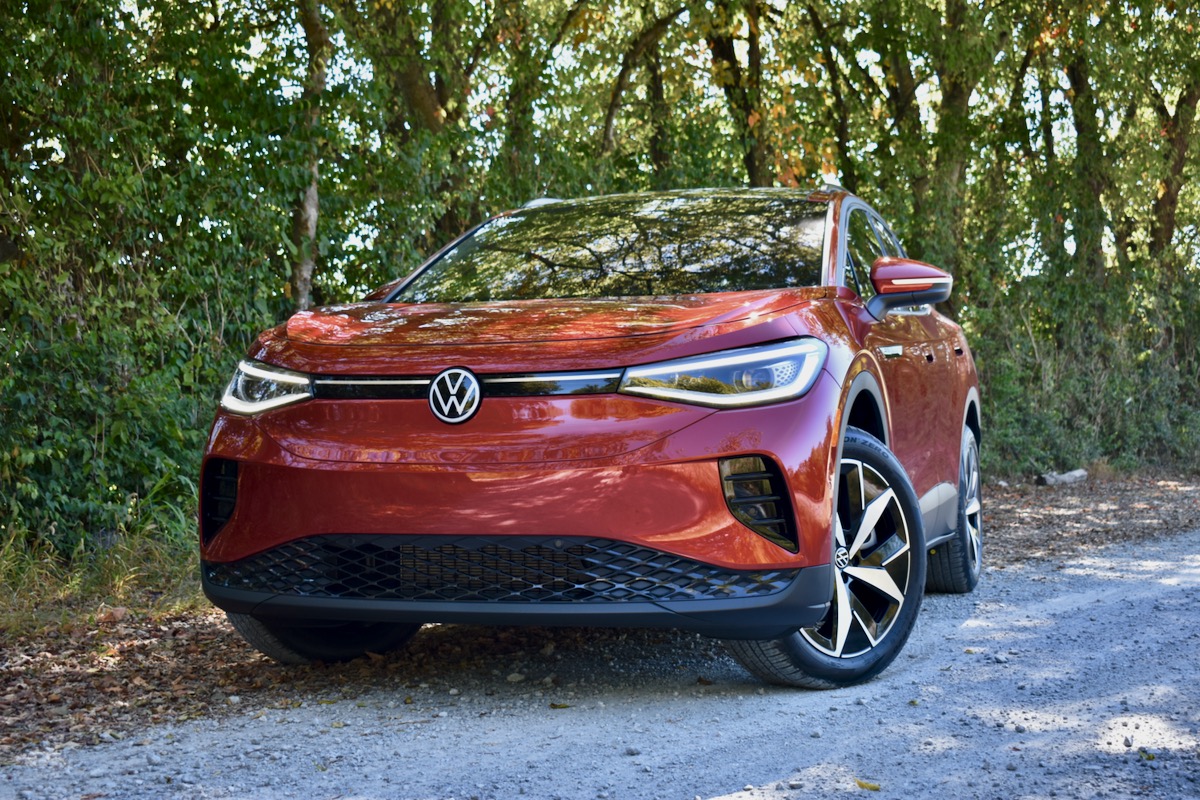
According to CarGurus experts, the overall rating for the 2022 Volvo XC60 is 7.8 out of 10, while the 2023 Volkswagen ID.4 scores 7.8 out of 10. Given these identical ratings, the final recommendation depends on your specific needs. If you seek a luxurious, traditional SUV experience with a focus on comfort and safety, the 2022 Volvo XC60 is a solid choice. However, if you prioritize interior space, advanced tech features, and the benefits of an electric vehicle, the 2023 Volkswagen ID.4 is the better option.
Choose the 2023 Volkswagen ID.4 if:
- You need more interior space and cargo capacity in an affordable EV.
- You value advanced tech features like a large touchscreen and ID.Light.
- You want a vehicle with good towing capability for an entry-level EV.





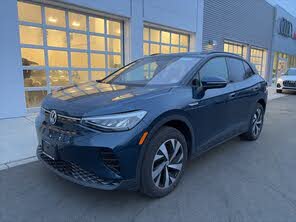

Choose the 2022 Volvo XC60 if:
- You prioritize a luxurious and quiet cabin with a comfortable ride.
- You want a vehicle with a strong emphasis on safety features.
- You prefer a traditional SUV design with a commanding driving position.


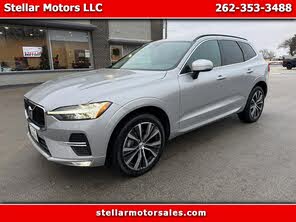


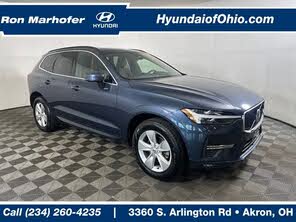

CarGurus highlights
According to CarGurus experts, the overall rating for the 2022 Volvo XC60 is 7.8 out of 10, while the 2023 Volkswagen ID.4 scores 7.8 out of 10. Given these identical ratings, the final recommendation depends on your specific needs. If you seek a luxurious, traditional SUV experience with a focus on comfort and safety, the 2022 Volvo XC60 is a solid choice. However, if you prioritize interior space, advanced tech features, and the benefits of an electric vehicle, the 2023 Volkswagen ID.4 is the better option.
Choose the 2023 Volkswagen ID.4 if:
Shop Now- You need more interior space and cargo capacity in an affordable EV.
- You value advanced tech features like a large touchscreen and ID.Light.
- You want a vehicle with good towing capability for an entry-level EV.






Choose the 2022 Volvo XC60 if:
Shop Now- You prioritize a luxurious and quiet cabin with a comfortable ride.
- You want a vehicle with a strong emphasis on safety features.
- You prefer a traditional SUV design with a commanding driving position.









By: CarGurus + AI
At CarGurus, our team of experienced automotive writers remain at the heart of our content operation, conducting hands-on car tests and writing insightful guides that are backed by years of industry experience. To complement this, we are harnessing AI to make our content offering more diverse and more helpful to shoppers than ever. To achieve this, our AI systems are based exclusively on CarGurus content, ratings and data, so that what we produce is both unique to CarGurus, and uniquely helpful to car shoppers.