2021 Hyundai Kona vs 2021 Honda CR-V

Overview | |
MSRP$20,500 | MSRP$25,350 |
Listings508 | Listings1279 |
Ratings & Reviews | |
User Reviews | User Reviews |
Expert reviews7.2 out of 10 | Expert reviews7.8 out of 10 |
Pros
Cons
| Pros
Cons
|
2021 Hyundai Kona Reviews SummaryAfter three years on the market, the Hyundai Kona continues to wow with great features, strong styling, and decent specs. The 2021 model year brings subtle changes to the Kona lineup, including new colors, a new Night Edition with Rays semi-gloss black 18-inch wheels, and gloss black exterior and interior accents. Hyundai offers the Kona in several trims: SE, SEL, SEL Plus, Night Edition, Limited, and Ultimate. A Hyundai Kona Electric model is available as well, but we'll cover that in a separate overview. A high-performance Kona N will be available for the 2022 model year. The Hyundai Kona competes with subcompact SUVs that include the Kia Soul, Volkswagen Taos, Mazda CX-30, Subaru Crosstrek, Nissan Kicks, Hyundai Venue, and Toyota C-HR. Given its size and price, buyers may also cross-shop the larger Hyundai Tucson. New car buyers have many other choices, then, but the Kona still stands out as a value-forward crossover with a long warranty and plenty of standard features. | |
2021 Honda CR-V Reviews SummaryEven in a grim year, Honda is selling a staggering number of CR-Vs. The CR-V is the best-selling Honda by far. It’s also the second best-selling compact SUV, just behind the Toyota RAV4. And it's the fifth best-selling vehicle in the U.S., and if you take out all the commercial sales of full-size pickups it’s one of the two best-selling vehicles year in and year out. So it’s hard to argue against the CR-V formula. Honda’s been at this almost as long as crossovers have been a thing, launching the CR-V in 1997—a year after the RAV4 debuted. The funny thing is, aside from sales volume, there’s only one thing the CR-V particularly excels at. Aesthetics are subjective, but it would be hard to argue the CR-V is the best looking vehicle in its class. It’s not the cheapest. It’s not the best equipped, especially at the middle to lower trim levels. It’s not the fastest, nor is it the quietest, or the most fuel efficient. It’s not even the most reliable, showing up nowhere in J.D. Power's Most Reliable list. So what makes it so appealing to American consumers? Let’s see if we can figure that out. | |
No video found | No video found |
Popular Features & Specs | |
Engine2.0L 147 hp I4 | Engine1.5L 190 hp I4 |
Drive TrainFWD | Drive TrainFWD |
Seating Capacity5 | Seating Capacity5 |
Horsepower147 hp @ 6200 rpm | Horsepower190 hp @ 5600 rpm |
MPG City27 | MPG City28 |
MPG Highway33 | MPG Highway34 |
Engine | |
Engine Name2.0L 147 hp I4 | Engine Name1.5L 190 hp I4 |
Torque132 lb-ft @ 4500 rpm | Torque179 lb-ft @ 2000 rpm |
Horsepower147 hp @ 6200 rpm | Horsepower190 hp @ 5600 rpm |
DrivetrainFWD | DrivetrainFWD |
Fuel Economy | |
MPG City27 | MPG City28 |
MPG Highway33 | MPG Highway34 |
Interior | |
Seating Capacity5 | Seating Capacity5 |
Safety | |
Front Crash Overall5 | Front Crash Overall5 |
Side Crash Overall5 | Side Crash Overall5 |
Dimensions & Capacity | |
Cargo Space19.2 cu ft | Cargo Space39.2 cu ft |
Curb Weight2890 lbs | Curb Weight3337 lbs |
Height61.0 in | Height66.1 in |
Length164.0 in | Length182.1 in |
Width70.9 in | Width73.0 in |
Wheelbase102.4 in | Wheelbase104.8 in |
Maximum Payload1089 lbs | Maximum Payload1358 lbs |
Number of doors4 | Number of doors4 |
Maximum Towing Capacity | Maximum Towing Capacity1500 lbs |
Overview | ||
MSRP | $20,500 | $25,350 |
Listings | ||
Ratings & Reviews | ||
User reviews | ||
Expert reviews | 7.2 out of 10Read full review | 7.8 out of 10Read full review |
Pros & cons | Pros
Cons
| Pros
Cons
|
Summary | After three years on the market, the Hyundai Kona continues to wow with great features, strong styling, and decent specs. The 2021 model year brings subtle changes to the Kona lineup, including new colors, a new Night Edition with Rays semi-gloss black 18-inch wheels, and gloss black exterior and interior accents. Hyundai offers the Kona in several trims: SE, SEL, SEL Plus, Night Edition, Limited, and Ultimate. A Hyundai Kona Electric model is available as well, but we'll cover that in a separate overview. A high-performance Kona N will be available for the 2022 model year. The Hyundai Kona competes with subcompact SUVs that include the Kia Soul, Volkswagen Taos, Mazda CX-30, Subaru Crosstrek, Nissan Kicks, Hyundai Venue, and Toyota C-HR. Given its size and price, buyers may also cross-shop the larger Hyundai Tucson. New car buyers have many other choices, then, but the Kona still stands out as a value-forward crossover with a long warranty and plenty of standard features. | Even in a grim year, Honda is selling a staggering number of CR-Vs. The CR-V is the best-selling Honda by far. It’s also the second best-selling compact SUV, just behind the Toyota RAV4. And it's the fifth best-selling vehicle in the U.S., and if you take out all the commercial sales of full-size pickups it’s one of the two best-selling vehicles year in and year out. So it’s hard to argue against the CR-V formula. Honda’s been at this almost as long as crossovers have been a thing, launching the CR-V in 1997—a year after the RAV4 debuted. The funny thing is, aside from sales volume, there’s only one thing the CR-V particularly excels at. Aesthetics are subjective, but it would be hard to argue the CR-V is the best looking vehicle in its class. It’s not the cheapest. It’s not the best equipped, especially at the middle to lower trim levels. It’s not the fastest, nor is it the quietest, or the most fuel efficient. It’s not even the most reliable, showing up nowhere in J.D. Power's Most Reliable list. So what makes it so appealing to American consumers? Let’s see if we can figure that out. |
Video | No video found | No video found |
Popular Features & Specs | ||
Engine | 2.0L 147 hp I4 | 1.5L 190 hp I4 |
Drive Train | FWD | FWD |
Seating Capacity | 5 | 5 |
Horsepower | 147 hp @ 6200 rpm | 190 hp @ 5600 rpm |
MPG City | 27 | 28 |
MPG Highway | 33 | 34 |
Engine | ||
Engine Name | 2.0L 147 hp I4 | 1.5L 190 hp I4 |
Torque | 132 lb-ft @ 4500 rpm | 179 lb-ft @ 2000 rpm |
Horsepower | 147 hp @ 6200 rpm | 190 hp @ 5600 rpm |
Drivetrain | FWD | FWD |
Fuel Economy | ||
MPG City | 27 | 28 |
MPG Highway | 33 | 34 |
Interior | ||
Seating Capacity | 5 | 5 |
Safety | ||
Front Crash Overall | 5 | 5 |
Side Crash Overall | 5 | 5 |
Dimensions & Capacity | ||
Cargo Space | 19.2 cu ft | 39.2 cu ft |
Curb Weight | 2890 lbs | 3337 lbs |
Height | 61.0 in | 66.1 in |
Length | 164.0 in | 182.1 in |
Width | 70.9 in | 73.0 in |
Wheelbase | 102.4 in | 104.8 in |
Maximum Payload | 1089 lbs | 1358 lbs |
Number of doors | 4 | 4 |
Maximum Towing Capacity | 1500 lbs | |
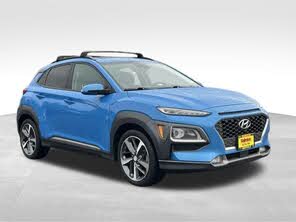
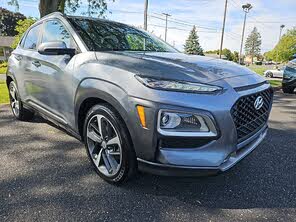
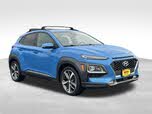
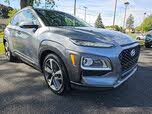
The 2021 Hyundai Kona was known for its funky and youthful styling, making it a stand-out in the subcompact SUV segment. Its front end showcased a busy yet playful appearance with multiple tiers of lighting, including a grille flanked by lighting features, additional lights above them, and fog lights on select trims. This design catered to younger buyers who appreciated a more adventurous and vibrant look. Contrasting the front, the rear end of the Kona sported a more subdued and traditional crossover shape with a standard lighting configuration, offering a balance between quirky and conventional aesthetics.
Inside, the Kona continued its playful theme without being overly whimsical. The cabin featured neatly patterned seats with standard cloth upholstery, while higher trims offered leather on the steering wheel and seats for an upgraded feel. The interior layout was praised for its simplicity and intuitiveness, with a high-mounted infotainment system touchscreen and physical climate controls that were easy to use and complemented the Kona's compact dimensions.
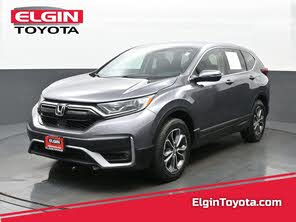
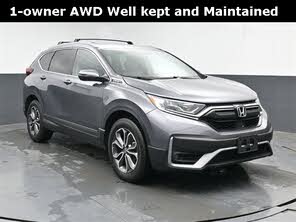
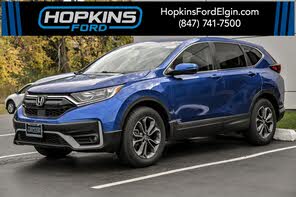
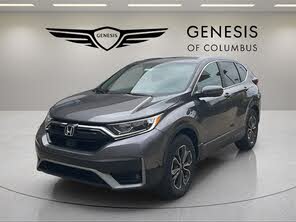
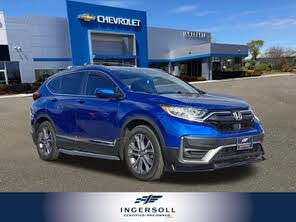
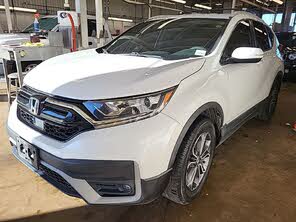
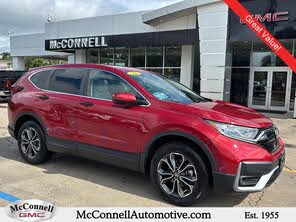
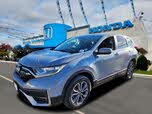
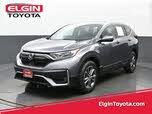
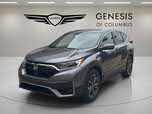
On the other hand, the 2021 Honda CR-V was criticized for its bland exterior styling, often blending into the sea of similar-looking compact crossovers. While the daylight opening—essentially the shape of the side windows—was nearly identical to its competitors, the CR-V did include some distinctive touches like a unique grille and subtle chrome accents. However, potential buyers were not likely to choose the CR-V based on its aesthetics alone.
The CR-V offered a somewhat limited color palette, especially on the lower trims. The base LX trim was only available in black, silver, and white, with other more vibrant colors like Aegean Blue Metallic and Radiant Red Metallic restricted to higher trims. Comparatively, the Hyundai Kona offered a wider variety of vibrant colors from the get-go.
Inside, the CR-V presented a modern yet straightforward look. The cabin came in black, gray, and ivory cloth or leather, depending on the trim level. Climbing up the trim ladder added features like wood panels and more chrome for a more upscale appearance. Both the front and rear seats included angular designs with sharp edges on the seat edges and headrests, providing a more contemporary feel compared to competitors like the Kia Sportage and Hyundai Tucson.


The 2021 Hyundai Kona offered two powertrain options, catering to varying performance preferences. The base model featured a 2.0-liter four-cylinder engine delivering 147 horsepower and 132 pound-feet of torque, paired with a six-speed automatic transmission. For those seeking more power, Hyundai offered a turbocharged 1.6-liter engine rated at 195 horsepower and 195 pound-feet of torque, coupled with a seven-speed dual-clutch automatic transmission. While neither engine provided jaw-dropping acceleration, they were sufficient for moving the compact Kona around town and on highways.
The turbocharged engine's dual-clutch transmission provided a more sporty feel, although it wasn't particularly smooth at low speeds. The Kona's handling was surprisingly confident and agile, making it a fun choice for driving enthusiasts. Hyundai also balanced comfort and composure, ensuring a smooth ride even on curvy roads. Fuel efficiency was respectable, with the base engine and FWD delivering an EPA-estimated 27/33/30 mpg city/highway/combined, while the turbo engine with FWD offered 28/32/30 mpg.
Conversely, the 2021 Honda CR-V came standard with a 190-horsepower turbocharged four-cylinder engine across all nine trims. While its 0-60 mph acceleration time of around 7.8 seconds wasn't particularly impressive, it was competitive within its class. The CR-V's continuously variable transmission (CVT) offered smooth and predictable acceleration, but it lacked the engagement found in some competitors' conventional automatic transmissions.
The CR-V provided a balanced ride with decent handling, thanks to its MacPherson strut front suspension and multi-link rear suspension. FWD was standard, with AWD available as an option. Although not designed for spirited driving, the CR-V excelled in providing a comfortable and steady driving experience around town and on the highway.
Front-seat passengers in the 2021 Hyundai Kona enjoyed decent headroom and legroom, with all controls and displays easily within reach. The front seats were wide and well-padded, though they could have benefitted from more support, especially during spirited driving. The rear seats, while offering good headroom, suffered from limited legroom, making long trips less comfortable for taller passengers. The Kona also struggled in terms of cargo space, ranking near the bottom of its segment. However, the rear seats could fold to expand the space, and small-item storage compartments were plentiful and conveniently located.
The 2021 Honda CR-V, designed with functionality in mind, provided ample space for passengers and cargo. With 102.9 cubic feet of passenger volume, it offered more space than the Toyota RAV4. The CR-V also boasted 75.8 cubic feet of total cargo volume with the rear seats folded, making it capable of carrying a substantial amount of luggage. Accessing the cargo area varied by trim, with the base trims requiring manual operation of the tailgate and higher trims offering power and hands-free tailgate options.
In terms of interior amenities, the CR-V included roof rails on the top Touring trim for added utility, whereas lower trims lacked this feature. Overall, the CR-V excelled in providing a spacious and practical interior, catering well to families and those needing to carry larger loads.
The 2021 Hyundai Kona came equipped with a solid array of tech features across all trims. Standard equipment included an eight-inch infotainment touchscreen, Bluetooth connectivity, six speakers, wireless Apple CarPlay and Android Auto, and USB inputs. Higher trims offered additional tech such as SiriusXM radio, navigation, wireless device charging, a Harman Kardon audio system, and a larger 10.25-inch touchscreen. The infotainment system was praised for its simplicity, colorful interface, and responsiveness, making it user-friendly for drivers and passengers alike.
In contrast, the base 2021 Honda CR-V LX featured a much smaller 5-inch color screen with basic Bluetooth connectivity. However, all other CR-V trims upgraded to a more modern 7-inch high-definition touchscreen infotainment system with Apple CarPlay and Android Auto integration. The CR-V's audio systems varied by trim, with higher trims offering more speakers and features like Sirius XM, HD radio, and a subwoofer in the Touring trim. Charging ports were generously distributed throughout the cabin, with higher trims adding wireless phone charging.
While the Kona offered a more advanced tech package right from the base trim, the CR-V required stepping up to higher trims for a comparable tech experience.
The 2021 Hyundai Kona achieved high safety ratings, earning a Top Safety Pick from the IIHS and a five-star overall rating from the NHTSA. Standard safety features included forward-collision warning, pedestrian detection, lane-keeping assist, lane-following assist, automatic emergency braking, adaptive cruise control, driver attention warning, and rear occupant alert. Optional features included blind-spot monitoring, rear cross-traffic alert, a head-up display, and parking sensors.
The 2021 Honda CR-V also received strong safety ratings, with a five-star overall rating from the NHTSA and a Top Safety Pick from the IIHS. While it didn't achieve the Top Safety Pick+ rating due to variations in headlight performance and child seat anchoring ease of use, it still performed well in crash tests. Importantly, Honda bundled its advanced safety features into the Honda Sensing system, making them standard across all trims. This included a multi-angle rearview camera, forward collision warning, lane departure warning, automatic emergency braking, road departure mitigation, lane keeping assist, adaptive cruise control, and auto high-beam headlamps. Only the blind spot monitoring system with rear cross-traffic alert was reserved for higher trims.
CarGurus highlights

According to CarGurus experts, the overall rating for the 2021 Hyundai Kona is 7.2 out of 10, while the 2021 Honda CR-V scores 7.8 out of 10. Considering these ratings and the details discussed, the 2021 Honda CR-V stands out as the superior choice. With its spacious and functional interior, comprehensive safety features, and balanced driving experience, the CR-V offers more for families and those seeking practicality and reliability in their compact crossover.
Choose the 2021 Hyundai Kona if:
- You prefer a more youthful and distinctive design, both inside and out.
- You want better tech features like wireless Apple CarPlay and Android Auto from the base trim.
- You appreciate a playful, agile driving experience with the option of a turbocharged engine.





Choose the 2021 Honda CR-V if:
- You need a spacious interior with ample cargo room and superior rear-seat legroom.
- You prioritize standard advanced safety features across all trims.
- You seek a balanced, comfortable driving experience with predictable handling.



CarGurus highlights
According to CarGurus experts, the overall rating for the 2021 Hyundai Kona is 7.2 out of 10, while the 2021 Honda CR-V scores 7.8 out of 10. Considering these ratings and the details discussed, the 2021 Honda CR-V stands out as the superior choice. With its spacious and functional interior, comprehensive safety features, and balanced driving experience, the CR-V offers more for families and those seeking practicality and reliability in their compact crossover.
Choose the 2021 Hyundai Kona if:
Shop Now- You prefer a more youthful and distinctive design, both inside and out.
- You want better tech features like wireless Apple CarPlay and Android Auto from the base trim.
- You appreciate a playful, agile driving experience with the option of a turbocharged engine.





Choose the 2021 Honda CR-V if:
Shop Now- You need a spacious interior with ample cargo room and superior rear-seat legroom.
- You prioritize standard advanced safety features across all trims.
- You seek a balanced, comfortable driving experience with predictable handling.








By: CarGurus + AI
At CarGurus, our team of experienced automotive writers remain at the heart of our content operation, conducting hands-on car tests and writing insightful guides that are backed by years of industry experience. To complement this, we are harnessing AI to make our content offering more diverse and more helpful to shoppers than ever. To achieve this, our AI systems are based exclusively on CarGurus content, ratings and data, so that what we produce is both unique to CarGurus, and uniquely helpful to car shoppers.