2020 Hyundai Kona vs 2021 Volvo XC40

Overview | |
MSRP$20,300 | MSRP$33,700 |
Listings397 | Listings170 |
Ratings & Reviews | |
User Reviews | User Reviews |
Expert reviews6.8 out of 10 | Expert reviews8.0 out of 10 |
Pros
Cons
| Pros
Cons
|
2020 Hyundai Kona Reviews SummaryThe Hyundai Kona subcompact SUV is one of the smallest cars you can buy with all-wheel drive. It competes in a class of four-door hatchbacks with the lifted suspensions and higher driving positions that crossover buyers want—and with the same generous list of convenience and safety features that come on larger crossovers. We last tested the Kona when it came out for 2018, but a new trim level and more standard driver assists are the major changes for 2020. For what Hyundai charges, the Kona is cramped and the interior disappoints, yet exterior style and on-road performance are spectacular. | |
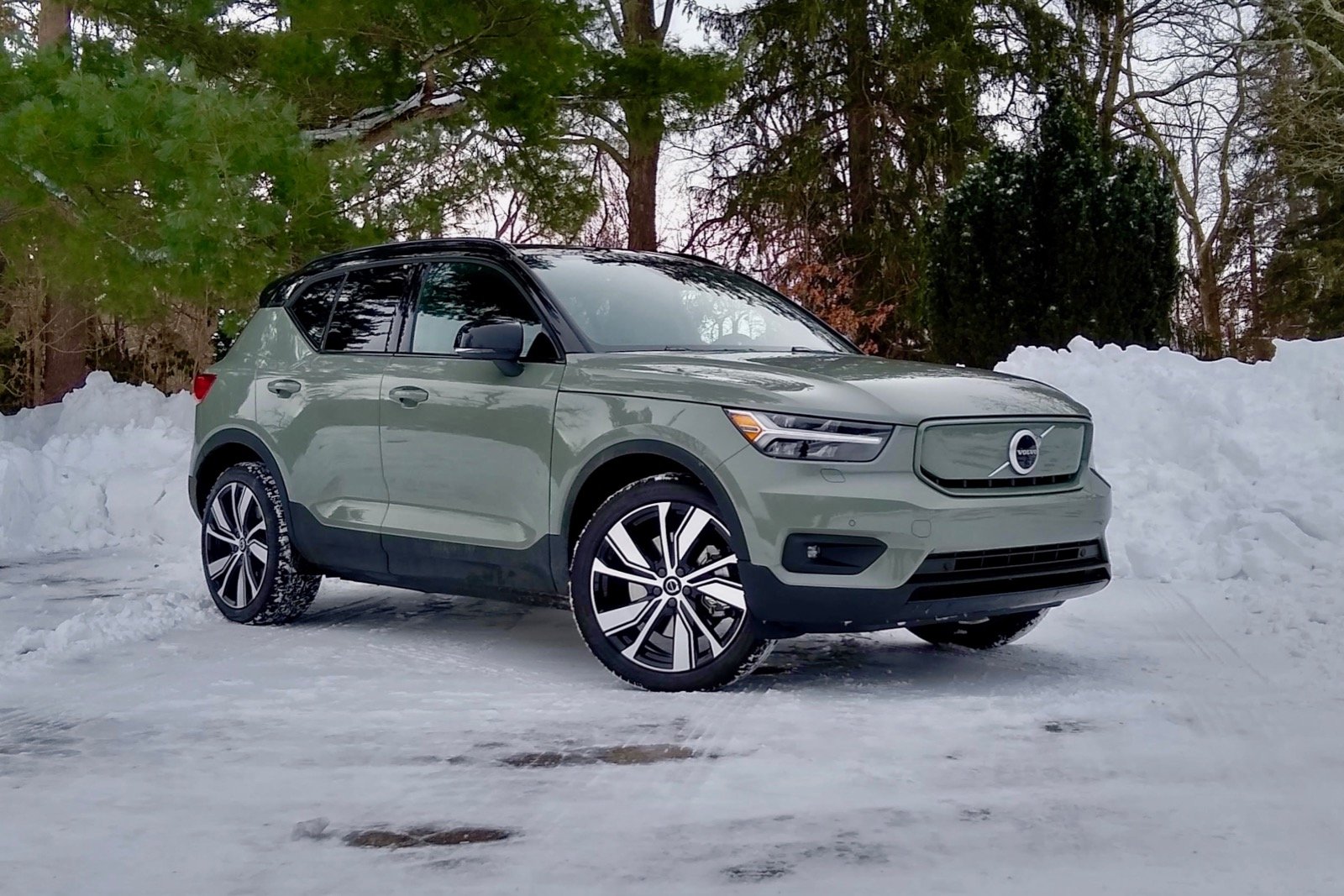
2021 Volvo XC40 Reviews SummaryIntroduced for the 2019 model year, the Volvo XC40 enters 2021 with one major change—the addition of an all-electric powertrain option. The 2021 Volvo XC40 Recharge is the Swedish automaker’s first mass-market electric vehicle, in fact. The Recharge will be sold alongside gasoline versions of the XC40, which carry over largely unchanged, and compete against small luxury crossovers like the Audi Q3, BMW X1, Mercedes-Benz GLA-Class, and Lexus UX. With its electric powertrain, the Recharge is a de facto Tesla Model Y competitor. It’s also priced similar to high-end versions of the Ford Mustang Mach-E, although the two electric crossovers have somewhat different philosophies. In addition to that zero-emission powertrain, the Recharge gets an Android-based operating system, over-the-air (OTA) software update capability for all vehicle systems, and some updates to driver-assist tech. These changes don’t apply to gasoline 2021 XC40 models, but Volvo does plan to add the Android operating system to more vehicles in the future. Since the Recharge is the main new thing for the 2021 XC40, that’s what we focused on for this review. While the gasoline XC40 is available in three trim levels—Momentum, R-Design, and Inscription—with front-wheel drive (FWD) or all-wheel drive (AWD), the Recharge is only offered in a single trim level, with standard AWD. | |
No video found | |
Popular Features & Specs | |
Engine2.0L 147 hp I4 | Engine2.0L 187 hp I4 |
Drive TrainFWD | Drive TrainFWD |
Seating Capacity5 | Seating Capacity5 |
Horsepower147 hp @ 6200 rpm | Horsepower187 hp @ 4700 rpm |
MPG City27 | MPG City23 |
MPG Highway33 | MPG Highway32 |
Engine | |
Engine Name2.0L 147 hp I4 | Engine Name2.0L 187 hp I4 |
Torque132 lb-ft @ 4500 rpm | Torque221 lb-ft @ 1400 rpm |
Horsepower147 hp @ 6200 rpm | Horsepower187 hp @ 4700 rpm |
DrivetrainFWD | DrivetrainFWD |
Fuel Economy | |
MPG City27 | MPG City23 |
MPG Highway33 | MPG Highway32 |
Interior | |
Leather Seats | Leather SeatsStandard |
Seating Capacity5 | Seating Capacity5 |
Safety | |
Front Crash Overall5 | Front Crash Overall5 |
Side Crash Overall5 | Side Crash Overall5 |
Dimensions & Capacity | |
Cargo Space19.2 cu ft | Cargo Space20.7 cu ft |
Curb Weight2890 lbs | Curb Weight3627 lbs |
Height61.0 in | Height65.3 in |
Length164.0 in | Length174.2 in |
Width70.9 in | Width80.1 in |
Wheelbase102.4 in | Wheelbase106.4 in |
Maximum Payload1089 lbs | Maximum Payload1133 lbs |
Number of doors4 | Number of doors4 |
Maximum Towing Capacity | Maximum Towing Capacity3500 lbs |
Overview | ||
MSRP | $20,300 | $33,700 |
Listings | ||
Ratings & Reviews | ||
User reviews | ||
Expert reviews | 6.8 out of 10Read full review | 8.0 out of 10Read full review |
Pros & cons | Pros
Cons
| Pros
Cons
|
Summary | The Hyundai Kona subcompact SUV is one of the smallest cars you can buy with all-wheel drive. It competes in a class of four-door hatchbacks with the lifted suspensions and higher driving positions that crossover buyers want—and with the same generous list of convenience and safety features that come on larger crossovers. We last tested the Kona when it came out for 2018, but a new trim level and more standard driver assists are the major changes for 2020. For what Hyundai charges, the Kona is cramped and the interior disappoints, yet exterior style and on-road performance are spectacular. | Introduced for the 2019 model year, the Volvo XC40 enters 2021 with one major change—the addition of an all-electric powertrain option. The 2021 Volvo XC40 Recharge is the Swedish automaker’s first mass-market electric vehicle, in fact. The Recharge will be sold alongside gasoline versions of the XC40, which carry over largely unchanged, and compete against small luxury crossovers like the Audi Q3, BMW X1, Mercedes-Benz GLA-Class, and Lexus UX. With its electric powertrain, the Recharge is a de facto Tesla Model Y competitor. It’s also priced similar to high-end versions of the Ford Mustang Mach-E, although the two electric crossovers have somewhat different philosophies. In addition to that zero-emission powertrain, the Recharge gets an Android-based operating system, over-the-air (OTA) software update capability for all vehicle systems, and some updates to driver-assist tech. These changes don’t apply to gasoline 2021 XC40 models, but Volvo does plan to add the Android operating system to more vehicles in the future. Since the Recharge is the main new thing for the 2021 XC40, that’s what we focused on for this review. While the gasoline XC40 is available in three trim levels—Momentum, R-Design, and Inscription—with front-wheel drive (FWD) or all-wheel drive (AWD), the Recharge is only offered in a single trim level, with standard AWD. |
Video | No video found | |
Popular Features & Specs | ||
Engine | 2.0L 147 hp I4 | 2.0L 187 hp I4 |
Drive Train | FWD | FWD |
Seating Capacity | 5 | 5 |
Horsepower | 147 hp @ 6200 rpm | 187 hp @ 4700 rpm |
MPG City | 27 | 23 |
MPG Highway | 33 | 32 |
Engine | ||
Engine Name | 2.0L 147 hp I4 | 2.0L 187 hp I4 |
Torque | 132 lb-ft @ 4500 rpm | 221 lb-ft @ 1400 rpm |
Horsepower | 147 hp @ 6200 rpm | 187 hp @ 4700 rpm |
Drivetrain | FWD | FWD |
Fuel Economy | ||
MPG City | 27 | 23 |
MPG Highway | 33 | 32 |
Interior | ||
Leather Seats | Standard | |
Seating Capacity | 5 | 5 |
Safety | ||
Front Crash Overall | 5 | 5 |
Side Crash Overall | 5 | 5 |
Dimensions & Capacity | ||
Cargo Space | 19.2 cu ft | 20.7 cu ft |
Curb Weight | 2890 lbs | 3627 lbs |
Height | 61.0 in | 65.3 in |
Length | 164.0 in | 174.2 in |
Width | 70.9 in | 80.1 in |
Wheelbase | 102.4 in | 106.4 in |
Maximum Payload | 1089 lbs | 1133 lbs |
Number of doors | 4 | 4 |
Maximum Towing Capacity | 3500 lbs | |
The 2020 Hyundai Kona was a standout in the subcompact SUV segment with its bold and sporty design. It was larger than the Ford EcoSport, yet still managed to maintain a sleek and dynamic appearance. The Kona's exterior was visually stimulating, featuring tiered lighting, a tall grille, and matte plastic trim that gave it a taller and wider look. The design elements, such as slim LED running lamps and fender creases, contributed to its premium vibe. However, the interior did not match the exterior's excitement, with hard plastics and lackluster finishes. Despite some colorful trim options in higher trims, the Kona's cabin fell short in tactile quality compared to competitors like the Mazda CX-30 and Honda HR-V.
In contrast, the 2021 Volvo XC40 embraced a more traditional SUV styling with a tall, flat roof and upright rear hatch. It fit well within the Volvo family, featuring signature elements like "Thor’s Hammer" LED headlights and a simple oval grille. The XC40 Recharge, the electric variant, had subtle differences such as a blanked-off grille and model-specific alloy wheels. Inside, the XC40 boasted a minimalist design with high-quality materials, including real metal trim and a combination of Nappa leather and Nubuck textile upholstery. The interior design was coherent and premium, with a focus on comfort and quietness rather than speed and g-force.


The 2020 Hyundai Kona offered a surprisingly robust powertrain for its segment. Its 1.6-liter turbocharged inline-four engine delivered 175 horsepower and 195 pound-feet of torque, outperforming most competitors. This engine, paired with a 7-speed dual-clutch transmission, provided strong acceleration and confidence in various driving conditions. However, only the Limited and Ultimate trims featured this turbo engine. The standard engine was a 2.0-liter inline-four with 147 hp and 132 lb-ft, paired with a 6-speed automatic transmission. The Kona's handling was impressive, with fast steering and a stable suspension, though the ride was stiffer and noisier compared to rivals. Fuel economy was average, with the turbo AWD model achieving 26 mpg city and 29 mpg highway.
The 2021 Volvo XC40 offered a three-tiered powertrain lineup, with the electric Recharge model at the top. The base T4 model had a 2.0-liter turbo four-cylinder engine with 187 hp and 221 lb-ft, while the T5 AWD variant offered 248 hp and 258 lb-ft. The Recharge model, sharing its powertrain with the Polestar 2, featured dual electric motors for a combined 402 hp and 486 lb-ft. It accelerated from zero to 60 mph in 4.7 seconds, emphasizing comfort and quietness over performance. The XC40 Recharge also offered one-pedal driving and a towing capacity of 2,000 pounds, showcasing its versatility.
The 2020 Hyundai Kona struggled with interior space, offering only 19 cubic feet of cargo space, expanding to 46 cubic feet with the rear seats folded. This was significantly less than competitors like the Honda HR-V and Kia Soul. While seating for four was adequate, the Kona's cramped interior limited its utility as a crossover. Despite easy-to-use controls and a simple infotainment system, the Kona's lack of space made it more akin to a small hatchback than a true SUV.
The 2021 Volvo XC40, while not particularly spacious, offered clever storage solutions to compensate for its limited interior space. The center console featured a removable trash bin, and the glovebox included a bag hook. The XC40's door bins were larger due to the relocation of the audio system's speakers to the dashboard. However, the XC40 Recharge had less legroom and headroom compared to rivals like the Tesla Model Y. Despite these limitations, the XC40's interior was well-designed and functional, with thoughtful touches enhancing its practicality.
The 2020 Hyundai Kona came equipped with a range of standard features, especially in trims above the base SE. The SEL trim added proximity entry, heated front seats, and blind-spot monitoring, among other features. The SEL Plus introduced an eight-speaker Infinity stereo and wireless charging. The Limited trim included leather upholstery, while the Ultimate trim offered a sunroof, an 8-inch touchscreen with navigation, and adaptive cruise control. The Kona's infotainment system was user-friendly, with Apple CarPlay and Android Auto compatibility.
The 2021 Volvo XC40 Recharge featured the Android Automotive OS infotainment system, integrating Google apps like Google Assistant and Google Maps. This system offered a 9-inch touchscreen and a 12.3-inch digital instrument cluster, with top-notch graphics and menu layouts. The Recharge model also introduced OTA update capability, allowing for software updates without visiting a dealership. The gasoline models continued with the previous infotainment system, maintaining conventional connectivity options like Apple CarPlay and Android Auto.
The 2020 Hyundai Kona received high safety ratings, earning five stars overall from the NHTSA and a Top Safety Pick from the IIHS. It came standard with forward emergency braking, lane-keep assist, and a driver attention monitor. However, pedestrian detection was only available on the Ultimate trim, and the Kona lacked front knee airbags and rear side airbags.
The 2021 Volvo XC40 received a Top Safety Pick+ rating from the IIHS and a five-star overall rating from the NHTSA. It came with a comprehensive list of standard safety features, including lane-keep assist, blind-spot monitoring, and automatic emergency braking. The Recharge model featured Volvo's latest sensor suite, capable of future updates for advanced driver aids.
CarGurus highlights
According to CarGurus experts, the overall rating for the 2020 Hyundai Kona is 6.8 out of 10, while the 2021 Volvo XC40 scores 8.0 out of 10. Based on these ratings, the 2021 Volvo XC40 is the recommended choice, offering a more refined and versatile package with superior safety and technology features.
Choose the 2020 Hyundai Kona if:
- You prioritize a sporty and visually appealing exterior design.
- You seek a robust turbocharged engine with strong performance.
- You value a user-friendly infotainment system with standard connectivity features.


Choose the 2021 Volvo XC40 if:
- You prefer a traditional SUV design with a premium and minimalist interior.
- You want a versatile powertrain lineup, including an electric option with impressive acceleration.
- You prioritize advanced safety features and future-ready technology.








CarGurus highlights
According to CarGurus experts, the overall rating for the 2020 Hyundai Kona is 6.8 out of 10, while the 2021 Volvo XC40 scores 8.0 out of 10. Based on these ratings, the 2021 Volvo XC40 is the recommended choice, offering a more refined and versatile package with superior safety and technology features.
Choose the 2020 Hyundai Kona if:
Shop Now- You prioritize a sporty and visually appealing exterior design.
- You seek a robust turbocharged engine with strong performance.
- You value a user-friendly infotainment system with standard connectivity features.







Choose the 2021 Volvo XC40 if:
Shop Now- You prefer a traditional SUV design with a premium and minimalist interior.
- You want a versatile powertrain lineup, including an electric option with impressive acceleration.
- You prioritize advanced safety features and future-ready technology.











By: CarGurus + AI
At CarGurus, our team of experienced automotive writers remain at the heart of our content operation, conducting hands-on car tests and writing insightful guides that are backed by years of industry experience. To complement this, we are harnessing AI to make our content offering more diverse and more helpful to shoppers than ever. To achieve this, our AI systems are based exclusively on CarGurus content, ratings and data, so that what we produce is both unique to CarGurus, and uniquely helpful to car shoppers.