2020 Hyundai Kona vs 2021 Volkswagen Tiguan

Overview | |
MSRP$20,300 | MSRP$25,245 |
Listings414 | Listings1315 |
Ratings & Reviews | |
User Reviews | User Reviews |
Expert reviews6.8 out of 10 | Expert reviews7.3 out of 10 |
Pros
Cons
| Pros
Cons
|
2020 Hyundai Kona Reviews SummaryThe Hyundai Kona subcompact SUV is one of the smallest cars you can buy with all-wheel drive. It competes in a class of four-door hatchbacks with the lifted suspensions and higher driving positions that crossover buyers want—and with the same generous list of convenience and safety features that come on larger crossovers. We last tested the Kona when it came out for 2018, but a new trim level and more standard driver assists are the major changes for 2020. For what Hyundai charges, the Kona is cramped and the interior disappoints, yet exterior style and on-road performance are spectacular. | |
2021 Volkswagen Tiguan Reviews SummaryYou may have noticed that crossover SUVs are popular. Among them, compact models dominate, having essentially replaced the traditional midsize sedan in American driveways. Offering room for five people, available all-wheel drive (AWD), and more cargo than any family car, they are the preferred method of transportation for a broad cross section of new vehicle buyers. But that’s not the only explanation for the runaway success of the 2021 Volkswagen Tiguan. | |
No video found | |
Popular Features & Specs | |
Engine2.0L 147 hp I4 | Engine2.0L 184 hp I4 |
Drive TrainFWD | Drive TrainFWD |
Seating Capacity5 | Seating Capacity7 |
Horsepower147 hp @ 6200 rpm | Horsepower184 hp @ 4400 rpm |
MPG City27 | MPG City23 |
MPG Highway33 | MPG Highway29 |
Engine | |
Engine Name2.0L 147 hp I4 | Engine Name2.0L 184 hp I4 |
Torque132 lb-ft @ 4500 rpm | Torque221 lb-ft @ 1600 rpm |
Horsepower147 hp @ 6200 rpm | Horsepower184 hp @ 4400 rpm |
DrivetrainFWD | DrivetrainFWD |
Fuel Economy | |
MPG City27 | MPG City23 |
MPG Highway33 | MPG Highway29 |
Interior | |
Seating Capacity5 | Seating Capacity7 |
Safety | |
Front Crash Overall5 | Front Crash Overall4 |
Side Crash Overall5 | Side Crash Overall5 |
Dimensions & Capacity | |
Cargo Space19.2 cu ft | Cargo Space12.0 cu ft |
Curb Weight2890 lbs | Curb Weight3735 lbs |
Height61.0 in | Height66.3 in |
Length164.0 in | Length185.1 in |
Width70.9 in | Width72.4 in |
Wheelbase102.4 in | Wheelbase109.8 in |
Maximum Payload1089 lbs | Maximum Payload1146 lbs |
Number of doors4 | Number of doors4 |
Maximum Towing Capacity | Maximum Towing Capacity1500 lbs |
Overview | ||
MSRP | $20,300 | $25,245 |
Listings | ||
Ratings & Reviews | ||
User reviews | ||
Expert reviews | 6.8 out of 10Read full review | 7.3 out of 10Read full review |
Pros & cons | Pros
Cons
| Pros
Cons
|
Summary | The Hyundai Kona subcompact SUV is one of the smallest cars you can buy with all-wheel drive. It competes in a class of four-door hatchbacks with the lifted suspensions and higher driving positions that crossover buyers want—and with the same generous list of convenience and safety features that come on larger crossovers. We last tested the Kona when it came out for 2018, but a new trim level and more standard driver assists are the major changes for 2020. For what Hyundai charges, the Kona is cramped and the interior disappoints, yet exterior style and on-road performance are spectacular. | You may have noticed that crossover SUVs are popular. Among them, compact models dominate, having essentially replaced the traditional midsize sedan in American driveways. Offering room for five people, available all-wheel drive (AWD), and more cargo than any family car, they are the preferred method of transportation for a broad cross section of new vehicle buyers. But that’s not the only explanation for the runaway success of the 2021 Volkswagen Tiguan. |
Video | No video found | |
Popular Features & Specs | ||
Engine | 2.0L 147 hp I4 | 2.0L 184 hp I4 |
Drive Train | FWD | FWD |
Seating Capacity | 5 | 7 |
Horsepower | 147 hp @ 6200 rpm | 184 hp @ 4400 rpm |
MPG City | 27 | 23 |
MPG Highway | 33 | 29 |
Engine | ||
Engine Name | 2.0L 147 hp I4 | 2.0L 184 hp I4 |
Torque | 132 lb-ft @ 4500 rpm | 221 lb-ft @ 1600 rpm |
Horsepower | 147 hp @ 6200 rpm | 184 hp @ 4400 rpm |
Drivetrain | FWD | FWD |
Fuel Economy | ||
MPG City | 27 | 23 |
MPG Highway | 33 | 29 |
Interior | ||
Seating Capacity | 5 | 7 |
Safety | ||
Front Crash Overall | 5 | 4 |
Side Crash Overall | 5 | 5 |
Dimensions & Capacity | ||
Cargo Space | 19.2 cu ft | 12.0 cu ft |
Curb Weight | 2890 lbs | 3735 lbs |
Height | 61.0 in | 66.3 in |
Length | 164.0 in | 185.1 in |
Width | 70.9 in | 72.4 in |
Wheelbase | 102.4 in | 109.8 in |
Maximum Payload | 1089 lbs | 1146 lbs |
Number of doors | 4 | 4 |
Maximum Towing Capacity | 1500 lbs | |
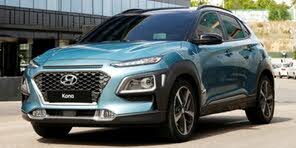
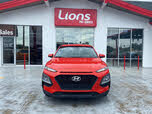
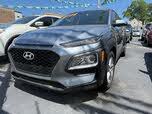
The 2020 Hyundai Kona presented a striking exterior design that stood out among its competitors. It was larger than the Ford EcoSport and boasted a sleek, sporty appearance that belied its economy car pricing. The Kona's design cleverly masked the inherent stubbiness of small, short-wheelbase vehicles with tall roofs, making it a standout in its class. Its exterior was visually stimulating, with tiered lighting, a tall grille, and matte plastic trim that gave it a taller and wider appearance. The Kona's design elements, such as the fender creases and two-tone wheels, contributed to its premium vibe. However, the interior did not match the exterior's excitement, with hard plastics and lackluster finishes. While the layout was acceptable, the fit and finish were below par compared to competitors like the Mazda CX-30 and Honda HR-V.
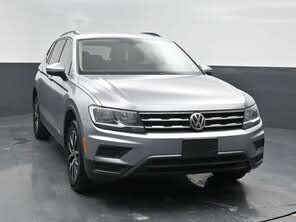
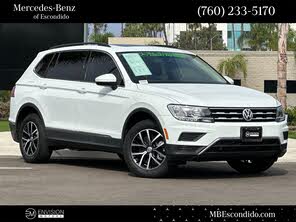
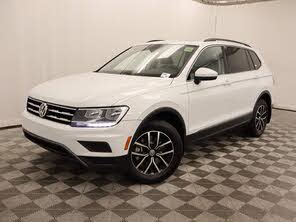
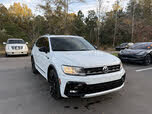
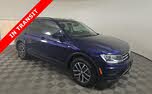
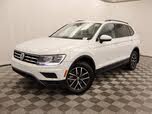
In contrast, the 2021 Volkswagen Tiguan offered a clean and balanced design that some might have found understated, but it exuded a conservative, upscale, and timeless aesthetic. The Tiguan was larger for its class, providing a roomy and accommodating interior with plenty of space for passengers. It featured a long-wheelbase version, making it nearly as spacious as larger SUVs like the Hyundai Santa Fe. The Tiguan's interior combined modern geometric forms with a no-nonsense control layout, although it had some hard plastic elements. The cabin was dressed up with shiny detailing, digital instrumentation, and a well-integrated touchscreen infotainment system. The Tiguan's design was understated yet elegant, appealing to those who appreciated a more classic look.


The 2020 Hyundai Kona surprised many with its impressive powertrain and chassis. Its 1.6-liter turbocharged inline-four engine delivered 175 horsepower and 195 pound-feet of torque, outperforming most competitors in its segment. The engine's torque came on early and remained flat, providing strong acceleration and confidence when merging onto highways. The 7-speed dual-clutch transmission was responsive, enhancing the driving experience. However, only the Limited and Ultimate trims featured the turbo engine, while the standard engine was a naturally-aspirated 2.0-liter inline-four with 147 hp. The Kona's handling was commendable, with fast and direct steering, a tight suspension, and minimal body roll. Despite its performance, the Kona's fuel economy was average, with the 1.6T AWD achieving 26 mpg city and 29 mpg highway.
The 2021 Volkswagen Tiguan came equipped with a turbocharged 2.0-liter four-cylinder engine producing 184 horsepower and 221 pound-feet of torque. While adequate, the engine suffered from turbocharger lag, affecting its responsiveness in certain driving situations. The Tiguan's nearly 4,000-pound curb weight contributed to a perception of lethargy when extra power was needed. The EPA estimated the Tiguan's fuel economy at 25 mpg combined with FWD and 24 mpg with AWD, but testing showed an average of 22.6 mpg. Despite this, the Tiguan offered a pleasurable driving experience with light steering, a compliant ride, and nimble handling. However, its suspension struggled with sharper speed bumps and railroad tracks, and the tires lacked grip in corners. On the highway, the Tiguan was quiet and composed, making it suitable for long road trips.
The 2020 Hyundai Kona struggled with interior space, offering seating for four with average rear legroom and headroom. However, its cargo space was limited, with only 19 cubic feet available and 46 cubic feet with the rear seats folded. This was significantly smaller than competitors like the Honda HR-V and Buick Encore GX, which offered more versatile cargo solutions. The Kona's controls were easy to use, and the infotainment system was simple and fast, but it fell short as a utility vehicle due to its cramped interior.
In contrast, the 2021 Volkswagen Tiguan excelled in interior comfort and space. It featured large doors and tall seating hip points, making entry and exit easy. The front seats offered a wide range of adjustments, and the back seat provided excellent support and generous legroom. The Tiguan's interior was well-equipped with air conditioning vents, USB charging ports, and a large panoramic sunroof. Its cargo space was versatile, with a 40/20/40-split folding rear seat and deep wells for additional storage. Depending on the configuration, the Tiguan offered between 33 and 37.6 cubic feet of cargo space behind the second row, with a maximum capacity of up to 73.5 cubic feet.
The 2020 Hyundai Kona offered a range of standard features, with the base SE model including a 7-inch touchscreen with Apple CarPlay and Android Auto. Higher trims added features like proximity entry, heated front seats, and a leather-wrapped steering wheel. The SEL Plus trim introduced an auto-dimming rear-view mirror, wireless charging, and an eight-speaker Infinity stereo. The Limited trim added leather upholstery, while the Ultimate trim featured a sunroof, an 8-inch touchscreen with navigation, and adaptive cruise control.
The 2021 Volkswagen Tiguan introduced the MIB3 infotainment system, available from the SE trim. It featured an 8-inch touchscreen, wireless Apple CarPlay and Android Auto, and a range of connected services. The system offered faster processing and response times, but the voice recognition technology was lacking. The SEL Premium R-Line trim included a nine-speaker Fender premium audio system, while the SEL and SEL Premium R-Line featured Volkswagen Digital Cockpit instrumentation. The Tiguan's technology was understated yet functional, providing a range of features for modern drivers.
The 2020 Hyundai Kona received high safety ratings, scoring five out of five stars overall in NHTSA crash tests and earning a 2020 Top Safety Pick from the IIHS. It came standard with forward emergency braking, lane-keep assist, and a driver attention monitor. However, pedestrian detection was only available on the Ultimate trim, and the Kona lacked front knee airbags and rear side airbags.
The 2021 Volkswagen Tiguan was equipped with the IQ Drive collection of advanced driving assistance systems, including forward-collision warning, pedestrian detection, and automatic emergency braking. Starting with the SE trim, adaptive cruise control was included, while the SEL added lane-departure warning and lane-keep assist. The Tiguan's safety features were comprehensive, with parking sensors and a reversing camera providing additional assistance. The IIHS rated the Tiguan as a Top Safety Pick in SEL and SEL Premium R-Line trims, thanks to its high-performing LED headlights.
CarGurus highlights
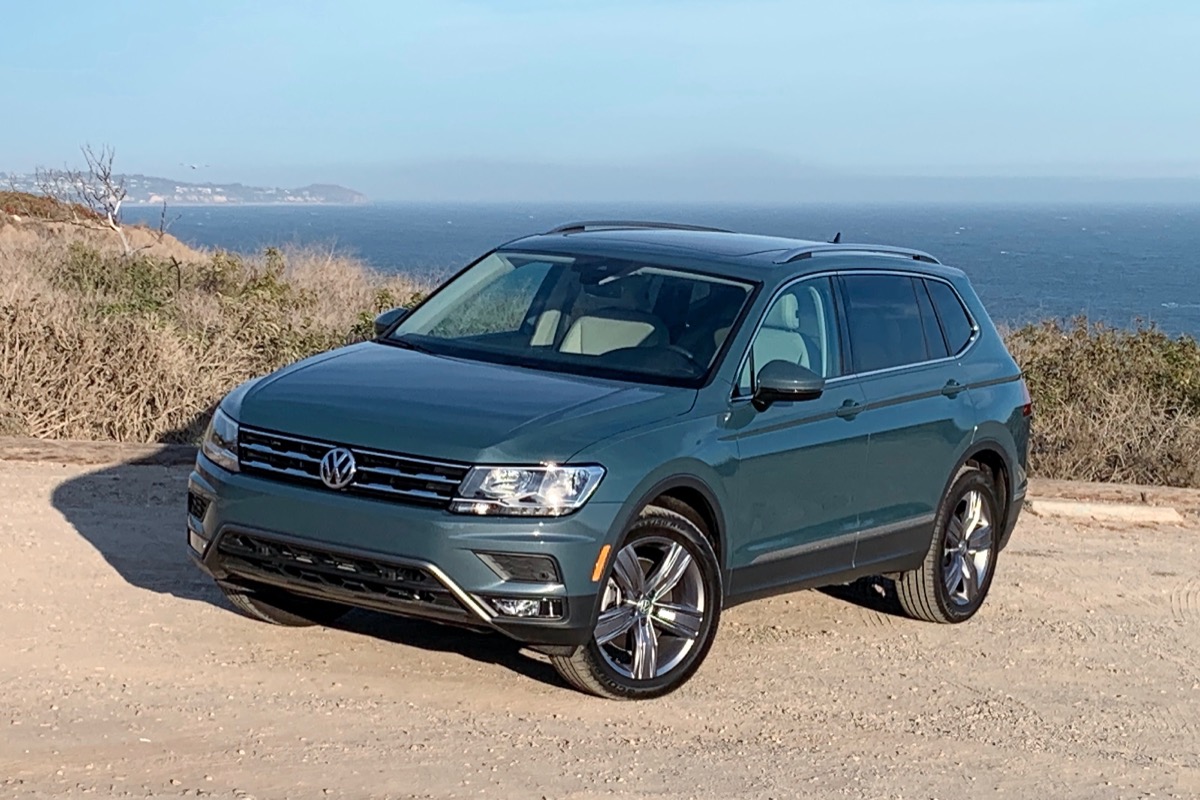
According to CarGurus experts, the overall rating for the 2020 Hyundai Kona is 6.8 out of 10, while the 2021 Volkswagen Tiguan scores 7.3 out of 10. Based on these ratings, the 2021 Volkswagen Tiguan is the recommended choice, offering a more spacious interior, a comprehensive suite of safety features, and a timeless design that appeals to a wide range of consumers.
Choose the 2020 Hyundai Kona if:
- You prioritize a sporty and visually stimulating exterior design.
- You seek a vehicle with strong acceleration and handling in its class.
- You value a range of standard features and technology options.




Choose the 2021 Volkswagen Tiguan if:
- You need a spacious and comfortable interior with ample cargo capacity.
- You appreciate a conservative, upscale design with a timeless aesthetic.
- You want a comprehensive suite of advanced safety features.




CarGurus highlights
According to CarGurus experts, the overall rating for the 2020 Hyundai Kona is 6.8 out of 10, while the 2021 Volkswagen Tiguan scores 7.3 out of 10. Based on these ratings, the 2021 Volkswagen Tiguan is the recommended choice, offering a more spacious interior, a comprehensive suite of safety features, and a timeless design that appeals to a wide range of consumers.
Choose the 2020 Hyundai Kona if:
Shop Now- You prioritize a sporty and visually stimulating exterior design.
- You seek a vehicle with strong acceleration and handling in its class.
- You value a range of standard features and technology options.







Choose the 2021 Volkswagen Tiguan if:
Shop Now- You need a spacious and comfortable interior with ample cargo capacity.
- You appreciate a conservative, upscale design with a timeless aesthetic.
- You want a comprehensive suite of advanced safety features.






By: CarGurus + AI
At CarGurus, our team of experienced automotive writers remain at the heart of our content operation, conducting hands-on car tests and writing insightful guides that are backed by years of industry experience. To complement this, we are harnessing AI to make our content offering more diverse and more helpful to shoppers than ever. To achieve this, our AI systems are based exclusively on CarGurus content, ratings and data, so that what we produce is both unique to CarGurus, and uniquely helpful to car shoppers.