2020 Hyundai Kona vs 2021 Lexus NX

Overview | |
MSRP$20,300 | MSRP$37,610 |
Listings393 | Listings368 |
Ratings & Reviews | |
User Reviews | User Reviews |
Expert reviews6.8 out of 10 | Expert reviews7.0 out of 10 |
Pros
Cons
| Pros
Cons
|
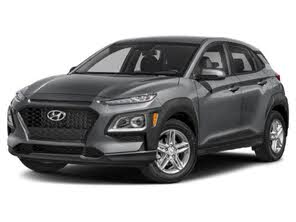
2020 Hyundai Kona Reviews SummaryThe Hyundai Kona subcompact SUV is one of the smallest cars you can buy with all-wheel drive. It competes in a class of four-door hatchbacks with the lifted suspensions and higher driving positions that crossover buyers want—and with the same generous list of convenience and safety features that come on larger crossovers. We last tested the Kona when it came out for 2018, but a new trim level and more standard driver assists are the major changes for 2020. For what Hyundai charges, the Kona is cramped and the interior disappoints, yet exterior style and on-road performance are spectacular. | |
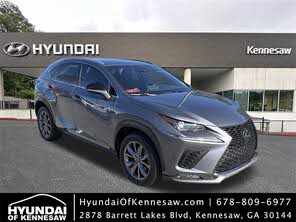
2021 Lexus NX Reviews SummaryOne year ahead of its redesign, the aged 2021 Lexus NX luxury compact SUV retains the features that have made it so popular: good looks, a high-quality interior, and agile driving dynamics. But not all that glitters is gold, as the NX has some definite problem areas. | |
No video found | |
Popular Features & Specs | |
Engine2.0L 147 hp I4 | Engine2.0L 235 hp I4 |
Drive TrainFWD | Drive TrainFWD |
Seating Capacity5 | Seating Capacity5 |
Horsepower147 hp @ 6200 rpm | Horsepower235 hp @ 5600 rpm |
MPG City27 | MPG City22 |
MPG Highway33 | MPG Highway28 |
Engine | |
Engine Name2.0L 147 hp I4 | Engine Name2.0L 235 hp I4 |
Torque132 lb-ft @ 4500 rpm | Torque258 lb-ft @ 4000 rpm |
Horsepower147 hp @ 6200 rpm | Horsepower235 hp @ 5600 rpm |
DrivetrainFWD | DrivetrainFWD |
Fuel Economy | |
MPG City27 | MPG City22 |
MPG Highway33 | MPG Highway28 |
Interior | |
Seating Capacity5 | Seating Capacity5 |
Safety | |
Front Crash Overall5 | Front Crash Overall4 |
Side Crash Overall5 | Side Crash Overall5 |
Dimensions & Capacity | |
Cargo Space19.2 cu ft | Cargo Space17.7 cu ft |
Curb Weight2890 lbs | Curb Weight3940 lbs |
Height61.0 in | Height64.8 in |
Length164.0 in | Length182.3 in |
Width70.9 in | Width83.9 in |
Wheelbase102.4 in | Wheelbase104.7 in |
Maximum Payload1089 lbs | Maximum Payload895 lbs |
Number of doors4 | Number of doors4 |
Maximum Towing Capacity | Maximum Towing Capacity2000 lbs |
Overview | ||
MSRP | $20,300 | $37,610 |
Listings | ||
Ratings & Reviews | ||
User reviews | ||
Expert reviews | 6.8 out of 10Read full review | 7.0 out of 10Read full review |
Pros & cons | Pros
Cons
| Pros
Cons
|
Summary | The Hyundai Kona subcompact SUV is one of the smallest cars you can buy with all-wheel drive. It competes in a class of four-door hatchbacks with the lifted suspensions and higher driving positions that crossover buyers want—and with the same generous list of convenience and safety features that come on larger crossovers. We last tested the Kona when it came out for 2018, but a new trim level and more standard driver assists are the major changes for 2020. For what Hyundai charges, the Kona is cramped and the interior disappoints, yet exterior style and on-road performance are spectacular. | One year ahead of its redesign, the aged 2021 Lexus NX luxury compact SUV retains the features that have made it so popular: good looks, a high-quality interior, and agile driving dynamics. But not all that glitters is gold, as the NX has some definite problem areas. |
Video | No video found | |
Popular Features & Specs | ||
Engine | 2.0L 147 hp I4 | 2.0L 235 hp I4 |
Drive Train | FWD | FWD |
Seating Capacity | 5 | 5 |
Horsepower | 147 hp @ 6200 rpm | 235 hp @ 5600 rpm |
MPG City | 27 | 22 |
MPG Highway | 33 | 28 |
Engine | ||
Engine Name | 2.0L 147 hp I4 | 2.0L 235 hp I4 |
Torque | 132 lb-ft @ 4500 rpm | 258 lb-ft @ 4000 rpm |
Horsepower | 147 hp @ 6200 rpm | 235 hp @ 5600 rpm |
Drivetrain | FWD | FWD |
Fuel Economy | ||
MPG City | 27 | 22 |
MPG Highway | 33 | 28 |
Interior | ||
Seating Capacity | 5 | 5 |
Safety | ||
Front Crash Overall | 5 | 4 |
Side Crash Overall | 5 | 5 |
Dimensions & Capacity | ||
Cargo Space | 19.2 cu ft | 17.7 cu ft |
Curb Weight | 2890 lbs | 3940 lbs |
Height | 61.0 in | 64.8 in |
Length | 164.0 in | 182.3 in |
Width | 70.9 in | 83.9 in |
Wheelbase | 102.4 in | 104.7 in |
Maximum Payload | 1089 lbs | 895 lbs |
Number of doors | 4 | 4 |
Maximum Towing Capacity | 2000 lbs | |
The 2020 Hyundai Kona was a standout in its segment, boasting a sleek, sporty, and dramatic exterior that belied its mass-market economy car status. Hyundai's clever design made the Kona appear taller and wider than it was, thanks to tiered lighting, a tall grille, and chunky matte plastic trim. The car's slim LED running lamps, strategically placed headlights, and optional fog lights added to its visual appeal. The fender creases and black trim further enhanced its premium vibe, especially with the two-tone wheels and gently sloping roof. However, the interior didn't match the exterior's excitement, with hard plastics and lackluster finishes. While the buttons and screens were functional, the overall tactile quality lagged behind competitors like the Mazda CX-30 and Honda HR-V.
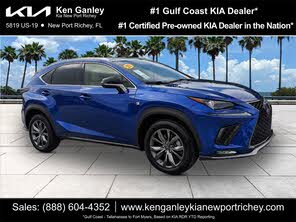
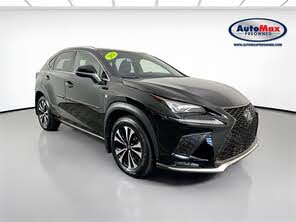
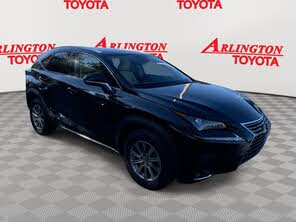
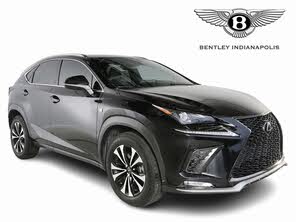
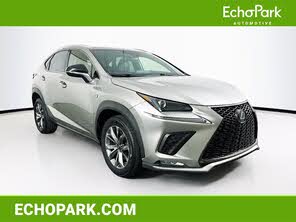
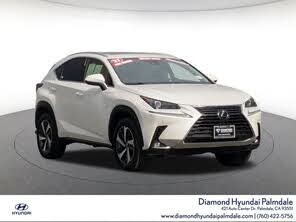
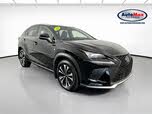
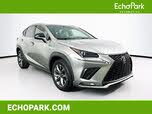
In contrast, the 2021 Lexus NX carried over Lexus's familial design and styling attributes, presenting a sharp, sculpted exterior that was both familiar and distinct. The NX 300 and 300 F Sport gasoline models featured power-folding outside mirrors and 17-inch wheels as standard. The F Sport variant added a honeycomb grille, triple-beam LED headlights, and 18-inch F Sport wheels, giving it a sportier appearance. Inside, the NX F Sport boasted quilted NuLuxe sport seats and optional Circuit Red interior color scheme. The material fit and finish were excellent, with a gauge cluster featuring a sculpted metal-faced four-dial setup. However, the center stack's design looked dated compared to newer models, and the G-Force meter felt more gimmicky than functional.


The 2020 Hyundai Kona surprised many with its impressive powertrain and chassis. The 1.6-liter turbocharged inline-four engine delivered 175 horsepower and 195 pound-feet of torque, outperforming most competitors. The 7-speed dual-clutch transmission provided strong acceleration and responsive handling, making the Kona a joy to drive. However, only the Limited and Ultimate trims featured the turbo engine. The standard 2.0-liter inline-four engine, with 147 horsepower and 132 pound-feet of torque, was less impressive but still paired with a traditional 6-speed automatic transmission. The Kona's AWD system included torque vectoring, enhancing its handling around tight corners. Despite its noisy cabin and stiffer ride, the Kona's steering and suspension impressed, offering a driving experience comparable to luxury models like the Mercedes-Benz GLA.
The 2021 Lexus NX, while not designed to be sporty, was capable and comfortable. Its turbocharged 2.0-liter four-cylinder engine produced 235 horsepower and 258 pound-feet of torque, allowing it to accelerate from zero to 60 mph in around seven seconds. The six-speed automatic transmission was adequate but less smooth than newer multi-speed transmissions. The NX's AWD system could transfer up to 50 percent of torque to the rear axle, but lacked individual-wheel torque vectoring. Fuel economy was decent, with the FWD model achieving 22 mpg city and 28 mpg highway. The NX F Sport featured an adaptive-suspension system and three drive modes, enhancing its driving experience. However, the steering was numb, and the G-Force meter felt unnecessary.
The 2020 Hyundai Kona struggled with interior space, offering only 19 cubic feet of cargo space and 46 cubic feet with the rear seats folded. While seating for four was adequate, the Kona's cramped interior made it less practical for carrying passengers and luggage. Competitors like the Honda HR-V and Buick Encore GX offered significantly more cargo space, making the Kona less suitable for families or those needing extra storage.
The 2021 Lexus NX, on the other hand, provided a more comfortable and upscale interior. The front seats offered ample room, and the second-row seats could comfortably accommodate two adults. The NX featured a 60/40 split-folding rear seat, but its cargo space was limited to 17.7 cubic feet behind the second row and 54.6 cubic feet with the seats folded. While not the most spacious in its class, the NX's interior comfort and quality made it a more appealing choice for those prioritizing luxury over cargo capacity.
The 2020 Hyundai Kona offered a good list of standard features, especially from the SEL trim upwards. The base SE model included a 7-inch touchscreen with Apple CarPlay and Android Auto, but higher trims added features like proximity entry, heated front seats, and a leather-wrapped steering wheel. The SEL Plus trim introduced wireless charging, an eight-speaker Infinity stereo, and Blue Link connectivity. The Limited trim added leather upholstery, while the Ultimate trim featured a sunroof, an 8-inch touchscreen with navigation, and adaptive cruise control.
The 2021 Lexus NX came with an 8-inch touchscreen as standard, with a 10.3-inch screen available in the Navigation package. The infotainment system included Apple CarPlay, Android Auto, and Lexus Enform Destination Assist. Standard features included keyless entry, dual-zone automatic climate control, and an eight-speaker stereo system. The Navigation package added two more speakers, and a Mark Levinson 14-speaker audio system was available on the top-tier NX. The Lexus Enform Remote mobile app allowed users to control various functions remotely, and the NX also featured Lexus Enform Services Connect for maintenance alerts.
The 2020 Hyundai Kona scored five out of five stars overall in NHTSA crash tests and was rated a 2020 Top Safety Pick by the IIHS. Standard safety features included forward emergency braking, lane-keep assist, and a driver attention monitor. However, pedestrian detection was only available on the Ultimate trim, and the Kona lacked front knee airbags and rear side airbags.
The 2021 Lexus NX came with Lexus Safety System+ 2.0 as standard, which included a rearview camera, lane-departure warning, lane-keep assist, traffic-sign recognition, automatic high beams, forward-collision warning, automatic emergency braking, pedestrian detection, and adaptive cruise control. Blind-spot monitoring and rear cross-traffic alert were also standard. The NX received top "Good" scores in all IIHS crash tests and a five-star overall safety rating from the NHTSA. Lexus Enform Safety Connect provided additional safety features, and the NX came with a four-year/50,000-mile limited warranty and a six-year/70,000-mile powertrain warranty.
CarGurus highlights

According to CarGurus experts, the overall rating for the 2020 Hyundai Kona is 6.8 out of 10, while the 2021 Lexus NX scores 7.0 out of 10. Based on these ratings, the 2021 Lexus NX is the better choice, offering a more luxurious interior, advanced safety features, and a refined driving experience.
Choose the 2020 Hyundai Kona if:
- You prioritize a sporty and visually appealing exterior design.
- You want a turbocharged engine with strong acceleration and responsive handling.
- You prefer a more affordable option with a good list of standard features.





Choose the 2021 Lexus NX if:
- You value a luxurious and comfortable interior with high-quality materials.
- You need advanced safety features and top safety ratings.
- You prefer a more refined driving experience with a capable turbocharged engine.



CarGurus highlights
According to CarGurus experts, the overall rating for the 2020 Hyundai Kona is 6.8 out of 10, while the 2021 Lexus NX scores 7.0 out of 10. Based on these ratings, the 2021 Lexus NX is the better choice, offering a more luxurious interior, advanced safety features, and a refined driving experience.
Choose the 2020 Hyundai Kona if:
Shop Now- You prioritize a sporty and visually appealing exterior design.
- You want a turbocharged engine with strong acceleration and responsive handling.
- You prefer a more affordable option with a good list of standard features.









Choose the 2021 Lexus NX if:
Shop Now- You value a luxurious and comfortable interior with high-quality materials.
- You need advanced safety features and top safety ratings.
- You prefer a more refined driving experience with a capable turbocharged engine.









By: CarGurus + AI
At CarGurus, our team of experienced automotive writers remain at the heart of our content operation, conducting hands-on car tests and writing insightful guides that are backed by years of industry experience. To complement this, we are harnessing AI to make our content offering more diverse and more helpful to shoppers than ever. To achieve this, our AI systems are based exclusively on CarGurus content, ratings and data, so that what we produce is both unique to CarGurus, and uniquely helpful to car shoppers.