2021 Hyundai Kona vs 2020 Honda CR-V

Overview | |
MSRP$25,150 | MSRP$20,500 |
Listings1674 | Listings504 |
Ratings & Reviews | |
User Reviews | User Reviews |
Expert reviews7.5 out of 10 | Expert reviews7.2 out of 10 |
Pros
Cons
| Pros
Cons
|
2020 Honda CR-V Reviews SummaryHonda’s compact SUV has been satisfying buyers for more than two decades, with more than five million CR-V’s sold. Such a legacy means the CR-V has long had its wrinkles smoothed out into a comfortable and capable crossover package that’s only downside may be its sheer inoffensiveness. This year’s model gets engine and safety upgrades, which improve fuel economy and help to make Honda’s bestseller an even better value. | |
2021 Hyundai Kona Reviews SummaryAfter three years on the market, the Hyundai Kona continues to wow with great features, strong styling, and decent specs. The 2021 model year brings subtle changes to the Kona lineup, including new colors, a new Night Edition with Rays semi-gloss black 18-inch wheels, and gloss black exterior and interior accents. Hyundai offers the Kona in several trims: SE, SEL, SEL Plus, Night Edition, Limited, and Ultimate. A Hyundai Kona Electric model is available as well, but we'll cover that in a separate overview. A high-performance Kona N will be available for the 2022 model year. The Hyundai Kona competes with subcompact SUVs that include the Kia Soul, Volkswagen Taos, Mazda CX-30, Subaru Crosstrek, Nissan Kicks, Hyundai Venue, and Toyota C-HR. Given its size and price, buyers may also cross-shop the larger Hyundai Tucson. New car buyers have many other choices, then, but the Kona still stands out as a value-forward crossover with a long warranty and plenty of standard features. | |
No video found | No video found |
Popular Features & Specs | |
Engine1.5L 190 hp I4 | Engine2.0L 147 hp I4 |
Drive TrainFWD | Drive TrainFWD |
Seating Capacity5 | Seating Capacity5 |
Horsepower190 hp @ 5600 rpm | Horsepower147 hp @ 6200 rpm |
MPG City28 | MPG City27 |
MPG Highway34 | MPG Highway33 |
Engine | |
Engine Name1.5L 190 hp I4 | Engine Name2.0L 147 hp I4 |
Torque179 lb-ft @ 2000 rpm | Torque132 lb-ft @ 4500 rpm |
Horsepower190 hp @ 5600 rpm | Horsepower147 hp @ 6200 rpm |
DrivetrainFWD | DrivetrainFWD |
Fuel Economy | |
MPG City28 | MPG City27 |
MPG Highway34 | MPG Highway33 |
Interior | |
Seating Capacity5 | Seating Capacity5 |
Safety | |
Front Crash Overall5 | Front Crash Overall5 |
Side Crash Overall5 | Side Crash Overall5 |
Dimensions & Capacity | |
Cargo Space39.2 cu ft | Cargo Space19.2 cu ft |
Curb Weight3337 lbs | Curb Weight2890 lbs |
Height66.1 in | Height61.0 in |
Length182.1 in | Length164.0 in |
Width73.0 in | Width70.9 in |
Wheelbase104.8 in | Wheelbase102.4 in |
Maximum Payload1358 lbs | Maximum Payload1089 lbs |
Number of doors4 | Number of doors4 |
Maximum Towing Capacity1500 lbs | Maximum Towing Capacity |
Overview | ||
MSRP | $25,150 | $20,500 |
Listings | ||
Ratings & Reviews | ||
User reviews | ||
Expert reviews | 7.5 out of 10Read full review | 7.2 out of 10Read full review |
Pros & cons | Pros
Cons
| Pros
Cons
|
Summary | Honda’s compact SUV has been satisfying buyers for more than two decades, with more than five million CR-V’s sold. Such a legacy means the CR-V has long had its wrinkles smoothed out into a comfortable and capable crossover package that’s only downside may be its sheer inoffensiveness. This year’s model gets engine and safety upgrades, which improve fuel economy and help to make Honda’s bestseller an even better value. | After three years on the market, the Hyundai Kona continues to wow with great features, strong styling, and decent specs. The 2021 model year brings subtle changes to the Kona lineup, including new colors, a new Night Edition with Rays semi-gloss black 18-inch wheels, and gloss black exterior and interior accents. Hyundai offers the Kona in several trims: SE, SEL, SEL Plus, Night Edition, Limited, and Ultimate. A Hyundai Kona Electric model is available as well, but we'll cover that in a separate overview. A high-performance Kona N will be available for the 2022 model year. The Hyundai Kona competes with subcompact SUVs that include the Kia Soul, Volkswagen Taos, Mazda CX-30, Subaru Crosstrek, Nissan Kicks, Hyundai Venue, and Toyota C-HR. Given its size and price, buyers may also cross-shop the larger Hyundai Tucson. New car buyers have many other choices, then, but the Kona still stands out as a value-forward crossover with a long warranty and plenty of standard features. |
Video | No video found | No video found |
Popular Features & Specs | ||
Engine | 1.5L 190 hp I4 | 2.0L 147 hp I4 |
Drive Train | FWD | FWD |
Seating Capacity | 5 | 5 |
Horsepower | 190 hp @ 5600 rpm | 147 hp @ 6200 rpm |
MPG City | 28 | 27 |
MPG Highway | 34 | 33 |
Engine | ||
Engine Name | 1.5L 190 hp I4 | 2.0L 147 hp I4 |
Torque | 179 lb-ft @ 2000 rpm | 132 lb-ft @ 4500 rpm |
Horsepower | 190 hp @ 5600 rpm | 147 hp @ 6200 rpm |
Drivetrain | FWD | FWD |
Fuel Economy | ||
MPG City | 28 | 27 |
MPG Highway | 34 | 33 |
Interior | ||
Seating Capacity | 5 | 5 |
Safety | ||
Front Crash Overall | 5 | 5 |
Side Crash Overall | 5 | 5 |
Dimensions & Capacity | ||
Cargo Space | 39.2 cu ft | 19.2 cu ft |
Curb Weight | 3337 lbs | 2890 lbs |
Height | 66.1 in | 61.0 in |
Length | 182.1 in | 164.0 in |
Width | 73.0 in | 70.9 in |
Wheelbase | 104.8 in | 102.4 in |
Maximum Payload | 1358 lbs | 1089 lbs |
Number of doors | 4 | 4 |
Maximum Towing Capacity | 1500 lbs | |
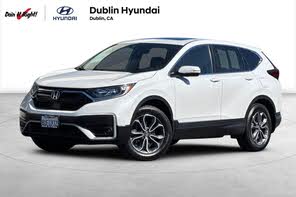
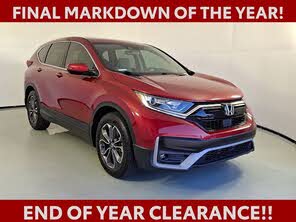
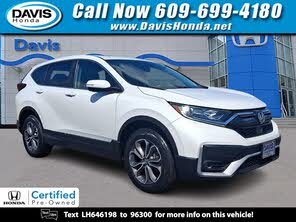
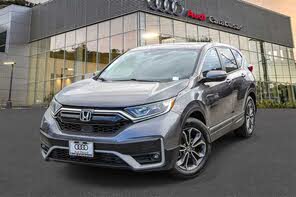
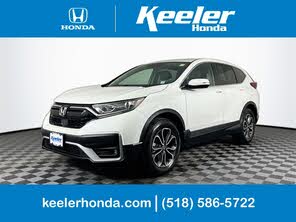
The 2020 Honda CR-V, part of Honda’s fifth generation of compact crossovers, had a design that was both familiar and fun. Its exterior featured curvy, car-like lines with a family resemblance to Honda’s sedan lineup, giving it a station wagon look rather than a traditional SUV appearance. Inside, the CR-V’s interior was a mix of textures and materials, with upscale touches like wood-look trim and leather upholstery in higher trims clashing with some low-quality plastics. This combination reminded drivers that even the pricier CR-V models were upgrades of a commodity car rather than true premium products.
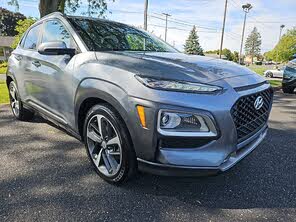
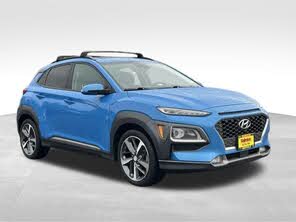
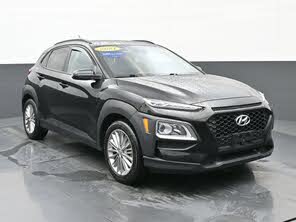
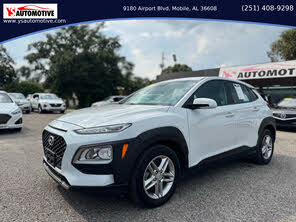
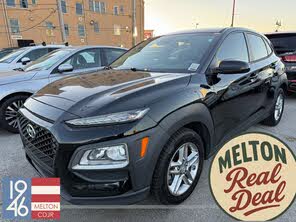
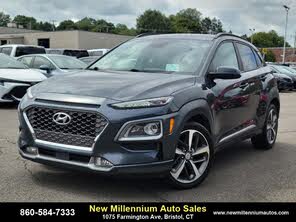
In contrast, the 2021 Hyundai Kona had a funky and playful exterior design aimed at younger buyers. The front featured a busy look with multiple lighting elements, while the rear had a more subdued, standard crossover shape. Inside, the Kona managed to maintain a fun attitude without being overly whimsical. The seats had neat patterns and standard cloth upholstery, with leather available on higher trims. The interior layout was simple and intuitive, with an infotainment system touchscreen mounted high on the dash and physical climate controls, making it easy to navigate the compact interior.


For the 2020 model year, the Honda CR-V simplified its lineup by replacing the base 2.4-liter engine with a 1.5-liter turbocharged engine, producing 190 horsepower and 179 pound-feet of torque. This engine was paired with a continuously variable automatic transmission (CVT), which provided a well-matched powertrain for the CR-V. Despite some CVTs' reputation for sluggish response, Honda’s engineers managed to make the CR-V feel quick, especially in Sport mode. The CR-V’s car-like demeanor extended to its road manners, with excellent handling, minimal body roll, and a low curb weight of 3,337 pounds for the FWD LX model. Fuel economy was impressive, with FWD models rated at 30 mpg combined and AWD models at 29 mpg.
The 2021 Hyundai Kona offered two powertrain options: a base 2.0-liter four-cylinder engine with 147 horsepower and 132 pound-feet of torque, and an optional turbocharged 1.6-liter engine with 195 horsepower and 195 pound-feet of torque. The base engine came with a six-speed automatic transmission, while the turbo engine was paired with a seven-speed dual-clutch automatic transmission. FWD was standard, with AWD available for an additional $1,400. The Kona’s handling was agile and engaging, with a sporty feel enhanced by the dual-clutch transmission, though it was less graceful at low speeds. Fuel economy varied by configuration, with the base engine and FWD achieving 30 mpg combined, and the turbo engine and AWD delivering 27 mpg combined.
The 2020 Honda CR-V excelled in interior space and clever storage solutions. Its cabin was roomy, with good head- and legroom for both front and rear passengers. The CR-V’s excellent seating position and low cowl provided great front visibility. The cargo compartment was spacious, offering 75.8 cubic feet of cargo space with the rear seats folded. The center console featured a deep well with a sliding cover, inspired by the Honda Odyssey minivan, and the rear had a two-position load floor for maximizing cargo space or creating a flat floor. Even the door pockets were large, making the CR-V easy to live with.
The 2021 Hyundai Kona provided decent headroom and legroom for front-seat passengers, with controls and displays within easy reach. The front seats were wide and well-padded but lacked support for spirited driving. Rear-seat passengers had good headroom but limited legroom, and large rear-facing car seats could cause issues for taller front passengers. The Kona’s cargo space was limited, ranking near the bottom of its segment, though the rear seats did fold to expand the space. Small-item storage was generous, with large door pockets and a spacious center console area.
The 2020 Honda CR-V showed its age in terms of infotainment. The base LX trim came with a 5-inch screen, offering minimal features like Bluetooth connectivity and Pandora compatibility. Higher trims had a 7-inch touchscreen, which still felt small compared to competitors. The system lacked hard buttons, making it challenging to operate, and even Apple CarPlay and Android Auto felt tacked on. However, the CR-V did offer plenty of USB ports in the EX trim and above, with two in the front and two high-powered ports in the backseat. The Touring trim added a wireless phone charger for 2020.
The 2021 Hyundai Kona came equipped with a solid list of tech features, including an eight-inch infotainment system touchscreen, Bluetooth, six speakers, wireless Apple CarPlay and Android Auto, and USB inputs. Available tech included SiriusXM radio, navigation, wireless device charging, a Harman Kardon audio system, and a 10.25-inch touchscreen. Hyundai’s infotainment software was simple, colorful, and responsive, making it easy to navigate and use. Wireless Apple CarPlay and Android Auto were significant benefits, especially for lower trims, providing navigation, streaming audio, and voice controls.
The 2020 Honda CR-V included the “Honda Sensing” system as standard, offering forward-collision warning with automatic emergency braking, pedestrian detection, road-departure mitigation, and adaptive cruise control with lane-keeping assist. EX trims and above added blind-spot monitoring and cross-traffic monitoring. The CR-V earned five stars from the NHTSA and a Top Safety Pick designation from the IIHS, though only the Touring trim had LED headlights that scored well in nighttime visibility tests. NHTSA issued one safety recall for a possible rear subframe failure, affecting 358 vehicles.
The 2021 Hyundai Kona earned a Top Safety Pick from the IIHS and five stars overall from the NHTSA. Standard safety features included forward-collision warning, pedestrian detection, lane-keeping assist, lane-following assist, automatic emergency braking, adaptive cruise control, a driver attention warning system, and rear occupant alert. Optional features included blind-spot monitoring, rear cross-traffic alert, a head-up display, and parking sensors.
CarGurus highlights
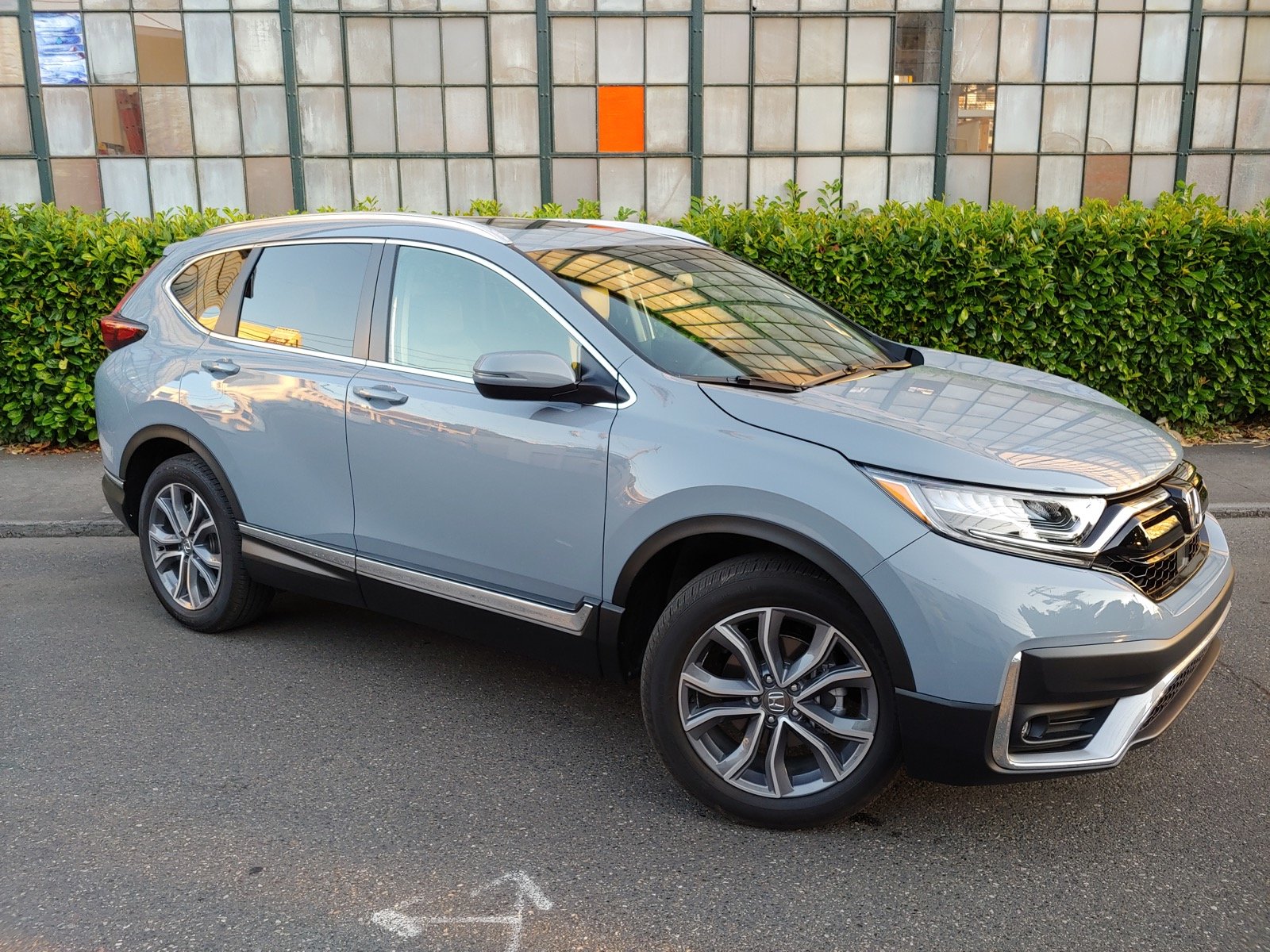
According to CarGurus experts, the overall rating for the 2020 Honda CR-V is 7.5 out of 10, while the 2021 Hyundai Kona scores 7.2 out of 10. Based on these ratings, the 2020 Honda CR-V is the better choice, offering superior interior space, fuel economy, and a comprehensive suite of safety features.
Choose the 2021 Hyundai Kona if:
- You prefer a fun and playful exterior design.
- You want a vehicle with a user-friendly and responsive infotainment system.
- You seek a compact SUV with engaging and agile handling.



Choose the 2020 Honda CR-V if:
- You prioritize interior space and clever storage solutions.
- You want a vehicle with excellent fuel economy.
- You value a comprehensive suite of standard safety features.

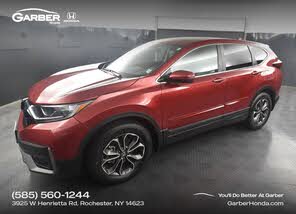

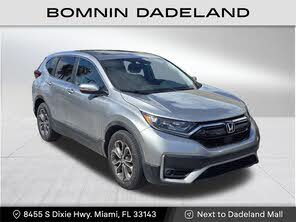

CarGurus highlights
According to CarGurus experts, the overall rating for the 2020 Honda CR-V is 7.5 out of 10, while the 2021 Hyundai Kona scores 7.2 out of 10. Based on these ratings, the 2020 Honda CR-V is the better choice, offering superior interior space, fuel economy, and a comprehensive suite of safety features.
Choose the 2021 Hyundai Kona if:
Shop Now- You prefer a fun and playful exterior design.
- You want a vehicle with a user-friendly and responsive infotainment system.
- You seek a compact SUV with engaging and agile handling.








Choose the 2020 Honda CR-V if:
Shop Now- You prioritize interior space and clever storage solutions.
- You want a vehicle with excellent fuel economy.
- You value a comprehensive suite of standard safety features.









By: CarGurus + AI
At CarGurus, our team of experienced automotive writers remain at the heart of our content operation, conducting hands-on car tests and writing insightful guides that are backed by years of industry experience. To complement this, we are harnessing AI to make our content offering more diverse and more helpful to shoppers than ever. To achieve this, our AI systems are based exclusively on CarGurus content, ratings and data, so that what we produce is both unique to CarGurus, and uniquely helpful to car shoppers.