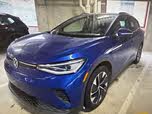
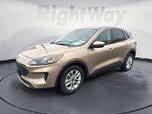
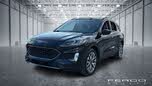
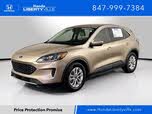
2022 Volkswagen ID.4 vs 2021 Ford Escape

Overview | |
MSRP$25,555 | MSRP$41,230 |
Listings982 | Listings201 |
Ratings & Reviews | |
User Reviews | User Reviews |
Expert reviews6.7 out of 10 | Expert reviews |
Pros
Cons
| |
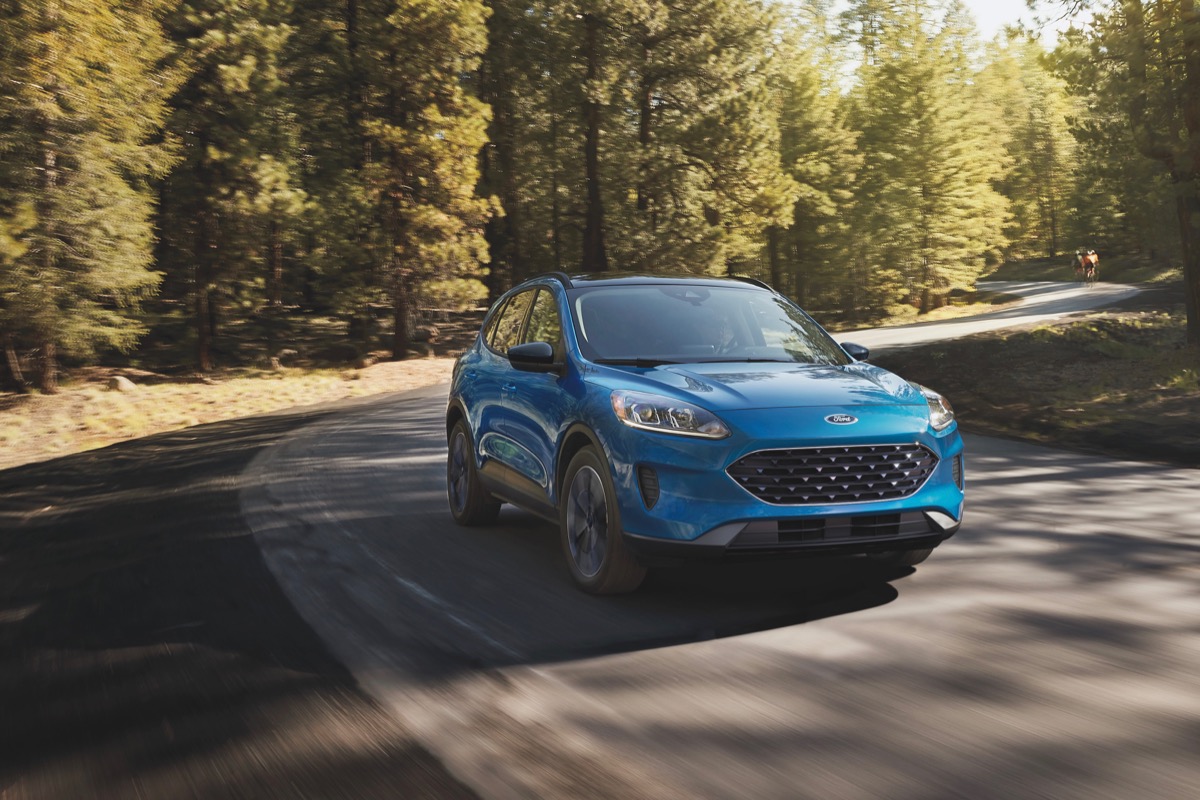
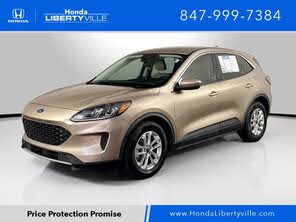
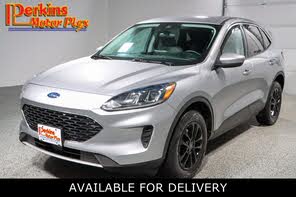
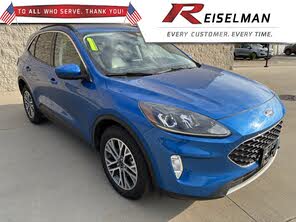
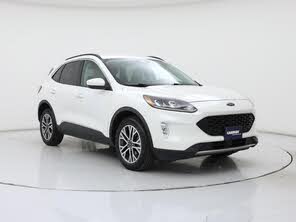
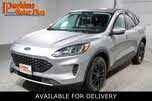
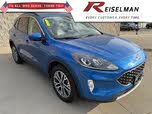
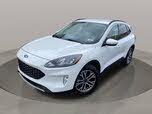
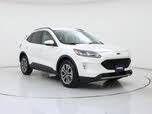
2021 Ford Escape Reviews SummaryThe Ford Escape is the Blue Oval’s compact crossover SUV, and one of the most important models in the automaker’s lineup. It competes in one of the most popular market segments of the moment, against popular vehicles like the Honda CR-V, Hyundai Tucson, Kia Sportage, Nissan Rogue, and Subaru Forester. Ford also views the Escape as the de facto choice for a large slice of its customers. After the automaker eliminated sedans and hatchbacks from its United States lineup, the Escape was left as the most logical choice for keeping existing Fusion and Focus owners in the Ford fold. So in a 2020 model year redesign, Ford gave the Escape more car-like styling, and emphasized fuel efficiency. Following that redesign, the 2021 Escape is largely unchanged. The only differences are new appearance packages and exterior colors, an available tow package, and slightly improved fuel economy for the base powertrain. The trim-level lineup of S, SE, SEL, and Titanium carries over as well. So while we didn’t get a chance to drive a 2021 Escape, we can evaluate it based on our experience with the 2020 model. | |
2022 Volkswagen ID.4 Reviews Summary | |
No video found | No video found |
Popular Features & Specs | |
Engine1.5L 181 hp I3 | Engine201 hp Electric |
Drive TrainFWD | Drive TrainRWD |
Seating Capacity5 | Seating Capacity5 |
EV Battery Capacity | EV Battery Capacity82 kWh |
MPG City28 | MPG City116 |
MPG Highway34 | MPG Highway98 |
Battery Charge Time (240V) | Battery Charge Time (240V)7.5 hours |
Engine | |
Engine Name1.5L 181 hp I3 | Engine Name201 hp Electric |
Battery Charge Time (240V) | Battery Charge Time (240V)7.5 hours |
DrivetrainFWD | DrivetrainRWD |
Fuel Economy | |
EV Battery Capacity | EV Battery Capacity82 kWh |
MPG City28 | MPG City116 |
MPG Highway34 | MPG Highway98 |
Interior | |
Seating Capacity5 | Seating Capacity5 |
Key Features | |
Navigation System | Navigation SystemOptional |
Safety | |
Front Crash Overall5 | Front Crash Overall5 |
Side Crash Overall5 | Side Crash Overall5 |
Dimensions & Capacity | |
Cargo Space37.5 cu ft | Cargo Space30.3 cu ft |
Curb Weight3302 lbs | Curb Weight4568 lbs |
Height66.1 in | Height64.6 in |
Length180.5 in | Length180.5 in |
Width85.6 in | Width72.9 in |
Wheelbase106.7 in | Wheelbase108.9 in |
Maximum Payload | Maximum Payload937 lbs |
Number of doors4 | Number of doors4 |
Maximum Towing Capacity | Maximum Towing Capacity2200 lbs |
Standard Towing Capacity | Standard Towing Capacity2200 lbs |
Overview | ||
MSRP | $25,555 | $41,230 |
Listings | ||
Ratings & Reviews | ||
User reviews | ||
Expert reviews | 6.7 out of 10Read full review | |
Pros & cons | Pros
Cons
| |
Summary | The Ford Escape is the Blue Oval’s compact crossover SUV, and one of the most important models in the automaker’s lineup. It competes in one of the most popular market segments of the moment, against popular vehicles like the Honda CR-V, Hyundai Tucson, Kia Sportage, Nissan Rogue, and Subaru Forester. Ford also views the Escape as the de facto choice for a large slice of its customers. After the automaker eliminated sedans and hatchbacks from its United States lineup, the Escape was left as the most logical choice for keeping existing Fusion and Focus owners in the Ford fold. So in a 2020 model year redesign, Ford gave the Escape more car-like styling, and emphasized fuel efficiency. Following that redesign, the 2021 Escape is largely unchanged. The only differences are new appearance packages and exterior colors, an available tow package, and slightly improved fuel economy for the base powertrain. The trim-level lineup of S, SE, SEL, and Titanium carries over as well. So while we didn’t get a chance to drive a 2021 Escape, we can evaluate it based on our experience with the 2020 model. | |
Video | No video found | No video found |
Popular Features & Specs | ||
Engine | 1.5L 181 hp I3 | 201 hp Electric |
Drive Train | FWD | RWD |
Seating Capacity | 5 | 5 |
EV Battery Capacity | 82 kWh | |
MPG City | 28 | 116 |
MPG Highway | 34 | 98 |
Battery Charge Time (240V) | 7.5 hours | |
Engine | ||
Engine Name | 1.5L 181 hp I3 | 201 hp Electric |
Battery Charge Time (240V) | 7.5 hours | |
Drivetrain | FWD | RWD |
Fuel Economy | ||
EV Battery Capacity | 82 kWh | |
MPG City | 28 | 116 |
MPG Highway | 34 | 98 |
Interior | ||
Seating Capacity | 5 | 5 |
Key Features | ||
Navigation System | Optional | |
Safety | ||
Front Crash Overall | 5 | 5 |
Side Crash Overall | 5 | 5 |
Dimensions & Capacity | ||
Cargo Space | 37.5 cu ft | 30.3 cu ft |
Curb Weight | 3302 lbs | 4568 lbs |
Height | 66.1 in | 64.6 in |
Length | 180.5 in | 180.5 in |
Width | 85.6 in | 72.9 in |
Wheelbase | 106.7 in | 108.9 in |
Maximum Payload | 937 lbs | |
Number of doors | 4 | 4 |
Maximum Towing Capacity | 2200 lbs | |
Standard Towing Capacity | 2200 lbs | |















By: CarGurus + AI
At CarGurus, our team of experienced automotive writers remain at the heart of our content operation, conducting hands-on car tests and writing insightful guides that are backed by years of industry experience. To complement this, we are harnessing AI to make our content offering more diverse and more helpful to shoppers than ever. To achieve this, our AI systems are based exclusively on CarGurus content, ratings and data, so that what we produce is both unique to CarGurus, and uniquely helpful to car shoppers.