2020 Ford Escape vs 2019 Volvo XC40

Overview | |
MSRP$33,700 | MSRP$24,885 |
Listings138 | Listings1786 |
Ratings & Reviews | |
User Reviews | User Reviews |
Expert reviews7.8 out of 10 | Expert reviews8.0 out of 10 |
Pros
Cons
| Pros
Cons
|
2019 Volvo XC40 Reviews SummaryIf any brand is experiencing a revival in terms of both form and function, it's Volvo. The Swedish automaker is experiencing a renaissance, delivering new cars that are not only breathtaking to look at inside and out, but that also provide fantastic technology, safety, and performance. Volvo was once the Safety Brand, but with the advent of advanced safety technology, many other brands have caught up. Volvo has found its niche in high fashion, backed by continually improving safety technology that rivals the best in the world. This recent trend started with the XC90 SUV and was followed by the V90 wagon. These are world-class vehicles, but they also fetch high prices. Enter the 2019 Volvo XC40. It scales down much of what makes those high-end models so great, offering it in a (comparatively) more affordable subcompact SUV package. The XC40 offers ingenious cargo solutions, incredibly advanced technology, and even a new way to go about car ownership. Is that enough to make it stand out compared to other subcompact SUVs? Read on to find out. | |
2020 Ford Escape Reviews SummaryIn case you didn’t hear, Ford came out with an electric crossover, calling it the Mustang Mach-E. Ford could have called it something else, but the marketing department decided to leverage the famous Mustang name to capture headlines and, hopefully, shoppers. What should not be overlooked is the fact Ford chose to make its first-ever standalone electric vehicle a crossover. This choice is a testament to how far the sport utility vehicle has come. Paired with Ford's decision to phase out sedans and hatchbacks, it's clear the company is putting all of its eggs into its trucks, SUVs, and crossovers. Suffice it to say, there is just a bit of pressure on the redesigned 2020 Ford Escape. While the Escape has been around since 2000, it came into its own in 2013 when the “One Ford” philosophy was adopted, meaning that vehicles would be sold in multiple markets around the globe. As a result, the U.S. got Europe’s Ford Kuga, rebranded as the Escape—a high-tech, handsome, and surprisingly athletic small SUV. So, with all this mind, the new Escape needs to not only be an improvement over the previous generation to compete against the rest of the compact crossover segment, it also needs to win over would-be sedan and hatchback customers. Can the 2020 Escape rise to the occasion? | |
Popular Features & Specs | |
Engine2.0L 187 hp I4 | Engine1.5L 181 hp I3 |
Drive TrainFWD | Drive TrainFWD |
Seating Capacity5 | Seating Capacity5 |
Horsepower187 hp @ 4700 rpm | Horsepower |
MPG City23 | MPG City27 |
MPG Highway33 | MPG Highway33 |
Engine | |
Engine Name2.0L 187 hp I4 | Engine Name1.5L 181 hp I3 |
Torque221 lb-ft @ 1400 rpm | Torque |
Horsepower187 hp @ 4700 rpm | Horsepower |
DrivetrainFWD | DrivetrainFWD |
Fuel Economy | |
MPG City23 | MPG City27 |
MPG Highway33 | MPG Highway33 |
Interior | |
Leather SeatsStandard | Leather Seats |
Seating Capacity5 | Seating Capacity5 |
Safety | |
Front Crash Overall | Front Crash Overall5 |
Side Crash Overall | Side Crash Overall5 |
Dimensions & Capacity | |
Cargo Space20.7 cu ft | Cargo Space37.5 cu ft |
Curb Weight3564 lbs | Curb Weight3299 lbs |
Height65.3 in | Height66.1 in |
Length174.2 in | Length180.5 in |
Width80.1 in | Width85.6 in |
Wheelbase106.4 in | Wheelbase106.7 in |
Maximum Payload1195 lbs | Maximum Payload |
Number of doors4 | Number of doors4 |
Maximum Towing Capacity3500 lbs | Maximum Towing Capacity |
Overview | ||
MSRP | $33,700 | $24,885 |
Listings | ||
Ratings & Reviews | ||
User reviews | ||
Expert reviews | 7.8 out of 10Read full review | 8.0 out of 10Read full review |
Pros & cons | Pros
Cons
| Pros
Cons
|
Summary | If any brand is experiencing a revival in terms of both form and function, it's Volvo. The Swedish automaker is experiencing a renaissance, delivering new cars that are not only breathtaking to look at inside and out, but that also provide fantastic technology, safety, and performance. Volvo was once the Safety Brand, but with the advent of advanced safety technology, many other brands have caught up. Volvo has found its niche in high fashion, backed by continually improving safety technology that rivals the best in the world. This recent trend started with the XC90 SUV and was followed by the V90 wagon. These are world-class vehicles, but they also fetch high prices. Enter the 2019 Volvo XC40. It scales down much of what makes those high-end models so great, offering it in a (comparatively) more affordable subcompact SUV package. The XC40 offers ingenious cargo solutions, incredibly advanced technology, and even a new way to go about car ownership. Is that enough to make it stand out compared to other subcompact SUVs? Read on to find out. | In case you didn’t hear, Ford came out with an electric crossover, calling it the Mustang Mach-E. Ford could have called it something else, but the marketing department decided to leverage the famous Mustang name to capture headlines and, hopefully, shoppers. What should not be overlooked is the fact Ford chose to make its first-ever standalone electric vehicle a crossover. This choice is a testament to how far the sport utility vehicle has come. Paired with Ford's decision to phase out sedans and hatchbacks, it's clear the company is putting all of its eggs into its trucks, SUVs, and crossovers. Suffice it to say, there is just a bit of pressure on the redesigned 2020 Ford Escape. While the Escape has been around since 2000, it came into its own in 2013 when the “One Ford” philosophy was adopted, meaning that vehicles would be sold in multiple markets around the globe. As a result, the U.S. got Europe’s Ford Kuga, rebranded as the Escape—a high-tech, handsome, and surprisingly athletic small SUV. So, with all this mind, the new Escape needs to not only be an improvement over the previous generation to compete against the rest of the compact crossover segment, it also needs to win over would-be sedan and hatchback customers. Can the 2020 Escape rise to the occasion? |
Video | ||
Popular Features & Specs | ||
Engine | 2.0L 187 hp I4 | 1.5L 181 hp I3 |
Drive Train | FWD | FWD |
Seating Capacity | 5 | 5 |
Horsepower | 187 hp @ 4700 rpm | |
MPG City | 23 | 27 |
MPG Highway | 33 | 33 |
Engine | ||
Engine Name | 2.0L 187 hp I4 | 1.5L 181 hp I3 |
Torque | 221 lb-ft @ 1400 rpm | |
Horsepower | 187 hp @ 4700 rpm | |
Drivetrain | FWD | FWD |
Fuel Economy | ||
MPG City | 23 | 27 |
MPG Highway | 33 | 33 |
Interior | ||
Leather Seats | Standard | |
Seating Capacity | 5 | 5 |
Safety | ||
Front Crash Overall | 5 | |
Side Crash Overall | 5 | |
Dimensions & Capacity | ||
Cargo Space | 20.7 cu ft | 37.5 cu ft |
Curb Weight | 3564 lbs | 3299 lbs |
Height | 65.3 in | 66.1 in |
Length | 174.2 in | 180.5 in |
Width | 80.1 in | 85.6 in |
Wheelbase | 106.4 in | 106.7 in |
Maximum Payload | 1195 lbs | |
Number of doors | 4 | 4 |
Maximum Towing Capacity | 3500 lbs | |
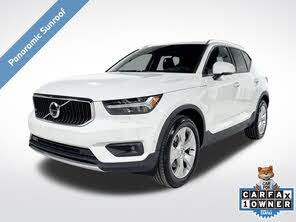
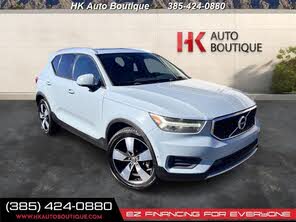
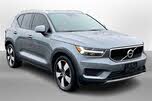
The 2019 Volvo XC40 and 2020 Ford Escape both featured eye-catching designs, but they catered to somewhat different aesthetic sensibilities. The Volvo XC40 took inspiration from its larger sibling, the XC90, resulting in an upright appearance that contrasted sharply with other subcompact SUVs like the Mercedes-Benz GLA-Class and BMW X2. These competitors leaned more towards low-slung designs, resembling hatchbacks with added ground clearance. The XC40's true SUV design granted an upright driving position, along with plenty of head- and legroom.
The XC40 came in three trims: Momentum, R-Design, and Inscription. The base Momentum trim boasted features like 18-inch wheels, bright aluminum roof rails, and LED signature headlights with a “Thor’s Hammer” design. Inside, it included a leather steering wheel and shift knob, power windows and doors, and a 9-inch Sensus touchscreen infotainment display.
The R-Design trim added sportier elements like a unique front grille, a contrasting black roof, and integrated dual tailpipes, along with a sport steering wheel, dual-zone climate control, a charcoal headliner, and ambient interior lighting. Meanwhile, the Inscription trim came with its own eponymous badging, a panoramic sunroof, actual driftwood door inlays, and an Orrefors crystal gearshift knob. The model we tested included the Premium Package, adding more luxuries like a wireless charging pad, Volvo’s Pilot Assist system, dual-zone climate control, and other upscale features.
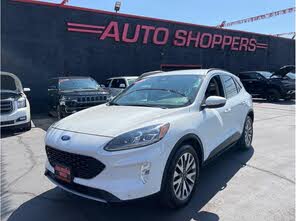
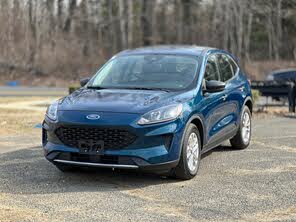
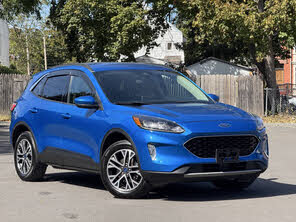
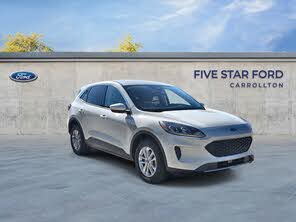
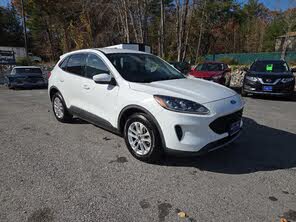
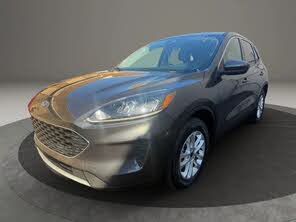
Compared to the Volvo, the 2020 Ford Escape embraced a sleeker, more curvaceous design than its predecessor, sharing its large grille with the Fiesta and Focus hatchbacks and inspired headlights. This design made the Escape one of the most attractive compact crossovers on the market, trailing only the Mazda CX-5 and Jeep Cherokee in visual appeal. The more aerodynamic design did result in reduced cargo space, but it enhanced the overall look.
Inside, the Escape featured a modern and user-friendly cabin. Its design balanced forward-looking elements with practical controls. The tested model came with a fully digital instrument panel, floating infotainment screen, and smooth design elements. The Escape was available in various trims: S, SE, SE Sport, SEL, and Titanium. The base S offered 17-inch steel wheels, manual front seats, and a 4.2-inch infotainment screen. The SE, recommended by CarGurus, provided 17-inch painted aluminum wheels, automatic climate control, heated front seats, and an 8-inch Sync 3 infotainment system with Apple CarPlay and Android Auto.
The Titanium trim we tested came with 19-inch wheels, LED fog lamps, acoustic-laminated glass for a quieter cabin, a dual-panel moonroof, and a two-tone leather interior. This top trim also included a premium B&O audio system, leather seating, and a power passenger seat.


Under the hood of the 2019 Volvo XC40 was a 2.0-liter turbocharged inline 4-cylinder engine producing 248 horsepower and 258 pound-feet of torque, paired with an 8-speed automatic transmission. The AWD was standard, although a FWD version was speculated to follow. The XC40's unique shifter design diverted from conventional usage, requiring drivers to pull back twice to engage Drive and push forward twice for Reverse. This setup, while innovative, could lead to accidental shifts into Neutral.
Once on the road, the XC40 excelled in driving performance with brisk acceleration, well-weighted steering, and responsive turn-in. The suspension adeptly balanced comfort and responsiveness, allowing the XC40 to handle bumps and maintain composure in turns. The Drive Mode button in the center console offered multiple modes including Comfort, Eco, Dynamic, Off-Road, and Individual, catering to different driving preferences. Fuel economy was reasonably good with an EPA estimate of 23 mpg city, 31 highway, and 26 combined, although our testing returned an observed 21 mpg.
The 2020 Ford Escape differentiated itself by offering four engine options, bucking the trend of limited powertrain choices in small SUVs. The base engine was a new 3-cylinder producing 180 horsepower and 177 pound-feet of torque. The SEL and Titanium trims featured a 2.0-liter turbocharged 4-cylinder engine delivering 250 horsepower and 275 pound-feet of torque. Additionally, there were two hybrid setups—a 2.5-liter 4-cylinder hybrid making 198 horsepower and an optional plug-in hybrid variant.
Our Titanium model with the 2.0-liter turbo provided ample power with an 8-speed automatic transmission, though it took a moment to downshift. Steering was direct and taut, and the Escape’s strong, responsive brakes contributed to an athletic driving feel. This combination of power and handling brought the Escape closer to sporty crossovers like the Mazda CX-5. In terms of fuel economy, the most efficient version of the Escape was the non-Sport hybrid, boasting 44 mpg city, 37 highway, 41 combined. The 2.0-liter turbo with AWD on our test model achieved 23/31/26.
The 2019 Volvo XC40 and 2020 Ford Escape provided impressive functionality but with some distinct differences. The XC40 utilized its space exceptionally well. It offered ample front- and backseat legroom and headroom, thanks to its upright layout. The small but clever features like a removable trash bin in the center console, a wireless charging pad, and smart rear seat trays added convenience.
Cargo space in the XC40 was notable, with 57.5 cubic feet of space when the rear seats were folded down, second only to the BMW X1 in the subcompact SUV category. The hands-free power liftgate was efficient, and the load floor with additional storage beneath it was practical for groceries and other items. The toggles for dropping the rear seats were user-friendly, spring-loaded to effortlessly lower the seats and headrests.
The 2020 Ford Escape sacrificed some cargo space to gain a sleeker design, offering 37.5 cubic feet of cargo space behind the second row and 65.4 cubic feet with the seats folded down. In hybrid models, rear cargo space dropped slightly to 34.4 cubic feet and 60.8 cubic feet, respectively. Compared to the previous model and rivals like the Honda CR-V and Subaru Forester that offered around 75 cubic feet, the new Escape had less cargo space. However, passenger space benefited from the redesign, with plenty of headroom in the second row and a commanding seating position up front.
The emphasis on real-world storage solutions in the Escape included deep water-bottle holders and multiple trays and compartments to accommodate various items despite the reduced cargo volume.
Both vehicles showcased advanced technology and infotainment systems, but with notable differences in implementation. The 2019 Volvo XC40 prominently featured a large, portrait-oriented touchscreen reminiscent of Tesla’s design. Almost all vehicle controls were routed through this 9-inch Sensus screen, with the only hard buttons being the Drive Mode selector, defroster, and volume knob. The system’s user interface was intuitive, allowing easy navigation through menus, although it required a couple of steps to access commonly used functions like heated seats.
The XC40’s infotainment system included standard Apple CarPlay and Android Auto, seamlessly integrating mobile devices. The available Multimedia Package enhanced the system with navigation and a 15-speaker Harman Kardon sound system.
The 2020 Ford Escape, however, had a range of infotainment options depending on the trim level. The base S trim was equipped with a basic 4.2-inch screen, considered subpar by modern standards. Moving up to the SE trim upgraded to an 8-inch Sync 3 screen, which was highly recommended. This system came with Android Auto and Apple CarPlay, whose recent updates allowed for multitasking on the display.
The Titanium trim further featured a head-up display (HUD), though it utilized a flip-up screen rather than a windshield projection, making it less effective for taller drivers. Despite this, the Escape’s Sync system provided a user-friendly experience with seamless smartphone integration.
Safety was a crucial aspect for both vehicles. The 2019 Volvo XC40 came equipped with a full suite of standard safety features including multiple airbags, tire pressure monitoring, whiplash protection, road-sign information, and a rear-collision warning system. Additionally, the standard City Safe automatic braking system could detect vehicles, pedestrians, and large animals. The Vision Package added blind-spot detection, cross-traffic alert, and Volvo’s semi-autonomous Pilot Assist system with adaptive cruise control. However, the XC40’s design incorporated large C-pillars that created significant blind spots, undermining its otherwise strong safety credentials.
The 2020 Ford Escape also offered comprehensive safety features, starting with front- and side-impact airbags, traction control, a reversing camera, and TPMS. The 2020 model hadn't been tested by the NHTSA yet, but it received top ratings from the IIHS. Its standout feature was the standard Ford Co-Pilot360 suite, including advanced systems like forward-collision warning, lane-keeping assist, and adaptive cruise control. Moreover, it included blind-spot monitoring, rear cross-traffic alert, and a driver drowsiness monitor even at the base level, making it a robust choice for safety-conscious consumers.
CarGurus highlights

According to CarGurus experts, the overall rating for the 2019 Volvo XC40 was 7.8 out of 10, while the 2020 Ford Escape scored 8.0 out of 10. Given these evaluations, the 2020 Ford Escape emerges as the more recommendable option. The Escape’s diverse powertrain lineup, advanced safety features, and user-friendly technology make it a well-rounded choice in the compact SUV segment. While the Volvo XC40 remains an attractive proposition with its luxurious touches and distinctive design, the Ford Escape edges ahead in overall value and functionality, particularly with its focus on safety and versatile engine options. Choosing the Ford Escape would likely offer a more satisfying long-term ownership experience based on these comprehensive assessments.
Choose the 2020 Ford Escape if:
- You want a small SUV with multiple powertrain options, including hybrid and plug-in hybrid variants.
- You prioritize a comprehensive suite of standard safety features, including advanced driving aids like forward-collision warning and adaptive cruise control.
- You seek a modern, user-friendly cabin with practical storage solutions and seamless smartphone integration via Apple CarPlay and Android Auto.



Choose the 2019 Volvo XC40 if:
- You value a truly luxurious interior with upscale materials like driftwood inlays and a crystal gearshift knob.
- You prefer an SUV with a high driving position and ample legroom and headroom in both the front and rear.
- You place significant importance on advanced technological features integrated into a large, portrait-oriented touchscreen system.






CarGurus highlights
According to CarGurus experts, the overall rating for the 2019 Volvo XC40 was 7.8 out of 10, while the 2020 Ford Escape scored 8.0 out of 10. Given these evaluations, the 2020 Ford Escape emerges as the more recommendable option. The Escape’s diverse powertrain lineup, advanced safety features, and user-friendly technology make it a well-rounded choice in the compact SUV segment. While the Volvo XC40 remains an attractive proposition with its luxurious touches and distinctive design, the Ford Escape edges ahead in overall value and functionality, particularly with its focus on safety and versatile engine options. Choosing the Ford Escape would likely offer a more satisfying long-term ownership experience based on these comprehensive assessments.
Choose the 2020 Ford Escape if:
Shop Now- You want a small SUV with multiple powertrain options, including hybrid and plug-in hybrid variants.
- You prioritize a comprehensive suite of standard safety features, including advanced driving aids like forward-collision warning and adaptive cruise control.
- You seek a modern, user-friendly cabin with practical storage solutions and seamless smartphone integration via Apple CarPlay and Android Auto.






Choose the 2019 Volvo XC40 if:
Shop Now- You value a truly luxurious interior with upscale materials like driftwood inlays and a crystal gearshift knob.
- You prefer an SUV with a high driving position and ample legroom and headroom in both the front and rear.
- You place significant importance on advanced technological features integrated into a large, portrait-oriented touchscreen system.










By: CarGurus + AI
At CarGurus, our team of experienced automotive writers remain at the heart of our content operation, conducting hands-on car tests and writing insightful guides that are backed by years of industry experience. To complement this, we are harnessing AI to make our content offering more diverse and more helpful to shoppers than ever. To achieve this, our AI systems are based exclusively on CarGurus content, ratings and data, so that what we produce is both unique to CarGurus, and uniquely helpful to car shoppers.