2020 Toyota RAV4 Hybrid vs 2020 Nissan Rogue
Overview | |
MSRP$25,490 | MSRP$28,350 |
Listings1109 | Listings578 |
Ratings & Reviews | |
User Reviews | User Reviews |
Expert reviews6.0 out of 10 | Expert reviews8.7 out of 10 |
Pros
Cons
| Pros
Cons
|
2020 Nissan Rogue Reviews SummaryNissan hasn’t redesigned the Rogue since 2014, but an all-new version of this SUV is coming for the 2021 model year. In the meantime, dealers will be eager to sell remaining stocks of the outgoing 2020 Nissan Rogue, and the deals on these new cars ought to be mighty juicy. Should you bite? Should you wait? Or should you shop for something else? The answers to these questions depend on who you are and what you value in a compact crossover SUV. | |
2020 Toyota RAV4 Hybrid Reviews SummaryThe RAV4 Hybrid offers a nearly perfect package of compact crossover attributes: Standard all-wheel drive, a roomy passenger compartment, and excellent fuel economy. It’s a pretty good value, too, with pricing starting at $29,470, which includes plenty of standard multimedia and safety features. It’s no wonder sales of the hybrid version of Toyota’s bestseller almost doubled in 2019. | |
No video found | No video found |
Popular Features & Specs | |
Engine2.5L 170 hp I4 | Engine2.5L 219 hp I4 Hybrid |
Drive TrainFWD | Drive TrainAWD |
Seating Capacity5 | Seating Capacity5 |
Horsepower170 hp @ 6000 rpm | Horsepower |
EV Battery Capacity | EV Battery Capacity1.6 kWh |
MPG City26 | MPG City41 |
MPG Highway33 | MPG Highway38 |
Engine | |
Engine Name2.5L 170 hp I4 | Engine Name2.5L 219 hp I4 Hybrid |
Torque175 lb-ft @ 4400 rpm | Torque |
Horsepower170 hp @ 6000 rpm | Horsepower |
DrivetrainFWD | DrivetrainAWD |
Fuel Economy | |
EV Battery Capacity | EV Battery Capacity1.6 kWh |
MPG City26 | MPG City41 |
MPG Highway33 | MPG Highway38 |
Interior | |
Seating Capacity5 | Seating Capacity5 |
Safety | |
Front Crash Overall4 | Front Crash Overall4 |
Side Crash Overall5 | Side Crash Overall5 |
Dimensions & Capacity | |
Cargo Space39.3 cu ft | Cargo Space37.6 cu ft |
Curb Weight3463 lbs | Curb Weight3710 lbs |
Height66.3 in | Height67.0 in |
Length184.5 in | Length180.9 in |
Width72.4 in | Width73.0 in |
Wheelbase106.5 in | Wheelbase105.9 in |
Maximum Payload1127 lbs | Maximum Payload1210 lbs |
Number of doors4 | Number of doors4 |
Maximum Towing Capacity | Maximum Towing Capacity1750 lbs |
Overview | ||
MSRP | $25,490 | $28,350 |
Listings | ||
Ratings & Reviews | ||
User reviews | ||
Expert reviews | 6.0 out of 10Read full review | 8.7 out of 10Read full review |
Pros & cons | Pros
Cons
| Pros
Cons
|
Summary | Nissan hasn’t redesigned the Rogue since 2014, but an all-new version of this SUV is coming for the 2021 model year. In the meantime, dealers will be eager to sell remaining stocks of the outgoing 2020 Nissan Rogue, and the deals on these new cars ought to be mighty juicy. Should you bite? Should you wait? Or should you shop for something else? The answers to these questions depend on who you are and what you value in a compact crossover SUV. | The RAV4 Hybrid offers a nearly perfect package of compact crossover attributes: Standard all-wheel drive, a roomy passenger compartment, and excellent fuel economy. It’s a pretty good value, too, with pricing starting at $29,470, which includes plenty of standard multimedia and safety features. It’s no wonder sales of the hybrid version of Toyota’s bestseller almost doubled in 2019. |
Video | No video found | No video found |
Popular Features & Specs | ||
Engine | 2.5L 170 hp I4 | 2.5L 219 hp I4 Hybrid |
Drive Train | FWD | AWD |
Seating Capacity | 5 | 5 |
Horsepower | 170 hp @ 6000 rpm | |
EV Battery Capacity | 1.6 kWh | |
MPG City | 26 | 41 |
MPG Highway | 33 | 38 |
Engine | ||
Engine Name | 2.5L 170 hp I4 | 2.5L 219 hp I4 Hybrid |
Torque | 175 lb-ft @ 4400 rpm | |
Horsepower | 170 hp @ 6000 rpm | |
Drivetrain | FWD | AWD |
Fuel Economy | ||
EV Battery Capacity | 1.6 kWh | |
MPG City | 26 | 41 |
MPG Highway | 33 | 38 |
Interior | ||
Seating Capacity | 5 | 5 |
Safety | ||
Front Crash Overall | 4 | 4 |
Side Crash Overall | 5 | 5 |
Dimensions & Capacity | ||
Cargo Space | 39.3 cu ft | 37.6 cu ft |
Curb Weight | 3463 lbs | 3710 lbs |
Height | 66.3 in | 67.0 in |
Length | 184.5 in | 180.9 in |
Width | 72.4 in | 73.0 in |
Wheelbase | 106.5 in | 105.9 in |
Maximum Payload | 1127 lbs | 1210 lbs |
Number of doors | 4 | 4 |
Maximum Towing Capacity | 1750 lbs | |
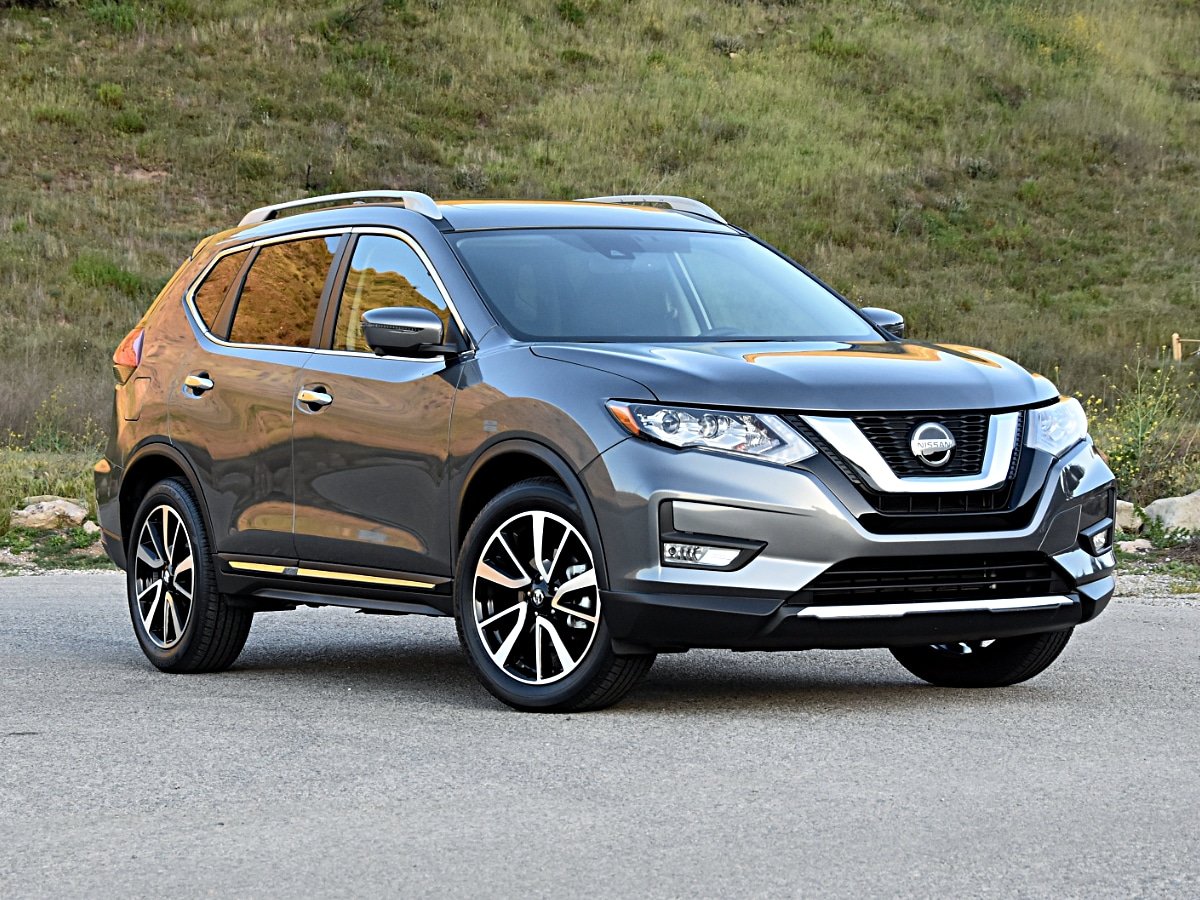
In 2020, the Nissan Rogue was available in three trim levels: S, SV, and SL. Each trim could be paired with either front-wheel drive (FWD) or all-wheel drive (AWD). Our tested vehicle came in the SL trim with front-drive, the SL Premium Package, carpeted floor and cargo mats, and a first-aid kit, all totaling up to a window-sticker price of $34,870, including a $1,095 destination charge.
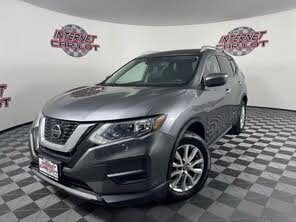
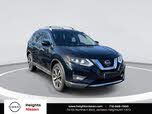
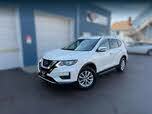
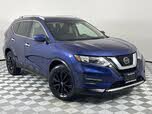
Even as it aged, the Rogue remained aesthetically pleasing, albeit its design did come with some polarizing features. The large V-Motion grille design was ornate, while the exaggerated fender swells added to its bold look. However, with the SL trim’s 19-inch aluminum wheels, the vehicle maintained an attractive appeal.
Upon opening the door, the Rogue's age was evident. The dashboard featured a waterfall control panel and rounded forms, which were older design themes compared to the wide, horizontal, angular motifs that many modern car designers favored. The plastic surfaces inside did little to impress. Yet, the Rogue SL provided thoughtful detailing, such as padded sides on the center console where drivers’ legs might rest, making long drives slightly more comfortable.
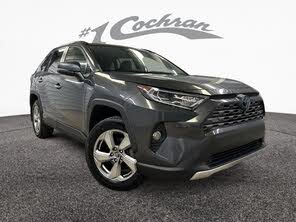
On the flip side, the 2020 Toyota RAV4 Hybrid showcased a complete redesign since 2019, moving away from the soft-roader styling to embrace a more rugged and angular appearance. The RAV4 Hybrid’s front fascia shared design cues with Toyota’s 4Runner, featuring stacked trapezoidal apertures and a perforated grille that contributed to a tougher, mechanical aesthetic. Complementary dark trim around the wheel wells and doorsills enhanced its go-anywhere look, implying that it was built for both urban commutes and off-road adventures.
The RAV4 Hybrid came in four trims: LE, XLE, XSE, and Limited. The lower trims sported 17-inch wheels, while the XSE and Limited trims upgraded to 18-inch wheels and tires, providing a more filled-out look. LED headlights and taillights came standard, with adaptive headlights available only on the top trim.
Inside, the RAV4 Hybrid boasted a simple yet functional design with tasteful shiny trim. Despite the absence of luxury options such as leather upholstery, the materials used, including Softex for the seats, felt premium. The base fabric seats were comfortable and visually appealing. Interior plastics and other materials were consistently high quality, though not necessarily at par with some competitors like the Honda CR-V Hybrid.


The 2020 Nissan Rogue was powered by a solitary engine option: a 2.5-liter four-cylinder engine producing 170 horsepower, coupled with a continuously variable automatic transmission (CVT). This powertrain was adequate for the Rogue, which weighed up to 3,671 pounds. Although it had a Sport driving mode, the Rogue was not particularly sporty.
Most Rogue owners might not have noticed the lack of power in everyday driving, partially because the CVT optimized the available power. However, during more demanding scenarios like freeway merging, overtaking slower vehicles, making quick traffic maneuvers, or climbing grades, the Rogue struggled, often responding with noise rather than tangible acceleration.
Fuel efficiency was another area where the Rogue could disappoint. While the EPA rated the FWD Rogue at 29 mpg combined, real-world testing yielded a maximum of 24.9 mpg, even with generous freeway driving, falling short of expectations.
However, the Rogue did have some redeeming qualities, particularly in ride and handling. Thanks to features like Intelligent Trace Control and Active Ride Control, the Rogue handled turns better and smoothed out speed bumps and road imperfections. Despite these technologies, the driving experience was not particularly engaging. The heavy, lifeless electrically assisted steering, insufficient suspension isolation, and occasional CVT drone often made driving the Rogue more of a chore than a pleasure.
Comparatively, the 2020 Toyota RAV4 Hybrid impressed with its power and fuel efficiency. It produced a combined 219 horsepower, 16 more than its non-hybrid counterpart, and boasted an EPA combined rating of 40 mpg. Notably, the RAV4 Hybrid consistently achieved this rating in various driving conditions—a rare feat for hybrid vehicles.
Under the hood, the RAV4 Hybrid featured a 2.5-liter, 176-horsepower four-cylinder gasoline engine paired with two electric motors. The front wheels were driven by an electric motor providing up to 118 horsepower, while a second motor delivering 54 horsepower powered the rear wheels. An additional smaller electric motor acted as a starter and generator. All electric motors drew power from a nickel-metal hydride battery located under the rear seats, and the system recharged during coasting. This hybrid arrangement eliminated the need for a traditional driveshaft, reducing weight and improving both handling and fuel efficiency.
On the road, the RAV4 Hybrid felt well balanced, with the hybrid system providing instantaneous electric power to supplement the gasoline engine. This resulted in quicker acceleration compared to the non-hybrid version. The regenerative braking system was smooth, and the electric motor assist was almost seamless. The RAV4 Hybrid was capable of towing up to 1,750 pounds and featured standard trailer sway control, though a hitch receiver and wiring harness were optional. Despite its softer suspension and light steering, which made it less sporty, the RAV4 Hybrid was user-friendly and comfortable for all drivers.
Interior space and comfort were crucial for any compact SUV, and in this regard, both the 2020 Nissan Rogue and Toyota RAV4 Hybrid had distinct characteristics.
In the Nissan Rogue, some drivers, particularly those with longer legs or larger frames, might have found it challenging to find a comfortable driving position. The seats, though incorporating Nissan's respected Zero Gravity design aimed at providing perfect support, were somewhat undersized. Quick Comfort heating was available, but finding the right balance of seat height and legroom could be a struggle, leading to a less-than-ideal driving experience.
Rear passengers in the Rogue had a more favorable experience. With a higher stadium-style seating positioning, excellent thigh support, and a proper backrest angle, the back seat was designed for comfort. The available panoramic glass sunroof enhanced the sense of space, making the rear seats a preferred spot for both children and adults. Additionally, rear air conditioning vents and USB charging ports added to passenger comfort.
On the downside, the Rogue's in-cabin storage was limited, with the glove compartment being the only significant storage area. However, the cargo area was a different story. With 39 cubic feet of cargo space behind the back seat, it offered generous room, further enhanced by underfloor storage compartments and the standard Divide-n-Hide cargo management system.
The 2020 Toyota RAV4 Hybrid, conversely, excelled in ergonomics. Its cabin featured a standard 7-inch touchscreen (with an optional 8-inch screen) prominently placed atop the center dashboard, flanked by hard buttons and knobs for volume and tuning. The climate controls were intuitively positioned below the vents, providing a user-friendly interface. The center console conveniently included a space for a cell phone, two cupholders, and a sizable storage bin under the armrest, with an optional Qi wireless charging tray.
Cabin noise was a minor drawback in the RAV4, albeit less pronounced in the Hybrid version because the electric drive reduced engine noise. Despite some road noise intrusion, the RAV4 Hybrid provided a comfortable driving experience, especially on long trips. The rear seats were spacious with impressive legroom, accommodating three adults comfortably. Importantly, the Hybrid version did not compromise on interior or cargo space despite housing additional hybrid components. It offered the same 98.9 cubic feet of passenger volume and 37.6 cubic feet of cargo space as the standard model, driving home the RAV4 Hybrid's practicality in space utilization.
In terms of technology, the 2020 Nissan Rogue featured an impressive array of infotainment options. Standard across all trims were Bluetooth connectivity, Apple CarPlay, Android Auto, and a hands-free text messaging assistant, which covered basic smartphone integration needs. Higher trims added SiriusXM satellite radio, navigation with door-to-door assistance via a smartphone app, and a Bose premium sound system. NissanConnect Services brought advanced features like Amazon Alexa, Google Assistant, remote engine start and door lock operation, car finder, automatic collision notification, emergency SOS calling, and safe teen driver settings. These subscription-based services offered various free trial periods, depending on the feature.
Despite this sophisticated tech suite, the Rogue’s NissanConnect interface left much to be desired. The 7-inch touchscreen had a recessed display that was considered outdated, reminiscent of an old iPhone 6. The system also suffered from slow response times and frustrating navigation map interactions, which, coupled with subpar voice-recognition technology, detracted from the overall user experience.
For the 2020 Toyota RAV4 Hybrid, notable technological upgrades included the introduction of Android Auto, joining the previously adopted Apple CarPlay. SiriusXM Radio with a 3-month trial was also standard on all trims, providing robust infotainment features. Both Android Auto and Apple CarPlay outperformed Toyota’s proprietary Entune multimedia software, and while Toyota offered navigation with a premium JBL stereo, it was expected that most users would prefer Google Maps or Apple Maps due to better visuals and reliability.
Conveniently, a USB-A port was placed on the dash, though Android users with USB-C phones still required a converter cable. Trims above LE included additional USB-A charging ports (two in the center console, two in the backseat) and an optional Qi wireless charging tray for added convenience.
Toyota’s Predictive Efficient Drive was a behind-the-scenes technology that used data from the navigation system and driver inputs to optimize battery efficiency. The RAV4 Hybrid also featured various drive modes—Eco, Sport, and Trail—that tailored the vehicle’s performance and efficiency based on driving conditions. This technology stack, combined with user-friendly interfaces and advanced driver aids, highlighted the RAV4 Hybrid’s tech-savviness.
Safety was a mixed bag for the 2020 Nissan Rogue. It included a comprehensive package of advanced driver-assistance systems (ADAS) in the standard Safety Shield 360 suite. This package featured forward-collision warning with pedestrian detection, automatic emergency braking for both front and rear, blind-spot monitoring, rear cross-traffic alert, lane departure warning, and automatic high-beam headlights. These systems were highly useful in daily driving scenarios, enhancing overall driving safety.
Additional safety features included Rear Door Alert, to prevent leaving important items or passengers behind, and a Tire Fill Alert system for maintaining proper tire pressure. Optional safety upgrades consisted of a surround-view camera and ProPilot Assist adaptive cruise control with lane-centering capability. However, these features had begun to feel outdated as newer, more refined technologies emerged from competitors.
The Rogue’s crash-test ratings were also indicative of its age. It received a 4-star overall rating from the National Highway Traffic Safety Administration (NHTSA), with a notably poor 3-star rating for driver protection in frontal-impact collisions. The Insurance Institute for Highway Safety (IIHS) cited the Rogue’s headlights and front-passenger protection in frontal impacts, preventing it from earning a Top Safety Pick designation.
Toyota, meanwhile, loaded the 2020 RAV4 Hybrid with its Toyota Safety Sense 2.0 suite as standard equipment. This package included a pre-collision system with pedestrian detection, automatic emergency braking, full-speed range dynamic radar adaptive cruise control, lane-departure alert with steering assist, automatic high beams, lane-tracing assist, and road-sign assist. It also came with a one-year trial of Safety Connect, which featured emergency assistance and stolen vehicle location services with automatic collision notification.
Additional safety features available for the RAV4 Hybrid included blind-spot monitoring and front and rear parking assist with automated braking. Standard safety features encompassed stability control, LATCH anchors for car seats, and eight airbags.
The NHTSA awarded the 2020 RAV4 Hybrid a five-star overall rating. While it scored four stars in the frontal crash test and rollover test, it earned a commendable five stars in the side crash test. Although the IIHS had not specifically tested the RAV4 Hybrid, the standard RAV4 achieved a Top Safety Pick designation. However, two safety recalls were issued for the 2020 RAV4 Hybrid: one for engine coolant leaks affecting 44,191 vehicles and another for suspension issues affecting 9,502 vehicles.
CarGurus highlights

According to CarGurus experts, the overall rating for the 2020 Nissan Rogue is 6.0 out of 10, while the 2020 Toyota RAV4 Hybrid scores 8.7 out of 10. Considering these ratings, the clear recommendation is the 2020 Toyota RAV4 Hybrid. It excels in fuel efficiency, advanced technology, and safety features, all while maintaining practical space and comfort. The RAV4 Hybrid’s blend of rugged design, innovative hybrid technology, and user-friendly features make it the superior choice for consumers seeking a well-rounded compact SUV.
Choose the 2020 Toyota RAV4 Hybrid if:
- Fuel efficiency is your top priority, as the RAV4 Hybrid offers an impressive 40 mpg combined, making it one of the best in its class.
- You desire a technologically advanced vehicle with user-friendly infotainment systems, including standard Apple CarPlay, Android Auto, and various USB charging options.
- High safety ratings are crucial to you, with the RAV4 Hybrid boasting a five-star rating from NHTSA and advanced safety features in Toyota Safety Sense 2.0.


Choose the 2020 Nissan Rogue if:
- You prioritize a cargo area with significant volume and versatile storage solutions, such as the 39 cubic feet of space and underfloor compartments.
- You value comprehensive safety features for daily driving, especially those included in the standard Safety Shield 360 package.
- Passenger comfort in the rear seat is important, considering the high seating position and good support, making it an ideal choice for families.



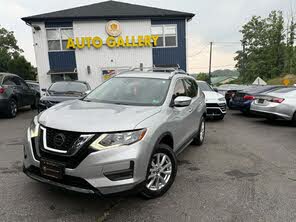


CarGurus highlights
According to CarGurus experts, the overall rating for the 2020 Nissan Rogue is 6.0 out of 10, while the 2020 Toyota RAV4 Hybrid scores 8.7 out of 10. Considering these ratings, the clear recommendation is the 2020 Toyota RAV4 Hybrid. It excels in fuel efficiency, advanced technology, and safety features, all while maintaining practical space and comfort. The RAV4 Hybrid’s blend of rugged design, innovative hybrid technology, and user-friendly features make it the superior choice for consumers seeking a well-rounded compact SUV.
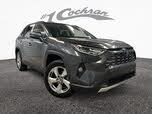
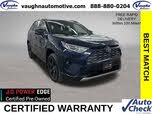
Choose the 2020 Toyota RAV4 Hybrid if:
Shop Now- Fuel efficiency is your top priority, as the RAV4 Hybrid offers an impressive 40 mpg combined, making it one of the best in its class.
- You desire a technologically advanced vehicle with user-friendly infotainment systems, including standard Apple CarPlay, Android Auto, and various USB charging options.
- High safety ratings are crucial to you, with the RAV4 Hybrid boasting a five-star rating from NHTSA and advanced safety features in Toyota Safety Sense 2.0.





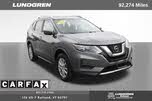
Choose the 2020 Nissan Rogue if:
Shop Now- You prioritize a cargo area with significant volume and versatile storage solutions, such as the 39 cubic feet of space and underfloor compartments.
- You value comprehensive safety features for daily driving, especially those included in the standard Safety Shield 360 package.
- Passenger comfort in the rear seat is important, considering the high seating position and good support, making it an ideal choice for families.







By: CarGurus + AI
At CarGurus, our team of experienced automotive writers remain at the heart of our content operation, conducting hands-on car tests and writing insightful guides that are backed by years of industry experience. To complement this, we are harnessing AI to make our content offering more diverse and more helpful to shoppers than ever. To achieve this, our AI systems are based exclusively on CarGurus content, ratings and data, so that what we produce is both unique to CarGurus, and uniquely helpful to car shoppers.