2020 Volkswagen Tiguan vs 2019 Toyota RAV4 Hybrid

Overview | |
MSRP$27,850 | MSRP$24,945 |
Listings398 | Listings914 |
Ratings & Reviews | |
User Reviews | User Reviews |
Expert reviews8.5 out of 10 | Expert reviews7.7 out of 10 |
Pros
Cons
| Pros
Cons
|
2019 Toyota RAV4 Hybrid Reviews SummaryThe Toyota Prius has become a household name over its 20-year lifespan, the Camry Hybrid arrived back in 2007, and Ford was first with a hybrid crossover in 2009. So, the RAV4 Hybrid was beyond overdue when it launched for 2016. The newest 2019 RAV4 Hybrid isn't the Corolla-looking lump that it resembled a year before. It now looks tougher, more rugged. Also, the hybrid version is the sportiest and most cost-effective way to rock a RAV4—seriously, it's so good and priced so right, you can ignore the standard model. | |
2020 Volkswagen Tiguan Reviews SummaryThe Volkswagen Tiguan is one of only two compact crossover SUV’s that currently offer third-row seating. (And the other is the hopelessly outdated Mitsubishi Outlander.) To fit the extra pair of surprisingly spacious seats, VW made the Tiguan much larger than average for its competitive set—which suits a vehicle that fills big shoes in VW dealerships. With five trim levels and prices that stretch from just under $26,000 to a bit over $40,000, the Tiguan is the German brand’s best-selling vehicle in the U.S. | |
No video found | |
Popular Features & Specs | |
Engine2.5L 219 hp I4 Hybrid | Engine2.0L 184 hp I4 |
Drive TrainAWD | Drive TrainFWD |
Seating Capacity5 | Seating Capacity7 |
Horsepower | Horsepower184 hp @ 4400 rpm |
EV Battery Capacity1.6 kWh | EV Battery Capacity |
MPG City41 | MPG City22 |
MPG Highway38 | MPG Highway29 |
Engine | |
Engine Name2.5L 219 hp I4 Hybrid | Engine Name2.0L 184 hp I4 |
Torque | Torque221 lb-ft @ 1600 rpm |
Horsepower | Horsepower184 hp @ 4400 rpm |
DrivetrainAWD | DrivetrainFWD |
Fuel Economy | |
EV Battery Capacity1.6 kWh | EV Battery Capacity |
MPG City41 | MPG City22 |
MPG Highway38 | MPG Highway29 |
Interior | |
Seating Capacity5 | Seating Capacity7 |
Safety | |
Front Crash Overall4 | Front Crash Overall4 |
Side Crash Overall5 | Side Crash Overall5 |
Dimensions & Capacity | |
Cargo Space37.6 cu ft | Cargo Space12.0 cu ft |
Curb Weight3710 lbs | Curb Weight3757 lbs |
Height67.0 in | Height66.3 in |
Length180.9 in | Length185.1 in |
Width73.0 in | Width72.4 in |
Wheelbase105.9 in | Wheelbase109.8 in |
Maximum Payload1210 lbs | Maximum Payload1124 lbs |
Number of doors4 | Number of doors4 |
Maximum Towing Capacity1750 lbs | Maximum Towing Capacity1500 lbs |
Overview | ||
MSRP | $27,850 | $24,945 |
Listings | ||
Ratings & Reviews | ||
User reviews | ||
Expert reviews | 8.5 out of 10Read full review | 7.7 out of 10Read full review |
Pros & cons | Pros
Cons
| Pros
Cons
|
Summary | The Toyota Prius has become a household name over its 20-year lifespan, the Camry Hybrid arrived back in 2007, and Ford was first with a hybrid crossover in 2009. So, the RAV4 Hybrid was beyond overdue when it launched for 2016. The newest 2019 RAV4 Hybrid isn't the Corolla-looking lump that it resembled a year before. It now looks tougher, more rugged. Also, the hybrid version is the sportiest and most cost-effective way to rock a RAV4—seriously, it's so good and priced so right, you can ignore the standard model. | The Volkswagen Tiguan is one of only two compact crossover SUV’s that currently offer third-row seating. (And the other is the hopelessly outdated Mitsubishi Outlander.) To fit the extra pair of surprisingly spacious seats, VW made the Tiguan much larger than average for its competitive set—which suits a vehicle that fills big shoes in VW dealerships. With five trim levels and prices that stretch from just under $26,000 to a bit over $40,000, the Tiguan is the German brand’s best-selling vehicle in the U.S. |
Video | No video found | |
Popular Features & Specs | ||
Engine | 2.5L 219 hp I4 Hybrid | 2.0L 184 hp I4 |
Drive Train | AWD | FWD |
Seating Capacity | 5 | 7 |
Horsepower | 184 hp @ 4400 rpm | |
EV Battery Capacity | 1.6 kWh | |
MPG City | 41 | 22 |
MPG Highway | 38 | 29 |
Engine | ||
Engine Name | 2.5L 219 hp I4 Hybrid | 2.0L 184 hp I4 |
Torque | 221 lb-ft @ 1600 rpm | |
Horsepower | 184 hp @ 4400 rpm | |
Drivetrain | AWD | FWD |
Fuel Economy | ||
EV Battery Capacity | 1.6 kWh | |
MPG City | 41 | 22 |
MPG Highway | 38 | 29 |
Interior | ||
Seating Capacity | 5 | 7 |
Safety | ||
Front Crash Overall | 4 | 4 |
Side Crash Overall | 5 | 5 |
Dimensions & Capacity | ||
Cargo Space | 37.6 cu ft | 12.0 cu ft |
Curb Weight | 3710 lbs | 3757 lbs |
Height | 67.0 in | 66.3 in |
Length | 180.9 in | 185.1 in |
Width | 73.0 in | 72.4 in |
Wheelbase | 105.9 in | 109.8 in |
Maximum Payload | 1210 lbs | 1124 lbs |
Number of doors | 4 | 4 |
Maximum Towing Capacity | 1750 lbs | 1500 lbs |
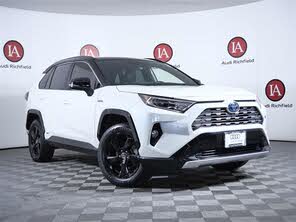
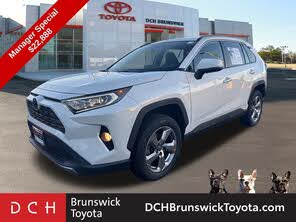
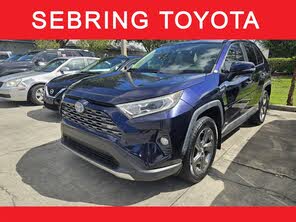
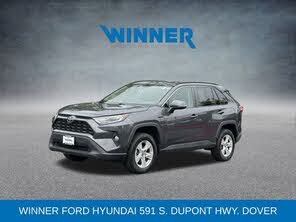
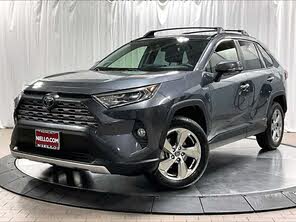
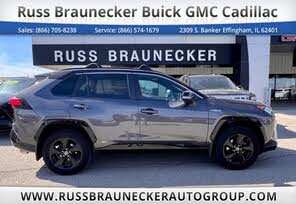
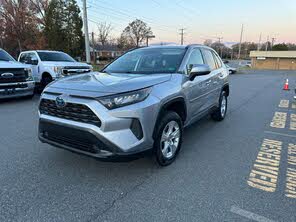
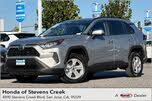
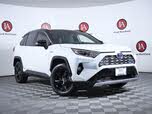
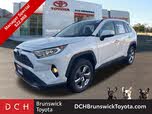
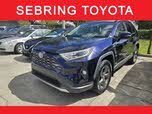
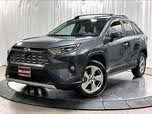
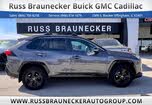
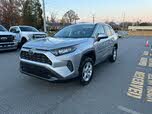
The 2019 Toyota RAV4 Hybrid marked a return to a more rugged and adventurous design, reminiscent of Toyota's classic trucks. The front end featured a bold, flat slab of trapezoids and flexing surfaces, while the fenders and wheel wells had hard creases. The side glass was large, echoing the original RAV4's design. The XSE trim, exclusive to the Hybrid, boasted glossy black trim on the roof, A-pillars, mirrors, fender flares, and 18-inch wheels, giving it a sporty and upscale look. Inside, the RAV4 Hybrid's cabin was adorned with padded dash and door trim, blue stitching, and silver accents, creating a high-quality feel. The oversized knobs and buttons, borrowed from the Tundra, added to the rugged aesthetic, while the snug front seats with blue-striped cloth inserts provided comfort and support.
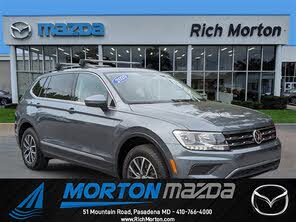
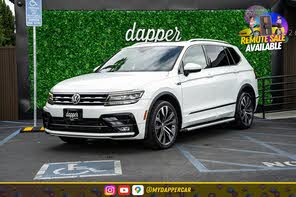
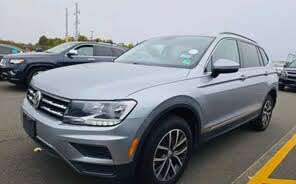
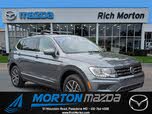
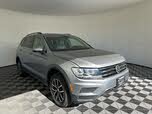
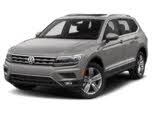
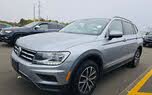
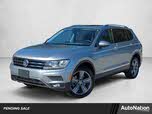
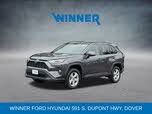
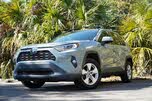
In contrast, the 2020 Volkswagen Tiguan had a more conservative and contemporary design, typical of Volkswagen's styling. The front fascia featured a horizontal grille that connected the headlights, giving it a clean and simple look. However, the interior was less impressive, with dull surfaces and hard black plastic that felt plain and uninspired. The cockpit was simple, with an emphasis on electronics, including an optional digital dashboard and a glass-covered touchscreen infotainment system. While the Tiguan's design was practical and functional, it lacked the excitement and upscale feel of the RAV4 Hybrid.


The 2019 Toyota RAV4 Hybrid combined a 2.5-liter 4-cylinder engine with two electric motors and a 1.6-kilowatt battery, producing a total of 219 horsepower. This setup provided a surge of torque and better acceleration compared to the gasoline-only model. The hybrid system was seamless, with the engine switching on and off effortlessly, making it quiet and smooth to drive. The continuously variable transmission (CVT) didn't strain the engine at high revs, and the standard all-wheel drive (AWD) offered stable handling. However, the braking system felt squishy and unresponsive. The RAV4 Hybrid's fuel efficiency was impressive, averaging 36 mpg over 400 miles, with an EPA rating of 41 mpg city, 38 highway, and 40 combined.
The 2020 Volkswagen Tiguan was powered by a turbocharged 2.0-liter four-cylinder engine, producing 184 horsepower and 221 pound-feet of torque. The engine was paired with an eight-speed automatic transmission, offering snappy throttle response and minimal turbo lag. However, the Tiguan's larger size and weight made it less nimble, and passing on the highway required patience. The cabin was well-insulated from wind noise, but some road noise filtered through on rough surfaces. The Tiguan's suspension provided a comfortable ride, even on rough roads, but the steering was too light in normal mode and only slightly firmer in sport mode. While not the most fun to drive, the Tiguan's performance was adequate for its size.
The 2019 Toyota RAV4 Hybrid offered excellent interior space and cargo capacity, with 37.5 cubic feet of cargo volume behind the rear seats and 70 cubic feet with the rear seats folded. The second row provided generous legroom and manual reclining seats. The air conditioning was effective, quickly cooling the cabin even on hot days. The large knobs and switches were ergonomic, although the controls for windows, locks, and mirrors were not illuminated at night. The infotainment system was user-friendly, with clear menus and customizable shortcuts, but the maps looked dated. Apple CarPlay was standard, but Android Auto was not.
The 2020 Volkswagen Tiguan excelled in practicality, with a second row of seats that could slide up to seven inches fore and aft, making the third row more usable. The third row had enough legroom for shorter adults and was cozy for kids. Front-drive Tiguans came with the third row as standard, while AWD models had it as an option. The second row folded flat, providing 65.7 cubic feet of cargo space with the third row collapsed and 73.5 cubic feet in two-row models. The Tiguan's wide beam offered plenty of hip and shoulder room in the front seats, and the abundant glass made the cabin feel spacious. The seating position was more tucked back, giving the Tiguan a larger feel.
The 2019 Toyota RAV4 Hybrid featured an infotainment interface that was better than Lexus models, with a touchscreen that accepted swiping and pinching gestures. The home screen could be customized with shortcuts, but the maps looked dated. Toyota's Entune 3.0 included apps like NPR, but only if a smartphone with the Entune app was plugged in. Apple CarPlay was standard, but Android Auto was not. The JBL stereo was adequate. The lane-keep assist reacted too late, and the semi-automated operation in traffic was not reliable. However, Toyota offered standard stolen-vehicle alerts, automatic crash notifications, and SOS assistance for three years as part of Safety Connect.
The 2020 Volkswagen Tiguan's infotainment system, called MIB II, was about to be replaced by MIB3. The current system was still one of the best on the market, with a 6.5-inch touchscreen in the base S trim and an 8-inch capacitive touchscreen in higher trims. The system was responsive and user-friendly, with bright colors and graphics. The Tiguan S had a single USB-C port, while higher trims had two USB-A ports in the front and one in the second row. A wireless charging pad was available in higher trims. VW's Digital Cockpit, available on top SEL trims, was a fully digital instrument panel that could be customized and reconfigured. Apple CarPlay, Android Auto, Bluetooth connectivity, and a WiFi hotspot were standard.
The 2019 RAV4 Hybrid earned a 5-star overall rating from the National Highway Traffic Safety Administration (NHTSA), with 4 stars for the driver's-side frontal crash test and rollover resistance. The Insurance Institute for Highway Safety (IIHS) rated the 2019 RAV4 (not the Hybrid) its top Good rating in all six crash tests and the top Superior rating for its collision-avoidance system. Toyota Safety Sense came standard, including forward emergency braking, pedestrian detection, lane-keep assist, blind-spot monitoring, adaptive cruise, traffic-sign recognition, and auto high beams. Unique to the RAV4 was an airbag mounted in the front passenger seat's cushion to prevent forward movement in a crash.
The 2020 Volkswagen Tiguan improved its standard safety package, adding forward-collision warning with automatic emergency braking, blind spot monitoring, and rear cross-traffic alert to all models. Adaptive cruise control with lane-keeping assistance and LED headlights with automatic high beams were reserved for the top SEL trim. VW equipped all 2020 Tiguan models with Car-Net, a telematics package that connected the vehicle to an owner's smartphone or watch through an app. Complimentary features were available for five years, including remote locking and unlocking, status checks, and vehicle location. The IIHS rated the Tiguan a Top Safety Pick for top-of-the-line SEL Premium models with LED headlights, but most Tiguans had halogen headlights, which the IIHS rated poor.
CarGurus highlights

According to CarGurus experts, the overall rating for the 2019 Toyota RAV4 Hybrid is 8.5 out of 10, while the 2020 Volkswagen Tiguan scores 7.7 out of 10. Based on these ratings, the 2019 Toyota RAV4 Hybrid is the better choice, offering superior fuel efficiency, a more rugged design, and comprehensive safety features.
Choose the 2020 Volkswagen Tiguan if:
- You need a practical and spacious interior with an optional third row.
- You prefer a user-friendly and responsive infotainment system.
- You appreciate advanced telematics and connectivity features.





Choose the 2019 Toyota RAV4 Hybrid if:
- You prioritize fuel efficiency and seamless hybrid performance.
- You want a rugged and upscale design with practical interior space.
- You value comprehensive standard safety features and high safety ratings.



CarGurus highlights
According to CarGurus experts, the overall rating for the 2019 Toyota RAV4 Hybrid is 8.5 out of 10, while the 2020 Volkswagen Tiguan scores 7.7 out of 10. Based on these ratings, the 2019 Toyota RAV4 Hybrid is the better choice, offering superior fuel efficiency, a more rugged design, and comprehensive safety features.
Choose the 2020 Volkswagen Tiguan if:
Shop Now- You need a practical and spacious interior with an optional third row.
- You prefer a user-friendly and responsive infotainment system.
- You appreciate advanced telematics and connectivity features.




Choose the 2019 Toyota RAV4 Hybrid if:
Shop Now- You prioritize fuel efficiency and seamless hybrid performance.
- You want a rugged and upscale design with practical interior space.
- You value comprehensive standard safety features and high safety ratings.

By: CarGurus + AI
At CarGurus, our team of experienced automotive writers remain at the heart of our content operation, conducting hands-on car tests and writing insightful guides that are backed by years of industry experience. To complement this, we are harnessing AI to make our content offering more diverse and more helpful to shoppers than ever. To achieve this, our AI systems are based exclusively on CarGurus content, ratings and data, so that what we produce is both unique to CarGurus, and uniquely helpful to car shoppers.