2020 Toyota RAV4 Hybrid vs 2019 Toyota 4Runner
Overview | |
MSRP$35,310 | MSRP$28,350 |
Listings951 | Listings578 |
Ratings & Reviews | |
User Reviews | User Reviews |
Expert reviews7.2 out of 10 | Expert reviews8.7 out of 10 |
Pros
Cons
| Pros
Cons
|
2019 Toyota 4Runner Reviews SummaryIf you’re in the market for a modern SUV capable of getting off the beaten path, you have only a handful of options. These include the 2- and 4-door Jeep Wranglers, the Jeep Cherokee Trailhawk, the Jeep Grand Cherokee Trailhawk, the Land Rover Range Rover, and the Toyota 4Runner. Of those, only the Jeep Wrangler Unlimited and the 4Runner are 4-door SUVs that put off-road grit above all else. While the Jeep Wrangler is only one year removed from a complete redesign that brought in many new technologies, the 2019 Toyota 4Runner is based on a design first introduced in 2009. For those keeping score at home, that means the DNA underpinning the 4Runner is a decade old. Yet picking which vehicle I’d choose as a daily drivable, off-road-capable SUV is a surprisingly difficult decision. So where does an old goat like the 2019 Toyota 4Runner fit in the modern SUV market? Interestingly, the 4Runner's advanced age actually helps it in some respects. | |
2020 Toyota RAV4 Hybrid Reviews SummaryThe RAV4 Hybrid offers a nearly perfect package of compact crossover attributes: Standard all-wheel drive, a roomy passenger compartment, and excellent fuel economy. It’s a pretty good value, too, with pricing starting at $29,470, which includes plenty of standard multimedia and safety features. It’s no wonder sales of the hybrid version of Toyota’s bestseller almost doubled in 2019. | |
No video found | |
Popular Features & Specs | |
Engine4.0L 270 hp V6 | Engine2.5L 219 hp I4 Hybrid |
Drive Train4X2 | Drive TrainAWD |
Seating Capacity7 | Seating Capacity5 |
Horsepower270 hp @ 5600 rpm | Horsepower |
EV Battery Capacity | EV Battery Capacity1.6 kWh |
MPG City17 | MPG City41 |
MPG Highway21 | MPG Highway38 |
Engine | |
Engine Name4.0L 270 hp V6 | Engine Name2.5L 219 hp I4 Hybrid |
Torque278 lb-ft @ 4400 rpm | Torque |
Horsepower270 hp @ 5600 rpm | Horsepower |
Drivetrain4X2 | DrivetrainAWD |
Fuel Economy | |
EV Battery Capacity | EV Battery Capacity1.6 kWh |
MPG City17 | MPG City41 |
MPG Highway21 | MPG Highway38 |
Interior | |
Seating Capacity7 | Seating Capacity5 |
Safety | |
Front Crash Overall4 | Front Crash Overall4 |
Side Crash Overall5 | Side Crash Overall5 |
Dimensions & Capacity | |
Cargo Space47.2 cu ft | Cargo Space37.6 cu ft |
Curb Weight4400 lbs | Curb Weight3710 lbs |
Height71.5 in | Height67.0 in |
Length190.2 in | Length180.9 in |
Width75.8 in | Width73.0 in |
Wheelbase109.8 in | Wheelbase105.9 in |
Maximum Payload1700 lbs | Maximum Payload1210 lbs |
Number of doors4 | Number of doors4 |
Maximum Towing Capacity5000 lbs | Maximum Towing Capacity1750 lbs |
Standard Towing Capacity5000 lbs | Standard Towing Capacity |
Overview | ||
MSRP | $35,310 | $28,350 |
Listings | ||
Ratings & Reviews | ||
User reviews | ||
Expert reviews | 7.2 out of 10Read full review | 8.7 out of 10Read full review |
Pros & cons | Pros
Cons
| Pros
Cons
|
Summary | If you’re in the market for a modern SUV capable of getting off the beaten path, you have only a handful of options. These include the 2- and 4-door Jeep Wranglers, the Jeep Cherokee Trailhawk, the Jeep Grand Cherokee Trailhawk, the Land Rover Range Rover, and the Toyota 4Runner. Of those, only the Jeep Wrangler Unlimited and the 4Runner are 4-door SUVs that put off-road grit above all else. While the Jeep Wrangler is only one year removed from a complete redesign that brought in many new technologies, the 2019 Toyota 4Runner is based on a design first introduced in 2009. For those keeping score at home, that means the DNA underpinning the 4Runner is a decade old. Yet picking which vehicle I’d choose as a daily drivable, off-road-capable SUV is a surprisingly difficult decision. So where does an old goat like the 2019 Toyota 4Runner fit in the modern SUV market? Interestingly, the 4Runner's advanced age actually helps it in some respects. | The RAV4 Hybrid offers a nearly perfect package of compact crossover attributes: Standard all-wheel drive, a roomy passenger compartment, and excellent fuel economy. It’s a pretty good value, too, with pricing starting at $29,470, which includes plenty of standard multimedia and safety features. It’s no wonder sales of the hybrid version of Toyota’s bestseller almost doubled in 2019. |
Video | No video found | |
Popular Features & Specs | ||
Engine | 4.0L 270 hp V6 | 2.5L 219 hp I4 Hybrid |
Drive Train | 4X2 | AWD |
Seating Capacity | 7 | 5 |
Horsepower | 270 hp @ 5600 rpm | |
EV Battery Capacity | 1.6 kWh | |
MPG City | 17 | 41 |
MPG Highway | 21 | 38 |
Engine | ||
Engine Name | 4.0L 270 hp V6 | 2.5L 219 hp I4 Hybrid |
Torque | 278 lb-ft @ 4400 rpm | |
Horsepower | 270 hp @ 5600 rpm | |
Drivetrain | 4X2 | AWD |
Fuel Economy | ||
EV Battery Capacity | 1.6 kWh | |
MPG City | 17 | 41 |
MPG Highway | 21 | 38 |
Interior | ||
Seating Capacity | 7 | 5 |
Safety | ||
Front Crash Overall | 4 | 4 |
Side Crash Overall | 5 | 5 |
Dimensions & Capacity | ||
Cargo Space | 47.2 cu ft | 37.6 cu ft |
Curb Weight | 4400 lbs | 3710 lbs |
Height | 71.5 in | 67.0 in |
Length | 190.2 in | 180.9 in |
Width | 75.8 in | 73.0 in |
Wheelbase | 109.8 in | 105.9 in |
Maximum Payload | 1700 lbs | 1210 lbs |
Number of doors | 4 | 4 |
Maximum Towing Capacity | 5000 lbs | 1750 lbs |
Standard Towing Capacity | 5000 lbs | |
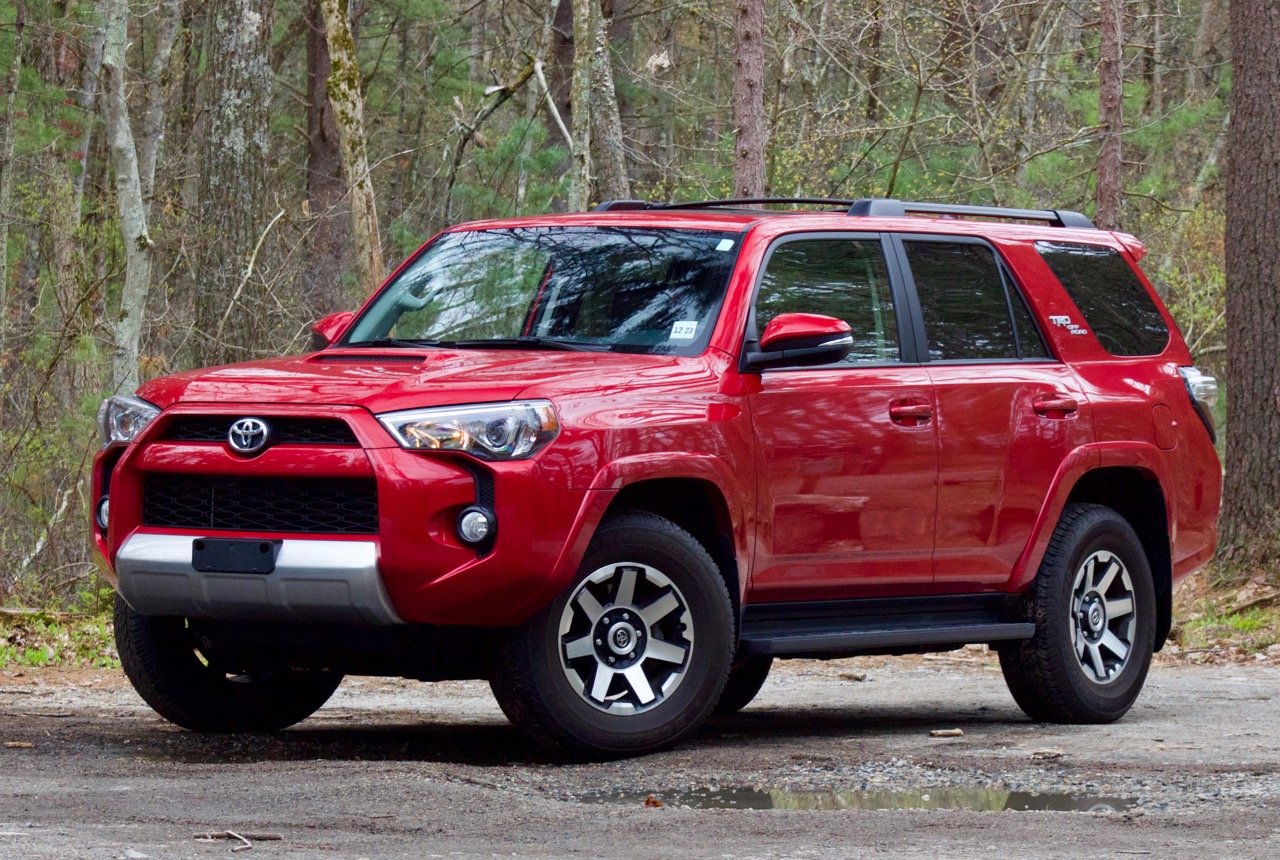
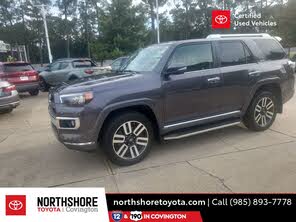
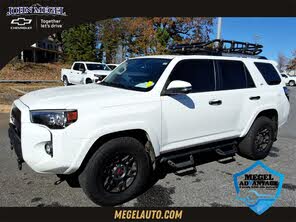
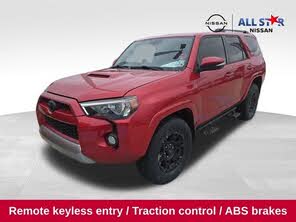
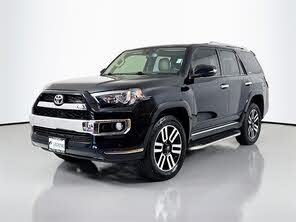
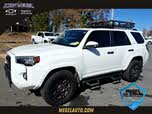
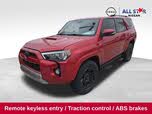
The 2019 Toyota 4Runner had a rugged and aggressive design, a product of its off-road capabilities. Its stubby front and rear ends provided steep approach and departure angles, while large tires and flared fenders enhanced its trail performance. The 4Runner's trim levels ranged from the base SR5 to the top-tier TRD Pro, each offering unique features like 17-inch alloy wheels, under-body skid plates, and a power up/down rear window. Inside, the 4Runner's interior was dated, with an 8-way power driver’s seat, cloth upholstery, and a basic infotainment system. The SR5 Premium trim added heated seats and SofTex upholstery, while the TRD Off-Road trims focused on off-road gear.
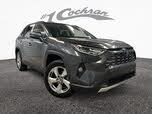
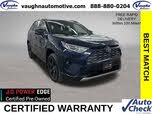
The 2020 Toyota RAV4 Hybrid, redesigned in 2019, featured a tougher and more angular look, reminiscent of the 4Runner. Its front fascia had stacked, trapezoidal apertures and a perforated grille, giving it a mechanical appearance. The RAV4 Hybrid was available in four trims: LE, XLE, XSE, and Limited, with higher trims offering 18-inch wheels and adaptive headlights. Inside, the RAV4 Hybrid had a simple and functional design, with a standard 7-inch touchscreen and optional 8-inch screen. The interior materials were nice, though not as luxurious as some competitors. The RAV4 Hybrid's cabin was spacious, with ample legroom and cargo space, and the hybrid hardware did not intrude on interior space.


The 2019 Toyota 4Runner was powered by a 4.0-liter V6 engine producing 270 horsepower and 278 pound-feet of torque, paired with a 5-speed automatic transmission. This engine, dating back to 2002, was more akin to a V8 in its characteristics, providing a truck-like driving experience. The 4Runner's off-road capabilities were enhanced by features like a locking rear differential, Multi-Terrain Select system, and crawl control. However, its fuel economy was poor, with 4WD models returning just 17 mpg city, 20 highway, and 18 combined. The 4Runner could tow up to 5,000 pounds, but its age showed in its performance and efficiency.
The 2020 Toyota RAV4 Hybrid combined a 2.5-liter, 176-horsepower four-cylinder gasoline engine with two electric motors, producing a total of 219 horsepower. This powertrain delivered exceptional fuel economy, with an EPA rating of 40 mpg combined. The RAV4 Hybrid's AWD system used electric motors to drive the rear wheels, eliminating the need for a heavy driveshaft and improving handling and efficiency. The hybrid system provided smooth and seamless power delivery, making the RAV4 Hybrid quicker to accelerate than the non-hybrid model. It could also tow up to 1,750 pounds and featured regenerative braking for improved efficiency.
The 2019 Toyota 4Runner offered a spacious interior with plenty of head- and legroom, even for tall drivers. Its fully enclosed cabin provided more usable space than the Jeep Wrangler, with nearly 90 cubic feet of cargo space with the rear seats folded. The 4Runner's interior was dated, with a small 6.1-inch touchscreen and basic controls, but it was ready for outdoor activities with features like large knobs that were easy to operate while wearing gloves.
The 2020 Toyota RAV4 Hybrid had excellent ergonomics, with a standard 7-inch touchscreen and optional 8-inch screen. The center console provided ample storage space, and the cabin was comfortable for long trips. The rear seat offered impressive legroom, and the cargo compartment was spacious, with 37.6 cubic feet of trunk capacity. The hybrid hardware did not intrude on interior space, maintaining the same 98.9 cubic feet of passenger volume as the standard RAV4.
The 2019 Toyota 4Runner lacked modern infotainment features like Apple CarPlay and Android Auto. Its basic system was straightforward but dated, with small fonts and limited functionality. The SR5 Premium trim offered an upgraded Entune system with navigation and Siri Eyes Free, but the overall tech level was behind the times.
The 2020 Toyota RAV4 Hybrid offered standard Apple CarPlay and Android Auto, along with SiriusXM Radio and WiFi Connect. These features provided excellent infotainment technology, surpassing Toyota's proprietary Entune software. The RAV4 Hybrid also featured Predictive Efficient Drive, which optimized the hybrid system's efficiency based on driver inputs and navigation data. The drive mode selector allowed drivers to choose between Eco, Sport, and Trail modes, enhancing the driving experience.
The 2019 Toyota 4Runner came with basic safety features like airbags, traction control, and a reversing camera. However, it lacked modern driver-assistance features, making it less family-friendly. The 4Runner received a 4-star overall rating from NHTSA, with a 3-star rating in the rollover test.
The 2020 Toyota RAV4 Hybrid came standard with Toyota Safety Sense 2.0, which included a pre-collision system, adaptive cruise control, lane-departure alert, automatic high beams, lane-tracing assist, and road-sign assist. Additional safety features like blind spot monitoring and parking assist were optional. The RAV4 Hybrid received a 5-star rating from NHTSA and was a Top Safety Pick from IIHS.
CarGurus highlights

According to CarGurus experts, the overall rating for the 2019 Toyota 4Runner is 7.2 out of 10, while the 2020 Toyota RAV4 Hybrid scores 8.7 out of 10. Based on these ratings, the 2020 Toyota RAV4 Hybrid is the clear winner, offering better fuel economy, advanced technology, and superior safety features.
Choose the 2020 Toyota RAV4 Hybrid if:
- You want excellent fuel economy and a modern hybrid powertrain.
- You need a spacious and comfortable interior with advanced technology.
- You prioritize safety features and high safety ratings.



Choose the 2019 Toyota 4Runner if:
- You need a rugged, off-road capable SUV with proven components.
- You prioritize cargo space and interior room for outdoor activities.
- You prefer a vehicle with a truck-like driving experience.




CarGurus highlights
According to CarGurus experts, the overall rating for the 2019 Toyota 4Runner is 7.2 out of 10, while the 2020 Toyota RAV4 Hybrid scores 8.7 out of 10. Based on these ratings, the 2020 Toyota RAV4 Hybrid is the clear winner, offering better fuel economy, advanced technology, and superior safety features.
Choose the 2020 Toyota RAV4 Hybrid if:
Shop Now- You want excellent fuel economy and a modern hybrid powertrain.
- You need a spacious and comfortable interior with advanced technology.
- You prioritize safety features and high safety ratings.







Choose the 2019 Toyota 4Runner if:
Shop Now- You need a rugged, off-road capable SUV with proven components.
- You prioritize cargo space and interior room for outdoor activities.
- You prefer a vehicle with a truck-like driving experience.









By: CarGurus + AI
At CarGurus, our team of experienced automotive writers remain at the heart of our content operation, conducting hands-on car tests and writing insightful guides that are backed by years of industry experience. To complement this, we are harnessing AI to make our content offering more diverse and more helpful to shoppers than ever. To achieve this, our AI systems are based exclusively on CarGurus content, ratings and data, so that what we produce is both unique to CarGurus, and uniquely helpful to car shoppers.