Hyundai Ioniq 5 vs Volvo C40 Recharge

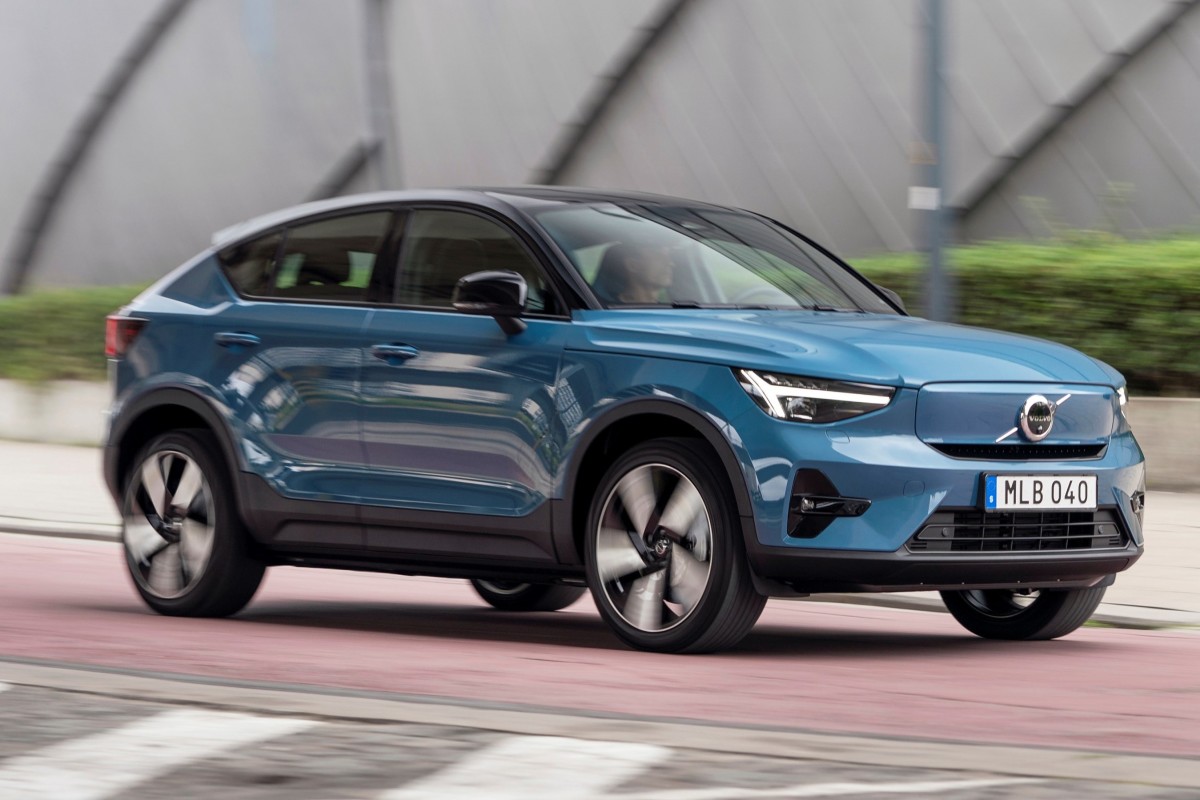
Overview | |
MSRP$39,950 | MSRP$58,750 |
Listings168 | Listings43 |
Ratings & Reviews | |
User Reviews | User Reviews |
Expert reviews9.0 out of 10 | Expert reviews7.0 out of 10 |
Pros
Cons
| Pros
Cons
|
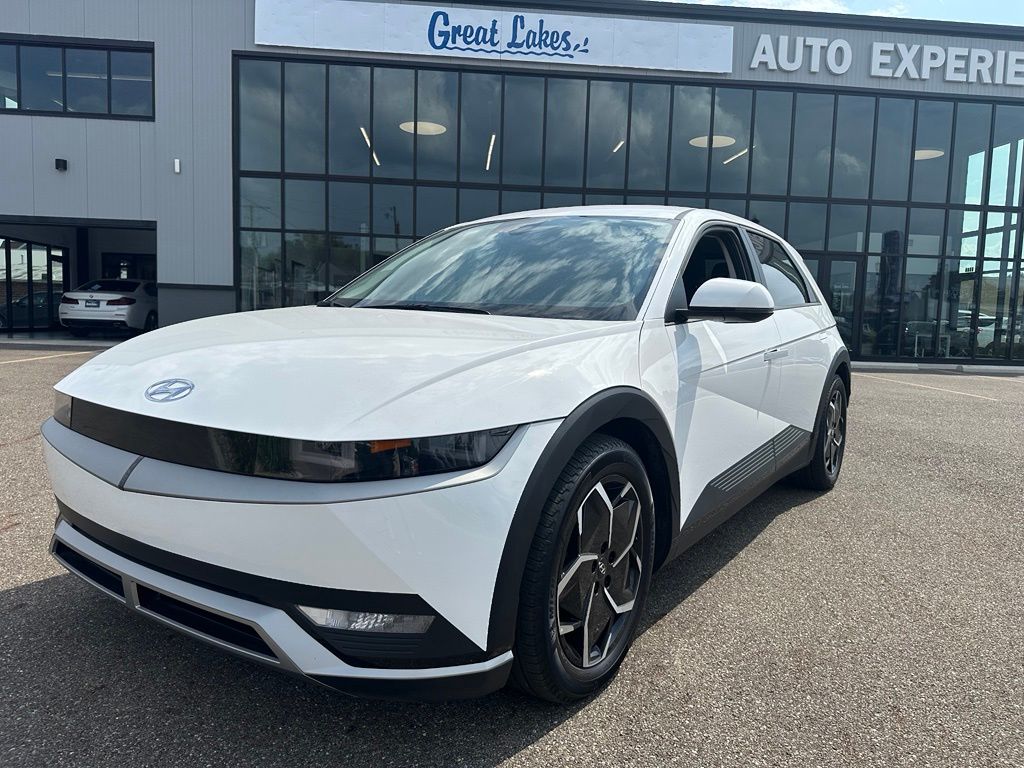
Reviews SummaryThe Hyundai Ioniq 5 is the automaker’s debut electric vehicle from its new sub-brand that focuses solely on battery electric-powered mobility. The all-new Ioniq 5 is chock full of battery technology, smart car connectivity, advanced safety, and unique design all at a price point that appeals to the masses. | |
Reviews SummaryIt’s an exciting time for EV enthusiasts. Many established automakers are launching their first electric cars, each putting a different spin on the concept of zero-emission transportation. Some are taking this opportunity to reinvent brand images with radical designs, but not Volvo. The 2022 Volvo C40 Recharge—the Swedish automaker’s first mass-produced pure electric model without a gasoline counterpart—takes a conservative approach that’s rooted more in today than tomorrow. The Volvo C40 Recharge is billed as a new car, but it’s more like a second body style of the Volvo XC40 Recharge crossover SUV, which in turn is an electric version of the Volvo XC40. Both models share a platform, powertrains, tech features, interior fittings, and a good amount of sheetmetal. The main differences between the two are the C40 Recharge’s sleeker roofline and different equipment and trim-level structures. Unlike the XC40 Recharge, the C40 Recharge is offered in a single trim level that incorporates the standard and optional equipment from the XC40 Recharge. We spent a day driving this well-equipped EV around Palm Springs, California, to see how it compares to its sibling, and how it stacks up against EVs from other automakers. | |
No video found | |
Popular Features & Specs | |
Engine168 hp Electric | Engine408 hp Electric |
Drive TrainRWD | Drive TrainAWD |
Seating Capacity5 | Seating Capacity5 |
EV Battery Capacity58 kWh | EV Battery Capacity78 kWh |
MPG City127 | MPG City94 |
MPG Highway94 | MPG Highway80 |
Battery Charge Time (240V) | Battery Charge Time (240V)8 hours |
Engine | |
Engine Name168 hp Electric | Engine Name408 hp Electric |
Battery Charge Time (240V) | Battery Charge Time (240V)8 hours |
DrivetrainRWD | DrivetrainAWD |
Fuel Economy | |
EV Battery Capacity58 kWh | EV Battery Capacity78 kWh |
MPG City127 | MPG City94 |
MPG Highway94 | MPG Highway80 |
Interior | |
Seating Capacity5 | Seating Capacity5 |
Key Features | |
Navigation SystemStandard | Navigation SystemStandard |
Sunroof/Moonroof | Sunroof/MoonroofStandard |
Safety | |
Front Crash Overall4 | Front Crash Overall |
Side Crash Overall5 | Side Crash Overall |
Dimensions & Capacity | |
Cargo Space27.2 cu ft | Cargo Space17.3 cu ft |
Curb Weight4200 lbs | Curb Weight4710 lbs |
Height63.0 in | Height62.6 in |
Length182.5 in | Length174.8 in |
Width74.4 in | Width80.1 in |
Wheelbase118.1 in | Wheelbase106.4 in |
Maximum Payload1157 lbs | Maximum Payload960 lbs |
Number of doors4 | Number of doors4 |
Maximum Towing Capacity | Maximum Towing Capacity3970 lbs |
Overview | ||
MSRP | $39,950 | $58,750 |
Listings | ||
Ratings & Reviews | ||
User reviews | ||
Expert reviews | 9.0 out of 10Read full review | 7.0 out of 10Read full review |
Pros & cons | Pros
Cons
| Pros
Cons
|
Summary | The Hyundai Ioniq 5 is the automaker’s debut electric vehicle from its new sub-brand that focuses solely on battery electric-powered mobility. The all-new Ioniq 5 is chock full of battery technology, smart car connectivity, advanced safety, and unique design all at a price point that appeals to the masses. | It’s an exciting time for EV enthusiasts. Many established automakers are launching their first electric cars, each putting a different spin on the concept of zero-emission transportation. Some are taking this opportunity to reinvent brand images with radical designs, but not Volvo. The 2022 Volvo C40 Recharge—the Swedish automaker’s first mass-produced pure electric model without a gasoline counterpart—takes a conservative approach that’s rooted more in today than tomorrow. The Volvo C40 Recharge is billed as a new car, but it’s more like a second body style of the Volvo XC40 Recharge crossover SUV, which in turn is an electric version of the Volvo XC40. Both models share a platform, powertrains, tech features, interior fittings, and a good amount of sheetmetal. The main differences between the two are the C40 Recharge’s sleeker roofline and different equipment and trim-level structures. Unlike the XC40 Recharge, the C40 Recharge is offered in a single trim level that incorporates the standard and optional equipment from the XC40 Recharge. We spent a day driving this well-equipped EV around Palm Springs, California, to see how it compares to its sibling, and how it stacks up against EVs from other automakers. |
Video | No video found | |
Popular Features & Specs | ||
Engine | 168 hp Electric | 408 hp Electric |
Drive Train | RWD | AWD |
Seating Capacity | 5 | 5 |
EV Battery Capacity | 58 kWh | 78 kWh |
MPG City | 127 | 94 |
MPG Highway | 94 | 80 |
Battery Charge Time (240V) | 8 hours | |
Engine | ||
Engine Name | 168 hp Electric | 408 hp Electric |
Battery Charge Time (240V) | 8 hours | |
Drivetrain | RWD | AWD |
Fuel Economy | ||
EV Battery Capacity | 58 kWh | 78 kWh |
MPG City | 127 | 94 |
MPG Highway | 94 | 80 |
Interior | ||
Seating Capacity | 5 | 5 |
Key Features | ||
Navigation System | Standard | Standard |
Sunroof/Moonroof | Standard | |
Safety | ||
Front Crash Overall | 4 | |
Side Crash Overall | 5 | |
Dimensions & Capacity | ||
Cargo Space | 27.2 cu ft | 17.3 cu ft |
Curb Weight | 4200 lbs | 4710 lbs |
Height | 63.0 in | 62.6 in |
Length | 182.5 in | 174.8 in |
Width | 74.4 in | 80.1 in |
Wheelbase | 118.1 in | 106.4 in |
Maximum Payload | 1157 lbs | 960 lbs |
Number of doors | 4 | 4 |
Maximum Towing Capacity | 3970 lbs | |



By: CarGurus + AI
At CarGurus, our team of experienced automotive writers remain at the heart of our content operation, conducting hands-on car tests and writing insightful guides that are backed by years of industry experience. To complement this, we are harnessing AI to make our content offering more diverse and more helpful to shoppers than ever. To achieve this, our AI systems are based exclusively on CarGurus content, ratings and data, so that what we produce is both unique to CarGurus, and uniquely helpful to car shoppers.

