Chevrolet Traverse vs Toyota bZ
Overview | |
MSRP$40,800 | MSRP$34,900 |
Listings1050 | Listings16 |
Ratings & Reviews | |
User Reviews | User Reviews |
Expert reviews7.3 out of 10 | Expert reviews6.5 out of 10 |
Pros
Cons
| Pros
Cons
|
Reviews SummaryAs a three-row crossover SUV, the Traverse has advantages over both minivans and full-size body-on-frame SUVs, but it also falls short in some ways. The same goes for the Traverse versus its competition. It rides better than full-size models but can’t tow as much and has a similar amount of space to a minivan but it's less accessible. Verdict: The Traverse provides the space and ride quality that sets crossovers apart from body-on-frame SUVs, but it lacks some of the refinement of its rivals. | |
Reviews SummaryReaders are looking at the electric vehicle formerly known as the bZ4X. It wears a shorter name for 2026, but that’s not the big news. More power, over 300 miles of range, a standard NACS charging port (with a CCS adapter), and Plug & Charge capability are all major improvements. Toyota has also tidied-up the styling—inside and out—and added a larger infotainment screen. Verdict: With the refreshed 2026 bZ, Toyota has fixed the bZ4X’s most significant flaws, making this a genuinely competitive model at a comparatively affordable price. | |
No video found | No video found |
Popular Features & Specs | |
Engine2.5L 328 hp I4 | Engine168 hp Electric |
DrivetrainFWD | DrivetrainFWD |
Seating Capacity8 | Seating Capacity5 |
Horsepower328 hp @ 5500 rpm | Horsepower |
EV Battery Capacity | EV Battery Capacity57.7 kWh |
MPG City20 | MPG City143 |
MPG Highway26 | MPG Highway119 |
Battery Charge Time (240V) | Battery Charge Time (240V)6 hours |
Engine | |
Engine Name2.5L 328 hp I4 | Engine Name168 hp Electric |
Torque326 lb-ft @ 3500 rpm | Torque |
Horsepower328 hp @ 5500 rpm | Horsepower |
Battery Charge Time (240V) | Battery Charge Time (240V)6 hours |
DrivetrainFWD | DrivetrainFWD |
Fuel Economy | |
EV Battery Capacity | EV Battery Capacity57.7 kWh |
MPG City20 | MPG City143 |
MPG Highway26 | MPG Highway119 |
Interior | |
Seating Capacity8 | Seating Capacity5 |
Key Features | |
Navigation SystemStandard | Navigation SystemOptional |
Safety | |
Front Crash Overall5 | Front Crash Overall |
Side Crash Overall5 | Side Crash Overall |
Dimensions & Capacity | |
Cargo Space22.9 cu ft | Cargo Space27.7 cu ft |
Curb Weight4504 lbs | Curb Weight4057 lbs |
Height70.9 in | Height65.0 in |
Length204.5 in | Length184.6 in |
Width87.9 in | Width73.2 in |
Wheelbase121.0 in | Wheelbase112.2 in |
Maximum Payload1669 lbs | Maximum Payload1045 lbs |
Number of doors4 | Number of doors4 |
Maximum Towing Capacity5000 lbs | Maximum Towing Capacity |
Standard Towing Capacity5000 lbs | Standard Towing Capacity |
Overview | ||
MSRP | $40,800 | $34,900 |
Listings | ||
Ratings & Reviews | ||
User reviews | ||
Expert reviews | 7.3 out of 10Read full review | 6.5 out of 10Read full review |
Pros & cons | Pros
Cons
| Pros
Cons
|
Summary | As a three-row crossover SUV, the Traverse has advantages over both minivans and full-size body-on-frame SUVs, but it also falls short in some ways. The same goes for the Traverse versus its competition. It rides better than full-size models but can’t tow as much and has a similar amount of space to a minivan but it's less accessible. Verdict: The Traverse provides the space and ride quality that sets crossovers apart from body-on-frame SUVs, but it lacks some of the refinement of its rivals. | Readers are looking at the electric vehicle formerly known as the bZ4X. It wears a shorter name for 2026, but that’s not the big news. More power, over 300 miles of range, a standard NACS charging port (with a CCS adapter), and Plug & Charge capability are all major improvements. Toyota has also tidied-up the styling—inside and out—and added a larger infotainment screen. Verdict: With the refreshed 2026 bZ, Toyota has fixed the bZ4X’s most significant flaws, making this a genuinely competitive model at a comparatively affordable price. |
Video | No video found | No video found |
Popular Features & Specs | ||
Engine | 2.5L 328 hp I4 | 168 hp Electric |
Drivetrain | FWD | FWD |
Seating Capacity | 8 | 5 |
Horsepower | 328 hp @ 5500 rpm | |
EV Battery Capacity | 57.7 kWh | |
MPG City | 20 | 143 |
MPG Highway | 26 | 119 |
Battery Charge Time (240V) | 6 hours | |
Engine | ||
Engine Name | 2.5L 328 hp I4 | 168 hp Electric |
Torque | 326 lb-ft @ 3500 rpm | |
Horsepower | 328 hp @ 5500 rpm | |
Battery Charge Time (240V) | 6 hours | |
Drivetrain | FWD | FWD |
Fuel Economy | ||
EV Battery Capacity | 57.7 kWh | |
MPG City | 20 | 143 |
MPG Highway | 26 | 119 |
Interior | ||
Seating Capacity | 8 | 5 |
Key Features | ||
Navigation System | Standard | Optional |
Safety | ||
Front Crash Overall | 5 | |
Side Crash Overall | 5 | |
Dimensions & Capacity | ||
Cargo Space | 22.9 cu ft | 27.7 cu ft |
Curb Weight | 4504 lbs | 4057 lbs |
Height | 70.9 in | 65.0 in |
Length | 204.5 in | 184.6 in |
Width | 87.9 in | 73.2 in |
Wheelbase | 121.0 in | 112.2 in |
Maximum Payload | 1669 lbs | 1045 lbs |
Number of doors | 4 | 4 |
Maximum Towing Capacity | 5000 lbs | |
Standard Towing Capacity | 5000 lbs | |
The 2026 Toyota bZ was available in XLE and Limited trims, offering both single-motor front-wheel drive (FWD) and dual-motor all-wheel drive (AWD) configurations, with two battery size options. The larger battery, which was standard on the Limited trim, provided enhanced power, performance, and range, albeit at a higher cost. Pricing ranged from $36,495 to $46,895, including the destination charge. The XLE test vehicle featured FWD and the optional larger battery, transforming it into the XLE Plus for an additional $3,000. The vehicle's exterior was enhanced with Heavy Metal paint and other accessories, bringing the MSRP to $40,468. The 2026 bZ's design improvements, particularly the body-color trim, were a welcome change from the previous model's black overfender trim. Inside, the dashboard and center console were redesigned for a cleaner look, with a 14-inch center touchscreen and integrated climate controls. However, the digital driver display's placement and size remained a concern, as it was difficult to read and could be obstructed by the steering wheel.
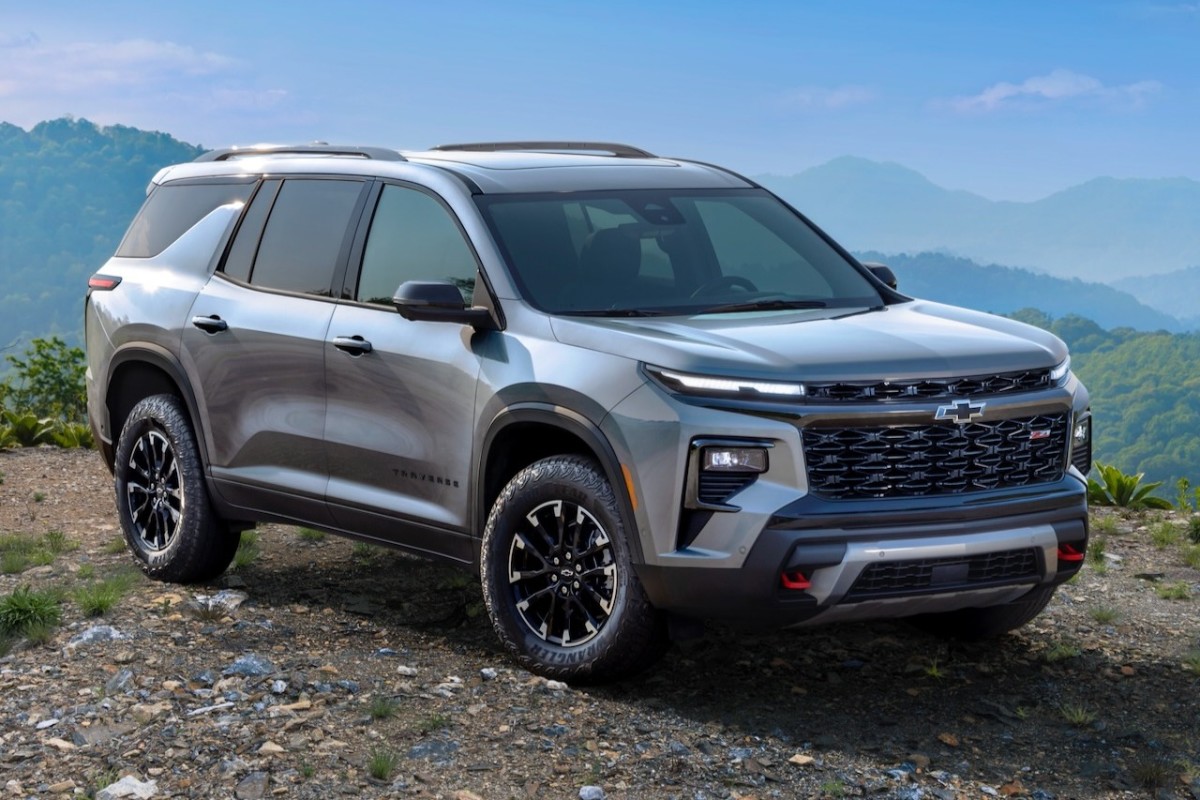
The 2026 Chevrolet Traverse resembled a smaller Chevrolet Tahoe, featuring an upright design, high-set grille, and a robust stance. Its exterior design included eye-slit LED headlights and a distinctive air intake/fog light design. The Traverse's sides mirrored the Tahoe's clean, semi-rounded shape, with a forward-angled pillar creating a semi-floating roof effect. The grille varied by model, with chrome and black options, while the Z71 trim stood out with red front tow hooks and all-terrain tires. Wheel sizes ranged from 18 to 22 inches, and a Midnight/Sport Edition offered a blacked-out aesthetic. Inside, the Traverse boasted a 17.7-inch touchscreen and an 11-inch digital instrument cluster. The interior materials were smartly chosen, with soft-touch surfaces and contrasting stitching, though some hard plastics were present. The base LT trim was well-equipped, featuring cloth upholstery, power-adjustable seats, and a hands-free power liftgate. Higher trims offered additional comforts, such as leather upholstery and heated rear seats.
The 2026 Toyota bZ offered a range of performance options depending on the configuration. The XLE with FWD featured a single electric motor paired with a 57.7-kWh battery, delivering 165 horsepower and 198 pound-feet of torque, with an EPA-estimated range of 236 miles and an efficiency rating of 26 kWh/100 miles. Opting for the larger 74.7-kWh battery increased the XLE FWD's output to 224 horsepower, maintaining the same torque, and extended the range to 314 miles. The Limited trim's range was slightly lower at 299 miles, with an efficiency of 27 kWh/100 miles. Dual-motor models, equipped with the 74.7-kWh battery, produced a combined 338 horsepower, with 198 lb-ft in front and 125 at the back. The XLE AWD offered a range of 288 miles, while the Limited could travel 278 miles, with efficiency ratings of 28 and 29 kWh/100 miles, respectively. The bZ's charging capabilities included compatibility with Tesla Superchargers and a CCS adapter for various charging stations. Recharging times varied, with the larger battery taking seven hours on a Level 2 home charger and the smaller battery requiring five and a half hours. The bZ's performance was tested in different conditions, revealing favorable efficiency results compared to EPA estimates. However, the vehicle's handling on winding roads was less impressive, with issues such as front wheelspin and lifeless steering.
The 2026 Chevrolet Traverse excelled in road manners compared to its larger sibling, the Tahoe, thanks to its car-like unibody architecture. Despite its size and weight—204.5 inches long and 4,792 pounds with AWD—the Traverse offered more controlled and agile handling than a body-on-frame vehicle. While there was notable lean in corners, the Traverse never felt unstable. The steering was light and direct, and the ride quality was generally good, though it could become busy on broken pavement. The Traverse was powered by a 2.5-liter turbocharged four-cylinder engine, producing 328 horsepower and 326 pound-feet of torque, paired with an eight-speed automatic transmission. The powertrain provided adequate power, with a 0-60 mph time of around eight seconds. However, engine noise was a concern, and the AWD system required manual engagement. The Traverse offered various drive modes, including Normal, Sport, Off-Road, Snow/Ice, and Tow/Haul, though Sport mode only moderately improved throttle response.
The 2026 Toyota bZ was built on a skateboard-style EV platform, providing 8.1 inches of ground clearance and easy access to the cabin. Both front seats featured standard height adjustment, with eight-way power adjustment available in XLE and Limited trims. Heated front seats and a heated steering wheel were standard, with ventilated front seats included in the Limited trim. The bZ lacked a traditional glove compartment but offered ample storage solutions, including a large bin under the center armrest and a sizable tray beneath the center console. Rear-seat passengers enjoyed generous legroom, though foot space under the front seats was limited. The bZ provided 27.7 cubic feet of cargo space behind the rear seats, with an underfloor storage well for additional room. Folding the back seats increased cargo capacity to 56.9 cubic feet.
The 2026 Chevrolet Traverse, while almost seven inches shorter than the Tahoe, offered nearly as much passenger space but less cargo capacity. It came standard with second-row captain’s chairs for seven-passenger seating, with an optional second-row bench expanding capacity to eight. First-row occupants enjoyed ample room and comfortable seats, with excellent storage options, including a center console with a wireless charging pad and a large covered bin. Second-row passengers had good space, and the captain’s chairs provided added comfort. The third row, while offering good headroom, was less suitable for adults due to a low seat bottom and limited legroom. The Traverse's cargo space was generous, with 22.9 cubic feet behind the third row, 56.6 behind the second row, and 98 behind the first row. A flat load floor enhanced usability.
The 2026 Toyota bZ featured a 7-inch digital driver display and a new 14-inch touchscreen infotainment display. While the driver display's placement and size were problematic, the 14-inch touchscreen ran the Toyota Audio Multimedia infotainment system, which was generally user-friendly. However, the lack of a home screen and low-contrast colors in daytime mode were drawbacks. The system supported wireless Apple CarPlay and Android Auto, with SiriusXM satellite radio and various connected service plans available. The Drive Connect feature powered the native navigation system and the Intelligent Assistant voice assistant, which performed well in testing.
The 2026 Chevrolet Traverse boasted an 11-inch digital instrument cluster and a 17.7-inch infotainment touchscreen with Google built-in. The touchscreen was easy to use, with large icons and quick response times. Google Maps was standard for navigation, and the system supported wireless Apple CarPlay and Android Auto. The instrument cluster offered selectable widgets for various functions. Standard technology included a satellite radio trial, Wi-Fi hotspot wiring, OnStar Basics, a wireless phone charger, and remote start. The base audio system had six speakers, with an optional 12-speaker Bose system available.
The 2026 Toyota bZ came standard with Toyota Safety Sense 3.0, which included features such as high-beam assist, forward-collision warning, automatic emergency braking, lane-departure warning, and adaptive cruise control. Proactive Driving Assist provided additional safety by adding subtle braking and steering inputs. Other standard features included blind-spot monitors, rear cross-traffic alert, and parking sensors. The Limited trim offered Traffic Jam Assist and other advanced features. The bZ's adaptive cruise control had inconsistent responses in traffic, and the lack of a touch-sensitive steering wheel for driver monitoring was a drawback. The bZ received mixed safety ratings from the IIHS, with Good ratings for front-crash avoidance but Poor ratings for headlights.
The 2026 Chevrolet Traverse offered a comprehensive set of standard safety features, including forward-collision warning, automatic emergency braking, adaptive cruise control, and blind-spot monitors. The Enhanced Driving package added GM’s Super Cruise hands-free driver-assistance technology and other features. Super Cruise performed well but required driver attention in certain situations. The Traverse earned a Top Safety Pick from the IIHS, with Good scores in various crash tests and an Acceptable rating in the updated moderate front overlap test. It also received a five-star rating from the NHTSA.
CarGurus highlights
According to CarGurus experts, the overall rating for the 2026 Toyota bZ is 6.5 out of 10, while the 2026 Chevrolet Traverse scores 7.3 out of 10. Based on these ratings, the Chevrolet Traverse is the recommended choice, offering a better balance of performance, technology, and safety features.
Choose the 2026 Toyota bZ if:
- You prioritize an electric vehicle with a range of up to 314 miles and compatibility with Tesla Superchargers.
- You value a clean and modern interior design with a large 14-inch touchscreen.
- You seek a vehicle with comprehensive safety features, including Toyota Safety Sense 3.0.


Choose the 2026 Chevrolet Traverse if:
- You need a spacious SUV with seating for up to eight passengers and generous cargo capacity.
- You appreciate advanced technology, including a 17.7-inch touchscreen with Google built-in and Super Cruise hands-free driving.
- You want a vehicle with strong safety ratings and a comprehensive set of standard safety features.


CarGurus highlights
According to CarGurus experts, the overall rating for the 2026 Toyota bZ is 6.5 out of 10, while the 2026 Chevrolet Traverse scores 7.3 out of 10. Based on these ratings, the Chevrolet Traverse is the recommended choice, offering a better balance of performance, technology, and safety features.
Choose the 2026 Toyota bZ if:
Shop Now- You prioritize an electric vehicle with a range of up to 314 miles and compatibility with Tesla Superchargers.
- You value a clean and modern interior design with a large 14-inch touchscreen.
- You seek a vehicle with comprehensive safety features, including Toyota Safety Sense 3.0.
Choose the 2026 Chevrolet Traverse if:
Shop Now- You need a spacious SUV with seating for up to eight passengers and generous cargo capacity.
- You appreciate advanced technology, including a 17.7-inch touchscreen with Google built-in and Super Cruise hands-free driving.
- You want a vehicle with strong safety ratings and a comprehensive set of standard safety features.

By: CarGurus + AI
At CarGurus, our team of experienced automotive writers remain at the heart of our content operation, conducting hands-on car tests and writing insightful guides that are backed by years of industry experience. To complement this, we are harnessing AI to make our content offering more diverse and more helpful to shoppers than ever. To achieve this, our AI systems are based exclusively on CarGurus content, ratings and data, so that what we produce is both unique to CarGurus, and uniquely helpful to car shoppers.

