2024 Genesis GV70 vs 2024 Hyundai Santa Fe

Overview | |
MSRP$45,150 | MSRP$33,950 |
Listings90 | Listings302 |
Ratings & Reviews | |
User Reviews | User Reviews |
Expert reviews8.3 out of 10 | Expert reviews8.2 out of 10 |
Pros
Cons
| Pros
Cons
|
2024 Genesis GV70 Reviews SummaryVerdict: The GV70 offers style, impressive tech, and a well-executed electric variant. Launched as a 2022 model and thus still very fresh, the Genesis GV70 is the Korean luxury brand’s answer to the BMW X3, Mercedes-Benz GLC-Class, Lexus NX, Volvo XC60, and other small luxury crossover SUVs. The GV70 checks most of the boxes needed to compete in this segment while offering something the competition doesn’t: an all-electric powertrain option. | |
2024 Hyundai Santa Fe Reviews SummaryThe Hyundai Santa Fe is fully redesigned for 2024. It marks a significant departure for the brand in terms of styling, with a bold and blocky profile and stance reminiscent of, dare we say it, a certain British brand known for its off-road prowess. The Santa Fe’s redesign has as much substance as style, with a longer wheelbase, standard third-row seats, and new premium amenities, including a “terrace” approach to designing passenger and cargo space. Verdict: According to Hyundai, compact SUVs make up 15% of the brand’s sales, and the company expects the Santa Fe to grow that number. Overall, based on our exploration and time behind the wheel, the 2024 Santa Fe’s redesign is successful, as long as it doesn’t overshadow the rest of Hyundai’s lineup. | |
No video found | |
Popular Features & Specs | |
Engine2.5L 300 hp I4 | Engine2.5L 277 hp I4 |
Drive TrainAWD | Drive TrainFWD |
Seating Capacity5 | Seating Capacity7 |
Horsepower | Horsepower277 hp @ 5800 rpm |
MPG City22 | MPG City20 |
MPG Highway28 | MPG Highway29 |
Engine | |
Engine Name2.5L 300 hp I4 | Engine Name2.5L 277 hp I4 |
Torque | Torque311 lb-ft @ 4000 rpm |
Horsepower | Horsepower277 hp @ 5800 rpm |
DrivetrainAWD | DrivetrainFWD |
Fuel Economy | |
MPG City22 | MPG City20 |
MPG Highway28 | MPG Highway29 |
Interior | |
Seating Capacity5 | Seating Capacity7 |
Key Features | |
Navigation SystemStandard | Navigation SystemStandard |
Safety | |
Front Crash Overall4 | Front Crash Overall4 |
Side Crash Overall5 | Side Crash Overall5 |
Dimensions & Capacity | |
Cargo Space28.9 cu ft | Cargo Space14.6 cu ft |
Curb Weight4167 lbs | Curb Weight4343 lbs |
Height64.2 in | Height67.7 in |
Length185.6 in | Length190.2 in |
Width75.2 in | Width74.8 in |
Wheelbase113.2 in | Wheelbase110.8 in |
Maximum Payload1334 lbs | Maximum Payload1191 lbs |
Number of doors4 | Number of doors4 |
Maximum Towing Capacity3500 lbs | Maximum Towing Capacity3500 lbs |
Overview | ||
MSRP | $45,150 | $33,950 |
Listings | ||
Ratings & Reviews | ||
User reviews | ||
Expert reviews | 8.3 out of 10Read full review | 8.2 out of 10Read full review |
Pros & cons | Pros
Cons
| Pros
Cons
|
Summary | Verdict: The GV70 offers style, impressive tech, and a well-executed electric variant. Launched as a 2022 model and thus still very fresh, the Genesis GV70 is the Korean luxury brand’s answer to the BMW X3, Mercedes-Benz GLC-Class, Lexus NX, Volvo XC60, and other small luxury crossover SUVs. The GV70 checks most of the boxes needed to compete in this segment while offering something the competition doesn’t: an all-electric powertrain option. | The Hyundai Santa Fe is fully redesigned for 2024. It marks a significant departure for the brand in terms of styling, with a bold and blocky profile and stance reminiscent of, dare we say it, a certain British brand known for its off-road prowess. The Santa Fe’s redesign has as much substance as style, with a longer wheelbase, standard third-row seats, and new premium amenities, including a “terrace” approach to designing passenger and cargo space. Verdict: According to Hyundai, compact SUVs make up 15% of the brand’s sales, and the company expects the Santa Fe to grow that number. Overall, based on our exploration and time behind the wheel, the 2024 Santa Fe’s redesign is successful, as long as it doesn’t overshadow the rest of Hyundai’s lineup. |
Video | No video found | |
Popular Features & Specs | ||
Engine | 2.5L 300 hp I4 | 2.5L 277 hp I4 |
Drive Train | AWD | FWD |
Seating Capacity | 5 | 7 |
Horsepower | 277 hp @ 5800 rpm | |
MPG City | 22 | 20 |
MPG Highway | 28 | 29 |
Engine | ||
Engine Name | 2.5L 300 hp I4 | 2.5L 277 hp I4 |
Torque | 311 lb-ft @ 4000 rpm | |
Horsepower | 277 hp @ 5800 rpm | |
Drivetrain | AWD | FWD |
Fuel Economy | ||
MPG City | 22 | 20 |
MPG Highway | 28 | 29 |
Interior | ||
Seating Capacity | 5 | 7 |
Key Features | ||
Navigation System | Standard | Standard |
Safety | ||
Front Crash Overall | 4 | 4 |
Side Crash Overall | 5 | 5 |
Dimensions & Capacity | ||
Cargo Space | 28.9 cu ft | 14.6 cu ft |
Curb Weight | 4167 lbs | 4343 lbs |
Height | 64.2 in | 67.7 in |
Length | 185.6 in | 190.2 in |
Width | 75.2 in | 74.8 in |
Wheelbase | 113.2 in | 110.8 in |
Maximum Payload | 1334 lbs | 1191 lbs |
Number of doors | 4 | 4 |
Maximum Towing Capacity | 3500 lbs | 3500 lbs |
The 2024 Genesis GV70 stood out both within the Genesis lineup and among its competitive set. Genesis recycled certain styling features such as the split headlights and large shield-like grille for brand-recognition purposes. However, the GV70 managed to look much sleeker than its bigger sibling, the GV80, and avoided the excessive quirkiness of the smaller GV60. The GV70 featured noteworthy details, including an almost hatchback-like rear window profile, large round exhaust outlets on the gasoline-powered Sport Prestige trim level, and distinctive designs for the available 21-inch wheels (standard wheels were 19 inches).
The GV70 nailed the balance between SUV size, presence, and luxury-car style. Competitors like the Audi Q5 and BMW X3 aimed for a tough look but lacked finesse, while the Porsche Macan extended its car styling cues awkwardly over SUV proportions. The Mercedes-Benz GLC-Class relied heavily on its three-pointed star for prestige. The GV70, however, sold itself effectively as both an SUV and a luxury brand's product.
The Electrified GV70 offered an interesting option for EV shoppers wanting an understated look. The glitzy grille housed the charge port, enabling easy access when pulling into charging stations. Unlike most other EVs that required careful positioning, the GV70's charge port positioning made for straightforward use.
Inside, the GV70 boasted one of the most distinctive interiors of any new vehicle. Along with traditional luxury touches like quilted Nappa leather upholstery and a panoramic sunroof, the interior design took unique turns. The climate controls and other buttons were housed in an elliptical pod. The infotainment system featured a futuristic rotary controller that looked Sci-Fi inspired, and the entire dashboard showcased a rounded, wing-like cross-section. These details made the GV70's interior memorable.
The 2024 Hyundai Santa Fe brought a radical departure in its design compared to prior models and its market competitors. Unlike the sleek, futuristic crossovers from Hyundai's Ioniq line, the Santa Fe opted for a boxier design, prioritizing storage and practicality. Hyundai's design chief SangYup Lee explained this choice as optimal for storage capacity, adding that their goal was to make this boxy shape look elegant and premium.
The Santa Fe achieved aerodynamic efficiency despite its boxy appearance, turning heads with its sophisticated exterior colors, including matte options and anodized-finish badging. The XRT trim added dark chrome and black cladding and trim for a more rugged look. Standard wheels were 18-inch alloys, whereas the Limited and Hybrid Calligraphy trims sported 20-inch wheels, with the gas-only Calligraphy featuring 21-inch wheels.
Inside, the Santa Fe showcased premium styling, particularly in the all-terrain XRT and loaded Calligraphy trims. While some surfaces used hard materials, most were softened by padded armrests and windowsills. The Calligraphy trim indulged with a soothing fabric covering the headliner. Despite the luxurious focus, certain out-of-the-way surfaces, like the Calligraphy’s door panels, incorporated less premium materials seamlessly.


The 2024 Genesis GV70 offered unchanged powertrain options from previous years. It came standard with a 2.0-liter turbocharged four-cylinder engine, delivering 300 horsepower and 311 pound-feet of torque on premium fuel. A 3.5-liter twin-turbo V6 was available, providing 375 hp and 391 lb-ft. Both engines were linked to an eight-speed automatic transmission with standard all-wheel drive (AWD).
The Electrified GV70 boasted standard AWD courtesy of front and rear electric motors, generating a combined 429 hp and 516 lb-ft of torque via a 77.4-kilowatt-hour battery pack. A “Boost Mode” offered a temporary surge to 483 hp for 10 seconds. Although the GV70 gave vigorous straight-line acceleration in Boost Mode or Sport+ mode, its chassis tuning didn’t match the sporty acceleration. Through corners, the GV70 felt larger, heavier, and slower than its sportier rivals like the Acura RDX, BMW X3, and Porsche Macan.
The GV70 delivered reasonable comfort, but its suspension could crash over bumps rather than float. The Electrified model carried a similar dynamic feel, not feeling more ungainly despite the added 441 pounds compared to its heaviest gasoline counterpart. The Electrified model featured steering-wheel paddles for adjusting regenerative braking, allowing drivers to switch from minimal regeneration to true one-pedal driving. With an EPA-rated 236-mile range, the Electrified GV70 was a competent alternative to the gasoline version for those comfortable with EV charging.
The 2024 Hyundai Santa Fe started with a 2.5-liter turbocharged four-cylinder engine paired with an eight-speed dual-clutch automatic transmission, churning out 277 horsepower and 311 pound-feet of torque. Front-wheel drive (FWD) was standard with AWD optional across most trims, except the XRT which included AWD as standard. The powertrain featured Normal, Sport, and Snow driving modes, with the XRT adding off-road modes.
An additional powertrain—a 1.6-liter turbocharged four-cylinder hybrid engine paired with a six-speed automatic transmission—was slated for introduction later in the model year, offering 231 hp and 271 lb-ft of torque.
Fuel economy for the base FWD versions was rated at 20 mpg city, 29 mpg highway, and 24 mpg combined, dropping slightly with AWD and even more with the XRT trim, mainly due to its increased ground clearance and all-terrain tires. Notably, the XRT trim offered a towing capacity of 4,500 pounds thanks to enhanced cooling systems.
In terms of driving dynamics, the Santa Fe Calligraphy showcased smooth and stable acceleration, throttle response, and shifting. While it exhibited significant body roll through corners, leading to passengers sliding slightly in their seats, it remained a pleasurable drive. For off-road endeavors, the Santa Fe XRT matched the capabilities of competitors like the Kia Telluride X-Pro and Subaru Forester Wilderness trims, easily tackling remote campsites with its ground clearance and robust tires.
The 2024 Genesis GV70 provided comparable interior space to its rivals. With slightly less headroom than the Audi Q5, BMW X3, and Mercedes-Benz GLC-Class, it compensated with a streamlined roofline and comparable front-seat legroom. Rear-seat legroom also offered marginal differences with more space than the X3 but slightly less than the Q5 and GLC.
The Genesis boasted 28.9 cubic feet of cargo space with the rear seats up, better than the Mercedes’ 21.9 cubic feet and slightly better than the BMW’s 28.7 cubic feet but less than the Audi’s 29.5 cubic feet. With rear seats folded, the GV70 had 56.9 cubic feet, less than all its German rivals.
Engineers fit a battery pack in the Electrified GV70 with negligible impact on interior space. First-row legroom remained unchanged, while rear legroom decreased by 0.6 inches, and headroom reduced by 1 inch and 0.8 inches in the front and rear, respectively. The cargo space difference between gasoline and electric models was less than a cubic foot with either seating configuration.
The GV70's stylish interior design sacrificed some small-item storage space, featuring an orb-like infotainment controller and rotary shifter, but it included dedicated phone storage and rear-seat climate controls. Automatic side bolsters in the Electrified GV70’s front seats added a unique touch, providing added grip during strong acceleration or cornering.
The 2024 Hyundai Santa Fe featured a boxy design optimized for cargo capacity. Compared to its predecessor, it had a wheelbase, body length, and height that were about two inches longer and taller. This space mainly benefited the cargo area, designed for camping and tailgating with its extra-wide tailgate and significant storage capacity.
Despite its cargo focus, the Santa Fe’s passenger space remained ample. It offered a snug third row, adequate for short trips, while the first and second rows provided more generous accommodation. The Santa Fe was about six inches shorter and three inches narrower than the Palisade, ensuring the two models didn’t cannibalize each other's market.
The Santa Fe’s second row featured either a bench or fully reclining captain’s chairs depending on trim, with upholstery options ranging from stain-resistant cloth to plush quilted Nappa leather. Heated front seats were standard on all but the base SE trim, with ventilation available on higher trims. All three rows included storage pockets and bottle holders.
In cargo capacity, the Santa Fe offered 14.6 cubic feet behind the third row, expanding to 40.5 cubic feet with the third row folded, and 79.6 cubic feet with both rows folded. Optional roof rails supported 220 pounds, and new grab handles facilitated easier loading.
Limited and Calligraphy models featured a UV sanitization compartment in the glovebox, a novel feature initially conceived during the early Covid-19 pandemic, capable of sterilizing small objects in about 10 minutes.
The Genesis GV70 housed a user-friendly infotainment system, borrowing heavily from Hyundai’s parts. All models came standard with a 14.5-inch touchscreen, wired Apple CarPlay, and Android Auto connectivity. An 8-inch digital instrument cluster adorned lower trims, while higher grades featured a 12.3-inch unit with a nostalgic 3D effect. Optional tech included a 12-inch head-up display and a 16-speaker Lexicon audio system.
The GV70’s infotainment layout was intuitive, with large tiles that were easy to navigate. While the touchscreen was accessible to both the driver and front-seat passenger, a rotary controller in the center console provided an alternative user interface, offering a higher quality feel than the controllers in BMW or Mercedes systems.
Genesis included a fingerprint scanner to manage driver profiles and digital key functionality, akin to some other luxury brands. The digital key allowed a phone to replace the key fob, unlocking, starting, and driving the car.
Hyundai's 2024 Santa Fe featured a curved panoramic display that spanned behind the steering wheel and above the center console, enhancing the luxurious feel in XRT, Limited, and Calligraphy trims. This display was intuitive, with crisp graphics and easy phone pairing for wireless Apple CarPlay or Android Auto. The higher trims included a 12-speaker Bose stereo, dynamic voice recognition, a Wi-Fi hotspot, and six USB ports.
Lower trims like the SE and SEL had a 12.3-inch touchscreen infotainment display that, while simpler, retained Hyundai’s signature ease of use and functionality. Wireless charging was standard in all but the SE trim, with the Calligraphy even featuring dual wireless chargers.
Hyundai’s BlueLink system provided vehicle access and information, upgraded in SEL and above trims to work without a physical key fob using Apple and Android devices for access. Owners could customize access for others, locking specific doors or granting driving permissions.
From late 2023, Hyundai Pay integrated into all but base trims, allowing for automatic, secure payments at partnered vendors, enhancing safety and convenience. Santa Fe also introduced Hyundai’s first biometric fingerprint scanner, controllable for valet mode and other features.
Gasoline versions of the 2024 Genesis GV70 received the Insurance Institute for Highway Safety’s (IIHS) highest Top Safety Pick+ award, and the same accolade went to the Electrified GV70 as a 2023 model. National Highway Traffic Safety Administration (NHTSA) ratings for the 2024 GV70 weren't fully published yet, though the agency's four-star frontal and rollover crash-test ratings for gasoline models, and a five-star overall safety rating for the 2023 GV70, suggested solid safety credentials.
Both gasoline and electric GV70 models included an extensive list of standard safety features: lane-keep assist, forward-collision warning, automatic emergency braking, rear cross-traffic alert, driver-attention monitor, parking assist sensors, and Highway Driving Assist for automated lane centering with adaptive cruise control. Advanced Highway Driving Assist 2 added automated lane-change capability and blind-spot monitoring.
Genesis also integrated high-tech safety functions at journey’s end, with safe exit assist aiming to prevent vehicle-exit accidents, and a rear occupant alert system sensitive enough to detect the breathing of children or pets.
The 2024 Hyundai Santa Fe had yet to be crash-tested by the Insurance Institute for Highway Safety (IIHS) or National Highway Traffic Safety Administration (NHTSA), though Hyundai’s strong safety record promised competitive results.
Standard safety and driver-assistance features included a reversing camera, stop-and-go adaptive cruise control, forward collision-avoidance assist, intersection assist, pedestrian and cyclist detection, blind-spot monitors, rear cross-traffic alert with automatic emergency braking, safe-exit assist, lane-keep and lane-following assist, driver-attention monitoring with a hands-off alert, and a rear-occupant reminder system.
The SEL trim added an upgraded rear-occupant reminder, forward-attention warning, and turn signal side-view mirrors. The XRT trim incorporated Hyundai’s highway limited hands-free driving system. Limited trims added a 360-degree camera system, blind-spot monitor, rain-sensing wipers, parking sensors, reverse parking collision assist, remote automatic parking, and glovebox sanitizing compartment.
The top-tier Calligraphy trim upped the ante with a widescreen head-up display (HUD) and upgraded collision avoidance systems, boasting a comprehensive suite of safety innovations.
CarGurus highlights
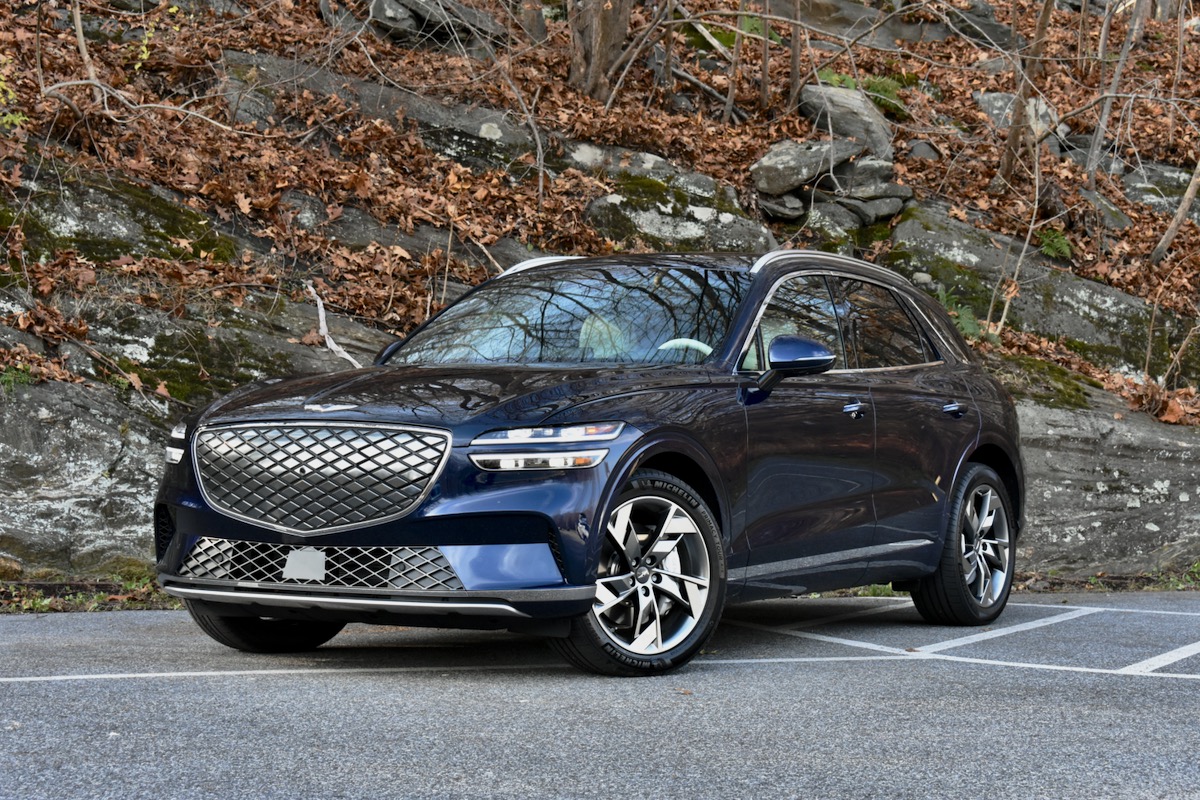
According to CarGurus experts, the overall rating for the 2024 Genesis GV70 is 8.3 out of 10, while the 2024 Hyundai Santa Fe scores 8.2 out of 10. Although the Hyundai Santa Fe offers excellent versatility, cargo space, and tech features, the Genesis GV70, with its superior build quality, luxurious feel, and impressive safety ratings, slightly edges out its sibling. If you are looking for a higher level of luxury and performance in a stylish package, the Genesis GV70 is the more highly recommended choice, albeit by a narrow margin.
Choose the 2024 Genesis GV70 if:
- You seek a stylish, luxurious SUV with advanced unique interior design elements and ample comfort features.
- Performance is a priority, and you appreciate powerful engine options, including an electric variant with formidable "Boost Mode."
- Safety is paramount, with top-notch IIHS scores and a generous array of high-tech safety features.


Choose the 2024 Hyundai Santa Fe if:
- You need a versatile SUV with substantial cargo space, accommodating up to seven passengers comfortably.
- Off-road capability matters, with the XRT trim offering higher ground clearance and robust tires.
- You want cutting-edge technology and convenience features, including biometric fingerprint scanners and wireless integrations.


CarGurus highlights
According to CarGurus experts, the overall rating for the 2024 Genesis GV70 is 8.3 out of 10, while the 2024 Hyundai Santa Fe scores 8.2 out of 10. Although the Hyundai Santa Fe offers excellent versatility, cargo space, and tech features, the Genesis GV70, with its superior build quality, luxurious feel, and impressive safety ratings, slightly edges out its sibling. If you are looking for a higher level of luxury and performance in a stylish package, the Genesis GV70 is the more highly recommended choice, albeit by a narrow margin.
Choose the 2024 Genesis GV70 if:
Shop Now- You seek a stylish, luxurious SUV with advanced unique interior design elements and ample comfort features.
- Performance is a priority, and you appreciate powerful engine options, including an electric variant with formidable "Boost Mode."
- Safety is paramount, with top-notch IIHS scores and a generous array of high-tech safety features.
Choose the 2024 Hyundai Santa Fe if:
Shop Now- You need a versatile SUV with substantial cargo space, accommodating up to seven passengers comfortably.
- Off-road capability matters, with the XRT trim offering higher ground clearance and robust tires.
- You want cutting-edge technology and convenience features, including biometric fingerprint scanners and wireless integrations.

By: CarGurus + AI
At CarGurus, our team of experienced automotive writers remain at the heart of our content operation, conducting hands-on car tests and writing insightful guides that are backed by years of industry experience. To complement this, we are harnessing AI to make our content offering more diverse and more helpful to shoppers than ever. To achieve this, our AI systems are based exclusively on CarGurus content, ratings and data, so that what we produce is both unique to CarGurus, and uniquely helpful to car shoppers.

