2024 Toyota Sequoia vs 2024 Hyundai Santa Fe
Overview | |
MSRP$61,275 | MSRP$33,950 |
Listings561 | Listings1071 |
Ratings & Reviews | |
User Reviews | User Reviews |
Expert reviews7.7 out of 10 | Expert reviews8.2 out of 10 |
Pros
Cons
| Pros
Cons
|
2024 Toyota Sequoia Reviews SummaryThe Toyota Sequoia gained a standard hybrid powertrain when it entered its third generation, just last year. While the tech updates were widely celebrated and the facelift considered unobjectionable even by its harshest critics, the move to hybrid power proved to be something of a mixed bag. Increased towing and hauling power bolstered the obvious advantage of improved fuel economy, but impact was somewhat dampened by the reduction in cargo and third-row space to accommodate the new battery. Verdict: The Sequoia may not be the most capable full-size SUV in the segment, and it’s certainly not the most spacious. It is, however, the only hybrid in its class, and it offers a blend of seating capacity, towing power, and fuel efficiency you won’t find elsewhere-at least, not if you don’t want to go diesel. | |
2024 Hyundai Santa Fe Reviews SummaryThe Hyundai Santa Fe is fully redesigned for 2024. It marks a significant departure for the brand in terms of styling, with a bold and blocky profile and stance reminiscent of, dare we say it, a certain British brand known for its off-road prowess. The Santa Fe’s redesign has as much substance as style, with a longer wheelbase, standard third-row seats, and new premium amenities, including a “terrace” approach to designing passenger and cargo space. Verdict: According to Hyundai, compact SUVs make up 15% of the brand’s sales, and the company expects the Santa Fe to grow that number. Overall, based on our exploration and time behind the wheel, the 2024 Santa Fe’s redesign is successful, as long as it doesn’t overshadow the rest of Hyundai’s lineup. | |
Popular Features & Specs | |
Engine3.4L 437 hp V6 Hybrid | Engine2.5L 277 hp I4 |
Drive Train4X2 | Drive TrainFWD |
Seating Capacity8 | Seating Capacity7 |
Horsepower437 hp @ 5200 rpm | Horsepower277 hp @ 5800 rpm |
EV Battery Capacity1.9 kWh | EV Battery Capacity |
MPG City21 | MPG City20 |
MPG Highway24 | MPG Highway29 |
Engine | |
Engine Name3.4L 437 hp V6 Hybrid | Engine Name2.5L 277 hp I4 |
Torque583 lb-ft @ 2400 rpm | Torque311 lb-ft @ 4000 rpm |
Horsepower437 hp @ 5200 rpm | Horsepower277 hp @ 5800 rpm |
Drivetrain4X2 | DrivetrainFWD |
Fuel Economy | |
EV Battery Capacity1.9 kWh | EV Battery Capacity |
MPG City21 | MPG City20 |
MPG Highway24 | MPG Highway29 |
Interior | |
Seating Capacity8 | Seating Capacity7 |
Key Features | |
Navigation System | Navigation SystemStandard |
Sunroof/MoonroofStandard | Sunroof/Moonroof |
Safety | |
Front Crash Overall | Front Crash Overall4 |
Side Crash Overall | Side Crash Overall5 |
Dimensions & Capacity | |
Cargo Space22.3 cu ft | Cargo Space14.6 cu ft |
Curb Weight5620 lbs | Curb Weight4343 lbs |
Height74.5 in | Height67.7 in |
Length208.1 in | Length190.2 in |
Width79.8 in | Width74.8 in |
Wheelbase122.0 in | Wheelbase110.8 in |
Maximum Payload1730 lbs | Maximum Payload1191 lbs |
Number of doors4 | Number of doors4 |
Maximum Towing Capacity9520 lbs | Maximum Towing Capacity3500 lbs |
Standard Towing Capacity9520 lbs | Standard Towing Capacity |
Overview | ||
MSRP | $61,275 | $33,950 |
Listings | ||
Ratings & Reviews | ||
User reviews | ||
Expert reviews | 7.7 out of 10Read full review | 8.2 out of 10Read full review |
Pros & cons | Pros
Cons
| Pros
Cons
|
Summary | The Toyota Sequoia gained a standard hybrid powertrain when it entered its third generation, just last year. While the tech updates were widely celebrated and the facelift considered unobjectionable even by its harshest critics, the move to hybrid power proved to be something of a mixed bag. Increased towing and hauling power bolstered the obvious advantage of improved fuel economy, but impact was somewhat dampened by the reduction in cargo and third-row space to accommodate the new battery. Verdict: The Sequoia may not be the most capable full-size SUV in the segment, and it’s certainly not the most spacious. It is, however, the only hybrid in its class, and it offers a blend of seating capacity, towing power, and fuel efficiency you won’t find elsewhere-at least, not if you don’t want to go diesel. | The Hyundai Santa Fe is fully redesigned for 2024. It marks a significant departure for the brand in terms of styling, with a bold and blocky profile and stance reminiscent of, dare we say it, a certain British brand known for its off-road prowess. The Santa Fe’s redesign has as much substance as style, with a longer wheelbase, standard third-row seats, and new premium amenities, including a “terrace” approach to designing passenger and cargo space. Verdict: According to Hyundai, compact SUVs make up 15% of the brand’s sales, and the company expects the Santa Fe to grow that number. Overall, based on our exploration and time behind the wheel, the 2024 Santa Fe’s redesign is successful, as long as it doesn’t overshadow the rest of Hyundai’s lineup. |
Video | ||
Popular Features & Specs | ||
Engine | 3.4L 437 hp V6 Hybrid | 2.5L 277 hp I4 |
Drive Train | 4X2 | FWD |
Seating Capacity | 8 | 7 |
Horsepower | 437 hp @ 5200 rpm | 277 hp @ 5800 rpm |
EV Battery Capacity | 1.9 kWh | |
MPG City | 21 | 20 |
MPG Highway | 24 | 29 |
Engine | ||
Engine Name | 3.4L 437 hp V6 Hybrid | 2.5L 277 hp I4 |
Torque | 583 lb-ft @ 2400 rpm | 311 lb-ft @ 4000 rpm |
Horsepower | 437 hp @ 5200 rpm | 277 hp @ 5800 rpm |
Drivetrain | 4X2 | FWD |
Fuel Economy | ||
EV Battery Capacity | 1.9 kWh | |
MPG City | 21 | 20 |
MPG Highway | 24 | 29 |
Interior | ||
Seating Capacity | 8 | 7 |
Key Features | ||
Navigation System | Standard | |
Sunroof/Moonroof | Standard | |
Safety | ||
Front Crash Overall | 4 | |
Side Crash Overall | 5 | |
Dimensions & Capacity | ||
Cargo Space | 22.3 cu ft | 14.6 cu ft |
Curb Weight | 5620 lbs | 4343 lbs |
Height | 74.5 in | 67.7 in |
Length | 208.1 in | 190.2 in |
Width | 79.8 in | 74.8 in |
Wheelbase | 122.0 in | 110.8 in |
Maximum Payload | 1730 lbs | 1191 lbs |
Number of doors | 4 | 4 |
Maximum Towing Capacity | 9520 lbs | 3500 lbs |
Standard Towing Capacity | 9520 lbs | |
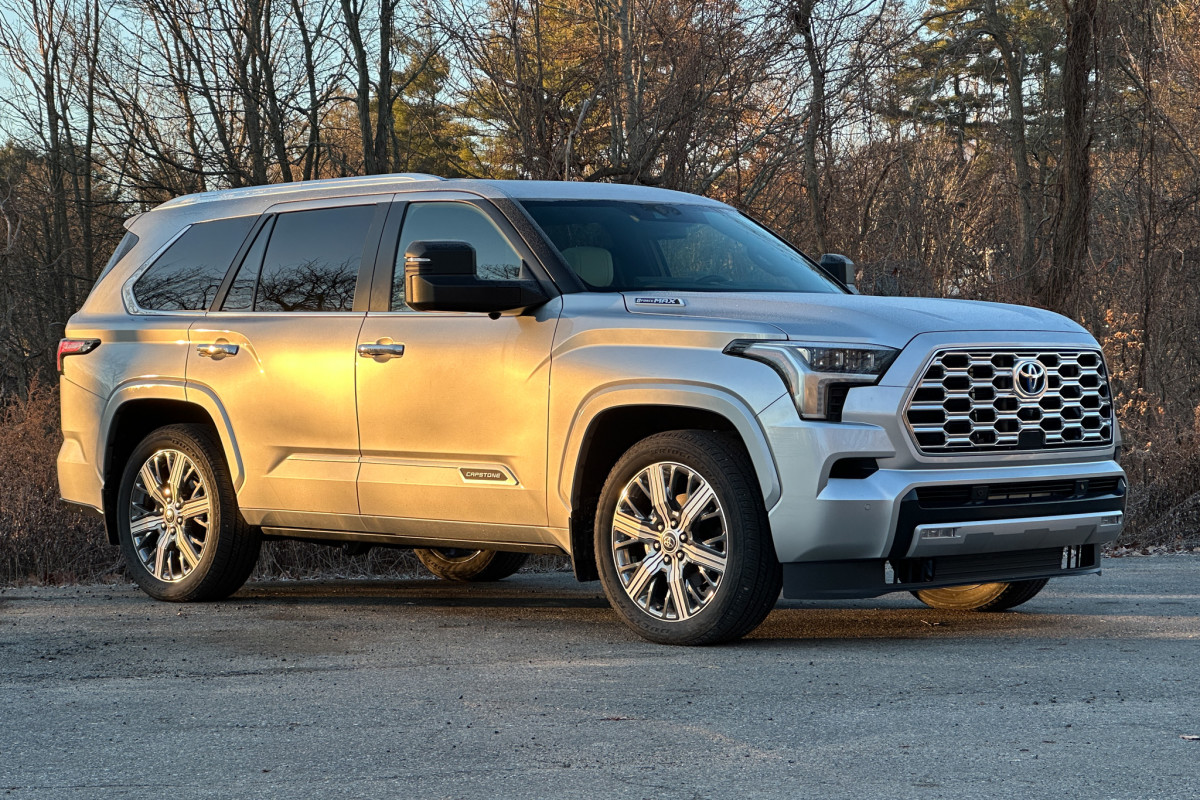
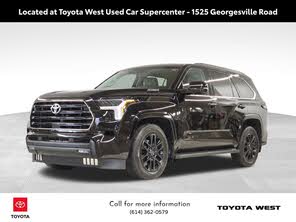
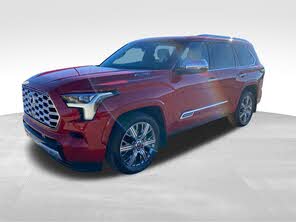
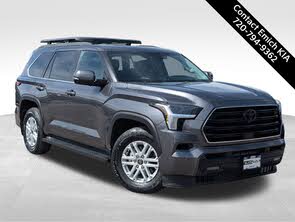
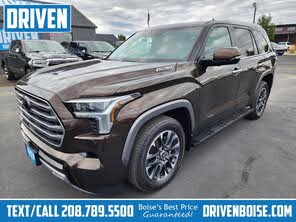
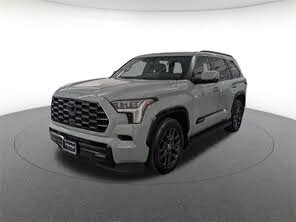
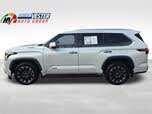
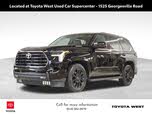
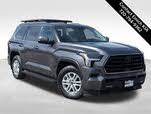
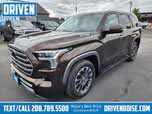
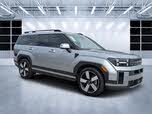
The 2024 Toyota Sequoia shared many design elements with the Tundra pickup, exhibiting bold hexagonal grilles, wheel arches, strong fender creases, and muscular stances. Exterior colors significantly altered its appearance. For instance, the Capstone model featured chrome accents, giving it a somewhat dated look in Celestial Silver, reminiscent of a “cop car.” However, the addition of Solar Octane orange and black accents transformed its vibe to a robust "Tonka truck."
Inside, the Sequoia’s layout mirrored Toyota's contemporary truck designs, evident in the geometric dashboard with user-friendly controls, a common aesthetic across the Tundra and new Tacoma. The center console housed a shallow covered compartment with padded armrests and a spacious cubby beneath. The Capstone trim boasted semi-aniline leather upholstery, elevating the interior’s luxury feel. Across the range, seating options varied, from fabric in the base SR5 to leather in the Platinum, ensuring enhanced comfort with up to eight-way power-adjustable front seats. All models featured a moonroof, with higher trims offering panoramic versions.
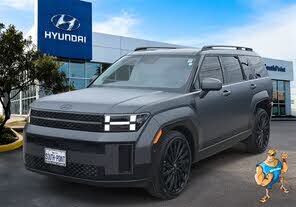
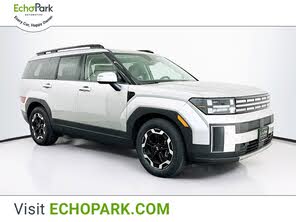
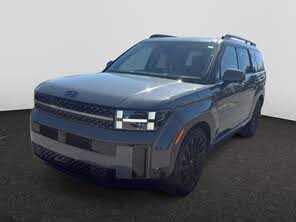
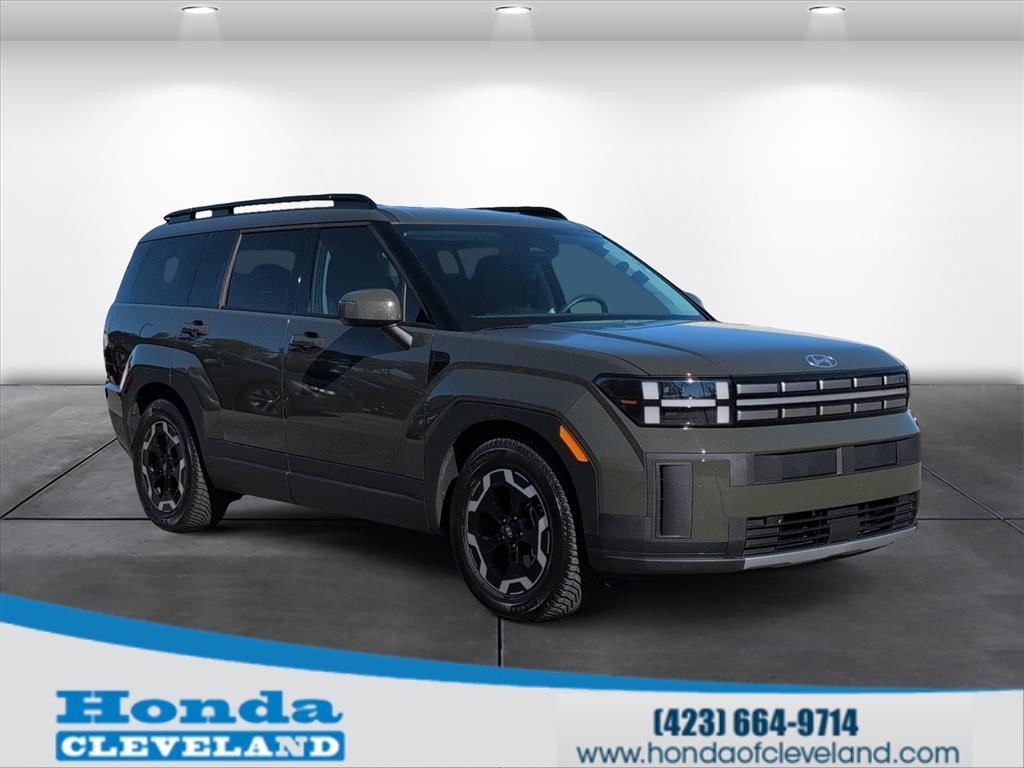
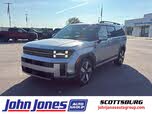
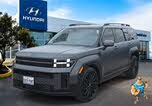
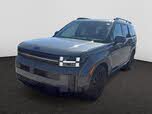
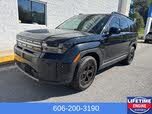
Conversely, the 2024 Hyundai Santa Fe came with a strikingly different aesthetic. Abandoning the sleek looks of earlier models like the Ioniq 5 and 6, it took a boxy, utilitarian approach. This design, explained by Hyundai’s design chief SangYup Lee, aimed at creating a premium, elegant box optimized for storage capacity. Despite its boxy design, it was surprisingly aerodynamic. The Santa Fe's upscale charm was evident and even garnered attention in rural Tennessee, impressing both store staff and a motorcycle gang.
Matte color options and anodized-finish badging further enhanced its premium feel, especially noteworthy in the XRT trim with its dark chrome and black cladding. The Santa Fe featured 18-inch alloy wheels for most trims, advancing to 20-inch in Limited and Hybrid Calligraphy versions, and 21-inch for the gas-only Calligraphy.
The interior echoed luxury with sophisticated materials. The Calligraphy trim, in particular, offered a cocooning fabric headliner that was as soothing as a winter scarf. Despite some hard surfaces in out-of-the-way areas, the clever integration of soft padding ensured a luxurious feel.


The 2024 Toyota Sequoia exclusively utilized the iForce MAX hybrid powertrain, combining a twin-turbo V6 engine with an electric motor, echoing the Tundra’s configuration. This setup delivered 437 horsepower and a whopping 583 lb-ft of torque, significantly improving upon the previous V8's 56 hp and 182 lb-ft. Fuel efficiency also saw a boost, achieving 20 mpg combined with 4WD, compared to the earlier 14 mpg.
The Sequoia offered optional 4WD for an extra $3,000 on trims other than the TRD Pro, which came with 4WD and a skid plate standard. The 10-speed automatic transmission provided smooth operation, and on-road handling was adequate for its class. The TRD Off-Road package added adventure-readiness with features like all-terrain tires, a skid plate, and off-road suspension, making it ideal for occasional off-roading.
Towing capacity reached 9,520 pounds, a significant increase from 7,400 pounds, with various upgrades available, including power-extending trailer tow mirrors. These mirrors were useful but posed visibility challenges for shorter drivers.
In contrast, the 2024 Hyundai Santa Fe's base powertrain featured a 2.5-liter turbocharged four-cylinder engine paired with an eight-speed dual-clutch automatic transmission, producing 277 horsepower and 311 lb-ft of torque. Standard FWD had AWD as an option, with the XRT trim exclusively featuring AWD. The Santa Fe also provided multiple driving modes, with the XRT adding off-road settings.
Later in the year, a 1.6-liter turbocharged four-cylinder hybrid variant would become available, offering 231 hp and 271 lb-ft of torque. Fuel economy varied, with the FWD model rated at 20 mpg city, 29 mpg highway, and 24 mpg combined, while AWD and XRT had slightly lower ratings. The hybrid promised better efficiency with up to 36 mpg combined.
The Santa Fe offered a 3,500-pound towing capacity for most trims, increasing to 4,500 pounds for the XRT due to enhanced cooling and air inlets. On-road, the Santa Fe exhibited smooth handling with some body roll through turns. Off-road, the XRT handled trails comparable to models like the Kia Telluride X-Pro and Subaru Forester Wilderness, thanks to its ground clearance and sturdy tires.
The 2024 Toyota Sequoia’s cabin featured automatic power-deploying running boards in high trims, aiding entry for shorter passengers but requiring timing adjustments. The interior provided 86.9 cubic feet of cargo space with the second and third rows folded. With the third-row seats upright, cargo space varied between 11.5 to 22.3 cubic feet, depending on seat positioning.
Accessing the third row was straightforward, though folding the seats did not create a flat load floor due to the battery pack underneath, impacting headroom and comfort. Legroom ranged from 28.1 to 33.7 inches in the third row, 39.2 inches in the second row, and 41.2 inches in the front, lagging slightly behind some competitors.
The 2024 Hyundai Santa Fe leveraged its increased wheelbase and body dimensions to enhance cargo space, inspired by the "chabak" concept. With a two-inch longer wheelbase and body, the Santa Fe didn’t sacrifice interior space. First and second rows were spacious, although the third row, like most in this class, was tighter and best suited for short journeys or smaller passengers.
The Santa Fe offered trim-dependent seating options, from stain-resistant cloth to plush quilted Nappa leather in the Calligraphy. Standard heated front seats in higher trims and storage pockets throughout the cabin enhanced practicality.
Cargo capacity reached 14.6 cubic feet behind the third row, expanding to 40.5 cubic feet with the third row folded and 79.6 cubic feet with both rear rows down. This made the Santa Fe extremely versatile for hauling larger loads. Optional roof rails supported 220 pounds, with innovative grab handles for easier loading.
The 2024 Toyota Sequoia came standard with wireless Apple CarPlay and Android Auto, accessible via an 8-inch touchscreen in the SR5 and a 14-inch screen in higher trims. The infotainment system, though somewhat sparse in aesthetics, excelled in functionality. A 12.3-inch color driver-information display and Panoramic View monitor were standard across all trims. Additionally, a 10-inch head-up display and a 14-speaker JBL audio system were available on higher trims, enhancing the overall driving experience.
In the 2024 Hyundai Santa Fe, the XRT, Limited, and Calligraphy trims boasted a pioneering curved panoramic display. The display integrated seamlessly without overwhelming drivers, offering intuitive controls and crisp graphics. Wireless Apple CarPlay and Android Auto came standard, supported by a 12-speaker Bose stereo and multiple USB ports across the cabin.
Lower trims featured a 12.3-inch infotainment display, still rich with functionality. Premium trims offered wireless charging and Hyundai’s innovative BlueLink system, which included vehicle access via phones, granting different levels of access. The cutting-edge Hyundai Pay and a biometric fingerprint scanner further added to the impressive tech suite, enhancing security and convenience.
Toyota equipped the 2024 Sequoia with standard Toyota Safety Sense (TSS) 2.5, which included a pre-collision system, lane-departure alert, adaptive cruise control, and road-sign recognition. It also featured front and rear parking sensors, blind-spot monitoring with Trailer Merge Warning, and optional Tow Technology Package for advanced towing assistance.
The 2024 Hyundai Santa Fe also offered a comprehensive suite of safety features standard across all trims, including adaptive cruise control, forward collision-avoidance assist, blind-spot monitors, lane-keep assist, and a rear-occupant reminder system. Higher trims introduced additional safety tech like a 360-degree camera system, rain-sensing windshield wipers, and Hyundai’s first biometric fingerprint scanner.
CarGurus highlights

According to CarGurus experts, the overall rating for the 2024 Toyota Sequoia is 7.7 out of 10, while the 2024 Hyundai Santa Fe scores 8.2 out of 10. Based on these ratings, the Hyundai Santa Fe emerges as the recommended choice. Its blend of innovative technology, efficient performance options, versatile interior space, and premium styling make it a standout in its segment.
Choose the 2024 Toyota Sequoia if:
- You need robust towing capacity up to 9,520 pounds.
- You prefer a hybrid powertrain with substantial torque and improved fuel economy.
- You value a rugged, adventurous aesthetic with options like the TRD Pro package.


Choose the 2024 Hyundai Santa Fe if:
- You seek a sophisticated, aerodynamic SUV with an emphasis on cargo space and versatility.
- You appreciate advanced technology and innovative features, including the curved panoramic display.
- You want multiple hybrid and efficient engine options with appealing fuel economy.




CarGurus highlights
According to CarGurus experts, the overall rating for the 2024 Toyota Sequoia is 7.7 out of 10, while the 2024 Hyundai Santa Fe scores 8.2 out of 10. Based on these ratings, the Hyundai Santa Fe emerges as the recommended choice. Its blend of innovative technology, efficient performance options, versatile interior space, and premium styling make it a standout in its segment.
Choose the 2024 Toyota Sequoia if:
Shop Now- You need robust towing capacity up to 9,520 pounds.
- You prefer a hybrid powertrain with substantial torque and improved fuel economy.
- You value a rugged, adventurous aesthetic with options like the TRD Pro package.




Choose the 2024 Hyundai Santa Fe if:
Shop Now- You seek a sophisticated, aerodynamic SUV with an emphasis on cargo space and versatility.
- You appreciate advanced technology and innovative features, including the curved panoramic display.
- You want multiple hybrid and efficient engine options with appealing fuel economy.





By: CarGurus + AI
At CarGurus, our team of experienced automotive writers remain at the heart of our content operation, conducting hands-on car tests and writing insightful guides that are backed by years of industry experience. To complement this, we are harnessing AI to make our content offering more diverse and more helpful to shoppers than ever. To achieve this, our AI systems are based exclusively on CarGurus content, ratings and data, so that what we produce is both unique to CarGurus, and uniquely helpful to car shoppers.