2024 Toyota Sequoia vs 2024 Volkswagen Atlas Cross Sport
Overview | |
MSRP$36,985 | MSRP$61,275 |
Listings923 | Listings568 |
Ratings & Reviews | |
User Reviews | User Reviews |
Expert reviews7.0 out of 10 | Expert reviews7.7 out of 10 |
Pros
Cons
| Pros
Cons
|
2024 Volkswagen Atlas Cross Sport Reviews SummaryVolkswagen's efforts to grow its appeal in the United States have developed over a long process of trial and error, but VW showed it finally understood American tastes when it launched the Atlas three-row crossover SUV. And because not everyone needs three rows, VW followed up the standard Atlas with the two-row Cross Sport for the 2020 model year. Both versions get a significant refresh for 2024. The 2024 Volkswagen Atlas Cross Sport gets most of the same updates as its three-row sibling, including different styling, more standard features, and the discontinuation of its six-cylinder engine option in favor of a more powerful turbocharged four-cylinder engine. These changes are aimed at making the Cross Sport more competitive against other midsize crossovers like the Chevrolet Blazer and Honda Pilot, the aged Ford Edge and Nissan Murano, and the more truck-like Jeep Grand Cherokee. The 2024 Atlas Cross Sport lineup includes SE, SE with Technology, SEL, SEL R-Line, and SEL Premium R-Line trim levels. We drove the range-topping SEL Premium R-Line for this review. | |
2024 Toyota Sequoia Reviews SummaryThe Toyota Sequoia gained a standard hybrid powertrain when it entered its third generation, just last year. While the tech updates were widely celebrated and the facelift considered unobjectionable even by its harshest critics, the move to hybrid power proved to be something of a mixed bag. Increased towing and hauling power bolstered the obvious advantage of improved fuel economy, but impact was somewhat dampened by the reduction in cargo and third-row space to accommodate the new battery. Verdict: The Sequoia may not be the most capable full-size SUV in the segment, and it’s certainly not the most spacious. It is, however, the only hybrid in its class, and it offers a blend of seating capacity, towing power, and fuel efficiency you won’t find elsewhere-at least, not if you don’t want to go diesel. | |
No video found | |
Popular Features & Specs | |
Engine2.0L 269 hp I4 | Engine3.4L 437 hp V6 Hybrid |
Drive TrainFWD | Drive Train4X2 |
Seating Capacity5 | Seating Capacity8 |
Horsepower | Horsepower437 hp @ 5200 rpm |
EV Battery Capacity | EV Battery Capacity1.9 kWh |
MPG City20 | MPG City21 |
MPG Highway27 | MPG Highway24 |
Engine | |
Engine Name2.0L 269 hp I4 | Engine Name3.4L 437 hp V6 Hybrid |
Torque | Torque583 lb-ft @ 2400 rpm |
Horsepower | Horsepower437 hp @ 5200 rpm |
DrivetrainFWD | Drivetrain4X2 |
Fuel Economy | |
EV Battery Capacity | EV Battery Capacity1.9 kWh |
MPG City20 | MPG City21 |
MPG Highway27 | MPG Highway24 |
Interior | |
Seating Capacity5 | Seating Capacity8 |
Key Features | |
Sunroof/Moonroof | Sunroof/MoonroofStandard |
Safety | |
Front Crash Overall4 | Front Crash Overall |
Side Crash Overall5 | Side Crash Overall |
Dimensions & Capacity | |
Cargo Space40.3 cu ft | Cargo Space22.3 cu ft |
Curb Weight4173 lbs | Curb Weight5620 lbs |
Height68.1 in | Height74.5 in |
Length195.6 in | Length208.1 in |
Width88.5 in | Width79.8 in |
Wheelbase117.3 in | Wheelbase122.0 in |
Maximum Payload1091 lbs | Maximum Payload1730 lbs |
Number of doors4 | Number of doors4 |
Maximum Towing Capacity2000 lbs | Maximum Towing Capacity9520 lbs |
Standard Towing Capacity | Standard Towing Capacity9520 lbs |
Overview | ||
MSRP | $36,985 | $61,275 |
Listings | ||
Ratings & Reviews | ||
User reviews | ||
Expert reviews | 7.0 out of 10Read full review | 7.7 out of 10Read full review |
Pros & cons | Pros
Cons
| Pros
Cons
|
Summary | Volkswagen's efforts to grow its appeal in the United States have developed over a long process of trial and error, but VW showed it finally understood American tastes when it launched the Atlas three-row crossover SUV. And because not everyone needs three rows, VW followed up the standard Atlas with the two-row Cross Sport for the 2020 model year. Both versions get a significant refresh for 2024. The 2024 Volkswagen Atlas Cross Sport gets most of the same updates as its three-row sibling, including different styling, more standard features, and the discontinuation of its six-cylinder engine option in favor of a more powerful turbocharged four-cylinder engine. These changes are aimed at making the Cross Sport more competitive against other midsize crossovers like the Chevrolet Blazer and Honda Pilot, the aged Ford Edge and Nissan Murano, and the more truck-like Jeep Grand Cherokee. The 2024 Atlas Cross Sport lineup includes SE, SE with Technology, SEL, SEL R-Line, and SEL Premium R-Line trim levels. We drove the range-topping SEL Premium R-Line for this review. | The Toyota Sequoia gained a standard hybrid powertrain when it entered its third generation, just last year. While the tech updates were widely celebrated and the facelift considered unobjectionable even by its harshest critics, the move to hybrid power proved to be something of a mixed bag. Increased towing and hauling power bolstered the obvious advantage of improved fuel economy, but impact was somewhat dampened by the reduction in cargo and third-row space to accommodate the new battery. Verdict: The Sequoia may not be the most capable full-size SUV in the segment, and it’s certainly not the most spacious. It is, however, the only hybrid in its class, and it offers a blend of seating capacity, towing power, and fuel efficiency you won’t find elsewhere-at least, not if you don’t want to go diesel. |
Video | No video found | |
Popular Features & Specs | ||
Engine | 2.0L 269 hp I4 | 3.4L 437 hp V6 Hybrid |
Drive Train | FWD | 4X2 |
Seating Capacity | 5 | 8 |
Horsepower | 437 hp @ 5200 rpm | |
EV Battery Capacity | 1.9 kWh | |
MPG City | 20 | 21 |
MPG Highway | 27 | 24 |
Engine | ||
Engine Name | 2.0L 269 hp I4 | 3.4L 437 hp V6 Hybrid |
Torque | 583 lb-ft @ 2400 rpm | |
Horsepower | 437 hp @ 5200 rpm | |
Drivetrain | FWD | 4X2 |
Fuel Economy | ||
EV Battery Capacity | 1.9 kWh | |
MPG City | 20 | 21 |
MPG Highway | 27 | 24 |
Interior | ||
Seating Capacity | 5 | 8 |
Key Features | ||
Sunroof/Moonroof | Standard | |
Safety | ||
Front Crash Overall | 4 | |
Side Crash Overall | 5 | |
Dimensions & Capacity | ||
Cargo Space | 40.3 cu ft | 22.3 cu ft |
Curb Weight | 4173 lbs | 5620 lbs |
Height | 68.1 in | 74.5 in |
Length | 195.6 in | 208.1 in |
Width | 88.5 in | 79.8 in |
Wheelbase | 117.3 in | 122.0 in |
Maximum Payload | 1091 lbs | 1730 lbs |
Number of doors | 4 | 4 |
Maximum Towing Capacity | 2000 lbs | 9520 lbs |
Standard Towing Capacity | 9520 lbs | |
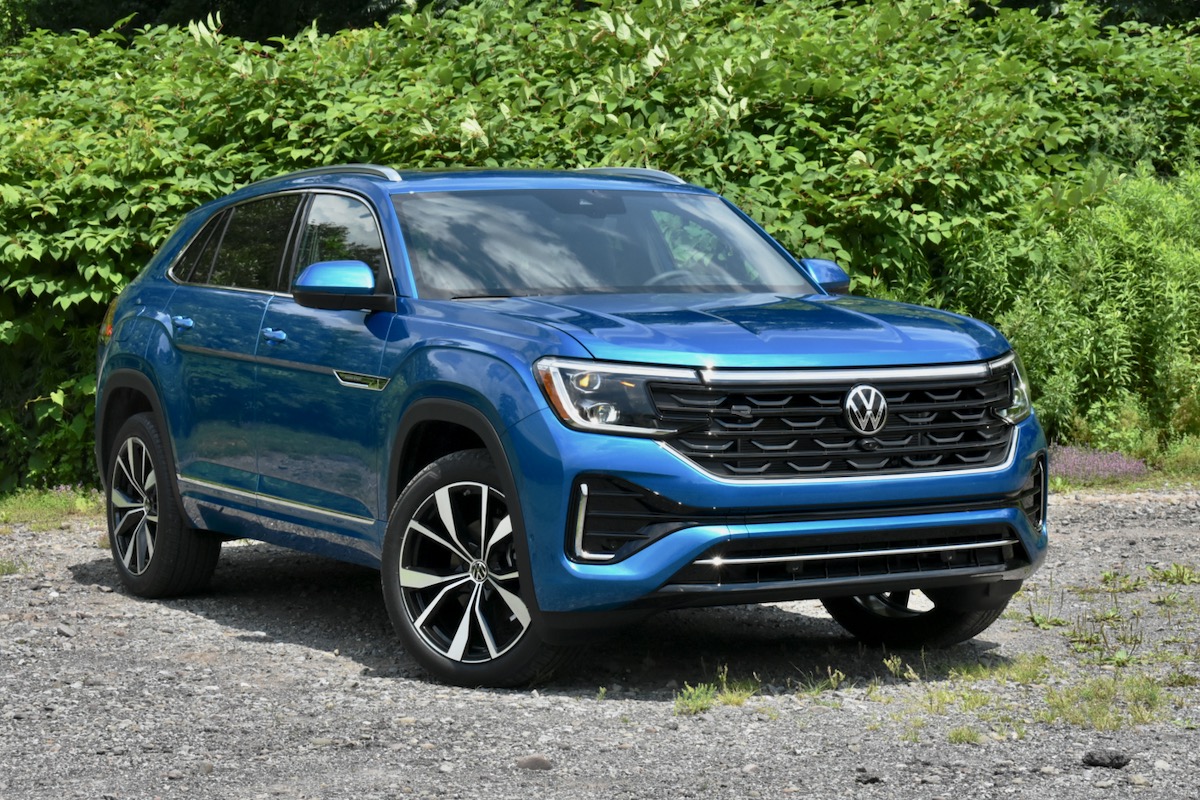
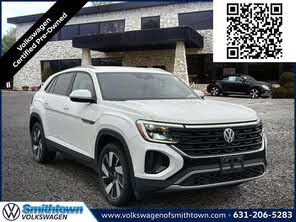
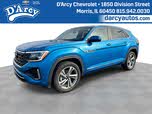
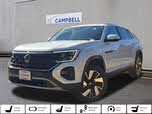
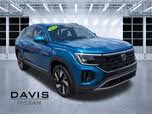
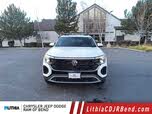
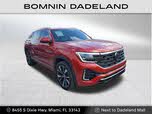
The 2024 Volkswagen Atlas Cross Sport had received the same styling updates as the three-row Atlas, notably incorporating new lighting elements both upfront and at the rear. Volkswagen logos on this model’s grille and tailgate illuminated in white and red respectively, echoing the design direction seen in Volkswagen’s all-electric ID.4 model. This addition was coupled with a sophisticated light bar connecting the daytime running lights upfront, enhancing the appeal of new standard LED headlights, which aimed to offer a more Americanized look. Built in Chattanooga, Tennessee, and designed particularly for the U.S. market, the Atlas Cross Sport presented a somewhat distinctive front view.
At the rear, reshaped taillights blended smoothly into a rear light bar, also embedding the second illuminating VW logo, a feature setting the Cross Sport apart due to its lower roofline. This design element lent the vehicle a silhouette resembling the “crossover coupes” from German luxury brands. Additionally, being 5.2 inches shorter and slightly lower than the standard Atlas, the Cross Sport projected a funkier and swifter appearance.
2024 brought new wheel designs for all Cross Sport trims. The SE trim came with 18-inch alloy wheels, while the SE with Technology and SEL trims were equipped with 20-inch wheels, with an optional black wheel package. The SEL R-Line was distinct with model-specific 20-inch wheels and sportier style touches, including side skirts and specialized front and rear bumpers. The premium SEL R-Line enhanced this further with 21-inch wheels.
Internally, the Cross Sport received interior updates mirroring the standard Atlas. Changes included an upgraded central touchscreen now mounted above the dashboard and a raised center console, creating extra storage space beneath thanks to the fresh electronic shifter design. Despite improvements, some aspects, like the simulated wood and carbon-fiber trim, remained plastic. Interior options ranged from standard leatherette upholstery to quilted leatherette with diamond patterns on the top SEL Premium R-Line trim.
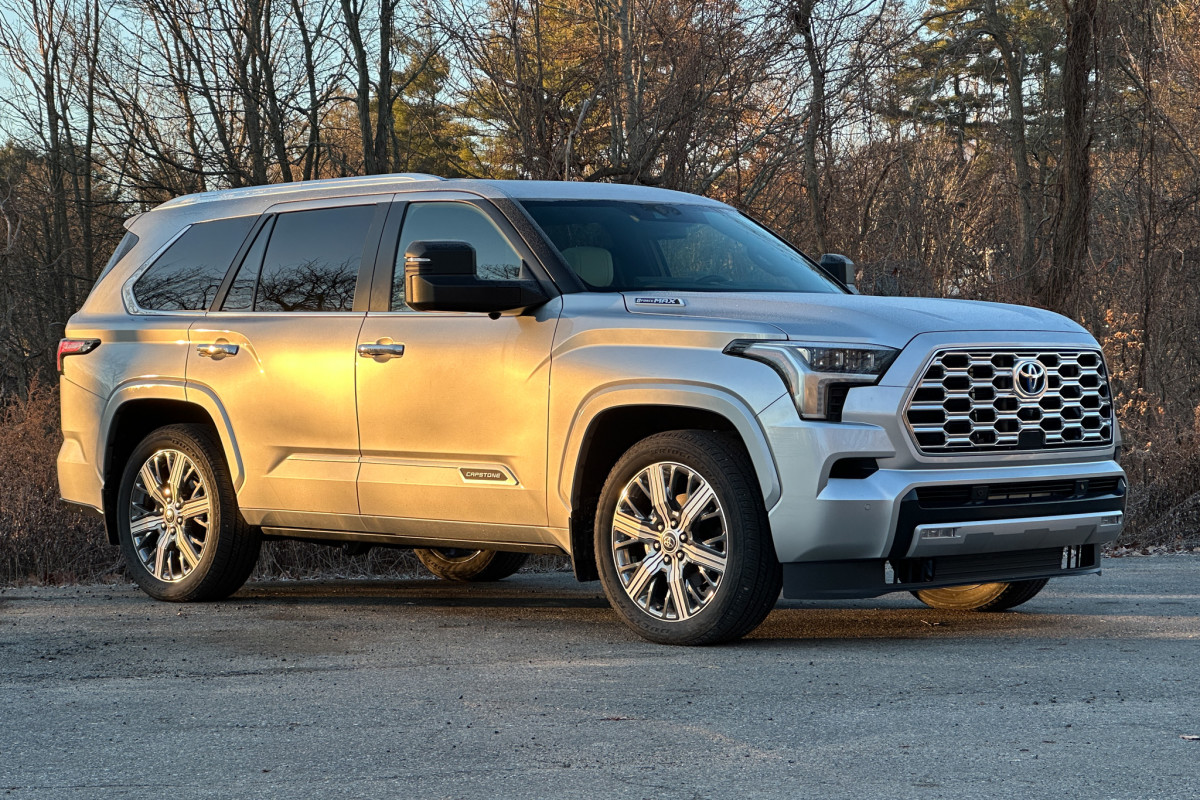
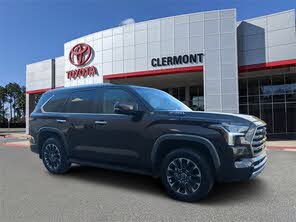
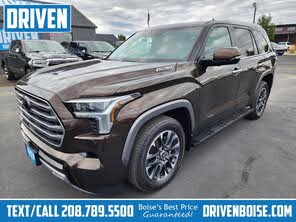
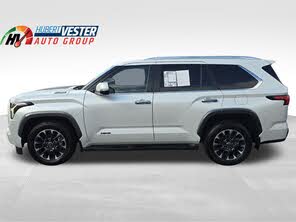
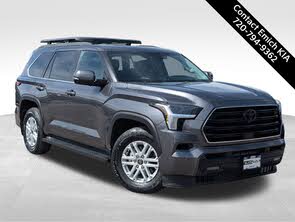
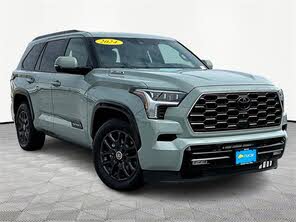
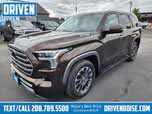
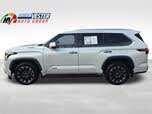
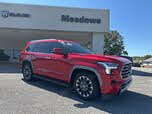
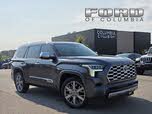
In contrast, the 2024 Toyota Sequoia shared its platform and several design traits with the Tundra pickup. Facets like hexagonal grilles, wheel arches, and pronounced fender lines characterized its robust stance. The Capstone model, specifically, adorned itself in abundant chrome brightwork and a Celestial Silver color, projecting a somewhat outdated and “cop car” vibe. However, a transformation occurred with colors like Solar Octane orange, which accentuated a more dynamic “Tonka truck” appearance.
The Sequoia’s interior mirrored the Tundra and other contemporary Toyota designs, featuring a blocky, geometric dash with physical dials and buttons for essential controls. The shifter and steering wheel also resembled its pickup siblings. Storage-wise, the center console incorporated a shallow covered compartment backed by padded armrests. Front seats showcased semi-aniline leather upholstery in the Capstone trim, while fabric remained standard on the base SR5 trim, with leather available in higher trims ensuring comfort with customizable, power-adjustable front seats across models.


For the 2024 Atlas and Atlas Cross Sport, Volkswagen switched to a singular 2.0-liter turbocharged four-cylinder engine coupled with an eight-speed automatic transmission, offering FWD as standard and 4Motion AWD as optional. This change marked the end of VW’s 3.6-liter VR6 engine era. The new turbo-four churned out 269 horsepower and 273 lb-ft of torque using regular fuel, promising more torque albeit slightly less horsepower than the previous VR6. VW asserted that this new engine, reaching peak torque at 1,550 rpm, would render quicker acceleration than its predecessor.
The new four-cylinder, previously more powerful compared to the outgoing standard 2.0-liter turbo-four engine, produced an engaging driving experience despite its less melodious sound and somewhat irksome noise-to-power ratio. The Cross Sport did not exemplify excitement in driving dynamics nor ride comfort, possibly influenced by the test car’s 21-inch wheels. Nonetheless, the model maintained a respectable 5,000-pound towing capacity (except the SE trim at 2,000 pounds), suitable for midsize crossovers but short of segmented leaders like the Jeep Grand Cherokee.
Conversely, the 2024 Toyota Sequoia leaned exclusively on its iForce MAX hybrid powertrain, merging a twin-turbo V6 with an electric motor. Producing an impressive 437 horsepower and 583 lb-ft of torque, it outperformed its V8 predecessor power-wise while offering an appreciably similar pleasant sound and a notable fuel economy leap to 20 mpg combined in 4WD variants from the earlier 14 mpg.
The TRD Pro catered distinctly to off-road enthusiasts with a 4WD system featuring options for 4Hi, 4Lo, and 2WD, reinforced by a skid plate. For other trims, buyers could avail 4WD at an additional $3,000. The smooth 10-speed automatic transmission facilitated decent on-road handling. The TRD Off-Road package, available on select trims, ramped up off-road readiness with all-terrain tires, a skid plate, and upgraded Bilstein shocks suspended with added off-road electronic aids.
Toyota Sequoia boasted an increased maximum towing capacity of 9,520 pounds— notably higher than its predecessor. Extra towing features were available, including power-extending trailer tow mirrors, adding convenience albeit with visibility trade-offs for shorter drivers.
Volkswagen added substantial standard equipment to the Atlas Cross Sport for 2024. Heated side mirrors, two-zone automatic climate control, and a heated steering wheel with ventilated front seats defined the base Cross Sport SE. In the SE with Technology trim, a power liftgate and tow hitch were standard, while heated second-row seats and leather upholstery were included from the SEL level downward, making luxury more accessible.
The Cross Sport rode stylishly albeit compromising rear-seat headroom due to the stylish roofline. However, legroom remained competitive with a decent first-row offering. The cargo area offered 40.3 cubic feet behind the rear seats and expanded to 77.6 cubic feet with them folded, roughly on par with rivals like the Honda Passport.
The interior revisions for 2024 emphasized functionality, with an upgraded center console offering substantial storage, alongside practical door pockets ensuring items remained secured during transit.
The 2024 Toyota Sequoia, particularly in the Capstone trim, featured automatic power-deploying running boards aiding in easier entry, albeit with initial adjustment required to avoid shin hits. Inside, the Sequoia offered 86.9 cubic feet of total cargo space with both rear rows folded. Behind the second row, it accommodated 49 cubic feet, while the third row provided between 11.5 and 22.3 cubic feet based on their slider position.
Despite the ease in moving second-row seats for access, third-row folding didn’t create a flat load floor due to the battery pack beneath, impacting available space and comfort slightly. Second-row captain’s chairs in higher trims like Platinum and Capstone were wide but lacked sufficient bolstering for stability.
Comparatively, Volkswagen’s cargo space edged out in usability with a flat load floor and functional storage adjustments, though Toyota’s configuration favored additional practical amenities at higher trims.
The 2024 Atlas Cross Sport introduced enhanced tech features with a standard 12-inch touchscreen, a 10.25-inch digital instrument cluster, and wireless Apple CarPlay and Android Auto coupled with wireless phone charging. While the user interface impressed with its intuitive layouts, the haptic touchpads replacing traditional buttons posed a challenge in terms of usability due to the lack of physical feedback.
SE with Technology trims and higher featured up to six USB-C ports, a dash cam port, and a head-up display for SEL models. A Harman Kardon premium audio system replaced the previous Fender setup in the SEL Premium R-Line, providing a richer auditory experience.
The 2024 Toyota Sequoia’s Capstone trim flaunted a well-equipped tech package, highlighted by a standard wireless Apple CarPlay and Android Auto integration. The tech experience varied by trim, with an 8-inch touchscreen in the SR5 and a massive 14-inch screen in others. The ease of use of the Toyota Audio Multimedia system, despite simple visuals, ensured practicality.
All trims benefited from a full-color 12.3-inch driver information display and a Panoramic View monitor, essential for maneuvering the bulky vehicle. Capstone and Platinum trims offered a 10-inch color head-up display, with a 14-speaker JBL Premium Audio system standard from the Platinum trim upward.
Volkswagen incorporated comprehensive safety features in the 2024 Atlas Cross Sport, earning it a five-star overall safety rating from the NHTSA, yet with slightly lower scores in frontal and rollover tests. The IIHS had not rated the 2024 model specifically, but historically, the structurally similar 2023 model performed well.
Standard across all models was the IQ.Drive package, equipping forward collision warning, automatic emergency braking, blind-spot monitoring, rear cross-traffic alert, lane-keep assist, and adaptive cruise control with Travel Assist. Higher trims enhanced safety with additional features such as predictive adaptive cruise control, park assist, and a surround-view camera system.
Likewise, Toyota standardized a robust suite of driver-assistance features in the 2024 Sequoia, incorporating the TSS 2.5 suite. This included pre-collision and pedestrian detection, lane-departure alert, adaptive cruise control, road-sign recognition, and front and rear parking sensors with automatic braking.
Trailer Merge Warning was standard for blind-spot monitoring when towing, extending its functionality. The Tow Technology Package, available on higher trims, added trailer-specific driver aids, enhancing safety and maneuverability during towing.
CarGurus highlights
According to CarGurus experts, the overall rating for the 2024 Volkswagen Atlas Cross Sport was 7.0 out of 10, while the 2024 Toyota Sequoia scored a higher 7.7 out of 10. Based on these ratings, we recommend the 2024 Toyota Sequoia for its superior performance, cutting-edge technology, elevated safety packages, and impressive towing capacity. While the Atlas Cross Sport offers great features and stylish design, the Sequoia edges ahead with a stronger overall score, making it the optimal choice for consumers in this comparison.
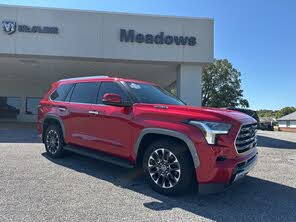
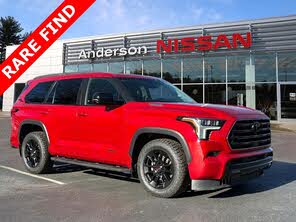
Choose the 2024 Toyota Sequoia if:
- You need a powerful hybrid engine with higher towing capabilities.
- Off-road readiness and a robust off-road package appeal to your adventurous spirit.
- Standard advanced safety and driver-assistance features are fundamental.

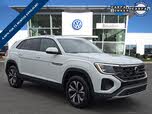
Choose the 2024 Volkswagen Atlas Cross Sport if:
- You prefer a vehicle with substantial standard tech features early in the trim lineup.
- Adequate cargo space and practical interior adaptability are crucial for your needs.
- Safety ratings highly influence your purchase decision.



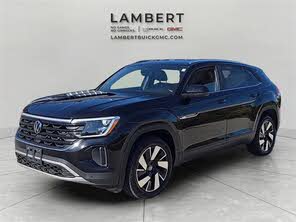
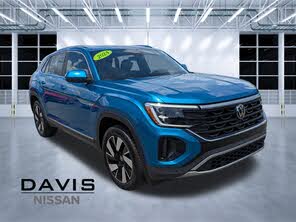


CarGurus highlights
According to CarGurus experts, the overall rating for the 2024 Volkswagen Atlas Cross Sport was 7.0 out of 10, while the 2024 Toyota Sequoia scored a higher 7.7 out of 10. Based on these ratings, we recommend the 2024 Toyota Sequoia for its superior performance, cutting-edge technology, elevated safety packages, and impressive towing capacity. While the Atlas Cross Sport offers great features and stylish design, the Sequoia edges ahead with a stronger overall score, making it the optimal choice for consumers in this comparison.
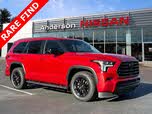
Choose the 2024 Toyota Sequoia if:
Shop Now- You need a powerful hybrid engine with higher towing capabilities.
- Off-road readiness and a robust off-road package appeal to your adventurous spirit.
- Standard advanced safety and driver-assistance features are fundamental.

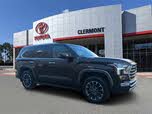
Choose the 2024 Volkswagen Atlas Cross Sport if:
Shop Now- You prefer a vehicle with substantial standard tech features early in the trim lineup.
- Adequate cargo space and practical interior adaptability are crucial for your needs.
- Safety ratings highly influence your purchase decision.





By: CarGurus + AI
At CarGurus, our team of experienced automotive writers remain at the heart of our content operation, conducting hands-on car tests and writing insightful guides that are backed by years of industry experience. To complement this, we are harnessing AI to make our content offering more diverse and more helpful to shoppers than ever. To achieve this, our AI systems are based exclusively on CarGurus content, ratings and data, so that what we produce is both unique to CarGurus, and uniquely helpful to car shoppers.