2021 Volkswagen ID.4 vs 2022 Kia EV6

Overview | |
MSRP$39,995 | MSRP$40,900 |
Listings339 | Listings192 |
Ratings & Reviews | |
User Reviews | User Reviews |
Expert reviews7.3 out of 10 | Expert reviews7.7 out of 10 |
Pros
Cons
| Pros
Cons
|
2021 Volkswagen ID.4 Reviews SummaryThe “Dieselgate” emissions scandal forced Volkswagen to double down on electric cars, and now we’re finally seeing the first result of that: the 2021 Volkswagen ID.4 electric crossover. VW has made an electric car before, but its last attempt, the e-Golf, was built to satisfy emissions standards, not rack up sales. It was barely advertised, and it was sold only in certain states. That’s not the case with the ID.4, which will be available nationwide and will even be built in Tennessee starting in 2022. Volkswagen views the ID.4 as a rival not to other EVs, but to mainstream gasoline vehicles like the Honda CR-V and Toyota RAV4. Being late to the party means there are already several other EVs trying to coax new-car buyers away from internal combustion, however. If you want a reasonably-priced EV, the Nissan Leaf, Hyundai Kona Electric, and Kia Niro EV already exist, and General Motors just announced the 2022 Chevrolet Bolt EUV—a new variant of the Chevy Bolt EV with a crossover body style similar to the Volkswagen. We tested an ID.4 1st Edition, which commemorates the car’s launch, and an ID.4 PRO S with all-wheel drive (AWD). The 1st Edition is a limited-edition model that has already sold out, but it’s mechanically identical to the ID.4 Pro S AWD, albeit with power sent only to the rear wheels. | |
2022 Kia EV6 Reviews SummaryWe didn't expect them to go there. But the designers and engineers behind the 2022 Kia EV6 did—and deleted the template of their company's affordable, cost-conscious brand. This is a $60,000 electric performance car that can genuinely compete with a Tesla Model 3 on everything from tech to style to acceleration to charging time. It's a masterclass of fresh thinking in a market segment dominated by rehashed ideas. And yet, it's hampered by the same major problems that, for decades, remain unresolved. The EV6 would be amazing with battery technology that hasn't yet been invented. For now, we'll tell you what the present life is like with this most unusual and exciting Kia in years. | |
Popular Features & Specs | |
Engine201 hp Electric | Engine167 hp Electric |
Drive TrainRWD | Drive TrainRWD |
Seating Capacity5 | Seating Capacity5 |
EV Battery Capacity82 kWh | EV Battery Capacity58 kWh |
MPG City104 | MPG City136 |
MPG Highway89 | MPG Highway100 |
Battery Charge Time (120V) | Battery Charge Time (120V)51 hours |
Battery Charge Time (240V)8 hours | Battery Charge Time (240V) |
Engine | |
Engine Name201 hp Electric | Engine Name167 hp Electric |
Battery Charge Time (120V) | Battery Charge Time (120V)51 hours |
Battery Charge Time (240V)8 hours | Battery Charge Time (240V) |
DrivetrainRWD | DrivetrainRWD |
Fuel Economy | |
EV Battery Capacity82 kWh | EV Battery Capacity58 kWh |
MPG City104 | MPG City136 |
MPG Highway89 | MPG Highway100 |
Interior | |
Seating Capacity5 | Seating Capacity5 |
Key Features | |
Navigation System | Navigation SystemStandard |
Safety | |
Front Crash Overall5 | Front Crash Overall5 |
Side Crash Overall5 | Side Crash Overall5 |
Dimensions & Capacity | |
Cargo Space30.3 cu ft | Cargo Space24.4 cu ft |
Curb Weight4517 lbs | Curb Weight4017 lbs |
Height64.4 in | Height60.8 in |
Length180.5 in | Length184.3 in |
Width72.9 in | Width74.0 in |
Wheelbase108.9 in | Wheelbase114.2 in |
Maximum Payload1347 lbs | Maximum Payload987 lbs |
Number of doors4 | Number of doors4 |
Overview | ||
MSRP | $39,995 | $40,900 |
Listings | ||
Ratings & Reviews | ||
User reviews | ||
Expert reviews | 7.3 out of 10Read full review | 7.7 out of 10Read full review |
Pros & cons | Pros
Cons
| Pros
Cons
|
Summary | The “Dieselgate” emissions scandal forced Volkswagen to double down on electric cars, and now we’re finally seeing the first result of that: the 2021 Volkswagen ID.4 electric crossover. VW has made an electric car before, but its last attempt, the e-Golf, was built to satisfy emissions standards, not rack up sales. It was barely advertised, and it was sold only in certain states. That’s not the case with the ID.4, which will be available nationwide and will even be built in Tennessee starting in 2022. Volkswagen views the ID.4 as a rival not to other EVs, but to mainstream gasoline vehicles like the Honda CR-V and Toyota RAV4. Being late to the party means there are already several other EVs trying to coax new-car buyers away from internal combustion, however. If you want a reasonably-priced EV, the Nissan Leaf, Hyundai Kona Electric, and Kia Niro EV already exist, and General Motors just announced the 2022 Chevrolet Bolt EUV—a new variant of the Chevy Bolt EV with a crossover body style similar to the Volkswagen. We tested an ID.4 1st Edition, which commemorates the car’s launch, and an ID.4 PRO S with all-wheel drive (AWD). The 1st Edition is a limited-edition model that has already sold out, but it’s mechanically identical to the ID.4 Pro S AWD, albeit with power sent only to the rear wheels. | We didn't expect them to go there. But the designers and engineers behind the 2022 Kia EV6 did—and deleted the template of their company's affordable, cost-conscious brand. This is a $60,000 electric performance car that can genuinely compete with a Tesla Model 3 on everything from tech to style to acceleration to charging time. It's a masterclass of fresh thinking in a market segment dominated by rehashed ideas. And yet, it's hampered by the same major problems that, for decades, remain unresolved. The EV6 would be amazing with battery technology that hasn't yet been invented. For now, we'll tell you what the present life is like with this most unusual and exciting Kia in years. |
Video | ||
Popular Features & Specs | ||
Engine | 201 hp Electric | 167 hp Electric |
Drive Train | RWD | RWD |
Seating Capacity | 5 | 5 |
EV Battery Capacity | 82 kWh | 58 kWh |
MPG City | 104 | 136 |
MPG Highway | 89 | 100 |
Battery Charge Time (120V) | 51 hours | |
Battery Charge Time (240V) | 8 hours | |
Engine | ||
Engine Name | 201 hp Electric | 167 hp Electric |
Battery Charge Time (120V) | 51 hours | |
Battery Charge Time (240V) | 8 hours | |
Drivetrain | RWD | RWD |
Fuel Economy | ||
EV Battery Capacity | 82 kWh | 58 kWh |
MPG City | 104 | 136 |
MPG Highway | 89 | 100 |
Interior | ||
Seating Capacity | 5 | 5 |
Key Features | ||
Navigation System | Standard | |
Safety | ||
Front Crash Overall | 5 | 5 |
Side Crash Overall | 5 | 5 |
Dimensions & Capacity | ||
Cargo Space | 30.3 cu ft | 24.4 cu ft |
Curb Weight | 4517 lbs | 4017 lbs |
Height | 64.4 in | 60.8 in |
Length | 180.5 in | 184.3 in |
Width | 72.9 in | 74.0 in |
Wheelbase | 108.9 in | 114.2 in |
Maximum Payload | 1347 lbs | 987 lbs |
Number of doors | 4 | 4 |
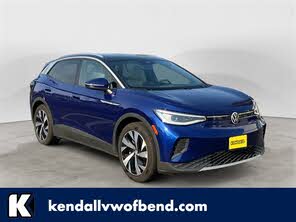
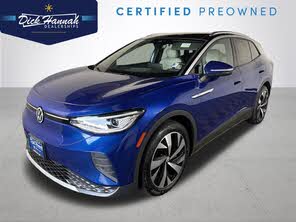
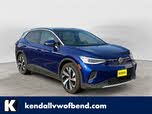
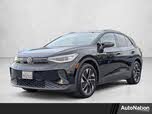
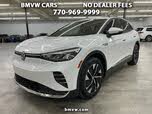
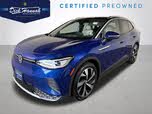
The 2021 Volkswagen ID.4 presented an exterior design tailored specifically as an electric vehicle (EV), diverging from Volkswagen's gasoline models. Unlike the Tiguan and Atlas, the ID.4 showcased a streamlined profile with wheels pushed to the corners, contributing to a more futuristic and distinctive aesthetic. Built on VW’s MEB platform, the ID.4 followed the European ID.3 hatchback, preferring a crossover offering for the U.S. market due to higher crossover sales.
The SUV-like styling of the ID.4 didn't quite translate fully; despite its crossover categorization, many observers noted its resemblance more to a hatchback than recognizable SUVs. This styling was in line with rivals like the Chevy Bolt EUV and the Hyundai Kona Electric. Inside, the ID.4 displayed Volkswagen's minimalist design philosophy with a blend of modern and tech-centric elements. The interior featured piano black and matte plastic, with standard cloth seats and a leather-wrapped steering wheel on the base Pro variant. Leatherette upholstery was available on the Pro S and 1St Edition models.
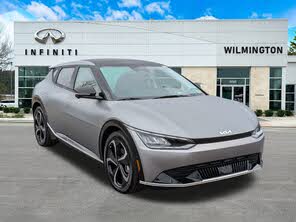
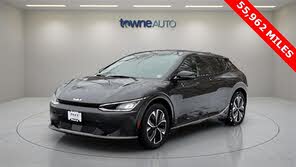
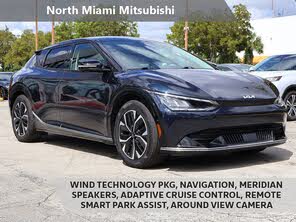
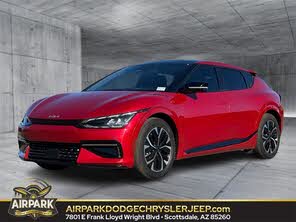
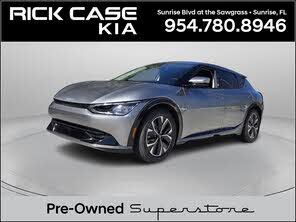
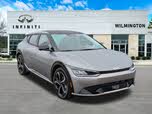
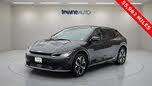
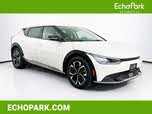
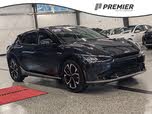
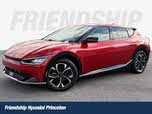
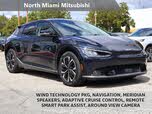
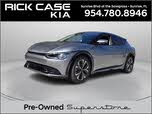
The 2022 Kia EV6, conversely, epitomized sportiness with a sleek, athletic design. Lower and wider than many of its competitors, the EV6 sported voluptuous curves akin to a Porsche 911, contributing to both style and stability. The highback tail with a lip spoiler doubling as a lightbar and the flush door handles added to its modern allure. Kia ensured the EV6 stood out with aesthetic details like illuminated body sections and architecturally intriguing reverse lights. It had a wedge-shaped profile, enhancing its aggressive stance.
Inside, the EV6 continued the futuristic theme with dual 12-inch screens on a curvy dash, suede and leather-covered seats, and ambient lighting surrounding the interior. The layout emphasized a blend of car-first aesthetics, ensuring functionality alongside style. A floating center console, a hockey-puck shifter, and futuristic seat designs accentuated the EV6's distinctiveness.


The 2021 Volkswagen ID.4 launched initially with a single rear-mounted electric motor producing 201 horsepower and 229 pound-feet of torque, powered by an 82-kilowatt-hour battery pack. This made it the first rear-wheel-drive (RWD) VW passenger car in the U.S. since the Beetle. The single-motor setup provided a balanced handling experience, as RWD generally divides labor between front and rear wheels effectively. The ID.4 also offered all-wheel drive (AWD) from the latter half of 2021, boosting power to 295 horsepower and 339 pound-feet of torque. Despite these capabilities, the ID.4 tuned itself more for comfort than sporty driving, exhibiting considerable body roll in corners but delivering a smooth ride over irregular surfaces.
The 2022 Kia EV6 GT-Line e-AWD variant tested roared with 320 horsepower and 446 pound-feet of torque powered by a 77-kilowatt-hour battery. Its acceleration was notable, speeding from 0-60 mph in an impressive 4.6 seconds, with a cornering capability akin to a getaway car due to the dual motor system. The separate single-motor versions provided variants with a 225 horsepower, maintaining decent performance. The EV6 excelled with its quick torque delivery and responsiveness in different driving modes. However, one-pedal driving was an option with its customizable regenerative braking settings, which proved highly effective for different driving needs.
However, during winter testing, the EV6 exhibited a rather poor driving range, clocking in at roughly 65 percent of its EPA range estimate in cold conditions. Despite its fast-charging capabilities, real-world conditions proved less efficient, with charge times and power outputs falling short of manufacturer claims.
The 2021 Volkswagen ID.4 provided ample space in both its front and rear headroom, surpassing many competitor EVs. However, its legroom measured average for the segment, while traditional gasoline rivals like the Honda CR-V and Toyota RAV4 offered better legroom. Cargo capacity was fairly generous at 30.3 cubic feet with the rear seats in place and 64.2 cubic feet with the rear seats folded. Unlike some EVs, the ID.4 did not include a front trunk but benefited interior space. Despite good forward visibility, rear visibility was limited.
The 2022 Kia EV6 prioritized innovative functionality in its interior. It featured touchscreens for dual purposes, adjusting climate controls and stereo settings interchangeably, which although novel, could finicky in practice. The low interior floor provided generous legroom and headroom across seating positions, creating a spacious feel in the cabin. Nonetheless, its cargo hold was more limited, offering 24 cubic feet behind the seats, expanding to 50 cubic feet when folded, slightly less than the ID.4. The high load floor affected its storage capabilities, especially in AWD models with no frunk space.
For the 2021 Volkswagen ID.4, the standard infotainment came with a 10-inch touchscreen, upgradable to a 12-inch version, complemented by wireless Apple CarPlay and Android Auto. The instrument cluster was a 5.3-inch display screen with haptic touchpads substituting conventional switches. While visually pleasing, the touchpads proved less intuitive in use. Natural-language voice control offered an alternative yet felt slow in responding. The innovative ID.Light provided color-coded information but wasn't particularly impactful in daily use.
Meanwhile, the 2022 Kia EV6’s infotainment echoed other Hyundai, Kia, and Genesis models in its simplicity and intuitive functionality. Despite needing a wired connection for Apple CarPlay and Android Auto, the system was highly connected. The instrument panel offered clear vehicle visuals and blind-spot feed live displays during lane changes. The advanced HUD with augmented reality and the customizable 360-degree camera system stood out as significant tech highlights. Higher trims included premium features like a 14-speaker Meridian stereo and a remote parking system.
The 2021 Volkswagen ID.4 earned impressive safety accolades, including the IIHS Top Safety Pick+ designation and a five-star rating from the NHTSA for the RWD model. Standard driver aids encompassed forward-collision warning, automatic emergency braking, blind-spot monitoring, lane-keep assist, park distance control, automatic high beams, and adaptive cruise control. Additional features like Travel Assist and Emergency Assist aimed to enhance highway driving safety.
In comparison, while the 2022 Kia EV6 lacked U.S. safety test results at the time, its comprehensive safety suite included lane-keeping, cyclist and pedestrian detection, front and rear cross-traffic alerts, a driver attention monitor, and rear occupant alert as basics in every trim. Advanced features on higher trims involved automatic rear braking and a 360-degree camera system. The enhanced adaptive cruise control, which learns driving patterns, and evasive steering assist further strengthened its safety profile.
CarGurus highlights
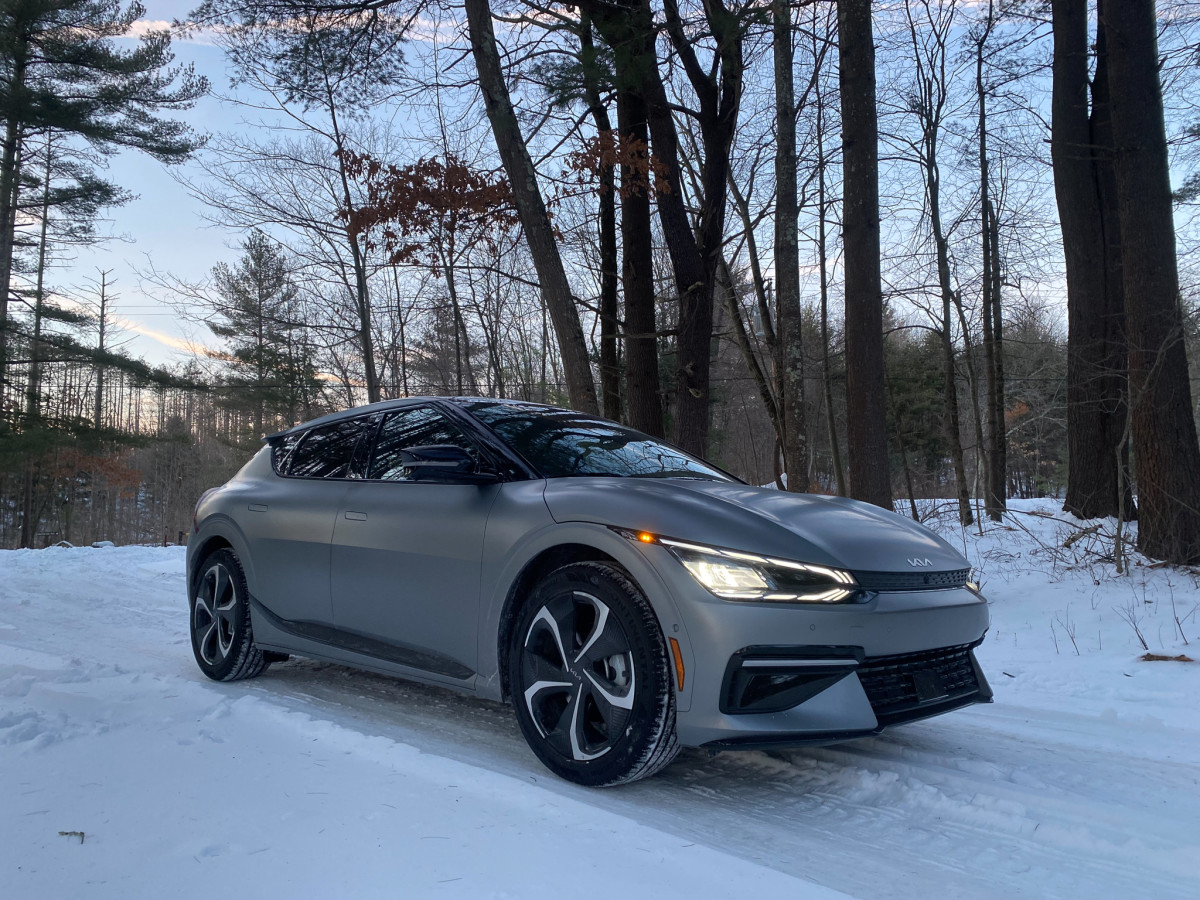
According to CarGurus experts, the overall rating for the 2021 Volkswagen ID.4 is 7.3 out of 10, while the 2022 Kia EV6 scores 7.7 out of 10. Based on these ratings, the 2022 Kia EV6 emerges as the preferred choice, offering a more engaging performance, cutting-edge technology, and an appealing, sportier design. While the 2021 Volkswagen ID.4 presents a solid and efficient option, especially with its top-tier safety ratings and spacious cargo hold, the excitement and innovation embodied by the EV6 drive it to the top recommendation in this comparison.
Choose the 2021 Volkswagen ID.4 if:
- You value a smooth and comfortable ride, with a design tailored specifically for EV performance.
- Advanced safety features and top-rated crash test results are a priority.
- You need slightly more cargo space for practical use.






Choose the 2022 Kia EV6 if:
- Sporty, aggressive styling and engaging, responsive performance are what you seek.
- Technological innovation, including advanced HUD and customizable camera systems, matter.
- Spacious interior comfort combined with modern, intuitive features resonate with your lifestyle.




CarGurus highlights
According to CarGurus experts, the overall rating for the 2021 Volkswagen ID.4 is 7.3 out of 10, while the 2022 Kia EV6 scores 7.7 out of 10. Based on these ratings, the 2022 Kia EV6 emerges as the preferred choice, offering a more engaging performance, cutting-edge technology, and an appealing, sportier design. While the 2021 Volkswagen ID.4 presents a solid and efficient option, especially with its top-tier safety ratings and spacious cargo hold, the excitement and innovation embodied by the EV6 drive it to the top recommendation in this comparison.
Choose the 2021 Volkswagen ID.4 if:
Shop Now- You value a smooth and comfortable ride, with a design tailored specifically for EV performance.
- Advanced safety features and top-rated crash test results are a priority.
- You need slightly more cargo space for practical use.






Choose the 2022 Kia EV6 if:
Shop Now- Sporty, aggressive styling and engaging, responsive performance are what you seek.
- Technological innovation, including advanced HUD and customizable camera systems, matter.
- Spacious interior comfort combined with modern, intuitive features resonate with your lifestyle.




By: CarGurus + AI
At CarGurus, our team of experienced automotive writers remain at the heart of our content operation, conducting hands-on car tests and writing insightful guides that are backed by years of industry experience. To complement this, we are harnessing AI to make our content offering more diverse and more helpful to shoppers than ever. To achieve this, our AI systems are based exclusively on CarGurus content, ratings and data, so that what we produce is both unique to CarGurus, and uniquely helpful to car shoppers.