2021 Ford Explorer vs 2021 Ford Escape
Overview | |
MSRP$32,925 | MSRP$25,555 |
Listings2297 | Listings1022 |
Ratings & Reviews | |
User Reviews | User Reviews |
Expert reviews7.5 out of 10 | Expert reviews6.7 out of 10 |
Pros
Cons
| Pros
Cons
|
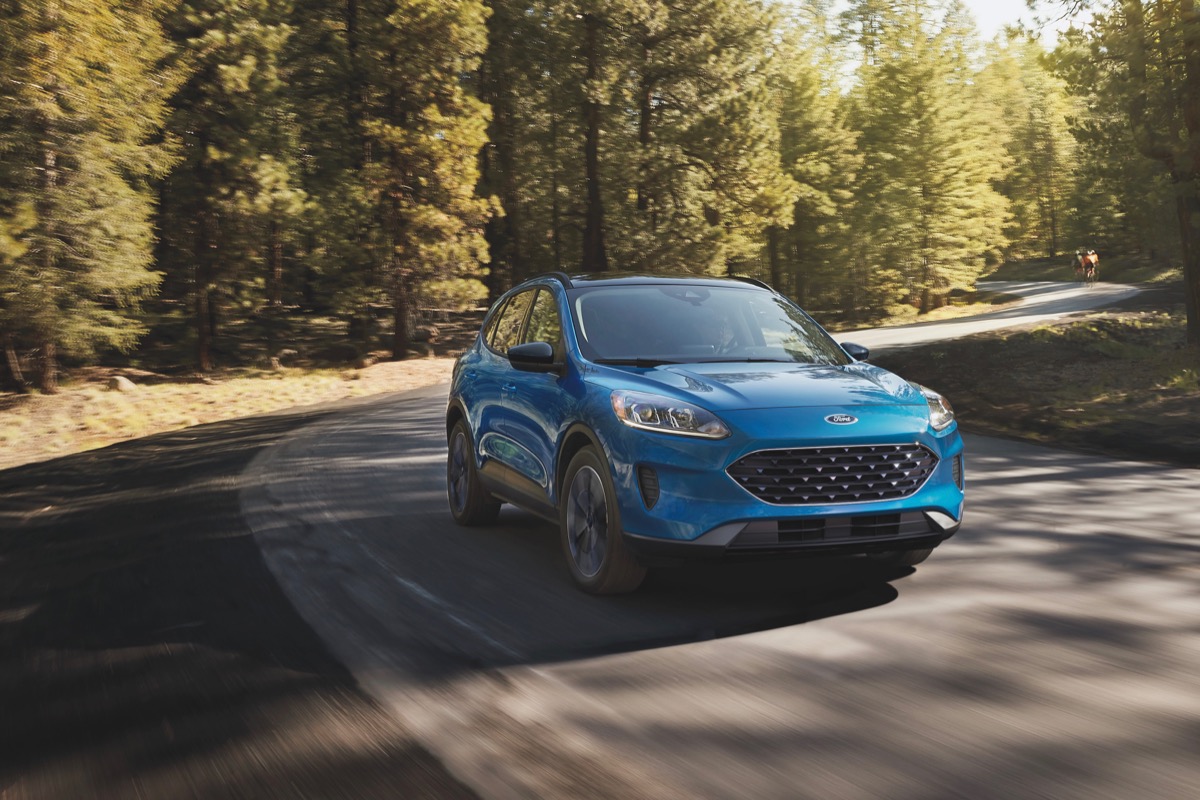
2021 Ford Explorer Reviews SummaryThere was a time when everybody in America seemingly drove an Explorer. That may be an exaggeration, but not by much. In its first four years of production, Ford sold over a million examples. In 1998, Ford was selling its second-generation Explorer at a rate of nearly 440,000 per year. Whether your family purchased an Explorer or not, this was the nameplate that invented the midsize SUV segment. Fast forward to the 2021 model year and the Explorer is in its sixth generation. It's now a three-row SUV that clocks in at a maximum of 4,700 pounds, with a price tag north of $50,000 for the Explorer Platinum trim level. Long gone are the days when it was the only game in town. Almost every automaker has a competitor. So how does the Explorer shake out for 2021? | |
2021 Ford Escape Reviews SummaryThe Ford Escape is the Blue Oval’s compact crossover SUV, and one of the most important models in the automaker’s lineup. It competes in one of the most popular market segments of the moment, against popular vehicles like the Honda CR-V, Hyundai Tucson, Kia Sportage, Nissan Rogue, and Subaru Forester. Ford also views the Escape as the de facto choice for a large slice of its customers. After the automaker eliminated sedans and hatchbacks from its United States lineup, the Escape was left as the most logical choice for keeping existing Fusion and Focus owners in the Ford fold. So in a 2020 model year redesign, Ford gave the Escape more car-like styling, and emphasized fuel efficiency. Following that redesign, the 2021 Escape is largely unchanged. The only differences are new appearance packages and exterior colors, an available tow package, and slightly improved fuel economy for the base powertrain. The trim-level lineup of S, SE, SEL, and Titanium carries over as well. So while we didn’t get a chance to drive a 2021 Escape, we can evaluate it based on our experience with the 2020 model. | |
No video found | No video found |
Popular Features & Specs | |
Engine2.3L 300 hp I4 | Engine1.5L 181 hp I3 |
Drive TrainRWD | Drive TrainFWD |
Seating Capacity7 | Seating Capacity5 |
MPG City21 | MPG City28 |
MPG Highway28 | MPG Highway34 |
Engine | |
Engine Name2.3L 300 hp I4 | Engine Name1.5L 181 hp I3 |
DrivetrainRWD | DrivetrainFWD |
Fuel Economy | |
MPG City21 | MPG City28 |
MPG Highway28 | MPG Highway34 |
Interior | |
Seating Capacity7 | Seating Capacity5 |
Safety | |
Front Crash Overall5 | Front Crash Overall5 |
Side Crash Overall5 | Side Crash Overall5 |
Dimensions & Capacity | |
Cargo Space18.2 cu ft | Cargo Space37.5 cu ft |
Curb Weight4345 lbs | Curb Weight3302 lbs |
Height69.9 in | Height66.1 in |
Length198.8 in | Length180.5 in |
Width89.3 in | Width85.6 in |
Wheelbase119.1 in | Wheelbase106.7 in |
Maximum Payload1425 lbs | Maximum Payload |
Number of doors4 | Number of doors4 |
Maximum Towing Capacity5300 lbs | Maximum Towing Capacity |
Overview | ||
MSRP | $32,925 | $25,555 |
Listings | ||
Ratings & Reviews | ||
User reviews | ||
Expert reviews | 7.5 out of 10Read full review | 6.7 out of 10Read full review |
Pros & cons | Pros
Cons
| Pros
Cons
|
Summary | There was a time when everybody in America seemingly drove an Explorer. That may be an exaggeration, but not by much. In its first four years of production, Ford sold over a million examples. In 1998, Ford was selling its second-generation Explorer at a rate of nearly 440,000 per year. Whether your family purchased an Explorer or not, this was the nameplate that invented the midsize SUV segment. Fast forward to the 2021 model year and the Explorer is in its sixth generation. It's now a three-row SUV that clocks in at a maximum of 4,700 pounds, with a price tag north of $50,000 for the Explorer Platinum trim level. Long gone are the days when it was the only game in town. Almost every automaker has a competitor. So how does the Explorer shake out for 2021? | The Ford Escape is the Blue Oval’s compact crossover SUV, and one of the most important models in the automaker’s lineup. It competes in one of the most popular market segments of the moment, against popular vehicles like the Honda CR-V, Hyundai Tucson, Kia Sportage, Nissan Rogue, and Subaru Forester. Ford also views the Escape as the de facto choice for a large slice of its customers. After the automaker eliminated sedans and hatchbacks from its United States lineup, the Escape was left as the most logical choice for keeping existing Fusion and Focus owners in the Ford fold. So in a 2020 model year redesign, Ford gave the Escape more car-like styling, and emphasized fuel efficiency. Following that redesign, the 2021 Escape is largely unchanged. The only differences are new appearance packages and exterior colors, an available tow package, and slightly improved fuel economy for the base powertrain. The trim-level lineup of S, SE, SEL, and Titanium carries over as well. So while we didn’t get a chance to drive a 2021 Escape, we can evaluate it based on our experience with the 2020 model. |
Video | No video found | No video found |
Popular Features & Specs | ||
Engine | 2.3L 300 hp I4 | 1.5L 181 hp I3 |
Drive Train | RWD | FWD |
Seating Capacity | 7 | 5 |
MPG City | 21 | 28 |
MPG Highway | 28 | 34 |
Engine | ||
Engine Name | 2.3L 300 hp I4 | 1.5L 181 hp I3 |
Drivetrain | RWD | FWD |
Fuel Economy | ||
MPG City | 21 | 28 |
MPG Highway | 28 | 34 |
Interior | ||
Seating Capacity | 7 | 5 |
Safety | ||
Front Crash Overall | 5 | 5 |
Side Crash Overall | 5 | 5 |
Dimensions & Capacity | ||
Cargo Space | 18.2 cu ft | 37.5 cu ft |
Curb Weight | 4345 lbs | 3302 lbs |
Height | 69.9 in | 66.1 in |
Length | 198.8 in | 180.5 in |
Width | 89.3 in | 85.6 in |
Wheelbase | 119.1 in | 106.7 in |
Maximum Payload | 1425 lbs | |
Number of doors | 4 | 4 |
Maximum Towing Capacity | 5300 lbs | |
In the past, Ford's SUV lineup demonstrated a clear family resemblance, ranging from the Escape to the Edge, Explorer, and Expedition—each vehicle’s name starting with an "E." This was reminiscent of the 1950s, when car brands aimed to create lifelong customers who would climb the model and price ladder over time.
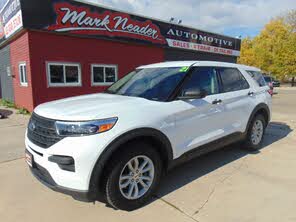
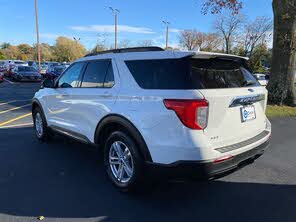
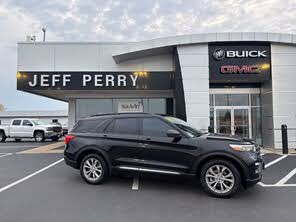
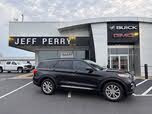
The 2021 Ford Explorer had a distinctly stylish exterior design. Though it was sometimes hard to tell the difference between an Edge and an Explorer at a quick glance, both models were unmistakable compared to competitors due to their sporty, slanted belt lines and squinting headlights. Depending on the trim level, the grille could be black, accented with a bit of chrome, feature a black grille with a red stripe, or be fully chrome. The Explorer offered six distinct trims: base, XLT, Limited, Limited Hybrid, ST, and Platinum, with price points ranging from $32,925 to $52,730, and each trim improving in exterior and interior quality.
Inside, the Explorer provided three rows of seats as a standard feature across all trims. The base model had cloth upholstery and reasonably comfortable seats, though the third row was not ideal for adult passengers. The dashboard featured a clean design with familiar gauges, an 8-inch LCD touchscreen dominating the center stack, and easily accessible knobs and buttons for audio and climate controls. The center console housed a rotary gearshift, freeing up significant storage space, including a covered bin, two cup holders, and a large storage compartment under the center armrest.
Most consumers opted for the XLT trim, which accounted for an expected 56 percent of sales. This trim introduced a power front passenger seat, better finishes, and a 6.5-inch instrument panel screen. Leather upholstery became standard from the mid-tier Limited trim and was available on the ST, Platinum, Timberline, and King Ranch models.
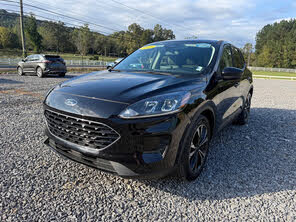
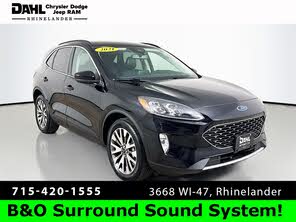
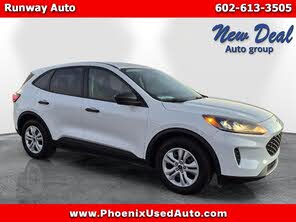
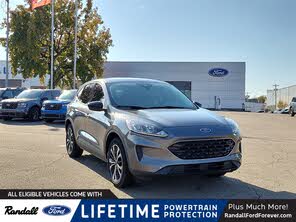
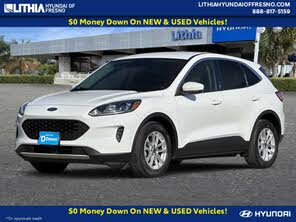
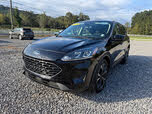
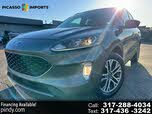
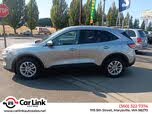
Conversely, the 2021 Ford Escape offered a more crossover-like design, blurring the line between SUV and hatchback. Its curved front and sleek roofline gave the Escape an appearance more akin to an oversized Ford Focus while still maintaining the ride height of an SUV. This design set it apart from more utilitarian-looking SUVs like the Honda CR-V, Subaru Forester, and Toyota RAV4 but seemed more generic compared to the eye-catching designs of the latest Hyundai Tucson and Kia Sportage.
For 2021, the Escape introduced new appearance packages such as the SE Sport Appearance Package, SEL Stealth AWD Package, and Titanium Elite Package. These packages offered upgrades like 19-inch alloy wheels, ActiveX upholstery with Miko Suede seat inserts, and leather-trimmed seats, enhancing the Escape's aesthetic appeal.
Inside, the Escape didn't showcase the same cohesive design theme as its exterior. Some interior elements, like the angular instrument cluster, clashed with the car’s exterior style. The materials used in the interior felt somewhat low-quality, even on the top-tier Titanium model, which did not feature standard leather upholstery. Additionally, leather was only available on the SEL trim and above, and dual-zone automatic climate control required an upgrade to the SEL trim level.


The 2021 Ford Explorer, weighing in at 4,345 pounds at its lightest, featured a standard 2.3-liter EcoBoost turbocharged four-cylinder engine with an impressive output of 300 horsepower and 310 pound-feet of torque. This powertrain surpassed the Kia Telluride’s 291hp/262 lb-ft V6 performance but was necessary given the Explorer's heavier build. All Explorer trims came with a 10-speed automatic transmission with SelectShift capability.
The Limited trim of the Explorer offered a V6 hybrid drivetrain that produced 310 hp and 331 lb-ft of torque. Higher trims featured a robust 3.0-liter EcoBoost twin-turbo V6, which delivered 365 hp and 380 lb-ft of torque across most trims. The performance-oriented Explorer ST trim escalated these figures to 400 hp and 415 lb-ft of torque, making it the most engaging to drive among the Explorer variants. Nonetheless, it was challenging to consider a full-size, three-row SUV’s performance as “engaging” without venturing into BMW or Porsche territory.
Towing capacity was a significant focus for the Explorer. Depending on the trim, engine, and option packages, the Explorer could tow between 5,000 and 5,600 pounds, which could handle an 18-foot dual-axle Airstream easily. However, within its class, this towing capacity wasn’t exceptionally high. Vehicles like the Subaru Ascent could tow up to 5,000 pounds with its turbo four-cylinder engine, while the Ford Expedition led with a class-topping 9,300-pound towing capacity.
The 2021 Ford Escape offered versatile powertrains, including two gasoline options, a hybrid, and a plug-in hybrid, which debuted in 2021 after delays.
The base Escape model featured a 1.5-liter turbocharged three-cylinder engine from Ford's EcoBoost range, generating 181 horsepower and 191 pound-feet of torque, paired with an eight-speed automatic transmission available in both front-wheel-drive (FWD) and all-wheel-drive (AWD) configurations. Buyers could opt for the 2.0-liter EcoBoost turbocharged four-cylinder engine, increasing power to 250 hp and 280 lb-ft of torque, though this engine was only available in AWD with an eight-speed automatic transmission.
The hybrid and plug-in hybrid Escapes used a 2.5-liter four-cylinder engine with electric assist, producing a combined 200 hp. However, the plug-in hybrid's larger battery allowed it to drive significant distances on electric power alone. While the hybrid was available with FWD or AWD, the plug-in hybrid only came in FWD.
The three-cylinder engine’s modest specifications, though questionable on paper, were adequate for the Escape in practical use. The transition between electric and gasoline propulsion in the hybrid models was smooth. However, all 2020 Escape models suffered from poor chassis tuning, leading to a less enjoyable driving experience in 2021 as no changes were made.
The 2.0-liter, hybrid, and plug-in hybrid models of the Escape could be equipped with a Class 2 Trailer Tow Package, offering a maximum towing capacity of 3,500 pounds with the 2.0-liter engine. However, towing figures for the hybrid or plug-in hybrid powertrains were not provided.
The 2021 Ford Explorer offered a seating capacity for seven passengers in the base trim, while other trims featured captain’s chairs in the second row, reducing the capacity to six. Second-row passengers enjoyed 39 inches of legroom, making the Explorer more spacious than the Nissan Murano and Buick Enclave, slightly less than the Mazda CX-9 and Chevrolet Blazer, and significantly less than the Kia Telluride and Hyundai Palisade. Compared to the Ford Edge, the Explorer offered more second-row legroom and the advantage of a third row.
With the third row deployed, the Explorer provided 21 cubic feet of cargo space. However, when the rear seats were folded, the overall cargo volume was 81 cubic feet, which fell short, putting the Explorer in competition with smaller SUVs like the Dodge Journey.
In contrast, the 2021 Ford Escape excelled in interior space despite its car-like styling, comparing favorably to more traditional compact SUVs. The first and second-row headroom and legroom were among the best in the segment. Notably, the Escape had a sliding rear seat that could be adjusted to either expand legroom or cargo space. Sliding the rear seat all the way back offered 40.7 inches of rear legroom in non-hybrid models, second only to the Hyundai Tucson. However, the placement of the battery pack in hybrid and plug-in hybrid models reduced some of this legroom.
In terms of cargo space, the gasoline-powered Escape had 33.5 cubic feet with the rear seats up and in their default position. This space reduced to 30.7 cubic feet in the hybrid and plug-in hybrid models. By sliding the rear seat forward, cargo capacity increased to 37.5 cubic feet in gasoline models and 34.4 cubic feet in hybrid and plug-in hybrid models. With the rear seats folded, the gasoline model offered 65.4 cubic feet of cargo space, while hybrid and plug-in hybrid variants provided 60.8 cubic feet. Most competitors, like the Nissan Rogue and Subaru Forester, offered over 70 cubic feet with their rear seats folded.
The 2021 Ford Explorer, even at its base level, came equipped with a respectable range of tech features. The standard 8-inch touchscreen included AM/FM radio, SiriusXM satellite radio, Apple CarPlay and Android Auto with wired functionality, a 4G WiFi hotspot for up to 10 devices, Ford’s Sync 3 infotainment system with voice recognition, and a six-speaker audio system.
Upgrading to the Limited trim introduced a 12-speaker Bang & Olufsen audio system and HD radio. Higher trims also provided the option for a 10.1-inch touchscreen and up to 14 speakers in the B&O sound system. Charging options included two USB ports in the center console and five 12-volt power outlets (two up front, two at the rear of the center console, and one in the cargo area). The ST model replaced one of these points with a 110-volt AC power outlet, which was an available option on the Limited. From the Limited trim upwards, a wireless charging pad was also standard.
Meanwhile, the 2021 Ford Escape used the older Sync 3 infotainment system, rather than the latest Sync 4. Base Escape S models were equipped with a 4.2-inch touchscreen, although Apple CarPlay, Android Auto, and a built-in 4G LTE WiFi hotspot were standard.
Stepping up to the Escape SE added an 8-inch touchscreen with pinch-and-zoom capabilities and SiriusXM satellite radio with a three-month trial period. The Escape Titanium trim introduced a 12.3-inch digital instrument cluster and a 10-speaker Bang & Olufsen sound system.
Sync 3 was user-friendly based on previous Escape drives. Despite this, Ford offered fewer standard tech features than its competitors, and the Escape missed out on the wireless versions of Apple CarPlay and Android Auto, which were part of the newer Sync 4 system.
The 2021 Ford Explorer was rated as a Top Safety Pick+ by the Insurance Institute for Highway Safety (IIHS), the highest rating, having achieved top “Good” scores in all crash tests and an “Acceptable” rating for adaptive headlight availability. Although Explorer had an impressive list of standard active safety features with Ford Co-Pilot360, including auto high-beam headlights, blind-spot monitoring, rear cross-traffic alert, lane keeping assist and alert, forward-collision warning, pedestrian detection, automatic emergency braking, and dynamic brake support, the need to spend extra for more advanced safety options prevented it from receiving a perfect safety rating. Features like adaptive cruise control, lane centering, evasive steering assist, forward sensing system, rain-sensing wipers, and speed sign recognition required upgrading to at least the Limited trim.
The 2021 Ford Escape, rated as a Top Safety Pick by IIHS, received top “Good” scores in all crash tests and for LATCH child-seat anchor ease of use. The Escape excelled in front-crash prevention tech but received “Acceptable” and “Marginal” ratings for headlights, based on the trim level. The National Highway Traffic Safety Administration (NHTSA) awarded the Escape a five-star overall safety rating, with five stars for frontal and side crashes and four stars for rollover crashes.
Standard safety features under the Ford Co-Pilot360 banner for the Escape included automatic high beams, blind-spot monitoring with rear cross-traffic alert, lane-keep assist, lane-departure warning, forward collision warning, and automatic emergency braking. The optional Co-Pilot360 Assist+ package added adaptive cruise control with stop-and-go, lane centering, traffic-sign recognition, park assist, and Evasive Steering Assist.
CarGurus highlights

According to CarGurus experts, the overall rating for the 2021 Ford Explorer was 7.5 out of 10, while the 2021 Ford Escape scored 6.7 out of 10. With these ratings in mind, the 2021 Ford Explorer emerged as the superior option, especially for those seeking a spacious vehicle with robust performance and a strong suite of safety features. While the Escape had its merits with versatile powertrains and good interior space, the Explorer's higher rating and better overall package make it the recommended choice.
Choose the 2021 Ford Explorer if:
- You require substantial towing capacity and robust performance options, especially for towing between 5,000 and 5,600 pounds.
- You prioritize extensive interior space and flexibility in seating arrangements, especially for larger families.
- Safety is paramount, with an extensive suite of safety features available even on lower trims and a Top Safety Pick+ rating.




Choose the 2021 Ford Escape if:
- You seek a more compact SUV with excellent rear legroom and versatile seating, including a sliding rear seat for customizable space.
- You value a range of powertrain options, including fuel-efficient hybrids and a newly available plug-in hybrid.
- You prioritize affordability and decent tech features at a lower price point, especially with the SE trim offering a larger touchscreen and additional functionality.


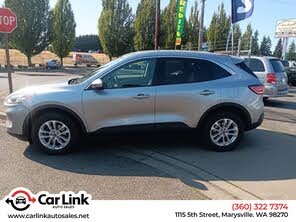

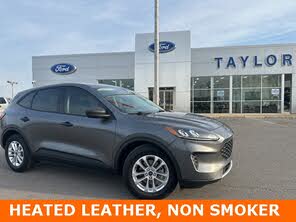
CarGurus highlights
According to CarGurus experts, the overall rating for the 2021 Ford Explorer was 7.5 out of 10, while the 2021 Ford Escape scored 6.7 out of 10. With these ratings in mind, the 2021 Ford Explorer emerged as the superior option, especially for those seeking a spacious vehicle with robust performance and a strong suite of safety features. While the Escape had its merits with versatile powertrains and good interior space, the Explorer's higher rating and better overall package make it the recommended choice.
Choose the 2021 Ford Explorer if:
Shop Now- You require substantial towing capacity and robust performance options, especially for towing between 5,000 and 5,600 pounds.
- You prioritize extensive interior space and flexibility in seating arrangements, especially for larger families.
- Safety is paramount, with an extensive suite of safety features available even on lower trims and a Top Safety Pick+ rating.






Choose the 2021 Ford Escape if:
Shop Now- You seek a more compact SUV with excellent rear legroom and versatile seating, including a sliding rear seat for customizable space.
- You value a range of powertrain options, including fuel-efficient hybrids and a newly available plug-in hybrid.
- You prioritize affordability and decent tech features at a lower price point, especially with the SE trim offering a larger touchscreen and additional functionality.






By: CarGurus + AI
At CarGurus, our team of experienced automotive writers remain at the heart of our content operation, conducting hands-on car tests and writing insightful guides that are backed by years of industry experience. To complement this, we are harnessing AI to make our content offering more diverse and more helpful to shoppers than ever. To achieve this, our AI systems are based exclusively on CarGurus content, ratings and data, so that what we produce is both unique to CarGurus, and uniquely helpful to car shoppers.