2022 Lexus IS vs 2021 BMW 3 Series
Overview | |
MSRP$41,250 | MSRP$39,125 |
Listings214 | Listings96 |
Ratings & Reviews | |
User Reviews | User Reviews |
Expert reviews6.8 out of 10 | Expert reviews8.2 out of 10 |
Pros
Cons
| Pros
Cons
|
2021 BMW 3 Series Reviews SummaryEarly generations of the BMW 3 Series redefined what a luxury car could be, justifying their prestige badge with sporty driving dynamics and impeccable engineering. BMW changed the luxury-car paradigm, proving that nimble sports sedans could be just as desirable as wood-encrusted land yachts. The 3 Series spawned a number of imitators, including the Audi A4, Mercedes-Benz C-Class, and Lexus IS. Those sedans, along with the Acura TLX, Alfa Romeo Giulia, Cadillac CT4, and Infiniti Q50 (which wear more recently-introduced nameplates) still form the 3 Series’ competitive set, but the car itself has changed. Introduced for the 2019 model year, the current-generation 3 Series (codenamed G20) feels more like a traditional luxury sedan, with a greater emphasis on comfort and convenience than previous generations. The manual transmission is gone, as are the wagon and 3 Series GT hatchback body styles. The 3 Series coupe and convertible were re-badged as the 4 Series beginning with the 2014 model year. The biggest change for the 2021 BMW 3 Series is the addition of the 330e plug-in hybrid model to the lineup, so that’s what we test drove for this review. BMW also offers 330i and M340i versions, and there’s an M3 performance model on the way. | |
2022 Lexus IS Reviews SummaryAfter a substantial refresh for the 2021 model year, the 2022 Lexus IS lineup returns with a handful of minor updates and a significant improvement in performance. The new 2022 Lexus IS 500 F Sport Performance also debuts this year, packing a normally-aspirated 5.0-liter V8 and laugh-riot driving dynamics. We sampled the new 2022 IS 500 in the suburbs and outskirts of Phoenix, and if you’re among the driving enthusiasts who miss the discontinued Lexus GS F, this is a credible substitute. | |
No video found | |
Popular Features & Specs | |
Engine2.0L 255 hp I4 | Engine2.0L 241 hp I4 |
DrivetrainRWD | DrivetrainRWD |
Seating Capacity5 | Seating Capacity5 |
Horsepower255 hp @ 5000 rpm | Horsepower241 hp @ 5800 rpm |
MPG City26 | MPG City21 |
MPG Highway36 | MPG Highway31 |
Engine | |
Engine Name2.0L 255 hp I4 | Engine Name2.0L 241 hp I4 |
Torque295 lb-ft @ 1450 rpm | Torque258 lb-ft @ 1650 rpm |
Horsepower255 hp @ 5000 rpm | Horsepower241 hp @ 5800 rpm |
DrivetrainRWD | DrivetrainRWD |
Fuel Economy | |
MPG City26 | MPG City21 |
MPG Highway36 | MPG Highway31 |
Interior | |
Seating Capacity5 | Seating Capacity5 |
Key Features | |
Navigation SystemStandard | Navigation System |
Sunroof/MoonroofStandard | Sunroof/Moonroof |
Safety | |
Front Crash Overall5 | Front Crash Overall4 |
Side Crash Overall5 | Side Crash Overall5 |
Dimensions & Capacity | |
Cargo Space13.0 cu ft | Cargo Space10.8 cu ft |
Curb Weight3589 lbs | Curb Weight3715 lbs |
Height56.8 in | Height56.5 in |
Length185.7 in | Length185.4 in |
Width81.4 in | Width72.4 in |
Wheelbase112.2 in | Wheelbase110.2 in |
Maximum Payload | Maximum Payload825 lbs |
Number of doors4 | Number of doors4 |
Overview | ||
MSRP | $41,250 | $39,125 |
Listings | ||
Ratings & Reviews | ||
User reviews | ||
Expert reviews | 6.8 out of 10Read full review | 8.2 out of 10Read full review |
Pros & cons | Pros
Cons
| Pros
Cons
|
Summary | Early generations of the BMW 3 Series redefined what a luxury car could be, justifying their prestige badge with sporty driving dynamics and impeccable engineering. BMW changed the luxury-car paradigm, proving that nimble sports sedans could be just as desirable as wood-encrusted land yachts. The 3 Series spawned a number of imitators, including the Audi A4, Mercedes-Benz C-Class, and Lexus IS. Those sedans, along with the Acura TLX, Alfa Romeo Giulia, Cadillac CT4, and Infiniti Q50 (which wear more recently-introduced nameplates) still form the 3 Series’ competitive set, but the car itself has changed. Introduced for the 2019 model year, the current-generation 3 Series (codenamed G20) feels more like a traditional luxury sedan, with a greater emphasis on comfort and convenience than previous generations. The manual transmission is gone, as are the wagon and 3 Series GT hatchback body styles. The 3 Series coupe and convertible were re-badged as the 4 Series beginning with the 2014 model year. The biggest change for the 2021 BMW 3 Series is the addition of the 330e plug-in hybrid model to the lineup, so that’s what we test drove for this review. BMW also offers 330i and M340i versions, and there’s an M3 performance model on the way. | After a substantial refresh for the 2021 model year, the 2022 Lexus IS lineup returns with a handful of minor updates and a significant improvement in performance. The new 2022 Lexus IS 500 F Sport Performance also debuts this year, packing a normally-aspirated 5.0-liter V8 and laugh-riot driving dynamics. We sampled the new 2022 IS 500 in the suburbs and outskirts of Phoenix, and if you’re among the driving enthusiasts who miss the discontinued Lexus GS F, this is a credible substitute. |
Video | No video found | |
Popular Features & Specs | ||
Engine | 2.0L 255 hp I4 | 2.0L 241 hp I4 |
Drivetrain | RWD | RWD |
Seating Capacity | 5 | 5 |
Horsepower | 255 hp @ 5000 rpm | 241 hp @ 5800 rpm |
MPG City | 26 | 21 |
MPG Highway | 36 | 31 |
Engine | ||
Engine Name | 2.0L 255 hp I4 | 2.0L 241 hp I4 |
Torque | 295 lb-ft @ 1450 rpm | 258 lb-ft @ 1650 rpm |
Horsepower | 255 hp @ 5000 rpm | 241 hp @ 5800 rpm |
Drivetrain | RWD | RWD |
Fuel Economy | ||
MPG City | 26 | 21 |
MPG Highway | 36 | 31 |
Interior | ||
Seating Capacity | 5 | 5 |
Key Features | ||
Navigation System | Standard | |
Sunroof/Moonroof | Standard | |
Safety | ||
Front Crash Overall | 5 | 4 |
Side Crash Overall | 5 | 5 |
Dimensions & Capacity | ||
Cargo Space | 13.0 cu ft | 10.8 cu ft |
Curb Weight | 3589 lbs | 3715 lbs |
Height | 56.8 in | 56.5 in |
Length | 185.7 in | 185.4 in |
Width | 81.4 in | 72.4 in |
Wheelbase | 112.2 in | 110.2 in |
Maximum Payload | 825 lbs | |
Number of doors | 4 | 4 |
When comparing the exterior and interior styling of the 2021 BMW 3 Series and the 2022 Lexus IS, both vehicles showcased distinctive design philosophies that catered to different tastes.
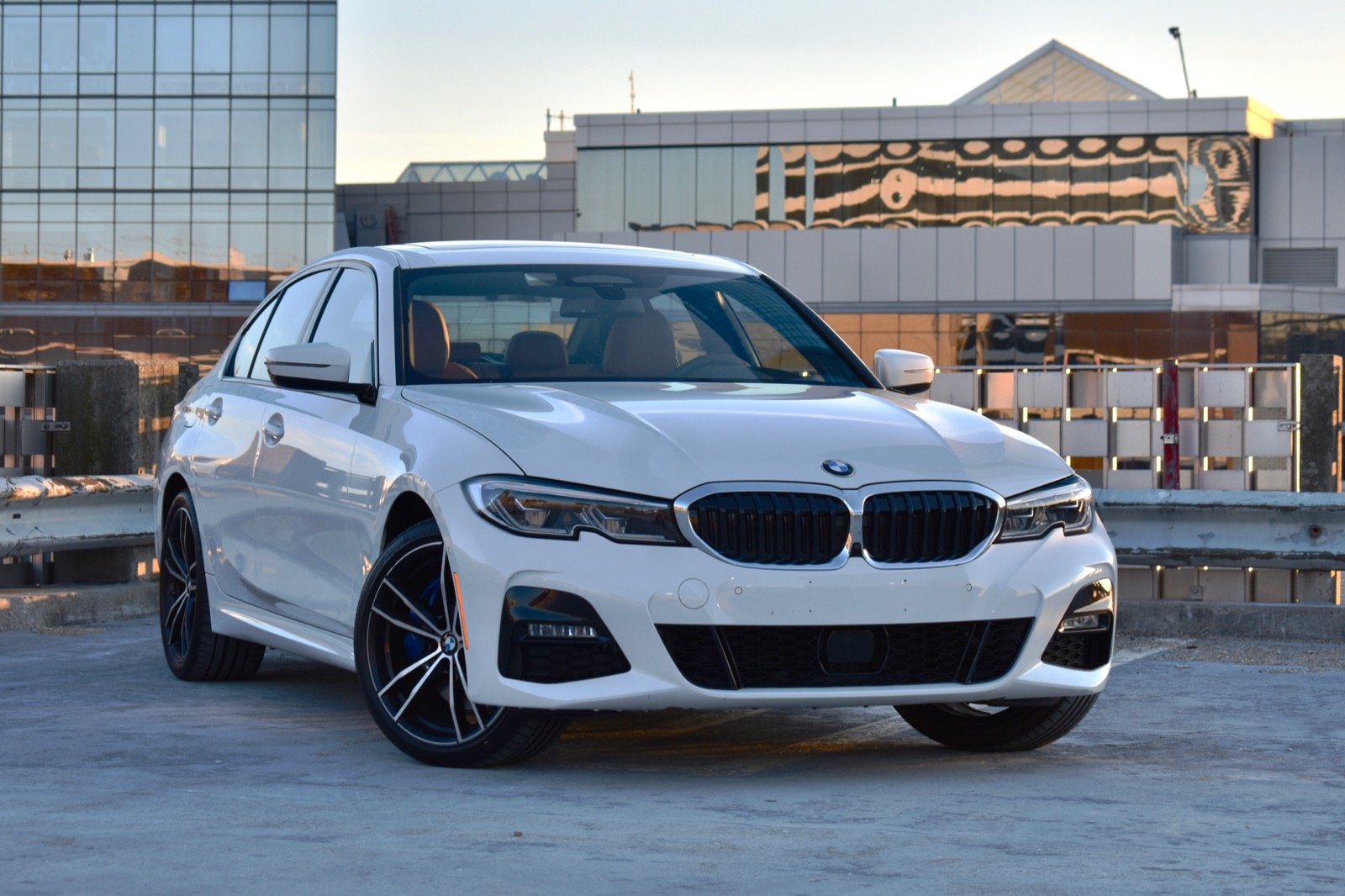
The 2021 BMW 3 Series embraced a familial aesthetic, reminiscent of BMW’s classic E30 3 Series. It adhered to the “same sausage, different lengths” principle, resembling a smaller version of the 5 Series and 7 Series sedans. However, unlike its iconic predecessor, the G20 3 Series appeared somewhat staid. The oversized grille, a signature feature on the larger 5 Series, seemed oddly disproportionate on this smaller sedan. Besides this prominent grille and the somewhat nostalgic halo-referencing headlights, the 3 Series lacked other distinctive styling elements. Nonetheless, the badge on the hood remained a significant draw for many customers. Our test car featured optional M 19-inch wheels and blue brake calipers, adding a touch of flair available with the M Sport trim package. The base Sport Line trim offered 18-inch wheels with a different design.
Inside, the 3 Series followed a conservative design ethos, with material quality falling short of true luxury. While the layout was functional, the plastic trim and faux Ash wood were disappointing. Leather upholstery was an expensive extra, with synthetic Sensatec being standard. The optional heated M Sport steering wheel, despite its utility, felt out of place amidst the otherwise understated interior.


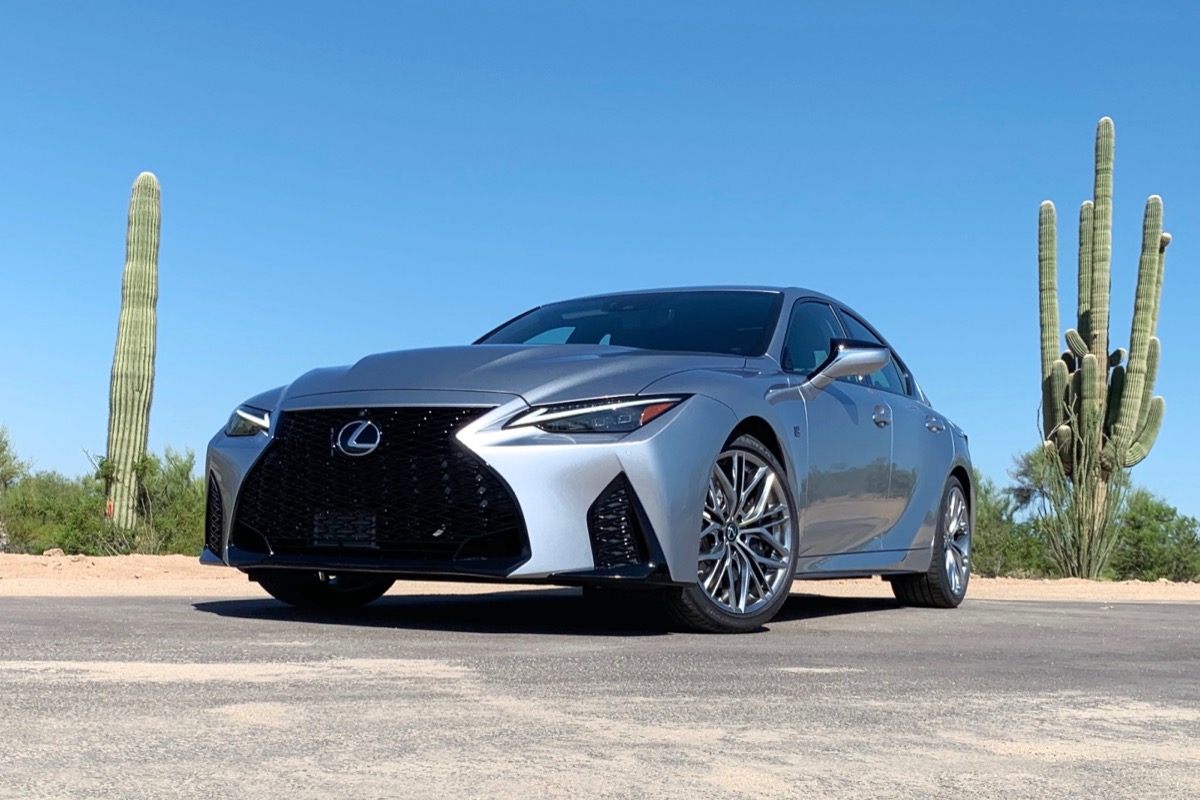
Inside, the IS 500 featured an intimate and comfortable cabin design, well-constructed with high-quality materials. Unlike its BMW counterpart, Lexus included heated and ventilated seats, effective climate control, and logically laid out controls that made the driving experience seamless. Despite the inclusion of a touchpad controller in the center console, the transition to a touchscreen infotainment system improved overall usability and aesthetics.
The 2021 BMW 3 Series offered multiple powertrain options to cater to different performance preferences. The base 330i featured a 2.0-liter turbocharged four-cylinder engine generating 255 horsepower and 295 pound-feet of torque. The 330e plug-in hybrid variant combined a less powerful version of this engine with an electric assist, producing a total of 288 horsepower and 310 pound-feet of torque. The M340i came with a turbocharged inline-six engine, delivering an impressive 382 horsepower and 369 pound-feet of torque. All models were paired with an eight-speed automatic transmission, with both rear-wheel drive (RWD) and xDrive all-wheel drive (AWD) options available. BMW claimed the M340i could sprint from 0 to 60 mph in just 4.2 seconds, while the 330i took 5.6 seconds.
Despite these promising figures, the 330e plug-in hybrid lacked the seamless acceleration that driving enthusiasts might hope for. The transition between electric and gasoline power was not smooth, undermining the car’s otherwise impressive technical capabilities. While the 3 Series provided a solid chassis and excellent handling, it fell short in engagement, leaving the driving experience less thrilling than expected.
Driving modes such as Eco, Normal, Sport S, and Sport+ adjusted the powertrain, steering, and suspension damping to suit different driving scenarios. An added Yamaha rear performance damper enhanced ride refinement at low speeds and stability at higher speeds, while an upgraded braking system ensured reliability even under extreme conditions. Despite its V8 engine, the IS 500 maintained comfort and docility in everyday driving, only letting road noise dampen the experience slightly.
Premium trim added advanced options like a 10.3-inch touchscreen, a navigation system, and a 17-speaker Mark Levinson premium sound system. The dynamic voice command system, free for 10 years, further enhanced its functionality, making the 2022 Lexus IS’s infotainment system one of the most user-friendly in its segment.
In the arena of interior space and functionality, the 2021 BMW 3 Series and the 2022 Lexus IS had contrasting approaches.
The BMW 3 Series excelled in maximizing its interior space, especially for a compact luxury sedan. It boasted exceptional rear headroom, surpassing many rivals, and above-average front headroom, though it trailed behind the Infiniti Q50. Legroom was adequate but not extraordinary, potentially feeling cramped for rear passengers when tall occupants occupied the front seats. Shoulder room was also narrower compared to competitors like the Acura TLX, giving the TLX a more spacious feel.
Cargo capacity varied between models. Gasoline variants offered a generous 17 cubic feet of trunk space, significantly outpacing competitors. However, the plug-in hybrid 330e, with its lithium-ion battery pack, saw a reduction to 13.2 cubic feet. The trunk’s long and narrow design necessitated an awkward reach to utilize the space efficiently, though the standard 40/20/40 split-folding rear seat added versatility. The cockpit remained driver-focused, with a well-placed touchscreen and excellent outward visibility enhancing the driving experience.
On the other hand, the 2022 Lexus IS prioritized comfort and ergonomics within a more confined space. The front seats provided substantial support and comfort, with snug bolstering that held occupants securely without being restrictive. While the rear seats were sufficient for average-sized adults, the rear legroom and overall space were relatively cramped. Rear passengers also lacked conveniences like smartphone charging, despite the presence of rear air conditioning vents.
Storage within the IS was practical but fell short of optimal. The trunk space was notably smaller than the 3 Series, at just 10.8 cubic feet, limiting its utility for larger items. Despite these limitations, Lexus excelled in creating an intuitive and driver-friendly cockpit, with clearly labeled controls and a streamlined infotainment system now featuring a touchscreen, making the driving experience more pleasant and less cumbersome.
Technological advancements and infotainment systems are pivotal in modern vehicles, and both the 2021 BMW 3 Series and the 2022 Lexus IS offered robust tech packages.
The 2021 BMW 3 Series came with a standard iDrive infotainment system featuring an 8.8-inch touchscreen, Bluetooth connectivity, and dual USB ports. Gasoline models benefited from both Apple CarPlay and Android Auto integration, while the 330e only offered CarPlay. The optional Live Cockpit Professional system, which included a digital instrument cluster and navigation plus an available head-up display (HUD), enhanced the tech experience.
In practice, the Live Cockpit Professional setup was one of the standout features in our 330e test car. It offered high-quality graphics, responsive screens, and intuitive controls that surpassed competitors like Mercedes-Benz. Multiple control options, including the iDrive controller, steering wheel buttons, a voice assistant activated by "Hey BMW," and gesture controls, provided users with versatile ways to interact with the system. Though some features like gesture control seemed more gimmick than necessity, the overall system allowed for significant user preference customization.
For the 2022 Lexus IS, the switch to a touchscreen infotainment display in 2021 rectified previous ergonomic issues. The new setup, combined with dedicated climate and stereo controls, simplified interaction and improved the overall driving experience.
The 2021 BMW 3 Series earned a “Top Safety Pick” award from the Insurance Institute for Highway Safety (IIHS), achieving top “Good” scores across all crash tests. However, the headlight ratings were inconsistent, and the optional Active Driving Assistant Professional system scored lower in vehicle-to-pedestrian front-crash prevention compared to the base system. The National Highway Traffic Safety Administration (NHTSA) had not yet published safety ratings for this model.
Like many luxury brands, BMW required additional expenditures for advanced safety features that are standard on more affordable vehicles. Standard safety gear included forward-collision warning, automatic emergency braking, and lane-departure warning. Enhancements like adaptive cruise control, lane-keep assist, automated lane centering, and a stop-and-go function (available through the Driving Assistant Professional Package) could be added. Further options included blind-spot monitoring, rear cross-traffic alert, and a parking-assist package with a 360-degree camera system and automated parking aid.
The 2022 Lexus IS came standard with Lexus Safety System+ 2.5 (LSS+ 2.5), an extensive array of safety features encompassing driving assistance, collision warning, and prevention technologies. Our evaluations of the IS 500’s LSS+ 2.5 revealed its overall effectiveness, with some features, like the lane-departure warning system’s subtle vibrations and adaptive cruise control, performing admirably.
During tests, some quirks emerged, such as the overly aggressive Curve Speed Reduction function and lane-centering system’s confusion on certain roadways, which sometimes created unexpected and unwelcome experiences. Nevertheless, the comprehensive safety package provided peace of mind.
The IS earned the highest overall rating of “Top Safety Pick+” from the Insurance Institute for Highway Safety (IIHS) and an overall five-star rating from the National Highway Traffic Safety Administration (NHTSA), cementing its reputation as a safe and reliable choice.
CarGurus highlights
According to CarGurus experts, the overall rating for the 2021 BMW 3 Series is 6.8 out of 10, while the 2022 Lexus IS scores 8.2 out of 10. Based on these ratings, the clear recommendation is for the 2022 Lexus IS. With its improved practicality, superior safety standards, and engaging performance, the Lexus IS offers a more compelling package for consumers looking for a luxury sedan that excites and delivers on multiple fronts.
Choose the 2022 Lexus IS if:
- The combination of a powerful V8 engine and a refined interior appeals to your driving enthusiast sensibilities.
- You prioritize comfort and intuitive controls within a compact luxury sedan.
- Advanced safety features, comprehensive infotainment systems, and award-winning safety ratings are critical in your decision-making process.


Choose the 2021 BMW 3 Series if:
- You prefer a car with a solid chassis, excellent handling, and a robust variety of powertrain options.
- You value a spacious trunk in the gasoline variants for extended cargo capacity.
- Advanced tech features like the versatile iDrive infotainment system and optional digital cockpit are high on your priority list.


CarGurus highlights
According to CarGurus experts, the overall rating for the 2021 BMW 3 Series is 6.8 out of 10, while the 2022 Lexus IS scores 8.2 out of 10. Based on these ratings, the clear recommendation is for the 2022 Lexus IS. With its improved practicality, superior safety standards, and engaging performance, the Lexus IS offers a more compelling package for consumers looking for a luxury sedan that excites and delivers on multiple fronts.
Choose the 2022 Lexus IS if:
Shop Now- The combination of a powerful V8 engine and a refined interior appeals to your driving enthusiast sensibilities.
- You prioritize comfort and intuitive controls within a compact luxury sedan.
- Advanced safety features, comprehensive infotainment systems, and award-winning safety ratings are critical in your decision-making process.
Choose the 2021 BMW 3 Series if:
Shop Now- You prefer a car with a solid chassis, excellent handling, and a robust variety of powertrain options.
- You value a spacious trunk in the gasoline variants for extended cargo capacity.
- Advanced tech features like the versatile iDrive infotainment system and optional digital cockpit are high on your priority list.

By: CarGurus + AI
At CarGurus, our team of experienced automotive writers remain at the heart of our content operation, conducting hands-on car tests and writing insightful guides that are backed by years of industry experience. To complement this, we are harnessing AI to make our content offering more diverse and more helpful to shoppers than ever. To achieve this, our AI systems are based exclusively on CarGurus content, ratings and data, so that what we produce is both unique to CarGurus, and uniquely helpful to car shoppers.

