2020 Hyundai Elantra vs 2021 BMW 3 Series
Overview | |
MSRP$19,300 | MSRP$41,250 |
Listings1045 | Listings578 |
Ratings & Reviews | |
User Reviews | User Reviews |
Expert reviews8.3 out of 10 | Expert reviews6.8 out of 10 |
Pros
Cons
| Pros
Cons
|
2020 Hyundai Elantra Reviews SummaryHyundai isn’t pulling any punches when it comes to the compact car segment, where value is of utmost importance. And though a completely redesigned 2021 Elantra is coming soon, the automaker bestows several value-enhancing improvements upon the outgoing 2020 Hyundai Elantra compact sedan. They include free scheduled maintenance, improved fuel economy ratings, and new standard safety features. | |
2021 BMW 3 Series Reviews SummaryEarly generations of the BMW 3 Series redefined what a luxury car could be, justifying their prestige badge with sporty driving dynamics and impeccable engineering. BMW changed the luxury-car paradigm, proving that nimble sports sedans could be just as desirable as wood-encrusted land yachts. The 3 Series spawned a number of imitators, including the Audi A4, Mercedes-Benz C-Class, and Lexus IS. Those sedans, along with the Acura TLX, Alfa Romeo Giulia, Cadillac CT4, and Infiniti Q50 (which wear more recently-introduced nameplates) still form the 3 Series’ competitive set, but the car itself has changed. Introduced for the 2019 model year, the current-generation 3 Series (codenamed G20) feels more like a traditional luxury sedan, with a greater emphasis on comfort and convenience than previous generations. The manual transmission is gone, as are the wagon and 3 Series GT hatchback body styles. The 3 Series coupe and convertible were re-badged as the 4 Series beginning with the 2014 model year. The biggest change for the 2021 BMW 3 Series is the addition of the 330e plug-in hybrid model to the lineup, so that’s what we test drove for this review. BMW also offers 330i and M340i versions, and there’s an M3 performance model on the way. | |
No video found | No video found |
Popular Features & Specs | |
Engine2.0L 147 hp I4 | Engine2.0L 255 hp I4 |
Drive TrainFWD | Drive TrainRWD |
Seating Capacity5 | Seating Capacity5 |
Horsepower147 hp @ 6200 rpm | Horsepower255 hp @ 5000 rpm |
MPG City31 | MPG City26 |
MPG Highway41 | MPG Highway36 |
Engine | |
Engine Name2.0L 147 hp I4 | Engine Name2.0L 255 hp I4 |
Torque132 lb-ft @ 4500 rpm | Torque295 lb-ft @ 1450 rpm |
Horsepower147 hp @ 6200 rpm | Horsepower255 hp @ 5000 rpm |
DrivetrainFWD | DrivetrainRWD |
Fuel Economy | |
MPG City31 | MPG City26 |
MPG Highway41 | MPG Highway36 |
Interior | |
Seating Capacity5 | Seating Capacity5 |
Key Features | |
Navigation System | Navigation SystemStandard |
Sunroof/Moonroof | Sunroof/MoonroofStandard |
Safety | |
Front Crash Overall4 | Front Crash Overall5 |
Side Crash Overall4 | Side Crash Overall5 |
Dimensions & Capacity | |
Cargo Space14.4 cu ft | Cargo Space13.0 cu ft |
Curb Weight2844 lbs | Curb Weight3589 lbs |
Height56.5 in | Height56.8 in |
Length181.9 in | Length185.7 in |
Width70.9 in | Width81.4 in |
Wheelbase106.3 in | Wheelbase112.2 in |
Maximum Payload1080 lbs | Maximum Payload |
Number of doors4 | Number of doors4 |
Overview | ||
MSRP | $19,300 | $41,250 |
Listings | ||
Ratings & Reviews | ||
User reviews | ||
Expert reviews | 8.3 out of 10Read full review | 6.8 out of 10Read full review |
Pros & cons | Pros
Cons
| Pros
Cons
|
Summary | Hyundai isn’t pulling any punches when it comes to the compact car segment, where value is of utmost importance. And though a completely redesigned 2021 Elantra is coming soon, the automaker bestows several value-enhancing improvements upon the outgoing 2020 Hyundai Elantra compact sedan. They include free scheduled maintenance, improved fuel economy ratings, and new standard safety features. | Early generations of the BMW 3 Series redefined what a luxury car could be, justifying their prestige badge with sporty driving dynamics and impeccable engineering. BMW changed the luxury-car paradigm, proving that nimble sports sedans could be just as desirable as wood-encrusted land yachts. The 3 Series spawned a number of imitators, including the Audi A4, Mercedes-Benz C-Class, and Lexus IS. Those sedans, along with the Acura TLX, Alfa Romeo Giulia, Cadillac CT4, and Infiniti Q50 (which wear more recently-introduced nameplates) still form the 3 Series’ competitive set, but the car itself has changed. Introduced for the 2019 model year, the current-generation 3 Series (codenamed G20) feels more like a traditional luxury sedan, with a greater emphasis on comfort and convenience than previous generations. The manual transmission is gone, as are the wagon and 3 Series GT hatchback body styles. The 3 Series coupe and convertible were re-badged as the 4 Series beginning with the 2014 model year. The biggest change for the 2021 BMW 3 Series is the addition of the 330e plug-in hybrid model to the lineup, so that’s what we test drove for this review. BMW also offers 330i and M340i versions, and there’s an M3 performance model on the way. |
Video | No video found | No video found |
Popular Features & Specs | ||
Engine | 2.0L 147 hp I4 | 2.0L 255 hp I4 |
Drive Train | FWD | RWD |
Seating Capacity | 5 | 5 |
Horsepower | 147 hp @ 6200 rpm | 255 hp @ 5000 rpm |
MPG City | 31 | 26 |
MPG Highway | 41 | 36 |
Engine | ||
Engine Name | 2.0L 147 hp I4 | 2.0L 255 hp I4 |
Torque | 132 lb-ft @ 4500 rpm | 295 lb-ft @ 1450 rpm |
Horsepower | 147 hp @ 6200 rpm | 255 hp @ 5000 rpm |
Drivetrain | FWD | RWD |
Fuel Economy | ||
MPG City | 31 | 26 |
MPG Highway | 41 | 36 |
Interior | ||
Seating Capacity | 5 | 5 |
Key Features | ||
Navigation System | Standard | |
Sunroof/Moonroof | Standard | |
Safety | ||
Front Crash Overall | 4 | 5 |
Side Crash Overall | 4 | 5 |
Dimensions & Capacity | ||
Cargo Space | 14.4 cu ft | 13.0 cu ft |
Curb Weight | 2844 lbs | 3589 lbs |
Height | 56.5 in | 56.8 in |
Length | 181.9 in | 185.7 in |
Width | 70.9 in | 81.4 in |
Wheelbase | 106.3 in | 112.2 in |
Maximum Payload | 1080 lbs | |
Number of doors | 4 | 4 |
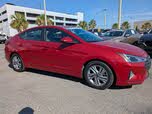
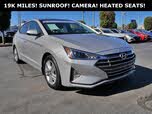
The 2020 Hyundai Elantra, last redesigned in 2017 and restyled in 2019, remained visually unchanged for the 2020 model year. The previous year's restyle introduced a geometric-influenced appearance, setting the stage for the dramatically angular styling of the 2021 Elantra. Available in six versions—SE, SEL, Value Edition, Eco, Limited, and Sport—the Elantra's price ranged from $19,300 to $24,150. Our Limited test vehicle, equipped with the Ultimate Package and floor mats, totaled $27,630, including the $975 destination charge. The Elantra GT hatchback was also available for 2020.
A black paint job highlighted the Elantra’s angular headlight, fog light, and wheel designs, contrasting sharply with the chrome grille, beltline, and logo detailing. The result was a stylish small car, though not universally appealing. The interior received an upscale update with silver trim on various elements, but the presence of hard and glossy plastic reminded occupants that it was still a mainstream compact car.
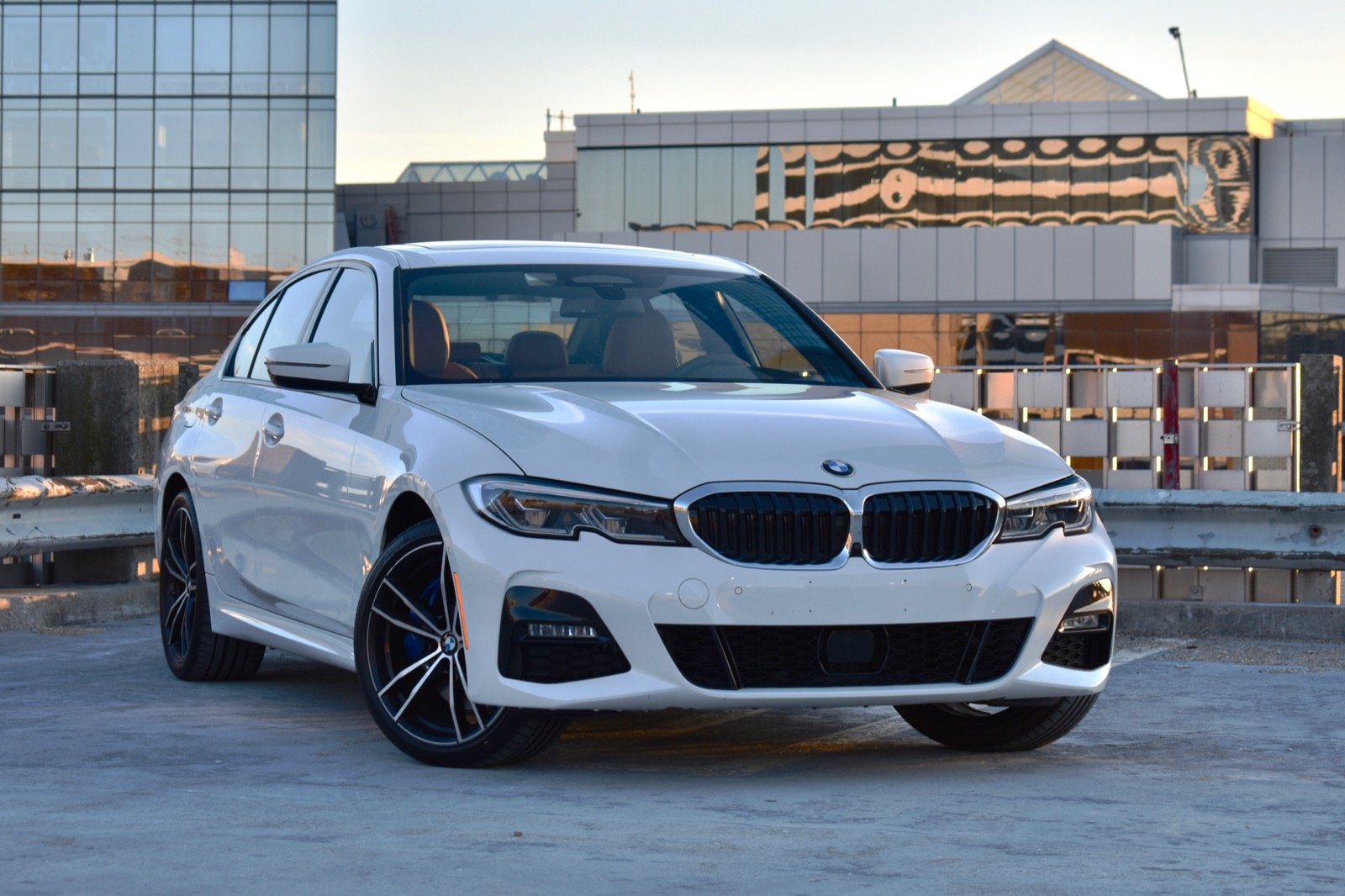
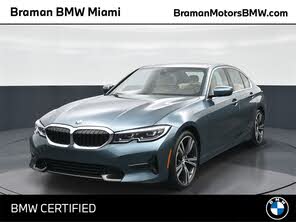
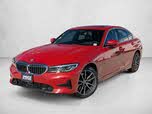
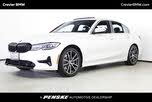
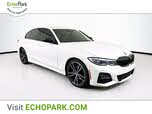
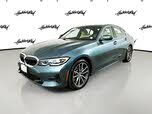
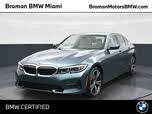
The 2021 BMW 3 Series returned to BMW's traditional familial look, resembling a smaller version of the 5 Series and 7 Series sedans. However, the G20 3 Series, unlike the iconic E30, appeared stuffy with its big, oddly-shaped grille. The grille looked fine on the larger 5 Series but seemed out of place on the smaller sedan. The headlights referenced older models' "halo" lights, but there wasn't much else distinctive about the design. Most customers likely cared more about the badge on the hood.
Our test car featured M 19-inch wheels and blue-painted brake calipers, part of the optional M Sport trim package. The standard Sport Line trim for the 330e and 330i included 18-inch wheels. The interior design was nice but marred by unimpressive materials. Despite being a luxury car, our test vehicle had as much plastic trim as a basic economy car, with Ash wood trim that looked fake. Leather upholstery was optional, with synthetic Sensatec material standard. The optional M heated steering wheel seemed out of place in the otherwise conservatively styled interior.


The 2020 Hyundai Elantra's base engine was a 147-horsepower, 2.0-liter four-cylinder paired with a new continuously variable transmission (CVT), replacing the previous six-speed automatic. The CVT, standard with SE trim, contributed to a $1,100 price increase from the previous year. All Elantra models were front-wheel drive. The Elantra Eco featured a turbocharged 1.4-liter four-cylinder engine with 128 horsepower and 156 lb-ft of torque, paired with a seven-speed dual-clutch automatic transmission (DCT) and an automatic engine start/stop system, achieving 36 mpg in combined driving.
The Elantra Sport trim offered a 1.6-liter turbo four-cylinder engine with 201 horsepower and 195 lb-ft of torque, featuring an independent rear suspension for improved ride quality. The Sport trim's seven-speed DCT replaced the manual gearbox. Our Elantra Limited test car, with its 2.0-liter engine and new CVT, provided a satisfactory driving experience. The CVT, dubbed "Intelligent Variable Transmission" by Hyundai, simulated gear shifts effectively, making it feel like a traditional automatic.
Despite Hyundai's claims of improved efficiency, our test car averaged 29.3 mpg, falling short of the expected 34 mpg. The 2020 Elantra's torsion beam axle rear suspension detracted from ride and handling quality, giving the car an unsettled feeling. The Elantra Sport's independent rear suspension offered a superior ride. Overall, the standard Elantra was agreeable but uninspiring, serving as a practical commuter car rather than a joy to drive.
The 2021 BMW 3 Series offered three powertrains: the base 330i with a 2.0-liter turbocharged four-cylinder engine producing 255 horsepower and 295 lb-ft of torque, the 330e plug-in hybrid with a combined output of 288 horsepower and 310 lb-ft of torque, and the M340i with a turbo inline-six engine producing 382 horsepower and 369 lb-ft of torque. All powertrains were available with rear-wheel drive (RWD) or xDrive all-wheel drive (AWD) and an eight-speed automatic transmission.
The M340i accelerated from 0 to 60 mph in 4.2 seconds, while the base 330i took 5.6 seconds. The 330e matched the 330i's 0 to 60 mph time of 5.7 seconds for the AWD version. Despite the 330e's quick acceleration, the transition from electric to gasoline power was clunky, and the powertrain produced a disconcerting thud when pulling away from a stop on electric power.
The 330e's chassis provided a solid, comfortable highway ride and excellent handling, but the driving experience lacked engagement. The 3 Series was technically impressive but didn't offer the same level of driving enjoyment as past models. It excelled in comfort and safety but fell short in delivering a fun driving experience.
The 2020 Hyundai Elantra was among the roomier compact cars, comfortably accommodating four adults, with a fifth person squeezed in for short trips. Our Limited test car featured power driver’s seat adjustment, leather upholstery, and a sliding center console armrest for added comfort. Every Elantra included a front passenger's seat-height adjuster, dual-zone automatic climate control with a Clean Air ionizer, and an automatic defogging system. Heated front seats were standard on all but the SE and SEL trims, but rear air conditioning vents were unavailable.
Interior storage was well-proportioned for a compact car, and the trunk offered 14.4 cubic feet of space, nearly matching some midsize sedans. A thoughtful touch was the interior grab handle inside the trunk lid, making it easy to close.
The 2021 BMW 3 Series offered better interior space than most small luxury sedans. Rear headroom was the best in the segment, and front headroom was above average, though still behind the Infiniti Q50. Legroom in both rows was average, potentially cramping rear-seat passengers with a long-legged person in front. The 3 Series lacked the shoulder room of the Acura TLX, giving the TLX a more spacious feel.
Gasoline 3 Series models had 17 cubic feet of cargo space, much more than competitors. However, the 330e plug-in hybrid's battery pack reduced trunk space to 13.2 cubic feet. The trunk's long-and-narrow shape required an awkward reach to maximize space, but a 40/20/40 split-folding rear seat was standard. The 3 Series cockpit was well-designed, with a touchscreen positioned for easy reach and good outward visibility.
The 2020 Hyundai Elantra came standard with a touchscreen infotainment system, Bluetooth, and a USB port. The base SE trim had a 5-inch screen, while the SEL trim featured a 7-inch display with Apple CarPlay, Android Auto, and SiriusXM satellite radio. The Value Edition included a complimentary subscription to Blue Link Connected Car and Remote plans for three years. The Limited trim added wireless smartphone charging and a premium Infinity sound system with Clari-Fi digital music restoration technology. The Ultimate Package increased the touchscreen size to 8 inches and added navigation, Blue Link Guidance service, and SiriusXM data services.
The touchscreen display was high on the dashboard and canted toward the driver, with shortcut buttons and volume and tuning knobs for easy use. The voice recognition system was user-friendly, and the Infinity sound system impressed for a compact car.
The 2021 BMW 3 Series featured the standard iDrive infotainment system with an 8.8-inch touchscreen, Bluetooth, and two USB ports. Gasoline models included Apple CarPlay and Android Auto, while the 330e only had CarPlay. The optional Live Cockpit Professional system added a digital instrument cluster, navigation, and a head-up display (HUD).
The Live Cockpit Professional setup in our 330e test car felt truly premium, with high-quality graphics and a responsive screen. The system was easy to use, with logical controls that outshone rival systems. BMW provided multiple control options, including the iDrive controller, steering wheel controls, voice assistant, and gesture controls. Some features felt gimmicky, but the system offered flexibility and ease of use.
The 2020 Hyundai Elantra featured Hyundai Smart Sense, a collection of advanced driving assistance systems (ADAS) standard on all trims. This included forward-collision warning, automatic emergency braking, lane departure warning, lane-keeping assist, and a driver attention monitor. Starting with SEL trim, the Elantra added blind-spot warning and rear cross-traffic alert. The Limited and Sport trims included full LED headlights with automatic high-beam operation. The Ultimate Package for the Limited trim added adaptive cruise control, a pedestrian detection system, and Safe Exit Assist.
The 2020 Elantra earned a Top Safety Pick from the Insurance Institute for Highway Safety (IIHS) when equipped with full LED headlights. The National Highway Traffic Safety Administration (NHTSA) gave it an overall rating of four stars, noting a concern about rear-door intrusion during the side-impact test.
The 2021 BMW 3 Series received a Top Safety Pick award from the IIHS, with top "Good" scores in all crash tests. However, headlight scores were mixed, and the optional Active Driving Assistant Professional system scored lower than the base system in vehicle-to-pedestrian front-crash prevention. The NHTSA had not published safety ratings for the 2021 3 Series.
BMW required additional payment for many safety features standard on cheaper cars. Adaptive cruise control, lane-keep assist, and automated lane centering were part of the Driving Assistant Professional Package, which included a stop-and-go function and Extended Traffic Jam Assistant. Standard driver-assist features included forward-collision warning, automatic emergency braking, and lane-departure warning. The lower-level Driving Assistant Package added blind-spot monitoring and rear cross-traffic alert, while a parking-assist package with a 360-degree camera system and automated parking aid was also available.
CarGurus highlights

According to CarGurus experts, the overall rating for the 2020 Hyundai Elantra is 8.3 out of 10, while the 2021 BMW 3 Series scores 6.8 out of 10. Based on these ratings, the 2020 Hyundai Elantra is the clear winner, offering a better overall value with its combination of affordability, fuel efficiency, and comprehensive safety features.
Choose the 2020 Hyundai Elantra if:
- You want a more affordable compact car with a stylish design.
- You prioritize fuel efficiency and a comfortable ride for daily commuting.
- You value a comprehensive suite of standard safety features.


Choose the 2021 BMW 3 Series if:
- You seek a luxury sedan with a premium infotainment system and multiple control options.
- You need a car with excellent handling and a comfortable highway ride.
- You prefer a vehicle with a spacious trunk and flexible cargo options.





CarGurus highlights
According to CarGurus experts, the overall rating for the 2020 Hyundai Elantra is 8.3 out of 10, while the 2021 BMW 3 Series scores 6.8 out of 10. Based on these ratings, the 2020 Hyundai Elantra is the clear winner, offering a better overall value with its combination of affordability, fuel efficiency, and comprehensive safety features.
Choose the 2020 Hyundai Elantra if:
Shop Now- You want a more affordable compact car with a stylish design.
- You prioritize fuel efficiency and a comfortable ride for daily commuting.
- You value a comprehensive suite of standard safety features.






Choose the 2021 BMW 3 Series if:
Shop Now- You seek a luxury sedan with a premium infotainment system and multiple control options.
- You need a car with excellent handling and a comfortable highway ride.
- You prefer a vehicle with a spacious trunk and flexible cargo options.





By: CarGurus + AI
At CarGurus, our team of experienced automotive writers remain at the heart of our content operation, conducting hands-on car tests and writing insightful guides that are backed by years of industry experience. To complement this, we are harnessing AI to make our content offering more diverse and more helpful to shoppers than ever. To achieve this, our AI systems are based exclusively on CarGurus content, ratings and data, so that what we produce is both unique to CarGurus, and uniquely helpful to car shoppers.