2020 Honda Civic Hatchback vs 2021 BMW 3 Series
Overview | |
MSRP$21,750 | MSRP$41,250 |
Listings388 | Listings573 |
Ratings & Reviews | |
User Reviews | User Reviews |
Expert reviews7.7 out of 10 | Expert reviews6.8 out of 10 |
Pros
Cons
| Pros
Cons
|
2020 Honda Civic Hatchback Reviews SummaryWhen the Honda Civic first went on sale in the US in 1973, it was a tiny 3-door hatchback capitalizing on concerns arising out of the OPEC Oil Embargo. In other words, it was a safe and smart choice during a period of unrest and uncertainty. Eventually though, years after oil pipelines once again gushed with plentiful crude, hatchbacks became synonymous with economic despair. Judgmental types assumed you couldn’t afford anything better, and soon few people wanted them anymore. Today, hatchbacks are making comebacks, and the 2020 Honda Civic Hatchback is a good example of why. | |
2021 BMW 3 Series Reviews SummaryEarly generations of the BMW 3 Series redefined what a luxury car could be, justifying their prestige badge with sporty driving dynamics and impeccable engineering. BMW changed the luxury-car paradigm, proving that nimble sports sedans could be just as desirable as wood-encrusted land yachts. The 3 Series spawned a number of imitators, including the Audi A4, Mercedes-Benz C-Class, and Lexus IS. Those sedans, along with the Acura TLX, Alfa Romeo Giulia, Cadillac CT4, and Infiniti Q50 (which wear more recently-introduced nameplates) still form the 3 Series’ competitive set, but the car itself has changed. Introduced for the 2019 model year, the current-generation 3 Series (codenamed G20) feels more like a traditional luxury sedan, with a greater emphasis on comfort and convenience than previous generations. The manual transmission is gone, as are the wagon and 3 Series GT hatchback body styles. The 3 Series coupe and convertible were re-badged as the 4 Series beginning with the 2014 model year. The biggest change for the 2021 BMW 3 Series is the addition of the 330e plug-in hybrid model to the lineup, so that’s what we test drove for this review. BMW also offers 330i and M340i versions, and there’s an M3 performance model on the way. | |
No video found | |
Popular Features & Specs | |
Engine1.5L 174 hp I4 | Engine2.0L 255 hp I4 |
Drive TrainFWD | Drive TrainRWD |
Seating Capacity5 | Seating Capacity5 |
Horsepower174 hp @ 6000 rpm | Horsepower255 hp @ 5000 rpm |
MPG City31 | MPG City26 |
MPG Highway40 | MPG Highway36 |
Engine | |
Engine Name1.5L 174 hp I4 | Engine Name2.0L 255 hp I4 |
Torque162 lb-ft @ 1700 rpm | Torque295 lb-ft @ 1450 rpm |
Horsepower174 hp @ 6000 rpm | Horsepower255 hp @ 5000 rpm |
DrivetrainFWD | DrivetrainRWD |
Fuel Economy | |
MPG City31 | MPG City26 |
MPG Highway40 | MPG Highway36 |
Interior | |
Seating Capacity5 | Seating Capacity5 |
Key Features | |
Navigation System | Navigation SystemStandard |
Sunroof/Moonroof | Sunroof/MoonroofStandard |
Safety | |
Front Crash Overall5 | Front Crash Overall5 |
Side Crash Overall5 | Side Crash Overall5 |
Dimensions & Capacity | |
Cargo Space25.7 cu ft | Cargo Space13.0 cu ft |
Curb Weight2906 lbs | Curb Weight3589 lbs |
Height56.5 in | Height56.8 in |
Length177.9 in | Length185.7 in |
Width70.8 in | Width81.4 in |
Wheelbase106.3 in | Wheelbase112.2 in |
Number of doors4 | Number of doors4 |
Overview | ||
MSRP | $21,750 | $41,250 |
Listings | ||
Ratings & Reviews | ||
User reviews | ||
Expert reviews | 7.7 out of 10Read full review | 6.8 out of 10Read full review |
Pros & cons | Pros
Cons
| Pros
Cons
|
Summary | When the Honda Civic first went on sale in the US in 1973, it was a tiny 3-door hatchback capitalizing on concerns arising out of the OPEC Oil Embargo. In other words, it was a safe and smart choice during a period of unrest and uncertainty. Eventually though, years after oil pipelines once again gushed with plentiful crude, hatchbacks became synonymous with economic despair. Judgmental types assumed you couldn’t afford anything better, and soon few people wanted them anymore. Today, hatchbacks are making comebacks, and the 2020 Honda Civic Hatchback is a good example of why. | Early generations of the BMW 3 Series redefined what a luxury car could be, justifying their prestige badge with sporty driving dynamics and impeccable engineering. BMW changed the luxury-car paradigm, proving that nimble sports sedans could be just as desirable as wood-encrusted land yachts. The 3 Series spawned a number of imitators, including the Audi A4, Mercedes-Benz C-Class, and Lexus IS. Those sedans, along with the Acura TLX, Alfa Romeo Giulia, Cadillac CT4, and Infiniti Q50 (which wear more recently-introduced nameplates) still form the 3 Series’ competitive set, but the car itself has changed. Introduced for the 2019 model year, the current-generation 3 Series (codenamed G20) feels more like a traditional luxury sedan, with a greater emphasis on comfort and convenience than previous generations. The manual transmission is gone, as are the wagon and 3 Series GT hatchback body styles. The 3 Series coupe and convertible were re-badged as the 4 Series beginning with the 2014 model year. The biggest change for the 2021 BMW 3 Series is the addition of the 330e plug-in hybrid model to the lineup, so that’s what we test drove for this review. BMW also offers 330i and M340i versions, and there’s an M3 performance model on the way. |
Video | No video found | |
Popular Features & Specs | ||
Engine | 1.5L 174 hp I4 | 2.0L 255 hp I4 |
Drive Train | FWD | RWD |
Seating Capacity | 5 | 5 |
Horsepower | 174 hp @ 6000 rpm | 255 hp @ 5000 rpm |
MPG City | 31 | 26 |
MPG Highway | 40 | 36 |
Engine | ||
Engine Name | 1.5L 174 hp I4 | 2.0L 255 hp I4 |
Torque | 162 lb-ft @ 1700 rpm | 295 lb-ft @ 1450 rpm |
Horsepower | 174 hp @ 6000 rpm | 255 hp @ 5000 rpm |
Drivetrain | FWD | RWD |
Fuel Economy | ||
MPG City | 31 | 26 |
MPG Highway | 40 | 36 |
Interior | ||
Seating Capacity | 5 | 5 |
Key Features | ||
Navigation System | Standard | |
Sunroof/Moonroof | Standard | |
Safety | ||
Front Crash Overall | 5 | 5 |
Side Crash Overall | 5 | 5 |
Dimensions & Capacity | ||
Cargo Space | 25.7 cu ft | 13.0 cu ft |
Curb Weight | 2906 lbs | 3589 lbs |
Height | 56.5 in | 56.8 in |
Length | 177.9 in | 185.7 in |
Width | 70.8 in | 81.4 in |
Wheelbase | 106.3 in | 112.2 in |
Number of doors | 4 | 4 |
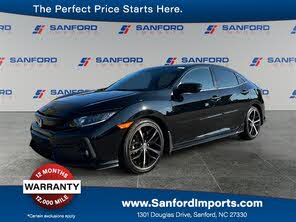
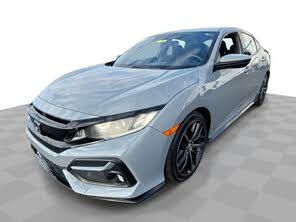
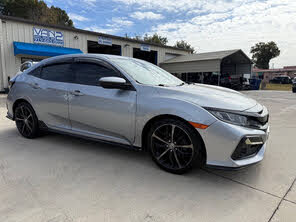
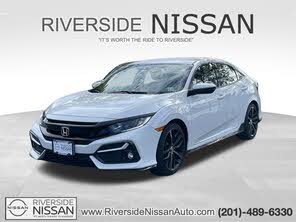
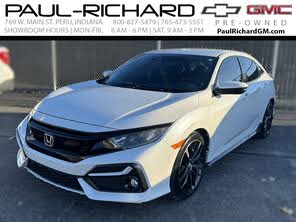
Five years prior, Honda had redesigned the Civic—a contender against the Subaru Impreza and Toyota Corolla, among others. By 2020, many were still acclimatizing to its appearance. Appreciating this compact car often required viewing it from the right angle and lighting.
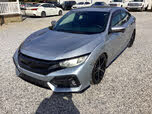
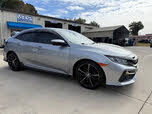
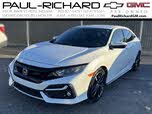
Honda tweaked the styling for the 2020 version. The massive faux air intakes featured body-color crossbars, reducing their prominence. The grille design was refreshed, and the headlights adopted a smoked look. New wheel designs made their debut, although this was not a pressing necessity.
The test car, clad in top-tier Sport Touring trim, had Platinum White Pearl paint, creating a striking contrast with the glossy black details. Accompanied by family members, several men in the group expressed their approval, mistaking it for a Type R due to its exterior appeal.
Inside, the Sport Touring trim boasted stitched leather on the steering wheel, soft surfaces, and high-quality materials. Although hard plastic remained, the overall experience was impressive once inside. The six-speed manual gearbox available in the Sport Touring raised its price to $28,980, including the destination charge from its UK factory.
Despite being considered expensive by some, the Sport Touring’s MSRP was $8,250 less than a Type R’s. The base MSRP was $21,650 for LX trim, with Sport at $22,750, EX at $24,150, and EX-L at $25,350.
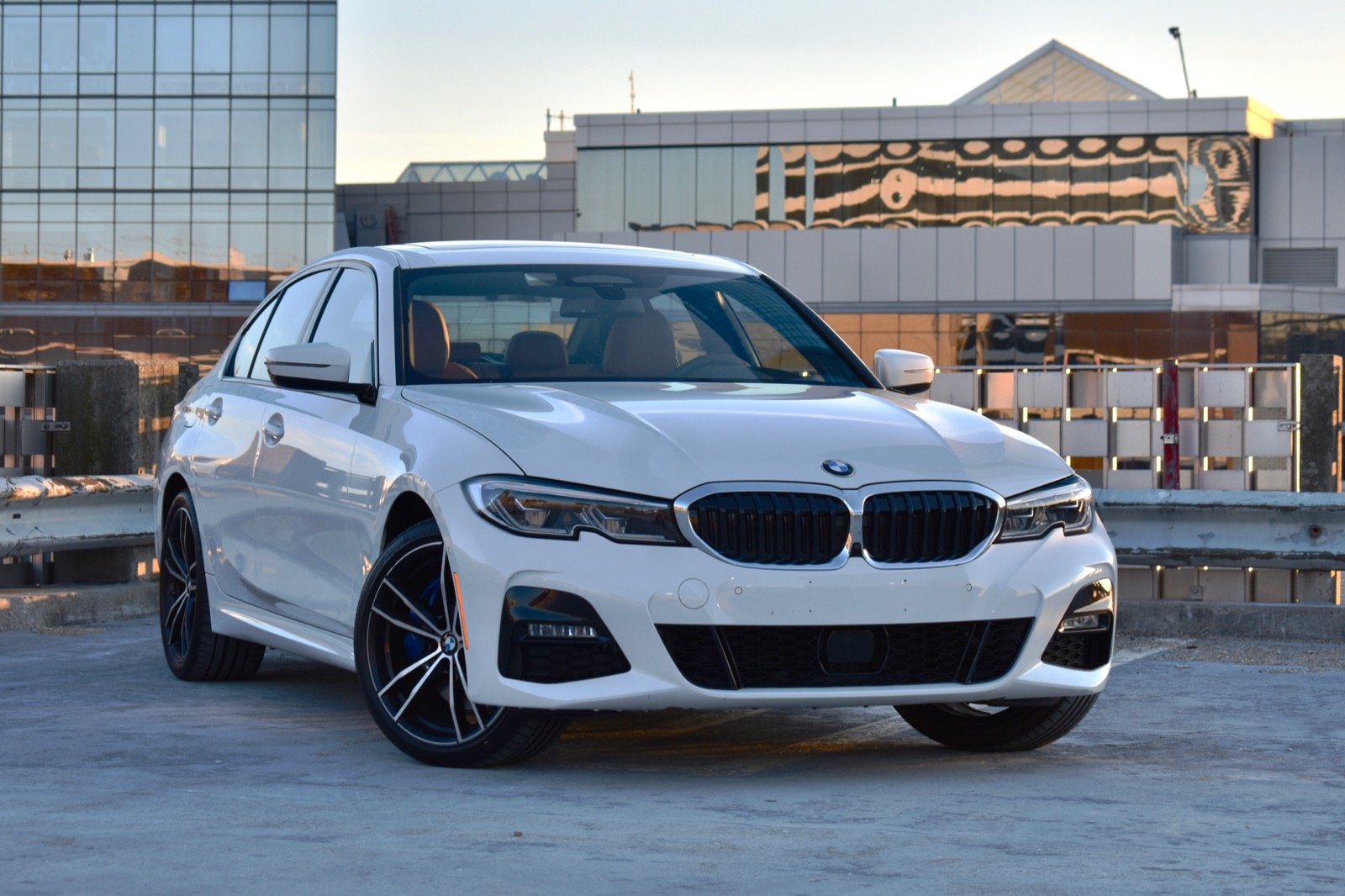
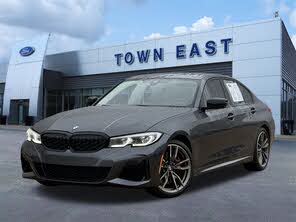
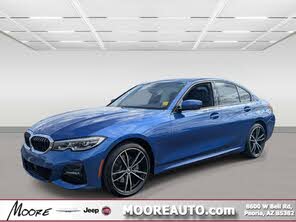
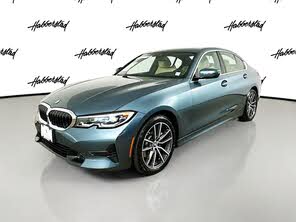
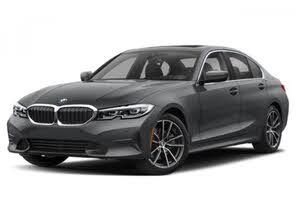
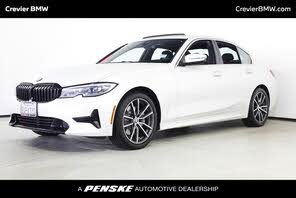
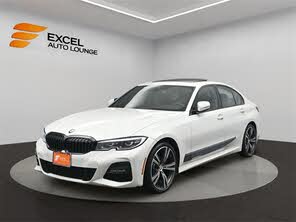
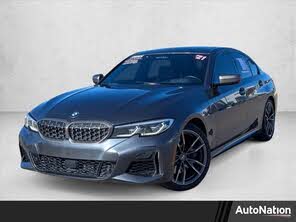
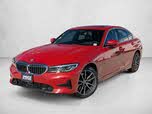
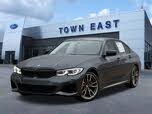
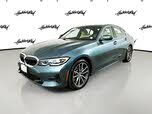
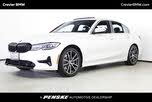
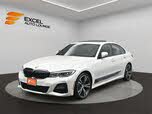
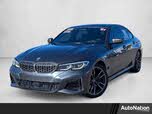
BMW, meanwhile, reverted to a traditional, familial styling approach by 2021. The G20 3 Series, designed to resemble smaller versions of the 5 Series and 7 Series, aimed to replicate the design legacy of the E30 3 Series but missed the iconic mark of its predecessor. The large, unusually shaped grille fit better on larger sedans but felt out of place on the smaller 3 Series.
Our test car, featuring M 19-inch wheels and blue-painted brake calipers from the M Sport trim package, provided some visual appeal, but it was otherwise underwhelming. The interior design was pleasing, though compromised by inferior materials. With as much plastic trim as a basic economy car, the minimalistic use of leather—optional, with synthetic Sensatec material standard—failed to resonate as truly luxurious, even with an optional heated steering wheel.


The 2020 Honda Civic Hatchback, with Sport or Sport Touring trims, differed significantly from the Civic Si, particularly in engine performance, ride, and handling. It had a 1.5-liter turbocharged 4-cylinder engine producing 174 horsepower for LX, EX, and EX-L trims, and 180 horsepower for Sport and Sport Touring trims. Torque was at 162 lb-ft (CVT) and 177 lb-ft (manual transmission).
The engine was potent, refined, and silent, although the transmission’s long clutch travel and gearbox throws differed from the Civic Si. The Civic Si offered a tighter feel and more power, with a helical limited-slip differential for spirited cornering.
The Civic Hatchback Sport and Sport Touring were more comfortable for daily driving, with softer suspensions, quieter cabins, and a less aggressive demeanor. The Hatchback, despite lacking the Si’s firmness, remained enjoyable and engaging on winding roads. Fuel efficiency was commendable at 32 mpg combined, with actual results hitting 32.7 mpg.
Conversely, the 2021 BMW 3 Series came with three engine choices: a 2.0-liter turbocharged four-cylinder in the base 330i generating 255 horsepower and 295 lb-ft torque; a 330e plug-in hybrid merging a weaker version of the engine with electric assist for 288 hp and 310 lb-ft; and a robust M340i with a turbo inline-six producing 382 hp and 369 lb-ft. All engines paired with an eight-speed automatic transmission, available in rear-wheel or xDrive all-wheel drive.
Our 330e test car, with its battery pack and hybrid setup, had a zero to 60 mph time matching the gasoline 330i at 5.6 seconds, though BMW quoted 5.7 seconds for the AWD 330e xDrive. The transition between electric and gasoline power was less smooth, and despite maintaining BMW's trademark chassis solidity, it lacked engagement.
Though SUVs had become popular, they were more costly and less fuel-efficient than compact cars. The 2020 Honda Civic Hatchback, with 25.2 cubic feet of cargo space, exceeded the HR-V Touring’s 23.2 cubic feet. Despite the HR-V's superior maximum volume (57.6 cubic feet vs. 46.2 cubic feet), the Civic’s performance and efficiency made it a preferable choice.
Sitting low in the Civic Hatchback wasn’t as convenient, but the Sport Touring trim’s heated leather seats made up for it. The exceptional center console storage, configurable to hold large water bottles, was a highlight. Rear-seat comfort was good, but passengers missed having air vents and found the black leather bench seat sweltering.
The 2021 BMW 3 Series, a small luxury sedan, performed reasonably well for its segment. Rear headroom was generous, while front headroom, though not as ample as the Infiniti Q50’s, was above average. Rear legroom was adequate but could be cramped. With 17 cubic feet of cargo space in gasoline models, the 3 Series beat competitors. However, the 330e’s battery reduced this to 13.2 cubic feet, and the trunk’s configuration required a long reach.
BMW’s cockpit setup still prioritized driver convenience, with a well-positioned touchscreen, low hood line, and abundant side glass providing excellent visibility.
The 2020 Honda Civic Hatchback offered a 7-inch touchscreen infotainment in all but the base LX trim, featuring Bluetooth, Apple CarPlay, Android Auto, satellite radio, text-messaging support, navigation, and a premium 12-speaker sound system in Sport Touring trim. It was missing advanced voice recognition and a larger screen similar to competitors. Notable features included automatic climate control and Smart Entry with Walk Away Auto Lock, ensuring peace of mind when locking the car.
BMW's standard iDrive infotainment in the 2021 3 Series included an 8.8-inch touchscreen, Bluetooth, and USB ports. While gasoline models supported both Apple CarPlay and Android Auto, the 330e was limited to CarPlay. The optional Live Cockpit Professional enhanced the system with a digital instrument cluster, navigation, and a head-up display. High-quality graphics and responsive controls differentiated BMW’s system from rivals, with multiple input options including gesture controls.
The 2020 Honda Civic Hatchback came standard with the Honda Sensing suite—forward-collision warning with automatic emergency braking, lane-keeping assist, lane-departure warning, Road Departure Mitigation, and adaptive cruise control with CVT-equipped models featuring low-speed follow. The aging system had some inconsistencies, like abrupt braking with adaptive cruise and limited blind-spot monitoring via LaneWatch.
The 2021 BMW 3 Series earned the IIHS “Top Safety Pick” with excellent crash-test ratings but had mixed headlight scores. Standard safety included forward-collision warning, automatic emergency braking, and lane-departure warning. Additional options like the Driving Assistant Professional Package added advanced features like lane-keep assist and automated lane centering, with a stop-and-go function for adaptive cruise control.
CarGurus highlights

According to CarGurus experts, the overall rating for the 2020 Honda Civic Hatchback is 7.7 out of 10, while the 2021 BMW 3 Series scores 6.8 out of 10. Based on these ratings, the 2020 Honda Civic Hatchback emerges as the superior choice. It provides a balanced mix of style, comfort, efficiency, and technology, making it a more compelling option for most buyers.
Choose the 2020 Honda Civic Hatchback if:
- You want a stylish, fuel-efficient compact car with more cargo space than an SUV.
- You prefer a quieter, more comfortable ride for daily driving.
- A comprehensive standard safety package.


Choose the 2021 BMW 3 Series if:
- You’re seeking a luxury sedan with a blend of performance and efficiency options, including hybrid.
- Advanced technological features, including sophisticated infotainment and versatile controls, appeal to you.
- Superior safety ratings and optional advanced driver-assistance features are a priority.


CarGurus highlights
According to CarGurus experts, the overall rating for the 2020 Honda Civic Hatchback is 7.7 out of 10, while the 2021 BMW 3 Series scores 6.8 out of 10. Based on these ratings, the 2020 Honda Civic Hatchback emerges as the superior choice. It provides a balanced mix of style, comfort, efficiency, and technology, making it a more compelling option for most buyers.
Choose the 2020 Honda Civic Hatchback if:
Shop Now- You want a stylish, fuel-efficient compact car with more cargo space than an SUV.
- You prefer a quieter, more comfortable ride for daily driving.
- A comprehensive standard safety package.







Choose the 2021 BMW 3 Series if:
Shop Now- You’re seeking a luxury sedan with a blend of performance and efficiency options, including hybrid.
- Advanced technological features, including sophisticated infotainment and versatile controls, appeal to you.
- Superior safety ratings and optional advanced driver-assistance features are a priority.



By: CarGurus + AI
At CarGurus, our team of experienced automotive writers remain at the heart of our content operation, conducting hands-on car tests and writing insightful guides that are backed by years of industry experience. To complement this, we are harnessing AI to make our content offering more diverse and more helpful to shoppers than ever. To achieve this, our AI systems are based exclusively on CarGurus content, ratings and data, so that what we produce is both unique to CarGurus, and uniquely helpful to car shoppers.