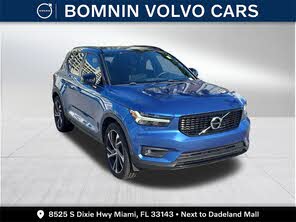
2020 Hyundai Venue vs 2020 Volvo XC40


Overview | |
MSRP$33,700 | MSRP$17,350 |
Listings141 | Listings101 |
Ratings & Reviews | |
User Reviews | User Reviews |
Expert reviews | Expert reviews7.3 out of 10 |
Pros
Cons
| |
2020 Volvo XC40 Reviews Summary | |
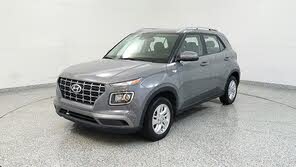
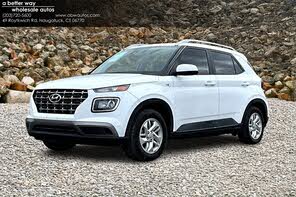
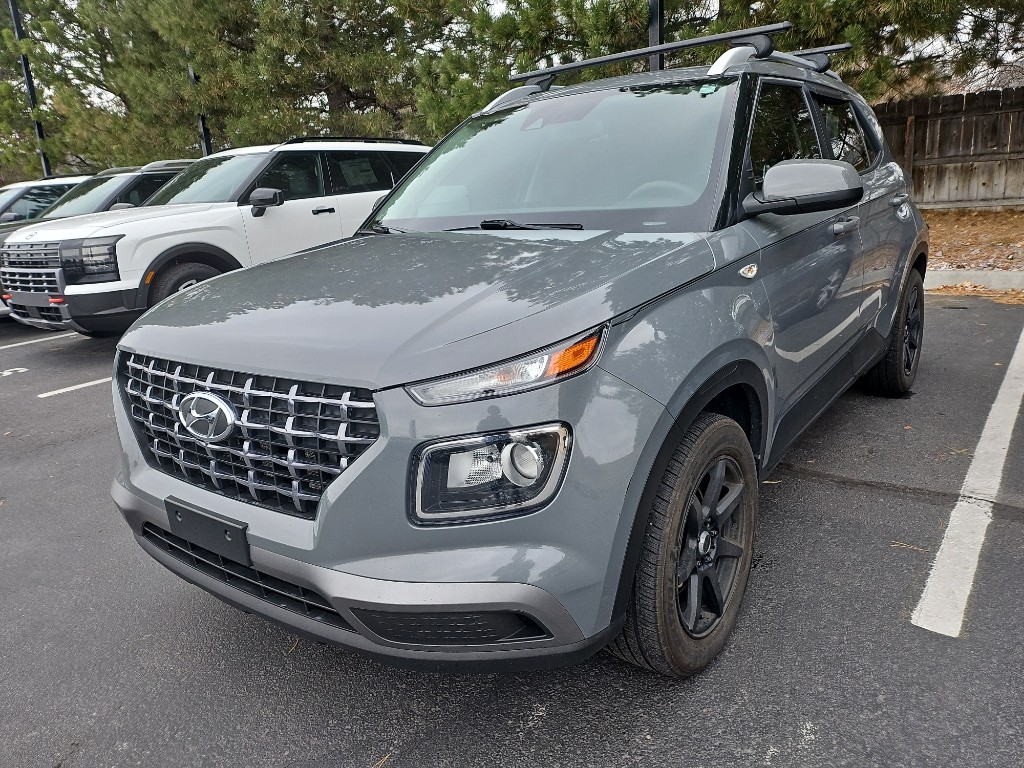
2020 Hyundai Venue Reviews SummaryThe 2020 Hyundai Venue you see here is classified as a subcompact crossover. But without the roof rails and extra plastic fender cladding, you might just as well call it a hatchback. If you were to describe a front-wheel-drive (FWD) car with a bit more space than a small sedan and with an emphasis on economy and efficiency, I would figure you are talking about a compact hatchback. But here we are, calling the Venue a crossover. Small crossovers and SUVs have been among the most popular and fastest-growing group of vehicles sold in the past decade. This is partly because of their utilitarian image, but it’s also because automakers are choosing to offer would-be hatchbacks as crossovers, thanks to the popularity of the segment. All we know is automakers have an easier time marketing a vehicle as a small sport utility vehicle, even if it doesn’t offer much sport or utility. But forget the labels. Let’s look at the 2020 Venue for what it is: an affordable, economical hatchback with a decent amount of cabin space (for a vehicle its size) and the latest infotainment and safety technology. | |
No video found | |
Popular Features & Specs | |
Engine2.0L 187 hp I4 | Engine1.6L 121 hp I4 |
Drive TrainFWD | Drive TrainFWD |
Seating Capacity5 | Seating Capacity5 |
Horsepower187 hp @ 4700 rpm | Horsepower121 hp @ 6300 rpm |
MPG City23 | MPG City27 |
MPG Highway33 | MPG Highway35 |
Engine | |
Engine Name2.0L 187 hp I4 | Engine Name1.6L 121 hp I4 |
Torque221 lb-ft @ 1400 rpm | Torque113 lb-ft @ 4500 rpm |
Horsepower187 hp @ 4700 rpm | Horsepower121 hp @ 6300 rpm |
DrivetrainFWD | DrivetrainFWD |
Fuel Economy | |
MPG City23 | MPG City27 |
MPG Highway33 | MPG Highway35 |
Interior | |
Seating Capacity5 | Seating Capacity5 |
Safety | |
Front Crash Overall5 | Front Crash Overall4 |
Side Crash Overall5 | Side Crash Overall5 |
Dimensions & Capacity | |
Cargo Space20.7 cu ft | Cargo Space18.7 cu ft |
Curb Weight3593 lbs | Curb Weight2557 lbs |
Height65.3 in | Height61.6 in |
Length174.2 in | Length159.0 in |
Width80.1 in | Width69.7 in |
Wheelbase106.4 in | Wheelbase99.2 in |
Maximum Payload1167 lbs | Maximum Payload1081 lbs |
Number of doors4 | Number of doors4 |
Maximum Towing Capacity3500 lbs | Maximum Towing Capacity |
Overview | ||
MSRP | $33,700 | $17,350 |
Listings | ||
Ratings & Reviews | ||
User reviews | ||
Expert reviews | 7.3 out of 10Read full review | |
Pros & cons | Pros
Cons
| |
Summary | The 2020 Hyundai Venue you see here is classified as a subcompact crossover. But without the roof rails and extra plastic fender cladding, you might just as well call it a hatchback. If you were to describe a front-wheel-drive (FWD) car with a bit more space than a small sedan and with an emphasis on economy and efficiency, I would figure you are talking about a compact hatchback. But here we are, calling the Venue a crossover. Small crossovers and SUVs have been among the most popular and fastest-growing group of vehicles sold in the past decade. This is partly because of their utilitarian image, but it’s also because automakers are choosing to offer would-be hatchbacks as crossovers, thanks to the popularity of the segment. All we know is automakers have an easier time marketing a vehicle as a small sport utility vehicle, even if it doesn’t offer much sport or utility. But forget the labels. Let’s look at the 2020 Venue for what it is: an affordable, economical hatchback with a decent amount of cabin space (for a vehicle its size) and the latest infotainment and safety technology. | |
Video | No video found | |
Popular Features & Specs | ||
Engine | 2.0L 187 hp I4 | 1.6L 121 hp I4 |
Drive Train | FWD | FWD |
Seating Capacity | 5 | 5 |
Horsepower | 187 hp @ 4700 rpm | 121 hp @ 6300 rpm |
MPG City | 23 | 27 |
MPG Highway | 33 | 35 |
Engine | ||
Engine Name | 2.0L 187 hp I4 | 1.6L 121 hp I4 |
Torque | 221 lb-ft @ 1400 rpm | 113 lb-ft @ 4500 rpm |
Horsepower | 187 hp @ 4700 rpm | 121 hp @ 6300 rpm |
Drivetrain | FWD | FWD |
Fuel Economy | ||
MPG City | 23 | 27 |
MPG Highway | 33 | 35 |
Interior | ||
Seating Capacity | 5 | 5 |
Safety | ||
Front Crash Overall | 5 | 4 |
Side Crash Overall | 5 | 5 |
Dimensions & Capacity | ||
Cargo Space | 20.7 cu ft | 18.7 cu ft |
Curb Weight | 3593 lbs | 2557 lbs |
Height | 65.3 in | 61.6 in |
Length | 174.2 in | 159.0 in |
Width | 80.1 in | 69.7 in |
Wheelbase | 106.4 in | 99.2 in |
Maximum Payload | 1167 lbs | 1081 lbs |
Number of doors | 4 | 4 |
Maximum Towing Capacity | 3500 lbs | |































By: CarGurus + AI
At CarGurus, our team of experienced automotive writers remain at the heart of our content operation, conducting hands-on car tests and writing insightful guides that are backed by years of industry experience. To complement this, we are harnessing AI to make our content offering more diverse and more helpful to shoppers than ever. To achieve this, our AI systems are based exclusively on CarGurus content, ratings and data, so that what we produce is both unique to CarGurus, and uniquely helpful to car shoppers.