2021 Toyota Camry vs 2020 Volkswagen Passat
Overview | |
MSRP$22,995 | MSRP$25,045 |
Listings255 | Listings1419 |
Ratings & Reviews | |
User Reviews | User Reviews |
Expert reviews8.0 out of 10 | Expert reviews7.8 out of 10 |
Pros
Cons
| Pros
Cons
|
2020 Volkswagen Passat Reviews SummaryVolkswagen builds a full-size car in Chattanooga, Tennessee, and has for nearly a decade. It’s called the Passat, and it gets a restyle for 2020. Huge inside like a full-size automobile, priced like a midsize sedan, and thrifty with gas like a compact car, the Passat has long been one of my favorite family haulers. Unfortunately, what it needs is a redesign, not a restyle. But since consumers want SUVs instead of sedans and VW is about to roll out a squadron of electric vehicles, the company couldn’t make a business case for spending a pile of cash to craft a new gas-powered car. Instead, you get the old one wearing a new suit. | |
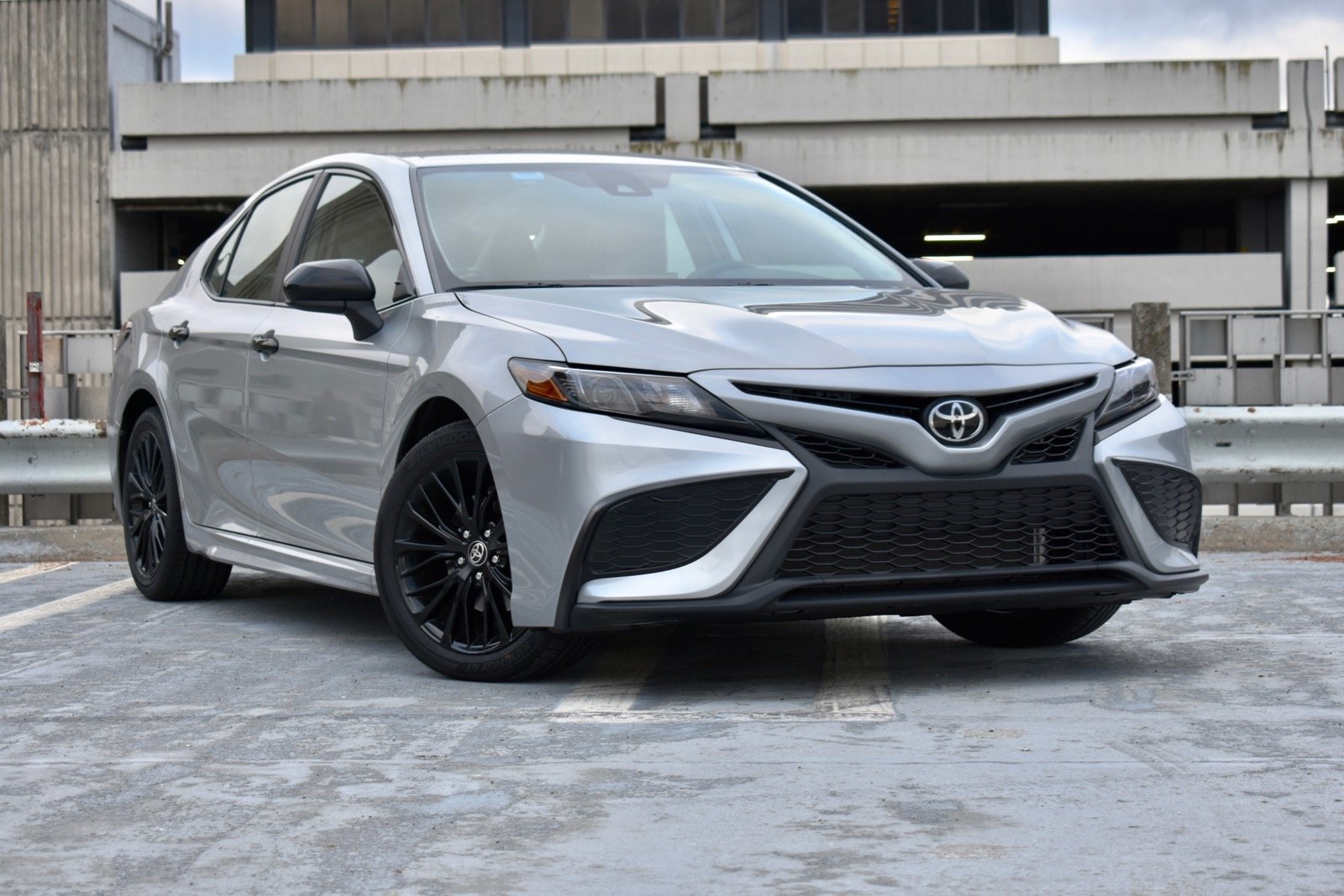
2021 Toyota Camry Reviews SummaryThe Toyota Camry has long been many new-car buyers’ default choice—but not because it’s interesting. Reliability and practicality have traditionally been the Camry’s strengths, not sportiness or style. Toyota tried to change that for the 2018 model year, when the Camry was last redesigned. The current-generation Camry adopted more extroverted styling, and engineers tried to make the driving experience more exciting, too. While Toyota’s approach has changed, the Camry still competes against the same array of midsize sedans, including the Honda Accord, Hyundai Sonata, Mazda 6, Nissan Altima, Subaru Legacy, and Volkswagen Passat. Changes for the 2021 model year include subtle styling tweaks, new infotainment displays, an upgrade to the Toyota Safety Sense 2.5+ (TSS 2.5+) package of driver aids, some changes to the dashboard trim, and the discontinuation of the Camry L trim level. That leaves the Camry LE as the new base trim level. The Camry offers buyers more choices than many rivals, encompassing three powertrains (inline-four, V6, and hybrid), six trim levels (LE, XLE, SE, SE Nightshade Edition, XSE, and TRD), and the choice of front-wheel drive (FWD) or all-wheel drive (AWD). Our test car was an AWD SE Nightshade Edition, positioned close to the middle of the lineup. | |
No video found | |
Popular Features & Specs | |
Engine2.0L 174 hp I4 | Engine2.5L 203 hp I4 |
Drive TrainFWD | Drive TrainFWD |
Seating Capacity5 | Seating Capacity5 |
Horsepower174 hp @ 5200 rpm | Horsepower |
MPG City23 | MPG City28 |
MPG Highway34 | MPG Highway39 |
Engine | |
Engine Name2.0L 174 hp I4 | Engine Name2.5L 203 hp I4 |
Torque206 lb-ft @ 1700 rpm | Torque |
Horsepower174 hp @ 5200 rpm | Horsepower |
DrivetrainFWD | DrivetrainFWD |
Fuel Economy | |
MPG City23 | MPG City28 |
MPG Highway34 | MPG Highway39 |
Interior | |
Seating Capacity5 | Seating Capacity5 |
Safety | |
Front Crash Overall4 | Front Crash Overall5 |
Side Crash Overall5 | Side Crash Overall5 |
Dimensions & Capacity | |
Cargo Space15.9 cu ft | Cargo Space15.1 cu ft |
Curb Weight3325 lbs | Curb Weight3310 lbs |
Height58.0 in | Height56.9 in |
Length193.6 in | Length192.1 in |
Width72.2 in | Width72.4 in |
Wheelbase110.4 in | Wheelbase111.2 in |
Maximum Payload926 lbs | Maximum Payload925 lbs |
Number of doors4 | Number of doors4 |
Overview | ||
MSRP | $22,995 | $25,045 |
Listings | ||
Ratings & Reviews | ||
User reviews | ||
Expert reviews | 8.0 out of 10Read full review | 7.8 out of 10Read full review |
Pros & cons | Pros
Cons
| Pros
Cons
|
Summary | Volkswagen builds a full-size car in Chattanooga, Tennessee, and has for nearly a decade. It’s called the Passat, and it gets a restyle for 2020. Huge inside like a full-size automobile, priced like a midsize sedan, and thrifty with gas like a compact car, the Passat has long been one of my favorite family haulers. Unfortunately, what it needs is a redesign, not a restyle. But since consumers want SUVs instead of sedans and VW is about to roll out a squadron of electric vehicles, the company couldn’t make a business case for spending a pile of cash to craft a new gas-powered car. Instead, you get the old one wearing a new suit. | The Toyota Camry has long been many new-car buyers’ default choice—but not because it’s interesting. Reliability and practicality have traditionally been the Camry’s strengths, not sportiness or style. Toyota tried to change that for the 2018 model year, when the Camry was last redesigned. The current-generation Camry adopted more extroverted styling, and engineers tried to make the driving experience more exciting, too. While Toyota’s approach has changed, the Camry still competes against the same array of midsize sedans, including the Honda Accord, Hyundai Sonata, Mazda 6, Nissan Altima, Subaru Legacy, and Volkswagen Passat. Changes for the 2021 model year include subtle styling tweaks, new infotainment displays, an upgrade to the Toyota Safety Sense 2.5+ (TSS 2.5+) package of driver aids, some changes to the dashboard trim, and the discontinuation of the Camry L trim level. That leaves the Camry LE as the new base trim level. The Camry offers buyers more choices than many rivals, encompassing three powertrains (inline-four, V6, and hybrid), six trim levels (LE, XLE, SE, SE Nightshade Edition, XSE, and TRD), and the choice of front-wheel drive (FWD) or all-wheel drive (AWD). Our test car was an AWD SE Nightshade Edition, positioned close to the middle of the lineup. |
Video | No video found | |
Popular Features & Specs | ||
Engine | 2.0L 174 hp I4 | 2.5L 203 hp I4 |
Drive Train | FWD | FWD |
Seating Capacity | 5 | 5 |
Horsepower | 174 hp @ 5200 rpm | |
MPG City | 23 | 28 |
MPG Highway | 34 | 39 |
Engine | ||
Engine Name | 2.0L 174 hp I4 | 2.5L 203 hp I4 |
Torque | 206 lb-ft @ 1700 rpm | |
Horsepower | 174 hp @ 5200 rpm | |
Drivetrain | FWD | FWD |
Fuel Economy | ||
MPG City | 23 | 28 |
MPG Highway | 34 | 39 |
Interior | ||
Seating Capacity | 5 | 5 |
Safety | ||
Front Crash Overall | 4 | 5 |
Side Crash Overall | 5 | 5 |
Dimensions & Capacity | ||
Cargo Space | 15.9 cu ft | 15.1 cu ft |
Curb Weight | 3325 lbs | 3310 lbs |
Height | 58.0 in | 56.9 in |
Length | 193.6 in | 192.1 in |
Width | 72.2 in | 72.4 in |
Wheelbase | 110.4 in | 111.2 in |
Maximum Payload | 926 lbs | 925 lbs |
Number of doors | 4 | 4 |
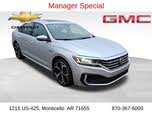
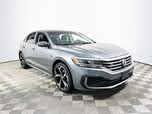
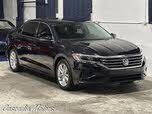
The 2020 Volkswagen Passat echoed familiar themes, primarily resembling its predecessors from 2012 to 2019 and borrowing heavily from the recently redesigned Volkswagen Jetta. This similarity spanned various design aspects but didn’t carry over inside. The Passat featured an old-school interior with a revamped dashboard and a small 6.3-inch touchscreen, shunning the latest VW technology witnessed in the Jetta.
The presence of cheap, glossy plastic throughout the cabin was a notable aspect of the Passat, although it proved easy to clean. Its whole design ethos revolved around simplicity, making it user-friendly and easy on the eyes, and focused on comfort and affordability. The 2020 Passat was available in four trims: Passat S ($22,995), SE ($25,845), R-Line ($28,645), and SEL ($31,095). The R-Line, adorned in Aurora Red paint, came with remote engine start and cost about $30,206 including destination charges.
Conversely, the 2021 Toyota Camry strived to break free from its somewhat generic past. Its designers infused the car with several styling elements to add excitement; while some aspects like the flared wheel arches and thin headlights worked well, others like fake vents on the SE, XSE, or TRD trims added unnecessary clutter. The LE and XLE trims featured a cleaner but still large grille.
The Camry’s refresh in 2021 wasn't extensive, but added some small tweaks to the front fascia. Unique touches like a large rear spoiler for the TRD model and the Nightshade Edition’s blacked-out trim and wheels were noteworthy. The standard wheels ranged from 17-inch alloys on the base LE to 19-inch wheels on upper trims.
However, the interior design of the Camry received criticism for being chaotic. The SE Nightshade Edition’s dashboard seemed to be a mismatch of parts from different cars. There was a mixture of trims and finishes with no consistent design theme, and the materials felt cheap.


The 2020 Volkswagen Passat housed a turbocharged 2.0-liter 4-cylinder engine, delivering 174 horsepower and 206 pound-feet of torque. It was paired with a 6-speed automatic transmission powering the front wheels. Although not the most powerful, it offered simplicity and sufficient torque for everyday driving. In standard mode, the transmission was slightly too eager to upshift to save fuel, which occasionally caused the engine to stumble. However, switching to Sport mode alleviated this issue. My test drive yielded an average of 26 mpg, slightly below the EPA’s combined rating of 27 mpg.
The steering was light but precise, maintaining the German engineering ethos despite some grabby brakes. The overall handling was predictable and enjoyable, but the suspension tuning was a weak point. It was too stiff over minor bumps while overly soft over larger ones, making the ride quality inconsistent. Despite these drawbacks, the Passat provided excellent road feedback, albeit at the expense of some cabin noise due to lack of sound insulation.
In contrast, the 2021 Toyota Camry came with a base 2.5-liter four-cylinder engine, named Dynamic Force, which provided a respectable 203 horsepower and 184 pound-feet of torque with FWD, slightly less with AWD. The XSE models achieved slightly higher outputs. An eight-speed automatic transmission accompanied both FWD and AWD configurations. Toyota also offered a 3.5-liter V6 producing 301 horsepower and 267 pound-feet of torque, and a hybrid model combining a 2.5-liter four-cylinder with electric assistance totaling 208 horsepower.
The SE Nightshade Edition, equipped with the base four-cylinder and AWD, was surprisingly dynamic. It provided a spirited driving experience, balancing handling and ride quality adeptly. Although it lacked the precision of a Honda Accord or Mazda 6, it performed above average for a midsize sedan. The sporty TRD model provided an enhanced driving experience with V6 power and several chassis upgrades, contributing to superior dynamics. Toyota’s AWD system, reintroduced in 2020, could distribute up to 50% torque to the rear wheels and reverts to FWD when not needed.
The 2020 Volkswagen Passat was designed with American consumers in mind, resulting in a spacious interior. It featured wide, comfortable seats, large door openings, and ample room for five passengers. The cabin’s utility was supported by numerous cupholders, storage bins, and trays, along with excellent outward visibility.
The standard Passat S came with cloth upholstery, while the SE and R-Line had V-Tex leatherette seats, and the SEL featured genuine leather sport seats. Amenities like heated seats and rear air conditioning vents enhanced comfort across seasons. The trunk offered 15.9 cubic feet of space with a flat load floor, capable of accommodating full-size suitcases, strollers, and more.
In comparison, the 2021 Toyota Camry had generous rear headroom and legroom, but that space came at the expense of front passenger space, which was subpar. Despite this, the front seats were adjustable enough to find a comfortable position and provided excellent support with good visibility.
At 15.1 cubic feet, the Camry’s cargo space lagged behind the Passat’s and significantly behind the Honda Accord. In-cabin storage was limited; the cupholders and door bottle holders were small, and items tended to get stuck in the door bins. Control knobs in the Camry were functional but poorly placed, leading to a less ergonomic experience for drivers.
The 2020 Volkswagen Passat did not include VW's latest infotainment and instrumentation technologies, sticking with a basic 6.3-inch touchscreen. Despite this, it covered the essentials with Apple CarPlay, Android Auto, HD and SiriusXM radio, a CD player, and Bluetooth. Higher trims like the SEL offered navigation and a Fender premium sound system. Simplicity ruled the Passat's infotainment, with physical buttons and knobs remaining prominent.
The 2021 Toyota Camry featured a more advanced infotainment system with a 7-inch touchscreen as standard, upgraded to 9 inches in higher trims. It included Apple CarPlay, Android Auto, Amazon Alexa compatibility, Bluetooth, Siri Eyes Free voice control, and SiriusXM radio. A 10-inch head-up display was available on the XSE and XLE trims. Standard conveniences included several USB ports and a 12-volt outlet. Despite its functionality, the Camry’s infotainment graphics were basic and not particularly impressive.
The 2020 Volkswagen Passat was well-equipped in terms of safety features. Standard safety systems included forward-collision warning with pedestrian detection, automatic emergency braking, blind-spot warning, rear cross-traffic warning, and an automatic post-collision braking system. The SE trim added adaptive cruise control, while the SEL came with parking assist sensors and adaptive headlights. The Passat earned top safety ratings from the IIHS.
The 2021 Toyota Camry received a “Top Safety Pick+” from the IIHS and a five-star rating from the NHTSA. The new TSS 2.5+ package included standard safety features like adaptive cruise control, automatic emergency braking, forward-collision warning, lane-departure warning, automatic high beams, and traffic-sign recognition. Advanced features like enhanced adaptive cruise control and new forward-collision detection capabilities were noteworthy. Blind-spot monitoring and rear cross-traffic alert were standard on higher trims and optional on others.
CarGurus highlights

According to CarGurus experts, the overall rating for the 2020 Volkswagen Passat was 8.0 out of 10, while the 2021 Toyota Camry scored 7.8 out of 10. Considering these ratings, the 2020 Volkswagen Passat edges out the 2021 Toyota Camry. The Passat offers superior interior space, a more user-friendly experience, and solid safety features—all at a competitive price point. Therefore, the 2020 Volkswagen Passat comes highly recommended for anyone seeking a reliable and practical midsize sedan.
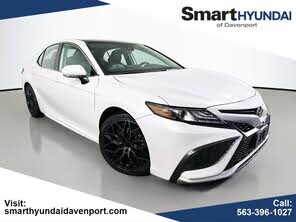
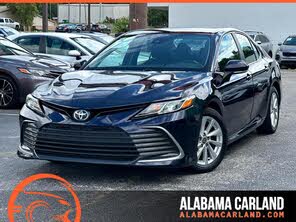
Choose the 2021 Toyota Camry if:
- You value the latest safety technologies and top-tier crash test ratings.
- You desire a dynamic driving experience with optional AWD and a sportier feel.
- You appreciate a well-rounded infotainment system with extensive connectivity options.





Choose the 2020 Volkswagen Passat if:
- You prioritize a spacious interior with excellent rear seating and storage capacity.
- You prefer straightforward, easy-to-use infotainment and vehicle controls.
- You want good value with essential safety features and reasonable pricing.

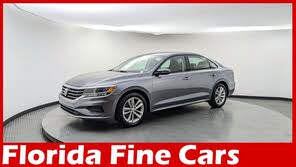
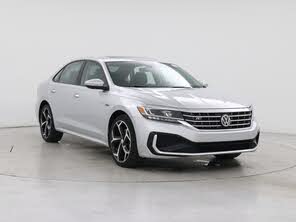


CarGurus highlights
According to CarGurus experts, the overall rating for the 2020 Volkswagen Passat was 8.0 out of 10, while the 2021 Toyota Camry scored 7.8 out of 10. Considering these ratings, the 2020 Volkswagen Passat edges out the 2021 Toyota Camry. The Passat offers superior interior space, a more user-friendly experience, and solid safety features—all at a competitive price point. Therefore, the 2020 Volkswagen Passat comes highly recommended for anyone seeking a reliable and practical midsize sedan.
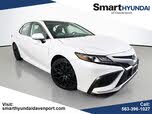
Choose the 2021 Toyota Camry if:
Shop Now- You value the latest safety technologies and top-tier crash test ratings.
- You desire a dynamic driving experience with optional AWD and a sportier feel.
- You appreciate a well-rounded infotainment system with extensive connectivity options.




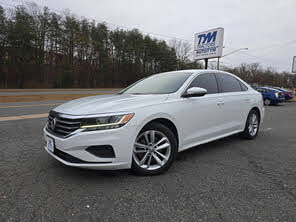
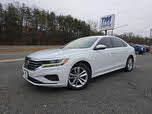
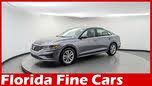
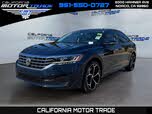
Choose the 2020 Volkswagen Passat if:
Shop Now- You prioritize a spacious interior with excellent rear seating and storage capacity.
- You prefer straightforward, easy-to-use infotainment and vehicle controls.
- You want good value with essential safety features and reasonable pricing.





By: CarGurus + AI
At CarGurus, our team of experienced automotive writers remain at the heart of our content operation, conducting hands-on car tests and writing insightful guides that are backed by years of industry experience. To complement this, we are harnessing AI to make our content offering more diverse and more helpful to shoppers than ever. To achieve this, our AI systems are based exclusively on CarGurus content, ratings and data, so that what we produce is both unique to CarGurus, and uniquely helpful to car shoppers.