2021 Toyota 4Runner vs 2020 Toyota 4Runner
Overview | |
MSRP$36,120 | MSRP$36,765 |
Listings776 | Listings1098 |
Ratings & Reviews | |
User Reviews | User Reviews |
Expert reviews6.8 out of 10 | Expert reviews6.2 out of 10 |
Pros
Cons
| Pros
Cons
|
2020 Toyota 4Runner Reviews SummaryEven in its expensive Limited trim, the Toyota 4Runner remains clearly purpose-built for tackling terrain. Whether on a dusty cow path or snowy mountain road, the 4Runner looks most in its element when its outside the typical car’s comfort zone. For 2020, Toyota keeps enough chrome and leather available to market the 4Runner as a rough-and-tumble luxury alternative, but shoppers considering one had better have a real need for 4-wheel drive. | |
2021 Toyota 4Runner Reviews SummaryDespite its design age, poor fuel economy, rough ride, iffy handling, and marginal safety ratings, the current-generation Toyota 4Runner remains a popular choice in a midsize SUV. Why? Its reputation for reliability and resale value, coupled with its undeniable utility, rugged image, and go-anywhere and do-anything capability, are the selling points. And if that's why you want a 2021 Toyota 4Runner, it won't disappoint you as long as you accept its shortcomings. | |
No video found | No video found |
Popular Features & Specs | |
Engine4.0L 270 hp V6 | Engine4.0L 270 hp V6 |
Drive Train4X2 | Drive Train4X2 |
Seating Capacity7 | Seating Capacity7 |
Horsepower270 hp @ 5600 rpm | Horsepower270 hp @ 5600 rpm |
MPG City16 | MPG City16 |
MPG Highway19 | MPG Highway19 |
Engine | |
Engine Name4.0L 270 hp V6 | Engine Name4.0L 270 hp V6 |
Torque278 lb-ft @ 4400 rpm | Torque278 lb-ft @ 4400 rpm |
Horsepower270 hp @ 5600 rpm | Horsepower270 hp @ 5600 rpm |
Drivetrain4X2 | Drivetrain4X2 |
Fuel Economy | |
MPG City16 | MPG City16 |
MPG Highway19 | MPG Highway19 |
Interior | |
Seating Capacity7 | Seating Capacity7 |
Safety | |
Front Crash Overall4 | Front Crash Overall4 |
Side Crash Overall5 | Side Crash Overall5 |
Dimensions & Capacity | |
Cargo Space47.2 cu ft | Cargo Space47.2 cu ft |
Curb Weight4400 lbs | Curb Weight4400 lbs |
Height71.5 in | Height71.5 in |
Length190.2 in | Length190.2 in |
Width75.8 in | Width75.8 in |
Wheelbase109.8 in | Wheelbase109.8 in |
Maximum Payload1700 lbs | Maximum Payload1700 lbs |
Number of doors4 | Number of doors4 |
Maximum Towing Capacity5000 lbs | Maximum Towing Capacity5000 lbs |
Standard Towing Capacity5000 lbs | Standard Towing Capacity5000 lbs |
Overview | ||
MSRP | $36,120 | $36,765 |
Listings | ||
Ratings & Reviews | ||
User reviews | ||
Expert reviews | 6.8 out of 10Read full review | 6.2 out of 10Read full review |
Pros & cons | Pros
Cons
| Pros
Cons
|
Summary | Even in its expensive Limited trim, the Toyota 4Runner remains clearly purpose-built for tackling terrain. Whether on a dusty cow path or snowy mountain road, the 4Runner looks most in its element when its outside the typical car’s comfort zone. For 2020, Toyota keeps enough chrome and leather available to market the 4Runner as a rough-and-tumble luxury alternative, but shoppers considering one had better have a real need for 4-wheel drive. | Despite its design age, poor fuel economy, rough ride, iffy handling, and marginal safety ratings, the current-generation Toyota 4Runner remains a popular choice in a midsize SUV. Why? Its reputation for reliability and resale value, coupled with its undeniable utility, rugged image, and go-anywhere and do-anything capability, are the selling points. And if that's why you want a 2021 Toyota 4Runner, it won't disappoint you as long as you accept its shortcomings. |
Video | No video found | No video found |
Popular Features & Specs | ||
Engine | 4.0L 270 hp V6 | 4.0L 270 hp V6 |
Drive Train | 4X2 | 4X2 |
Seating Capacity | 7 | 7 |
Horsepower | 270 hp @ 5600 rpm | 270 hp @ 5600 rpm |
MPG City | 16 | 16 |
MPG Highway | 19 | 19 |
Engine | ||
Engine Name | 4.0L 270 hp V6 | 4.0L 270 hp V6 |
Torque | 278 lb-ft @ 4400 rpm | 278 lb-ft @ 4400 rpm |
Horsepower | 270 hp @ 5600 rpm | 270 hp @ 5600 rpm |
Drivetrain | 4X2 | 4X2 |
Fuel Economy | ||
MPG City | 16 | 16 |
MPG Highway | 19 | 19 |
Interior | ||
Seating Capacity | 7 | 7 |
Safety | ||
Front Crash Overall | 4 | 4 |
Side Crash Overall | 5 | 5 |
Dimensions & Capacity | ||
Cargo Space | 47.2 cu ft | 47.2 cu ft |
Curb Weight | 4400 lbs | 4400 lbs |
Height | 71.5 in | 71.5 in |
Length | 190.2 in | 190.2 in |
Width | 75.8 in | 75.8 in |
Wheelbase | 109.8 in | 109.8 in |
Maximum Payload | 1700 lbs | 1700 lbs |
Number of doors | 4 | 4 |
Maximum Towing Capacity | 5000 lbs | 5000 lbs |
Standard Towing Capacity | 5000 lbs | 5000 lbs |
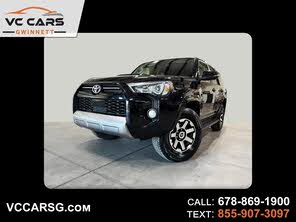
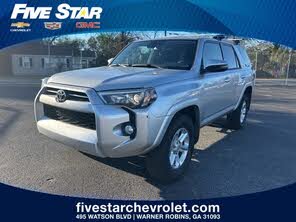
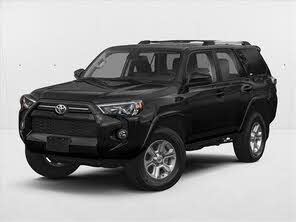
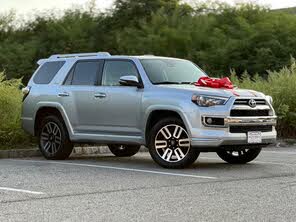
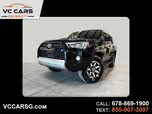
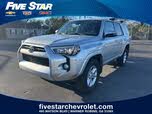
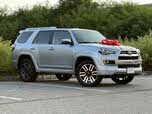
The 2020 Toyota 4Runner featured tall slab sides, a high beltline, short overhangs, and a near-vertical front fascia, contributing to its timeless design. Its utilitarian attitude was reminiscent of an XJ Jeep Cherokee, with flared wheel wells designed to accommodate bulky off-road tires and short overhangs for tackling steep pitches and sharp declines. The hood scoop, a visual cue for the off-road-focused TRD trim, was one of the few non-functional elements. Small, angular headlights highlighted the front end, and the grille varied by trim, with body-color bars on most trims and blacked-out accents on the TRD Pro. The trim lineup included SR5, SR5 Premium, TRD Off-Road, TRD Off-Road Premium, TRD Pro, and Limited, with the Nightshade and Venture Special Editions adding unique aesthetics and off-road capabilities.
Our test model, a Limited trim, aimed at comfort over capability, featured leather upholstery and an 8-inch touchscreen. Despite the chrome and leather, the 4Runner's utilitarian DNA was evident, with plenty of plastic and a seating position designed for off-roading rather than highway cruising.
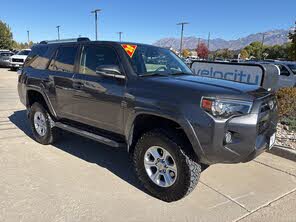
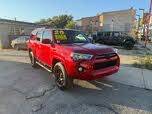
The 2021 Toyota 4Runner, last redesigned 12 years prior, had undergone updates but retained much of its original design. Most versions adopted a gape-mouthed and angry visage, except for the chrome-festooned Limited. The two-box body with flared fenders and trapezoidal wheel arches maintained balanced proportions, timeless styling, and undeniable utility. The 4Runner was like a good tool, not requiring frequent redesigns. Toyota offered the 4Runner in SR5, TRD Off-Road, Limited, and TRD Pro trims, with special editions like the Trail, Venture, and Nightshade.
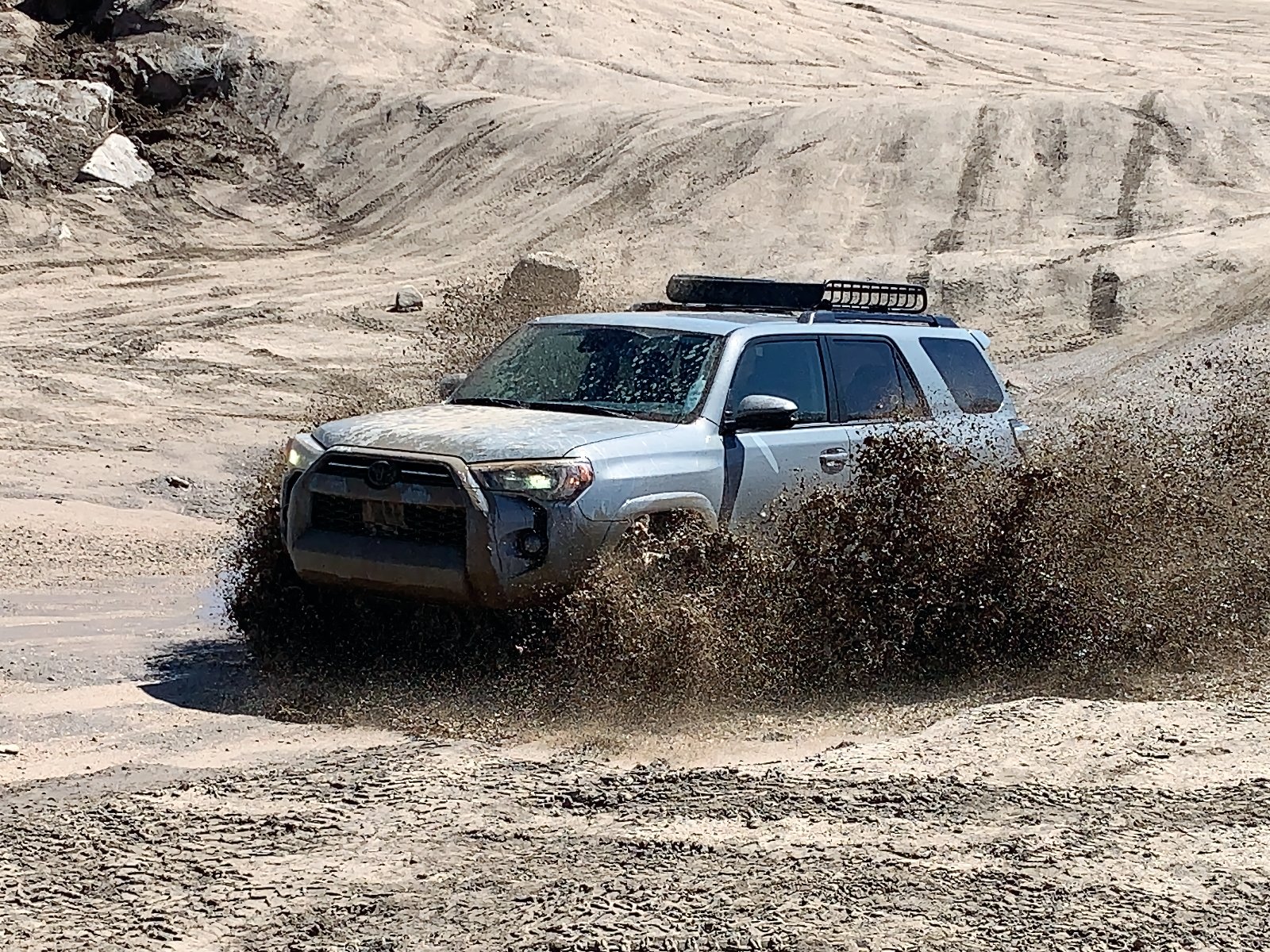
Our test vehicle, the new-for-2021 Trail Special Edition, was priced at $38,565 MSRP for the RWD model, with 4WD adding $1,875. It featured premium audio, a cargo cover, and a TRD front skid plate, totaling $43,729. Toyota planned to build only 4,000 Trail Special Editions, available in white, black, Cement (gray), and Army Green, with dark gray TRD Off-Road wheels and a Yakima RoadWarrior rooftop cargo basket. Inside, it had black cloth upholstery with tan stitching, all-weather floor mats, a sliding rear cargo tray, and a custom-made 40-quart cooler.


The 2020 Toyota 4Runner, built on a truck chassis, featured a 4-liter V6 engine with a 5-speed automatic transmission, producing 270 horsepower and 278 pound-feet of torque. This engine was not smooth or efficient, designed for lumbering and plowing ahead. It offered up to 5,000 pounds of towing capacity, with an EPA estimate of 16 mpg city, 19 highway, and 17 combined. Over 400-plus miles, we managed 17.7 mpg. The 4Runner excelled off-road, with body-on-frame construction and advanced traction systems like Toyota’s CRAWL control and Multi-Terrain Select. The full-time 4WD system on the Limited trim was better suited for maintaining forward progress, while the part-time system in the TRD models handled crawling up boulders.
The 2021 Toyota 4Runner, tested at Hungry Valley State Vehicular Recreational Area, featured A-Trac, the standard off-road traction control system. The 4Runner Trail Special Edition tackled mud, hills, and ruts with ease. Upgrading to the TRD Off-Road or TRD Pro added a locking rear differential, Multi-Terrain Select, and Crawl Control. The 4.0-liter V6 engine produced 270 horsepower and 278 pound-feet of torque, with a five-speed automatic transmission powering the rear wheels unless manually shifted to 4-Hi or 4-Lo. The maximum tow rating was 5,000 pounds. On-pavement, the 4Runner felt slow, heavy, and clunky, with poor fuel economy, averaging 16.8 mpg during our week, including off-roading.
The 2020 Toyota 4Runner offered excellent outward visibility and a tidy turning radius of 18 feet, 7 inches. The dashboard featured large, chunky knobs for HVAC controls and slightly smaller knobs for the stereo. The 8-inch touchscreen was flanked by physical buttons, and the steering wheel had an array of controls, though not illuminated. The tall seating position, aided by power-retractable running boards on the Limited trim, provided a commanding view. The optional third row of seats in non-TRD and non-Venture trims was best for short and occasional use, with narrow and thin jump seats.
The 2021 Toyota 4Runner sat high off the ground, with available running boards aiding entry. The front and rear seats offered proper support, with generous legroom, good visibility, air conditioning vents, and USB charging ports in the back. The optional third-row seat was not present in our test vehicle, which featured a sliding cargo deck holding 440 pounds. Cargo space measured up to 47.2 cubic feet behind the back seat and 89.7 cu.-ft. with the rear seat folded down. The Trail Special Edition's big roof rack added to the storage capacity.
The 2020 Toyota 4Runner featured an 8-inch touchscreen infotainment system with Apple CarPlay and Android Auto compatibility. The onboard navigation system was less efficient than Google Maps via Android Auto. The 4Runner also offered Amazon Alexa, Bluetooth connectivity, a single USB media port, and various subscription services like Sirius XM Radio, Safety Connect, and WiFi Connect. Higher trims added features like a JBL stereo and navigation system. The 4Runner's advanced features were more focused on the powertrain than the dashboard.
The 2021 Toyota 4Runner Trail Special Edition had limited technology, with a windshield wiper de-icer system and a 120-volt AC power outlet in the cargo area. The standard 8-inch touchscreen infotainment system included Bluetooth, Apple CarPlay, Android Auto, Amazon Alexa compatibility, SiriusXM satellite radio, and five USB ports. The premium audio upgrade added dynamic navigation, dynamic point-of-interest search, dynamic voice recognition, and a one-year subscription to Destination Assist concierge services. The system's physical shortcut buttons and knobs were easy to use, even with gloves.
The 2020 Toyota 4Runner featured Toyota Safety Sense P (TSS-P), including adaptive cruise control, lane-departure alert, a pre-collision system with pedestrian detection, and automatic high beams. It had eight standard airbags and received four out of five stars overall from the NHTSA, with three stars in the rollover test. The IIHS gave it a Good rating in most crash tests, except for a Marginal rating in the small overlap front: driver-side test. The adaptive cruise control worked well, but the high center of gravity and imprecise steering made a more active lane-keeping assist system desirable.
The 2021 Toyota 4Runner also featured TSS-P, with adaptive cruise control, forward-collision warning, automatic forward emergency braking, lane departure warning, and automatic high-beam headlights. However, it lacked a blind-spot warning system with rear cross-traffic warning. The NHTSA gave it a three-star rollover resistance rating and a three-star rating for front passenger protection in a frontal-impact crash. The IIHS rated its roof crush strength as Good but gave a Marginal rating for driver protection in a small overlap frontal-impact collision. These ratings reflected the SUV's age and older safety engineering principles.
CarGurus highlights

According to CarGurus experts, the overall rating for the 2020 Toyota 4Runner is 6.8 out of 10, while the 2021 Toyota 4Runner scores 6.2 out of 10. Based on these ratings, the 2020 Toyota 4Runner is the better choice, offering a more comfortable interior, a wider range of trims, and a slightly higher safety rating.
Choose the 2021 Toyota 4Runner if:
- You are interested in the new Trail Special Edition with unique features like a custom-made cooler.
- You need a more affordable entry point into the 4Runner lineup.
- You appreciate the latest updates in off-road technology and traction systems.




Choose the 2020 Toyota 4Runner if:
- You prefer a more comfortable and luxurious interior with leather upholstery.
- You want a wider range of trims and special editions to choose from.
- You value a slightly higher overall safety rating.




CarGurus highlights
According to CarGurus experts, the overall rating for the 2020 Toyota 4Runner is 6.8 out of 10, while the 2021 Toyota 4Runner scores 6.2 out of 10. Based on these ratings, the 2020 Toyota 4Runner is the better choice, offering a more comfortable interior, a wider range of trims, and a slightly higher safety rating.
Choose the 2021 Toyota 4Runner if:
Shop Now- You are interested in the new Trail Special Edition with unique features like a custom-made cooler.
- You need a more affordable entry point into the 4Runner lineup.
- You appreciate the latest updates in off-road technology and traction systems.






Choose the 2020 Toyota 4Runner if:
Shop Now- You prefer a more comfortable and luxurious interior with leather upholstery.
- You want a wider range of trims and special editions to choose from.
- You value a slightly higher overall safety rating.






By: CarGurus + AI
At CarGurus, our team of experienced automotive writers remain at the heart of our content operation, conducting hands-on car tests and writing insightful guides that are backed by years of industry experience. To complement this, we are harnessing AI to make our content offering more diverse and more helpful to shoppers than ever. To achieve this, our AI systems are based exclusively on CarGurus content, ratings and data, so that what we produce is both unique to CarGurus, and uniquely helpful to car shoppers.