2020 Mercedes-Benz GLB vs 2020 Honda CR-V Hybrid

Overview | |
MSRP$36,600 | MSRP$27,850 |
Listings248 | Listings207 |
Ratings & Reviews | |
User Reviews | User Reviews |
Expert reviews8.5 out of 10 | Expert reviews7.3 out of 10 |
Pros
Cons
| Pros
Cons
|
2020 Mercedes-Benz GLB Reviews SummaryMercedes-Benz is a master at slicing and dicing, and we’re not talking about its culinary game. The automaker is a virtuoso at filling every possible niche within and between traditional luxury vehicle segments, and one of the latest examples of this talent is the 2020 Mercedes-Benz GLB 250, a small SUV plugging the $6,270 price gap between the less expensive GLA-Class and more expensive GLC-Class. And while it might look like a couple of conjoined boxes on wheels, it sure does endear itself to its driver through thoughtful details, impressive technology, an engaging driving character, and undeniable practicality. | |
2020 Honda CR-V Hybrid Reviews SummaryOne of the forerunners to today’s seemingly never-ending onslaught of crossover SUV debuts, the Honda CR-V entered the market when SUV meant body-on-frame truck and CUV meant, well, nothing. The year was 1996 and the only other crossover option in the U.S. was the Toyota RAV4, which went on sale the year prior. Since then, hybrid technology has become commonplace. Yet, Americans have lived without a battery-assisted Honda crossover. That finally changes, with the debut of the 2020 Honda CR-V Hybrid. | |
No video found | No video found |
Popular Features & Specs | |
Engine2.0L 221 hp I4 | Engine2.0L 212 hp I4 Hybrid |
Drive TrainFWD | Drive TrainAWD |
Seating Capacity7 | Seating Capacity5 |
Horsepower221 hp @ 5500 rpm | Horsepower212 hp @ 6200 rpm |
EV Battery Capacity | EV Battery Capacity1.3 kWh |
MPG City23 | MPG City40 |
MPG Highway30 | MPG Highway35 |
Engine | |
Engine Name2.0L 221 hp I4 | Engine Name2.0L 212 hp I4 Hybrid |
Torque258 lb-ft @ 1800 rpm | Torque |
Horsepower221 hp @ 5500 rpm | Horsepower212 hp @ 6200 rpm |
DrivetrainFWD | DrivetrainAWD |
Fuel Economy | |
EV Battery Capacity | EV Battery Capacity1.3 kWh |
MPG City23 | MPG City40 |
MPG Highway30 | MPG Highway35 |
Interior | |
Seating Capacity7 | Seating Capacity5 |
Safety | |
Front Crash Overall | Front Crash Overall5 |
Side Crash Overall | Side Crash Overall5 |
Dimensions & Capacity | |
Cargo Space12.4 cu ft | Cargo Space33.2 cu ft |
Curb Weight3638 lbs | Curb Weight3649 lbs |
Height65.3 in | Height66.5 in |
Length182.4 in | Length182.1 in |
Width79.5 in | Width73.0 in |
Wheelbase111.4 in | Wheelbase104.7 in |
Number of doors4 | Number of doors4 |
Overview | ||
MSRP | $36,600 | $27,850 |
Listings | ||
Ratings & Reviews | ||
User reviews | ||
Expert reviews | 8.5 out of 10Read full review | 7.3 out of 10Read full review |
Pros & cons | Pros
Cons
| Pros
Cons
|
Summary | Mercedes-Benz is a master at slicing and dicing, and we’re not talking about its culinary game. The automaker is a virtuoso at filling every possible niche within and between traditional luxury vehicle segments, and one of the latest examples of this talent is the 2020 Mercedes-Benz GLB 250, a small SUV plugging the $6,270 price gap between the less expensive GLA-Class and more expensive GLC-Class. And while it might look like a couple of conjoined boxes on wheels, it sure does endear itself to its driver through thoughtful details, impressive technology, an engaging driving character, and undeniable practicality. | One of the forerunners to today’s seemingly never-ending onslaught of crossover SUV debuts, the Honda CR-V entered the market when SUV meant body-on-frame truck and CUV meant, well, nothing. The year was 1996 and the only other crossover option in the U.S. was the Toyota RAV4, which went on sale the year prior. Since then, hybrid technology has become commonplace. Yet, Americans have lived without a battery-assisted Honda crossover. That finally changes, with the debut of the 2020 Honda CR-V Hybrid. |
Video | No video found | No video found |
Popular Features & Specs | ||
Engine | 2.0L 221 hp I4 | 2.0L 212 hp I4 Hybrid |
Drive Train | FWD | AWD |
Seating Capacity | 7 | 5 |
Horsepower | 221 hp @ 5500 rpm | 212 hp @ 6200 rpm |
EV Battery Capacity | 1.3 kWh | |
MPG City | 23 | 40 |
MPG Highway | 30 | 35 |
Engine | ||
Engine Name | 2.0L 221 hp I4 | 2.0L 212 hp I4 Hybrid |
Torque | 258 lb-ft @ 1800 rpm | |
Horsepower | 221 hp @ 5500 rpm | 212 hp @ 6200 rpm |
Drivetrain | FWD | AWD |
Fuel Economy | ||
EV Battery Capacity | 1.3 kWh | |
MPG City | 23 | 40 |
MPG Highway | 30 | 35 |
Interior | ||
Seating Capacity | 7 | 5 |
Safety | ||
Front Crash Overall | 5 | |
Side Crash Overall | 5 | |
Dimensions & Capacity | ||
Cargo Space | 12.4 cu ft | 33.2 cu ft |
Curb Weight | 3638 lbs | 3649 lbs |
Height | 65.3 in | 66.5 in |
Length | 182.4 in | 182.1 in |
Width | 79.5 in | 73.0 in |
Wheelbase | 111.4 in | 104.7 in |
Number of doors | 4 | 4 |
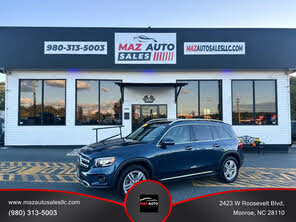
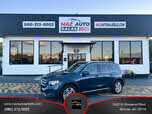
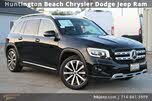
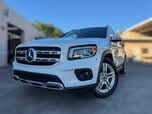
The 2020 Mercedes-Benz GLB was a boxy and tall SUV, distinct from other small Mercedes models. It sat on a front-wheel-drive platform with an optional 4Matic all-wheel-drive system. The design featured a long, flat hood, an upright windshield, large side windows, and a nearly vertical rear liftgate, creating a symmetrical look. The GLB prioritized interior volume over sleek aesthetics, evident in its robust roof rails and functional design. Painted in Mountain Gray metallic with the AMG Line design package and 20-inch AMG wheels, the test vehicle exuded style and attitude. Prices started at $36,600, with the tested GLB 250 4Matic priced at $55,890, including numerous options like metallic paint, adaptive damping suspension, and a Burmester premium sound system.
Inside, the GLB 250 made drivers feel special, especially with the upgraded dual 10.25-inch screens and optional ambient lighting system. The interior combined high style with simplicity, though it required some acclimation for those unfamiliar with Mercedes-Benz controls. Materials and construction were of high quality, though some metallic trim pieces revealed the vehicle's more affordable status. Overall, the GLB’s interior was a lovely place to spend time, offering a blend of style and functionality.
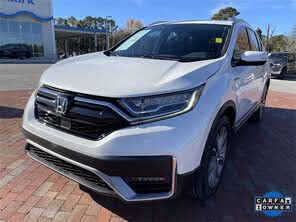
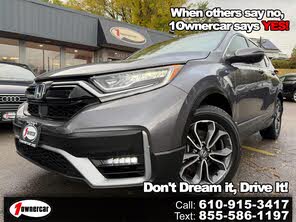
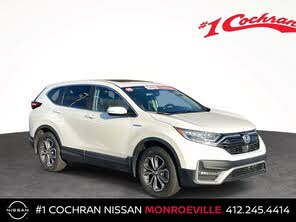
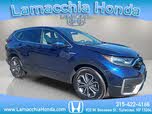
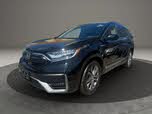
The 2020 Honda CR-V Hybrid, introduced as part of a mid-cycle refresh, was visually and dimensionally identical to the gasoline-powered CR-V. It featured the same length, width, and height, and even the 19-inch alloy wheel pattern on the Touring test car was unchanged. The interior was also a carryover, with the same dash, multi-function center console, 7-inch infotainment screen, and steering-wheel-mounted functions. Exterior differences were subtle, with blue-outlined Honda emblems and “Hybrid” badges, a hidden exhaust, and LED fog lights on EX models and above.
Inside, the gear shifter was replaced with a push-button selector, similar to other Honda hybrids. Paddle shifters adjusted brake regeneration instead of shifting gears. The instrument panel displayed new information reflecting the vehicle’s driving modes: Normal, EV, Econ, and Sport. Despite these changes, the CR-V Hybrid maintained the same overall design and functionality as its gasoline counterpart.


The 2020 Mercedes-Benz GLB came in GLB 250 and GLB 250 4Matic specifications, both equipped with a turbocharged 2.0-liter four-cylinder engine producing 221 horsepower at 5,500 rpm and 258 lb-ft of torque between 1,800 and 4,000 rpm. Mercedes claimed a 0-60 mph time of 6.9 seconds, though it felt faster due to the engine’s wide torque band and the snappy eight-speed dual-clutch automatic transmission (DCT). The DCT powered the front wheels unless the 4Matic AWD was optioned, which optimized grip and performance. An Off-Road driving mode locked the drivetrain in a 50:50 power split for maximum traction.
The test vehicle, equipped with an adaptive damping suspension and 20-inch AMG wheels, delivered a soft, pillowy ride in Comfort mode, ideal for city and highway driving. In Sport mode, the suspension provided greater road feel and reduced body motion, while the turbo powertrain responded quickly to accelerator inputs. Despite its modest engine specifications, the GLB offered a fun driving experience, reflected in a fuel economy result of 21.4 mpg, below the EPA estimate of 26 mpg. However, the brakes faded prematurely during enthusiastic driving, cutting short an otherwise enjoyable mountain run.
The 2020 Honda CR-V Hybrid featured a two-motor hybrid system with AWD, combining a 2.0-liter 4-cylinder gasoline engine with an electric generator/starter motor and a propulsion motor. This setup eliminated the need for a conventional transmission, using four fixed-ratio gear sets and a lock-up clutch. The total system power was 212 horsepower and 232 lb-ft of torque, compared to the gasoline model’s 190 horsepower and 179 lb-ft of torque with a CVT.
The hybrid’s fuel economy was significantly better, with EPA ratings of 40 mpg city, 35 highway, and 38 combined, compared to the gasoline model’s 27/32/29. However, it ranked third among hybrid competitors, with the Ford Escape Hybrid and Toyota RAV4 Hybrid offering better fuel economy. During a 65-mile city drive in Tucson, Arizona, the CR-V Hybrid achieved nearly 41 mpg without any special driving techniques. The EV mode operated on electricity alone for up to a mile, but it frequently switched out of EV mode, making it more suitable for short distances.
The CR-V Hybrid’s ride comfort and handling were as expected, with good steering feel and compliant AWD performance. The hybrid drivetrain’s on-demand torque made it more fun to drive than the gasoline model, though the RAV4 and Escape hybrids offered additional driving modes and features.
The Mercedes-Benz GLB offered generous interior dimensions, even more than the larger and more expensive GLC. It could be equipped with an optional third row of seats, a feature unavailable in other Mercedes SUVs except the GLS. The GLB comfortably accommodated four adults, with ample headroom, tall seating positions, large windows, and an available panoramic sunroof. Entry and exit were easy, and the second-row seat could slide to adjust space for third-row passengers or cargo.
The test vehicle’s front seats had power adjustments but lacked heating and ventilation, which would have added over $1,000 to the price. A heated steering wheel and multi-contour adjustable seats were available. The second-row seat could fit three people, but two was more comfortable due to the vehicle’s narrow width. The third-row seat was an $850 option not included in the test vehicle. Cargo space was 22 cubic feet behind the second row, expanding to 62 cubic feet with the seats folded down, offering more space than the GLA and GLC.
The Honda CR-V Hybrid, sharing the same dimensions as the gasoline model, compromised on cargo capacity due to the battery pack beneath the cargo floor. It offered 33.2 cubic feet behind the rear seats and 68.7 cubic feet with the seats folded flat, compared to the non-hybrid’s 39.2 and 75.8 cubic feet. Despite this, the CR-V Hybrid had more volume than the Ford Escape Hybrid, though the Toyota RAV4 Hybrid offered slightly more cargo space.
The CR-V Hybrid maintained passenger comfort with more overall space than its direct competitors, including better front headroom and rear legroom. It featured a configurable center console bin with a sliding cover for larger items, though the armrest’s locking mechanism was too loose. The CR-V Hybrid’s low cargo floor made loading and unloading easy, and it offered a class-competitive 8.2 inches of ground clearance.
The 2020 Mercedes-Benz GLB’s Premium Package, costing an extra $2,200, was highly recommended. It included a blind-spot warning system, keyless entry and engine start, and upgraded the standard 7-inch screens to twin 10.25-inch displays with lush graphics and fast response. The GLB came with the Mercedes Benz User Experience (MBUX) infotainment system, featuring Android Auto, Apple CarPlay, and natural voice recognition technology.
The test vehicle also had the Multimedia Package, adding a navigation system with augmented video, using the forward-facing camera to provide a live video feed with turn-by-turn directions. The Parking Assistance Package included a high-definition surround-view camera system and a semi-autonomous active parking assistance system. The 12-speaker Burmester premium sound system was also available, offering excellent sound quality and stylish aluminum speaker grilles.
The 2020 Honda CR-V Hybrid came standard with Bluetooth connectivity, Pandora compatibility, and a single USB connector. Higher trims added more features, with the EX trim including a 7-inch touchscreen display, Honda Link, smartphone integration, SiriusXM and HD radio, a 180-watt stereo, and additional USB ports. The Touring trim offered navigation, wireless device charging, and a 330-watt premium audio system.
The CR-V Hybrid’s infotainment system had some drawbacks, such as the lack of haptic feedback and complicated procedures to turn off the automatic beep sound. The instrument panel provided useful information but required flipping through various menus, which could be distracting while driving.
The 2020 Mercedes-Benz GLB came standard with several safety features, including a driver monitoring system, backup camera, forward collision warning with pedestrian detection, automatic emergency braking, and a Pre-Safe front collision preparation system. Emergency call service was also standard. Optional safety features included second-row side-impact airbags, blind-spot monitoring with Exit Warning Assist, and the Driver Assistance Package, which added adaptive cruise control, lane-centering assistance, evasive steering assistance, and an automatic emergency stop assistance system.
The 2020 Honda CR-V Hybrid earned a Top Safety Pick designation from the IIHS and a 5-Star Safety Rating from NHTSA. It came standard with Honda Sensing, a suite of safety and driver-assistance technologies including automatic braking, forward-collision warning with pedestrian detection, lane-departure warning, lane-keep assist, adaptive cruise control with stop-and-go, automatic high beams, and a multi-angle rearview camera. Blind-spot monitoring and rear cross-traffic alert were available starting with the EX trim.
CarGurus highlights

According to CarGurus experts, the overall rating for the 2020 Mercedes-Benz GLB is 8.5 out of 10, while the 2020 Honda CR-V Hybrid scores 7.3 out of 10. Based on these ratings, the 2020 Mercedes-Benz GLB is the recommended choice, offering a more luxurious interior, advanced technology, and a better overall driving experience.
Choose the 2020 Mercedes-Benz GLB if:
- You prioritize a luxurious and stylish interior with high-quality materials.
- You need a compact SUV with optional third-row seating for extra passengers.
- You value advanced technology features like augmented video navigation and a premium sound system.







Choose the 2020 Honda CR-V Hybrid if:
- You want a hybrid SUV with excellent fuel economy and standard AWD.
- You need a spacious interior with more passenger comfort and cargo capacity than most competitors.
- You prioritize safety, with top ratings from both IIHS and NHTSA and a comprehensive suite of driver-assistance features.





CarGurus highlights
According to CarGurus experts, the overall rating for the 2020 Mercedes-Benz GLB is 8.5 out of 10, while the 2020 Honda CR-V Hybrid scores 7.3 out of 10. Based on these ratings, the 2020 Mercedes-Benz GLB is the recommended choice, offering a more luxurious interior, advanced technology, and a better overall driving experience.
Choose the 2020 Mercedes-Benz GLB if:
Shop Now- You prioritize a luxurious and stylish interior with high-quality materials.
- You need a compact SUV with optional third-row seating for extra passengers.
- You value advanced technology features like augmented video navigation and a premium sound system.





Choose the 2020 Honda CR-V Hybrid if:
Shop Now- You want a hybrid SUV with excellent fuel economy and standard AWD.
- You need a spacious interior with more passenger comfort and cargo capacity than most competitors.
- You prioritize safety, with top ratings from both IIHS and NHTSA and a comprehensive suite of driver-assistance features.









By: CarGurus + AI
At CarGurus, our team of experienced automotive writers remain at the heart of our content operation, conducting hands-on car tests and writing insightful guides that are backed by years of industry experience. To complement this, we are harnessing AI to make our content offering more diverse and more helpful to shoppers than ever. To achieve this, our AI systems are based exclusively on CarGurus content, ratings and data, so that what we produce is both unique to CarGurus, and uniquely helpful to car shoppers.