2020 Honda CR-V vs 2020 Mazda CX-5
Overview | |
MSRP$25,150 | MSRP$25,190 |
Listings1672 | Listings733 |
Ratings & Reviews | |
User Reviews | User Reviews |
Expert reviews7.5 out of 10 | Expert reviews7.7 out of 10 |
Pros
Cons
| Pros
Cons
|
2020 Honda CR-V Reviews SummaryHonda’s compact SUV has been satisfying buyers for more than two decades, with more than five million CR-V’s sold. Such a legacy means the CR-V has long had its wrinkles smoothed out into a comfortable and capable crossover package that’s only downside may be its sheer inoffensiveness. This year’s model gets engine and safety upgrades, which improve fuel economy and help to make Honda’s bestseller an even better value. | |
2020 Mazda CX-5 Reviews SummaryAccording to a Harvard Business Review marketing study, there is such a thing as too much choice. And when the marketplace presents consumers with too much choice, there is a chance they won’t buy anything at all. For the 2020 model year, there are more than 40 small or compact SUVs available, half of them sold by luxury brands. Small and scrappy Mazda offers three of them: the CX-3, the CX-30, and the CX-5. However, in a marketplace awash in Chevys, Fords, Hondas, and Toyotas, Mazda has trouble standing apart from the established crowd. What’s the solution? Move upscale into “premium” territory. Premium is where Buick, Fiat, GMC, Jeep, Mini, and Volkswagen play to varying levels of success. Combining the value inherent in a mainstream brand with the design, materials, and technology common to luxury brands, these premium vehicles attempt to provide more than mainstream for less than luxury. At the same time, less is more. Because the 2020 Mazda CX-5 has but four similarly sized competitors in the premium class, that makes it easier for a consumer to choose, and more likely that a consumer will buy. The trick is convincing people that Mazda is a premium brand, and the automaker is taking a pragmatic approach to this emotionally-charged solution. | |
No video found | No video found |
Popular Features & Specs | |
Engine1.5L 190 hp I4 | Engine2.5L 187 hp I4 |
Drive TrainFWD | Drive TrainFWD |
Seating Capacity5 | Seating Capacity5 |
Horsepower190 hp @ 5600 rpm | Horsepower187 hp @ 6000 rpm |
MPG City28 | MPG City25 |
MPG Highway34 | MPG Highway31 |
Engine | |
Engine Name1.5L 190 hp I4 | Engine Name2.5L 187 hp I4 |
Torque179 lb-ft @ 2000 rpm | Torque186 lb-ft @ 4000 rpm |
Horsepower190 hp @ 5600 rpm | Horsepower187 hp @ 6000 rpm |
DrivetrainFWD | DrivetrainFWD |
Fuel Economy | |
MPG City28 | MPG City25 |
MPG Highway34 | MPG Highway31 |
Interior | |
Seating Capacity5 | Seating Capacity5 |
Safety | |
Front Crash Overall5 | Front Crash Overall5 |
Side Crash Overall5 | Side Crash Overall5 |
Dimensions & Capacity | |
Cargo Space39.2 cu ft | Cargo Space30.9 cu ft |
Curb Weight3337 lbs | Curb Weight3541 lbs |
Height66.1 in | Height66.2 in |
Length182.1 in | Length179.1 in |
Width73.0 in | Width83.3 in |
Wheelbase104.8 in | Wheelbase106.2 in |
Maximum Payload1358 lbs | Maximum Payload1034 lbs |
Number of doors4 | Number of doors4 |
Maximum Towing Capacity1500 lbs | Maximum Towing Capacity2000 lbs |
Overview | ||
MSRP | $25,150 | $25,190 |
Listings | ||
Ratings & Reviews | ||
User reviews | ||
Expert reviews | 7.5 out of 10Read full review | 7.7 out of 10Read full review |
Pros & cons | Pros
Cons
| Pros
Cons
|
Summary | Honda’s compact SUV has been satisfying buyers for more than two decades, with more than five million CR-V’s sold. Such a legacy means the CR-V has long had its wrinkles smoothed out into a comfortable and capable crossover package that’s only downside may be its sheer inoffensiveness. This year’s model gets engine and safety upgrades, which improve fuel economy and help to make Honda’s bestseller an even better value. | According to a Harvard Business Review marketing study, there is such a thing as too much choice. And when the marketplace presents consumers with too much choice, there is a chance they won’t buy anything at all. For the 2020 model year, there are more than 40 small or compact SUVs available, half of them sold by luxury brands. Small and scrappy Mazda offers three of them: the CX-3, the CX-30, and the CX-5. However, in a marketplace awash in Chevys, Fords, Hondas, and Toyotas, Mazda has trouble standing apart from the established crowd. What’s the solution? Move upscale into “premium” territory. Premium is where Buick, Fiat, GMC, Jeep, Mini, and Volkswagen play to varying levels of success. Combining the value inherent in a mainstream brand with the design, materials, and technology common to luxury brands, these premium vehicles attempt to provide more than mainstream for less than luxury. At the same time, less is more. Because the 2020 Mazda CX-5 has but four similarly sized competitors in the premium class, that makes it easier for a consumer to choose, and more likely that a consumer will buy. The trick is convincing people that Mazda is a premium brand, and the automaker is taking a pragmatic approach to this emotionally-charged solution. |
Video | No video found | No video found |
Popular Features & Specs | ||
Engine | 1.5L 190 hp I4 | 2.5L 187 hp I4 |
Drive Train | FWD | FWD |
Seating Capacity | 5 | 5 |
Horsepower | 190 hp @ 5600 rpm | 187 hp @ 6000 rpm |
MPG City | 28 | 25 |
MPG Highway | 34 | 31 |
Engine | ||
Engine Name | 1.5L 190 hp I4 | 2.5L 187 hp I4 |
Torque | 179 lb-ft @ 2000 rpm | 186 lb-ft @ 4000 rpm |
Horsepower | 190 hp @ 5600 rpm | 187 hp @ 6000 rpm |
Drivetrain | FWD | FWD |
Fuel Economy | ||
MPG City | 28 | 25 |
MPG Highway | 34 | 31 |
Interior | ||
Seating Capacity | 5 | 5 |
Safety | ||
Front Crash Overall | 5 | 5 |
Side Crash Overall | 5 | 5 |
Dimensions & Capacity | ||
Cargo Space | 39.2 cu ft | 30.9 cu ft |
Curb Weight | 3337 lbs | 3541 lbs |
Height | 66.1 in | 66.2 in |
Length | 182.1 in | 179.1 in |
Width | 73.0 in | 83.3 in |
Wheelbase | 104.8 in | 106.2 in |
Maximum Payload | 1358 lbs | 1034 lbs |
Number of doors | 4 | 4 |
Maximum Towing Capacity | 1500 lbs | 2000 lbs |
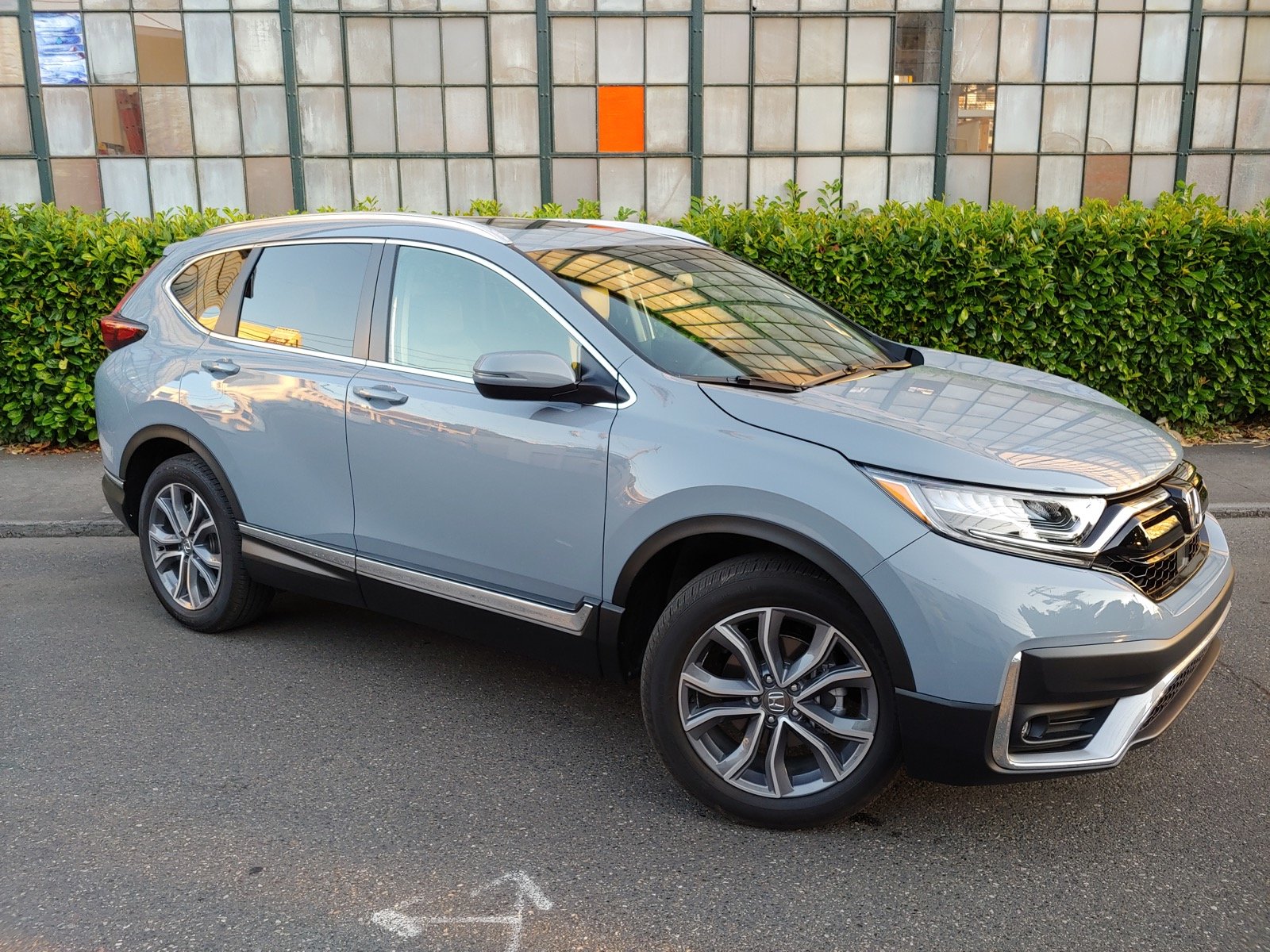
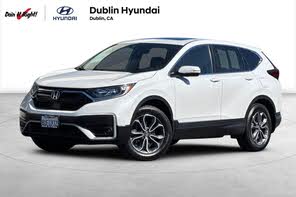
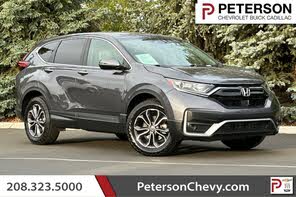
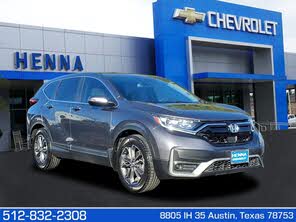
The 2020 Honda CR-V had been a familiar sight on the roads since its fifth generation debuted in the 2017 model year. Its design was both fun and instantly recognizable, sporting a soft, curvy, car-like aesthetic that leaned more towards a station wagon than a traditional SUV. The front and rear fascias bore a close resemblance to Honda’s sedan lineup, establishing a consistent family look. This design approach made the CR-V a paradigm of modern family transportation in terms of exterior styling.
However, the interior of the CR-V told a different story. A mish-mash of textures and materials characterized the cabin. While pricier models boasted nice touches like wood-look trim and leather upholstery, these upscale features clashed with some low-quality plastics, reminding drivers of the CR-V’s more economical roots.
Pricing for the 2020 CR-V started at $26,270 for the base front-wheel-drive LX model. Honda kept the lineup simple with only four trims: LX, EX, EX-L, and Touring, with all-wheel drive available as a $1,500 option across all trims. Standard 17-inch alloy wheels adorned the base model, while EX trims got 18-inch wheels, and the Touring model came with optional 19-inch wheels. Fabric seating was standard on the lower trims, with real leather on the top two trims. A moonroof was present on all but the base LX trim, although it wasn’t the expansive panoramic style offered by some competitors. Roof rails were limited to the Touring model, maintaining a low profile.
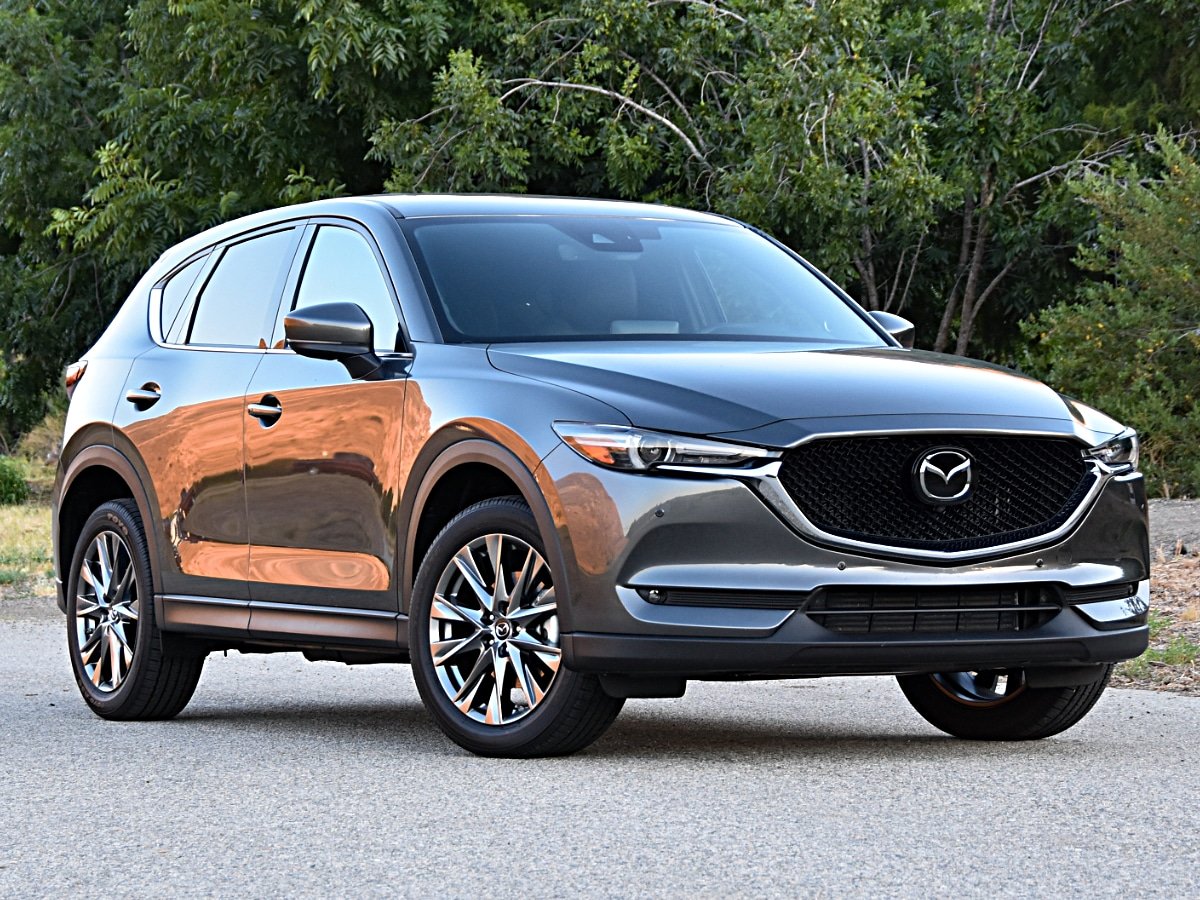
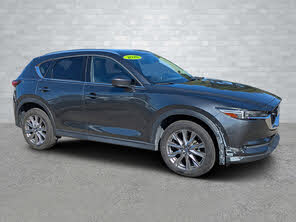
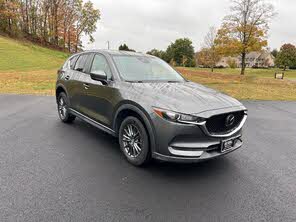
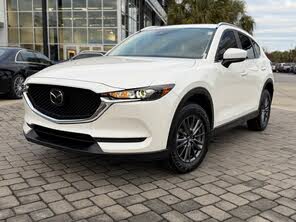
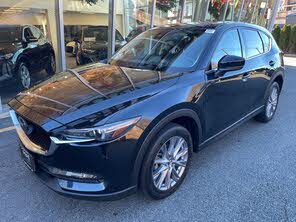
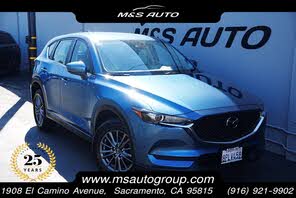
In contrast, the 2020 Mazda CX-5 embodied the idea of going premium. Mazda’s commitment to building better cars was evident in the CX-5’s captivating style and continual product improvements. For the 2020 model year, the CX-5 received more standard equipment, updated interior controls, and noise reduction enhancements, boosting its premium appeal.
Prices for the 2020 Mazda CX-5 ranged from $25,190 to $37,155, with trim levels including Sport, Touring, Grand Touring, Grand Touring Reserve, and Signature. The test model was a Signature trim equipped with premium features such as Nappa leather upholstery, real wood trim, and a black headliner for a luxurious cabin feel. Despite the luxurious materials, the Caturra Brown leather was almost indistinguishable from the otherwise black interior, reducing the desired contrast.
Mazda’s Kodo design language made the CX-5 look appealing and distinctive, managing to appear both upscale and stylish in a way that was challenging for many competitors. Inside, every trim of the CX-5 reflected a sense of style and good taste, with classy gauges and metallic accents throughout.


The 2020 Honda CR-V saw significant changes under its hood with the elimination of the previous base engine. Instead, all trims were equipped with a turbocharged 1.5-liter four-cylinder engine producing 190 horsepower and 179 pound-feet of torque, paired with a continuously variable automatic transmission (CVT). This setup proved well-matched to the CR-V, offering a balance between performance and fuel efficiency.
Despite the reputation some CVTs had for sluggishness and noisy operation, Honda’s engineers managed to make the CR-V’s CVT perform credibly, mimicking a traditional automatic transmission convincingly. While initial acceleration took a moment, the vehicle felt quick once in motion, particularly in Sport mode. The CR-V’s light curb weight of 3,337 pounds for the FWD LX model contributed to its agile handling and excellent fuel economy, with FWD models rated at 30 mpg combined and AWD models at 29 mpg combined.
In comparison, the 2020 Mazda CX-5 offered a standard 2.5-liter four-cylinder engine for its Sport, Touring, and Grand Touring trims, generating 187 horsepower and 186 pound-feet of torque, mated to a six-speed automatic transmission with Sport mode. The engine provided satisfactory performance, though not exceptional.
For those seeking more power, the Grand Touring Reserve and Signature trims featured a turbocharged version of the same engine, producing up to 250 horsepower and 320 pound-feet of torque on premium fuel (227 hp and 310 lb-ft on regular fuel). This turbocharged engine, paired exclusively with AWD, delivered robust acceleration despite the CX-5’s higher 3,825-pound curb weight. However, it came at the cost of efficiency, with the turbocharged engine rated at 24 mpg combined compared to 26 mpg for the non-turbo AWD variant.
Mazda’s focus on driving dynamics was evident in the CX-5, which featured G-Vectoring Control Plus (GVC Plus) technology to enhance handling. This system used brakes to stabilize the SUV during cornering, although the CX-5’s high center of gravity and excessive body motions detracted from the driving experience. Nonetheless, the precise steering and reliable brakes made the CX-5 a fun vehicle to drive in typical conditions.
Honda’s mastery of space utilization shone through in the 2020 CR-V. Its cabin was as roomy as the Volkswagen Tiguan’s, yet it didn’t feel oversized. The seating position was excellent, offering great front visibility and spacious head- and legroom for both the driver and passengers. The cargo compartment was equally impressive, providing 75.8 cubic feet with the rear seats folded—comparable to the Tiguan’s despite the CR-V’s shorter overall length.
Clever storage solutions were a hallmark of the CR-V, from the deep center console bin with a sliding cover to the two-position load floor in the rear, enhancing cargo versatility. The CR-V excelled in accommodating various items, making it an easy vehicle to live with daily.
The 2020 Mazda CX-5, while stylish and well-appointed, fell short in practicality compared to its competitors like the Honda CR-V and Toyota RAV4. The CX-5’s interior was elegant, with upscale materials and a refined design. However, it offered less space, with front and rear passengers experiencing a tighter fit.
While the front seats in the CX-5 Signature were comfortable, rear legroom was less generous, accommodating only two adults comfortably. The cargo space also lagged behind the CR-V, with 30.9 cubic feet behind the rear seats and a maximum of 59.6 cubic feet with the seats folded down. To compensate, Mazda focused on adding luxury features and a more extensive list of standard equipment, attempting to appeal to buyers looking for a more premium experience.
The 2020 Honda CR-V’s technology offerings revealed its age. The base LX trim came with a 5-inch screen that lacked essential features, offering only Bluetooth connectivity and Pandora compatibility. Even the 7-inch touchscreen available in higher trims was small compared to competitors’ infotainment systems. The absence of hard buttons and the need for multiple taps to operate the system made it less user-friendly.
Apple CarPlay and Android Auto were available only with the larger screen, improving the experience somewhat, but Honda’s navigation system remained subpar, found only in the Touring trim. However, Honda did provide plenty of USB ports in the CR-V EX trim and above, with two upfront and two high-powered ports in the backseat. The Touring trim also included a wireless phone charger for added convenience.
The 2020 Mazda CX-5, equipped with the Mazda Connect infotainment system, gave a more upscale impression, resembling the technology found in German luxury brands. The system featured a 7-inch touchscreen in the Sport trim, although it was operable by touch only when the vehicle was stationary. Higher trims added Apple CarPlay and Android Auto, an 8-inch touchscreen, satellite radio, and a Bose premium sound system, with the Signature trim offering advanced features like a navigation system and a surround-view camera.
Mazda Connect could be controlled via the touchscreen, center console controls, steering wheel buttons, or voice recognition, but each method had its drawbacks. The voice-recognition system, in particular, struggled with natural commands, often leaving drivers frustrated. Despite these issues, the presence of plenty of standard and advanced features gave the CX-5 an edge in the technology department.
The 2020 Honda CR-V came equipped with the “Honda Sensing” suite of safety features as standard, even on the base LX trim. This included forward-collision warning with automatic emergency braking, pedestrian detection, road-departure mitigation, and adaptive cruise control with lane-keeping assist. Automatic high beams were also standard, with EX trims and above adding blind-spot monitoring and cross-traffic alert.
In crash tests, the CR-V scored well, earning a five-star overall rating from the National Highway Traffic Safety Administration (NHTSA), with top marks in frontal and side crash tests and four stars in the rollover test. The Insurance Institute for Highway Safety (IIHS) awarded it a Top Safety Pick designation, contingent on the higher trims' LED headlights. A single recall for a possible rear subframe failure was issued for the 2020 model.
The 2020 Mazda CX-5 was equally commendable in terms of safety. Its i-Activsense package included adaptive cruise control, forward collision warning, automatic emergency braking, blind-spot monitoring, rear cross-traffic alert, lane departure warning, and lane-keep assist, along with standard LED headlights and rain-sensing wipers. Grand Touring trims added adaptive headlights for enhanced nighttime visibility.
The CX-5 earned the highest ratings in safety tests, receiving a Top Safety Pick+ from the IIHS and a five-star overall rating from the NHTSA. The strong performance in crash tests and the comprehensive safety features made the CX-5 a reliable choice for safety-conscious buyers.
CarGurus highlights
According to CarGurus experts, the overall rating for the 2020 Honda CR-V is 7.5 out of 10, while the 2020 Mazda CX-5 scores 7.7 out of 10. Based on these ratings, it is recommended to choose the 2020 Mazda CX-5 for those seeking a more premium experience with higher performance and exceptional safety features. However, if practicality, spaciousness, and fuel efficiency are your primary concerns, the 2020 Honda CR-V remains a strong contender.
Choose the 2020 Honda CR-V if:
- You prioritize interior space and clever storage solutions.
- You want impressive fuel efficiency for a compact SUV.
- You appreciate a well-rounded vehicle with a reliable reputation.





Choose the 2020 Mazda CX-5 if:
- You seek a more premium, upscale design and interior materials.
- You enjoy engaging driving dynamics and responsive handling.
- You value a comprehensive suite of standard safety features.




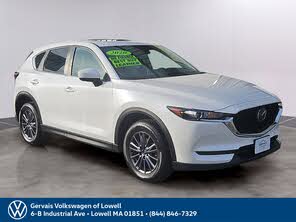
CarGurus highlights
According to CarGurus experts, the overall rating for the 2020 Honda CR-V is 7.5 out of 10, while the 2020 Mazda CX-5 scores 7.7 out of 10. Based on these ratings, it is recommended to choose the 2020 Mazda CX-5 for those seeking a more premium experience with higher performance and exceptional safety features. However, if practicality, spaciousness, and fuel efficiency are your primary concerns, the 2020 Honda CR-V remains a strong contender.
Choose the 2020 Honda CR-V if:
Shop Now- You prioritize interior space and clever storage solutions.
- You want impressive fuel efficiency for a compact SUV.
- You appreciate a well-rounded vehicle with a reliable reputation.







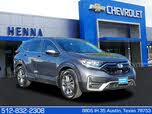


Choose the 2020 Mazda CX-5 if:
Shop Now- You seek a more premium, upscale design and interior materials.
- You enjoy engaging driving dynamics and responsive handling.
- You value a comprehensive suite of standard safety features.











By: CarGurus + AI
At CarGurus, our team of experienced automotive writers remain at the heart of our content operation, conducting hands-on car tests and writing insightful guides that are backed by years of industry experience. To complement this, we are harnessing AI to make our content offering more diverse and more helpful to shoppers than ever. To achieve this, our AI systems are based exclusively on CarGurus content, ratings and data, so that what we produce is both unique to CarGurus, and uniquely helpful to car shoppers.