2020 Honda CR-V Hybrid vs 2021 Volvo XC90

Overview | |
MSRP$27,850 | MSRP$49,000 |
Listings216 | Listings323 |
Ratings & Reviews | |
User Reviews | User Reviews |
Expert reviews7.3 out of 10 | Expert reviews7.7 out of 10 |
Pros
Cons
| Pros
Cons
|
2020 Honda CR-V Hybrid Reviews SummaryOne of the forerunners to today’s seemingly never-ending onslaught of crossover SUV debuts, the Honda CR-V entered the market when SUV meant body-on-frame truck and CUV meant, well, nothing. The year was 1996 and the only other crossover option in the U.S. was the Toyota RAV4, which went on sale the year prior. Since then, hybrid technology has become commonplace. Yet, Americans have lived without a battery-assisted Honda crossover. That finally changes, with the debut of the 2020 Honda CR-V Hybrid. | |
2021 Volvo XC90 Reviews SummaryVolvo may be known for sensible station wagons, but the XC90 SUV is the Swedish automaker’s de facto flagship. The current generation debuted design features, technology, and powertrains that have since found their way into most other Volvo models. Several years into the current-generation model’s lifecycle, the XC90 is no longer a trendsetter, but remains Volvo’s contender in the competitive midsize luxury SUV segment, with the automaker’s typical emphasis on safety features. The current-generation XC90 launched for the 2016 model year, so most competitors—including the Audi Q7, Acura MDX, BMW X5, and Mercedes-Benz GLE-Class—have been updated or redesigned since then. The Cadillac XT6 and Lincoln Aviator didn’t even exist when this generation of XC90 launched. A redesigned version is expected to arrive soon, so changes to the 2021 XC90 are minimal. All 2021 Volvo models are now limited to 112 mph for safety reasons and get Care Key, which lets owners limit the top speed before loaning the car out to a friend or family member. The XC90 also gets a handful of newly standard tech features, and some small cosmetic changes. Volvo offers the XC90 in three trim levels—Momentum, R-Design, and Inscription—with three powertrain options: T5 and T6 gasoline engines, and the T8 plug-in hybrid. Our test car was a range-topping T8 Recharge Inscription, combining the top Inscription trim level with the plug-in hybrid powertrain, which has the highest output of the three. | |
No video found | No video found |
Popular Features & Specs | |
Engine2.0L 212 hp I4 Hybrid | Engine2.0L 250 hp I4 |
Drive TrainAWD | Drive TrainFWD |
Seating Capacity5 | Seating Capacity7 |
Horsepower212 hp @ 6200 rpm | Horsepower250 hp @ 5500 rpm |
EV Battery Capacity1.3 kWh | EV Battery Capacity |
MPG City40 | MPG City21 |
MPG Highway35 | MPG Highway30 |
Engine | |
Engine Name2.0L 212 hp I4 Hybrid | Engine Name2.0L 250 hp I4 |
Torque | Torque258 lb-ft @ 1500 rpm |
Horsepower212 hp @ 6200 rpm | Horsepower250 hp @ 5500 rpm |
DrivetrainAWD | DrivetrainFWD |
Fuel Economy | |
EV Battery Capacity1.3 kWh | EV Battery Capacity |
MPG City40 | MPG City21 |
MPG Highway35 | MPG Highway30 |
Interior | |
Seating Capacity5 | Seating Capacity7 |
Key Features | |
Sunroof/Moonroof | Sunroof/MoonroofStandard |
Safety | |
Front Crash Overall5 | Front Crash Overall5 |
Side Crash Overall5 | Side Crash Overall5 |
Dimensions & Capacity | |
Cargo Space33.2 cu ft | Cargo Space10.7 cu ft |
Curb Weight3649 lbs | Curb Weight4374 lbs |
Height66.5 in | Height69.9 in |
Length182.1 in | Length195.0 in |
Width73.0 in | Width84.3 in |
Wheelbase104.7 in | Wheelbase117.5 in |
Maximum Payload | Maximum Payload1631 lbs |
Number of doors4 | Number of doors4 |
Maximum Towing Capacity | Maximum Towing Capacity4000 lbs |
Overview | ||
MSRP | $27,850 | $49,000 |
Listings | ||
Ratings & Reviews | ||
User reviews | ||
Expert reviews | 7.3 out of 10Read full review | 7.7 out of 10Read full review |
Pros & cons | Pros
Cons
| Pros
Cons
|
Summary | One of the forerunners to today’s seemingly never-ending onslaught of crossover SUV debuts, the Honda CR-V entered the market when SUV meant body-on-frame truck and CUV meant, well, nothing. The year was 1996 and the only other crossover option in the U.S. was the Toyota RAV4, which went on sale the year prior. Since then, hybrid technology has become commonplace. Yet, Americans have lived without a battery-assisted Honda crossover. That finally changes, with the debut of the 2020 Honda CR-V Hybrid. | Volvo may be known for sensible station wagons, but the XC90 SUV is the Swedish automaker’s de facto flagship. The current generation debuted design features, technology, and powertrains that have since found their way into most other Volvo models. Several years into the current-generation model’s lifecycle, the XC90 is no longer a trendsetter, but remains Volvo’s contender in the competitive midsize luxury SUV segment, with the automaker’s typical emphasis on safety features. The current-generation XC90 launched for the 2016 model year, so most competitors—including the Audi Q7, Acura MDX, BMW X5, and Mercedes-Benz GLE-Class—have been updated or redesigned since then. The Cadillac XT6 and Lincoln Aviator didn’t even exist when this generation of XC90 launched. A redesigned version is expected to arrive soon, so changes to the 2021 XC90 are minimal. All 2021 Volvo models are now limited to 112 mph for safety reasons and get Care Key, which lets owners limit the top speed before loaning the car out to a friend or family member. The XC90 also gets a handful of newly standard tech features, and some small cosmetic changes. Volvo offers the XC90 in three trim levels—Momentum, R-Design, and Inscription—with three powertrain options: T5 and T6 gasoline engines, and the T8 plug-in hybrid. Our test car was a range-topping T8 Recharge Inscription, combining the top Inscription trim level with the plug-in hybrid powertrain, which has the highest output of the three. |
Video | No video found | No video found |
Popular Features & Specs | ||
Engine | 2.0L 212 hp I4 Hybrid | 2.0L 250 hp I4 |
Drive Train | AWD | FWD |
Seating Capacity | 5 | 7 |
Horsepower | 212 hp @ 6200 rpm | 250 hp @ 5500 rpm |
EV Battery Capacity | 1.3 kWh | |
MPG City | 40 | 21 |
MPG Highway | 35 | 30 |
Engine | ||
Engine Name | 2.0L 212 hp I4 Hybrid | 2.0L 250 hp I4 |
Torque | 258 lb-ft @ 1500 rpm | |
Horsepower | 212 hp @ 6200 rpm | 250 hp @ 5500 rpm |
Drivetrain | AWD | FWD |
Fuel Economy | ||
EV Battery Capacity | 1.3 kWh | |
MPG City | 40 | 21 |
MPG Highway | 35 | 30 |
Interior | ||
Seating Capacity | 5 | 7 |
Key Features | ||
Sunroof/Moonroof | Standard | |
Safety | ||
Front Crash Overall | 5 | 5 |
Side Crash Overall | 5 | 5 |
Dimensions & Capacity | ||
Cargo Space | 33.2 cu ft | 10.7 cu ft |
Curb Weight | 3649 lbs | 4374 lbs |
Height | 66.5 in | 69.9 in |
Length | 182.1 in | 195.0 in |
Width | 73.0 in | 84.3 in |
Wheelbase | 104.7 in | 117.5 in |
Maximum Payload | 1631 lbs | |
Number of doors | 4 | 4 |
Maximum Towing Capacity | 4000 lbs | |
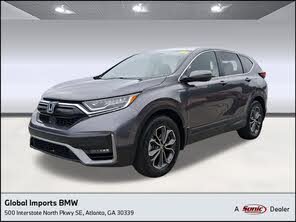
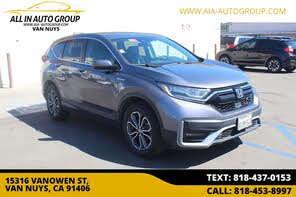
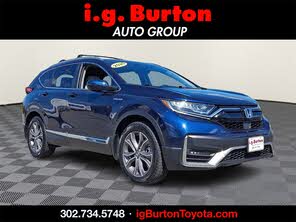
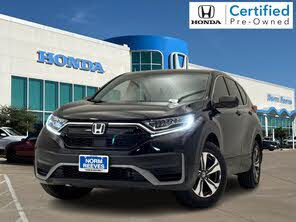
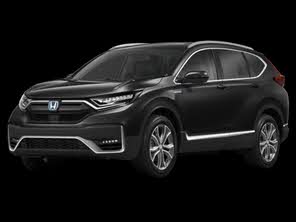
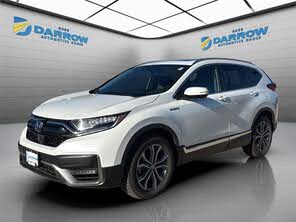
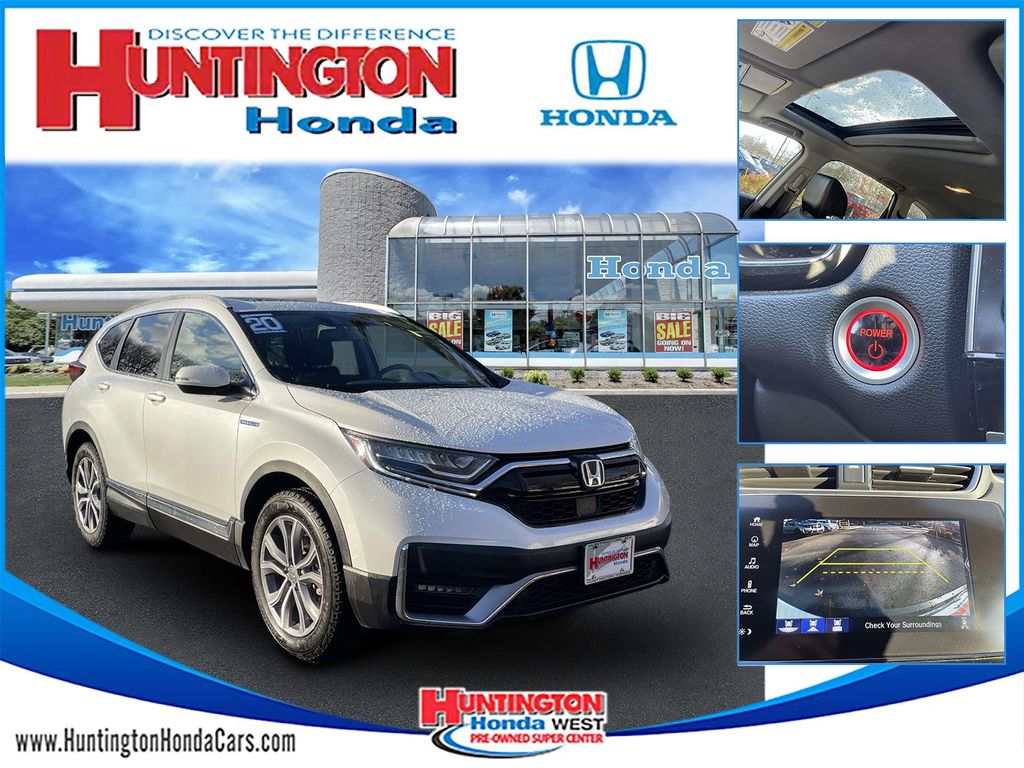
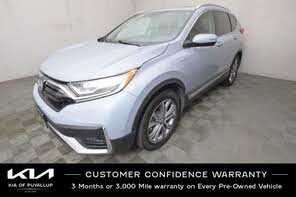
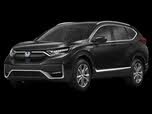
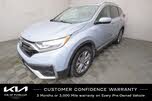
The 2020 Honda CR-V Hybrid, which saw its debut following a mid-cycle refresh in 2017, retained its visual and dimensional similarities to the gasoline-powered CR-V. Measurements for length, width, and height remained the same at 182.1, 73.0, and 66.5 inches, respectively. The hybrid Touring model included 19-inch alloy wheels identical to its gasoline counterpart. Interior design also remained consistent, with features like the dash, multi-function center console, 7-inch infotainment screen, and steering-wheel-mounted functions remaining unchanged.
However, there were subtle exterior differences. The hybrid variant was distinguishable by blue-outlined Honda emblems and “Hybrid” badging on the A-pillars and tailgate, along with a hidden exhaust in the rear lower bumper. Higher trims included LED fog lights, absent in gasoline models. Inside, a push-button gear selector replaced the traditional gear shifter, aligning with Honda’s other hybrids. The new paddle shifters allowed for brake regeneration adjustments rather than shifting gears. Though the instrument panel remained the same, it now displayed information about the new driving modes - Normal, EV, Econ, and Sport.
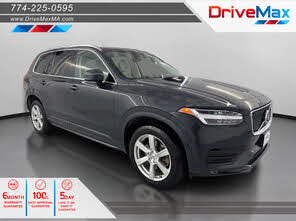
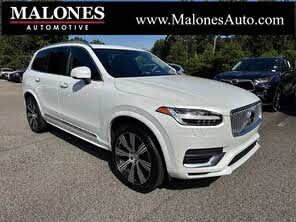
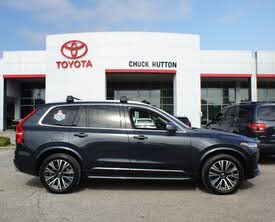
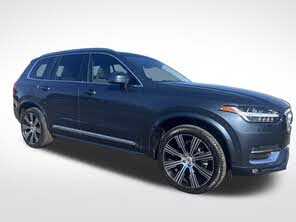
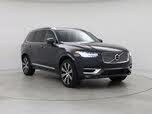
Contrastingly, the 2021 Volvo XC90 was a testament to the automaker's ability to reshape its image through smart design. Since its debut in 2016, Volvo managed to inject character into the XC90 while holding onto traditional traits like a boxy profile and a blunt front end with a rectangular grille. By incorporating softer lines, more chrome, and distinctive “Thor’s Hammer” LED headlights, the XC90 stood out without sacrificing its Volvo identity.
The XC90 Inscription test car, the flashiest of the trims, featured extra chrome and optional 21-inch alloy wheels. The sporty R-Design trim gained a new gloss-black grille surround for 2021, while the base Momentum trim sported new 19-inch wheels. Built on Volvo's Scalable Product Architecture (SPA), the XC90 shared this platform with several other Volvo models, ensuring a family resemblance across the lineup.
Inside, the XC90 epitomized “Swedish minimalism.” It offered premium materials in a well-thought-out arrangement. Matte-finish wood trim provided an authentic look, and unique options like wool upholstery added a touch of bespoke luxury. The Orrefors crystal shifter in the Inscription model was a high-end touch that, while lavish, seemed slightly out of place amidst the otherwise understated design.


The 2020 Honda CR-V Hybrid came equipped with a robust two-motor hybrid system powertrain standard with all-wheel drive (AWD). It integrated a 2.0-liter 4-cylinder gasoline engine with an electric generator/starter motor and a propulsion motor, eliminating the need for a traditional automatic or continuously variable transmission. The system produced a combined 212 horsepower and 232 pound-feet of torque, outperforming the gasoline variant's 190 horsepower and 179 pound-feet of torque.
Fuel economy saw a significant improvement as well, with the hybrid achieving an EPA-rated 40 mpg city, 35 highway, and 38 combined, compared to the gasoline model's 27/32/29 mpg. Despite ranking third among hybrid competitors like the Ford Escape and Toyota RAV4, actual driving in Tucson, Arizona delivered impressive results of nearly 41 mpg over a 65-mile city route.
However, the system’s limited EV mode functionality, operational for barely a mile, often switched out, rendering it almost impractical for anything beyond parking maneuvers. While the sporty drive mode enhanced the hybrid’s throttle and torque responses, it lacked the additional driving options found in competitor models.
In comparison, the 2021 Volvo XC90 featured three powertrain options, all centered around a 2.0-liter 4-cylinder engine and eight-speed automatic transmission. The base T5 model, with a turbocharged engine, delivered 250 horsepower and 258 pound-feet of torque. The T6 model, utilizing both turbocharging and supercharging, boosted output to 316 horsepower and 295 pound-feet of torque. The T8 Twin Engine plug-in hybrid combined the T6 engine with electric assists, producing an impressive 400 horsepower and 472 pound-feet of torque.
While this power was sufficient for the SUV’s size, the small engine struggled to match the flexibility of rivals' six-cylinder or V8 engines. The T8, similar to other plug-in hybrids, forced drivers to choose between efficiency and power through its three drive modes—Pure, Hybrid, and Power. Pure mode, intended for all-electric driving, was challenging to maintain as the gasoline engine engaged frequently.
The XC90 excelled in terms of ride quality and old-school luxury, aided by an optional air suspension system that smoothed out road imperfections while minimizing body roll during cornering. It boasted a quiet cabin, limiting noise intrusion to air conditioning and seat ventilation on hot days. Capacities for towing were competitive, with most XC90 models pulling 5,000 pounds, reaching up to 4,000 pounds for the base T5 FWD model.
The 2020 Honda CR-V Hybrid offered a practical yet compromised cargo capacity due to the battery pack placement beneath the cargo floor. It provided 33.2 cubic feet of space behind the rear seats, expandable to 68.7 cubic feet when folded flat, compared to the non-hybrid’s 39.2 and 75.8 cubic feet respectively. Despite this sacrifice, it still delivered more cargo volume than the Ford Escape Hybrid, while the Toyota RAV4 Hybrid edged it out slightly.
Regarding passenger space, the CR-V Hybrid surpassed competitors in front headroom and rear legroom, ensuring comfort despite cargo compromises. It also featured a configurable center console bin with a sliding cover, but the overly eager armrest adjustability posed a minor inconvenience.
In contrast, the 2021 Volvo XC90, available in six-seat or seven-seat configurations, balanced luxury with practicality. Though headroom and legroom were average, third-row space remained tight for adults, and the seats' firmness detracted from long-ride comfort. The airy feel afforded by the power moonroof and the upright roof profile somewhat mitigated these drawbacks.
Storage was limited, with a shallow center console bin and scant console options. Cargo space in the T8 Recharge model measured 11.2 cubic feet with all seats in place, expandable to 34.1 cubic feet with the rear seats down, and 64.1 cubic feet with second and third rows folded—placing it near the bottom of the segment. Nonetheless, it compensated with a hands-free power tailgate for ease of access.
The 2020 Honda CR-V Hybrid addressed tech and infotainment needs adequately. Standard features included Bluetooth connectivity, Pandora compatibility, and one 1.0-amp USB port. Higher trims offered enhancements beginning with the EX, which added a 7-inch touchscreen display, Honda Link, smartphone integration, SiriusXM, HD radio, and multiple USB ports. The top-tier Touring trim included navigation, wireless charging, and a 330-watt premium audio system.
Despite these features, the CR-V’s system was hindered by cumbersome navigation through information and driver-assistance menus, which could be distracting. For example, disabling the automatic beep required multiple steps buried deep in the settings.
In contrast, the 2021 Volvo XC90 featured the intuitive and efficient Sensus infotainment system. Standard offerings included a 9-inch touchscreen, 12.3-inch digital instrument cluster, Apple CarPlay/Android Auto compatibility, Bluetooth, and a built-in WiFi hotspot. Additional tech features such as a 19-speaker Bowers & Wilkins audio system and a head-up display (HUD) were available.
The portrait-oriented touchscreen offered simple, tablet-like navigation through menus, aligning with Volvo’s minimalist interior design. However, the text size and typeface occasionally made reading menus while driving challenging. The wireless charging pad added in 2021 was undersized for many phones, and the lack of front USB-C ports could inconvenience drivers with newer devices.
The 2020 Honda CR-V Hybrid garnered high safety marks, earning a Top Safety Pick designation from the IIHS and a 5-Star Safety Rating from NHTSA. Standard safety features under the Honda Sensing suite included automatic braking, forward-collision warning with pedestrian detection, lane-departure warning, lane-keep assist, adaptive cruise control with stop-and-go, automatic high beams, and a multi-angle rearview camera. Blind-spot monitoring and rear cross-traffic alert were available from the EX trim onward.
Similarly, the 2021 XC90 achieved the highest “Top Safety Pick+” rating from the IIHS, although this only applied to non-hybrid models, as the T8 hybrid version had not been rated. The non-hybrid XC90 models earned top scores in all IIHS crash tests and high marks for front-crash prevention.
The NHTSA awarded all XC90 models a five-star rating overall, with specific marks in various categories. Standard safety features were abundant, including lane-keep assist, driver-attention monitor, traffic-sign recognition, blind-spot monitoring, rear cross-traffic alert, automatic emergency braking, and Volvo’s Pilot Assist—a combination of adaptive cruise control and lane centering that stood out for its smoothness and quick responsiveness, though it was not perfect on curvier roads.
CarGurus highlights

According to CarGurus experts, the overall rating for the 2020 Honda CR-V Hybrid is 7.3 out of 10, while the 2021 Volvo XC90 scores 7.7 out of 10. While both vehicles offer compelling features, strong performance, and excellent safety ratings, the 2021 Volvo XC90 stands out with its luxurious interior, advanced technology, and higher overall rating. Therefore, based on these evaluations, the 2021 Volvo XC90 is the recommended choice for those seeking a blend of luxury, safety, and cutting-edge tech.
Choose the 2020 Honda CR-V Hybrid if:
- You prioritize fuel efficiency and lower running costs.
- You need more passenger space, especially in the front and rear seating areas.
- You seek a vehicle with a simple, practical design and familiar controls.


Choose the 2021 Volvo XC90 if:
- You desire a luxury SUV with premium materials and a sophisticated, minimalist design.
- You need robust safety features and high safety ratings.
- You appreciate advanced infotainment systems that are intuitive and easy to use.






CarGurus highlights
According to CarGurus experts, the overall rating for the 2020 Honda CR-V Hybrid is 7.3 out of 10, while the 2021 Volvo XC90 scores 7.7 out of 10. While both vehicles offer compelling features, strong performance, and excellent safety ratings, the 2021 Volvo XC90 stands out with its luxurious interior, advanced technology, and higher overall rating. Therefore, based on these evaluations, the 2021 Volvo XC90 is the recommended choice for those seeking a blend of luxury, safety, and cutting-edge tech.
Choose the 2020 Honda CR-V Hybrid if:
Shop Now- You prioritize fuel efficiency and lower running costs.
- You need more passenger space, especially in the front and rear seating areas.
- You seek a vehicle with a simple, practical design and familiar controls.







Choose the 2021 Volvo XC90 if:
Shop Now- You desire a luxury SUV with premium materials and a sophisticated, minimalist design.
- You need robust safety features and high safety ratings.
- You appreciate advanced infotainment systems that are intuitive and easy to use.









By: CarGurus + AI
At CarGurus, our team of experienced automotive writers remain at the heart of our content operation, conducting hands-on car tests and writing insightful guides that are backed by years of industry experience. To complement this, we are harnessing AI to make our content offering more diverse and more helpful to shoppers than ever. To achieve this, our AI systems are based exclusively on CarGurus content, ratings and data, so that what we produce is both unique to CarGurus, and uniquely helpful to car shoppers.