2019 Hyundai Santa Fe vs 2020 Ford Explorer
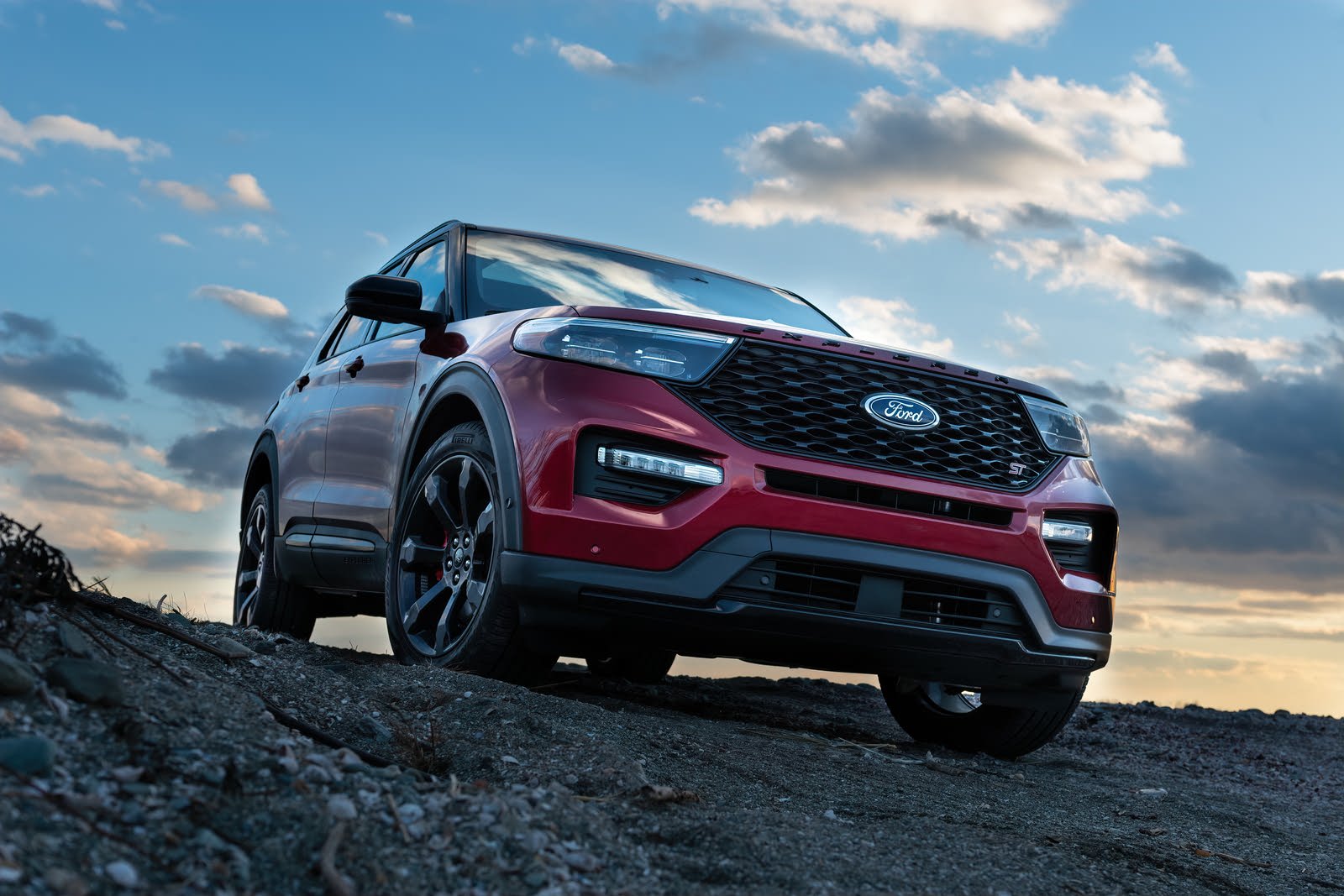
Overview | |
MSRP$25,750 | MSRP$32,765 |
Listings147 | Listings535 |
Ratings & Reviews | |
User Reviews | User Reviews |
Expert reviews8.2 out of 10 | Expert reviews7.2 out of 10 |
Pros
Cons
| |
2019 Hyundai Santa Fe Reviews SummaryTechnically, the 2019 Hyundai Santa Fe is listed as a midsize SUV, but this is a stretch. Now entering its fourth generation, the Santa Fe fits somewhere between a compact SUV like the Toyota RAV4, Honda CR-V, or Nissan Rogue and a midsize like the Toyota Highlander, Honda Pilot, or Nissan Pathfinder. This vehicle actually replaces the 2-row Santa Fe Sport. The previous Santa Fe was a 3-row version, and it is still available, largely unchanged, but now named the Santa Fe XL. It will most likely be phased out of production, as Hyundai has a true 3-row midsize called the Palisade arriving this summer for the 2020 model year. But back to the car at hand: The 2019 Hyundai Santa Fe is a true quality crossover. While it's technically large enough to compete against midsize SUVs, it shines as a great value when cross-shopped against other compact crossovers. | |
2020 Ford Explorer Reviews SummaryFor nearly 30 years, the Ford Explorer has settled into the American lexicon like Cheerios. We've gobbled up millions of them, from the rock-crawling Eddie Bauers of the 1990s to the brand-new ST that can take down sports cars. The 2020 Explorer brings an all-new chassis, cranks up the technology, and introduces hybrid and high-performance powertrains in a space the size of a small living room. The Explorer's also getting very expensive while other automakers catch on to Ford's winning formula—for a lot less money. | |
Popular Features & Specs | |
Engine2.4L 185 hp I4 | Engine2.3L 300 hp I4 |
Drive TrainFWD | Drive TrainRWD |
Seating Capacity5 | Seating Capacity7 |
Horsepower185 hp @ 6000 rpm | Horsepower |
MPG City22 | MPG City21 |
MPG Highway29 | MPG Highway28 |
Engine | |
Engine Name2.4L 185 hp I4 | Engine Name2.3L 300 hp I4 |
Torque178 lb-ft @ 4000 rpm | Torque |
Horsepower185 hp @ 6000 rpm | Horsepower |
DrivetrainFWD | DrivetrainRWD |
Fuel Economy | |
MPG City22 | MPG City21 |
MPG Highway29 | MPG Highway28 |
Interior | |
Seating Capacity5 | Seating Capacity7 |
Safety | |
Front Crash Overall4 | Front Crash Overall5 |
Side Crash Overall5 | Side Crash Overall5 |
Dimensions & Capacity | |
Cargo Space35.9 cu ft | Cargo Space18.2 cu ft |
Curb Weight3803 lbs | Curb Weight4345 lbs |
Height66.1 in | Height69.9 in |
Length187.8 in | Length198.8 in |
Width74.4 in | Width89.3 in |
Wheelbase108.9 in | Wheelbase119.1 in |
Maximum Payload926 lbs | Maximum Payload1425 lbs |
Number of doors4 | Number of doors4 |
Maximum Towing Capacity2000 lbs | Maximum Towing Capacity5300 lbs |
Overview | ||
MSRP | $25,750 | $32,765 |
Listings | ||
Ratings & Reviews | ||
User reviews | ||
Expert reviews | 8.2 out of 10Read full review | 7.2 out of 10Read full review |
Pros & cons | Pros
Cons
| |
Summary | Technically, the 2019 Hyundai Santa Fe is listed as a midsize SUV, but this is a stretch. Now entering its fourth generation, the Santa Fe fits somewhere between a compact SUV like the Toyota RAV4, Honda CR-V, or Nissan Rogue and a midsize like the Toyota Highlander, Honda Pilot, or Nissan Pathfinder. This vehicle actually replaces the 2-row Santa Fe Sport. The previous Santa Fe was a 3-row version, and it is still available, largely unchanged, but now named the Santa Fe XL. It will most likely be phased out of production, as Hyundai has a true 3-row midsize called the Palisade arriving this summer for the 2020 model year. But back to the car at hand: The 2019 Hyundai Santa Fe is a true quality crossover. While it's technically large enough to compete against midsize SUVs, it shines as a great value when cross-shopped against other compact crossovers. | For nearly 30 years, the Ford Explorer has settled into the American lexicon like Cheerios. We've gobbled up millions of them, from the rock-crawling Eddie Bauers of the 1990s to the brand-new ST that can take down sports cars. The 2020 Explorer brings an all-new chassis, cranks up the technology, and introduces hybrid and high-performance powertrains in a space the size of a small living room. The Explorer's also getting very expensive while other automakers catch on to Ford's winning formula—for a lot less money. |
Video | ||
Popular Features & Specs | ||
Engine | 2.4L 185 hp I4 | 2.3L 300 hp I4 |
Drive Train | FWD | RWD |
Seating Capacity | 5 | 7 |
Horsepower | 185 hp @ 6000 rpm | |
MPG City | 22 | 21 |
MPG Highway | 29 | 28 |
Engine | ||
Engine Name | 2.4L 185 hp I4 | 2.3L 300 hp I4 |
Torque | 178 lb-ft @ 4000 rpm | |
Horsepower | 185 hp @ 6000 rpm | |
Drivetrain | FWD | RWD |
Fuel Economy | ||
MPG City | 22 | 21 |
MPG Highway | 29 | 28 |
Interior | ||
Seating Capacity | 5 | 7 |
Safety | ||
Front Crash Overall | 4 | 5 |
Side Crash Overall | 5 | 5 |
Dimensions & Capacity | ||
Cargo Space | 35.9 cu ft | 18.2 cu ft |
Curb Weight | 3803 lbs | 4345 lbs |
Height | 66.1 in | 69.9 in |
Length | 187.8 in | 198.8 in |
Width | 74.4 in | 89.3 in |
Wheelbase | 108.9 in | 119.1 in |
Maximum Payload | 926 lbs | 1425 lbs |
Number of doors | 4 | 4 |
Maximum Towing Capacity | 2000 lbs | 5300 lbs |
The 2019 Hyundai Santa Fe represented a significant departure from Hyundai's traditionally conservative styling. This model led Hyundai's charge into more daring and futuristic designs. It featured an exterior that was bold and eye-catching, characterized by a unique lighting arrangement similar to that of the 2014-2018 Jeep Cherokees. The Santa Fe sported an upper LED strip for daytime running lights and main headlight assemblies in mid-level clusters, resembling oversized fog lights but executed with more finesse.
Inside, the Santa Fe combined modernity and practicality. The cabin had a modern, crisp feel without sacrificing functionality. It included deep compartments in the doors and center console, and the interior design was imbued with a surprisingly organic ambiance. The Ultimate trim test vehicle showcased earthy tones, a unique speaker pattern, and a textured, sweatshirt-like headliner, achieving a balance of style and usability.
The Santa Fe was available in multiple trims: SE, SEL, SEL Plus, Limited, and Ultimate. The base SE trim came with standard 17-inch alloy wheels, high-beam assist, and power heated side mirrors. The interiors featured manually controlled seats and remote keyless entry. The SEL trim added fog lights, an 8-way power driver’s seat, and push-button start, while the SEL Plus included 18-inch alloy wheels, dual automatic climate control, and a premium Infinity sound system. The Limited trim boasted full LED headlights, satin chrome door handles, and leather seating. The top-tier Ultimate trim was equipped with features like a panoramic sunroof, rain-sensing wipers, memory settings for the front seats, and ventilated front seats.
The 2020 Ford Explorer had an imposing exterior and refined an already handsome design reminiscent of the Land Rover Discovery. The latest model appeared lower and more athletic, with wide headlights, a large grille, and bold "Explorer" lettering on the hood, creating a recognizable and prominent face. Despite retaining an overall utilitarian look, the ST version with black 21-inch rims, red brake calipers, and quad exhaust pipes exuded a sporty charisma.
However, the Explorer's interior was a different story. Despite its price point—reaching up to $60,000—interior materials felt subpar with low-grade vinyl and hard plastics making up much of the door panels and center console. The aluminum speaker covers and white stitching offered some relief from the black monotony. The dashboard was padded, and the switchgear felt solid, but the overall interior could not compete with similarly priced vehicles from luxury brands. Advanced features in the ST model, such as a 12-inch digital instrument cluster and a large vertical touchscreen, were well-received but did not fully compensate for the lack of luxury feel.


The 2019 Santa Fe offered two engines. The base engine was a 2.4-liter 4-cylinder making 185 horsepower and 178 pound-feet of torque. The Limited and Ultimate trims had an option for a turbocharged 2.0-liter 4-cylinder engine producing 235 horsepower and 260 pound-feet of torque. Power was sent through an 8-speed automatic transmission to either the front wheels or an available all-wheel-drive system (AWD).
The base engine was considered sluggish, while the turbocharged 2.0 engine delivered strong acceleration both from a standstill and at highway speeds, though it wasn't available in the lower trims. The Santa Fe had 7.2 inches of ground clearance, offering a stable ride with minimal body roll for its size. It also featured a drive mode selector with Sport, Comfort, and Smart settings, adjusting the throttle response and shift-mapping.
Fuel efficiency for the front-wheel-drive Santa Fe with the 2.4-liter engine was rated at 22 mpg city, 29 highway, and 25 combined. The AWD turbo model returned 19 mpg city, 24 highway, and 21 combined, and in practical usage, an average of 22 mpg was achieved.
For the 2020 Ford Explorer, the investment in a rear-wheel-drive (RWD) chassis paid off significantly. The RWD setup allowed for better weight distribution, akin to luxury automakers like BMW. The ST model excelled with its crisp handling, sharp steering, and minimal body roll, making it a nimble vehicle despite its size. Ride quality was firm but not harsh, thanks to the well-tuned suspension by Ford Performance.
The Explorer ST featured a robust 3.0-liter twin-turbo V6 engine generating 400 horsepower and 415 pound-feet of torque, paired with a 10-speed automatic transmission. All-wheel drive was optional, and the power delivery was smooth, with minimal jerking during downshifts. The turbo V6 was also available in the Platinum trim with 365 horsepower and 380 pound-feet of torque. The standard engine across most trims was a 2.3-liter turbo inline-four with 300 horsepower, and 310 pound-feet of torque. There was also a hybrid option combining a 3.3-liter V6 with an electric motor for a net 318 horsepower.
Fuel efficiency varied with the engine choice. The hybrid was rated at 23 mpg city, 26 highway, and 25 combined with AWD. The 2.3-liter turbo inline-four delivered 20 mpg city, 27 highway, and 23 combined. The turbo V6 with AWD was rated at 18 mpg city, 24 highway, and 20 combined, but practical usage saw an average of 18 mpg. Towing capacities were impressive: the hybrid could tow 5,000 pounds, the 4-cylinder up to 5,300 pounds, and the V6 with AWD up to 5,600 pounds.
The interior space and cargo capacity of the 2019 Hyundai Santa Fe were somewhat limited for a midsize crossover. With the rear seats folded, it offered 71 cubic feet of cargo space, less than the compact Honda CR-V, which had 75 cubic feet. With the rear seats up, it provided 35.9 cubic feet. The Santa Fe featured a hands-free power liftgate and multiple storage compartments, making it practical despite its modest cargo space.
In contrast, the 2020 Ford Explorer excelled in form and function, offering comfortable seating and ample interior space. On a Christmas road trip, the Explorer accommodated three adults and their gear comfortably. Its redesigned interior felt airier, particularly in the third row, which could fit six-foot-tall adults for short trips. The Explorer's cargo capacities were improved, offering 18 cubic feet behind the third row, 48 cubic feet behind the second row, and a class-leading 88 cubic feet with all seats folded.
The Explorer's ergonomics were also well-thought-out, featuring physical knobs and switches for climate and stereo controls. However, thick D-pillars and fuzzy 360-degree cameras created some blind spots. Still, the overall driving experience was stress-free and intuitive.
The 2019 Hyundai Santa Fe was well-equipped in terms of technology. The base SE trim came with a 7-inch touchscreen infotainment system featuring Apple CarPlay and Android Auto. Higher trims like the SEL and above added satellite radio, HD Radio, and Hyundai’s BlueLink system with Alexa integration. The Ultimate trim included a head-up display, an 8-inch touchscreen, and additional features like rear USB ports and a wall-style power outlet. The infotainment system was user-friendly, with a logical layout, bright graphics, and hard buttons and dials for easy operation.
The 2020 Ford Explorer came with an 8-inch touchscreen featuring Sync 3, Apple CarPlay, Android Auto, and 4G WiFi as standard. Factory navigation was standard on all trims except the base XLT. Keyless entry, remote start, 3-zone climate control, and SiriusXM satellite radio were also standard. The Explorer offered a 10-inch vertical touchscreen and a 12-inch digital instrument cluster on the ST and Platinum models. These features made navigation easier and provided a high-resolution interface for various settings. The Co-Pilot360 Assist+ system included adaptive cruise control and semi-automated driving assistance, though it was somewhat less refined than competitors' systems.
The 2019 Hyundai Santa Fe came with a comprehensive suite of safety features. Standard equipment included front- and side-impact airbags, a reversing camera, and a tire pressure monitoring system. Hyundai’s Smart Sense suite included forward-collision avoidance, blind-spot monitoring, lane-departure warning, and adaptive cruise control with stop-and-go capability. The Safe Exit Assist System tied the rear child-proof locks to the blind-spot monitoring, preventing the rear doors from opening if a car was approaching.
The 2020 Ford Explorer also offered robust safety features. The standard Ford Co-Pilot 360 included forward emergency braking, blind-spot monitoring, auto high beams, and lane-keep assist. The Assist+ option added adaptive cruise control with steering assist and reverse braking, though the latter could be overly sensitive at times. While the NHTSA had not tested the 2020 Explorer, the IIHS had rated it Acceptable in the small overlap test on the driver’s side.
CarGurus highlights
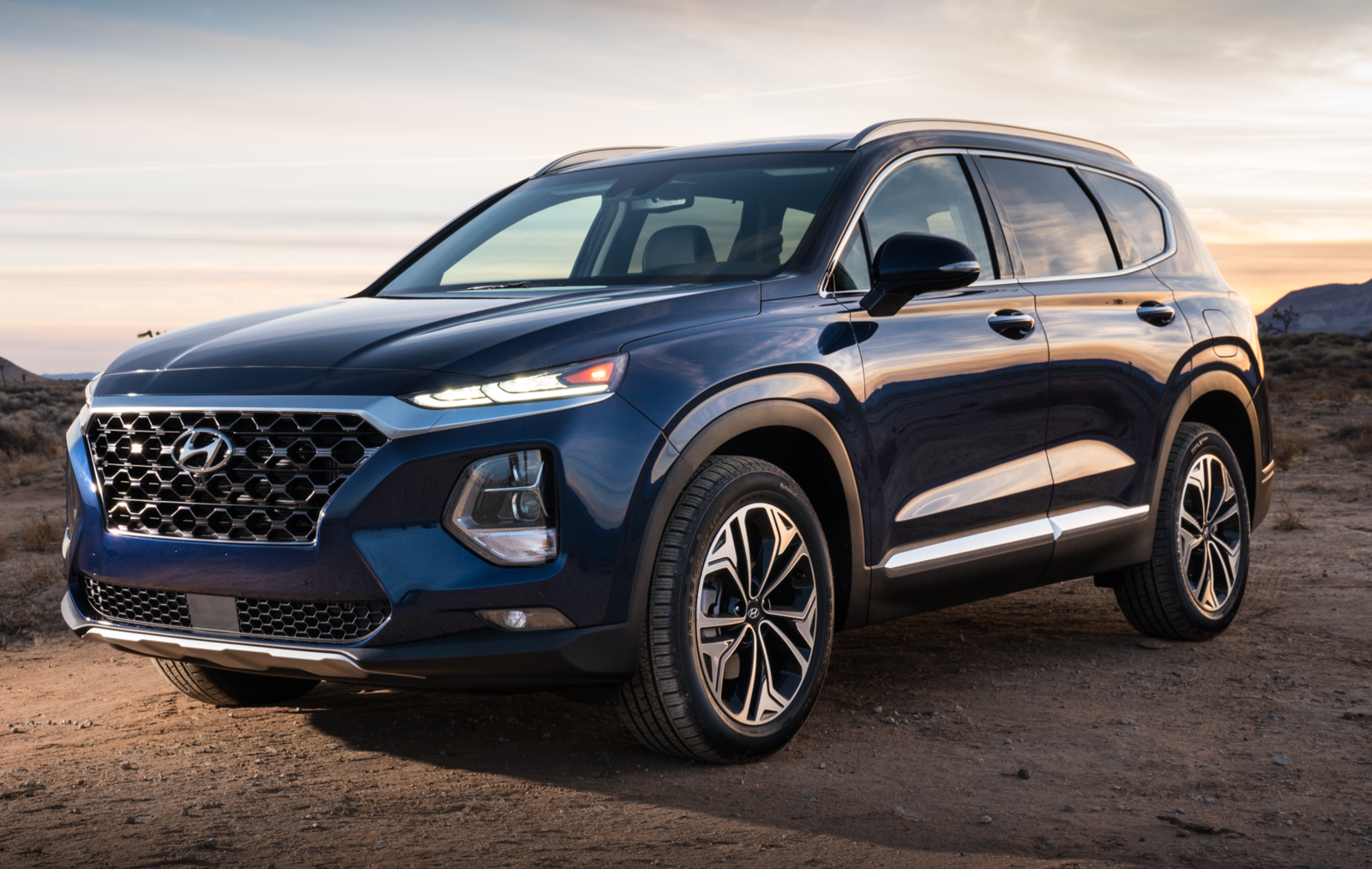
According to CarGurus experts, the overall rating for the 2019 Hyundai Santa Fe is 8.2 out of 10, while the 2020 Ford Explorer scores 7.2 out of 10. The Hyundai Santa Fe gets the nod for its superior overall rating. It combines a bold, modern design with practical features, user-friendly technology, and a comprehensive suite of safety features, making it a well-rounded choice for most consumers. While the Ford Explorer offers impressive performance and spaciousness, it falls short in interior quality and overall value for money, especially at higher trim levels.
Choose the 2019 Hyundai Santa Fe if:
- You seek a crossover with a modern interior that balances functionality and style.
- You prioritize user-friendly technology and straightforward infotainment.
- You require a comprehensive suite of standard safety features at various trim levels.


Choose the 2020 Ford Explorer if:
- You desire a spacious, comfortable three-row SUV with excellent cargo capacity.
- You value a sporty driving experience with strong engine performance.
- You appreciate a well-equipped vehicle with advanced technology features, including a large touchscreen and digital instrument cluster.


CarGurus highlights
According to CarGurus experts, the overall rating for the 2019 Hyundai Santa Fe is 8.2 out of 10, while the 2020 Ford Explorer scores 7.2 out of 10. The Hyundai Santa Fe gets the nod for its superior overall rating. It combines a bold, modern design with practical features, user-friendly technology, and a comprehensive suite of safety features, making it a well-rounded choice for most consumers. While the Ford Explorer offers impressive performance and spaciousness, it falls short in interior quality and overall value for money, especially at higher trim levels.
Choose the 2019 Hyundai Santa Fe if:
Shop Now- You seek a crossover with a modern interior that balances functionality and style.
- You prioritize user-friendly technology and straightforward infotainment.
- You require a comprehensive suite of standard safety features at various trim levels.
Choose the 2020 Ford Explorer if:
Shop Now- You desire a spacious, comfortable three-row SUV with excellent cargo capacity.
- You value a sporty driving experience with strong engine performance.
- You appreciate a well-equipped vehicle with advanced technology features, including a large touchscreen and digital instrument cluster.

By: CarGurus + AI
At CarGurus, our team of experienced automotive writers remain at the heart of our content operation, conducting hands-on car tests and writing insightful guides that are backed by years of industry experience. To complement this, we are harnessing AI to make our content offering more diverse and more helpful to shoppers than ever. To achieve this, our AI systems are based exclusively on CarGurus content, ratings and data, so that what we produce is both unique to CarGurus, and uniquely helpful to car shoppers.

