2019 Ford Edge vs 2020 Toyota 4Runner

Overview | |
MSRP$29,995 | MSRP$36,120 |
Listings217 | Listings199 |
Ratings & Reviews | |
User Reviews | User Reviews |
Expert reviews7.3 out of 10 | Expert reviews6.8 out of 10 |
Pros
Cons
| |
2019 Ford Edge Reviews SummaryThe Edge was a key vehicle in the evolution of the family SUV market when Ford first introduced it for the 2007 model year. Back then, automakers were experimenting with just what a “crossover” could constitute—look at the Pontiac Aztec and first-generation Chrysler Pacifica if you disagree. But with the Edge, the midsize, two-row SUV template started to take shape. Ford offers the 2019 Edge with an ST trim, grafting performance onto the utilitarian Edge blueprint. But that begs a question—can a vehicle still be good at family hauling and commuting while also delivering speed and performance? | |
2020 Toyota 4Runner Reviews SummaryEven in its expensive Limited trim, the Toyota 4Runner remains clearly purpose-built for tackling terrain. Whether on a dusty cow path or snowy mountain road, the 4Runner looks most in its element when its outside the typical car’s comfort zone. For 2020, Toyota keeps enough chrome and leather available to market the 4Runner as a rough-and-tumble luxury alternative, but shoppers considering one had better have a real need for 4-wheel drive. | |
No video found | |
Popular Features & Specs | |
Engine2.0L 250 hp I4 | Engine4.0L 270 hp V6 |
Drive TrainFWD | Drive Train4X2 |
Seating Capacity5 | Seating Capacity7 |
Horsepower250 hp @ 5500 rpm | Horsepower270 hp @ 5600 rpm |
MPG City22 | MPG City16 |
MPG Highway29 | MPG Highway19 |
Engine | |
Engine Name2.0L 250 hp I4 | Engine Name4.0L 270 hp V6 |
Torque280 lb-ft @ 3000 rpm | Torque278 lb-ft @ 4400 rpm |
Horsepower250 hp @ 5500 rpm | Horsepower270 hp @ 5600 rpm |
DrivetrainFWD | Drivetrain4X2 |
Fuel Economy | |
MPG City22 | MPG City16 |
MPG Highway29 | MPG Highway19 |
Interior | |
Seating Capacity5 | Seating Capacity7 |
Safety | |
Front Crash Overall5 | Front Crash Overall4 |
Side Crash Overall5 | Side Crash Overall5 |
Dimensions & Capacity | |
Cargo Space39.2 cu ft | Cargo Space47.2 cu ft |
Curb Weight4027 lbs | Curb Weight4400 lbs |
Height68.3 in | Height71.5 in |
Length188.8 in | Length190.2 in |
Width85.8 in | Width75.8 in |
Wheelbase112.2 in | Wheelbase109.8 in |
Maximum Payload1243 lbs | Maximum Payload1700 lbs |
Number of doors4 | Number of doors4 |
Maximum Towing Capacity1500 lbs | Maximum Towing Capacity5000 lbs |
Standard Towing Capacity | Standard Towing Capacity5000 lbs |
Overview | ||
MSRP | $29,995 | $36,120 |
Listings | ||
Ratings & Reviews | ||
User reviews | ||
Expert reviews | 7.3 out of 10Read full review | 6.8 out of 10Read full review |
Pros & cons | Pros
Cons
| |
Summary | The Edge was a key vehicle in the evolution of the family SUV market when Ford first introduced it for the 2007 model year. Back then, automakers were experimenting with just what a “crossover” could constitute—look at the Pontiac Aztec and first-generation Chrysler Pacifica if you disagree. But with the Edge, the midsize, two-row SUV template started to take shape. Ford offers the 2019 Edge with an ST trim, grafting performance onto the utilitarian Edge blueprint. But that begs a question—can a vehicle still be good at family hauling and commuting while also delivering speed and performance? | Even in its expensive Limited trim, the Toyota 4Runner remains clearly purpose-built for tackling terrain. Whether on a dusty cow path or snowy mountain road, the 4Runner looks most in its element when its outside the typical car’s comfort zone. For 2020, Toyota keeps enough chrome and leather available to market the 4Runner as a rough-and-tumble luxury alternative, but shoppers considering one had better have a real need for 4-wheel drive. |
Video | No video found | |
Popular Features & Specs | ||
Engine | 2.0L 250 hp I4 | 4.0L 270 hp V6 |
Drive Train | FWD | 4X2 |
Seating Capacity | 5 | 7 |
Horsepower | 250 hp @ 5500 rpm | 270 hp @ 5600 rpm |
MPG City | 22 | 16 |
MPG Highway | 29 | 19 |
Engine | ||
Engine Name | 2.0L 250 hp I4 | 4.0L 270 hp V6 |
Torque | 280 lb-ft @ 3000 rpm | 278 lb-ft @ 4400 rpm |
Horsepower | 250 hp @ 5500 rpm | 270 hp @ 5600 rpm |
Drivetrain | FWD | 4X2 |
Fuel Economy | ||
MPG City | 22 | 16 |
MPG Highway | 29 | 19 |
Interior | ||
Seating Capacity | 5 | 7 |
Safety | ||
Front Crash Overall | 5 | 4 |
Side Crash Overall | 5 | 5 |
Dimensions & Capacity | ||
Cargo Space | 39.2 cu ft | 47.2 cu ft |
Curb Weight | 4027 lbs | 4400 lbs |
Height | 68.3 in | 71.5 in |
Length | 188.8 in | 190.2 in |
Width | 85.8 in | 75.8 in |
Wheelbase | 112.2 in | 109.8 in |
Maximum Payload | 1243 lbs | 1700 lbs |
Number of doors | 4 | 4 |
Maximum Towing Capacity | 1500 lbs | 5000 lbs |
Standard Towing Capacity | 5000 lbs | |
The 2019 Ford Edge received a facelift that included a new grille, headlights, and lower front fascia, giving it a sportier appearance. The rear also saw updates with new taillights and a larger black panel replacing the red connector between the taillights. Despite these exterior changes, the interior remained largely unchanged from previous models, feeling dated and heavily reliant on plastics. The cabin, while useful with features like a new rotary shifter, struggled to feel modern.
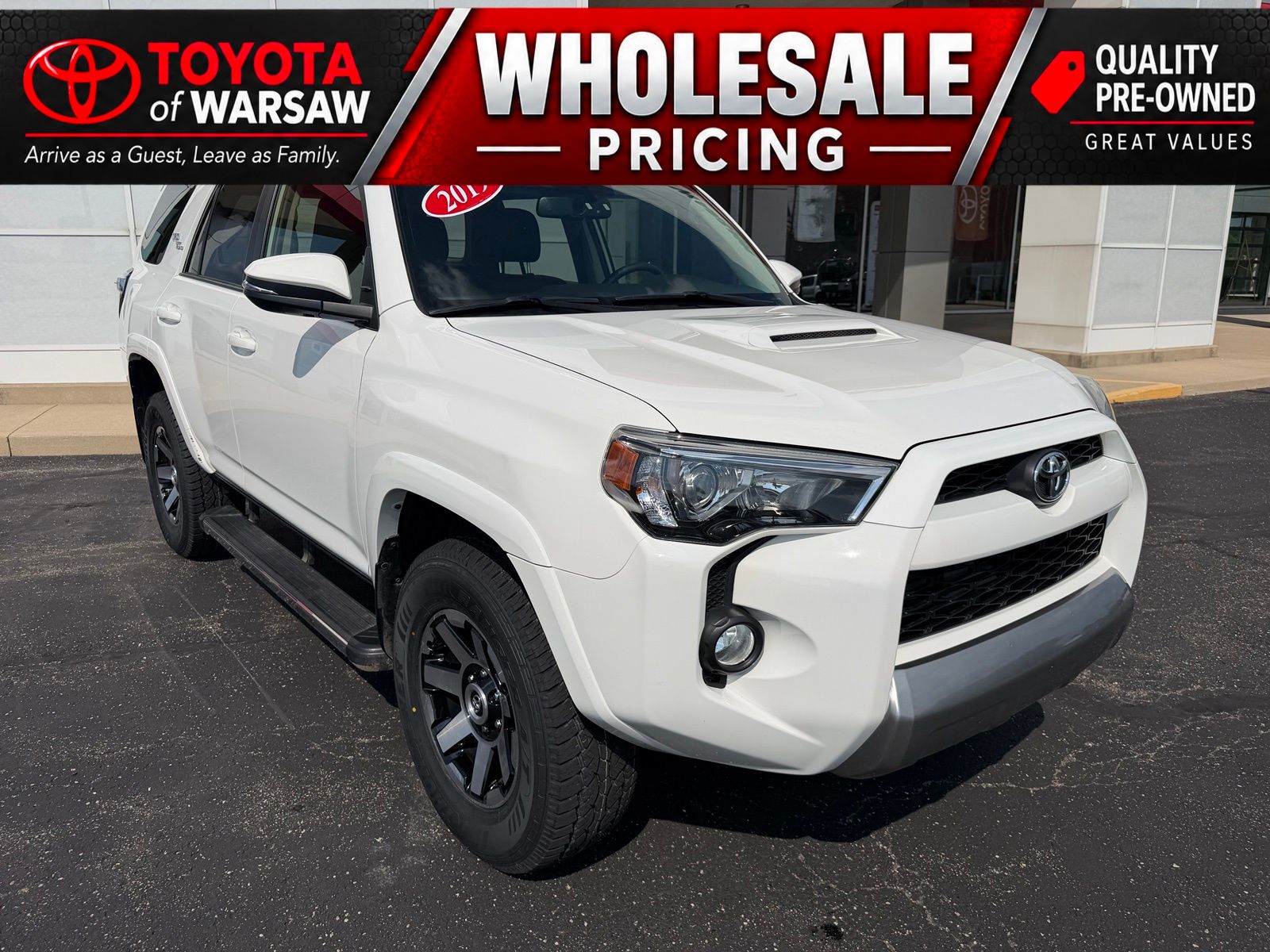
In contrast, the 2020 Toyota 4Runner maintained its timeless, utilitarian design with tall slab sides, a high beltline, and short overhangs. The flared wheel wells and hood scoop added to its rugged look, although the scoop was non-functional. The 4Runner's trim lineup included various options, from the base SR5 to the off-road-focused TRD Pro and the comfort-oriented Limited. The interior featured large, chunky knobs for controls and an 8-inch touchscreen, but the seating position was very tall, making entry and exit challenging without the power-retractable running boards.


The 2019 Ford Edge offered a 2-liter turbocharged 4-cylinder engine across all non-ST trims, producing 250 horsepower and 280 pound-feet of torque. This engine, paired with an 8-speed automatic transmission, could be configured with either front-wheel drive or all-wheel drive. The ST trim, however, featured a more powerful 2.7-liter EcoBoost V6 engine, delivering 335 horsepower and 380 pound-feet of torque, exclusively with all-wheel drive. The ST provided impressive acceleration and handling, especially in Sport Mode, while maintaining a smooth ride over rough roads. Fuel economy for the base engine was 22 mpg city, 29 highway, and 25 combined, while the ST achieved 19/26/21.
The 2020 Toyota 4Runner came with a 4-liter V6 engine and a 5-speed automatic transmission, producing 270 horsepower and 278 pound-feet of torque. This engine was designed for durability and off-road capability rather than fuel efficiency, with an EPA rating of 16 mpg city, 19 highway, and 17 combined. The 4Runner excelled off-road, thanks to its body-on-frame construction and advanced traction systems like CRAWL control and Multi-Terrain Select. On-road performance was less impressive, with significant body roll and vague steering. The 4Runner's towing capacity was up to 5,000 pounds.
The 2019 Ford Edge's cabin, though dated, was practical with deep storage bins, USB ports, and available wireless charging. The front seats were comfortable, but the ST's bucket seats were not ideal for taller drivers. The rear seats offered ample head- and legroom, and the cargo space was generous, with 39 cubic feet behind the rear seats and 73.4 cubic feet with the seats folded down.
The 2020 Toyota 4Runner provided excellent outward visibility and a relatively tight turning radius. The interior featured large, easy-to-use controls and an 8-inch touchscreen. The tall seating position offered a commanding view but could be tiring for shorter drivers. The 4Runner also offered an optional third row, though it was best suited for short and occasional use due to its limited legroom and comfort. The cargo space was versatile, with the third-row seats folding to create more room.
The 2019 Ford Edge's base infotainment system was basic, with a 4.2-inch non-touchscreen and limited functionality. Higher trims offered an 8-inch Sync 3 system with Apple CarPlay, Android Auto, and Amazon Alexa integration, providing a more user-friendly experience despite average graphics.
The 2020 Toyota 4Runner finally received an 8-inch touchscreen with Apple CarPlay and Android Auto compatibility. While Toyota's proprietary system was functional, it struggled with navigation accuracy compared to smartphone apps. The 4Runner also featured Amazon Alexa, Bluetooth, and various subscription services. Higher trims included a JBL stereo and onboard navigation, though the overall technology still lagged behind competitors.
The 2019 Ford Edge came standard with a reversing camera, traction control, and multiple airbags. It also included Ford's Co-Pilot360 suite, featuring automatic emergency braking, forward-collision warning, lane-departure warning, automatic high-beams, and blind-spot monitoring. Higher trims could be upgraded with Co-Pilot360 Assist+, adding adaptive cruise control, evasive steering assist, and lane-centering.
The 2020 Toyota 4Runner was equipped with Toyota Safety Sense P (TSS-P), which included adaptive cruise control, lane-departure alert, a pre-collision system with pedestrian detection, and automatic high beams. It also had eight standard airbags. The 4Runner received four out of five stars overall from the NHTSA but only three stars in the rollover test. The IIHS gave it good ratings in most crash tests, except for a marginal rating in the small overlap front: driver-side test.
CarGurus highlights

According to CarGurus experts, the overall rating for the 2019 Ford Edge is 7.3 out of 10, while the 2020 Toyota 4Runner scores 6.8 out of 10. Based on these ratings, the 2019 Ford Edge is the better choice for most consumers, offering a more balanced combination of technology, comfort, and performance.
Choose the 2019 Ford Edge if:
- You prioritize a modern infotainment system with Apple CarPlay and Android Auto.
- You want a smoother on-road driving experience with better fuel economy.
- You need ample cargo space and comfortable rear seating.


Choose the 2020 Toyota 4Runner if:
- You require a vehicle with exceptional off-road capabilities.
- You value a rugged, utilitarian design with a high seating position.
- You need an optional third row for occasional use.




CarGurus highlights
According to CarGurus experts, the overall rating for the 2019 Ford Edge is 7.3 out of 10, while the 2020 Toyota 4Runner scores 6.8 out of 10. Based on these ratings, the 2019 Ford Edge is the better choice for most consumers, offering a more balanced combination of technology, comfort, and performance.
Choose the 2019 Ford Edge if:
Shop Now- You prioritize a modern infotainment system with Apple CarPlay and Android Auto.
- You want a smoother on-road driving experience with better fuel economy.
- You need ample cargo space and comfortable rear seating.
Choose the 2020 Toyota 4Runner if:
Shop Now- You require a vehicle with exceptional off-road capabilities.
- You value a rugged, utilitarian design with a high seating position.
- You need an optional third row for occasional use.

By: CarGurus + AI
At CarGurus, our team of experienced automotive writers remain at the heart of our content operation, conducting hands-on car tests and writing insightful guides that are backed by years of industry experience. To complement this, we are harnessing AI to make our content offering more diverse and more helpful to shoppers than ever. To achieve this, our AI systems are based exclusively on CarGurus content, ratings and data, so that what we produce is both unique to CarGurus, and uniquely helpful to car shoppers.

