Toyota 4Runner vs Hyundai Venue
Overview | |
MSRP$42,270 | MSRP$20,550 |
Listings805 | Listings139 |
Ratings & Reviews | |
User Reviews | User Reviews |
Expert reviews6.7 out of 10 | Expert reviews5.2 out of 10 |
Pros
Cons
| Pros
Cons
|
Reviews SummaryShoppers looking for an old-school SUV should be careful what they wish for, because the 4Runner makes compromises in passenger comfort and interior space to make it one of the better off-roaders on the market. It’s offered as a hybrid, but fuel economy is never as good as a typical crossover SUVs, which will be more comfortable and more affordable. That makes mainstream crossovers better choices for most, but for those who want adventure while carrying passengers, the 4Runner makes sense. Verdict: The 4Runner’s closest rivals are the Jeep Wrangler and the Ford Bronco. Compared to them, the 4Runner can carry more passengers and offers better fuel economy thanks to an available hybrid powertrain. If adventure is a priority, then the 4Runner is a great choice, but those who want a five- or seven-passenger SUV for daily family duty would be better off with a crossover. | |
Reviews SummaryAutomakers have traditionally had a hard time making money on entry-level subcompact cars, because they have low profit margins, but America has largely moved away from cars to crossover SUVs—and higher prices. That allows car companies to offer an entry-level subcompact SUV for thousands more than a similar sedan or hatchback. Such is the case with the Hyundai Venue, which costs more than its predecessor, the subcompact Accent that was dropped after the 2022 model year. While the price is higher, the advantage for buyers is a vehicle that generally has more cargo space and is more practical. We recently drove the 2026 Hyundai Venue SEL w/2-Tone Roof (yes, that’s the trim level name) to find out if a subcompact crossover is a better buy than a cheaper subcompact car. Verdict: The Hyundai Venue sacrifices refinement for a price point that isn’t as low as a comparable subcompact car. We’d be tempted to spend a little more for a slightly larger compact car with more power, features, and refinement. | |
No video found | No video found |
Popular Features & Specs | |
Engine | Engine1.6L 121 hp I4 |
Drivetrain | DrivetrainFWD |
Seating Capacity7 | Seating Capacity5 |
Horsepower | Horsepower121 hp @ 6300 rpm |
MPG City | MPG City29 |
MPG Highway | MPG Highway33 |
Engine | |
Engine Name2.4L 278 hp I4 | Engine Name1.6L 121 hp I4 |
Torque317 lb-ft @ 1700 rpm | Torque113 lb-ft @ 4500 rpm |
Horsepower278 hp @ 6000 rpm | Horsepower121 hp @ 6300 rpm |
Drivetrain4X2 | DrivetrainFWD |
Fuel Economy | |
MPG City | MPG City29 |
MPG Highway | MPG Highway33 |
Interior | |
Seating Capacity7 | Seating Capacity5 |
Safety | |
Front Crash Overall4 | Front Crash Overall4 |
Side Crash Overall5 | Side Crash Overall5 |
Dimensions & Capacity | |
Cargo Space48.4 cu ft | Cargo Space18.7 cu ft |
Curb Weight4455 lbs | Curb Weight2612 lbs |
Height72.6 in | Height61.6 in |
Length194.9 in | Length159.1 in |
Width78.0 in | Width69.7 in |
Wheelbase112.2 in | Wheelbase99.2 in |
Maximum Payload895 lbs | Maximum Payload1158 lbs |
Number of doors4 | Number of doors4 |
Maximum Towing Capacity6000 lbs | Maximum Towing Capacity |
Standard Towing Capacity6000 lbs | Standard Towing Capacity |
Overview | ||
MSRP | $42,270 | $20,550 |
Listings | ||
Ratings & Reviews | ||
User reviews | ||
Expert reviews | 6.7 out of 10Read full review | 5.2 out of 10Read full review |
Pros & cons | Pros
Cons
| Pros
Cons
|
Summary | Shoppers looking for an old-school SUV should be careful what they wish for, because the 4Runner makes compromises in passenger comfort and interior space to make it one of the better off-roaders on the market. It’s offered as a hybrid, but fuel economy is never as good as a typical crossover SUVs, which will be more comfortable and more affordable. That makes mainstream crossovers better choices for most, but for those who want adventure while carrying passengers, the 4Runner makes sense. Verdict: The 4Runner’s closest rivals are the Jeep Wrangler and the Ford Bronco. Compared to them, the 4Runner can carry more passengers and offers better fuel economy thanks to an available hybrid powertrain. If adventure is a priority, then the 4Runner is a great choice, but those who want a five- or seven-passenger SUV for daily family duty would be better off with a crossover. | Automakers have traditionally had a hard time making money on entry-level subcompact cars, because they have low profit margins, but America has largely moved away from cars to crossover SUVs—and higher prices. That allows car companies to offer an entry-level subcompact SUV for thousands more than a similar sedan or hatchback. Such is the case with the Hyundai Venue, which costs more than its predecessor, the subcompact Accent that was dropped after the 2022 model year. While the price is higher, the advantage for buyers is a vehicle that generally has more cargo space and is more practical. We recently drove the 2026 Hyundai Venue SEL w/2-Tone Roof (yes, that’s the trim level name) to find out if a subcompact crossover is a better buy than a cheaper subcompact car. Verdict: The Hyundai Venue sacrifices refinement for a price point that isn’t as low as a comparable subcompact car. We’d be tempted to spend a little more for a slightly larger compact car with more power, features, and refinement. |
Video | No video found | No video found |
Popular Features & Specs | ||
Engine | 1.6L 121 hp I4 | |
Drivetrain | FWD | |
Seating Capacity | 7 | 5 |
Horsepower | 121 hp @ 6300 rpm | |
MPG City | 29 | |
MPG Highway | 33 | |
Engine | ||
Engine Name | 2.4L 278 hp I4 | 1.6L 121 hp I4 |
Torque | 317 lb-ft @ 1700 rpm | 113 lb-ft @ 4500 rpm |
Horsepower | 278 hp @ 6000 rpm | 121 hp @ 6300 rpm |
Drivetrain | 4X2 | FWD |
Fuel Economy | ||
MPG City | 29 | |
MPG Highway | 33 | |
Interior | ||
Seating Capacity | 7 | 5 |
Safety | ||
Front Crash Overall | 4 | 4 |
Side Crash Overall | 5 | 5 |
Dimensions & Capacity | ||
Cargo Space | 48.4 cu ft | 18.7 cu ft |
Curb Weight | 4455 lbs | 2612 lbs |
Height | 72.6 in | 61.6 in |
Length | 194.9 in | 159.1 in |
Width | 78.0 in | 69.7 in |
Wheelbase | 112.2 in | 99.2 in |
Maximum Payload | 895 lbs | 1158 lbs |
Number of doors | 4 | 4 |
Maximum Towing Capacity | 6000 lbs | |
Standard Towing Capacity | 6000 lbs | |
The 2026 Hyundai Venue was classified as a crossover SUV, though its design leaned more towards a tall hatchback. It featured only front-wheel drive and had a ground clearance of 6.7 inches, which was higher than a typical car but not as tall as most crossover SUVs. The EPA classified it as a midsize car due to its interior space. The Venue's design was more crossover-like, with a small and narrow appearance reminiscent of European runabouts. It had an upright windshield, a bluff nose, and standard roof rails, giving it an SUV-like look. The Venue's high nose was complemented by lower headlights and high-set daytime running lights, while black wheel flares around its small wheels added to its SUV cues. Inside, the Venue had a simple and functional look, with a digital instrument cluster and a small touchscreen that resembled an iPad on the dash.
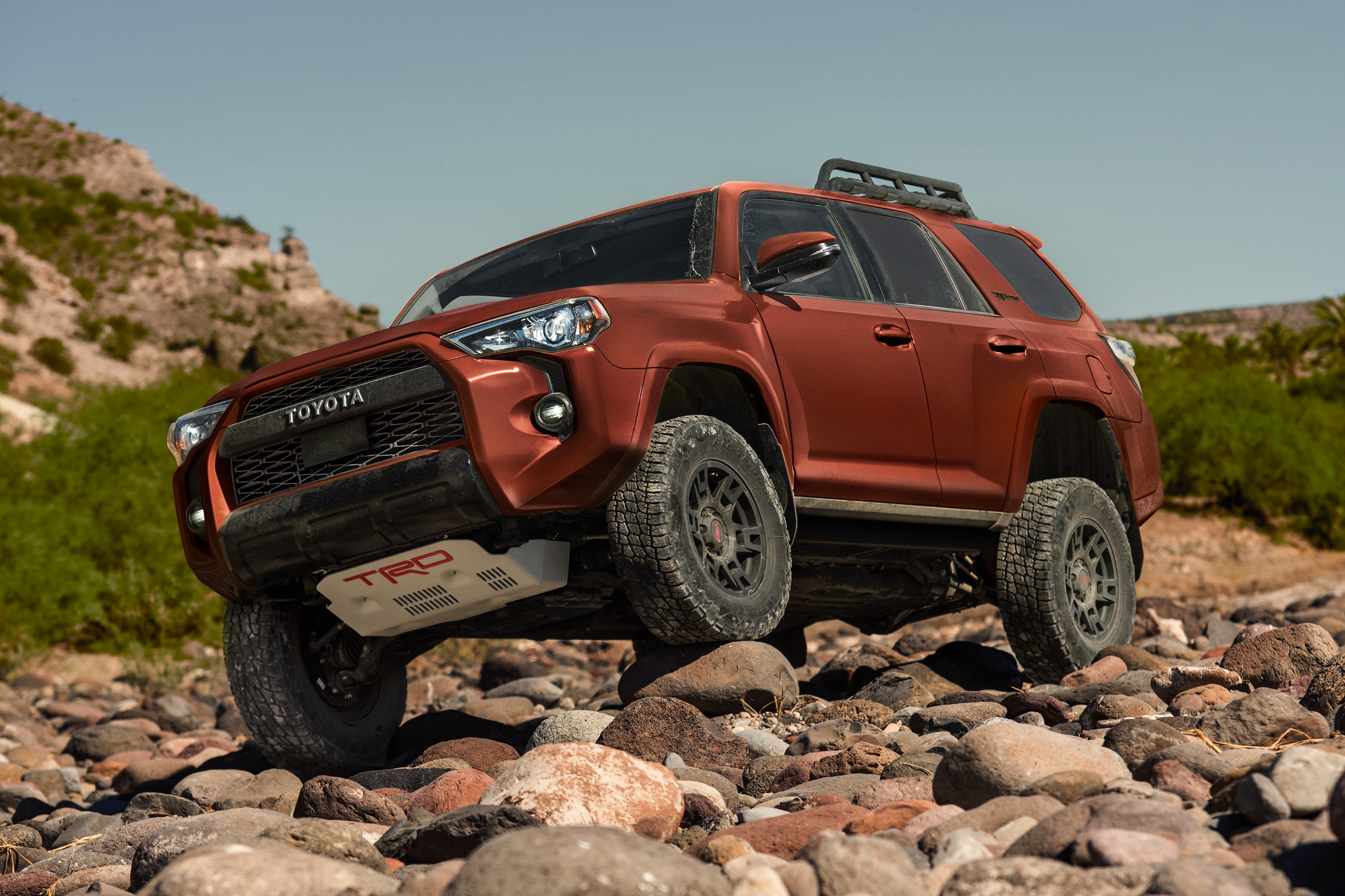
The 2026 Toyota 4Runner shared design elements with the Tacoma pickup, making it difficult to distinguish the two from the front. It had a muscular look with pronounced haunches and black wheel flares for off-road models. The sheet metal was creased and angled, with deep creases along the sides. The grille sat high above a lower intake, especially on the TRD Pro and Trailhunter models, which featured heritage-inspired front ends with "Toyota" lettering and an integrated light bar. The rear side windows extended into the roof, reminiscent of the original 4Runner from the 1980s. Wheel sizes ranged from 18 to 20 inches. Inside, the 4Runner had a simple, utilitarian look with chunky control dials and an abundance of hard plastic. Cloth upholstery was standard, with synthetic leather and leather options available on higher trims.

The 2026 Hyundai Venue was not known for its performance, as it was one of the least powerful vehicles on the market. It was powered by a naturally aspirated 1.6-liter four-cylinder engine that produced only 121 horsepower and 113 pound-feet of torque. The power was delivered through a continuously variable transmission (CVT) to the front wheels. The Venue's 0-60 mph time ranged from 8.5 to 8.8 seconds, which was better than expected given its power output, thanks to its lightweight of 2,738 pounds. The Venue felt peppy in city traffic but struggled at highway speeds, where the transmission was slow to downshift. Handling was aided by its small size and low weight, making it easy to maneuver in traffic and fit into tight parking spots. However, the ride was jiggly on broken pavement due to its solid rear axle.
The 2026 Toyota 4Runner offered a choice of two powertrains and rear-wheel drive or two four-wheel-drive systems. The base engine, known as i-Force, was a turbocharged 2.4-liter four-cylinder that generated 278 horsepower and 317 pound-feet of torque. The i-Force Max hybrid system added an electric motor, increasing output to 326 hp and 465 lb-ft. The 4Runner hybrid had a mid-to-low seven-second 0-60 mph time. The eight-speed automatic transmission was well-matched to the engine, with more aggressive tuning in Sport mode. The 4Runner excelled off-road, with features like a locking rear differential, Bilstein dampers, and a Multi-Terrain System with various drive modes. However, its on-road dynamics were compromised, with a firm suspension and notable lean in corners. The Limited and Platinum models offered a more street-friendly ride.
The 2026 Hyundai Venue's interior featured cloth and H-Tex seats with black upholstery and white contrast stitching. The seats were comfortable, with six-way manual adjustments for the driver. Headroom was plentiful, but legroom was lacking for taller individuals. The rear seat had enough room for average-sized adults, but taller passengers would struggle for legroom. The rear seats folded flat in a 60/40 split, providing 31.9 cubic feet of cargo space, which was modest compared to typical compact crossovers. The Venue's interior was dominated by hard black plastic, with limited soft-touch surfaces.
The 2026 Toyota 4Runner could be configured with two or three rows of seats. The front seats were the most comfortable, with manual adjustments as standard. Heated front seats were standard on most trims, with power adjustments available on higher trims. The second row offered decent space but lacked comfort due to low seat bottoms. The three-row version was less accommodating, with limited legroom. Cargo space was competitive with midsize rivals, but accessibility was an issue. Gas-only two-row models had 48.4 cubic feet of space behind the second row, while hybrid models had slightly less due to a higher load floor.
The 2026 Hyundai Venue came with an 8-inch touchscreen for basic infotainment features. While it felt small by modern standards, it was functional and responsive. It included phone, radio, media, and phone-projection connections, as well as wireless Apple CarPlay and Android Auto. However, it lacked features like navigation and a Wi-Fi hotspot. The audio system was a simple six-speaker unit, with no premium option available.
The 2026 Toyota 4Runner featured a 7-inch digital instrument cluster and an 8-inch touchscreen as standard, with larger screens available on higher trims. The 14-inch touchscreen was easy to use, with quick access to functions like navigation and entertainment. The 4Runner came with a one-year trial of Remote Connect, Safety Connect, and Service Connect, as well as a Wi-Fi hotspot. The 12.3-inch digital instrument cluster provided programmable information, and the standard tech features included wireless Apple CarPlay and Android Auto, a satellite radio trial, and a wireless phone charger on most trims.
The 2026 Hyundai Venue offered a good set of standard safety features, including forward-collision warning, automatic emergency braking, lane-keep assist, and a driver-attention monitor. However, it lacked adaptive cruise control. The Venue received four out of five stars from the NHTSA and had mixed ratings from the IIHS, with some tests still pending.
The 2026 Toyota 4Runner was equipped with Toyota's Safety Sense 3.0 suite, which included forward collision warning, automatic emergency braking, adaptive cruise control, and more. It also had blind-spot monitors and cross-traffic alert. The 4Runner received four out of five stars from the NHTSA, with mixed results from the IIHS, including a Marginal score in the moderate front overlap crash test.
CarGurus highlights

According to CarGurus experts, the overall rating for the 2026 Hyundai Venue is 5.2 out of 10, while the 2026 Toyota 4Runner scores 6.7 out of 10. Based on these ratings, the Toyota 4Runner is the recommended choice, offering better performance, technology, and off-road capabilities.
Choose the 2026 Toyota 4Runner if:
- You require a vehicle with strong off-road capabilities and multiple drive modes.
- You want a spacious interior with the option for three rows of seating.
- You value advanced technology features and a comprehensive safety suite.


Choose the 2026 Hyundai Venue if:
- You prioritize a budget-friendly vehicle with essential safety features.
- You need a compact and maneuverable car for city driving.
- You prefer a simple and functional interior with wireless smartphone integration.


CarGurus highlights
According to CarGurus experts, the overall rating for the 2026 Hyundai Venue is 5.2 out of 10, while the 2026 Toyota 4Runner scores 6.7 out of 10. Based on these ratings, the Toyota 4Runner is the recommended choice, offering better performance, technology, and off-road capabilities.
Choose the 2026 Toyota 4Runner if:
Shop Now- You require a vehicle with strong off-road capabilities and multiple drive modes.
- You want a spacious interior with the option for three rows of seating.
- You value advanced technology features and a comprehensive safety suite.
Choose the 2026 Hyundai Venue if:
Shop Now- You prioritize a budget-friendly vehicle with essential safety features.
- You need a compact and maneuverable car for city driving.
- You prefer a simple and functional interior with wireless smartphone integration.

By: CarGurus + AI
At CarGurus, our team of experienced automotive writers remain at the heart of our content operation, conducting hands-on car tests and writing insightful guides that are backed by years of industry experience. To complement this, we are harnessing AI to make our content offering more diverse and more helpful to shoppers than ever. To achieve this, our AI systems are based exclusively on CarGurus content, ratings and data, so that what we produce is both unique to CarGurus, and uniquely helpful to car shoppers.

