Nissan LEAF vs Volkswagen ID.4
Overview | |
MSRP$31,600 | MSRP$39,995 |
Listings135 | Listings130 |
Ratings & Reviews | |
User Reviews | User Reviews |
Expert reviews6.8 out of 10 | Expert reviews7.3 out of 10 |
Pros
Cons
| Pros
Cons
|
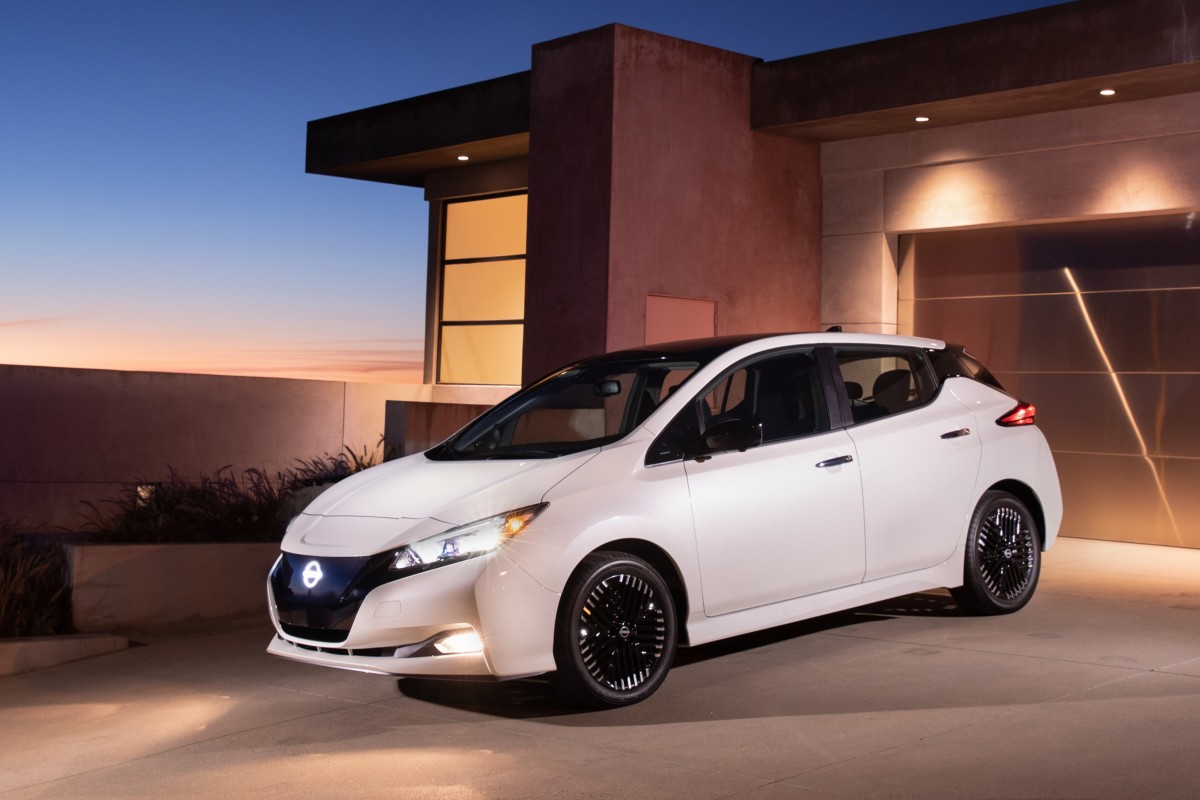
Reviews SummaryThis is the car I wish Nissan made 10 years ago, when the first-generation Leaf almost stranded me on my way to work. Batteries have improved so much since 2010, they've made those early cars practically worthless on the used market. Case in point: with the second-generation Leaf, Nissan has added a new Plus model that claims up to 226 miles per charge, offers quicker acceleration, and includes more technology for every Leaf trim. It's enough to make the Leaf feel like a real car. | |
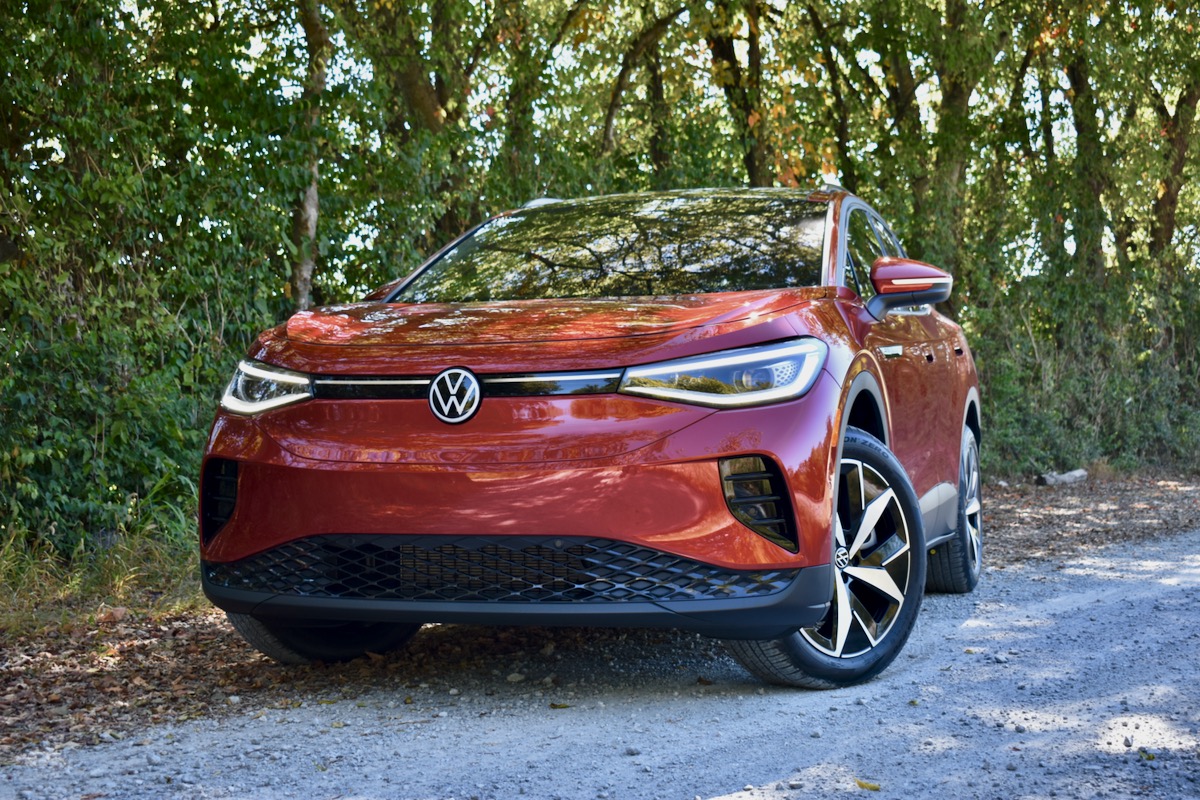
Reviews SummaryThe “Dieselgate” emissions scandal forced Volkswagen to double down on electric cars, and now we’re finally seeing the first result of that: the 2021 Volkswagen ID.4 electric crossover. VW has made an electric car before, but its last attempt, the e-Golf, was built to satisfy emissions standards, not rack up sales. It was barely advertised, and it was sold only in certain states. That’s not the case with the ID.4, which will be available nationwide and will even be built in Tennessee starting in 2022. Volkswagen views the ID.4 as a rival not to other EVs, but to mainstream gasoline vehicles like the Honda CR-V and Toyota RAV4. Being late to the party means there are already several other EVs trying to coax new-car buyers away from internal combustion, however. If you want a reasonably-priced EV, the Nissan Leaf, Hyundai Kona Electric, and Kia Niro EV already exist, and General Motors just announced the 2022 Chevrolet Bolt EUV—a new variant of the Chevy Bolt EV with a crossover body style similar to the Volkswagen. We tested an ID.4 1st Edition, which commemorates the car’s launch, and an ID.4 PRO S with all-wheel drive (AWD). The 1st Edition is a limited-edition model that has already sold out, but it’s mechanically identical to the ID.4 Pro S AWD, albeit with power sent only to the rear wheels. | |
Popular Features & Specs | |
Engine147 hp Electric | Engine201 hp Electric |
Drive TrainFWD | Drive TrainRWD |
Seating Capacity5 | Seating Capacity5 |
EV Battery Capacity40 kWh | EV Battery Capacity82 kWh |
MPG City123 | MPG City104 |
MPG Highway99 | MPG Highway89 |
Battery Charge Time (240V)8 hours | Battery Charge Time (240V)8 hours |
Engine | |
Engine Name147 hp Electric | Engine Name201 hp Electric |
Battery Charge Time (240V)8 hours | Battery Charge Time (240V)8 hours |
DrivetrainFWD | DrivetrainRWD |
Fuel Economy | |
EV Battery Capacity40 kWh | EV Battery Capacity82 kWh |
MPG City123 | MPG City104 |
MPG Highway99 | MPG Highway89 |
Interior | |
Seating Capacity5 | Seating Capacity5 |
Safety | |
Front Crash Overall4 | Front Crash Overall5 |
Side Crash Overall5 | Side Crash Overall5 |
Dimensions & Capacity | |
Cargo Space23.6 cu ft | Cargo Space30.3 cu ft |
Curb Weight3538 lbs | Curb Weight4517 lbs |
Height61.4 in | Height64.4 in |
Length176.4 in | Length180.5 in |
Width70.5 in | Width72.9 in |
Wheelbase106.3 in | Wheelbase108.9 in |
Maximum Payload1220 lbs | Maximum Payload1347 lbs |
Number of doors4 | Number of doors4 |
Overview | ||
MSRP | $31,600 | $39,995 |
Listings | ||
Ratings & Reviews | ||
User reviews | ||
Expert reviews | 6.8 out of 10Read full review | 7.3 out of 10Read full review |
Pros & cons | Pros
Cons
| Pros
Cons
|
Summary | This is the car I wish Nissan made 10 years ago, when the first-generation Leaf almost stranded me on my way to work. Batteries have improved so much since 2010, they've made those early cars practically worthless on the used market. Case in point: with the second-generation Leaf, Nissan has added a new Plus model that claims up to 226 miles per charge, offers quicker acceleration, and includes more technology for every Leaf trim. It's enough to make the Leaf feel like a real car. | The “Dieselgate” emissions scandal forced Volkswagen to double down on electric cars, and now we’re finally seeing the first result of that: the 2021 Volkswagen ID.4 electric crossover. VW has made an electric car before, but its last attempt, the e-Golf, was built to satisfy emissions standards, not rack up sales. It was barely advertised, and it was sold only in certain states. That’s not the case with the ID.4, which will be available nationwide and will even be built in Tennessee starting in 2022. Volkswagen views the ID.4 as a rival not to other EVs, but to mainstream gasoline vehicles like the Honda CR-V and Toyota RAV4. Being late to the party means there are already several other EVs trying to coax new-car buyers away from internal combustion, however. If you want a reasonably-priced EV, the Nissan Leaf, Hyundai Kona Electric, and Kia Niro EV already exist, and General Motors just announced the 2022 Chevrolet Bolt EUV—a new variant of the Chevy Bolt EV with a crossover body style similar to the Volkswagen. We tested an ID.4 1st Edition, which commemorates the car’s launch, and an ID.4 PRO S with all-wheel drive (AWD). The 1st Edition is a limited-edition model that has already sold out, but it’s mechanically identical to the ID.4 Pro S AWD, albeit with power sent only to the rear wheels. |
Video | ||
Popular Features & Specs | ||
Engine | 147 hp Electric | 201 hp Electric |
Drive Train | FWD | RWD |
Seating Capacity | 5 | 5 |
EV Battery Capacity | 40 kWh | 82 kWh |
MPG City | 123 | 104 |
MPG Highway | 99 | 89 |
Battery Charge Time (240V) | 8 hours | 8 hours |
Engine | ||
Engine Name | 147 hp Electric | 201 hp Electric |
Battery Charge Time (240V) | 8 hours | 8 hours |
Drivetrain | FWD | RWD |
Fuel Economy | ||
EV Battery Capacity | 40 kWh | 82 kWh |
MPG City | 123 | 104 |
MPG Highway | 99 | 89 |
Interior | ||
Seating Capacity | 5 | 5 |
Safety | ||
Front Crash Overall | 4 | 5 |
Side Crash Overall | 5 | 5 |
Dimensions & Capacity | ||
Cargo Space | 23.6 cu ft | 30.3 cu ft |
Curb Weight | 3538 lbs | 4517 lbs |
Height | 61.4 in | 64.4 in |
Length | 176.4 in | 180.5 in |
Width | 70.5 in | 72.9 in |
Wheelbase | 106.3 in | 108.9 in |
Maximum Payload | 1220 lbs | 1347 lbs |
Number of doors | 4 | 4 |


By: CarGurus + AI
At CarGurus, our team of experienced automotive writers remain at the heart of our content operation, conducting hands-on car tests and writing insightful guides that are backed by years of industry experience. To complement this, we are harnessing AI to make our content offering more diverse and more helpful to shoppers than ever. To achieve this, our AI systems are based exclusively on CarGurus content, ratings and data, so that what we produce is both unique to CarGurus, and uniquely helpful to car shoppers.

