Land Rover Range Rover Velar vs Volkswagen ID.4
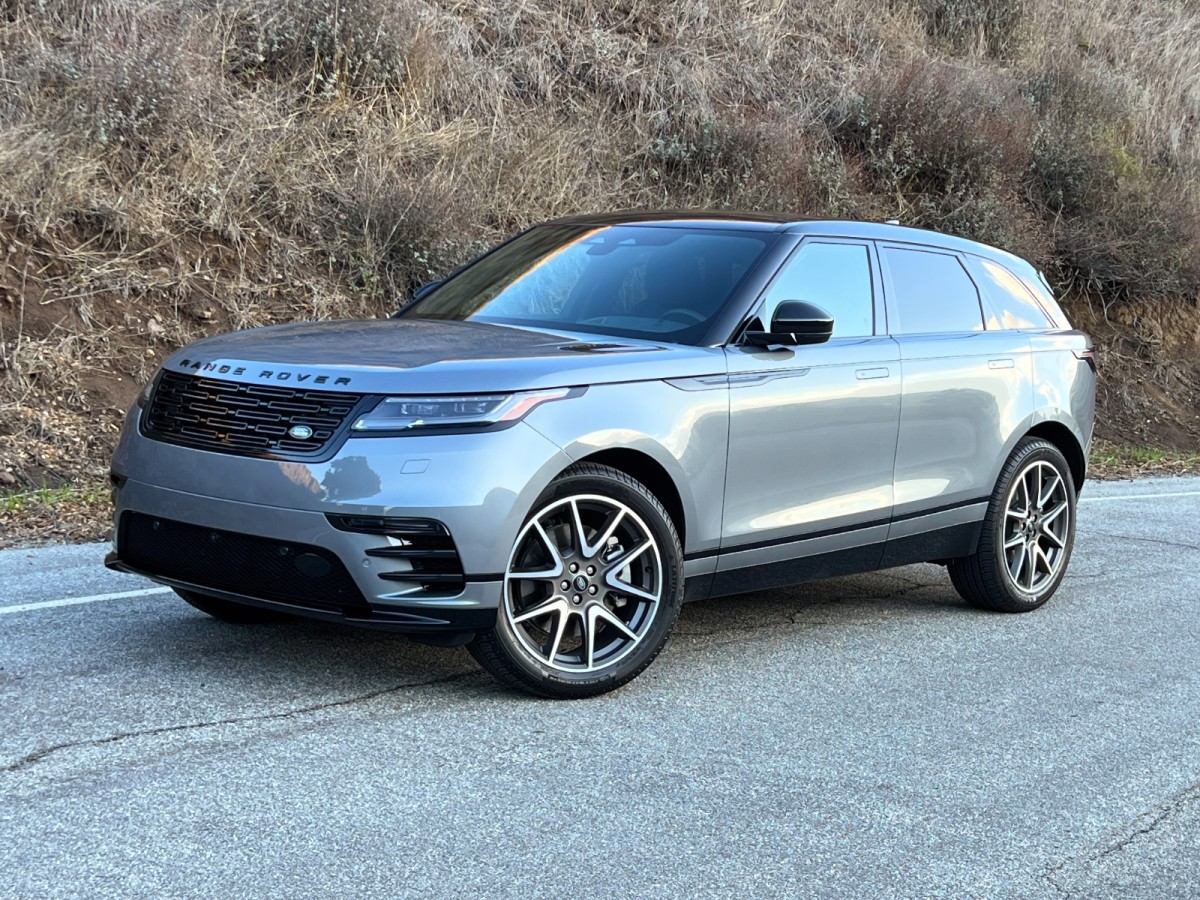
Overview | |
MSRP$61,500 | MSRP$39,735 |
Listings304 | Listings142 |
Ratings & Reviews | |
User Reviews | User Reviews |
Expert reviews6.3 out of 10 | Expert reviews7.5 out of 10 |
Pros
Cons
| Pros
Cons
|
Reviews SummaryA luxury SUV with seating for five people, the 2024 Velar is one of four SUVs to wear Range Rover lettering across the leading edge of its hood. It slots into the lineup between the smaller Evoque and more capable Sport. This model year, the Velar receives several updates. They include design and comfort enhancements and several improvements to the standard infotainment system. Verdict: The changes to the 2024 Range Rover Velar result in an appealing, if flawed, alternative to the best-sellers in the segment, such as the BMW X5 and Mercedes-Benz GLE-Class. If the Velar had more natural and less frustrating technology, it could raise its profile in the midsize luxury SUV segment considerably. | |
Reviews SummaryThanks to a new, more powerful rear-drive motor, increased driving range to nearly 300 miles, a next-generation infotainment system with substantial user-experience improvements, and a handful of comfort and convenience upgrades, the 2024 Volkswagen ID.4 is a better electric SUV than before. However, it no longer includes complimentary DC fast charging for three years. Instead, you get up to 500 kWh of free charging, after which you’ll pay to play. Verdict: While the downgrade in free charging is a bummer, the updated 2024 Volkswagen ID.4 is not. With the technology better sorted, improved comfort, an impressive sound system, and more power, performance, and range, VeeDub’s electric SUV need not make apologies. | |
No video found | No video found |
Popular Features & Specs | |
Engine2.0L 247 hp I4 | Engine201 hp Electric |
Drive TrainAWD | Drive TrainRWD |
Seating Capacity5 | Seating Capacity5 |
Horsepower247 hp @ 5000 rpm | Horsepower |
EV Battery Capacity | EV Battery Capacity62 kWh |
MPG City22 | MPG City115 |
MPG Highway26 | MPG Highway98 |
Battery Charge Time (120V) | Battery Charge Time (120V)65 hours |
Battery Charge Time (240V) | Battery Charge Time (240V)6.25 hours |
Engine | |
Engine Name2.0L 247 hp I4 | Engine Name201 hp Electric |
Torque269 lb-ft @ 1300 rpm | Torque |
Horsepower247 hp @ 5000 rpm | Horsepower |
Battery Charge Time (120V) | Battery Charge Time (120V)65 hours |
Battery Charge Time (240V) | Battery Charge Time (240V)6.25 hours |
DrivetrainAWD | DrivetrainRWD |
Fuel Economy | |
EV Battery Capacity | EV Battery Capacity62 kWh |
MPG City22 | MPG City115 |
MPG Highway26 | MPG Highway98 |
Interior | |
Leather SeatsStandard | Leather Seats |
Seating Capacity5 | Seating Capacity5 |
Key Features | |
Navigation SystemStandard | Navigation SystemStandard |
Sunroof/MoonroofStandard | Sunroof/Moonroof |
Safety | |
Front Crash Overall | Front Crash Overall5 |
Side Crash Overall | Side Crash Overall5 |
Dimensions & Capacity | |
Cargo Space30.9 cu ft | Cargo Space30.3 cu ft |
Curb Weight4130 lbs | Curb Weight4308 lbs |
Height66.3 in | Height64.5 in |
Length188.9 in | Length180.5 in |
Width84.5 in | Width83.0 in |
Wheelbase113.0 in | Wheelbase108.9 in |
Maximum Payload1490 lbs | Maximum Payload981 lbs |
Number of doors4 | Number of doors4 |
Maximum Towing Capacity5291 lbs | Maximum Towing Capacity2200 lbs |
Overview | ||
MSRP | $61,500 | $39,735 |
Listings | ||
Ratings & Reviews | ||
User reviews | ||
Expert reviews | 6.3 out of 10Read full review | 7.5 out of 10Read full review |
Pros & cons | Pros
Cons
| Pros
Cons
|
Summary | A luxury SUV with seating for five people, the 2024 Velar is one of four SUVs to wear Range Rover lettering across the leading edge of its hood. It slots into the lineup between the smaller Evoque and more capable Sport. This model year, the Velar receives several updates. They include design and comfort enhancements and several improvements to the standard infotainment system. Verdict: The changes to the 2024 Range Rover Velar result in an appealing, if flawed, alternative to the best-sellers in the segment, such as the BMW X5 and Mercedes-Benz GLE-Class. If the Velar had more natural and less frustrating technology, it could raise its profile in the midsize luxury SUV segment considerably. | Thanks to a new, more powerful rear-drive motor, increased driving range to nearly 300 miles, a next-generation infotainment system with substantial user-experience improvements, and a handful of comfort and convenience upgrades, the 2024 Volkswagen ID.4 is a better electric SUV than before. However, it no longer includes complimentary DC fast charging for three years. Instead, you get up to 500 kWh of free charging, after which you’ll pay to play. Verdict: While the downgrade in free charging is a bummer, the updated 2024 Volkswagen ID.4 is not. With the technology better sorted, improved comfort, an impressive sound system, and more power, performance, and range, VeeDub’s electric SUV need not make apologies. |
Video | No video found | No video found |
Popular Features & Specs | ||
Engine | 2.0L 247 hp I4 | 201 hp Electric |
Drive Train | AWD | RWD |
Seating Capacity | 5 | 5 |
Horsepower | 247 hp @ 5000 rpm | |
EV Battery Capacity | 62 kWh | |
MPG City | 22 | 115 |
MPG Highway | 26 | 98 |
Battery Charge Time (120V) | 65 hours | |
Battery Charge Time (240V) | 6.25 hours | |
Engine | ||
Engine Name | 2.0L 247 hp I4 | 201 hp Electric |
Torque | 269 lb-ft @ 1300 rpm | |
Horsepower | 247 hp @ 5000 rpm | |
Battery Charge Time (120V) | 65 hours | |
Battery Charge Time (240V) | 6.25 hours | |
Drivetrain | AWD | RWD |
Fuel Economy | ||
EV Battery Capacity | 62 kWh | |
MPG City | 22 | 115 |
MPG Highway | 26 | 98 |
Interior | ||
Leather Seats | Standard | |
Seating Capacity | 5 | 5 |
Key Features | ||
Navigation System | Standard | Standard |
Sunroof/Moonroof | Standard | |
Safety | ||
Front Crash Overall | 5 | |
Side Crash Overall | 5 | |
Dimensions & Capacity | ||
Cargo Space | 30.9 cu ft | 30.3 cu ft |
Curb Weight | 4130 lbs | 4308 lbs |
Height | 66.3 in | 64.5 in |
Length | 188.9 in | 180.5 in |
Width | 84.5 in | 83.0 in |
Wheelbase | 113.0 in | 108.9 in |
Maximum Payload | 1490 lbs | 981 lbs |
Number of doors | 4 | 4 |
Maximum Towing Capacity | 5291 lbs | 2200 lbs |
The 2024 Land Rover Range Rover Velar's design was guided by a “reductive” philosophy, seeking to simplify and modernize the SUV's appearance. Introduced initially with this ethos in 2018, the Velar received further refinements in 2024. The SUV boasted a new grille, revised headlights and taillights, and updated exterior details. A redesigned rear bumper emphasized the vehicle's width, conveying a lower and broader stance, complemented by a full-length upper stop lamp.
Inside, the 2024 Velar featured a larger 11.4-inch touchscreen infotainment system designed to float in front of the dashboard. The center console underwent significant changes, eliminating physical climate system dials, stereo volume knobs, and other controls in favor of touchscreen functionality. This minimalist approach looked fantastic, despite a few areas where quality fell short. Omitting physical controls for essential functions like temperature and stereo volume proved to be a misstep, especially since these could only be operated via an Amazon account or active connected services subscription for the natural voice recognition system.
However, the Velar offered some positive upgrades, such as the option for Kvadrat wool blend, animal-free seat upholstery, and a Cabin Air Purification Plus system complete with PM 2.5 filtration and carbon dioxide monitoring.
The test vehicle, a Dynamic SE trim, came loaded with a turbocharged six-cylinder engine enhanced with mild-hybrid technology. Optional features like expensive paint and wheel upgrades, a Black Exterior Pack, and a Cold Climate Pack brought the MSRP to $80,533, including a $1,275 destination charge.
The 2024 Volkswagen ID.4 maintained a conservative but timeless design aesthetic. For that year, all-wheel-drive versions included standard 20-inch wheels, while the S Plus trim sported a 21-inch design. The lineup was divided into two models: ID.4 with a 62-kWh battery and ID.4 Pro with an 82-kWh battery. Pricing ranged from $39,735 to $57,055, plus a $1,425 destination charge.
Volkswagen declared that ID.4s with SK On-sourced batteries qualified for the full $7,500 federal tax credit upon purchase. Additionally, every 2024 ID.4 came with 500 kWh of complimentary DC fast charging at Electrify America (EA) stations and a three-year EA Pass+ membership.
The ID.4 Pro S we tested featured the larger battery pack (Pro), mid-level trim (S), and rear-wheel drive, totaling $51,815 before the $7,500 credit.
The interior of the 2024 ID.4 saw significant updates. VW replaced last year's Cosmic interior treatment with choices between Cosmic Black or Galaxy artificial leather upholstery. Standard models offered Nutmeg/Brown and Stone/Black fabric options with artificial leather bolsters. Changes included a new transmission shift stalk, revised steering wheel controls, available ventilated front seats, and an optional Harman Kardon premium sound system. The Pro models benefited from a new 12.9-inch touchscreen infotainment system, enhancing user experience.


The 2024 Range Rover Velar Dynamic SE trim was equipped with a turbocharged 3.0-liter inline six-cylinder engine featuring a 48-volt mild-hybrid system. This setup produced 394 horsepower (5,500 rpm - 6,500 rpm) and 406 lb-ft of torque (2,000 rpm - 5,000 rpm). Velar models with this engine were designated P400, while those with a less powerful 247-hp 2.0-liter turbo four-cylinder engine carried the P250 label.
The P400 engine was notably recommended for its superior performance, shaving off nearly two seconds from the 0-60 mph time compared to the P250. The trade-off in fuel efficiency was minimal, with the P400 averaging 21 mpg in combined driving, compared to 23 mpg for the P250. However, in our tests, the P400 managed only 19.5 mpg.
An eight-speed automatic transmission powered all four wheels through an all-wheel-drive system that varied power distribution between the front and rear axles. Ground clearance stood at 8.4 inches but could be raised to 9.9 inches with optional air suspension. Off-road capabilities included fording water up to 22.8 inches, depending on the suspension type.
The Velar offered standard Terrain Response driving modes, including Eco, Comfort, Grass-Gravel-Snow, Mud-Ruts, Sand, and Automatic. Our test vehicle's Dynamic mode impressed on mountain roads, showcasing nimble and athletic handling. Highway driving in Comfort mode was quiet and soothing, ideal for long journeys, while urban driving in Comfort mode felt too soft and unresponsive at times.
Off-roading was off-limits during our testing, but on paper, the Velar promised competitive capability, although not quite matching the Sport and full-size Range Rover levels.
The 2024 Volkswagen ID.4 received a performance boost with a new rear electric motor powering the single-motor Pro (82 kWh) models. This motor delivered 282 horsepower and 402 lb-ft of torque, enabling the ID.4 to accelerate from 0-60 mph in a claimed 5.9 seconds, which was 1.3 seconds faster than the 2023 model. The 62-kWh models retained the previous motor, producing 201 hp and 229 lb-ft of torque.
The AWD ID.4 Pro added an electric motor upfront for enhanced traction, boosting the total output to 335 hp and 402 lb-ft of torque, achieving 0-60 mph in 4.9 seconds. The 2024 ID.4 Pro models also benefited from increased driving range, with the EPA rating the RWD version at 291 miles and the AWD version at 263 miles per full charge. Standard 62-kWh battery models offered an estimated 206 miles of range.
All ID.4 models supported 11-kW Level 2 home charging stations, fully recharging the 62-kWh battery in 6.25 hours and the 82-kWh battery in 8 hours. At a DC fast charger, the 62-kWh battery could handle up to 140 kW, while the 82-kWh battery could accept up to 175 kW, charging from 10% to 80% in about 30 minutes.
Our brief testing during a media event revealed an observed efficiency rate of 28.6 kWh/100 miles, slightly better than the EPA rating. Driving in Normal mode with Brake mode active, the ID.4 demonstrated smooth and efficient handling. The enhanced electric motor significantly improved acceleration, and freeway merging and mountainous driving were effortless.
At higher speeds, increased road noise was noticeable, but the ID.4’s handling remained impressive on twisty roads. The brake pedal felt natural, courtesy of the regenerative braking, though not a complete one-pedal driving system.
The Velar’s flush-mounted door handles powered out when unlocking the doors, though their upper corners were potential hazards. Entering the front seats posed a challenge for taller individuals due to angled windshield pillars and small openings. However, once inside, the new-for-2024 seat cushions provided added support for a comfortable position.
The test vehicle featured 14-way power-adjustable front seats with heating, wrapped in leather. The optional Cold Climate Pack included ventilated front seats, heated rear seats, a heated windshield, and a headlight power-wash system. The interior was adorned in a Cloud over Ebony theme with genuine wood veneers, exuding luxury except for lower door panel plastics and an ill-fitting driver's floor mat.
Rear seating was comfortable for two adults, with excellent backrest angles, lumbar support, legroom, and air conditioning vents. The panoramic glass sunroof extended over the rear seats, though rear doors lacked side window sunshades. In-cabin storage was adequate, with generous door panel bins, though items tended to slide and required stopping to retrieve.
Cargo space behind the rear seats measured 30.9 cubic feet, expandable to 62.7 cubic feet with the 40/20/40-split folding back seat down.
The 2024 ID.4's interior changes improved ease of use and comfort. The transmission selector moved to a stalk on the right side of the steering wheel, with wiper controls on the left stalk and lighting controls on a touch-sensing pad on the dashboard's left side. These minor adjustments aimed to simplify the controls, but accidental activations remained an issue.
The ID.4 Pro models featured a new 12.9-inch touchscreen infotainment system that improved usability, with climate controls readily accessible and illuminated touch-sensing sliders for volume and temperature.
Comfort enhancements included ventilated front seats in Pro S and Pro S Plus models, ideal for hot climates. Standard features encompassed heated front seats, heated side mirrors, heated washer nozzles, with AWD models adding a heated windshield. Heated rear seats and a triple-zone climate control system were exclusive to S Plus versions.
Rear passengers enjoyed sufficient legroom, footroom, and comfortable seating positions. Additional amenities included air conditioning vents, USB-C charging ports, a small cubby, and a fold-down center armrest with cupholders. The 60/40-split folding back seat with a center pass-through allowed for longer items while preserving rear passenger space. Cargo capacity measured 30.3 cubic feet behind the rear seat, expand
ing to 64.2 cubic feet with the seats folded down. The ID.4 lacked a front trunk (frunk).
The 2024 Velar's most significant upgrade was the next-generation Pivi Pro infotainment system with a larger 11.4-inch touchscreen display, over-the-air updates, Amazon Alexa compatibility, and an improved user interface. However, Pivi Pro also introduced more complexity, incorporating climate control, stereo volume, and defrost functions into the single screen.
Shortcut icons were small and difficult to read, and the absence of a hand rest made accurate touch inputs challenging while driving. Yet, the simplified sidebar shortcuts allowed execution of 80% of tasks within two screen taps from the home page.
Voice commands required an active connected services subscription or Amazon account, prompting many users to rely on wireless Apple CarPlay or Android Auto. Physical button removal for basic adjustments like cabin temperature was a significant downside.
Standard features included a 12.3-inch digital instrumentation panel, configurable driver-selectable themes, Meridian premium sound system, with optional upgrades like a head-up display (HUD) and surround-view camera. The HUD effectively conveyed safety system status, but our test vehicle relied on reversing cameras and parking sensors instead of a surround-view system.
The 2024 VW ID.4’s highlight was the 12.9-inch touchscreen infotainment system standard on Pro models. Though it lacked graphics appeal, it improved the user experience with a home screen featuring four main data panels, easily accessible primary menu tiles, and always-visible climate controls. The touch-sensing sliders for volume and temperature were illuminated at night.
The standard navigation system included a battery preconditioning feature, enhancing efficiency during longer trips by preparing the battery for DC fast-charging sessions at set waypoints. An available Harman Kardon nine-speaker premium sound system was exclusive to S Plus trim.
Pairing devices and wirelessly running Apple CarPlay were seamless, with the infotainment system supporting gesture control—though our testing time was too brief to explore this feature fully. The new system offered three years of complimentary Plus Nav (traffic, fuel price, parking data) and Plus Speech access, the latter introducing a digital voice assistant named Ida. However, Ida’s effectiveness was hit-or-miss, excelling at certain tasks but failing others.
Additional connected services included Remote Access, enabling remote battery charging, climate control operation, charging station search, and roadside assistance via a smartphone app. The Safe & Secure plan offered automatic crash notification and SOS emergency assistance. An optional Car-Net Hotspot service could upgrade to a Plus Online Radio Package, providing access to over 30,000 internet radio and podcast stations.
The 2024 Velar came equipped with a comprehensive suite of advanced driver assistance systems (ADAS). The adaptive cruise control with a speed-limited function helped prevent speeding, clearly indicated by green LIM lettering on the steering wheel when activated.
Adaptive Cruise Control with Steer Assist created a Level 2 hands-on semi-autonomous system, although Steer Assist struggled with accurate tracking through road bends, unwanted steering inputs, and confusion amidst turn lanes and freeway ramps. These inconsistencies led to frustrating and stressful experiences.
Steer Assist's erratic behavior included sudden steering corrections under freeway overpasses, attempts to enter turn lanes instead of continuing straight, and over-compensating through curves. This behavior made Steer Assist more of a burden than a helpful feature.
All Volkswagen ID.4 models were equipped with a post-collision braking system to prevent secondary collisions following airbag deployment. Standard IQ.Drive ADAS included features like Travel Assist and Emergency Assist.
Emergency Assist recognized when the driver became unresponsive and safely stopped the vehicle with hazard lights activated. Travel Assist, briefly tested on a Pasadena freeway, smoothly managed following distances and lane-centering, though a comprehensive evaluation required more varied road conditions.
Volkswagen included a semi-autonomous parking assist system with Memory Parking to store and execute five different parking maneuvers autonomously. The ID.4 received favorable crash-test ratings from the National Highway Traffic Safety Administration (NHTSA), with incomplete evaluations from the Insurance Institute for Highway Safety (IIHS) showing promising performance.
CarGurus highlights
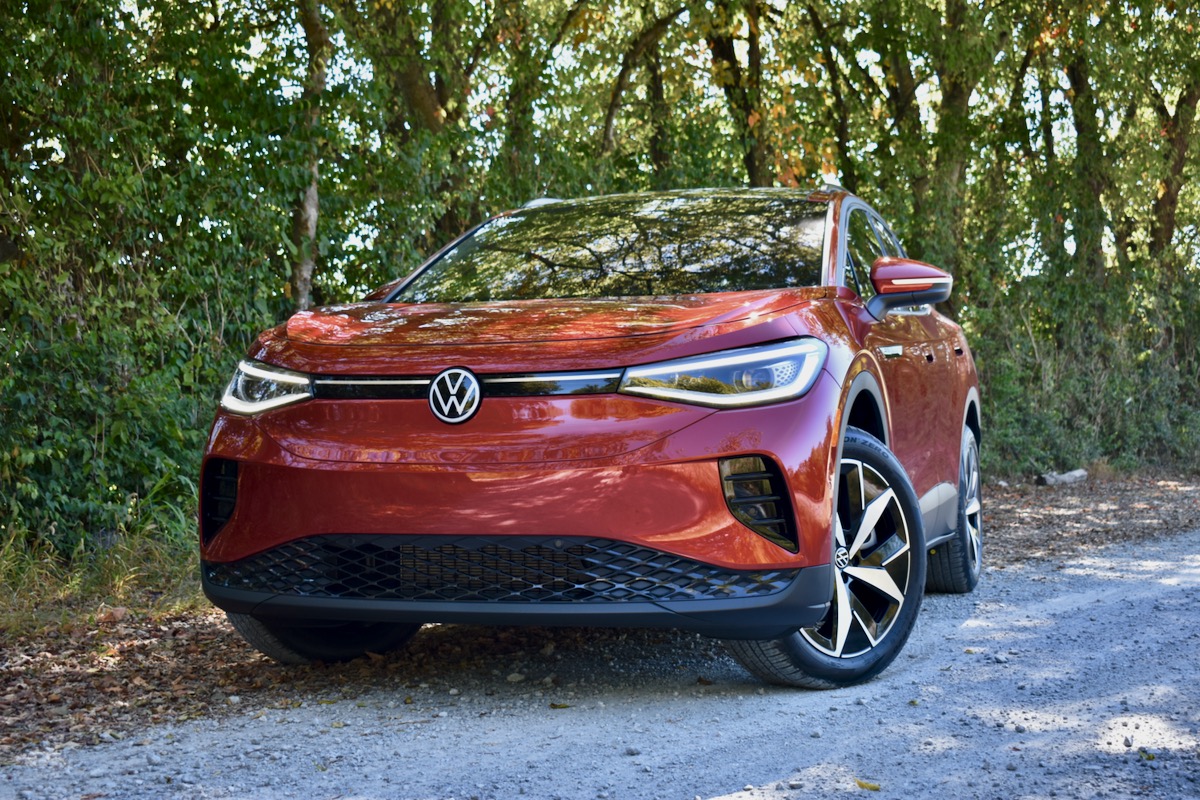
According to CarGurus experts, the overall rating for the 2024 Land Rover Range Rover Velar is 6.3 out of 10, while the 2024 Volkswagen ID.4 scores 7.5 out of 10. Given these ratings, the 2024 Volkswagen ID.4 stands out as the better-reviewed vehicle. It offers excellent value for an electric SUV, combining practicality with advanced technology and a smooth driving experience. Therefore, we recommend the 2024 Volkswagen ID.4 as the preferred choice.
Choose the 2024 Land Rover Range Rover Velar if:
- You value luxurious, modern design and high-quality in-car materials.
- You prioritize off-road capability paired with dynamic on-road performance.
- You appreciate advanced driver assistance systems with clear indications.


Choose the 2024 Volkswagen ID.4 if:
- You are looking for an efficient, quick EV with a reasonable price and significant federal tax credits.
- You prefer a user-friendly, modern infotainment system with advanced features.
- You require a practical, comfortable interior with ample cargo space and rear passenger comfort.


CarGurus highlights
According to CarGurus experts, the overall rating for the 2024 Land Rover Range Rover Velar is 6.3 out of 10, while the 2024 Volkswagen ID.4 scores 7.5 out of 10. Given these ratings, the 2024 Volkswagen ID.4 stands out as the better-reviewed vehicle. It offers excellent value for an electric SUV, combining practicality with advanced technology and a smooth driving experience. Therefore, we recommend the 2024 Volkswagen ID.4 as the preferred choice.
Choose the 2024 Land Rover Range Rover Velar if:
Shop Now- You value luxurious, modern design and high-quality in-car materials.
- You prioritize off-road capability paired with dynamic on-road performance.
- You appreciate advanced driver assistance systems with clear indications.
Choose the 2024 Volkswagen ID.4 if:
Shop Now- You are looking for an efficient, quick EV with a reasonable price and significant federal tax credits.
- You prefer a user-friendly, modern infotainment system with advanced features.
- You require a practical, comfortable interior with ample cargo space and rear passenger comfort.

By: CarGurus + AI
At CarGurus, our team of experienced automotive writers remain at the heart of our content operation, conducting hands-on car tests and writing insightful guides that are backed by years of industry experience. To complement this, we are harnessing AI to make our content offering more diverse and more helpful to shoppers than ever. To achieve this, our AI systems are based exclusively on CarGurus content, ratings and data, so that what we produce is both unique to CarGurus, and uniquely helpful to car shoppers.

