Chevrolet Traverse vs Hyundai Venue

Overview | |
MSRP$40,800 | MSRP$20,550 |
Listings1060 | Listings137 |
Ratings & Reviews | |
User Reviews | User Reviews |
Expert reviews7.3 out of 10 | Expert reviews5.2 out of 10 |
Pros
Cons
| Pros
Cons
|
Reviews SummaryAs a three-row crossover SUV, the Traverse has advantages over both minivans and full-size body-on-frame SUVs, but it also falls short in some ways. The same goes for the Traverse versus its competition. It rides better than full-size models but can’t tow as much and has a similar amount of space to a minivan but it's less accessible. Verdict: The Traverse provides the space and ride quality that sets crossovers apart from body-on-frame SUVs, but it lacks some of the refinement of its rivals. | |
Reviews SummaryAutomakers have traditionally had a hard time making money on entry-level subcompact cars, because they have low profit margins, but America has largely moved away from cars to crossover SUVs—and higher prices. That allows car companies to offer an entry-level subcompact SUV for thousands more than a similar sedan or hatchback. Such is the case with the Hyundai Venue, which costs more than its predecessor, the subcompact Accent that was dropped after the 2022 model year. While the price is higher, the advantage for buyers is a vehicle that generally has more cargo space and is more practical. We recently drove the 2026 Hyundai Venue SEL w/2-Tone Roof (yes, that’s the trim level name) to find out if a subcompact crossover is a better buy than a cheaper subcompact car. Verdict: The Hyundai Venue sacrifices refinement for a price point that isn’t as low as a comparable subcompact car. We’d be tempted to spend a little more for a slightly larger compact car with more power, features, and refinement. | |
No video found | No video found |
Popular Features & Specs | |
Engine2.5L 328 hp I4 | Engine1.6L 121 hp I4 |
DrivetrainFWD | DrivetrainFWD |
Seating Capacity8 | Seating Capacity5 |
Horsepower328 hp @ 5500 rpm | Horsepower121 hp @ 6300 rpm |
MPG City20 | MPG City29 |
MPG Highway26 | MPG Highway33 |
Engine | |
Engine Name2.5L 328 hp I4 | Engine Name1.6L 121 hp I4 |
Torque326 lb-ft @ 3500 rpm | Torque113 lb-ft @ 4500 rpm |
Horsepower328 hp @ 5500 rpm | Horsepower121 hp @ 6300 rpm |
DrivetrainFWD | DrivetrainFWD |
Fuel Economy | |
MPG City20 | MPG City29 |
MPG Highway26 | MPG Highway33 |
Interior | |
Seating Capacity8 | Seating Capacity5 |
Key Features | |
Navigation SystemStandard | Navigation System |
Safety | |
Front Crash Overall5 | Front Crash Overall4 |
Side Crash Overall5 | Side Crash Overall5 |
Dimensions & Capacity | |
Cargo Space22.9 cu ft | Cargo Space18.7 cu ft |
Curb Weight4504 lbs | Curb Weight2612 lbs |
Height70.9 in | Height61.6 in |
Length204.5 in | Length159.1 in |
Width87.9 in | Width69.7 in |
Wheelbase121.0 in | Wheelbase99.2 in |
Maximum Payload1669 lbs | Maximum Payload1158 lbs |
Number of doors4 | Number of doors4 |
Maximum Towing Capacity5000 lbs | Maximum Towing Capacity |
Standard Towing Capacity5000 lbs | Standard Towing Capacity |
Overview | ||
MSRP | $40,800 | $20,550 |
Listings | ||
Ratings & Reviews | ||
User reviews | ||
Expert reviews | 7.3 out of 10Read full review | 5.2 out of 10Read full review |
Pros & cons | Pros
Cons
| Pros
Cons
|
Summary | As a three-row crossover SUV, the Traverse has advantages over both minivans and full-size body-on-frame SUVs, but it also falls short in some ways. The same goes for the Traverse versus its competition. It rides better than full-size models but can’t tow as much and has a similar amount of space to a minivan but it's less accessible. Verdict: The Traverse provides the space and ride quality that sets crossovers apart from body-on-frame SUVs, but it lacks some of the refinement of its rivals. | Automakers have traditionally had a hard time making money on entry-level subcompact cars, because they have low profit margins, but America has largely moved away from cars to crossover SUVs—and higher prices. That allows car companies to offer an entry-level subcompact SUV for thousands more than a similar sedan or hatchback. Such is the case with the Hyundai Venue, which costs more than its predecessor, the subcompact Accent that was dropped after the 2022 model year. While the price is higher, the advantage for buyers is a vehicle that generally has more cargo space and is more practical. We recently drove the 2026 Hyundai Venue SEL w/2-Tone Roof (yes, that’s the trim level name) to find out if a subcompact crossover is a better buy than a cheaper subcompact car. Verdict: The Hyundai Venue sacrifices refinement for a price point that isn’t as low as a comparable subcompact car. We’d be tempted to spend a little more for a slightly larger compact car with more power, features, and refinement. |
Video | No video found | No video found |
Popular Features & Specs | ||
Engine | 2.5L 328 hp I4 | 1.6L 121 hp I4 |
Drivetrain | FWD | FWD |
Seating Capacity | 8 | 5 |
Horsepower | 328 hp @ 5500 rpm | 121 hp @ 6300 rpm |
MPG City | 20 | 29 |
MPG Highway | 26 | 33 |
Engine | ||
Engine Name | 2.5L 328 hp I4 | 1.6L 121 hp I4 |
Torque | 326 lb-ft @ 3500 rpm | 113 lb-ft @ 4500 rpm |
Horsepower | 328 hp @ 5500 rpm | 121 hp @ 6300 rpm |
Drivetrain | FWD | FWD |
Fuel Economy | ||
MPG City | 20 | 29 |
MPG Highway | 26 | 33 |
Interior | ||
Seating Capacity | 8 | 5 |
Key Features | ||
Navigation System | Standard | |
Safety | ||
Front Crash Overall | 5 | 4 |
Side Crash Overall | 5 | 5 |
Dimensions & Capacity | ||
Cargo Space | 22.9 cu ft | 18.7 cu ft |
Curb Weight | 4504 lbs | 2612 lbs |
Height | 70.9 in | 61.6 in |
Length | 204.5 in | 159.1 in |
Width | 87.9 in | 69.7 in |
Wheelbase | 121.0 in | 99.2 in |
Maximum Payload | 1669 lbs | 1158 lbs |
Number of doors | 4 | 4 |
Maximum Towing Capacity | 5000 lbs | |
Standard Towing Capacity | 5000 lbs | |
The 2026 Chevrolet Traverse presented a robust and commanding presence, reminiscent of a smaller Chevrolet Tahoe. Its upright design, high-set grille, and macho stance contributed to its bold appearance. The front end featured eye-slit LED headlights and an air intake/fog light design integrated into the grille, echoing the Tahoe's aesthetic. The sides maintained a clean, semi-rounded shape, with a forward-angled pillar behind the rear door, creating a semi-floating roof effect. The Traverse's grille varied by model, with chrome and black options, while the Z71 trim stood out with red front tow hooks and all-terrain tires. Wheel sizes ranged from 18 to 22 inches, and the Midnight/Sport Edition offered a sleek blacked-out look. Inside, a 17.7-inch touchscreen dominated the dash, complemented by an 11-inch digital instrument cluster. The interior materials were smart, with soft-touch surfaces and contrasting stitching, enhancing the overall ambiance. The base LT trim was well-equipped, featuring cloth upholstery, power-adjustable seats, and a hands-free power liftgate, while higher trims offered additional luxury features.
The 2026 Hyundai Venue, classified as a crossover SUV, had a design that leaned more towards a tall hatchback. Its compact size and narrow profile gave it a European runabout vibe. The upright windshield and bluff nose added to its SUV-like appearance, while standard roof rails and black rocker panels lightened its profile. The Venue's high nose was flanked by lower headlights and high-set daytime running lights, with a satin metallic lower fascia. Black wheel flares around small wheels and a sharply angled rear pillar added to its crossover appeal. Inside, the Venue's interior was simple and functional, with a digital instrument cluster and a small touchscreen resembling an iPad. Body-color trim around the air vents and shifter brought some exterior flair inside. The Venue's interior was practical, but the use of hard plastics was evident, reflecting its budget-friendly nature.


The 2026 Chevrolet Traverse excelled in road manners, benefiting from its car-like unibody architecture, which provided better ride and handling compared to the truck-like body-on-frame Tahoe. Despite its size, the Traverse's handling was more controlled and agile, with light and direct steering. It featured a 2.5-liter turbocharged four-cylinder engine producing 328 horsepower and 326 pound-feet of torque, paired with an eight-speed automatic transmission. The Traverse offered front-wheel drive as standard, with an optional all-wheel-drive system. Its towing capacity was 5,000 pounds, and while the turbo-four engine provided adequate power, the 0-60 mph time of around eight seconds was on the slower side. Engine noise was a concern, and the active noise cancellation was not very effective. The Traverse required manual engagement of the AWD system, and its drive modes included Normal, Sport, Off-Road, Snow/Ice, and Tow/Haul.
The 2026 Hyundai Venue, powered by a 1.6-liter four-cylinder engine, delivered 121 horsepower and 113 pound-feet of torque through a continuously variable transmission (CVT) to the front wheels. The Venue's performance was modest, with a 0-60 mph time in the 8.5–8.8-second range. Its lightweight design, at 2,738 pounds, contributed to its peppy feel in city traffic, but highway acceleration required planning due to the limited torque. The CVT's stepped gear ratios felt slurred, and heavy throttle caused engine droning. Handling was aided by the Venue's small size and low weight, making it easy to maneuver in traffic and park. The ride was generally comfortable, though the solid rear axle made it jiggly on rough surfaces.
The 2026 Chevrolet Traverse, nearly seven inches shorter than a Tahoe, offered ample passenger space but less cargo capacity. It came standard with second-row captain’s chairs for seven-passenger seating, with an option for a second-row bench to accommodate eight. The first-row seats provided comfort and adjustability, while the center console offered excellent storage options. Second-row passengers enjoyed good space, and the third row, though tight, was suitable for children. Cargo space was generous, with 22.9 cubic feet behind the third row, 56.6 behind the second row, and 98 behind the first row, though less than a Tahoe or minivan.
The 2026 Hyundai Venue featured cloth and H-Tex seats with manual adjustments, providing comfort and a sporty appearance. Headroom was ample, but legroom was limited for taller occupants. The rear seat accommodated average-sized adults, but taller individuals would struggle for legroom. The rear seat folded flat in a 60/40 split, offering 31.9 cubic feet of cargo space, with 18.7 cubic feet available with the seats up. The Venue's interior was dominated by hard black plastic, with limited soft-touch surfaces, reflecting its cost-conscious design.
The 2026 Chevrolet Traverse boasted advanced technology, featuring an 11-inch digital instrument cluster and a 17.7-inch infotainment touchscreen with Google built-in, wireless Apple CarPlay, and Android Auto. The touchscreen was user-friendly, with large icons and quick response times. Google Maps, Apple Music, and Amazon Music were standard, and the system included separate climate controls. The Traverse also offered a satellite radio trial, Wi-Fi hotspot wiring, OnStar Basics, a wireless phone charger, and remote start. The base audio system had six speakers, with an optional 12-speaker Bose system available.
The 2026 Hyundai Venue came with a simple 8-inch touchscreen for basic infotainment features. While it felt small compared to modern standards, it was functional and responsive. The system included phone, radio, media, and phone-projection connections, along with wireless Apple CarPlay and Android Auto. However, it lacked navigation, a Wi-Fi hotspot, and SiriusXM satellite radio. The Venue's audio system was a basic six-speaker unit, with no premium option available.
The 2026 Chevrolet Traverse offered a comprehensive set of standard safety features, including forward-collision warning, automatic emergency braking, adaptive cruise control, and blind-spot monitors. Optional packages added features like GM’s Super Cruise hands-free driver-assistance technology, automatic parking, and a surround-view camera system. The Traverse earned a Top Safety Pick from the IIHS and a five-star rating from the NHTSA, with room for improvement in some crash tests.
The 2026 Hyundai Venue, despite its budget-friendly nature, included standard safety features like forward-collision warning, automatic emergency braking, and lane-keep assist. Higher trims added blind-spot monitors and rear cross-traffic alert. The Venue received a four-star rating from the NHTSA, with limited IIHS ratings available at the time of writing.
CarGurus highlights
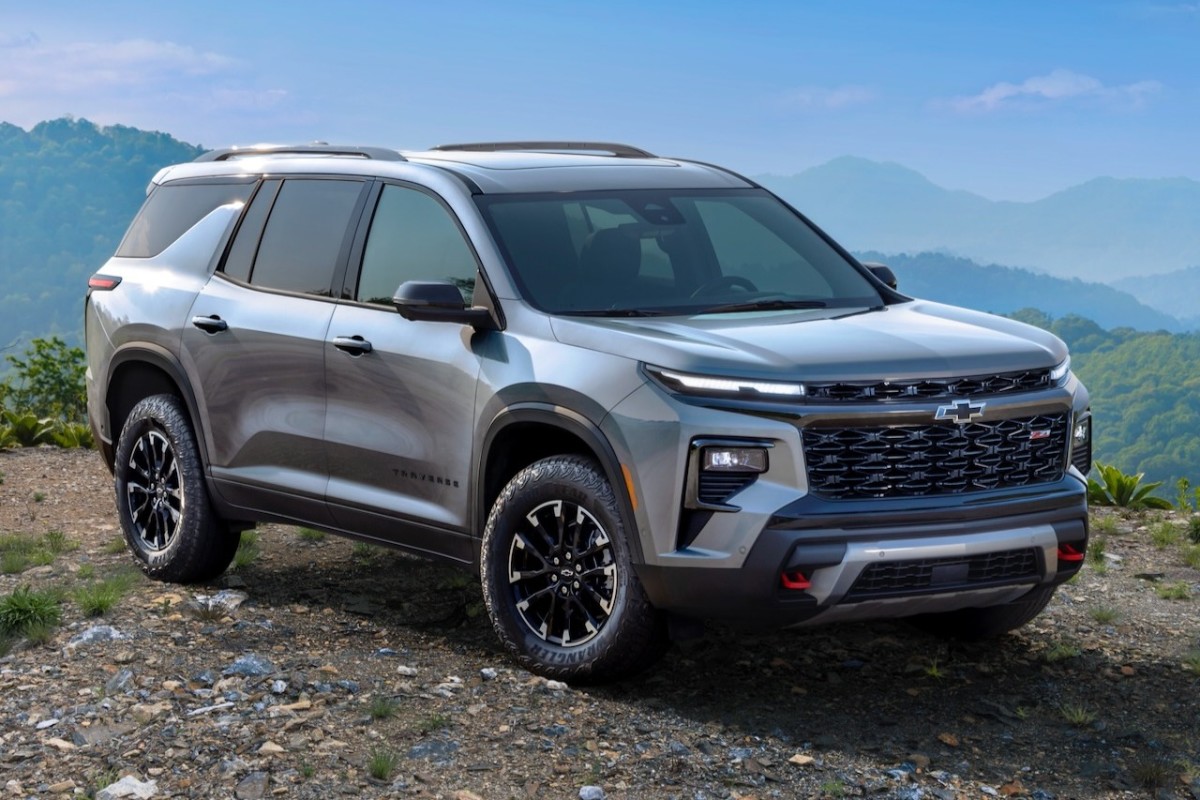
According to CarGurus experts, the overall rating for the 2026 Chevrolet Traverse is 7.3 out of 10, while the 2026 Hyundai Venue scores 5.2 out of 10. Based on these ratings, the Chevrolet Traverse is the recommended choice, offering a more comprehensive package of technology, safety, and performance features.
Choose the 2026 Hyundai Venue if:
- You are looking for a budget-friendly vehicle with essential safety features.
- You prefer a compact size for easy maneuverability in urban environments.
- You want a vehicle with wireless Apple CarPlay and Android Auto at an affordable price.


Choose the 2026 Chevrolet Traverse if:
- You prioritize advanced technology and a spacious interior for passengers and cargo.
- You value a comprehensive set of safety features and high safety ratings.
- You need a vehicle with a higher towing capacity and optional all-wheel drive.


CarGurus highlights
According to CarGurus experts, the overall rating for the 2026 Chevrolet Traverse is 7.3 out of 10, while the 2026 Hyundai Venue scores 5.2 out of 10. Based on these ratings, the Chevrolet Traverse is the recommended choice, offering a more comprehensive package of technology, safety, and performance features.
Choose the 2026 Hyundai Venue if:
Shop Now- You are looking for a budget-friendly vehicle with essential safety features.
- You prefer a compact size for easy maneuverability in urban environments.
- You want a vehicle with wireless Apple CarPlay and Android Auto at an affordable price.
Choose the 2026 Chevrolet Traverse if:
Shop Now- You prioritize advanced technology and a spacious interior for passengers and cargo.
- You value a comprehensive set of safety features and high safety ratings.
- You need a vehicle with a higher towing capacity and optional all-wheel drive.

By: CarGurus + AI
At CarGurus, our team of experienced automotive writers remain at the heart of our content operation, conducting hands-on car tests and writing insightful guides that are backed by years of industry experience. To complement this, we are harnessing AI to make our content offering more diverse and more helpful to shoppers than ever. To achieve this, our AI systems are based exclusively on CarGurus content, ratings and data, so that what we produce is both unique to CarGurus, and uniquely helpful to car shoppers.

