2021 Toyota Venza vs 2021 Toyota Highlander
Overview | |
MSRP$32,670 | MSRP$35,085 |
Listings454 | Listings1369 |
Ratings & Reviews | |
User Reviews | User Reviews |
Expert reviews8.3 out of 10 | Expert reviews7.5 out of 10 |
Pros
Cons
| Pros
Cons
|
2021 Toyota Venza Reviews SummaryAt first glance, the 2021 Toyota Venza looks more like a Lexus than a typical Toyota, which is fitting, because the Venza is anything but typical. The new Venza blends a new approach to in-car technology with fresh exterior and interior design. Like the Nissan Murano, Honda Passport, Ford Edge, and Chevrolet Blazer, the Venza is a two-row SUV meant to be more sophisticated than the family-friendly Nissan Rogue, Honda CR-V, Chevrolet Equinox, and Toyota RAV4. There is no three-row Venza option. It also comes only with a hybrid powertrain—for better or worse—something that its competition is lacking. All-wheel drive is also standard. That's also offered by the competition, but only as a costly upgrade. The Venza’s $32,470 starting price is slightly higher than the Murano and Blazer, but it comes with the traditionally-more-expensive hybrid powertrain. Is the hybrid worth shelling out a little more for? | |
2021 Toyota Highlander Reviews SummaryToyota hardly needs any help selling three-row Highlanders. It already sits close to the top of the sales charts for its segment, and few vehicles carry the name recognition as the Highlander, which enters into its 20th year of production. But the three-row marketplace is a competitive one, and even after a 2020 redesign, Toyota would be foolish to rest on its laurels. As such, the Highlander enters this year with additional safety-feature technology listed as standard equipment. | |
Popular Features & Specs | |
Engine2.5L 219 hp I4 Hybrid | Engine3.5L 295 hp V6 |
Drive TrainAWD | Drive TrainFWD |
Seating Capacity5 | Seating Capacity8 |
Horsepower | Horsepower295 hp @ 6600 rpm |
EV Battery Capacity0.93 kWh | EV Battery Capacity |
MPG City40 | MPG City20 |
MPG Highway37 | MPG Highway28 |
Engine | |
Engine Name2.5L 219 hp I4 Hybrid | Engine Name3.5L 295 hp V6 |
Torque | Torque263 lb-ft @ 4700 rpm |
Horsepower | Horsepower295 hp @ 6600 rpm |
DrivetrainAWD | DrivetrainFWD |
Fuel Economy | |
EV Battery Capacity0.93 kWh | EV Battery Capacity |
MPG City40 | MPG City20 |
MPG Highway37 | MPG Highway28 |
Interior | |
Seating Capacity5 | Seating Capacity8 |
Safety | |
Front Crash Overall4 | Front Crash Overall4 |
Side Crash Overall5 | Side Crash Overall5 |
Dimensions & Capacity | |
Cargo Space28.8 cu ft | Cargo Space16.0 cu ft |
Curb Weight3847 lbs | Curb Weight4145 lbs |
Height65.9 in | Height68.1 in |
Length186.6 in | Length194.9 in |
Width73.0 in | Width76.0 in |
Wheelbase105.9 in | Wheelbase112.2 in |
Maximum Payload900 lbs | Maximum Payload1685 lbs |
Number of doors4 | Number of doors4 |
Maximum Towing Capacity | Maximum Towing Capacity5000 lbs |
Overview | ||
MSRP | $32,670 | $35,085 |
Listings | ||
Ratings & Reviews | ||
User reviews | ||
Expert reviews | 8.3 out of 10Read full review | 7.5 out of 10Read full review |
Pros & cons | Pros
Cons
| Pros
Cons
|
Summary | At first glance, the 2021 Toyota Venza looks more like a Lexus than a typical Toyota, which is fitting, because the Venza is anything but typical. The new Venza blends a new approach to in-car technology with fresh exterior and interior design. Like the Nissan Murano, Honda Passport, Ford Edge, and Chevrolet Blazer, the Venza is a two-row SUV meant to be more sophisticated than the family-friendly Nissan Rogue, Honda CR-V, Chevrolet Equinox, and Toyota RAV4. There is no three-row Venza option. It also comes only with a hybrid powertrain—for better or worse—something that its competition is lacking. All-wheel drive is also standard. That's also offered by the competition, but only as a costly upgrade. The Venza’s $32,470 starting price is slightly higher than the Murano and Blazer, but it comes with the traditionally-more-expensive hybrid powertrain. Is the hybrid worth shelling out a little more for? | Toyota hardly needs any help selling three-row Highlanders. It already sits close to the top of the sales charts for its segment, and few vehicles carry the name recognition as the Highlander, which enters into its 20th year of production. But the three-row marketplace is a competitive one, and even after a 2020 redesign, Toyota would be foolish to rest on its laurels. As such, the Highlander enters this year with additional safety-feature technology listed as standard equipment. |
Video | ||
Popular Features & Specs | ||
Engine | 2.5L 219 hp I4 Hybrid | 3.5L 295 hp V6 |
Drive Train | AWD | FWD |
Seating Capacity | 5 | 8 |
Horsepower | 295 hp @ 6600 rpm | |
EV Battery Capacity | 0.93 kWh | |
MPG City | 40 | 20 |
MPG Highway | 37 | 28 |
Engine | ||
Engine Name | 2.5L 219 hp I4 Hybrid | 3.5L 295 hp V6 |
Torque | 263 lb-ft @ 4700 rpm | |
Horsepower | 295 hp @ 6600 rpm | |
Drivetrain | AWD | FWD |
Fuel Economy | ||
EV Battery Capacity | 0.93 kWh | |
MPG City | 40 | 20 |
MPG Highway | 37 | 28 |
Interior | ||
Seating Capacity | 5 | 8 |
Safety | ||
Front Crash Overall | 4 | 4 |
Side Crash Overall | 5 | 5 |
Dimensions & Capacity | ||
Cargo Space | 28.8 cu ft | 16.0 cu ft |
Curb Weight | 3847 lbs | 4145 lbs |
Height | 65.9 in | 68.1 in |
Length | 186.6 in | 194.9 in |
Width | 73.0 in | 76.0 in |
Wheelbase | 105.9 in | 112.2 in |
Maximum Payload | 900 lbs | 1685 lbs |
Number of doors | 4 | 4 |
Maximum Towing Capacity | 5000 lbs | |
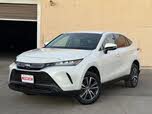
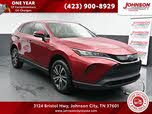
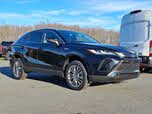
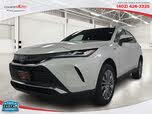
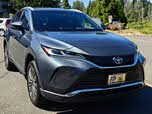
The 2021 Toyota Venza, shorter by five to six inches compared to the Toyota RAV4 (depending on the trim level), sat about an inch closer to the ground but shared the same wheelbase. Critics often remarked that the Venza appeared more luxurious, drawing comparisons to a Lexus. This resemblance extended from the grille to its elongated profile, evoking the design language of the Lexus LF-1 Limitless concept introduced at the 2018 North American International Auto Show rather than belonging to Toyota's SUV lineup.
Toyota offered the Venza in three trims: LE, XLE, and Limited, with seven paint color options, though not all were available across every trim. Standard equipment for the Venza included a dual chrome-tipped exhaust, LED headlights and taillights, automatic high beams, puddle lights, and 18-inch alloy wheels. The LE trim was equipped with a wireless charging pad, a 4.2-inch driver’s information display, a leather-trimmed steering wheel, Bluetooth, dual-zone automatic climate control, fabric-trimmed seats, an eight-way power-adjustable driver’s seat, a 60/40 split-folding second-row seat, a leather-trimmed shifter, automatic up/down power windows, remote keyless entry, an 8-inch infotainment touch screen, four USB ports, Android Auto, Apple CarPlay, Amazon Alexa, and a WiFi hot spot.
Upgrades to the XLE trim included black bumper garnishes, silver roof rails, 19-inch alloy wheels, LED projector headlights, gloss black exterior elements, dual LED daytime running lights, a 7-inch driver information display, an auto-dimming rearview mirror, a rearview camera with dynamic gridlines, SofTex bolsters, heated front seats, a soft-touch dashboard, and a Smart Key. Meanwhile, the Limited trim came with a digital rearview mirror with Homelink, illuminated footwells, a backup camera washer, and a 12.3-inch infotainment screen. Buyers of the Limited trim also had the option to add the Star Gaze panoramic roof, featuring electrochromic glazing technology to enhance the vehicle's luxury appeal.
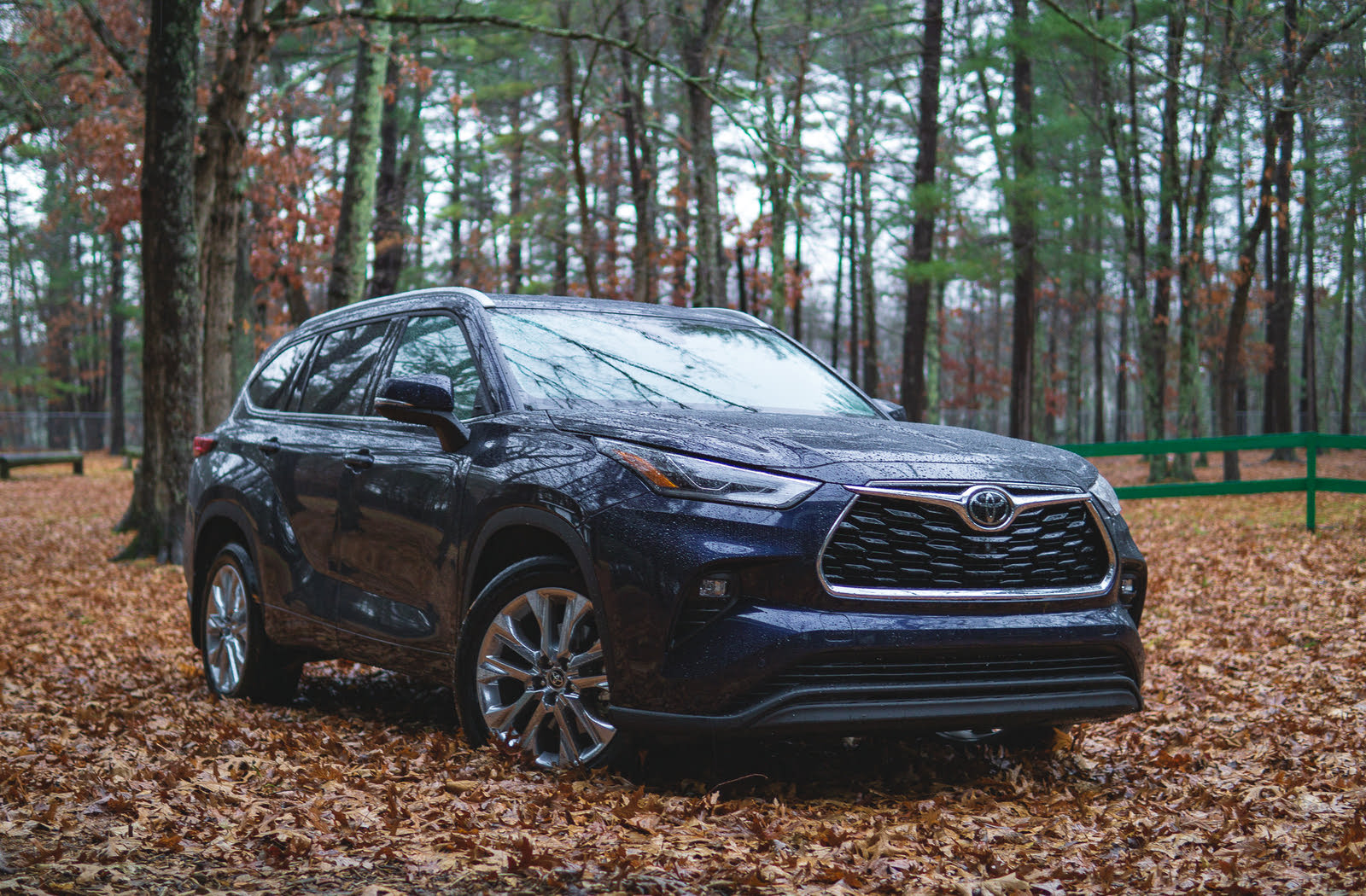
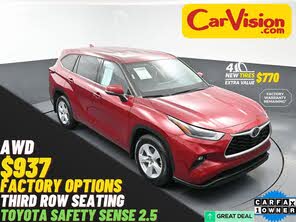
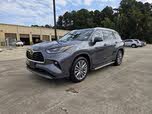
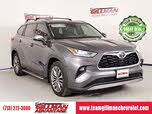
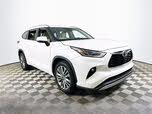
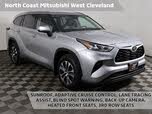
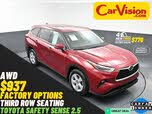
Meanwhile, the 2021 Toyota Highlander defied blandness. It distinguished itself from the mass of midsize SUVs with striking design elements. Its front end, although less dramatic than the bullet-train-inspired 2021 Sienna, still made a statement with wide headlights, a long hood, and an assertive, trapezoidal grille. Along its sides, a character line reminiscent of the Supra sports car accentuated its profile, while the rear taillights hinted at Lexus styling, sans the vertical elements. Overall, the 2021 Highlander appeared longer and lower than its predecessor while retaining its substantial size.
The Highlander lineup introduced a new XSE trim for 2021, with a more aggressive front end, a suspension tune, and a distinctive appearance package. Features included 20-inch wheels with black accents, a unique front fascia, a lower spoiler, and a larger lower air intake. Despite these sporty enhancements, the XSE wasn't designed to compete with sport-tuned models like the Ford Explorer ST.
Our test vehicle, a Limited trim Highlander, showcased chrome roof rails and accents, boosting its upscale exterior. Inside, it bordered luxury with near-flawless fit and finish, a comfortable steering wheel, and tan leather seats complemented by dark brown trim and faux wood details.
While the Highlander XSE aimed to blend practicality with sportiness, it excelled in offering a luxurious ride. The Limited trim's interior provided excellent comfort, devoid of squeaks, rattles, or unsightly gaps, ensuring a premium experience for drivers and passengers alike.


The 2021 Toyota Venza came standard with a 2.5-liter four-cylinder gasoline engine, combined with a lithium-ion battery pack that powered electric motors. This setup, paired with an electronically-controlled continuously-variable transmission (eCVT), delivered smooth acceleration. The hybrid system's sequential-shifting feature allowed drivers to increase regenerative braking, simulating conventional transmission downshifts. Combined, the Venza's hybrid system output 219 horsepower and 163 pound-feet of torque—figures slightly below some competitors, yet adequate for typical driving needs.
While accelerating, the Venza exhibited noticeable engine noise typical of CVTs, and eco-conscious tires contributed additional road noise. Once at cruising speeds, the cabin noise diminished considerably. Acceleration was smooth without being rapid, fitting the expected driving profile for Venza owners. Handling was confident, with the AWD system delivering predictable performance akin to other Toyota models—a consistent and reliable driving experience.
Where the Venza truly excelled was fuel efficiency. Compared to rivals like the Murano, Passport, and Blazer, the Venza boasted nearly double the fuel economy, achieving an EPA-estimated 40 mpg on the highway, 37 mpg in the city, and 39 mpg combined. Toyota supported its hybrid system with a 10-year/150,000-mile hybrid battery warranty and an eight-year/100,000-mile hybrid system warranty.
By contrast, the 2021 Toyota Highlander leaned towards smooth, predictable operation rather than high performance. Its tried-and-true 3.5-liter V6 engine produced 295 horsepower and 263 pound-feet of torque, paired with an eight-speed automatic transmission. Both front-wheel drive and all-wheel drive configurations were available. Notably, the Highlander Hybrid variant, covered separately, offered an alternative for those seeking better fuel efficiency.
The V6 powertrain provided sufficient performance for everyday driving, ensuring drivers felt confident during highway merges or passing maneuvers. When compared to alternatives such as the Hyundai Palisade, Kia Telluride, Honda Pilot, and Chevy Traverse, the Highlander's power figures were competitive. The Mazda CX-9 offered less horsepower but more torque, while the Ford Explorer ST, although more powerful, commanded a higher price.
Handling-wise, the Highlander felt its size, particularly in cornering, a common trait in three-row crossovers. The comfortable, soft suspension contributed to this behavior, emphasizing a smooth ride over sporty dynamics. The XSE trim's sport-tuned suspension included higher-rated springs, retuned shock absorbers, enhanced power steering, and a rear stabilizer bar for improved handling, though it stopped short of transforming the Highlander into a true performance vehicle.
Toyota aimed for practicality in the 2021 Venza’s design. Though it lacked the luxurious features of higher-end vehicles, it delivered a unique cabin experience that did not quite mirror either a Lexus or a traditional Toyota. The interior was characterized by premium touches in the center stack, with shapely upholstered vertical elements lined in silver accents and piano black capacitive buttons for climate and infotainment controls. The infotainment screen was subtly placed atop this button panel.
The deep center console housed resizable cup holders, a traditional stick shifter, drive mode buttons, an electronic parking brake button, USB and AUX ports, a wireless charging pad, heated and ventilated seats controls, and push-button ignition. In the top-tier trim, the padded upholstery of the console exuded a sense of luxury.
Seating in the Venza was comfortable, with ample space for both the driver and front passenger. The rear seats accommodated two adults comfortably, making extended drives pleasant for occupants. Compared to the RAV4, the Venza offered more headroom, slightly less legroom in the front, and nearly equal shoulder and hip room. Passenger volume was similarly spacious in both models. However, the Venza sacrificed cargo space for this passenger comfort.
With the second-row upright, the Venza provided around 60 percent of the RAV4's cargo capacity—maxing at 55.1 cubic feet. Though this was less than offerings from the Murano, Passport, and Blazer, it was more than adequate for daily use and manageable for travel with thoughtful packing. Quick-flip releases on the 60/40 split-folding rear seatbacks simplified cargo area reconfiguration.
In the 2021 Highlander, storage innovation took the form of practical shelves ahead of the front seats—large enough for the largest smartphones, with a small pass-through enabling cord management to USB ports. Higher trims featured a standard wireless charging pad in the center console.
Second-row passengers benefited from ample legroom, with seats adjustable forward and backward to prioritize either middle or third-row space. Adults could fit in the third row with the second-row seats adjusted forward, though this would be less comfortable for longer journeys. The rear-seat placement of climate control air vents—only positioned on the ceiling—was an unusual critique, potentially causing discomfort with direct airflow.
Cargo space was a crucial differentiation point. The Highlander offered 16 cubic feet of cargo room behind the third row, expanding to 48.4 cubic feet with the third row folded down. Maximizing storage with both rows folded delivered a substantial 84.3 cubic feet of cargo space, dwarfing the Venza’s capacity and making the Highlander ideal for extended trips or family activities, though still falling short of minivans' capabilities.
The 2021 Toyota Venza came with an 8-inch infotainment system in the LE and XLE trims, while the Limited trim received a 12.3-inch touchscreen. All screens featured Toyota's Entune system, which had improved in usability over the years but still didn’t lead the industry. The larger 12.3-inch screen performed well, exhibiting good response times and the ability to display three separate sections of information. However, it required multiple menu trips for functions that seemed like they should be simpler, such as expanding information on your radio station or map. Competing systems, like Hyundai’s, handled these tasks more intuitively.
Standard across all trims were Apple CarPlay, Android Auto, and Amazon Alexa integration. Other standard entertainment features included AM/FM/HD Radio, hands-free phone capability, Bluetooth, and a six-speaker audio system. A Wi-Fi hotspot was included, requiring a separate contract for continued use after a 2-gigabyte/three-month free trial.
The Venza XLE offered an optional nine-speaker JBL premium audio system, which came standard on the Limited trim, including a subwoofer and amplifier. Toyota’s connected services were standard, featuring a one-year trial of Safety Connect, providing roadside assistance similar to GM’s OnStar, and Remote Connect, an app that allowed owners to access vehicle functions from their smartphone. A 10-year trial of Service Connect provided maintenance and service data.
Venza models equipped with the larger infotainment screen also received dynamic navigation, utilizing cloud-based technology to provide real-time route guidance based on changing conditions.
In contrast, the 2021 Toyota Highlander featured an 8-inch touchscreen in trim levels below the Limited trim, which offered a 12.3-inch touchscreen as an option—standard only on the top-tier Platinum trim. Both systems were user-friendly. However, navigation came as an extra cost. While it performed well when given specific addresses, it struggled with points of interest that alternative systems like Google Maps handled with ease. Fortunately, Android Auto and Apple CarPlay were standard across all Highlander trims.
The 12.3-inch screen in our test vehicle looked visually impressive with bright, crisp, and fast performance. The JBL audio system delivered good sound quality, though it wasn’t exceptional. The physical volume and tuning knobs were appreciated, but the touchscreen only displayed certain apps at full width, leading to a question of whether the big screen’s additional cost was justified given its minimal functional enhancement.
The 2021 Toyota Venza boasted nearly identical safety features across all trim levels, included under the Toyota Safety Sense 2.0 suite. This comprehensive package included eight airbags, a rearview camera, hill start assist, parking distance sensors, a tire pressure monitoring system, adjustable front seatbelt anchors, and various driver-assist technologies. The pre-collision warning system featured pedestrian detection and automatic emergency braking, while lane-departure alert came with steering assist and lane-tracing assist. Additional features included automatic high beams, adaptive cruise control, and road sign assist.
Blind-spot monitoring with rear cross-traffic alert was standard, with the option to upgrade to a system with automatic braking—standard on the XLE and Limited trims. The Venza also included two full sets of LATCH (Lower Anchors and Tethers for CHildren) connections on the rear outboard seats. The various safety and driver-assist features performed as expected without being intrusive, although the lane-keeping and lane-tracing assists tended to keep the SUV slightly further to the right than systems from other manufacturers.
For the 2021 Toyota Highlander, Toyota integrated the Toyota Safety Sense 2.5+ suite. This update included cutting-edge technologies such as automatic emergency braking with pedestrian detection and intersection support, which could recognize oncoming vehicles making left-hand turns at intersections and signal the emergency braking system if necessary.
Other standard features included road sign assist, adaptive cruise control, lane-departure warning, lane-keeping assist, lane-tracing assist, and automatic high beams. The National Highway Traffic Safety Administration (NHTSA) awarded the Highlander five out of five stars, and the Insurance Institute for Highway Safety (IIHS) named it a Top Safety Pick+.
CarGurus highlights

According to CarGurus experts, the overall rating for the 2021 Toyota Venza is 8.3 out of 10, while the 2021 Toyota Highlander scores 7.5 out of 10. For consumers seeking a balance of style, efficiency, and practicality in a midsize SUV package, the 2021 Toyota Venza emerges as the clear choice based on its higher rating and excellent fuel economy.
Choose the 2021 Toyota Venza if:
- Fuel economy is a priority, with its outstanding MPG figures greatly surpassing many competitors.
- You prefer a more refined and stylish interior that approaches luxury, without a luxury price tag.
- Your driving habits are primarily city-based, where the Venza’s compact size and efficient hybrid system excel.




Choose the 2021 Toyota Highlander if:
- You need ample cargo space, with up to 84.3 cubic feet available when both the second
- and third-row seats are folded.
- You frequently carry more than five passengers, thanks to the Highlander's three-row seating configuration.
- You value advanced safety features, including the latest Toyota Safety Sense 2.5+ technologies.





CarGurus highlights
According to CarGurus experts, the overall rating for the 2021 Toyota Venza is 8.3 out of 10, while the 2021 Toyota Highlander scores 7.5 out of 10. For consumers seeking a balance of style, efficiency, and practicality in a midsize SUV package, the 2021 Toyota Venza emerges as the clear choice based on its higher rating and excellent fuel economy.
Choose the 2021 Toyota Venza if:
Shop Now- Fuel economy is a priority, with its outstanding MPG figures greatly surpassing many competitors.
- You prefer a more refined and stylish interior that approaches luxury, without a luxury price tag.
- Your driving habits are primarily city-based, where the Venza’s compact size and efficient hybrid system excel.





Choose the 2021 Toyota Highlander if:
Shop Now- You need ample cargo space, with up to 84.3 cubic feet available when both the second
- and third-row seats are folded.
- You frequently carry more than five passengers, thanks to the Highlander's three-row seating configuration.
- You value advanced safety features, including the latest Toyota Safety Sense 2.5+ technologies.






By: CarGurus + AI
At CarGurus, our team of experienced automotive writers remain at the heart of our content operation, conducting hands-on car tests and writing insightful guides that are backed by years of industry experience. To complement this, we are harnessing AI to make our content offering more diverse and more helpful to shoppers than ever. To achieve this, our AI systems are based exclusively on CarGurus content, ratings and data, so that what we produce is both unique to CarGurus, and uniquely helpful to car shoppers.