2021 Volkswagen ID.4 vs 2021 Toyota Highlander

Overview | |
MSRP$35,085 | MSRP$39,995 |
Listings1369 | Listings341 |
Ratings & Reviews | |
User Reviews | User Reviews |
Expert reviews7.5 out of 10 | Expert reviews7.3 out of 10 |
Pros
Cons
| Pros
Cons
|
2021 Toyota Highlander Reviews SummaryToyota hardly needs any help selling three-row Highlanders. It already sits close to the top of the sales charts for its segment, and few vehicles carry the name recognition as the Highlander, which enters into its 20th year of production. But the three-row marketplace is a competitive one, and even after a 2020 redesign, Toyota would be foolish to rest on its laurels. As such, the Highlander enters this year with additional safety-feature technology listed as standard equipment. | |
2021 Volkswagen ID.4 Reviews SummaryThe “Dieselgate” emissions scandal forced Volkswagen to double down on electric cars, and now we’re finally seeing the first result of that: the 2021 Volkswagen ID.4 electric crossover. VW has made an electric car before, but its last attempt, the e-Golf, was built to satisfy emissions standards, not rack up sales. It was barely advertised, and it was sold only in certain states. That’s not the case with the ID.4, which will be available nationwide and will even be built in Tennessee starting in 2022. Volkswagen views the ID.4 as a rival not to other EVs, but to mainstream gasoline vehicles like the Honda CR-V and Toyota RAV4. Being late to the party means there are already several other EVs trying to coax new-car buyers away from internal combustion, however. If you want a reasonably-priced EV, the Nissan Leaf, Hyundai Kona Electric, and Kia Niro EV already exist, and General Motors just announced the 2022 Chevrolet Bolt EUV—a new variant of the Chevy Bolt EV with a crossover body style similar to the Volkswagen. We tested an ID.4 1st Edition, which commemorates the car’s launch, and an ID.4 PRO S with all-wheel drive (AWD). The 1st Edition is a limited-edition model that has already sold out, but it’s mechanically identical to the ID.4 Pro S AWD, albeit with power sent only to the rear wheels. | |
Popular Features & Specs | |
Engine3.5L 295 hp V6 | Engine201 hp Electric |
Drive TrainFWD | Drive TrainRWD |
Seating Capacity8 | Seating Capacity5 |
Horsepower295 hp @ 6600 rpm | Horsepower |
EV Battery Capacity | EV Battery Capacity82 kWh |
MPG City20 | MPG City104 |
MPG Highway28 | MPG Highway89 |
Battery Charge Time (240V) | Battery Charge Time (240V)8 hours |
Engine | |
Engine Name3.5L 295 hp V6 | Engine Name201 hp Electric |
Torque263 lb-ft @ 4700 rpm | Torque |
Horsepower295 hp @ 6600 rpm | Horsepower |
Battery Charge Time (240V) | Battery Charge Time (240V)8 hours |
DrivetrainFWD | DrivetrainRWD |
Fuel Economy | |
EV Battery Capacity | EV Battery Capacity82 kWh |
MPG City20 | MPG City104 |
MPG Highway28 | MPG Highway89 |
Interior | |
Seating Capacity8 | Seating Capacity5 |
Safety | |
Front Crash Overall4 | Front Crash Overall5 |
Side Crash Overall5 | Side Crash Overall5 |
Dimensions & Capacity | |
Cargo Space16.0 cu ft | Cargo Space30.3 cu ft |
Curb Weight4145 lbs | Curb Weight4517 lbs |
Height68.1 in | Height64.4 in |
Length194.9 in | Length180.5 in |
Width76.0 in | Width72.9 in |
Wheelbase112.2 in | Wheelbase108.9 in |
Maximum Payload1685 lbs | Maximum Payload1347 lbs |
Number of doors4 | Number of doors4 |
Maximum Towing Capacity5000 lbs | Maximum Towing Capacity |
Overview | ||
MSRP | $35,085 | $39,995 |
Listings | ||
Ratings & Reviews | ||
User reviews | ||
Expert reviews | 7.5 out of 10Read full review | 7.3 out of 10Read full review |
Pros & cons | Pros
Cons
| Pros
Cons
|
Summary | Toyota hardly needs any help selling three-row Highlanders. It already sits close to the top of the sales charts for its segment, and few vehicles carry the name recognition as the Highlander, which enters into its 20th year of production. But the three-row marketplace is a competitive one, and even after a 2020 redesign, Toyota would be foolish to rest on its laurels. As such, the Highlander enters this year with additional safety-feature technology listed as standard equipment. | The “Dieselgate” emissions scandal forced Volkswagen to double down on electric cars, and now we’re finally seeing the first result of that: the 2021 Volkswagen ID.4 electric crossover. VW has made an electric car before, but its last attempt, the e-Golf, was built to satisfy emissions standards, not rack up sales. It was barely advertised, and it was sold only in certain states. That’s not the case with the ID.4, which will be available nationwide and will even be built in Tennessee starting in 2022. Volkswagen views the ID.4 as a rival not to other EVs, but to mainstream gasoline vehicles like the Honda CR-V and Toyota RAV4. Being late to the party means there are already several other EVs trying to coax new-car buyers away from internal combustion, however. If you want a reasonably-priced EV, the Nissan Leaf, Hyundai Kona Electric, and Kia Niro EV already exist, and General Motors just announced the 2022 Chevrolet Bolt EUV—a new variant of the Chevy Bolt EV with a crossover body style similar to the Volkswagen. We tested an ID.4 1st Edition, which commemorates the car’s launch, and an ID.4 PRO S with all-wheel drive (AWD). The 1st Edition is a limited-edition model that has already sold out, but it’s mechanically identical to the ID.4 Pro S AWD, albeit with power sent only to the rear wheels. |
Video | ||
Popular Features & Specs | ||
Engine | 3.5L 295 hp V6 | 201 hp Electric |
Drive Train | FWD | RWD |
Seating Capacity | 8 | 5 |
Horsepower | 295 hp @ 6600 rpm | |
EV Battery Capacity | 82 kWh | |
MPG City | 20 | 104 |
MPG Highway | 28 | 89 |
Battery Charge Time (240V) | 8 hours | |
Engine | ||
Engine Name | 3.5L 295 hp V6 | 201 hp Electric |
Torque | 263 lb-ft @ 4700 rpm | |
Horsepower | 295 hp @ 6600 rpm | |
Battery Charge Time (240V) | 8 hours | |
Drivetrain | FWD | RWD |
Fuel Economy | ||
EV Battery Capacity | 82 kWh | |
MPG City | 20 | 104 |
MPG Highway | 28 | 89 |
Interior | ||
Seating Capacity | 8 | 5 |
Safety | ||
Front Crash Overall | 4 | 5 |
Side Crash Overall | 5 | 5 |
Dimensions & Capacity | ||
Cargo Space | 16.0 cu ft | 30.3 cu ft |
Curb Weight | 4145 lbs | 4517 lbs |
Height | 68.1 in | 64.4 in |
Length | 194.9 in | 180.5 in |
Width | 76.0 in | 72.9 in |
Wheelbase | 112.2 in | 108.9 in |
Maximum Payload | 1685 lbs | 1347 lbs |
Number of doors | 4 | 4 |
Maximum Towing Capacity | 5000 lbs | |
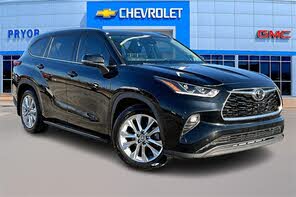
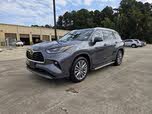
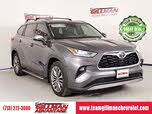
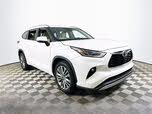
The 2021 Toyota Highlander was anything but mundane, standing out among the sea of midsize SUVs with its distinctive design. Its wide headlights, long hood, and assertive trapezoidal grille gave it a commanding presence. The character line along its side, reminiscent of the Supra sports car, and Lexus-like taillights added to its unique appeal. The Highlander XSE trim introduced a sportier look with a restyled front end and 20-inch wheels, although it was more about appearance than performance. Inside, the Limited trim exuded luxury with its near-flawless fit and finish, tan leather seats, and elegant wood details, making it a comfortable choice for families prioritizing comfort and convenience.
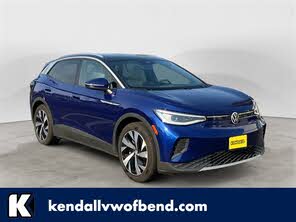
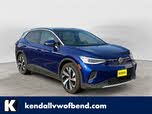
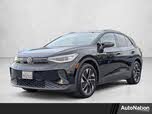
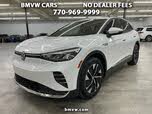
In contrast, the 2021 Volkswagen ID.4 showcased a distinctive design as an electric vehicle, departing from the traditional styling of its gasoline counterparts. Its streamlined profile and wheels pushed to the corners emphasized its EV identity. The ID.4, based on VW's MEB platform, offered a spacious interior with more front headroom than its gasoline rivals, although rear headroom and legroom were average. The cargo space was competitive, with 30.3 cubic feet available with the rear seats up and 64.2 cubic feet when folded. Despite lacking a "frunk," the ID.4's cabin felt roomy, and its forward visibility was commendable, though rearward visibility was hindered by thick pillars.


The 2021 Toyota Highlander was equipped with a 3.5-liter V6 engine, delivering 295 horsepower and 263 pound-feet of torque. Paired with an eight-speed automatic transmission, it offered both front-wheel and all-wheel drive options. While not a powerhouse, the Highlander provided smooth and reliable performance, comparable to competitors like the Hyundai Palisade and Kia Telluride. The XSE trim added sportier suspension tuning, but the Highlander remained more focused on comfort than agility, with a soft suspension that contributed to its comfortable ride.
The 2021 Volkswagen ID.4 initially launched with a single rear-mounted electric motor producing 201 horsepower and 229 pound-feet of torque, powered by an 82-kilowatt-hour battery. It marked VW's return to rear-wheel drive in the U.S. with a balanced handling experience. The AWD version, introduced later, increased power to 295 horsepower and 339 pound-feet of torque, enhancing its performance. While not sporty, the ID.4 prioritized comfort with a smooth ride, though it exhibited body roll in corners. Unlike many EVs, it relied on friction brakes, offering a familiar driving experience for those transitioning from gasoline vehicles.
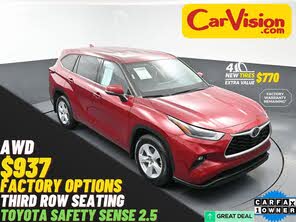
The 2021 Toyota Highlander excelled in interior space and practicality. Its three-row configuration provided ample legroom for second-row passengers, with adjustable seats to optimize space. However, the third row was best suited for children or shorter trips. Cargo space was limited to 16 cubic feet behind the third row but expanded to 48.4 cubic feet with it folded, and 84.3 cubic feet with both rear rows down. The Highlander's interior featured convenient storage solutions, including shelves for devices and a wireless charging pad on higher trims.
The 2021 Volkswagen ID.4 offered a spacious cabin with more front headroom than its gasoline counterparts, though rear headroom and legroom were average. Cargo capacity was competitive, with 30.3 cubic feet available with the rear seats up and 64.2 cubic feet when folded. The ID.4 lacked a "frunk," but its interior felt roomy, and forward visibility was good. However, rearward visibility was compromised by thick pillars. The ID.4's interior design included a unique twist-grip gear selector and a narrow center console, providing storage for smaller items but limited space for larger ones.
The 2021 Toyota Highlander featured an 8-inch touchscreen on lower trims, with a 12.3-inch option available on the Limited trim and standard on the Platinum trim. While the navigation system had limitations, Android Auto and Apple CarPlay were standard. The 12.3-inch screen was bright and responsive, though it didn't fully utilize its size for all functions. The JBL audio system provided decent sound quality, and the interface was user-friendly.
The 2021 Volkswagen ID.4 came with a standard 10-inch touchscreen, with a 12-inch option available. It offered wireless Apple CarPlay and Android Auto, along with a 5.3-inch display for the instrument cluster. The haptic touchpads replaced traditional controls, but they lacked tactile feedback, making them challenging to use while driving. The natural-language voice-control system provided an alternative, though it was occasionally slow to respond. The ID.Light feature added a futuristic touch, but its practical use was limited. Despite some gimmicks, the touchscreen was well-positioned, with intuitive menus and smart graphics.
The 2021 Toyota Highlander came equipped with Toyota Safety Sense 2.5+, featuring advanced driver assistance systems like automatic emergency braking with pedestrian detection, intersection support, road-sign assist, adaptive cruise control, lane-departure warning, lane-keeping assist, lane-tracing assist, and automatic high beams. It received a five-star rating from the NHTSA and was named a Top Safety Pick+ by the IIHS.
The 2021 Volkswagen ID.4 earned the IIHS Top Safety Pick+ designation and a five-star rating from the NHTSA for the RWD model. It included standard safety features such as forward-collision warning, automatic emergency braking, blind-spot monitoring, lane-keep assist, park distance control, automatic high beams, and adaptive cruise control. The ID.4 also introduced Travel Assist and Emergency Assist, enhancing its safety capabilities.
CarGurus highlights
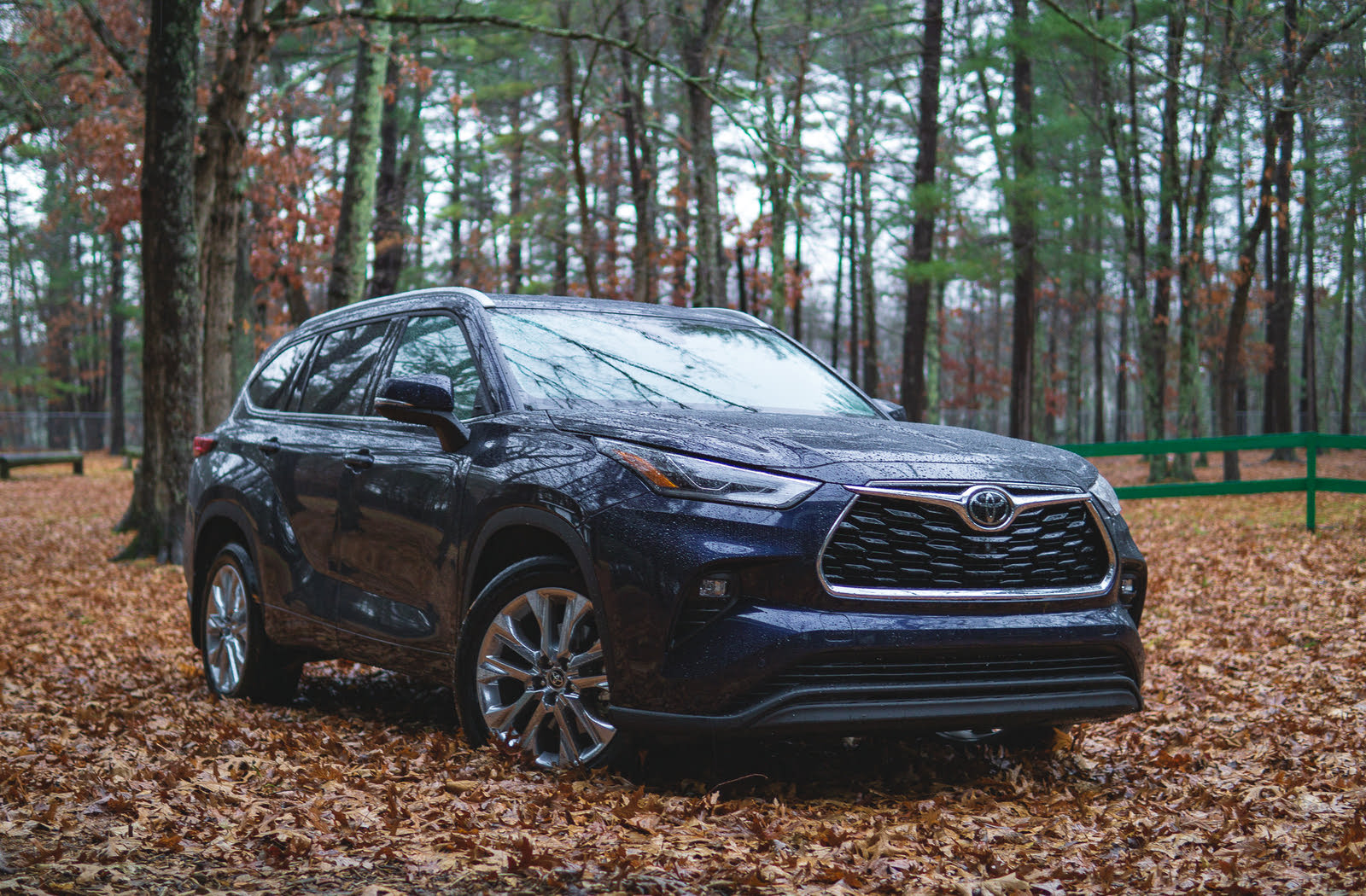
According to CarGurus experts, the overall rating for the 2021 Toyota Highlander is 7.5 out of 10, while the 2021 Volkswagen ID.4 scores 7.3 out of 10. Based on these ratings, the Toyota Highlander is the recommended choice, offering a blend of comfort, reliability, and advanced safety features that make it a strong contender in the midsize SUV segment.
Choose the 2021 Volkswagen ID.4 if:
- You prefer an all-electric vehicle with a distinctive design and spacious cabin.
- You want a modern infotainment system with wireless smartphone integration.
- You appreciate advanced safety features, including Travel Assist and Emergency Assist.





Choose the 2021 Toyota Highlander if:
- You prioritize a spacious and luxurious interior with high-quality materials.
- You value a proven V6 engine with smooth and reliable performance.
- You seek a comprehensive suite of advanced safety features with top safety ratings.





CarGurus highlights
According to CarGurus experts, the overall rating for the 2021 Toyota Highlander is 7.5 out of 10, while the 2021 Volkswagen ID.4 scores 7.3 out of 10. Based on these ratings, the Toyota Highlander is the recommended choice, offering a blend of comfort, reliability, and advanced safety features that make it a strong contender in the midsize SUV segment.
Choose the 2021 Volkswagen ID.4 if:
Shop Now- You prefer an all-electric vehicle with a distinctive design and spacious cabin.
- You want a modern infotainment system with wireless smartphone integration.
- You appreciate advanced safety features, including Travel Assist and Emergency Assist.






Choose the 2021 Toyota Highlander if:
Shop Now- You prioritize a spacious and luxurious interior with high-quality materials.
- You value a proven V6 engine with smooth and reliable performance.
- You seek a comprehensive suite of advanced safety features with top safety ratings.







By: CarGurus + AI
At CarGurus, our team of experienced automotive writers remain at the heart of our content operation, conducting hands-on car tests and writing insightful guides that are backed by years of industry experience. To complement this, we are harnessing AI to make our content offering more diverse and more helpful to shoppers than ever. To achieve this, our AI systems are based exclusively on CarGurus content, ratings and data, so that what we produce is both unique to CarGurus, and uniquely helpful to car shoppers.