2021 Lincoln Aviator vs 2021 BMW X5
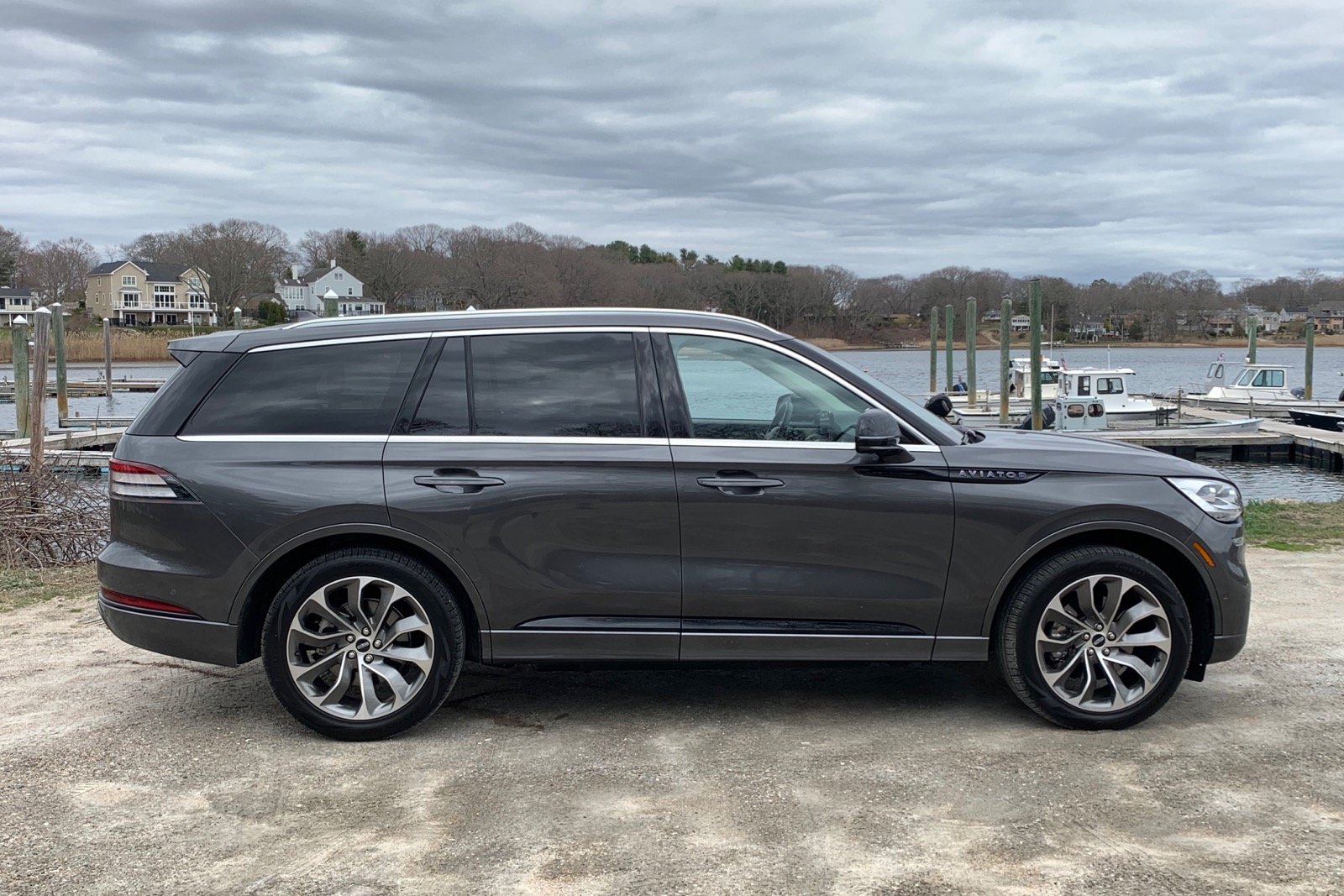
Overview | |
MSRP$50,660 | MSRP$59,400 |
Listings298 | Listings819 |
Ratings & Reviews | |
User Reviews | User Reviews |
Expert reviews7.8 out of 10 | Expert reviews8.0 out of 10 |
Pros
Cons
| Pros
Cons
|
2021 Lincoln Aviator Reviews SummaryOnly a few years ago, Lincoln was in a confusing space. Confusing because many of its cars overlapped with the nicest trims of vehicles from parent company Ford. It was also confusing because of the alphanumeric vehicle names. But Lincoln has ended both of those trends. First, Lincoln has returned to real names for its vehicles, such as the Corsair and Nautilus (Cadillac, are you listening?!). But what’s in a name? This rebranding would be moot without a compelling product. In this respect, the American luxury brand has delivered, highlighted by the 2021 Lincoln Aviator. This three-row midsize SUV boasts modern technology, potent drivetrain options, and creature comforts that you might sooner find in a high-end German luxury sedan. But this newfound quality comes with a steeper price tag. So is it worth consideration against the likes of the Audi Q7 and RX 350L? Read on to find out. | |
2021 BMW X5 Reviews SummaryThe BMW X5 was fully redesigned for the 2019 model year. In 2020, high-performance models were added to the mix and for 2021, the SUV’s second-generation plug-in hybrid variant joins the family. All feature similar body design and utility, including a large cargo area. | |
No video found | No video found |
Popular Features & Specs | |
Engine3.0L 400 hp V6 | Engine3.0L 335 hp I6 |
Drive TrainRWD | Drive TrainRWD |
Seating Capacity7 | Seating Capacity7 |
Horsepower | Horsepower335 hp @ 5500 rpm |
MPG City18 | MPG City21 |
MPG Highway26 | MPG Highway26 |
Engine | |
Engine Name3.0L 400 hp V6 | Engine Name3.0L 335 hp I6 |
Torque | Torque330 lb-ft @ 1500 rpm |
Horsepower | Horsepower335 hp @ 5500 rpm |
DrivetrainRWD | DrivetrainRWD |
Fuel Economy | |
MPG City18 | MPG City21 |
MPG Highway26 | MPG Highway26 |
Interior | |
Seating Capacity7 | Seating Capacity7 |
Key Features | |
Navigation System | Navigation SystemStandard |
Sunroof/Moonroof | Sunroof/MoonroofStandard |
Safety | |
Front Crash Overall5 | Front Crash Overall4 |
Side Crash Overall5 | Side Crash Overall5 |
Dimensions & Capacity | |
Cargo Space18.3 cu ft | Cargo Space33.9 cu ft |
Curb Weight4745 lbs | Curb Weight4828 lbs |
Height69.6 in | Height68.7 in |
Length199.3 in | Length194.3 in |
Width89.9 in | Width87.3 in |
Wheelbase119.1 in | Wheelbase117.1 in |
Maximum Payload1615 lbs | Maximum Payload974 lbs |
Number of doors4 | Number of doors4 |
Maximum Towing Capacity | Maximum Towing Capacity7209 lbs |
Overview | ||
MSRP | $50,660 | $59,400 |
Listings | ||
Ratings & Reviews | ||
User reviews | ||
Expert reviews | 7.8 out of 10Read full review | 8.0 out of 10Read full review |
Pros & cons | Pros
Cons
| Pros
Cons
|
Summary | Only a few years ago, Lincoln was in a confusing space. Confusing because many of its cars overlapped with the nicest trims of vehicles from parent company Ford. It was also confusing because of the alphanumeric vehicle names. But Lincoln has ended both of those trends. First, Lincoln has returned to real names for its vehicles, such as the Corsair and Nautilus (Cadillac, are you listening?!). But what’s in a name? This rebranding would be moot without a compelling product. In this respect, the American luxury brand has delivered, highlighted by the 2021 Lincoln Aviator. This three-row midsize SUV boasts modern technology, potent drivetrain options, and creature comforts that you might sooner find in a high-end German luxury sedan. But this newfound quality comes with a steeper price tag. So is it worth consideration against the likes of the Audi Q7 and RX 350L? Read on to find out. | The BMW X5 was fully redesigned for the 2019 model year. In 2020, high-performance models were added to the mix and for 2021, the SUV’s second-generation plug-in hybrid variant joins the family. All feature similar body design and utility, including a large cargo area. |
Video | No video found | No video found |
Popular Features & Specs | ||
Engine | 3.0L 400 hp V6 | 3.0L 335 hp I6 |
Drive Train | RWD | RWD |
Seating Capacity | 7 | 7 |
Horsepower | 335 hp @ 5500 rpm | |
MPG City | 18 | 21 |
MPG Highway | 26 | 26 |
Engine | ||
Engine Name | 3.0L 400 hp V6 | 3.0L 335 hp I6 |
Torque | 330 lb-ft @ 1500 rpm | |
Horsepower | 335 hp @ 5500 rpm | |
Drivetrain | RWD | RWD |
Fuel Economy | ||
MPG City | 18 | 21 |
MPG Highway | 26 | 26 |
Interior | ||
Seating Capacity | 7 | 7 |
Key Features | ||
Navigation System | Standard | |
Sunroof/Moonroof | Standard | |
Safety | ||
Front Crash Overall | 5 | 4 |
Side Crash Overall | 5 | 5 |
Dimensions & Capacity | ||
Cargo Space | 18.3 cu ft | 33.9 cu ft |
Curb Weight | 4745 lbs | 4828 lbs |
Height | 69.6 in | 68.7 in |
Length | 199.3 in | 194.3 in |
Width | 89.9 in | 87.3 in |
Wheelbase | 119.1 in | 117.1 in |
Maximum Payload | 1615 lbs | 974 lbs |
Number of doors | 4 | 4 |
Maximum Towing Capacity | 7209 lbs | |
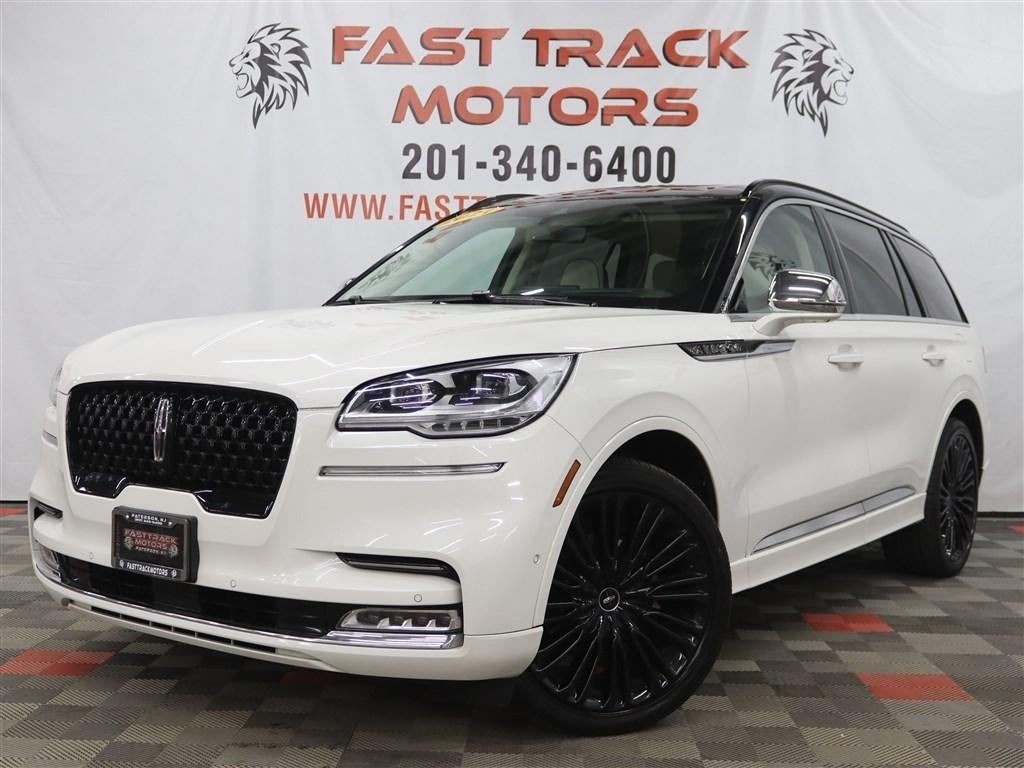
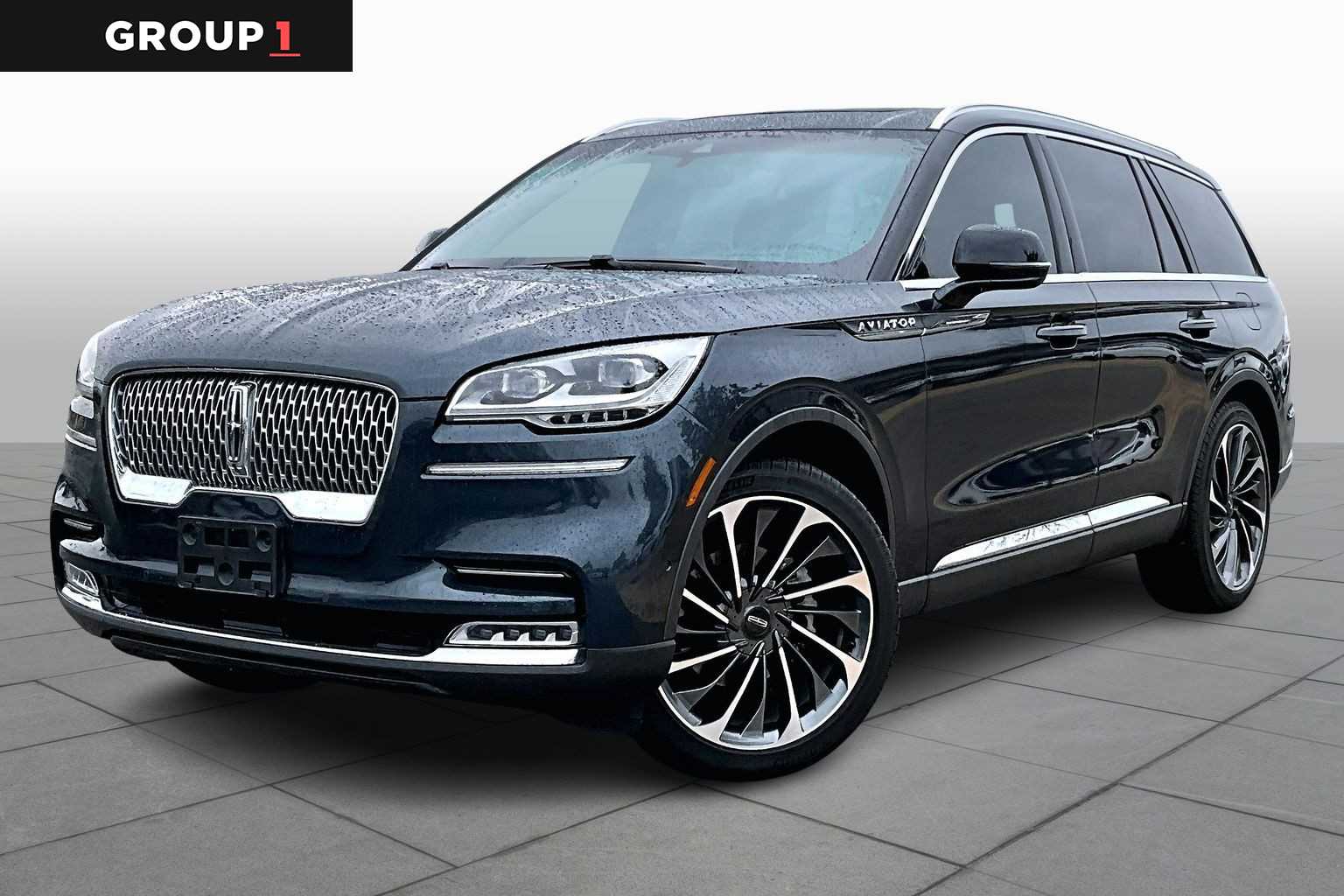
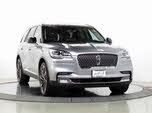
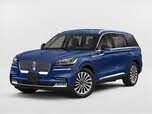
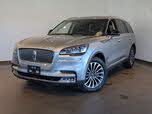
The 2021 Lincoln Aviator stood out in the crowded luxury SUV market by confidently embracing its unique design language. Unlike its competitors, Lincoln chose not to imitate the popular European styles. Instead, it drew inspiration from its flagship Navigator. The Aviator’s exterior was characterized by crisp lines and generous chrome accents, making it one of the few modern cars that actually benefited from heavy chrome use. The exterior design projected a blend of sharpness and elegance.
Inside, the Aviator felt miles apart from its Ford sibling, the Explorer, despite sharing the same platform. The cabin was defined by its comfort and warmth, accentuated by soft-touch materials and chrome accents. The central 10.1-inch touchscreen was an immediate focal point, elegantly integrated into the rising center console. Lincoln added unique touches, such as the piano button shifter, which despite being less intuitive than a traditional lever, was laid out sensibly. Additionally, calming chimes replaced typical alerts, enhancing the luxurious ambiance.
The Aviator was offered in several trims: Standard, Reserve, Grand Touring, Black Label, and Black Label Grand Touring. Even the base Standard trim came well-equipped with synthetic leather upholstery, tri-zone climate control, and heated front seats. Moving up to the Reserve trim added premium features such as 12-way power-adjustable front seats, upgraded leather upholstery, and a panoramic sunroof. The Grand Touring trim, equipped with a plug-in hybrid powertrain, introduced adaptive headlights and the Elements Package Plus, which included a heated steering wheel and massaging front seats. The Black Label trims topped the range, incorporating nearly all optional features as standard, along with exclusive benefits like the 28-speaker Revel Ultima sound system.
In contrast, the 2021 BMW X5 carried the unmistakable signature BMW design, from its kidney grille to its well-proportioned SUV shape. This familiarity was both a strength and a weakness. While brand recognition was high, the X5 could blend into a lineup of BMWs parked in a lot. The X5 did feature full adaptive LED headlights and a variety of trim-specific exterior accents. The xLine models had matte aluminum grilles, while the M Sport models showcased sportier aesthetics with body-color matched trims and high-gloss black details.
The interior of the X5 continued this theme of familiar luxury. While the design felt uniform with other BMW models, it was executed with high-quality materials, although there was an overabundance of dust-collecting black plastic. The M Sport models featured more aggressive styling elements, such as a sports steering wheel and exclusive trim strips, further enhancing the sporty feel.


The 2021 Lincoln Aviator offered robust performance right from the base model. The Standard, Reserve, and Black Label trims shared a 3.0-liter twin-turbocharged V6 engine, delivering an impressive 400 horsepower and 415 pound-feet of torque. This power was channeled through a 10-speed automatic transmission, with options for rear-wheel drive (RWD) or all-wheel drive (AWD).
The Grand Touring and Grand Touring Black Label trims took performance up a notch with a plug-in hybrid configuration. This setup paired the same twin-turbo V6 with an electric motor, boosting output to 494 horsepower and a substantial 630 pound-feet of torque. The hybrid system allowed for up to 21 miles of pure electric driving. Despite its size, the Aviator delivered smooth acceleration and maintained a brisk pace, although it exhibited noticeable body roll in corners due to its substantial weight.
The Aviator featured unique drive modes like "Excite" and "Conserve," which suited its character well. While it wasn’t a high-performance SUV, it excelled in highway driving and suburban cruising.
The 2021 BMW X5 provided a variety of powertrain options, all paired with an eight-speed automatic transmission. The base model, X5 sDrive40i/xDrive40i, was powered by a 3.0-liter inline six-cylinder engine, producing 335 horsepower and 330 pound-feet of torque. The sDrive denoted RWD, while xDrive indicated AWD.
For those craving more power, the X5 M50i packed a twin-turbocharged 4.4-liter V8, delivering 523 horsepower and 553 pound-feet of torque. The high-performance X5 M took this further with 600 horsepower, which increased to 617 horsepower with the Competition Package. BMW introduced the X5 xDrive45e plug-in hybrid for 2021, achieving 389 horsepower and 443 pound-feet of torque from a combination of a 3.0-liter six-cylinder engine and a 24-kilowatt-hour battery. This configuration allowed for up to 30 miles of electric-only range.
The X5’s hybrid system seamlessly transitioned between electric, hybrid, and gasoline-only modes without perceptible changes in noise or throttle response. However, the hybrid model's driving dynamics fell short, especially in terms of steering accuracy and handling at speed. The X5’s ride quality was cushioned and quiet, but it lacked the connected and engaging experience typical of BMW vehicles.
The 2021 Lincoln Aviator proved to be a practical and versatile luxury SUV. It offered 18.3 cubic feet of cargo space behind the third-row seats. The power-lift-and-lower third-row seats enhanced practicality, expanding the cargo capacity to 41.8 cubic feet when folded down. With all rear seats stowed, the Aviator boasted 77.7 cubic feet of cargo space, positioning it favorably within the midsize luxury SUV class. The Aviator came standard with a power liftgate, and a hands-free option was available for added convenience.
Passenger comfort was another strong suit for the Aviator. While the third row provided decent space, the second row, especially in the Grand Touring trim with captain's chairs, stole the show. The second-row center console added functionality with digital controls for seats, climate, and audio, and even featured toggles for the panoramic sunroof visor. One design quirk, however, was the power-button door releases, which raised concerns about usability in the event of a dead battery.
The 2021 BMW X5 also made efficient use of its space. The front center console was designed with practical cupholders and a wireless phone charging pad. However, the abundance of buttons and controls could be overwhelming and difficult to navigate without diverting attention from the road. The front seats were comfortable for short trips but became hard over longer journeys. Rear seats provided ample comfort for children and adults, although the third-row option, not tested, was expected to offer limited space.
The X5 retained its split liftgate, now fully power-operated, which was convenient for loading cargo. An adjustable vehicle height button on the lower liftgate made handling awkward or heavy items easier. The traditional X5 offered ample cargo space, though the xDrive45e plug-in hybrid's cargo area was slightly reduced due to battery placement. However, this difference was negligible for most buyers. The design of the rear doors, which did not open very wide, made it challenging to move passengers or cargo in and out of the second row.
The 2021 Lincoln Aviator was equipped with a 10.1-inch touchscreen running the Sync 3 infotainment system. Lincoln opted for a landscape layout for the screen, which extended from the dash and offered a more natural user experience. Sync 3 was intuitive with a sensible menu layout and redundant controls on the center stack. Standard features included Apple CarPlay and Android Auto, both of which were well-integrated and utilized the screen’s full real estate with large, easy-to-read icons. The Aviator also offered a digital instrument panel and an optional head-up display (HUD) with clear and crisp graphics, enhancing the driver's interface with the vehicle.
The 2021 BMW X5 featured a 12.3-inch infotainment touchscreen as standard. The list of tech features was extensive, including wireless Apple CarPlay and Android Auto, a 12.3-inch digital gauge cluster, a 10-speaker sound system, Bluetooth, and multiple USB ports. However, wireless Apple CarPlay exhibited unpredictable behavior, often taking over the vehicle's audio system unexpectedly.
Options for the X5 included a head-up display, quad-zone automatic climate control, a wireless smartphone charger, massaging seats, and premium audio systems from Harman Kardon and Bowers & Wilkins. BMW's iDrive system, though initially complex, became more intuitive with regular use.
The 2021 Lincoln Aviator came with a robust suite of standard safety features under the Lincoln Co-Pilot 360 package. These included automatic emergency braking, lane departure warning, automatic high beams, blind-spot monitoring, and front-and-rear parking sensors. Additional standard safety features included tire pressure monitoring, traction control, and a comprehensive set of airbags. The Grand Touring trim added the Co-Pilot 360 Plus package, which included reverse automatic braking, self-parking functionality, and adaptive cruise control with stop-and-go capability. The Aviator earned high safety ratings from both the National Highway Traffic Safety Administration (NHTSA) and the Insurance Institute for Highway Safety (IIHS), including a Top Safety Pick accolade from the IIHS.
The 2021 BMW X5 also offered a comprehensive list of standard safety features, such as blind-spot monitoring, forward collision warning, automatic emergency braking, pedestrian detection, adaptive cruise control, and front-and-rear parking sensors. Other standard features included rain-sensing windshield wipers, fatigue and focus alert, lane departure warning, and automatic high-beam headlights.
However, the X5’s driving assistance systems faced issues. The adaptive cruise control’s stop-and-go function did not always react to stopped traffic promptly, necessitating human intervention. Lane-keeping assistance often struggled with clearly marked lanes, especially in sunny conditions and during light rain, which compromised the system’s reliability. Despite these concerns, the X5 received favorable safety ratings from the IIHS and a four-star overall rating from the NHTSA, although it was subject to seven recalls.
CarGurus highlights

According to CarGurus experts, the overall rating for the 2021 Lincoln Aviator is 7.8 out of 10, while the 2021 BMW X5 scores 8.0 out of 10. Although the Lincoln Aviator impresses with its distinct style, comfort, and robust safety features, the BMW X5 takes the lead with its versatile powertrain options, extensive technology suite, and slightly better overall rating. Therefore, based on these ratings, the 2021 BMW X5 is the recommended choice for consumers seeking a luxury SUV that combines performance, technology, and brand prestige.
Choose the 2021 Lincoln Aviator if:
- You want a luxury SUV with a unique and stylish design that stands out.
- You seek superior comfort and practical features in all rows, especially the second row.
- You prefer a vehicle with strong safety ratings and a comprehensive suite of driver assistance features.




Choose the 2021 BMW X5 if:
- You desire a vehicle with a familiar, high-quality BMW design and brand recognition.
- You need a versatile SUV with extensive powertrain options, including high-performance and plug-in hybrid variants.
- You value comprehensive technology features and are willing to spend time familiarizing yourself with the iDrive system.









CarGurus highlights
According to CarGurus experts, the overall rating for the 2021 Lincoln Aviator is 7.8 out of 10, while the 2021 BMW X5 scores 8.0 out of 10. Although the Lincoln Aviator impresses with its distinct style, comfort, and robust safety features, the BMW X5 takes the lead with its versatile powertrain options, extensive technology suite, and slightly better overall rating. Therefore, based on these ratings, the 2021 BMW X5 is the recommended choice for consumers seeking a luxury SUV that combines performance, technology, and brand prestige.
Choose the 2021 Lincoln Aviator if:
Shop Now- You want a luxury SUV with a unique and stylish design that stands out.
- You seek superior comfort and practical features in all rows, especially the second row.
- You prefer a vehicle with strong safety ratings and a comprehensive suite of driver assistance features.



Choose the 2021 BMW X5 if:
Shop Now- You desire a vehicle with a familiar, high-quality BMW design and brand recognition.
- You need a versatile SUV with extensive powertrain options, including high-performance and plug-in hybrid variants.
- You value comprehensive technology features and are willing to spend time familiarizing yourself with the iDrive system.











By: CarGurus + AI
At CarGurus, our team of experienced automotive writers remain at the heart of our content operation, conducting hands-on car tests and writing insightful guides that are backed by years of industry experience. To complement this, we are harnessing AI to make our content offering more diverse and more helpful to shoppers than ever. To achieve this, our AI systems are based exclusively on CarGurus content, ratings and data, so that what we produce is both unique to CarGurus, and uniquely helpful to car shoppers.